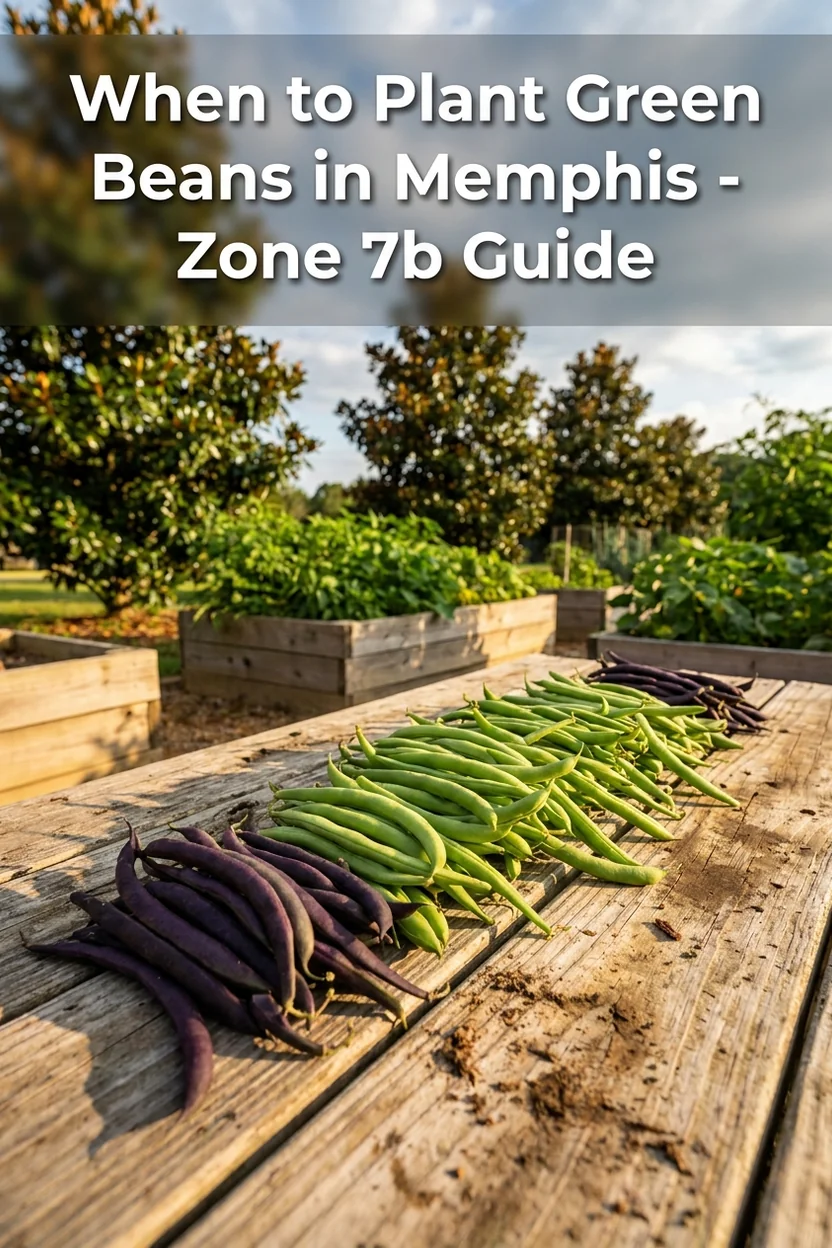
When to Plant Green Beans in Memphis: Complete Guide + Best Varieties for Zone 7b
Pets & Toxicity
Recorded toxicity for plants linked in this guide. An unknown status is not a safety assessment.
No linked plant is recorded as toxicDetailsHide
Phaseolus vulgaris 'Blue Lake' — Toxicity
Non-toxic when cooked. Raw pods carry lectins (phytohemagglutinin) that cause digestive upset on raw consumption — pods are cooked before eatingView Phaseolus vulgaris 'Blue Lake' plant profilePhaseolus vulgaris 'Purple Queen' — Toxicity
Non-toxicView Phaseolus vulgaris 'Purple Queen' plant profilePhaseolus vulgaris 'Dragon Tongue' — Toxicity
Non-toxicView Phaseolus vulgaris 'Dragon Tongue' plant profilePhaseolus vulgaris 'Kentucky Wonder' — Toxicity
Non-toxicView Phaseolus vulgaris 'Kentucky Wonder' plant profile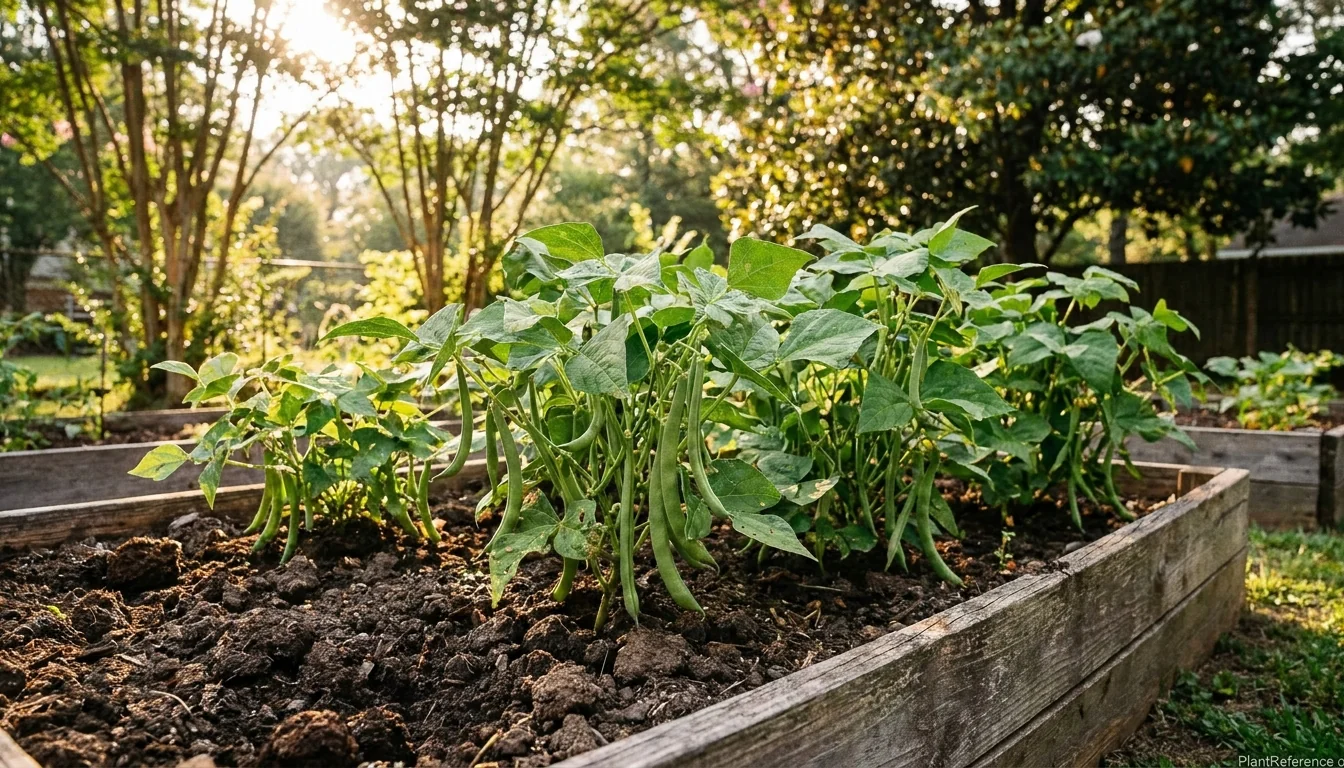
— Image © PlantReference.org 2026
Memphis gives green beans more growing time than most cities—210 frost-free days between our April 5 last frost and November 1 first frost. That long window means five or six succession plantings are possible, and fall beans are some of the best you'll harvest all year. But the Memphis summer tests every plant in your garden. When July and August bring weeks of 95°F+ afternoons with humidity that never drops below 70%, even heat-loving Phaseolus vulgaris struggles to set pods. The gardeners who produce beans all season are the ones who plant heat-tolerant varieties through the summer gap and time their succession sowings so fresh plants are always coming on line when older ones fade. The Complete Guide to Raised Bed Gardening for Beginners (2025)
Best Green Bean Varieties for Memphis's Zone 7b Climate
Memphis sits in the Mississippi River floodplain, and the soil reflects it—heavy alluvial clay in many neighborhoods, with better-draining loam on the bluffs east of downtown. The clay is incredibly fertile but holds water after the frequent summer thunderstorms that dump 2-3 inches in an hour. Beans need moisture but cannot tolerate standing water, so drainage is the first problem to solve. The heat and humidity also create relentless disease pressure from rust, bacterial blight, and anthracnose—variety selection with disease resistance built in saves you from fighting those battles all season. Best Soil Mix for Raised Beds: Creating the Perfect Growing Medium
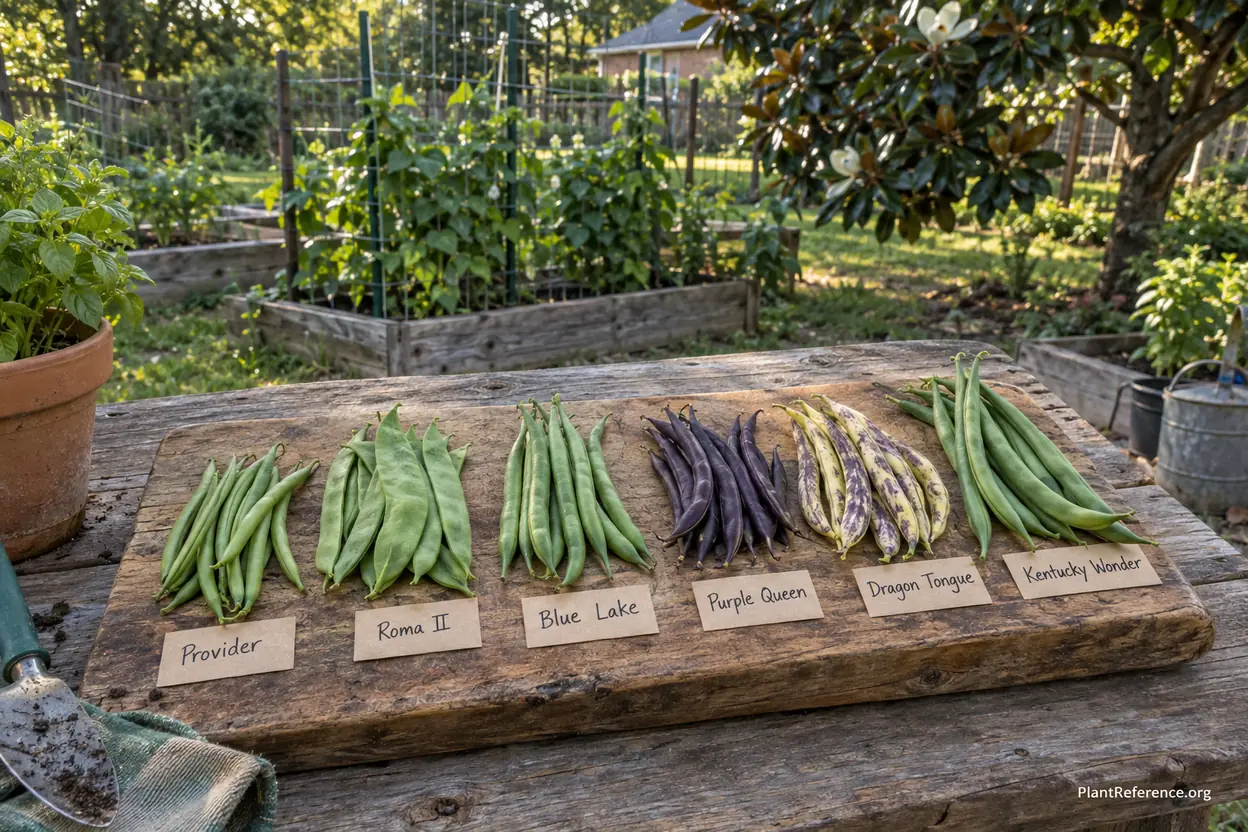
🌿Phaseolus vulgaris 'Provider' starts your Memphis season at 50-55 days to maturity. 🌿Phaseolus vulgaris 'Provider' germinates in cooler soil than other varieties, making it the right choice for mid-April sowings when the ground has just crossed 60°F. The determinate bush habit produces a concentrated harvest in 10-14 days—plant it, pick it, pull it, and replant the space. Space 🌿Phaseolus vulgaris 'Provider' at 4 inches (10 cm) in rows 18-24 inches apart.
🌿Phaseolus vulgaris 'Roma II' is the disease-resistant workhorse at 53-60 days. 🌿Phaseolus vulgaris 'Roma II' carries genetic resistance to common bean mosaic virus, which is endemic in Memphis through persistent aphid populations. The broad flat Italian pods hold quality on the plant longer than round types—helpful when a week of rain delays your harvest. 🌿Phaseolus vulgaris 'Roma II' earns its place in every Memphis succession rotation.
🌿Phaseolus vulgaris 'Blue Lake' produces the classic round pods at 55-65 days that are the gold standard for canning and freezing. 🌿Phaseolus vulgaris 'Blue Lake' needs 6-inch (15 cm) spacing for its vigorous bush habit. Plant from late April through June for main season production. The heavier plant structure handles Memphis wind better than compact bush types during summer thunderstorms.
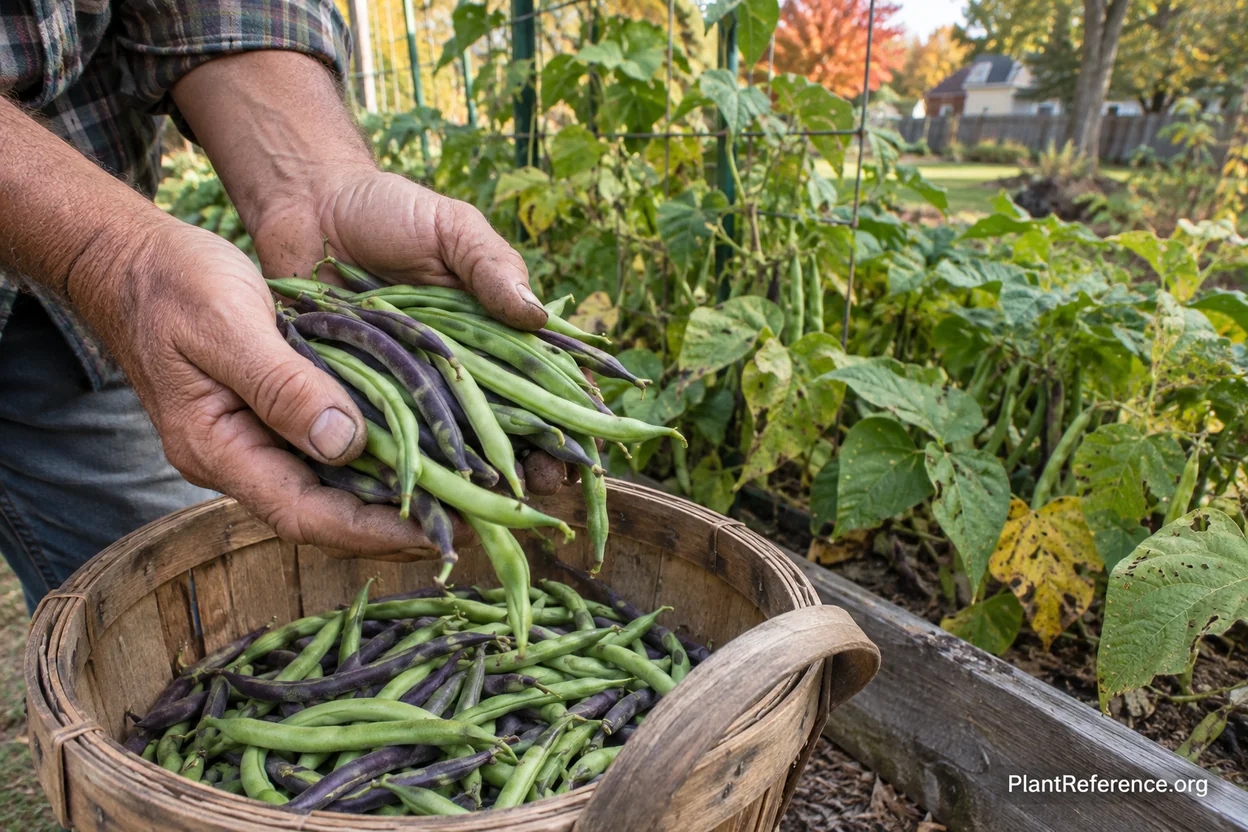
🌿Phaseolus vulgaris 'Purple Queen' is the essential midsummer variety at 55-60 days. 🌿Phaseolus vulgaris 'Purple Queen' handles heat better than any other variety in this lineup—critical for July sowings when Memphis temperatures regularly top 95°F. The deep purple pods are easy to spot against green foliage, speeding harvest during the weeks when you'd rather spend minimal time in the garden. Pods turn green when cooked.
🌿Phaseolus vulgaris 'Dragon Tongue' offers a specialty option at 55-60 days with cream-and-purple streaked pods. 🌿Phaseolus vulgaris 'Dragon Tongue' serves as both a snap bean harvested young and a shell bean if left to mature. The vigorous habit needs 6-inch (15 cm) spacing. Good for May and September plantings when heat stress is moderate.
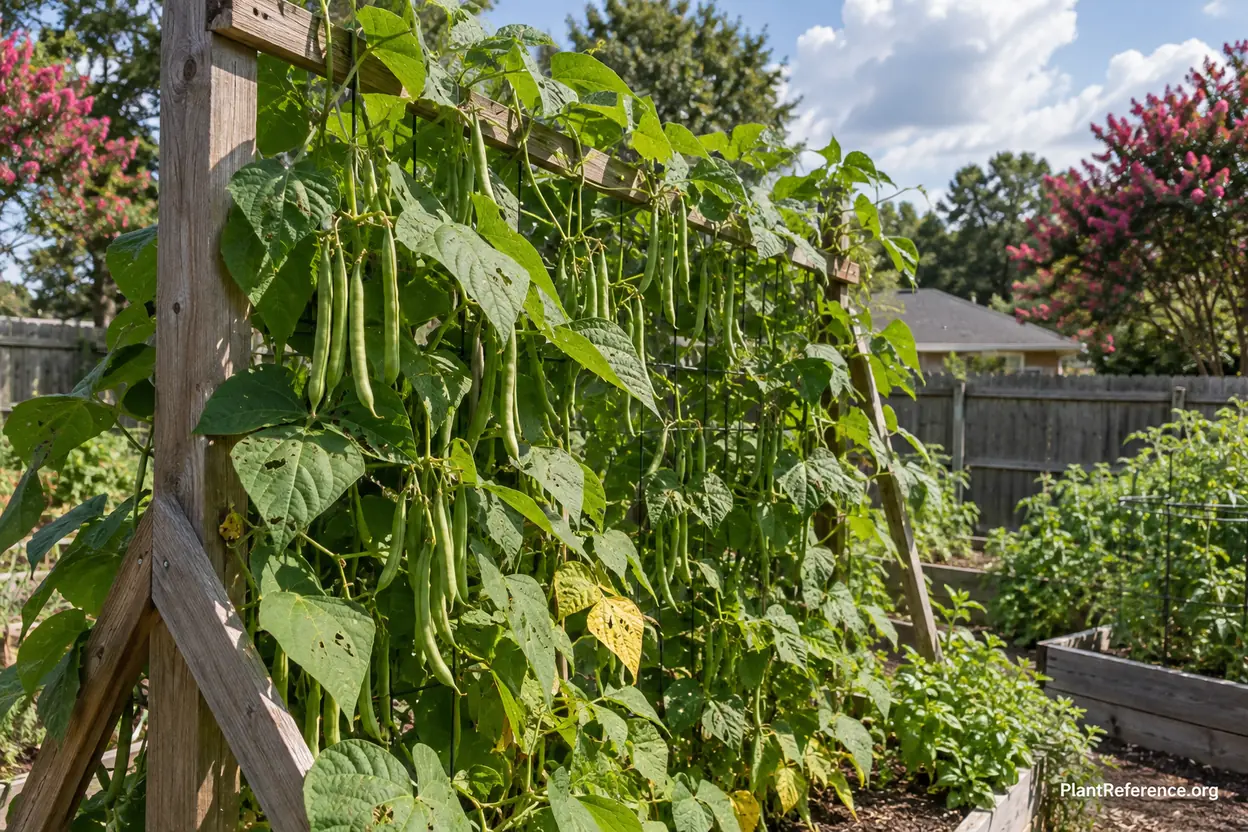
🌿Phaseolus vulgaris 'Kentucky Wonder' is the pole bean at 60-70 days for gardeners willing to build a trellis. 🌿Phaseolus vulgaris 'Kentucky Wonder' produces continuously for 6-8 weeks, replacing multiple succession sowings with a single planting. Vines reach 8-10 feet (2.4-3 m). Plant in early May for production starting in July. The continuous harvest habit means 🌿Phaseolus vulgaris 'Kentucky Wonder' keeps producing through the summer heat gap when bush beans stall, because established vines recover faster from heat stress than newly germinated seedlings. Raised Bed Vegetable Garden Layout: Planning for Maximum Production
Variety | Days to Maturity | Type | Best For Memphis | Notes for Zone 7b |
|---|---|---|---|---|
50-55 days | Bush | First spring crop | Cool-soil tolerance; mid-April start; fast turnaround | |
53-60 days | Bush | Disease resistance | Mosaic virus resistant; holds quality; flat Italian pod | |
55-65 days | Vigorous bush | Main season | Gold standard canning and freezing; handles wind | |
55-60 days | Bush | Midsummer heat | Best heat tolerance; purple pods easy to harvest | |
55-60 days | Vigorous bush | Specialty harvest | Dual-purpose snap or shell; spring and fall plantings | |
60-70 days | Pole | Continuous harvest | Produces through heat gap; 6-8 weeks from one planting |
Specific Planting Dates for Memphis
Memphis averages an April 5 last frost and November 1 first frost, giving you 210 frost-free days. The practical bean planting window starts about two weeks after the last frost when soil hits 60°F and extends through late August—plenty of time for five or six succession sowings of bush beans.
First Sowing: Mid-April
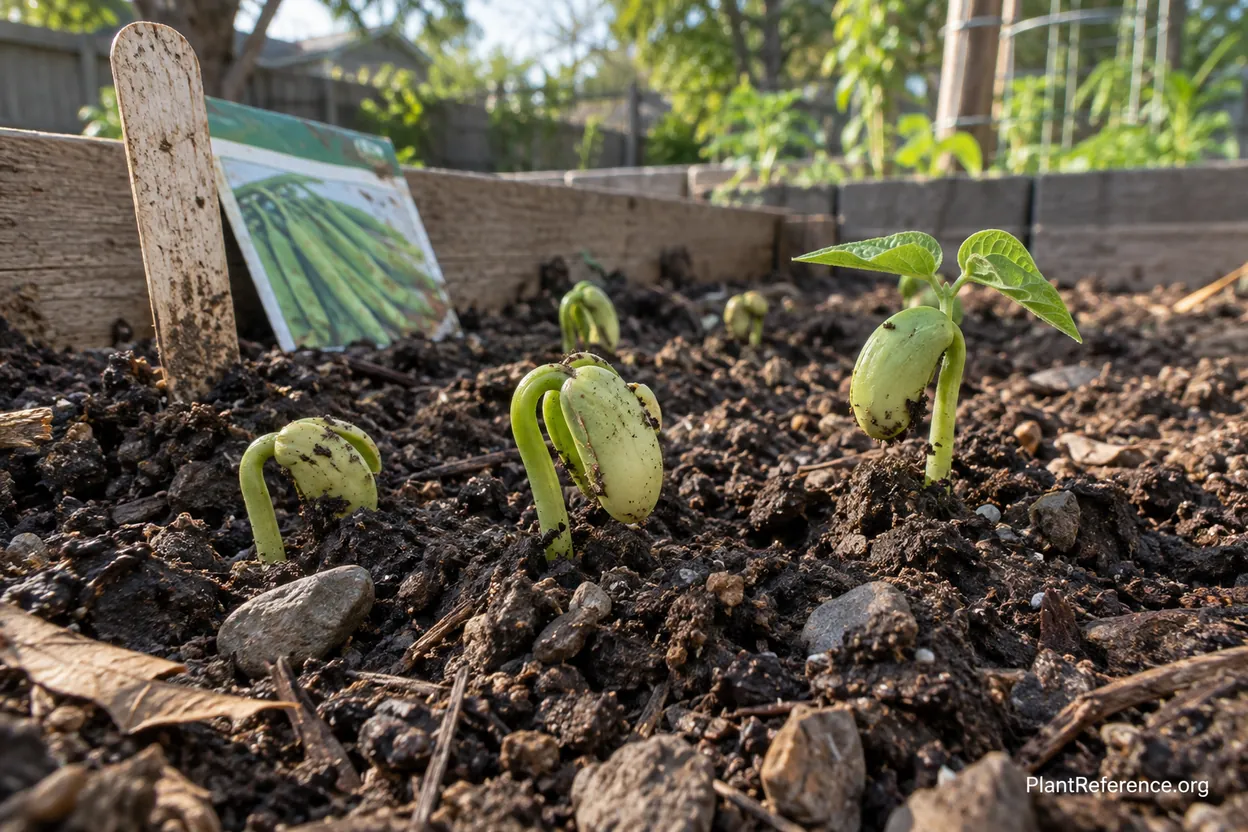
Direct sow 🌿Phaseolus vulgaris 'Provider' starting mid-April once soil temperature reaches 60°F. Memphis springs warm quickly compared to northern cities, and soil temperature usually crosses the threshold within 10 days of the last frost. 🌿Phaseolus vulgaris 'Provider' tolerates marginal soil temperature better than other varieties, making it ideal for this first planting.
Spring and Early Summer: Late April through June
Switch to 🌿Phaseolus vulgaris 'Blue Lake' and 🌿Phaseolus vulgaris 'Roma II' from late April through June, planting a new row every 2-3 weeks. Soil is thoroughly warm and germination is fast—5-7 days at 70°F+. These are your most productive plantings because they mature before the worst summer heat arrives. Best Raised Bed Vegetables for Beginners: Top 10 Easy-Growing Crops
Midsummer: July through Mid-August
Memphis July and August bring sustained temperatures above 95°F with crushing humidity. Bean blossoms drop when daytime highs exceed 90°F for extended periods. Use 🌿Phaseolus vulgaris 'Purple Queen' for July sowings—it sets pods at higher temperatures than green varieties. Expect reduced yields from midsummer plantings but keep the succession going so fresh plants are ready when temperatures moderate in September.
Fall Plantings: Mid-August through Late August
Your last sowing in late August gives 55-60 day varieties enough runway before the November 1 first frost. Fall beans often produce the best quality of the season—September and October temperatures settle into the 70s-80s°F range that Phaseolus vulgaris prefers, humidity drops, and disease pressure eases. Don't skip the fall planting.
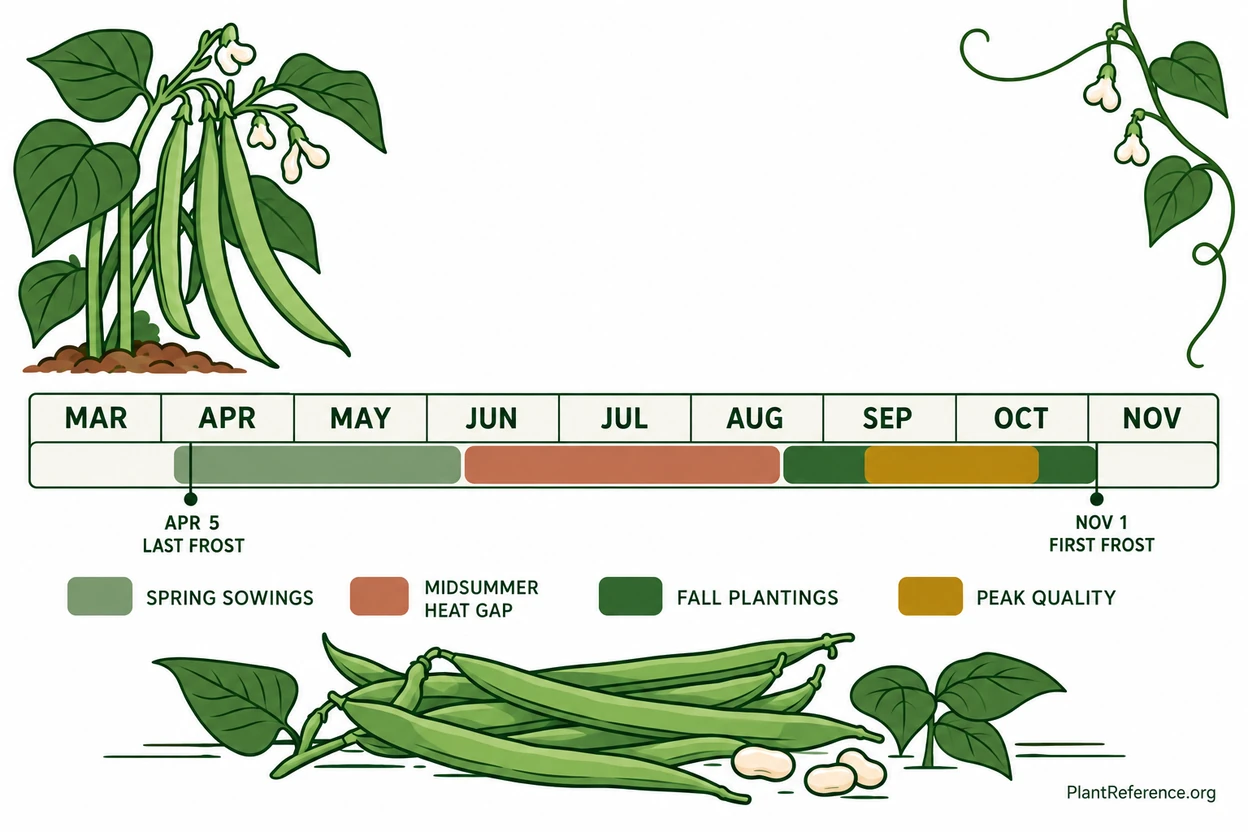
First sowing: Mid-April (Provider only, once soil reaches 60°F)
Spring succession: Late April through June (every 2-3 weeks, most productive)
Midsummer: July through mid-August (Purple Queen for heat; reduced yields)
Fall planting: Mid-August through late August (best quality of season)
Pole bean planting: Early May (single planting, continuous harvest July-September)
Season end: November 1 first frost terminates remaining plants
Complete Growing Guide for Memphis
Soil Preparation
Memphis alluvial clay is among the most fertile soil in the country—but it drains like a bathtub with the plug in. After a typical summer thunderstorm dumps 2-3 inches in an hour, unimproved clay holds standing water for days. Phaseolus vulgaris roots rot within 48 hours in waterlogged soil. Amend clay with 4-6 inches (10-15 cm) of compost worked into the top 10 inches (25 cm). Raised beds 10-12 inches deep solve the drainage problem entirely. Mix 60% quality topsoil with 30% compost and 10% coarse sand or perlite. Best Soil for Raised Beds: 6 Commercial Mixes Tested and Compared
Green beans prefer pH 6.0-6.8. Memphis clay often runs slightly acidic at 5.5-6.5, which is close to ideal. A soil test through the University of Tennessee Extension confirms your specific situation and identifies any phosphorus or potassium deficiencies.
Planting Method
Direct sow all varieties. Plant seeds 1 inch (2.5 cm) deep in rows 18-24 inches (45-60 cm) apart. Space compact bush varieties at 4 inches (10 cm) and vigorous types at 6 inches (15 cm). In Memphis heat, consider planting 10-15% more seed than you need—germination rates drop during midsummer sowings when soil temperatures exceed 85°F. Water immediately after planting to settle soil around seeds. How to Build a Raised Garden Bed: Step-by-Step Construction Guide
Watering
Green beans need 1-1.5 inches (2.5-4 cm) of water per week. Memphis averages 53 inches of annual rainfall, but summer distribution is erratic—heavy thunderstorms followed by dry spells. Drip irrigation delivers consistent moisture at soil level without wetting foliage, which is critical for disease prevention in Memphis humidity. Water early morning so any splash dries before evening. Avoid overhead watering entirely during July and August when humidity already keeps foliage damp. Raised Bed Irrigation Systems: Watering Solutions for Consistent Growth
Fertilizing
Phaseolus vulgaris fixes its own nitrogen through root nodule bacteria, so skip the nitrogen-heavy fertilizers that produce leaves at the expense of pods. Apply a low-nitrogen formula (5-10-10) at planting for phosphorus and potassium. Side-dress with compost when plants begin flowering. After harvest, cut plants at soil level—the nitrogen-rich root nodules decompose in place and improve soil for your next planting. Nutrient Deficiencies in Raised Beds: Visual Diagnosis and Treatment
Mulching
Apply 3-4 inches (8-10 cm) of straw or shredded hardwood mulch after seedlings reach 4-6 inches tall. Memphis heat radiates intensely from bare soil, pushing root zone temperatures above the comfort range for Phaseolus vulgaris. Thick mulch moderates soil temperature by 10-15°F on the hottest days. It also prevents disease spores from splashing onto lower foliage during thunderstorms and conserves moisture between erratic summer rains. Pull mulch 2 inches from stems. Raised Bed Weeds: Prevention Strategies and Control Methods
Trellising Pole Beans
🌿Phaseolus vulgaris 'Kentucky Wonder' needs sturdy support—vines loaded with pods catch enormous wind during Memphis thunderstorms. Use treated 4x4 posts set 2 feet deep at row ends with heavy twine or cattle panel between them. The investment in a strong trellis pays off because pole beans produce continuously for 6-8 weeks from a single planting, reducing the labor of succession sowing through the brutal midsummer months.
Troubleshooting Memphis-Specific Problems
Summer Heat and Blossom Drop
When Memphis daytime highs exceed 90°F for multiple consecutive days—common from late June through August—bean flowers drop without setting pods. You cannot prevent this entirely, but you can mitigate it. Plant 🌿Phaseolus vulgaris 'Purple Queen' for midsummer sowings. Mulch heavily to keep root zones cooler. Water consistently so heat stress isn't compounded by drought stress. Established 🌿Phaseolus vulgaris 'Kentucky Wonder' pole beans recover faster from heat stress than newly germinated bush bean seedlings. Raised Bed Too Hot in Summer: Protecting Plants from Heat Stress
Rust and Fungal Disease
Memphis humidity creates ideal conditions for bean rust (orange-brown pustules on leaf undersides), anthracnose (dark sunken spots on pods), and bacterial blight. All three spread through water splash on foliage. Use drip irrigation exclusively. Space rows wide for air circulation. Remove infected foliage immediately and bag for trash. Rotate bean bed locations annually—pathogens overwinter in crop debris. 🌿Phaseolus vulgaris 'Roma II' carries mosaic virus resistance and generally performs better in high-humidity conditions than other bush varieties.
Standing Water After Storms
Memphis thunderstorms dump heavy rain that pools in clay soil. Beans sitting in standing water for 24-48 hours develop root rot. Raise beds above grade by 6-8 inches. Add gravel at the base of beds for emergency drainage. After heavy storms, check beds immediately and remove any pooled water. If a bed floods repeatedly, it needs better drainage infrastructure before the next planting. Poor Drainage in Raised Beds: Causes and Fixes for Waterlogged Soil
Japanese Beetles and Bean Beetles
Memphis gardens face both Japanese beetles (metallic green) and Mexican bean beetles (copper with 16 black spots). Japanese beetles skeletonize upper foliage while Mexican bean beetle larvae work from the undersides. Hand-pick both in small gardens. For larger plantings, apply neem oil in early morning or evening. Row cover over newly planted rows prevents egg-laying but must be removed when plants flower for pollination. Raised Bed Pest Problems: Identification and Organic Control Methods
Harvest & Storage
Harvest bush beans when pods are 4-6 inches (10-15 cm) long and snap crisply when bent. In Memphis heat, pods go from perfect to tough and seedy faster than in cooler climates—check plants every 2 days during peak production. Leaving over-mature pods on the plant tells Phaseolus vulgaris to stop flowering. Pick with two hands to avoid uprooting shallow-rooted bush varieties.
🌿Phaseolus vulgaris 'Kentucky Wonder' pole beans need daily harvest during peak production. The continuous flowering habit means new pods develop constantly, and over-mature pods on the vine shut down new flower production quickly.
Fresh beans store 5-7 days refrigerated. For freezing, blanch 3 minutes in boiling water, plunge into ice water, drain, and freeze flat on baking sheets before bagging. Memphis gardens can produce enough beans across five or six succession plantings to fill a chest freezer for winter. 🌿Phaseolus vulgaris 'Blue Lake' holds texture and flavor through freezing better than any other variety. 🌿Phaseolus vulgaris 'Dragon Tongue' shells well for dried beans—let pods brown on the vine, then shell and store in jars for soup and chili through the winter.
Frequently Asked Questions
Reading about plants and recognising them are different skills. These three build the second.
- Daily PlantIdentify the day’s mystery plant from a close-up photograph.
- Keyed OutWork a dichotomous key, lead by lead, to name a hidden specimen.
- Name That PlantName a specimen from botanical clues dealt hardest first.
Free to play, no account needed
Tagged with
Marcus manages the grounds at a historic property in Memphis and runs a side business doing residential garden design. He grew up helping his grandfather maintain a large vegetable garden in the Mississippi Delta and carried that knowledge into formal training—he has a degree in landscape technology. Memphis sits in a sweet spot for growing: long warm seasons, decent rainfall, and mild enough winters that many marginally hardy plants survive. Marcus writes about Southern gardening traditions, ornamental garden design, and dealing with the humidity and heavy rainfall that define the Mid-South climate.