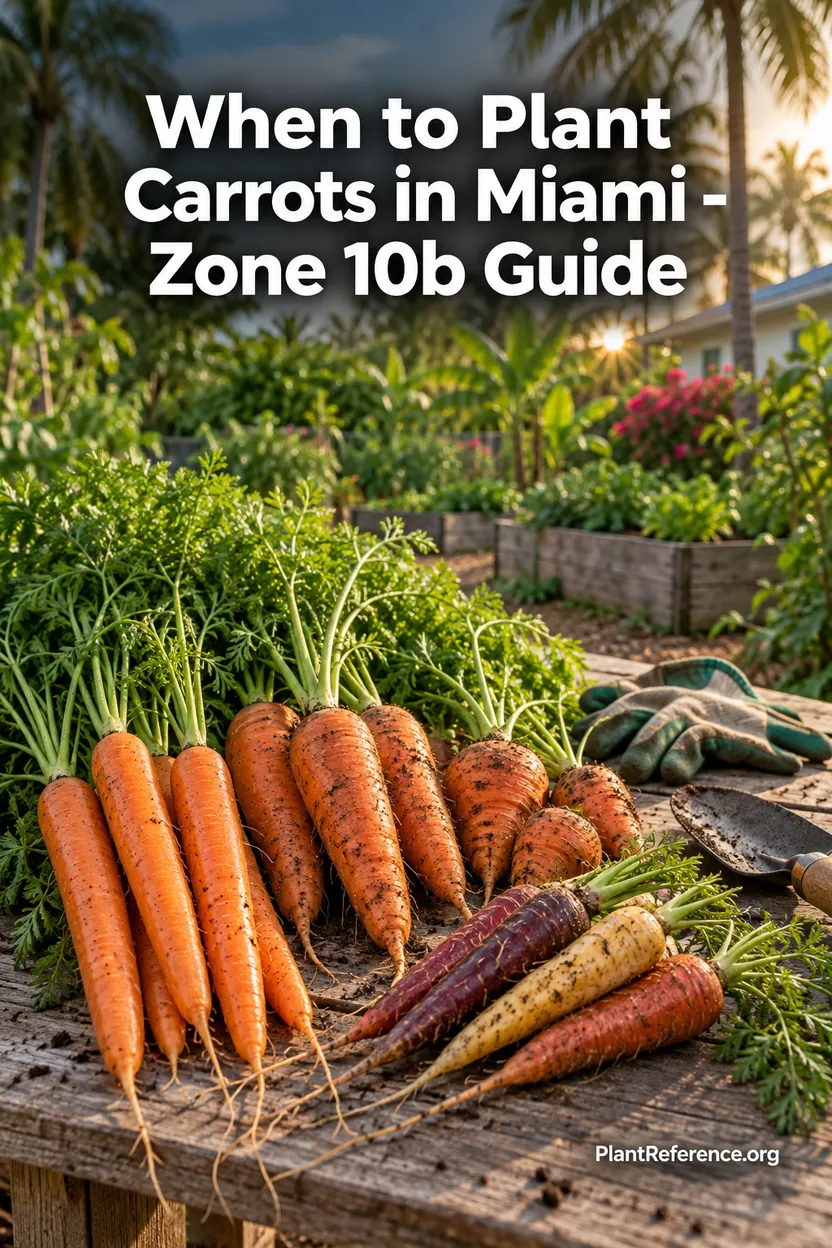
When to Plant Carrots in Miami: Zone 10b Dates + Best Varieties
Pets & Toxicity
Recorded toxicity for plants linked in this guide. An unknown status is not a safety assessment.
Daucus carota ssp. sativus 'Nantes' — Toxicity
Non-toxicView Daucus carota ssp. sativus 'Nantes' plant profileDaucus carota ssp. sativus 'Danvers 126' — Toxicity
Non-toxicView Daucus carota ssp. sativus 'Danvers 126' plant profileDaucus carota ssp. sativus 'Chantenay' — Toxicity
Non-toxicView Daucus carota ssp. sativus 'Chantenay' plant profileDaucus carota ssp. sativus 'Imperator' — Toxicity
Non-toxicView Daucus carota ssp. sativus 'Imperator' plant profileDaucus carota ssp. sativus 'Rainbow' — Toxicity
Non-toxicView Daucus carota ssp. sativus 'Rainbow' plant profile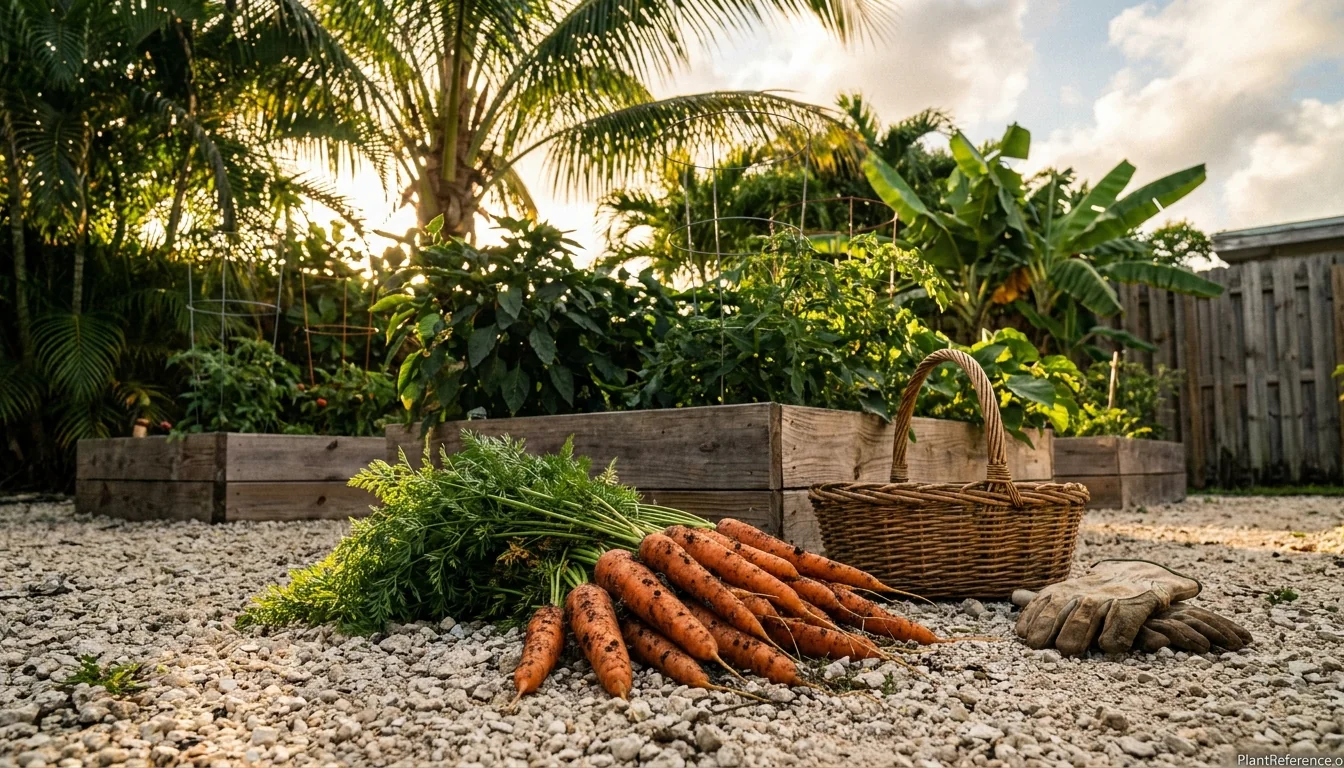
— Image © Plant Reference 2026
Miami isn't a natural carrot city. The combination of tropical heat, extreme humidity, and limestone bedrock makes this one of the most challenging climates for root crops in the continental United States. But we get a narrow window each winter when conditions align just enough to produce a decent carrot crop. You need to understand what you're working with: there is no real soil here—just porous oolitic limestone with a thin organic layer on top. You can't dig a planting hole without a pickaxe. Raised beds aren't a preference in Miami; they're the only option. Once you accept the limestone reality and work within the winter window, carrots become one of the more satisfying crops in the South Florida vegetable garden.
Best Carrot Varieties for Miami's Zone 10b Climate
Miami's growing medium—whether you call it soil or not—is derived from oolitic limestone. The native ground is alkaline (pH 7.5-8.5), shallow, and rocky. In-ground planting is impractical for root crops. Raised beds with imported soil are standard for vegetable gardening across South Florida. Even in raised beds, Miami's high humidity creates persistent fungal pressure that dry-climate gardeners never deal with.
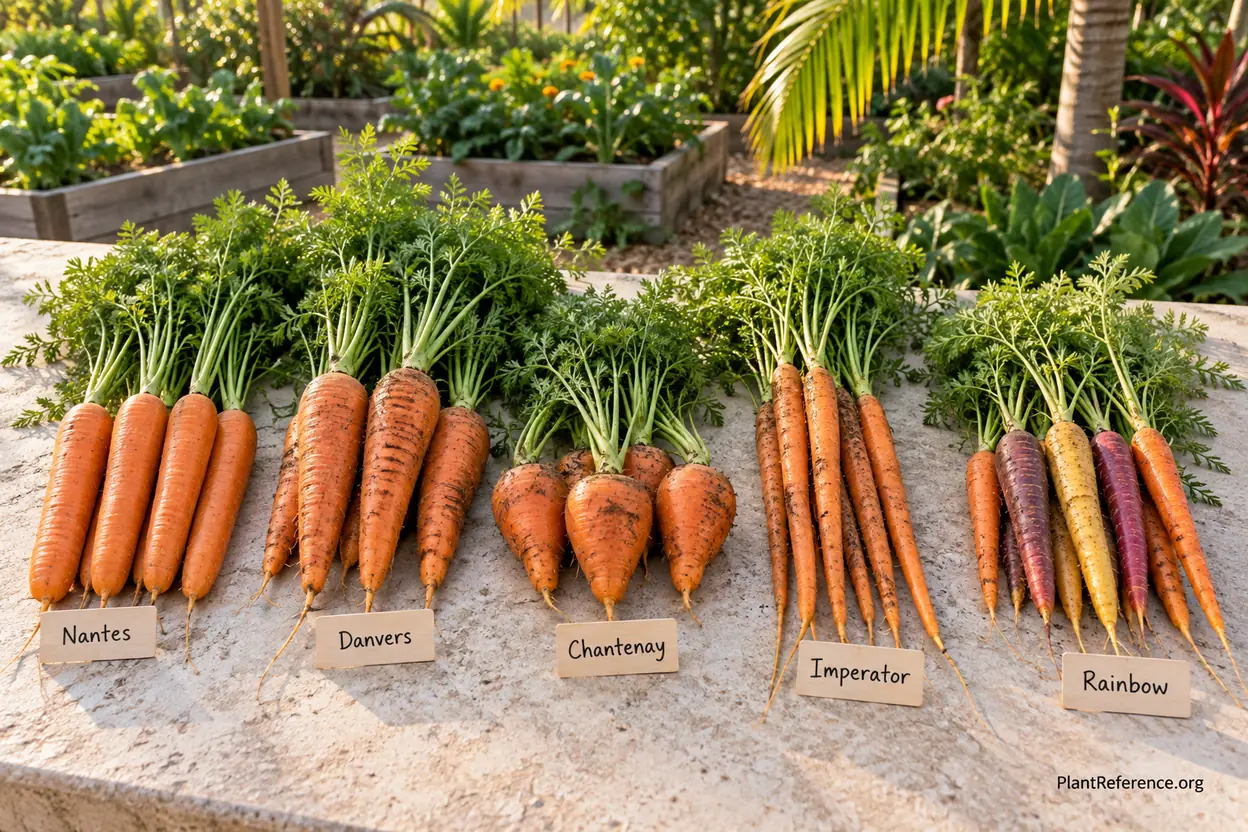
🌿Daucus carota ssp. sativus 'Nantes' (DAW-kus kuh-ROH-tuh) is the best variety for Miami's brief winter window. The cylindrical roots produce sweet, tender eating quality when grown during our coolest months (December-February). 🌿Daucus carota ssp. sativus 'Nantes' matures in 65-75 days, fitting the tight window. The cultivar 'Bolero' adds critical disease resistance—a significant advantage in Miami's humidity. Choose 'Bolero' over other Nantes selections here.
🌿Daucus carota ssp. sativus 'Danvers 126' offers the most forgiving growth habit for Miami's challenging conditions. The conical root tolerates variable soil structure, and the firm flesh resists the soft rot that Miami's moisture promotes. At 70-80 days, 🌿Daucus carota ssp. sativus 'Danvers 126' pushes the window but completes if you start early in November.
🌿Daucus carota ssp. sativus 'Chantenay' is the most practical variety for Miami. At 4-5 inches (10-13 cm) long, 🌿Daucus carota ssp. sativus 'Chantenay' works in shallow raised beds and containers where soil depth is limited. The shorter maturity cycle provides margin in Miami's compressed window.
🌿Daucus carota ssp. sativus 'Imperator' needs 12 inches (30 cm) of loose soil and 75-85 days—both challenging in Miami. Reserve 🌿Daucus carota ssp. sativus 'Imperator' for deep raised beds where you control soil depth and drainage completely. November sowings only.
🌿Daucus carota ssp. sativus 'Rainbow' adds color variety but offers no particular advantage in Miami's conditions. At 70-75 days, timing is tight. Start in November if you want to try it.
Variety | Days to Maturity | Best For | Notes for Miami |
|---|---|---|---|
65-75 days | Flavor and winter window | Top pick; choose 'Bolero' for disease resistance in tropical humidity | |
70-80 days | Resilience and storage | Best rot resistance; firm flesh handles Miami's moisture; start November | |
65-75 days | Shallow beds and containers | Most practical for Miami; short roots fit limited bed depth | |
75-85 days | Deep raised beds only | Tight timing; November sowing only; needs excellent drainage | |
70-75 days | Specialty growing | Color variety; no disease advantage; November start recommended |
Specific Planting Dates for Miami
Miami has no frost dates. The city is essentially frost-free year-round, with the rare exception of brief cold events that occur perhaps once or twice a decade. But frost isn't the issue—heat and humidity are. Carrots produce bitter terpenoid compounds when soil temperature exceeds 75°F (24°C), and Miami's soil stays above that threshold from April through October. The productive window is entirely determined by when conditions cool enough for palatable roots.
Primary Window: November through February
Begin sowing in early November as temperatures finally moderate. November soil temperatures in raised beds drop into the 70-75°F range—marginal but workable. December and January are Miami's best carrot months: daytime highs in the mid-70s°F, nighttime lows in the 60s°F, and the lowest humidity of the year. Continue succession sowings every 2-3 weeks through mid-February. February sowings need to mature before April heat returns.
The Tight Reality
Miami's carrot window is roughly 3.5 months—the shortest of any city in this entire series. There is no fall or spring extension. November is warm enough to be marginal, and by March, conditions are already deteriorating. Work within this window and accept that carrots are a winter-only luxury in South Florida.
Sowing window: November 1 - February 15
Best months: December and January (lowest humidity, coolest temperatures)
First harvest: January (from early November sowings)
Final harvest: Late April (from February sowings, before heat returns)
Heat and humidity shutdown: March through October
No frost dates: Miami is essentially frost-free year-round
Complete Growing Guide for Miami
Soil Preparation
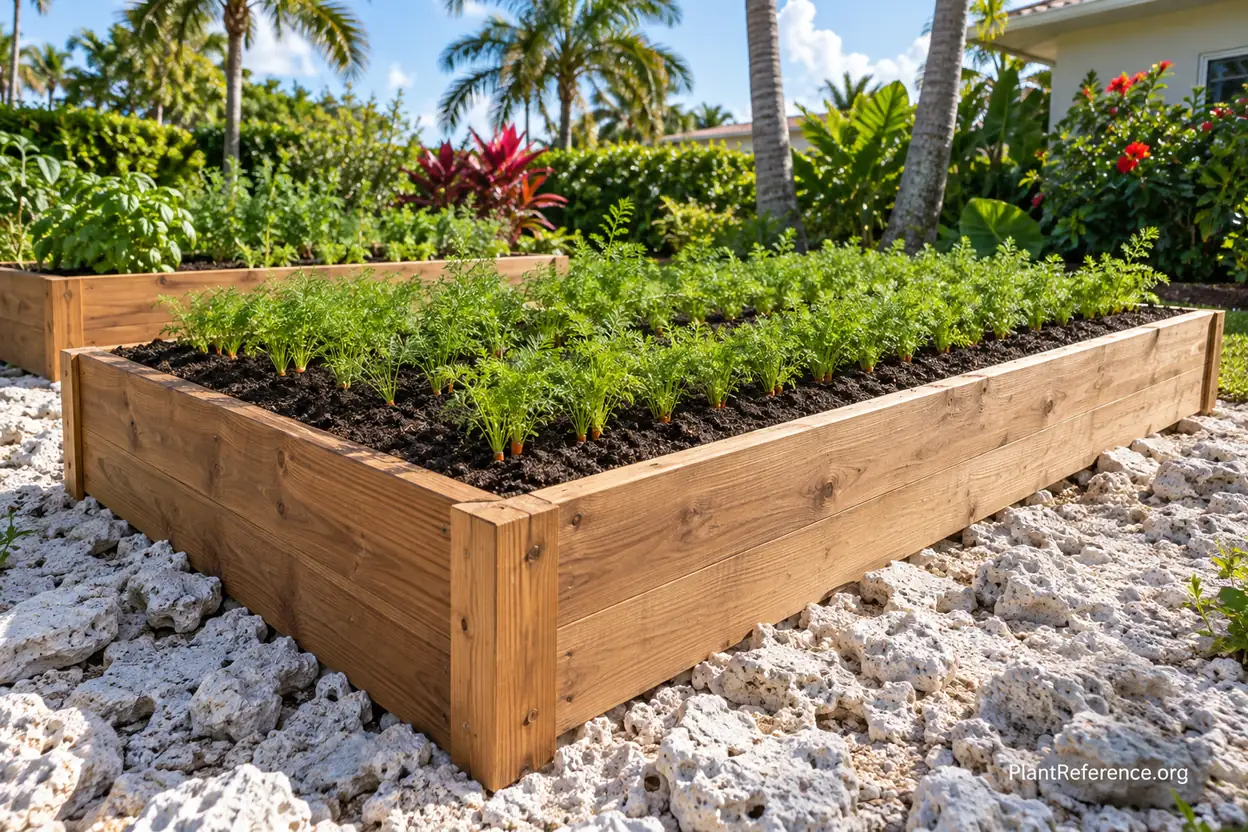
Miami doesn't have soil in the traditional sense. The bedrock is oolitic limestone—porous, alkaline, and impenetrable for root crops. You're gardening on top of rock. Raised beds with imported growing media are the standard approach for every serious vegetable gardener in South Florida.
Build raised beds at least 12 inches (30 cm) deep for carrots. Use a mix of 50% quality topsoil, 30% compost, and 20% coarse sand or perlite. Drainage is critical—Miami receives 60+ inches of rain annually, and waterlogged soil kills carrots faster than heat does. Drill extra drainage holes if using enclosed bed frames. Test pH before planting; limestone influence pushes even imported soil toward 7.5-8.0. Sulfur amendment lowers pH toward the 6.0-6.8 carrot ideal. Best Soil Mix for Raised Beds: Creating the Perfect Growing Medium
For containers—a practical option in Miami's many condos and apartments—use 12-inch deep pots with premium potting mix. Containers offer better drainage control than ground-level beds and avoid the limestone influence entirely. How to Build a Raised Garden Bed: Step-by-Step Construction Guide
Seeding
Sow seeds 1/4 inch (0.6 cm) deep in rows 12 inches (30 cm) apart. Cover with vermiculite or fine compost. Unlike desert cities, Miami's humidity helps maintain surface moisture during germination—but it also promotes damping off, a fungal disease that kills seedlings at the soil line. Avoid overwatering during germination. A light misting twice daily is sufficient. Best Soil for Raised Beds: 6 Commercial Mixes Tested and Compared
November sowings germinate in 10-14 days. December-January sowings germinate in 12-18 days in slightly cooler soil. Don't sow too thickly—crowded seedlings in humid tropical conditions are an invitation for fungal problems that spread rapidly.
Thinning
Thin in two stages: first to 1 inch (2.5 cm) at 2 inches (5 cm) tall, then to 2-3 inches (5-8 cm) at 4-5 inches (10-13 cm). Cut at the soil line with scissors. Adequate spacing is more important in Miami than in dry climates because air circulation between plants reduces fungal pressure. Raised Bed Vegetable Garden Layout: Planning for Maximum Production
Watering
Miami receives over 60 inches of annual rainfall—more water than any other city in this series. But distribution is uneven: the wet season (May-October) dumps most of that rain during months when you're not growing carrots. The dry season (November-April) coincides with your carrot window and delivers significantly less precipitation.
During the winter growing season, supplement natural rainfall with targeted irrigation when weekly totals fall below 1 inch. Drip irrigation provides consistent moisture without wetting foliage—important for reducing the fungal pressure that Miami's humidity creates even during the "dry" season. Overwatering is a bigger risk than underwatering in Miami. Ensure beds drain freely and never allow standing water. Raised Bed Irrigation Systems: Watering Solutions for Consistent Growth
Mulching
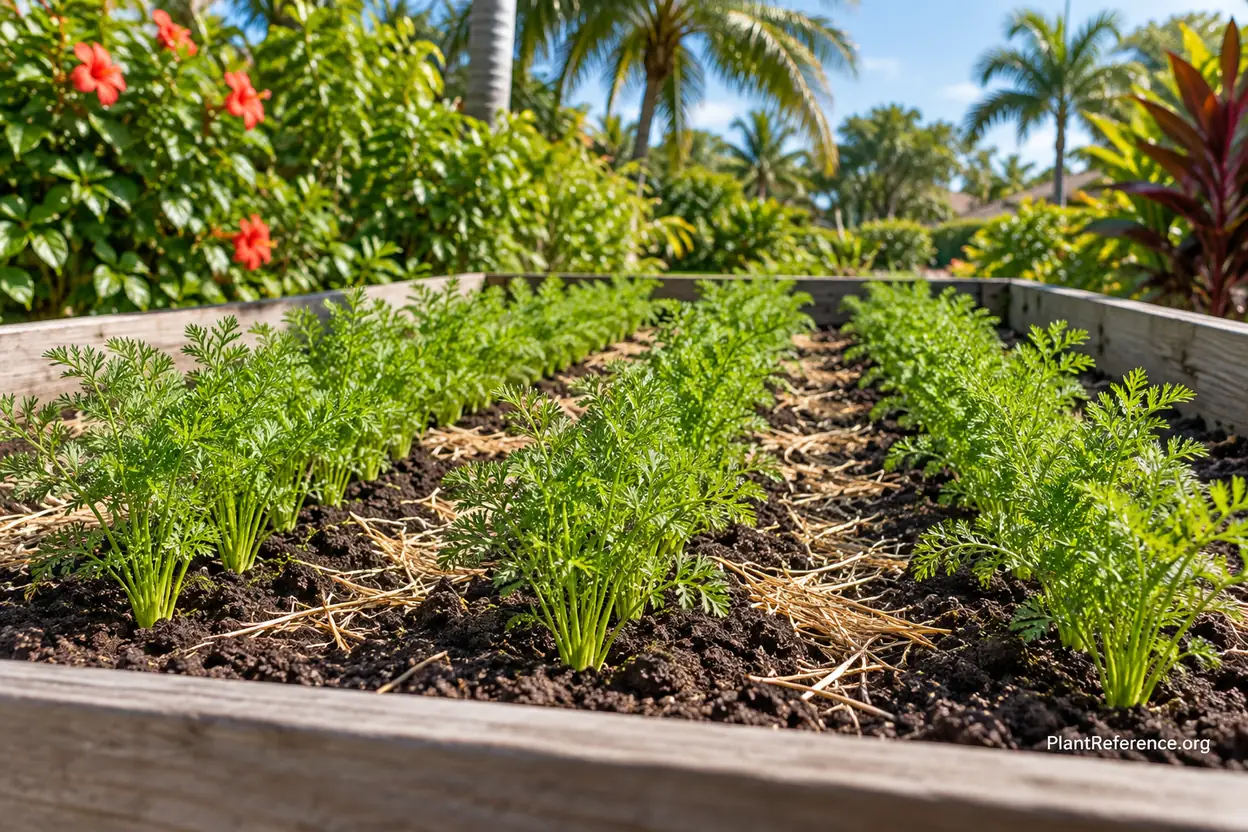
Apply 1-2 inches (2.5-5 cm) of straw after seedlings establish. Keep mulch thinner in Miami than in dry climates—thick mulch retains too much moisture in tropical conditions and promotes fungal issues. Mulch serves primarily as weed suppression and soil temperature moderation in South Florida. Pull mulch back from carrot crowns to allow air circulation at the soil line. Raised Bed Soil Settling and Compaction: Prevention and Solutions
Troubleshooting Miami-Specific Problems
Fungal Disease Pressure
Miami's humidity promotes leaf blight (Alternaria dauci), damping off, and soft rot on carrots year-round—including during the winter window. Choose disease-resistant cultivars like 'Bolero.' Space plants generously for air circulation. Water at the soil line with drip irrigation rather than overhead. Apply copper-based fungicide preventatively every 10-14 days during periods of high humidity or rain. Remove any yellowing or spotted foliage immediately. When to Plant Kale in Miami: Complete Guide + Best Varieties for Zone 10b
Nematode Damage
Root-knot nematodes (Meloidogyne spp.) are endemic in South Florida soil. They cause galls, forking, and stunted roots. Fresh imported soil in raised beds reduces nematode risk, but they can colonize beds over time. Solarize bed soil between seasons by covering with clear plastic during summer's intense heat. Rotate crops within beds—don't plant carrots in the same bed every winter. When to Plant Green Beans in Miami: Complete Guide + Best Varieties for Zone 10b
Limestone pH Influence
Even in raised beds with imported soil, Miami's underlying limestone gradually raises pH through contact and irrigation water. Miami-Dade water runs alkaline (pH 7.5-8.5). Test bed pH every season and amend with elemental sulfur as needed. Chelated iron (EDDHA form) corrects yellowing foliage from iron lockout while sulfur works to lower overall pH. When to Plant Tomatoes in Miami: Complete Guide + Best Varieties for Zone 10b
Compressed Growing Window
At 3.5 months, Miami's carrot window offers no margin for replanting failures. If November sowings don't germinate, you've lost a significant portion of your season. Maximize success by pre-moistening beds before sowing, using fresh seed, and protecting seedbeds with light shade cloth during the first week to moderate residual October heat. Succession plant every 2-3 weeks through February to spread risk. When to Plant Onions in Miami: Complete Guide + Best Varieties for Zone 10b
Harvest & Storage
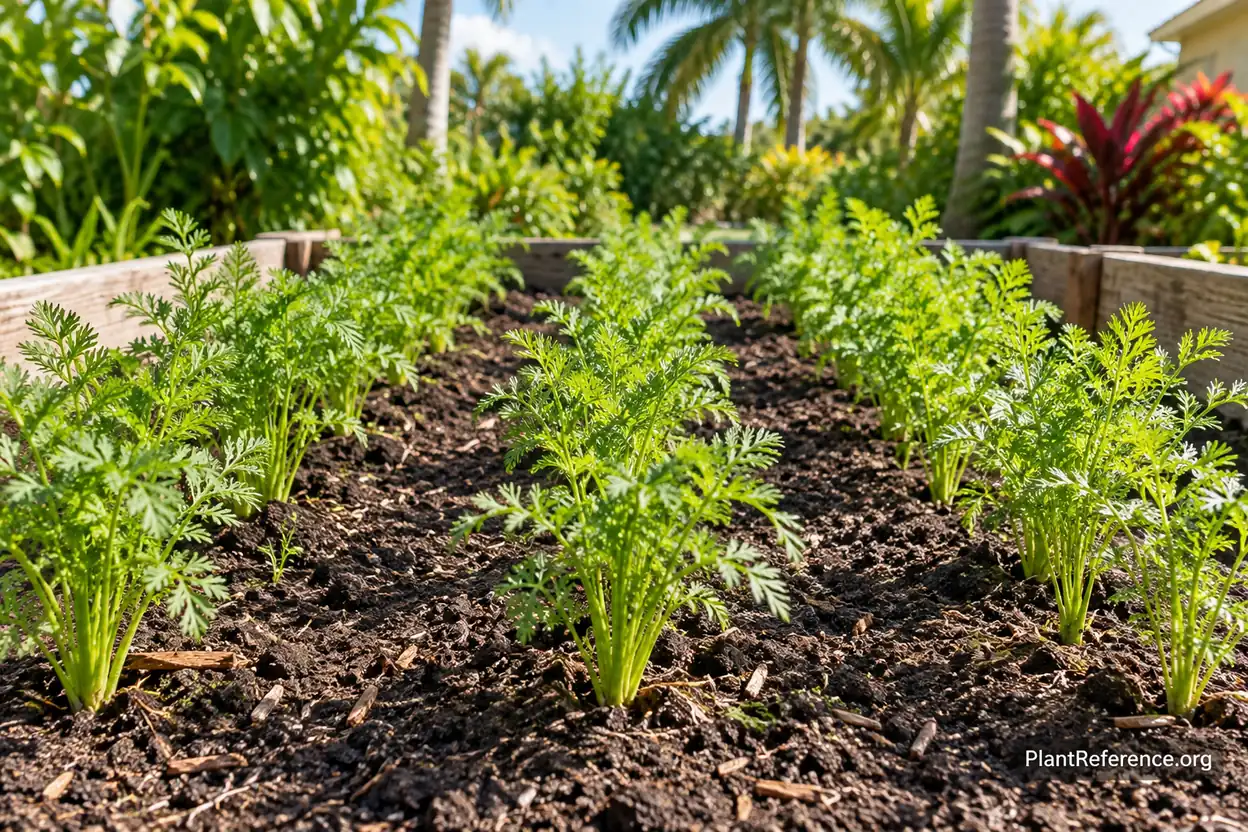
Carrots reach harvest size when shoulders measure 3/4-1 inch (2-2.5 cm) in diameter, typically 65-85 days after sowing. With November sowings, first harvests arrive in January. Continue harvesting through late April from succession plantings. Don't leave mature carrots in Miami's warm, moist soil longer than necessary—they develop soft rot faster than in drier climates. Poor Drainage in Raised Beds: Causes and Fixes for Waterlogged Soil
Harvest as soon as roots reach usable size. Miami's conditions don't offer the natural cold storage that cooler climates provide—soil stays warm enough to promote bacterial activity year-round. Pull carrots, remove foliage, and refrigerate immediately.
For storage, remove foliage and store unwashed carrots in perforated plastic bags at 32-38°F (0-3°C). 🌿Daucus carota ssp. sativus 'Danvers 126' stores four to five months under proper refrigeration. Storage extends your winter harvest into the summer months when fresh production is impossible. Consider dedicating a refrigerator shelf or drawer to carrot storage starting in January—by April, you'll be glad you planned ahead for the eight months of growing downtime that South Florida's tropical climate imposes. Raised Bed Weeds: Prevention Strategies and Control Methods
Frequently Asked Questions
Reading about plants and recognising them are different skills. These three build the second.
- Daily PlantIdentify the day’s mystery plant from a close-up photograph.
- Keyed OutWork a dichotomous key, lead by lead, to name a hidden specimen.
- Name That PlantName a specimen from botanical clues dealt hardest first.
Free to play, no account needed
Tagged with
Maria is a tropical plant grower in Miami who maintains a half-acre property packed with palms, fruit trees, and tropical ornamentals. She grew up in Puerto Rico surrounded by tropical plants and moved to South Florida for college, earning a biology degree. Maria worked at a major tropical botanic garden for several years before transitioning to freelance writing and consulting. She specializes in tropical fruit growing, hurricane-resilient landscaping, and the particular challenges of gardening in South Florida—salt air, limestone soil, intense rain, and the threat of tropical storms. Maria's practical about the realities of tropical gardening: it's not paradise if you don't understand what you're dealing with.