When to Plant Carrots in Austin: Zone 8b Dates + Best Varieties
Pets & Toxicity
Recorded toxicity for plants linked in this guide. An unknown status is not a safety assessment.
Daucus carota ssp. sativus 'Chantenay' — Toxicity
Non-toxicView Daucus carota ssp. sativus 'Chantenay' plant profileDaucus carota ssp. sativus 'Nantes' — Toxicity
Non-toxicView Daucus carota ssp. sativus 'Nantes' plant profileDaucus carota ssp. sativus 'Danvers 126' — Toxicity
Non-toxicView Daucus carota ssp. sativus 'Danvers 126' plant profileDaucus carota ssp. sativus 'Imperator' — Toxicity
Non-toxicView Daucus carota ssp. sativus 'Imperator' plant profileDaucus carota ssp. sativus 'Rainbow' — Toxicity
Non-toxicView Daucus carota ssp. sativus 'Rainbow' plant profile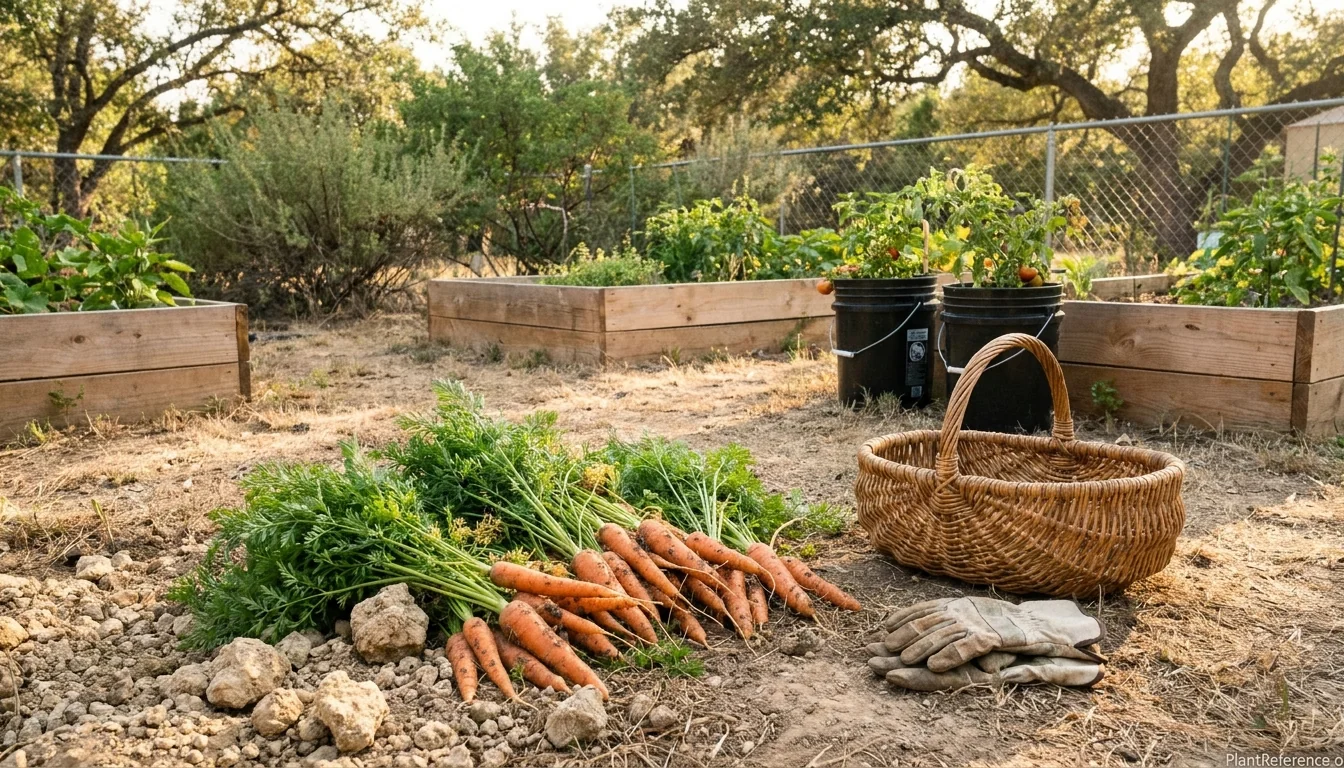
— Image © Plant Reference 2026
I killed a lot of plants before I figured out Austin gardening. The biggest lesson? This isn't the same as growing up in San Antonio's river bottomland. Austin sits on the Edwards Plateau—limestone bedrock with a thin layer of alkaline soil on top. My first attempt at carrots in the backyard produced twisted, stunted roots that hit rock at four inches. Once I switched to containers and raised beds, everything changed. Carrots actually grow well here during the cooler months. You just have to stop fighting the limestone and work around it. The good news: you don't need expensive setups. A five-gallon bucket with drainage holes grows great carrots for about three dollars.
Best Carrot Varieties for Austin's Zone 8b Climate
Austin's native soil is thin, rocky, and alkaline. The Edwards Plateau limestone sits close to the surface across most of the city—sometimes at 3 inches, sometimes at 12. Where you live in Austin determines how much soil you have to work with. East Austin tends to have deeper Blackland clay. West Austin and the Hill Country are shallow limestone. Either way, the pH runs 7.5-8.5, well above the 6.0-6.8 carrot ideal.
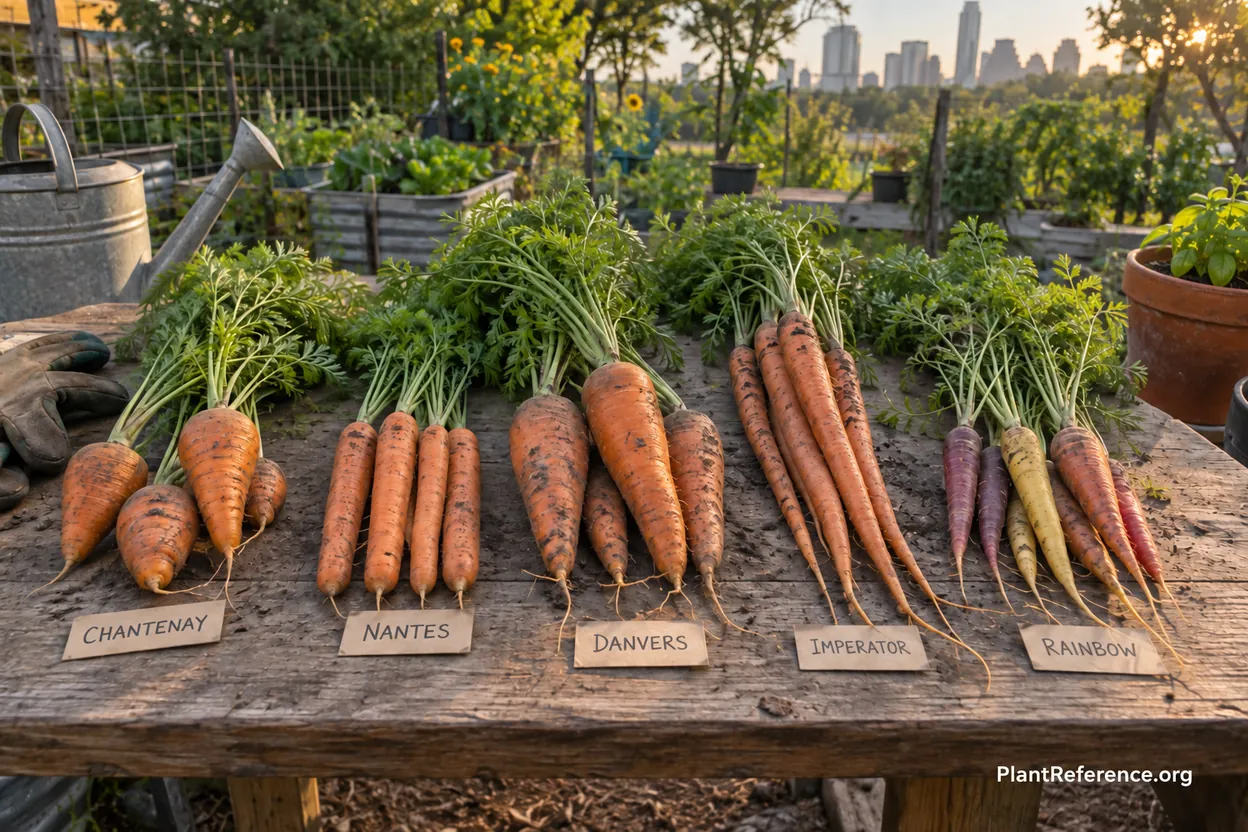
🌿Daucus carota ssp. sativus 'Chantenay' (DAW-kus kuh-ROH-tuh) is the most practical variety for Austin. At 4-5 inches (10-13 cm) long, 🌿Daucus carota ssp. sativus 'Chantenay' stays above the limestone in shallow ground and works perfectly in containers. The broad shoulders and stout shape handle rocky conditions without the forking that longer varieties produce. This is the variety I recommend to every neighbor who asks.
🌿Daucus carota ssp. sativus 'Nantes' produces the sweetest roots in Austin's mild fall and winter temperatures. The cylindrical shape delivers outstanding eating quality in raised beds and deep containers where you control soil depth. 🌿Daucus carota ssp. sativus 'Nantes' needs loose, amended soil—not Austin's native ground. The cultivar 'Bolero' adds disease resistance.
🌿Daucus carota ssp. sativus 'Danvers 126' is the reliable all-around option. The conical root pushes through heavier soil better than cylindrical types. At 70-80 days to maturity, 🌿Daucus carota ssp. sativus 'Danvers 126' fits both windows. Good storage quality—the firm flesh keeps for months in the refrigerator.
🌿Daucus carota ssp. sativus 'Imperator' needs 12 inches (30 cm) of loose soil—only achievable in deep raised beds or tall containers in Austin. Don't attempt 🌿Daucus carota ssp. sativus 'Imperator' in native ground. The cultivar 'Sugarsnax 54' adds high sugar content to the long form.
🌿Daucus carota ssp. sativus 'Rainbow' produces multiple colors from one packet. At 70-75 days, it fits both windows in containers and amended beds. A fun variety that gets kids interested in the garden.
Variety | Days to Maturity | Best For | Notes for Austin |
|---|---|---|---|
65-75 days | Containers and shallow soil | Top pick for Austin; stays above limestone; works in 5-gallon buckets | |
65-75 days | Raised beds and flavor | Sweetest roots; needs loose soil; great in deep containers | |
70-80 days | All-around reliability | Conical root handles variable soil; good storage; fits both windows | |
75-85 days | Deep raised beds only | Needs 12+ inches loose soil; not for native Austin ground | |
70-75 days | Family gardens and kids | Multiple colors; fits both windows; gets kids excited about vegetables |
Specific Planting Dates for Austin
Austin averages a March 1 last frost and November 30 first frost, giving you 274 frost-free days. That's a long season, but summer heat creates a significant gap. Soil temperatures exceed 85°F from mid-June through mid-September in most Austin yards—limestone absorbs and radiates heat, making ground temperatures even higher than air readings suggest.
Spring Planting
Start sowing in mid-February, about two weeks before the March 1 last frost. Carrots tolerate frost and light freezes, so early planting is safe. Continue succession sowings every two weeks through mid-March. Spring carrots need to reach harvestable size before sustained soil temperatures exceed 75°F—typically by late May or early June. Austin springs are unpredictable: one year you get six weeks of mild weather, the next year it jumps from winter to summer in two weeks.
Fall Planting
Fall is Austin's premium carrot season. Begin sowing in early September while soil is still warm for fast germination (5-7 days). Continue through mid-October. The timing puts root development during October and November's cooling temperatures—ideal for sugar concentration. Austin's November 30 first frost is late enough that fall carrots have a generous development window.
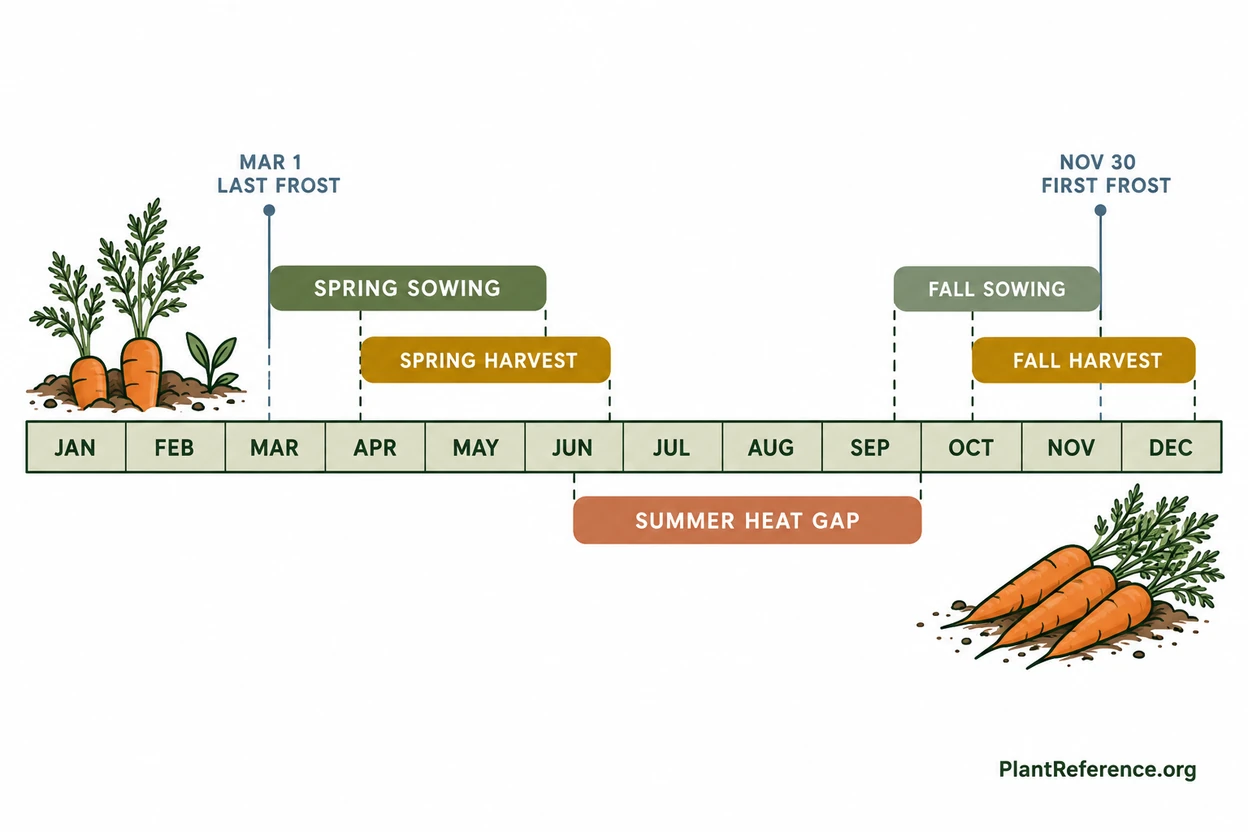
Spring sowing window: February 15 - March 15
Spring harvest: May through early June (before sustained heat)
Summer heat gap: Mid-June through mid-September
Fall sowing window: September 1 - October 15
Fall harvest: November through January (with mulch protection)
Best flavor: Fall harvest after cooling triggers sugar conversion in roots
Complete Growing Guide for Austin
Soil Preparation
Austin's Edwards Plateau geology means limestone bedrock sits close to the surface across most of the city. Native soil is thin, rocky, and alkaline (pH 7.5-8.5). Trying to grow carrots directly in this ground is frustrating—roots hit rock, fork around limestone fragments, and stunt in the shallow alkaline material. Containers and raised beds are the practical solution.
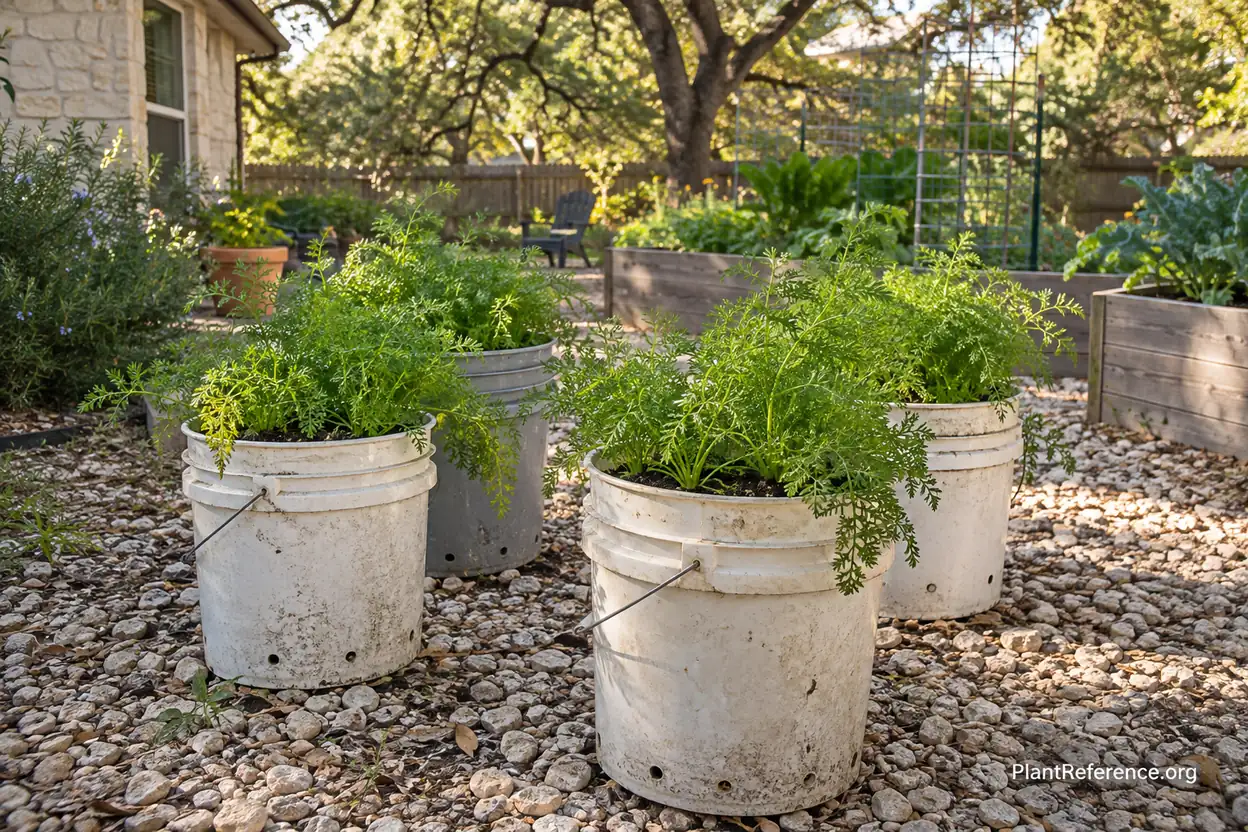
For containers—my recommended approach for most Austin gardeners—use five-gallon buckets with four to six 1/2-inch drainage holes drilled in the bottom. Fill with 70% quality potting mix and 30% compost. Total cost: about three dollars per bucket if you source used food-grade buckets. Each bucket grows 8-10 carrots. Best Soil Mix for Raised Beds: Creating the Perfect Growing Medium
For raised beds, build to at least 12 inches (30 cm) deep with 60% topsoil, 30% compost, and 10% coarse sand or perlite. Test pH—even imported soil in Austin tends to drift alkaline from limestone contact and alkaline city water. Sulfur amendment lowers pH toward the 6.0-6.8 carrot range. How to Build a Raised Garden Bed: Step-by-Step Construction Guide
Seeding
Sow seeds 1/4 inch (0.6 cm) deep in rows or scatter-sow in containers. Cover with vermiculite or fine compost—never native Austin soil, which crusts hard when dry. February sowings germinate in 14-21 days in cool soil. September sowings germinate in 5-7 days in warm ground. Water gently twice daily during germination. Austin's low winter humidity dries surface soil faster than you'd expect. Best Soil for Raised Beds: 6 Commercial Mixes Tested and Compared
Thinning
Thin in two stages: first to 1 inch (2.5 cm) at 2 inches (5 cm) tall, then to 2-3 inches (5-8 cm) at 4-5 inches (10-13 cm). In containers, thin to 2-inch spacing for maximum production per bucket. Cut at the soil line with scissors—pulling disturbs neighboring roots in the confined container space. Raised Bed Vegetable Garden Layout: Planning for Maximum Production
Watering
Austin receives about 34 inches of annual rainfall, but distribution is erratic—Central Texas is known for drought punctuated by intense storms. Carrots need 1-1.5 inches per week. Containers dry faster than in-ground beds, especially in Austin's heat, so check daily during warm periods. Drip irrigation on a timer works for raised beds. For containers, hand watering with a gentle spray gives you direct feedback on moisture levels.
Avoid overhead watering during late afternoon—Austin's occasional humid spells can promote fungal issues if foliage stays wet overnight. Water in the morning. Flash flooding from intense Central Texas thunderstorms can waterlog containers without drainage holes—make sure every container drains freely. Raised Bed Irrigation Systems: Watering Solutions for Consistent Growth
Mulching
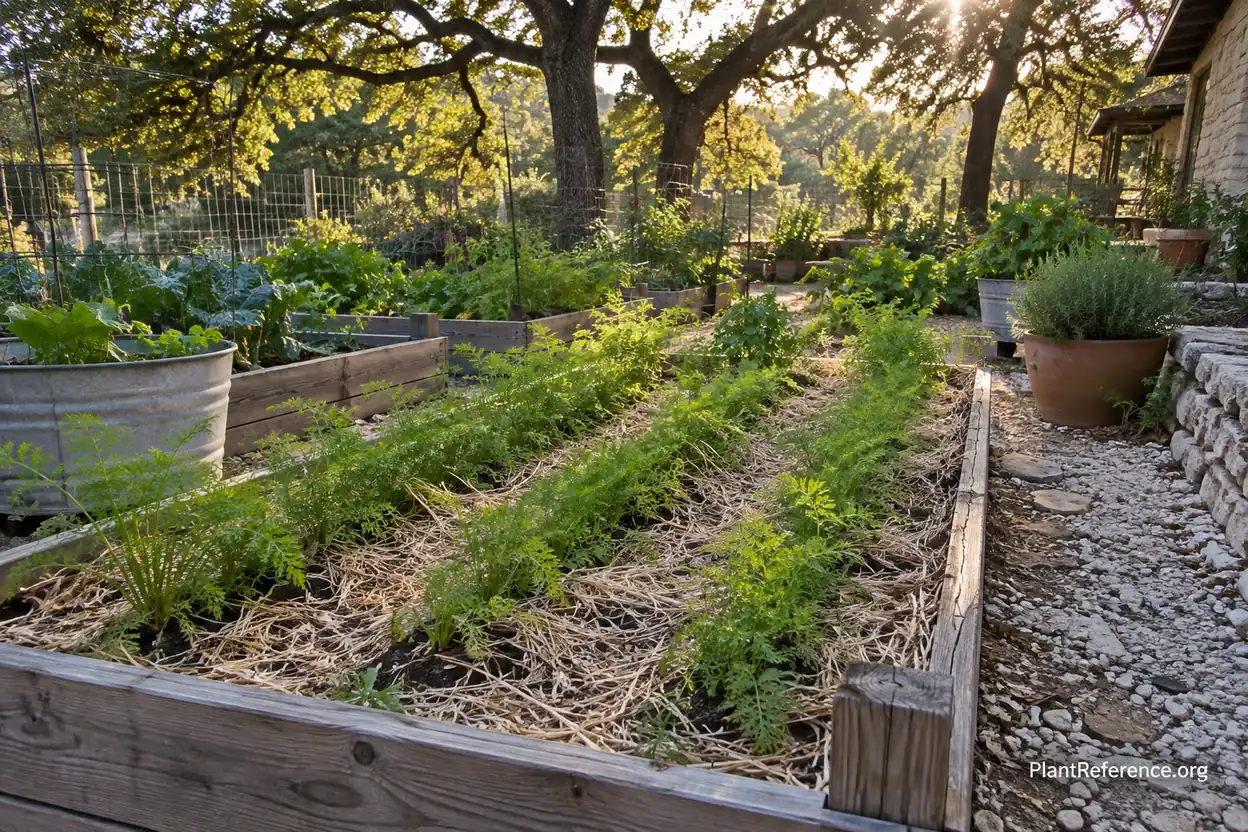
Apply 2-3 inches (5-8 cm) of straw or shredded leaves after seedlings establish. In containers, 1-2 inches is sufficient. Mulch prevents the rapid soil surface drying that Austin's sun and wind create, and it moderates the temperature swings that stress roots. In fall, 3-4 inches of mulch after the November 30 frost extends harvest into December and January. Raised Bed Soil Settling and Compaction: Prevention and Solutions
Troubleshooting Austin-Specific Problems
Summer Heat Gap
Austin's summer gap runs from mid-June through mid-September—roughly three months when soil temperatures exceed 85°F. Limestone bedrock absorbs and radiates heat, pushing ground temperatures higher than air readings indicate. Shade cloth over containers can moderate soil temperature but won't make summer growing practical. Harvest spring carrots by early June and restart in September. When to Plant Tomatoes in Austin: Complete Guide + Best Varieties for Zone 8b
Limestone Bedrock and Shallow Soil
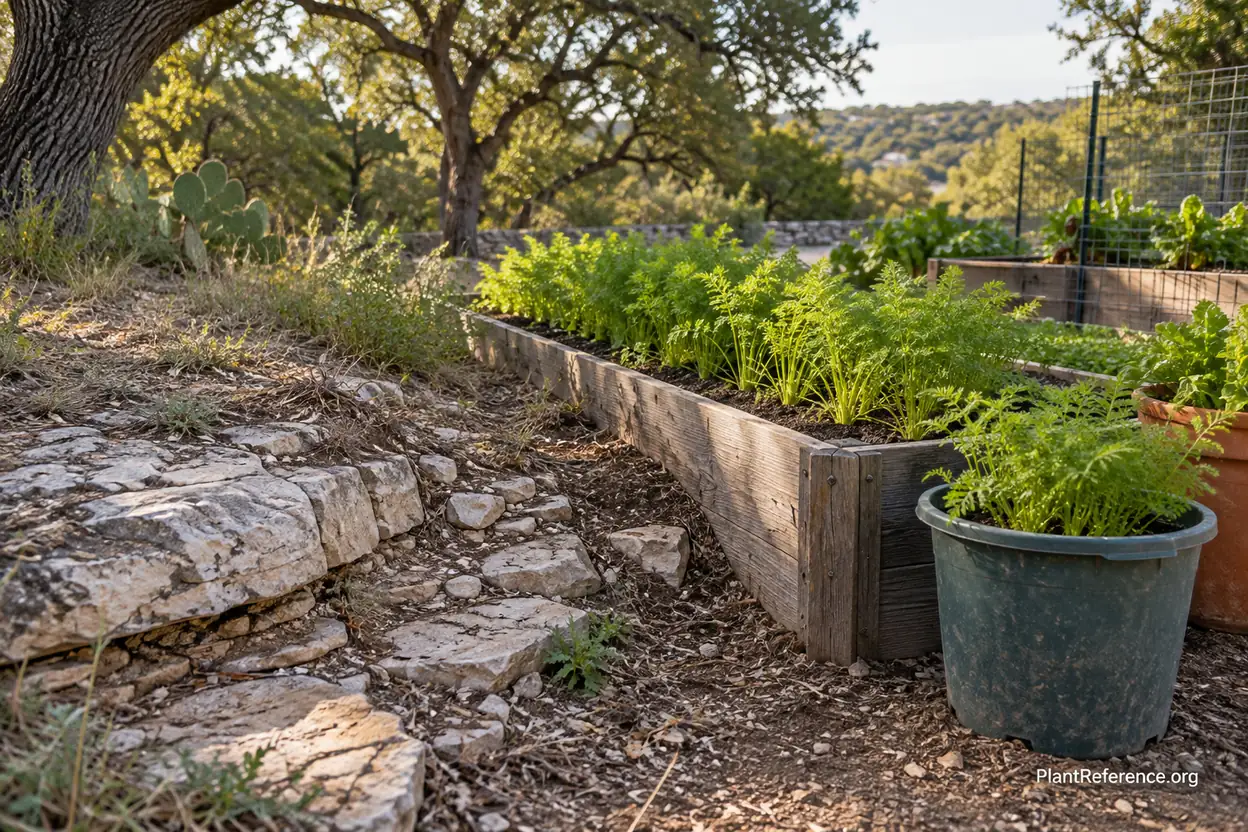
Austin's Edwards Plateau limestone sits 3-12 inches below the surface across most of the city. Carrots hit this layer and fork, stunt, or stop growing entirely. There's no practical way to break through limestone for a vegetable garden. Containers and raised beds above the bedrock are the standard approach. East Austin's deeper Blackland clay is an exception—soil test before investing in raised bed infrastructure. When to Plant Kale in Austin: Complete Guide + Best Varieties for Zone 8b
Alkaline Soil and Water
Austin's native soil and city water both run alkaline (pH 7.5-8.5). Even in containers with potting mix, repeated watering with alkaline water raises pH over time. Test container and bed pH every season. Sulfur amendment lowers pH, but the correction is temporary because every irrigation cycle pushes pH back up. Chelated iron (EDDHA form) provides quick relief for yellowing foliage. When to Plant Onions in Austin: Complete Guide + Best Varieties for Zone 8b
Erratic Spring Weather
Austin's spring is notoriously unpredictable. Late February can feel like spring one week and deliver a hard freeze the next (remember February 2021). Carrots tolerate frost, but extreme cold events can damage young seedlings. Containers offer an advantage here—you can move them to protected spots during cold snaps. For raised beds, floating row cover provides 4-6°F of frost protection during unexpected freezes. Poor Drainage in Raised Beds: Causes and Fixes for Waterlogged Soil
Harvest & Storage
Carrots reach harvest size when shoulders measure 3/4-1 inch (2-2.5 cm) in diameter, typically 65-85 days after sowing. Spring carrots harvest May through early June. Fall carrots harvest November through January with mulch protection. In containers, tip the bucket to check root size without disturbing neighbors—a major advantage of container growing. Raised Bed Weeds: Prevention Strategies and Control Methods
Fall carrots are Austin's premium production. Roots developing through October and November's cooling temperatures accumulate sugar as starch converts. The November 30 first frost enhances sweetness. Apply 3-4 inches of straw mulch after frost and continue harvesting into January. Austin winters occasionally deliver hard freezes, so harvest before extended periods below 20°F (-7°C).
For storage, remove foliage immediately. Store unwashed carrots in perforated plastic bags at 32-38°F (0-3°C). 🌿Daucus carota ssp. sativus 'Danvers 126' stores four to five months. Container-grown carrots can be left in their buckets in a shaded, cool spot for short-term storage—the potting mix insulates roots better than native ground. This is one of the real advantages of container growing in Austin: your storage solution is built into your growing system, and you can move buckets to the coolest spot on your property. Raised Bed Soil Settling and Compaction: Prevention and Solutions
Frequently Asked Questions
Reading about plants and recognising them are different skills. These three build the second.
- Daily PlantIdentify the day’s mystery plant from a close-up photograph.
- Keyed OutWork a dichotomous key, lead by lead, to name a hidden specimen.
- Name That PlantName a specimen from botanical clues dealt hardest first.
Free to play, no account needed
Tagged with
Carlos grew up helping his abuelos tend their backyard garden in San Antonio, Texas, but didn't get serious about growing his own food until he bought his first house in Austin. He works as an HVAC technician during the day and gardens in the early mornings and evenings. Carlos specializes in heat-tolerant vegetables and container growing—essential skills for Texas summers and his south-facing driveway that gets intense sun. He's learned through plenty of failures (multiple dead fig trees, countless bolted lettuce crops) and now helps neighbors troubleshoot their own gardens. His YouTube channel documenting his container tomato experiments has a small but dedicated following. Carlos is passionate about growing food on a budget, often sourcing free containers and building his own compost.