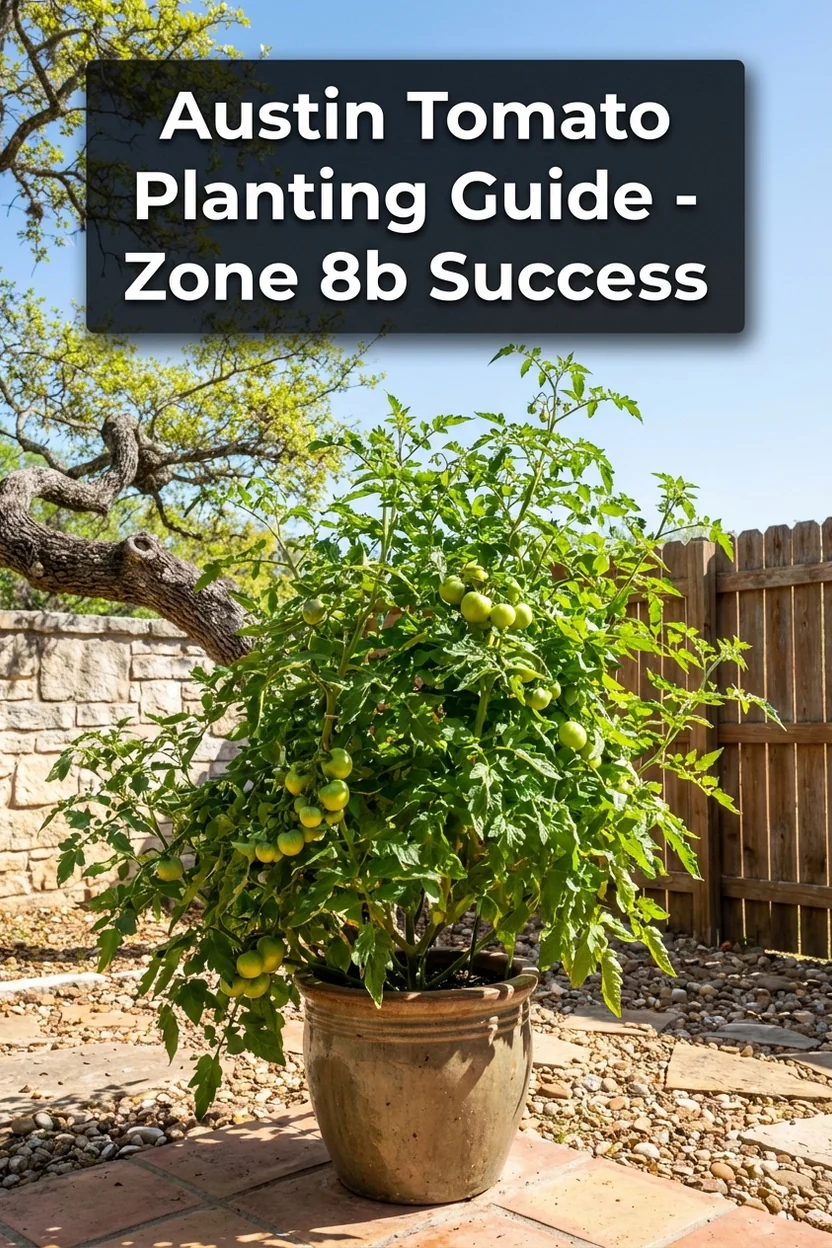
When to Plant Tomatoes in Austin: Complete Guide + Best Varieties for Zone 8b
Pets & Toxicity
Recorded toxicity for plants linked in this guide. An unknown status is not a safety assessment.
Toxic to pets: early girl tomato, Surefire red tomato, phoenix tomato and 5 moreDetailsHide
Solanum lycopersicum 'Early Girl' — Toxicity Warning
Toxic to petsView Solanum lycopersicum 'Early Girl' plant profileSolanum lycopersicum 'Surefire Red' — Toxicity Warning
Toxic to petsView Solanum lycopersicum 'Surefire Red' plant profileSolanum lycopersicum 'Phoenix' — Toxicity Warning
Toxic to petsView Solanum lycopersicum 'Phoenix' plant profileSolanum lycopersicum 'San Marzano' — Toxicity Warning
Toxic to petsView Solanum lycopersicum 'San Marzano' plant profileSolanum lycopersicum 'Brandywine' — Toxicity Warning
Toxic to petsView Solanum lycopersicum 'Brandywine' plant profileSolanum lycopersicum 'Celebrity' — Toxicity Warning
Toxic to petsView Solanum lycopersicum 'Celebrity' plant profileSolanum lycopersicum 'Heatmaster' — Toxicity Warning
Toxic to petsView Solanum lycopersicum 'Heatmaster' plant profileSolanum lycopersicum 'Stupice' — Toxicity Warning
Toxic to petsView Solanum lycopersicum 'Stupice' plant profile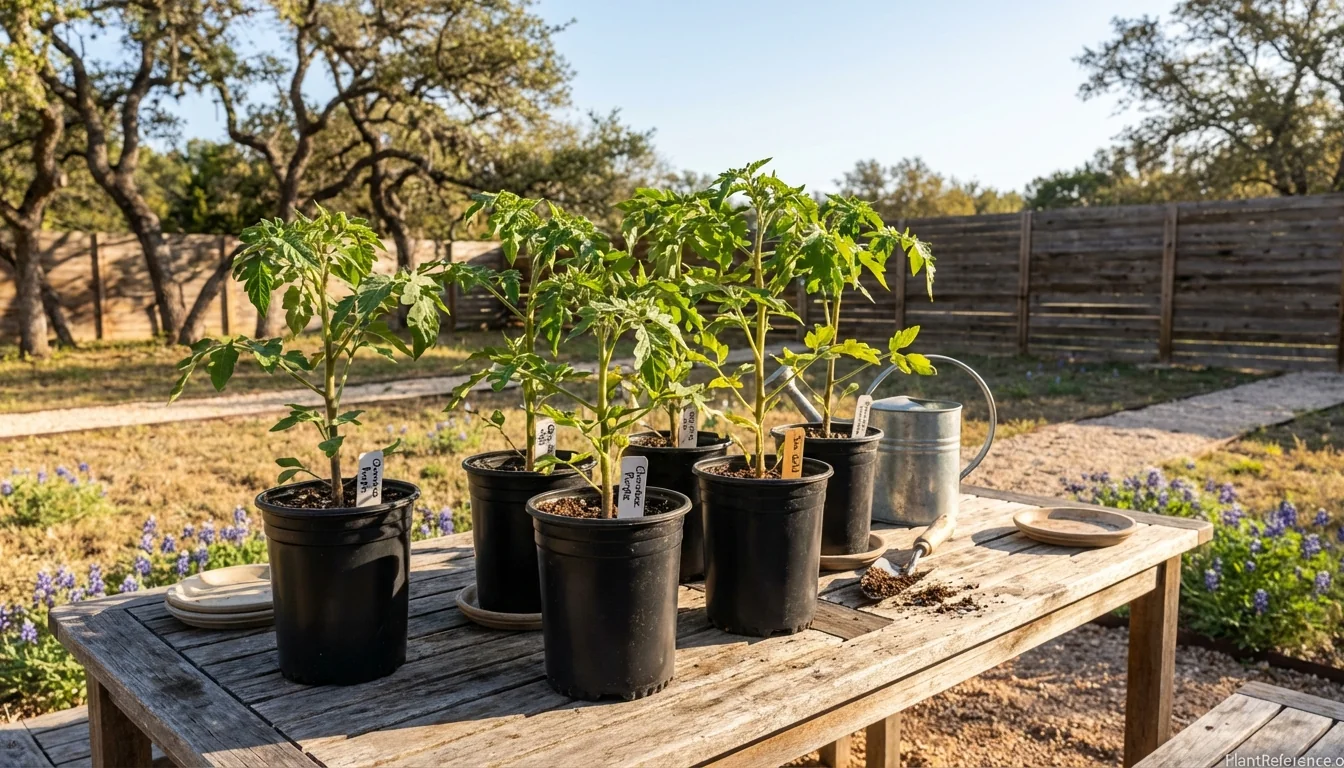
— Image © Plant Reference 2026
Austin's Zone 8b climate offers tomato growers a significant advantage: nearly nine months of growing weather with minimal frost risk. With the last frost averaging February 28 and first frost not arriving until November 29, you've got 274 growing days to work with—more than most gardeners could dream of.
I've been gardening in Texas for over forty years, and I can tell you that Austin's climate is both a blessing and a challenge for tomato growing. The extended season means multiple plantings, but the intense summer heat from July through September requires strategic variety selection and timing. Success comes from understanding that Austin isn't just one growing season—it's two distinct seasons with a hot dormancy period in between.
Best Tomato Varieties for Austin's Zone 8b Climate
Austin's climate demands varieties that can handle intense heat, humidity fluctuations, and strong UV radiation. I've tested dozens of varieties over the decades, and these six consistently deliver in Texas conditions.
Variety | Days to Maturity | Best For | Notes for Austin |
|---|---|---|---|
50-62 days | Quick spring harvest | Sets fruit in cool weather, finishes before heat | |
70-75 days | Heat tolerance | Bred specifically for Southern heat, continues producing | |
65-75 days | Disease resistance | Excellent for humid Austin summers | |
70-75 days | All-purpose reliability | VFN resistance, handles temperature swings | |
75-85 days | Extreme heat production | Only variety that sets fruit above 95°F consistently | |
60-65 days | Fall planting | Cold-tolerant for late season, good flavor |
Heat-Tolerant Champions for Spring Planting
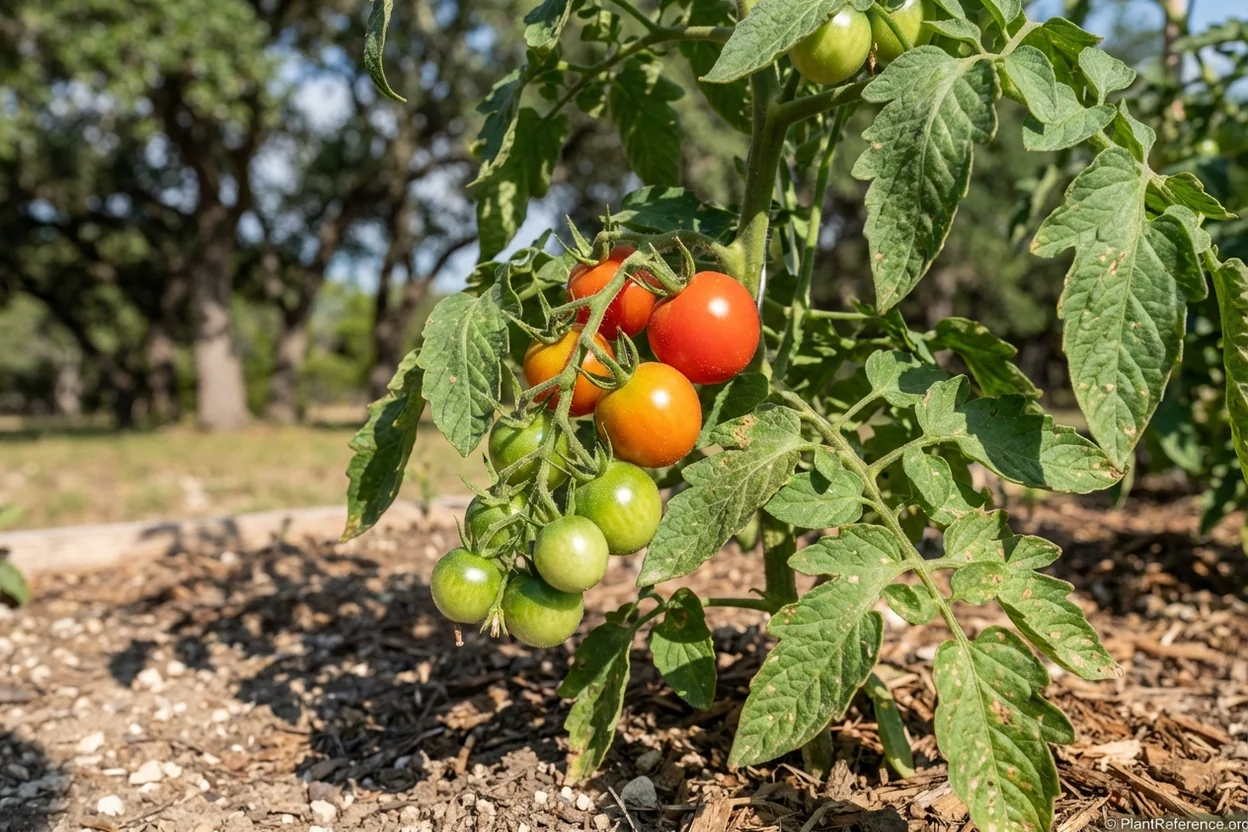
🌿Solanum lycopersicum 'Early Girl' remains my go-to for the primary spring crop. While it stops setting fruit once temperatures consistently hit 90°F, it produces heavily from March through June, giving you months of harvest before the heat arrives. The key is getting it established early so it has a mature root system before stress hits.
🌿Solanum lycopersicum 'Surefire Red' was developed at Texas A&M specifically for our climate. It's the only large-fruited variety I've found that continues producing through July heat. The fruits aren't huge—typically 6-8 ounces—but they're consistent and flavorful even in stress conditions.
🌿Solanum lycopersicum 'Phoenix' earned its name by rising from the ashes of summer heat stress. This determinate variety produces a concentrated harvest in 65-75 days, making it perfect for succession planting every three weeks through spring.
Varieties for Fall Extension
Austin's fall growing season often surprises newcomers. Starting seeds in mid-July for transplanting in August gives you fresh tomatoes through Thanksgiving and sometimes Christmas. 🌿Solanum lycopersicum 'Stupice' excels here—it's bred for cool conditions and actually improves in flavor as temperatures drop.
🌿Solanum lycopersicum 'Celebrity' works beautifully for fall because its compact, determinate growth habit makes it less susceptible to storm damage during Austin's occasionally wild November weather.
Specific Planting Dates for Austin
Austin's 274-day growing season allows for strategic succession planting, but timing is everything. Plant too early and late cold snaps can damage tender transplants. Plant too late for spring crops and summer heat arrives before fruit sets.
Spring Planting Timeline
Start seeds indoors: January 15-22 Austin's last frost averages February 28, so indoor seed starting begins 6-7 weeks earlier. I start my first batch January 15 and continue weekly sowings through early February for succession harvests.
Transplant outdoors: March 7-14 (one week after last frost date) Even though average last frost is February 28, I always add a safety buffer. Transplanting March 7-14 avoids most late cold snaps while giving plants time to establish before heat.
Fall Planting Timeline
Start fall seeds: July 15-22 This timing allows for transplanting in mid-August when the brutal heat begins moderating. Fall varieties need 10-12 weeks to produce before first frost November 29.
Fall transplant: August 15-22 Late August transplanting takes advantage of monsoon moisture patterns and moderating temperatures while still allowing time for fruit development.
Succession Planting Strategy
March 7: First main crop (🌿Solanum lycopersicum 'Early Girl', 🌿Solanum lycopersicum 'Celebrity') March 21: Second succession for extended harvest April 4: Final spring planting (early varieties only) August 15: Fall crop (🌿Solanum lycopersicum 'Stupice', 🌿Solanum lycopersicum 'Surefire Red')
This schedule provides continuous harvests from May through November, working around Austin's July-September heat stress period.
Complete Growing Guide for Austin
Austin's unique climate—hot summers, mild winters, alkaline clay soil, and intense UV—requires specific growing adaptations that I've refined over decades of Texas gardening.
Soil Preparation for Clay and Limestone
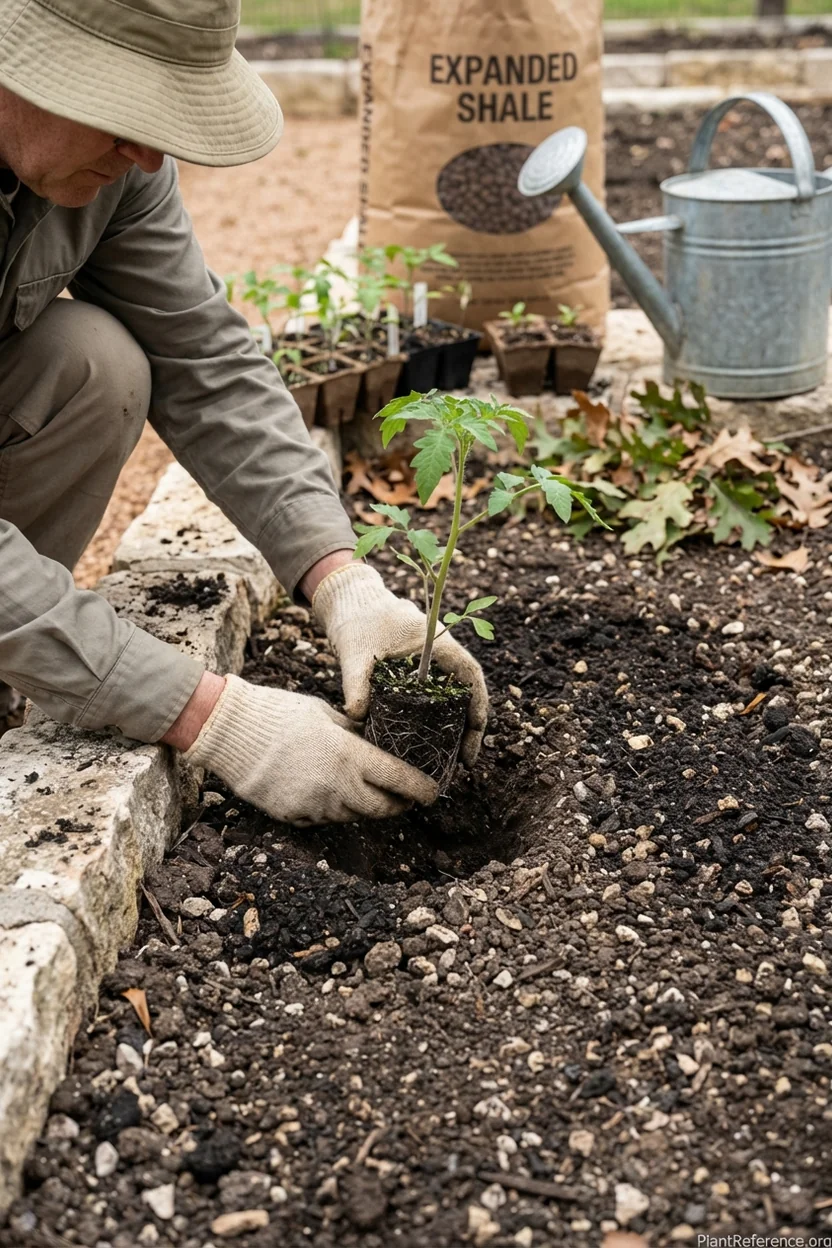
Austin's clay soil retains moisture but becomes concrete-hard when dry and soggy when wet. The solution isn't fighting the clay—it's improving it. I add expanded shale (available at local nurseries) at a rate of 2-3 inches tilled 8 inches deep. Unlike sand, which creates concrete when mixed with clay, expanded shale creates permanent structure.
Austin's naturally high pH (typically 7.5-8.5) locks up iron and other nutrients. While tomatoes tolerate alkaline soil, they perform better at 6.0-6.8 pH. I add sulfur at 1 pound per 100 square feet each fall, working it in gradually over years rather than shocking the soil with massive amendments.
Water Management in Texas Heat
Austin averages 32 inches of rain annually, but it arrives erratically—either drought or flood, rarely steady moisture. Drip irrigation isn't optional here; it's survival equipment. I install drip lines with pressure-compensating emitters every 12 inches, running them under 3-4 inches of mulch.
The key timing: water deeply twice weekly rather than daily shallow watering. Clay soil needs time to absorb moisture, and daily watering encourages shallow roots that can't handle heat stress. Each watering session should penetrate 8-10 inches deep.
Heat Stress Management
When temperatures hit 95°F consistently (typically July-August), even heat-tolerant varieties shut down fruit production. This isn't plant failure—it's survival strategy. Pollen becomes sterile above 90°F, and the plant redirects energy to staying alive rather than reproduction.
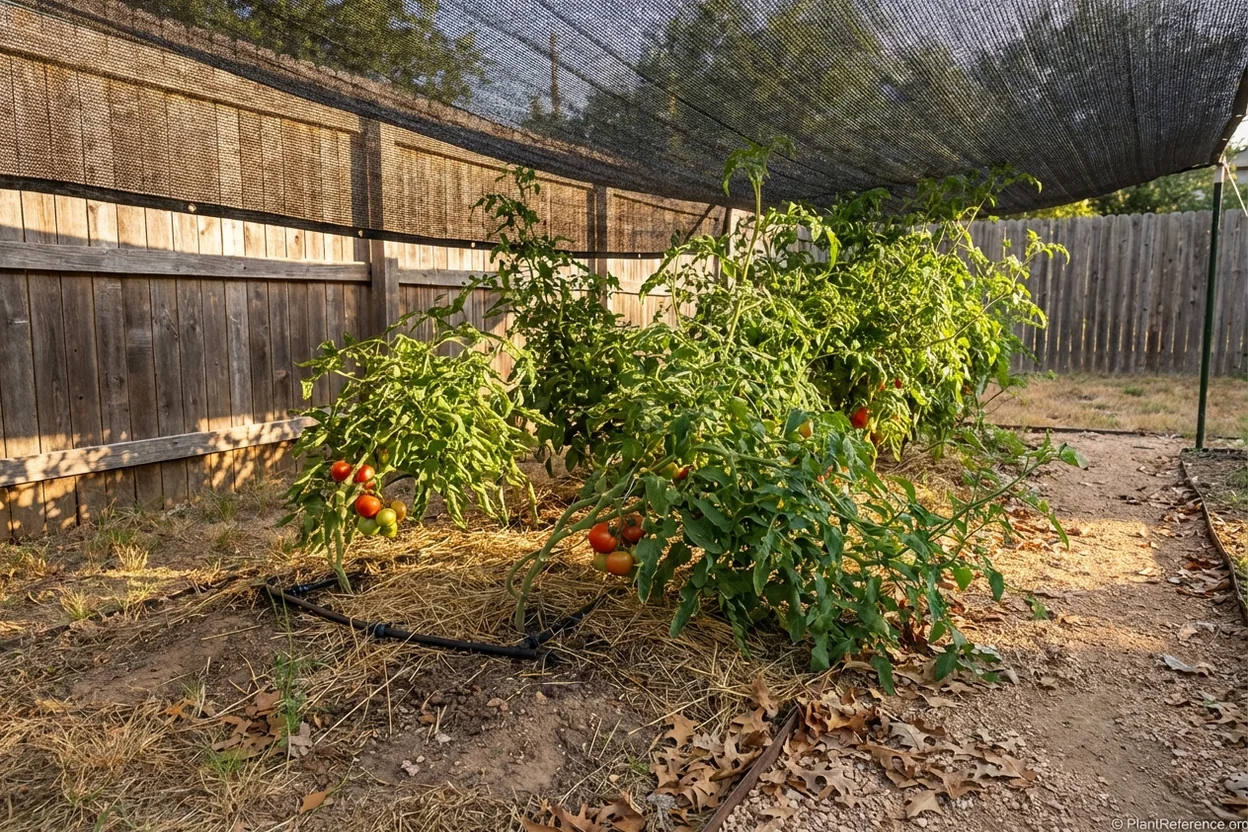
During heat stress periods, maintain watering to keep plants alive but don't expect fruit set. Many Austin gardeners make the mistake of over-fertilizing stressed plants, which forces tender new growth that gets scorched. Instead, apply shade cloth (30-50%) during peak heat hours (11 AM-4 PM) and wait for September's cooling.
Fertilization Schedule
Austin's alkaline soil and intense heat create unique nutritional challenges. Nitrogen becomes more available as temperatures rise, while phosphorus and iron become less available. I use a season-long approach:
Pre-plant: Work in 2-3 inches of compost and 1/4 cup of bone meal per plant Month 1-2: Weekly liquid fertilizer (balanced 10-10-10) diluted to half strength Month 3+: Switch to low-nitrogen, high-potassium formula to promote fruit development rather than excessive foliage Heat stress period: Stop all fertilization except occasional liquid kelp meal for micronutrients
Staking and Support Systems
Austin's spring storms and summer heat require robust support systems. I use 8-foot metal T-posts driven 18 inches deep, with horizontal wires at 2-foot intervals. This creates a permanent trellis system that handles both wind and the weight of heat-stressed plants that become top-heavy as lower leaves drop.
For determinate varieties, sturdy cages work well, but buy commercial-grade cages or build your own from concrete remesh. The flimsy cone cages sold at garden centers collapse under Austin's wind and plant weight.
Troubleshooting Austin-Specific Problems
Four decades of Austin tomato growing has taught me that certain problems appear predictably based on our climate. Here's how to recognize and address the most common issues.
Blossom End Rot in Spring Growth
Austin's clay soil and erratic spring rainfall create perfect conditions for blossom end rot, especially in 🌿Solanum lycopersicum 'San Marzano' and other paste varieties. The problem isn't soil calcium deficiency—it's inconsistent water uptake preventing calcium transport to developing fruit.
Solution: Mulch heavily (4-6 inches) to buffer soil moisture, and maintain consistent weekly watering. Don't add lime to alkaline Austin soil; it makes the problem worse by raising pH further.
Heat Scald on Fruit
Austin's intense UV radiation can literally cook tomatoes on the vine, creating white or yellow patches that turn brown and leathery. This is especially common when heat stress causes leaf drop, exposing fruit to direct sun.
Solution: Choose varieties with dense foliage like 🌿Solanum lycopersicum 'Celebrity' or provide afternoon shade during peak summer. Once scald occurs, harvest affected fruit immediately and use for cooking—the damaged areas won't heal.
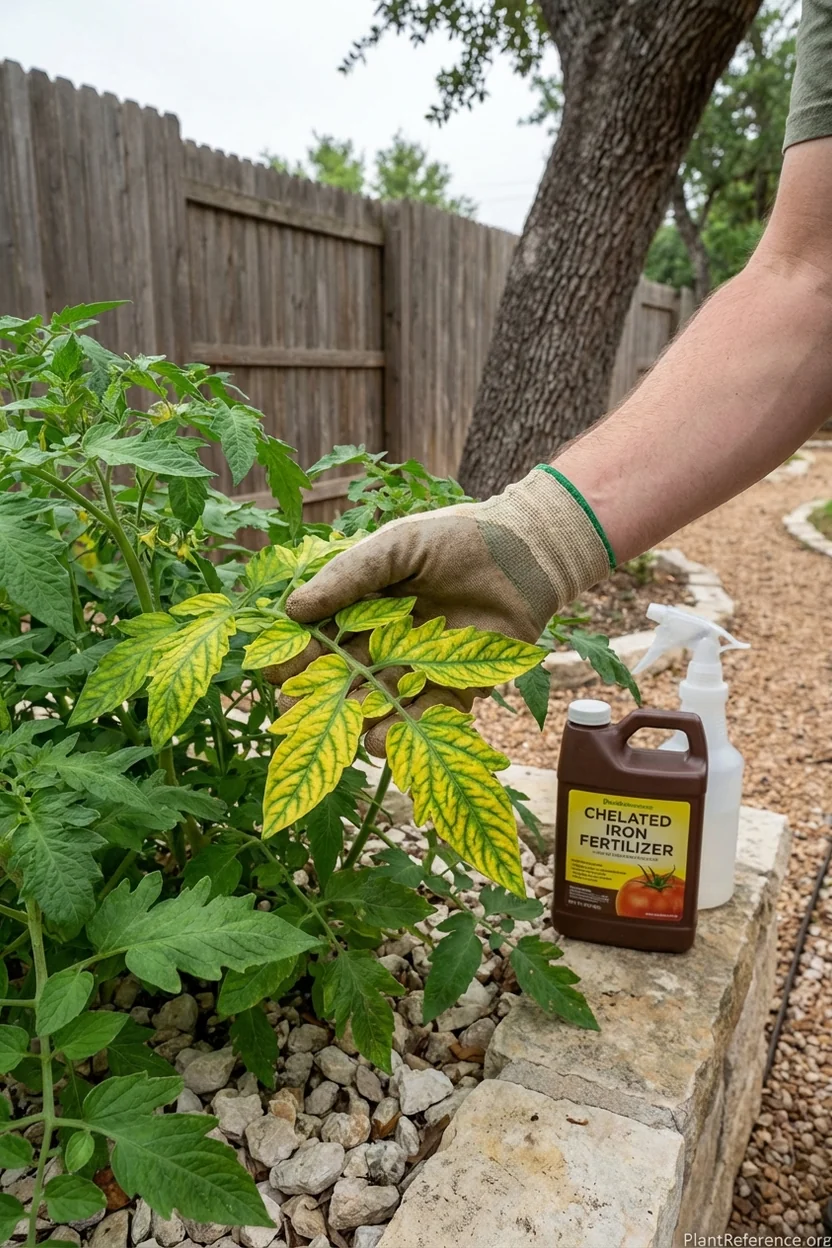
Iron Chlorosis (Yellow Leaves with Green Veins)
Austin's alkaline soil locks up iron, causing younger leaves to yellow while veins remain green. This is especially problematic in 🌿Solanum lycopersicum 'Brandywine' and other heavy feeders.
Solution: Apply chelated iron as foliar spray every 2-3 weeks during active growth. Avoid iron sulfate, which doesn't work in alkaline conditions. Long-term, gradually lower soil pH with sulfur applications.
Late Season Virus Issues
Austin's mild falls allow virus-carrying insects to remain active longer than in colder climates. Aphids and whiteflies transmit viruses that cause mottled leaves, stunted growth, and poor fruit quality in fall crops.
Solution: Use reflective mulch (aluminum or silver plastic) to deter aphids, and choose virus-resistant varieties like 🌿Solanum lycopersicum 'Phoenix' for fall planting. Remove and destroy affected plants immediately—viruses spread rapidly in Austin's extended season.
Storm Damage and Recovery
Austin's spring storms can devastate tomato plants with hail, wind, and flooding. Don't panic if plants lose leaves or break stems—tomatoes are remarkably resilient.
Recovery protocol: Remove damaged fruit and broken branches, but leave as much healthy foliage as possible. Don't fertilize immediately after storm damage; stressed plants can't utilize nutrients effectively. Instead, maintain consistent moisture and let plants recover naturally over 2-3 weeks.
Harvest & Storage
Austin's extended season creates unique harvest and storage opportunities. Unlike northern gardeners who harvest everything before first frost, Austin growers can selectively harvest for optimal flavor and extend storage naturally.
Optimal Harvest Timing
Spring harvest (May-June): Pick at full color for peak flavor. Austin's moderate spring temperatures allow full vine ripening without heat damage.
Summer heat harvest (July-August): Harvest at "breaker" stage (first blush of color) and finish ripening indoors. Fruit left on vine during 100°F days develops poor flavor and tough texture.
Fall harvest (September-November): Return to vine ripening as temperatures moderate. Fall tomatoes often develop better flavor than spring crops due to slower ripening in cooler nights.
Storage Strategies for Extended Season
Green tomatoes from fall frost: Austin's first frost is often light, followed by weeks of warm weather. Harvest green tomatoes before hard freeze, wrap in newspaper, and store at 55-60°F. They'll ripen gradually through December and sometimes January.
Seed saving in Austin: Save seeds from late-season fruit that developed during optimal conditions (September-October). These plants experienced full seasonal stress and are most adapted to local conditions.
Extending Harvest with Protection
Austin's mild winters allow season extension with minimal protection. Row covers or small greenhouses can extend harvest through Christmas. I use old shower curtains draped over cages during light frost warnings—they're waterproof, reusable, and store easily.
For gardeners with south-facing protected areas (against house walls), container-grown determinate varieties can produce through December in Austin. Move containers to protected spots during cold snaps and back to sun during warm periods.
Frequently Asked Questions
Reading about plants and recognising them are different skills. These three build the second.
- Daily PlantIdentify the day’s mystery plant from a close-up photograph.
- Keyed OutWork a dichotomous key, lead by lead, to name a hidden specimen.
- Name That PlantName a specimen from botanical clues dealt hardest first.
Free to play, no account needed
Carlos grew up helping his abuelos tend their backyard garden in San Antonio, Texas, but didn't get serious about growing his own food until he bought his first house in Austin. He works as an HVAC technician during the day and gardens in the early mornings and evenings. Carlos specializes in heat-tolerant vegetables and container growing—essential skills for Texas summers and his south-facing driveway that gets intense sun. He's learned through plenty of failures (multiple dead fig trees, countless bolted lettuce crops) and now helps neighbors troubleshoot their own gardens. His YouTube channel documenting his container tomato experiments has a small but dedicated following. Carlos is passionate about growing food on a budget, often sourcing free containers and building his own compost.