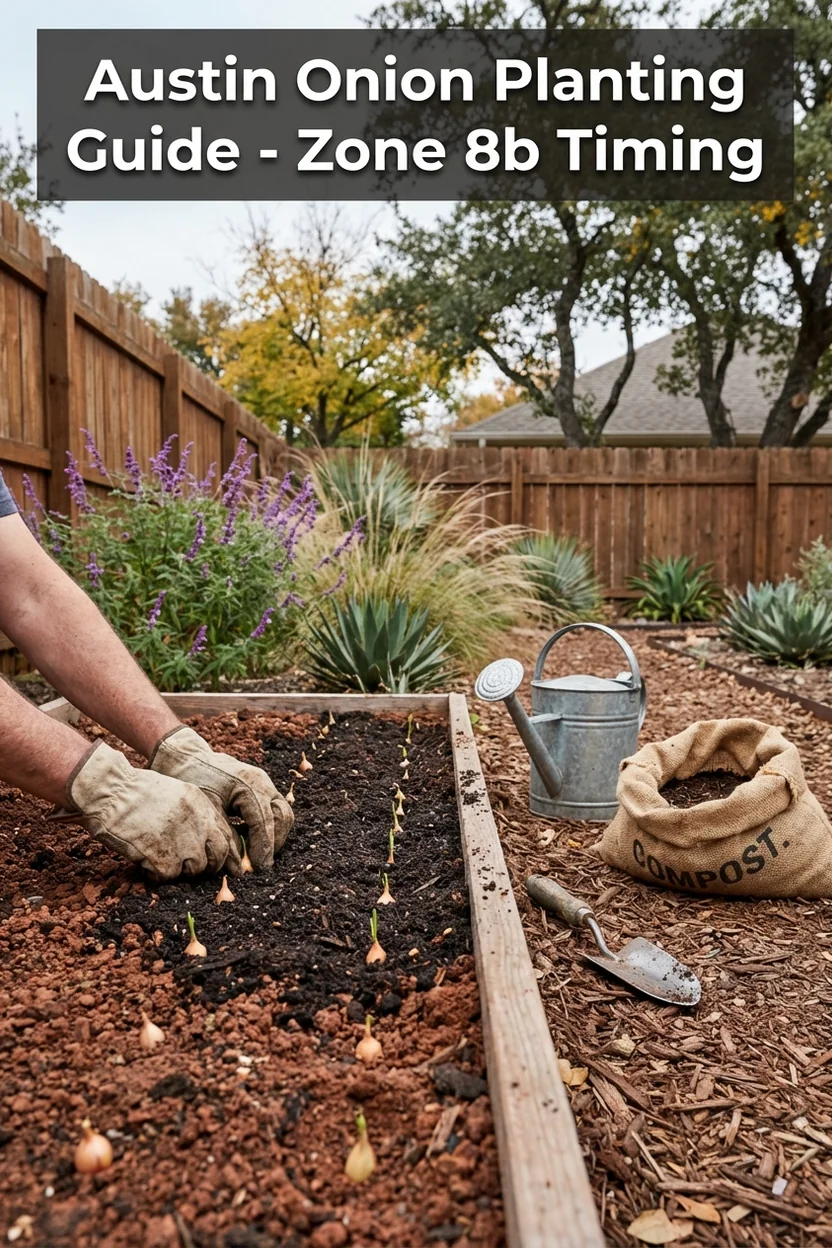
When to Plant Onions in Austin: Complete Guide + Best Varieties for Zone 8b
Pets & Toxicity
Recorded toxicity for plants linked in this guide. An unknown status is not a safety assessment.
Toxic to pets: California early softneck garlic, Texas super sweet onion, red creole onion and 2 moreDetailsHide
Allium sativum 'California Early' — Toxicity Warning
Toxic to cats and dogs if eaten; cats are especially susceptible, and raw, cooked or concentrated plant material can damage red blood cells and cause anaemia.View Allium sativum 'California Early' plant profileAllium cepa 'Texas Super Sweet' — Toxicity Warning
Toxic to cats and dogs if eaten; cats are especially susceptible, and raw, cooked or concentrated plant material can damage red blood cells and cause anaemia.View Allium cepa 'Texas Super Sweet' plant profileAllium cepa 'Red Creole' — Toxicity Warning
Toxic to cats and dogs if eaten; cats are especially susceptible, and raw, cooked or concentrated plant material can damage red blood cells and cause anaemia.View Allium cepa 'Red Creole' plant profileAllium cepa 'Yellow Granex' — Toxicity Warning
Toxic to cats and dogs if eaten; cats are especially susceptible, and raw, cooked or concentrated plant material can damage red blood cells and cause anaemia.View Allium cepa 'Yellow Granex' plant profileAllium fistulosum 'Evergreen Hardy White' — Toxicity Warning
Toxic to cats and dogs if eaten; cats are especially susceptible, and raw, cooked or concentrated plant material can damage red blood cells and cause anaemia.View Allium fistulosum 'Evergreen Hardy White' plant profile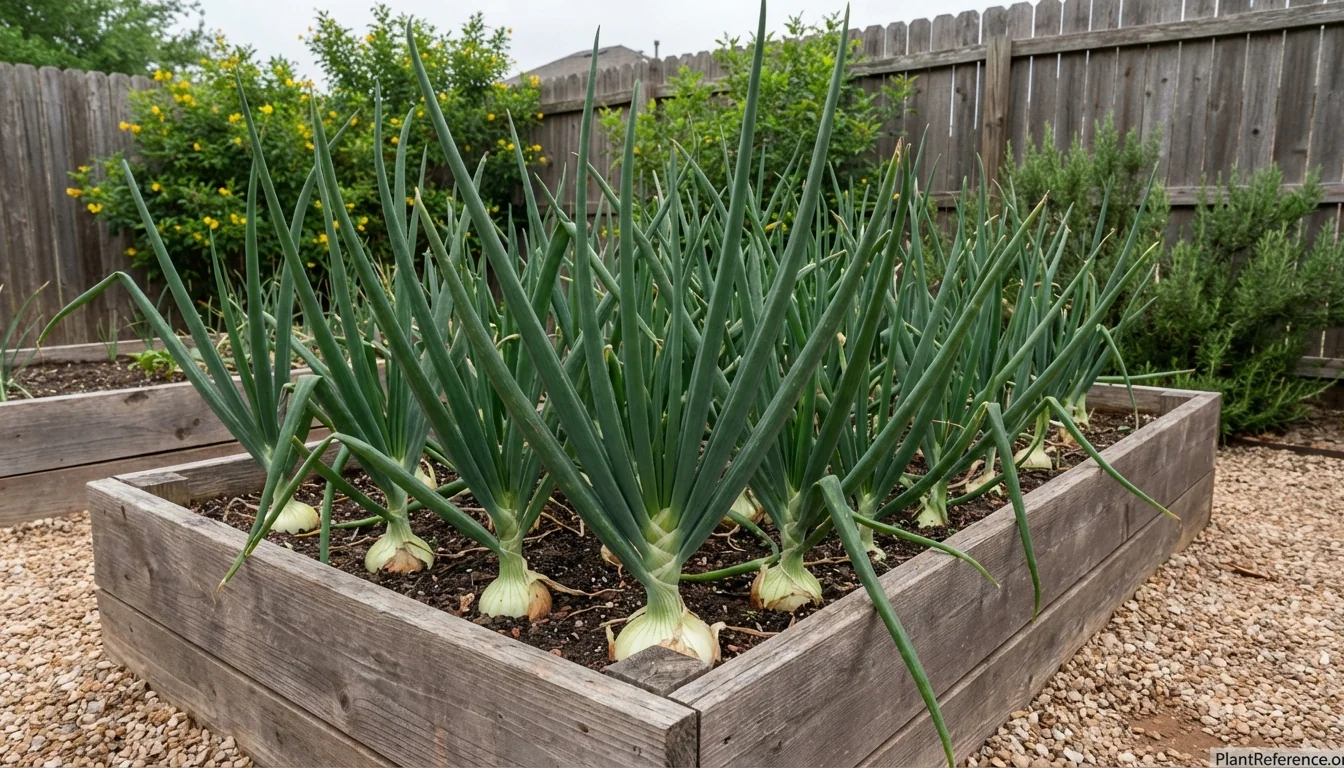
— Image © Plant Reference 2026
After forty years of growing vegetables in Texas, I can tell you that timing is everything when it comes to onions in Austin. Most newcomers try spring planting like they did up north—and wonder why their onions bolt or produce tiny bulbs. The secret to Austin onion success is understanding that we're in short-day onion country, and that means fall planting for spring harvest.
Best Onion Varieties for Austin's Zone 8b Climate
Austin sits at 30°N latitude in Zone 8b, which puts us squarely in short-day onion territory. These varieties are triggered to form bulbs when daylight reaches 10-12 hours—which happens here in early March. That's why we plant in fall: the onions need several months to build up leaf mass before the bulbing switch flips.
Short-day onions are bred for our latitude and climate. Try to grow a long-day variety like 'Walla Walla' in Austin, and you'll get giant green tops but no bulbs—the day length here never gets long enough to trigger bulbing in those northern varieties.
Variety | Days to Maturity | Best For | Notes for Austin |
|---|---|---|---|
110-120 days | Fresh eating, mild flavor | Developed by Texas A&M specifically for our climate | |
100-110 days | Storage, cooking | Heat-tolerant Creole variety, stores 3-4 months | |
Allium cepa '1015Y Super Sweet' | 110-125 days | Fresh eating, jumbo size | The famous "Million Dollar Baby" onion |
95-110 days | Fresh eating, Vidalia-type | Sweet, mild flavor perfect for Austin gardens | |
240-270 days | Long storage, braiding | Softneck garlic ideal for Zone 8b | |
60-70 days | Green onions, continuous harvest | Plant fall through early spring for steady supply |
Understanding Day-Length Requirements
The most important concept for Austin gardeners is day length sensitivity. Onions don't bulb based on temperature or plant size—they bulb when daylight hours hit their genetic trigger point.
Short-Day Onions (10-12 hours): Perfect for Austin. Bulb formation begins in early March when days reach 11-12 hours.
Intermediate-Day Onions (12-14 hours): Can work with careful timing but less reliable than short-day types.
Long-Day Onions (14-16 hours): Will not bulb in Austin. Day length here peaks at about 14.5 hours in June—not long enough for most long-day varieties.
Sweet vs Storage Onions
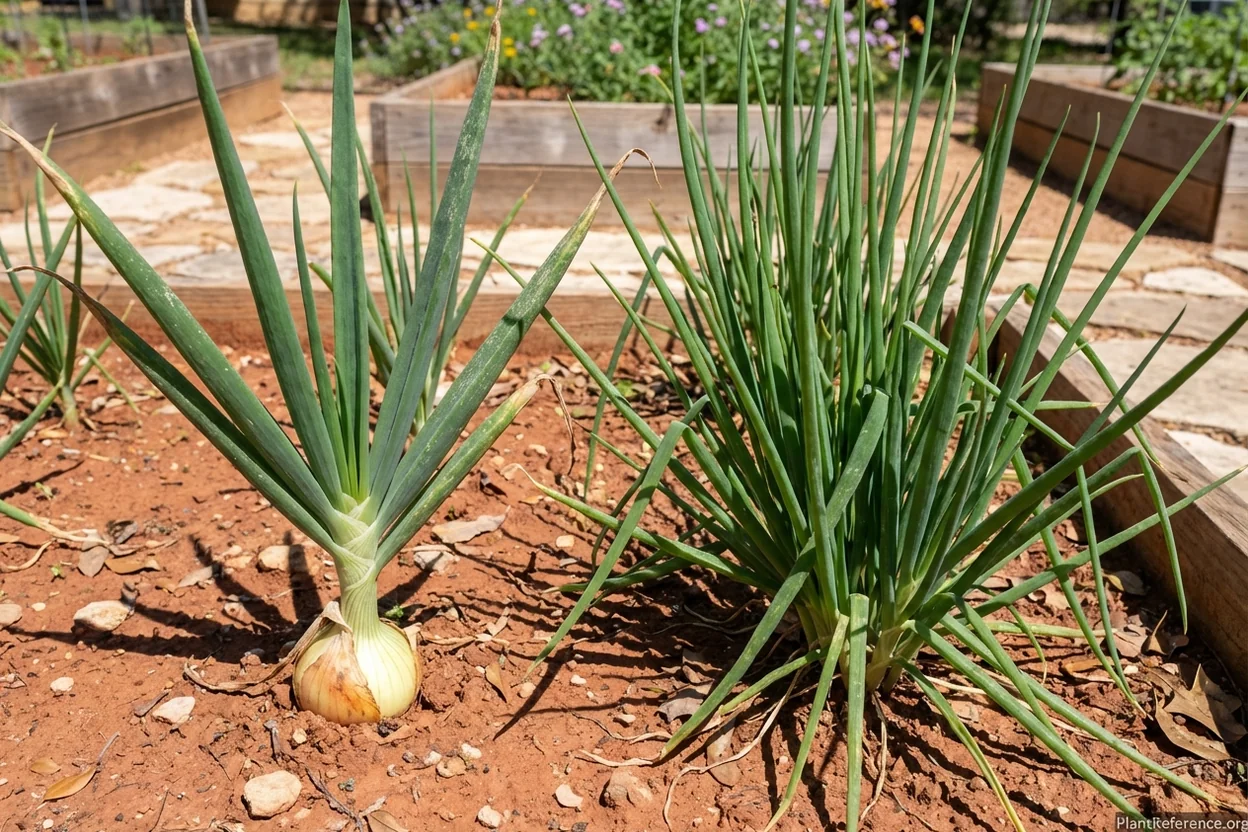
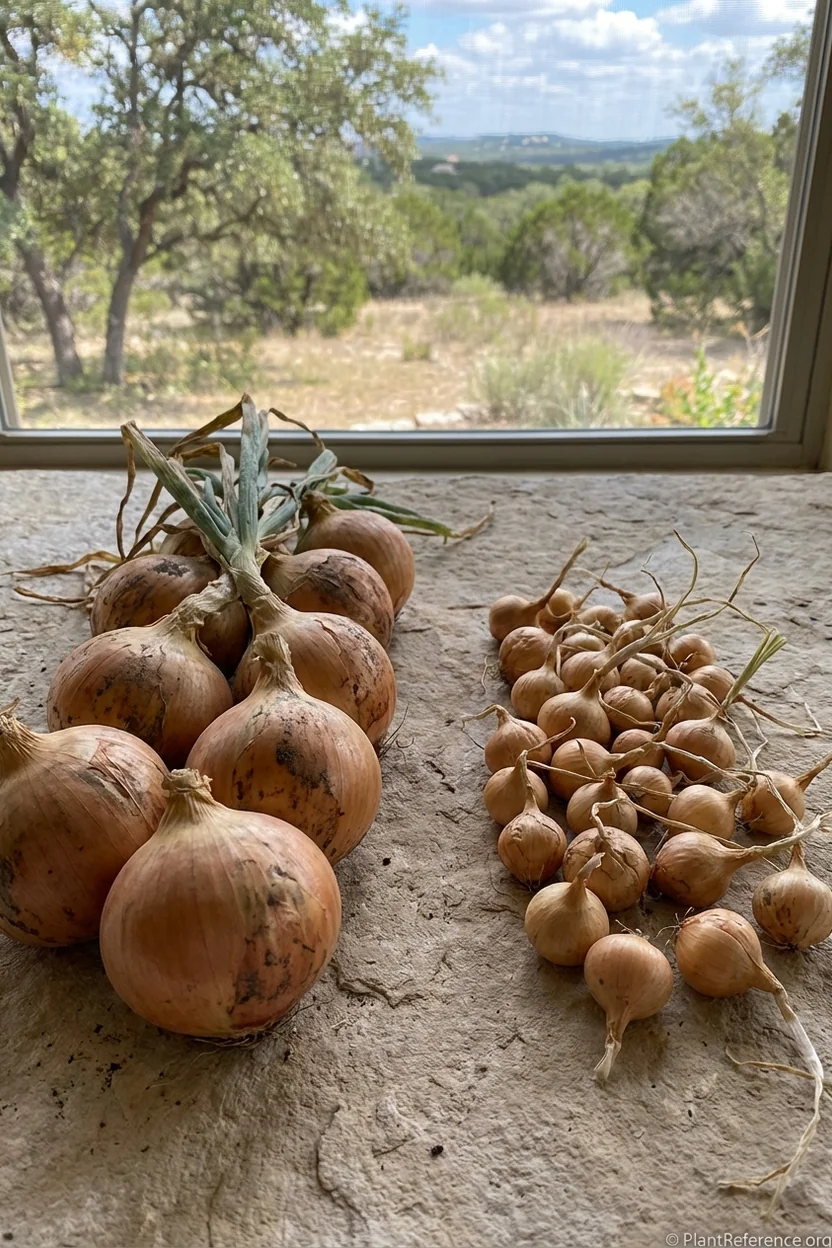
Austin's climate favors sweet onions for fresh eating over long-storage types. The warm, humid conditions make long-term storage challenging for most home gardeners.
Sweet Onions for Austin: - 🌿Allium cepa 'Texas Super Sweet': The gold standard developed at Texas A&M - Allium cepa '1015Y Super Sweet': Famous for jumbo size and mild flavor - 🌿Allium cepa 'Yellow Granex': Vidalia-type sweetness
Limited Storage Options: - 🌿Allium cepa 'Red Creole': Best storage variety for Austin, keeps 3-4 months in proper conditions - Most sweet varieties: Eat fresh within 1-2 months of harvest
Specific Planting Dates for Austin
With our last frost around February 28 and first frost November 29, Austin has a 274-day growing season—plenty of time for fall-planted onions to mature by May harvest.
Fall Planting (Recommended)
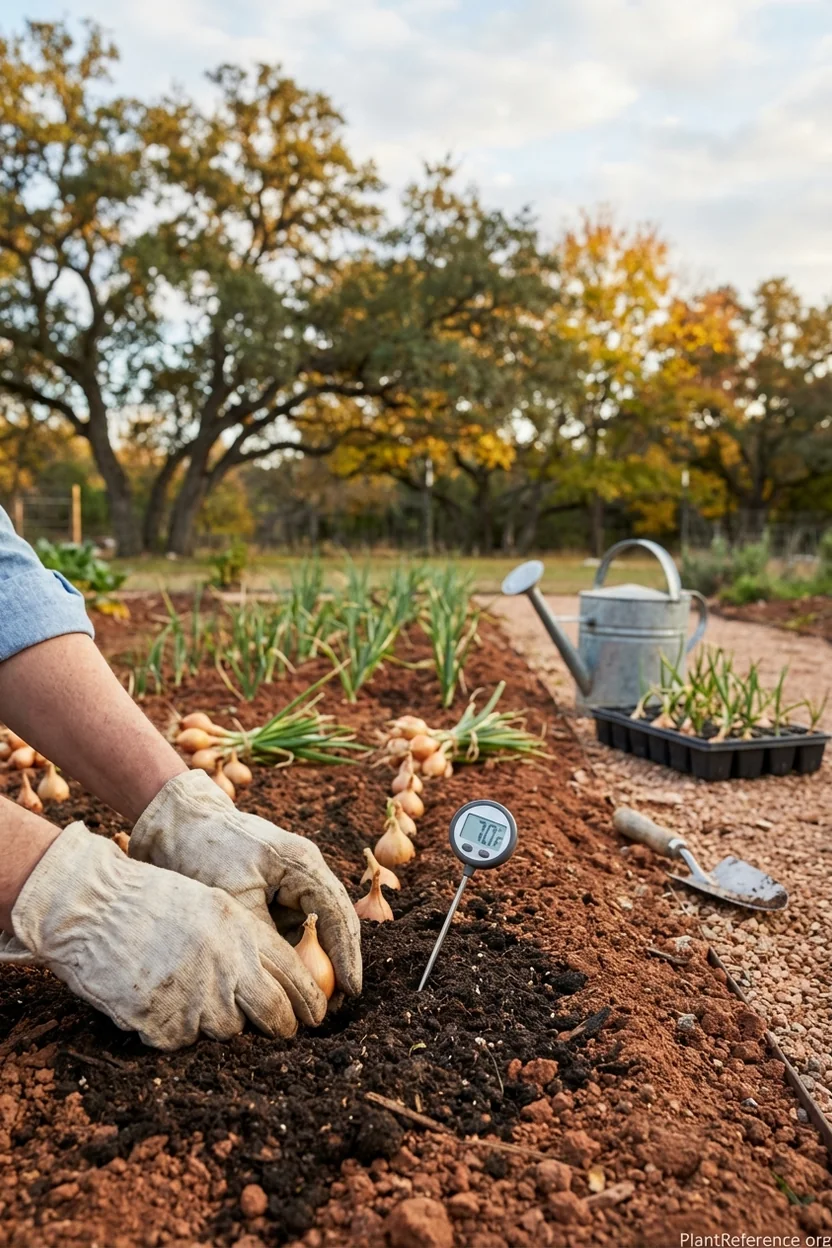
Onion Transplants: October 15 - December 15
Optimal window: November 1-15
Plant transplants when soil temperature drops below 80°F
Allow 110-120 days before expected harvest in March-April
Garlic Cloves: November 1 - November 30
Plant after soil cools but before roots become dormant
Allows 6-8 weeks of root establishment before winter
Green Onions/Scallions: October 1 - March 15
Plant every 3-4 weeks for continuous harvest
Succession plant through fall and early spring
Why Not Spring Planting?
Spring planting works in northern states but fails in Austin for several reasons:
Temperature Stress: March-planted onions face 90°F+ temperatures by May, causing stress before bulbs develop.
Premature Bolting: Warm spring weather combined with increasing day length often triggers flowering instead of bulbing.
Poor Bulb Development: Insufficient cool-weather growth period before bulbing trigger in early summer.
Calculating Your Planting Dates
Here's how I determine exact planting dates for Austin:
Target Harvest: April 15 - May 15 (before summer heat)
Days to Maturity: 110-120 days for most varieties
Count Backwards: October 15 - December 15 planting window
Optimal Window: November 1-15 for best results
Complete Growing Guide for Austin
Success with Austin onions starts with understanding our unique growing conditions: alkaline clay soil, mild winters, and hot summers that arrive earlier than most gardening guides assume.
Soil Preparation
Austin's heavy clay soil needs amendment before planting onions. These shallow-rooted plants struggle in compacted clay and poorly drained conditions.
Soil Testing: Test pH first—Austin soils typically run 7.5-8.5, but onions prefer 6.0-6.8.
Clay Soil Amendment:
Add 3-4 inches of compost per 100 square feet
Work in 2 inches of coarse sand (never fine sand)
Consider raised beds for improved drainage
Sulfur addition lowers pH gradually over several months
Drainage Solutions:
Plant in raised beds or mounded rows
Avoid low-lying areas where water collects
Ensure beds drain within 24 hours after heavy rain
Test soil pH and amend if above 7.0 with sulfur
Work 3-4 inches of compost into heavy clay soil
Create raised beds or mounded rows for drainage
Choose full sun location with 8+ hours daily
Avoid areas with standing water after rain
Planting Techniques
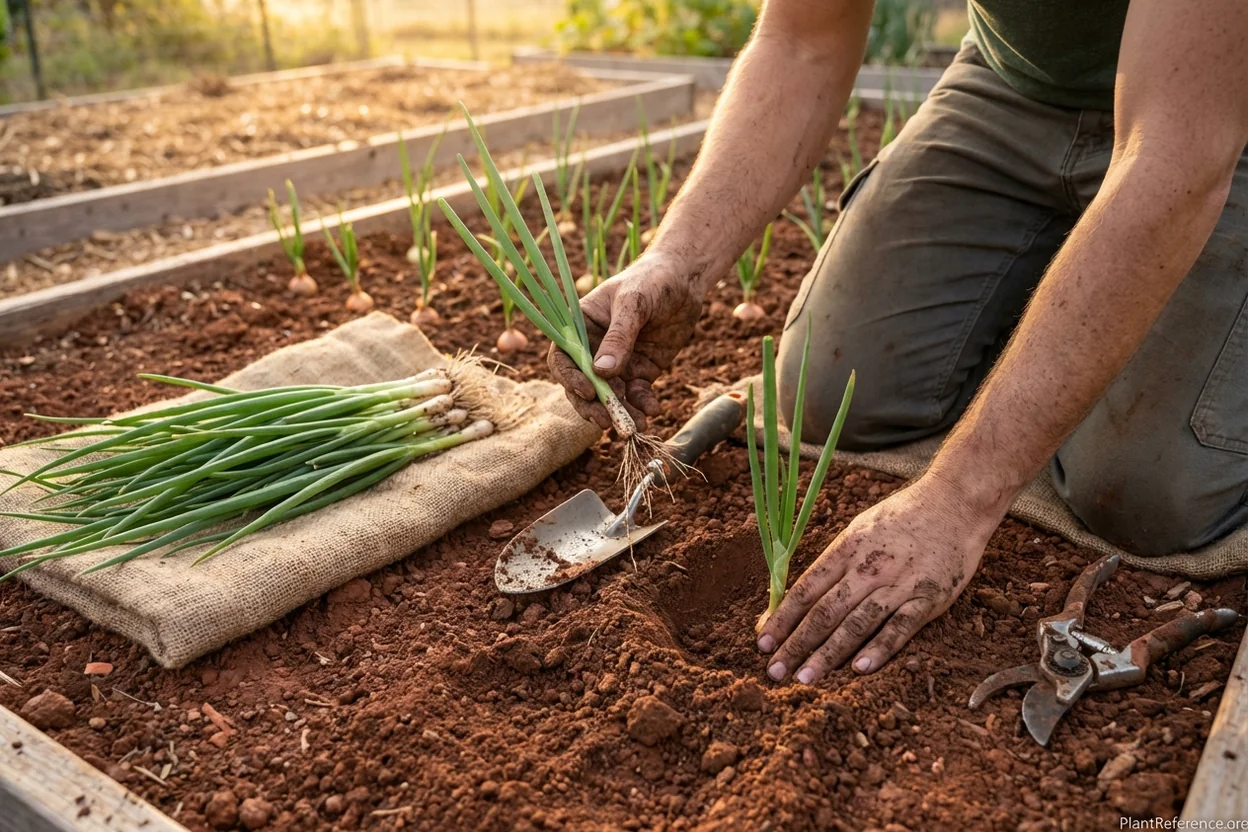
Transplant Method (Recommended for Austin): 1. Purchase transplants from reputable nurseries in October-November 2. Trim roots to 2 inches, tops to 4 inches 3. Plant with root ball just below soil surface 4. Space 4 inches apart in rows 12 inches apart 5. Water thoroughly after planting
Direct Seeding: Generally not recommended for Austin due to timing challenges and heat stress.
Depth and Spacing: Plant transplants with the white portion just below soil level. Spacing of 4 inches allows proper bulb development without crowding.
Fertilization Schedule
Austin's alkaline soil often locks up nutrients, requiring strategic fertilization.
Pre-Plant: Work balanced organic fertilizer (10-10-10) into beds at 2 pounds per 100 square feet.
Early Growth (November-January): Side-dress with nitrogen source monthly. Use ammonium sulfate to help lower soil pH.
Bulbing Period (February-March): Reduce nitrogen, increase potassium. Stop all nitrogen fertilizer when bulbing begins—excess nitrogen creates thick necks that won't cure properly.
Garlic Specific: Side-dress garlic with compost in late February when shoots emerge.
Watering Strategy
Austin's variable rainfall requires careful water management. Too much water during bulbing creates storage problems; too little stunts development.
Fall Establishment (October-December): Keep soil consistently moist but not soggy. Clay soil holds water longer than sandy soil.
Winter Growth (December-February): Reduce watering frequency. Austin winters provide some natural rainfall.
Spring Bulbing (March-May): Maintain even moisture until tops begin yellowing, then gradually reduce water to help bulbs cure in the ground.
Water deeply but infrequently to encourage deep roots
Mulch with 2-3 inches of compost to retain moisture
Install drip irrigation or soaker hoses for even water distribution
Reduce watering when tops begin yellowing in late April/May
Stop watering completely 2 weeks before harvest
Garlic Growing in Austin
🌿Allium sativum 'California Early' softneck garlic thrives in Austin's Zone 8b climate. The mild winters provide just enough cold for proper bulb development without the harsh freezes that damage cloves.
Planting: Plant individual cloves 2 inches deep, 6 inches apart in November.
Winter Care: Mulch lightly with compost—heavy mulch isn't needed in our mild winters.
Spring Management: Remove any flower stalks (scapes) that appear to direct energy into bulb development.
Harvest: Ready in July when lower leaves brown but several green leaves remain.
Troubleshooting Austin-Specific Problems
Austin's unique climate creates specific challenges that northern gardening guides don't address.
Bolting (Premature Flowering)
Symptoms: Hard flower stalk shoots through center of bulb, making it inedible.
Austin Causes:
Using long-day varieties not suited for our latitude
Planting too early in fall when temperatures are still high
Temperature fluctuations during January-February cold snaps
Prevention:
Stick to short-day varieties only
Wait for soil temperatures below 80°F before planting
Protect plants during unusual cold snaps with row covers
Small Bulb Development
Symptoms: Plants produce healthy tops but tiny bulbs at harvest.
Austin Causes:
Wrong day-length variety for our 30°N latitude
Insufficient pre-bulbing growth period
Poor soil drainage in clay soil
Solutions:
Verify you're using short-day varieties
Plant by November 15 to allow maximum growth time
Improve soil drainage with compost and raised beds
Heat Stress and Early Maturity
Symptoms: Tops die back prematurely in April, forcing early harvest.
Austin Causes:
Earlier-than-expected heat waves (90°F+ in March)
Insufficient mulching to keep soil cool
Inadequate water during temperature spikes
Management:
Apply 3-4 inch mulch layer in early March
Increase watering frequency during heat waves
Be prepared for early harvest if tops begin dying back
Clay Soil Drainage Issues
Symptoms: Bulbs rot in ground, plants yellow and decline.
Solutions:
Never plant onions in areas where water stands after rain
Build raised beds 6-8 inches high for improved drainage
Add coarse sand and compost to break up clay density
Pest Problems in Austin
Thrips: These tiny insects cause silvery streaks on leaves and can reduce bulb size.
Control: Use row covers during peak thrips season (March-April) or apply beneficial predatory mites.
Fire Ants: Can disturb newly planted transplants.
Prevention: Apply beneficial nematodes to soil in fall to reduce fire ant populations naturally.
Harvest & Storage
Austin's warm climate requires careful attention to harvest timing and curing to maximize storage life.
Harvest Timing
Indicator: Begin harvest when 50% of tops fall over naturally, typically mid-April to mid-May.
Don't Wait: Unlike northern climates, Austin heat arrives quickly. Harvest before soil temperatures consistently exceed 85°F.
Weather Window: Choose a stretch of dry weather for harvest to reduce disease risk.
Curing Process
Austin's humidity makes proper curing critical for any storage life.
Field Curing: Lay harvested onions on soil surface for 2-3 days if weather is dry. Cover bulbs with tops to prevent sunscald.
Protected Curing: Move to covered, ventilated area (garage, carport) for final curing. Austin humidity requires excellent air circulation.
Completion: Properly cured onions have papery outer skins and tight, dry necks. This takes 2-4 weeks in Austin conditions.
Storage Expectations
Austin's warm, humid climate limits storage compared to northern regions.
Sweet Onions: 🌿Allium cepa 'Texas Super Sweet' and Allium cepa '1015Y' store 1-2 months maximum. Plan to use fresh.
Storage Types: 🌿Allium cepa 'Red Creole' stores 3-4 months in proper conditions.
Storage Conditions: Cool (60-65°F), dry area with good ventilation. Avoid garages or sheds that heat up in summer.
Garlic Storage: Softneck garlic like Allium cepa 'California Early' stores 6-8 months when properly cured and stored in Austin.
Frequently Asked Questions
Reading about plants and recognising them are different skills. These three build the second.
- Daily PlantIdentify the day’s mystery plant from a close-up photograph.
- Keyed OutWork a dichotomous key, lead by lead, to name a hidden specimen.
- Name That PlantName a specimen from botanical clues dealt hardest first.
Free to play, no account needed
Carlos grew up helping his abuelos tend their backyard garden in San Antonio, Texas, but didn't get serious about growing his own food until he bought his first house in Austin. He works as an HVAC technician during the day and gardens in the early mornings and evenings. Carlos specializes in heat-tolerant vegetables and container growing—essential skills for Texas summers and his south-facing driveway that gets intense sun. He's learned through plenty of failures (multiple dead fig trees, countless bolted lettuce crops) and now helps neighbors troubleshoot their own gardens. His YouTube channel documenting his container tomato experiments has a small but dedicated following. Carlos is passionate about growing food on a budget, often sourcing free containers and building his own compost.