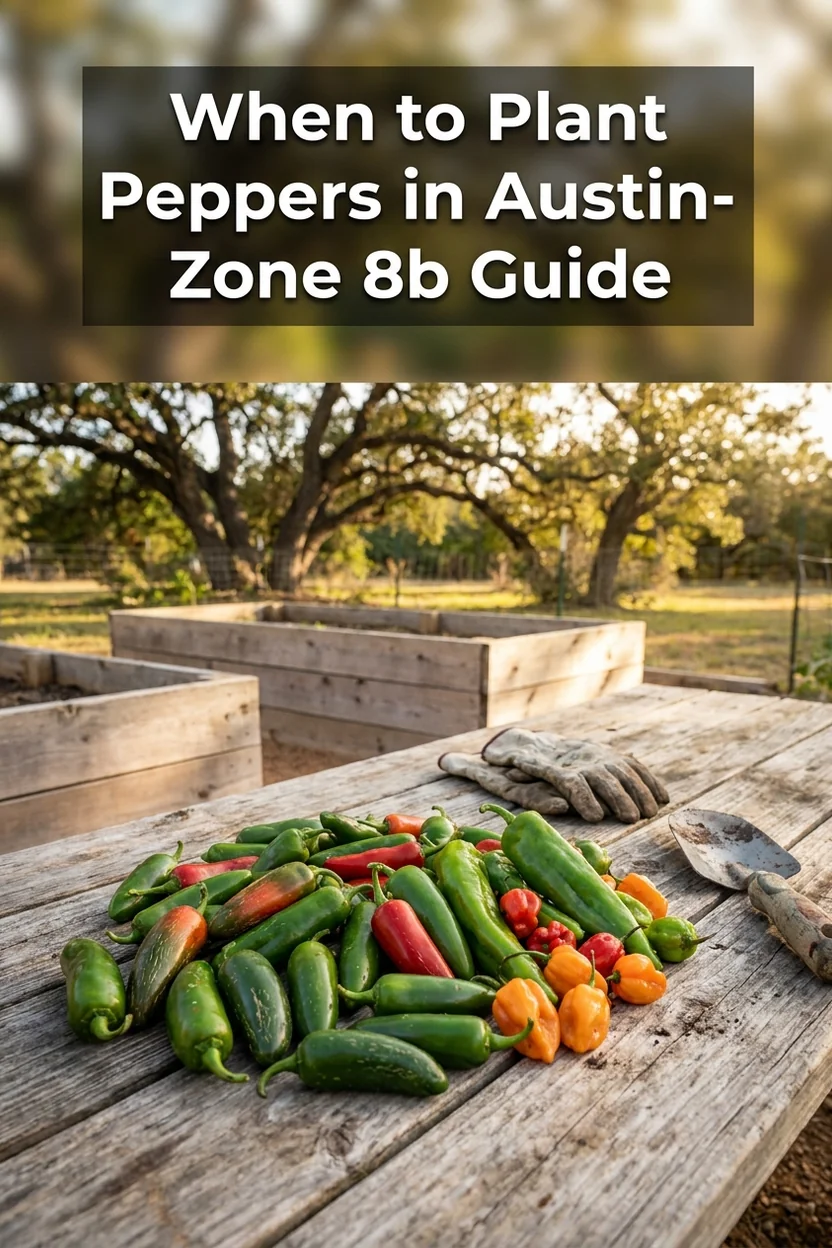
When to Plant Peppers in Austin: Zone 8b Dates + Best Varieties
Pets & Toxicity
Recorded toxicity for plants linked in this guide. An unknown status is not a safety assessment.
Toxic to pets: Poblano pepper (7 linked plants checked)DetailsHide
Capsicum annuum 'Jalapeño' — Toxicity: Not assessed
Capsaicin in fruit causes burning sensations in mouth and on skin. Fruit and handling oils are irritating to eyes and mucous membranes but are not toxic in the usual sense. Gloves are used during harvesting and processing; hands are washed thoroughly before touching face. Small amounts are generally safe for pets but can cause digestive upset.View Capsicum annuum 'Jalapeño' plant profileCapsicum annuum 'Poblano' — Toxicity Warning
Toxic to petsView Capsicum annuum 'Poblano' plant profileCapsicum chinense 'Habanero' — Toxicity: Not assessed
Fruit contains capsaicin at 100,000–350,000 Scoville Heat Units — strong enough to cause severe burning on skin, eyes, and mucous membranes through simple contact with cut fruit or the hand that held it. Nitrile gloves are used during handling and food preparation; face and eye contact is avoided. The fruit is irritating rather than toxic in the usual sense, but the heat level can cause significant discomfort and real injury if mishandled. The plant is kept out of reach of children and pets.View Capsicum chinense 'Habanero' plant profileCapsicum annuum 'California Wonder' — Toxicity
Non-toxicView Capsicum annuum 'California Wonder' plant profile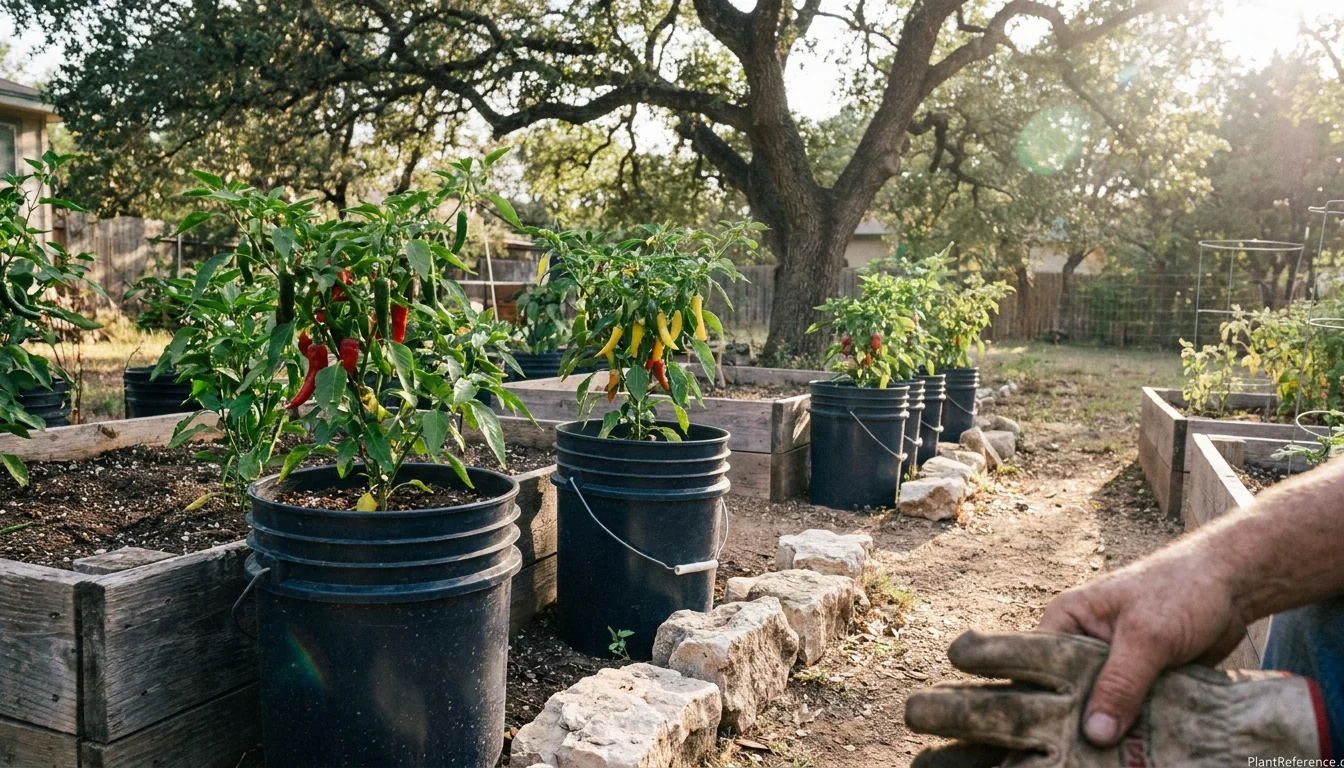
— Image © PlantReference.org 2026
Austin is built for peppers. We get nine months of frost-free weather, summer temperatures that peppers love, and the kind of heat that concentrates capsaicin in hot varieties. I grow most of my peppers in five-gallon buckets because the Edwards Plateau limestone that sits under much of Austin makes in-ground planting a wrestling match. A bucket with drainage holes, some potting mix, and a pepper transplant costs about three dollars total and produces for six months straight. You don't need a big yard or an expensive raised bed setup. A sunny driveway, patio, or apartment balcony works fine. The only real challenge is keeping plants watered through July and August when it hasn't rained in weeks and the limestone radiates heat back up from the ground.
Best Pepper Varieties for Austin's Zone 8b Climate
Austin soil depends on where you are. East Austin sits on Blackland Prairie clay—heavy, dark, fertile but poorly drained. West Austin and the Hill Country neighborhoods sit on shallow limestone with thin, alkaline soil (pH 7.5-8.5). Both need work for peppers, but the good news is that peppers have shallow root systems compared to root vegetables. A 12-inch raised bed or a five-gallon bucket gives them everything they need.
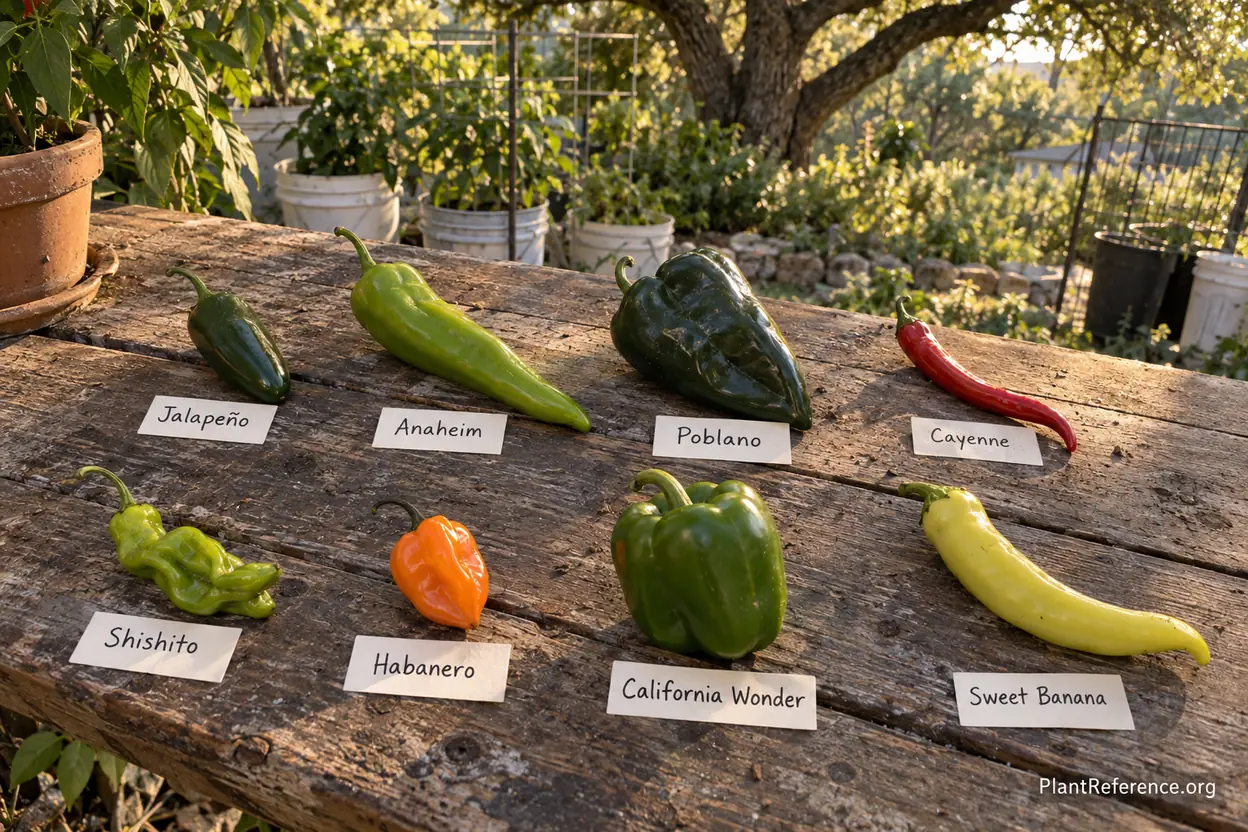
🌿Capsicum annuum 'Jalapeño' (KAP-sih-kum AN-yoo-um) is Austin's pepper. At 2,500-8,000 SHU and 70-80 days, 🌿Capsicum annuum 'Jalapeño' is the backbone of the city's salsa and taco culture. Every Austin garden should have at least two plants. They produce reliably in both containers and raised beds, handle the heat well, and a single plant yields 25-35 fruits over the season. The heat stress of Austin summers pushes 🌿Capsicum annuum 'Jalapeño' toward the upper end of its Scoville range.
🌿Capsicum annuum 'Anaheim' produces at 500-2,500 SHU and 70-80 days. 🌿Capsicum annuum 'Anaheim' is the workhorse mild pepper for roasting and stuffing—popular at Austin's farmers markets. Good heat tolerance for our summers.
🌿Capsicum annuum 'Poblano' at 1,000-2,000 SHU and 65-80 days handles Austin heat well. The large leaves provide natural fruit shade, reducing sunscald risk during triple-digit days. 🌿Capsicum annuum 'Poblano' is a heavy producer that does well in both five-gallon buckets and raised beds.
🌿Capsicum annuum 'Cayenne' thrives at 30,000-50,000 SHU and 70-85 days. Austin's low summer humidity makes 🌿Capsicum annuum 'Cayenne' excellent for drying—hang strings in a covered area and they'll dry in 1-2 weeks. Great for homemade hot sauce.
🌿Capsicum annuum 'Shishito' is the quickest at 60-70 days and 50-200 SHU. 🌿Capsicum annuum 'Shishito' fits Austin's food scene perfectly—every restaurant in town serves blistered shishitos. Prolific in containers.
🌿Capsicum chinense 'Habanero' (KAP-sih-kum chi-NEN-see) needs the longest season at 90-120 days and 100,000-350,000 SHU. Austin's 274 frost-free days give 🌿Capsicum chinense 'Habanero' plenty of runway. March transplants produce by July. The summer heat drives capsaicin to maximum levels.
🌿Capsicum annuum 'California Wonder' at 0 SHU and 70-80 days is the standard bell. 🌿Capsicum annuum 'California Wonder' needs afternoon shade during Austin's hottest weeks to prevent sunscald. Bells are the fussiest variety in Austin heat.
🌿Capsicum annuum 'Sweet Banana' matures early at 65-75 days with 0-500 SHU. Good for pickling. Handles Austin heat better than bells and produces well in containers.
Variety | Days to Maturity | Heat Level (SHU) | Best For Austin | Notes for Zone 8b |
|---|---|---|---|---|
70-80 days | 2,500-8,000 | Salsa, tacos, pickling | Austin's signature pepper; two plants minimum; hotter in heat | |
70-80 days | 500-2,500 | Roasting, stuffing | Workhorse mild pepper; good heat tolerance; farmers market staple | |
65-80 days | 1,000-2,000 | Cooking, rellenos | Large leaves shade fruit; heavy producer; works in buckets | |
70-85 days | 30,000-50,000 | Drying, hot sauce | Low humidity ideal for drying; hang strings outdoors | |
60-70 days | 50-200 | Grilling, blistering | Quickest variety; fits Austin food scene; prolific in containers | |
90-120 days | 100,000-350,000 | Hot sauce, specialty | March transplant for July harvest; 274-day season works | |
70-80 days | 0 | Fresh eating, stuffing | Needs afternoon shade; fussiest in Austin heat | |
65-75 days | 0-500 | Pickling, fresh eating | Better heat tolerance than bells; good in containers |
Specific Planting Dates for Austin
Austin averages a March 1 last frost and November 30 first frost, giving you 274 frost-free days. That's more than enough for every pepper variety. Unlike Phoenix, Austin doesn't typically need a two-wave planting approach—a single spring transplant wave produces from June through November. The summer heat can sometimes cause blossom drop during the worst weeks in July and August, but it's usually brief and plants recover quickly on their own.
Transplant Window: Mid-March through May
Start transplanting outdoors in mid-March once nighttime temperatures consistently hold above 55°F (13°C). Continue through May. Earlier transplants produce more because they're larger and better established when the peak heat arrives. 🌿Capsicum chinense 'Habanero' should go in by late March to maximize its growing window.
Seed Starting: January through March
Start seeds indoors 8-10 weeks before your planned transplant date. For mid-March transplants, start seeds in early January. Seed starting gives you access to varieties that Austin nurseries may not carry—especially 🌿Capsicum annuum 'Shishito' and specialty hot peppers. A sunny south-facing window or a basic shop light works fine.
Brief Summer Slowdown
Austin summers occasionally push past 105°F for stretches in July and August. Pepper blossom drop can occur during these peaks, but it's usually 2-3 weeks—not the 6-8 week gap Phoenix experiences. Plants keep growing and resume production when temperatures moderate. Existing fruit continues ripening through the hot spell. Raised Bed Too Hot in Summer: Protecting Plants from Heat Stress
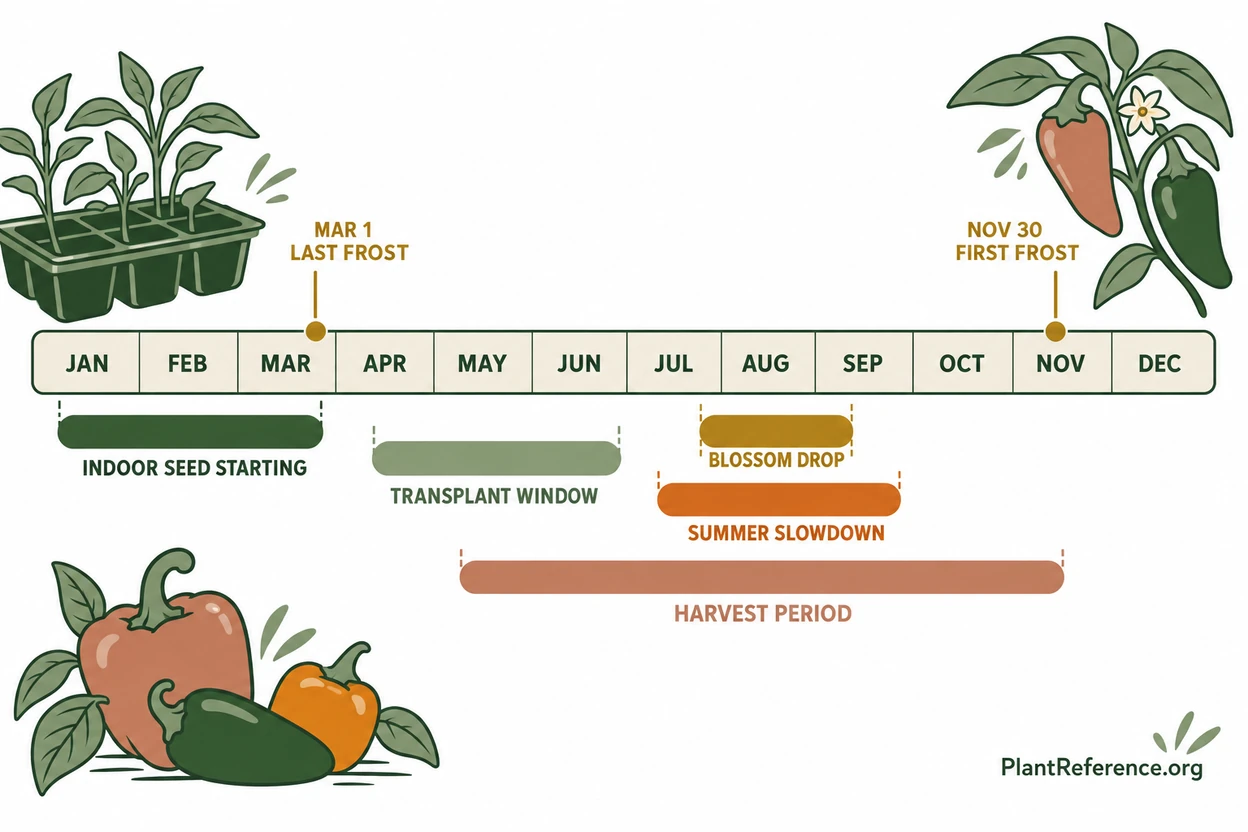
Indoor seed starting: January through March (8-10 weeks before transplant)
Transplant window: Mid-March through May
First harvest: June (from March transplants of fast varieties)
Peak production: June through October
Brief summer slowdown: July-August during 105°F+ heat events (2-3 weeks)
Season end: November frost terminates plants
Complete Growing Guide for Austin
Container Growing: The Five-Gallon Bucket Method
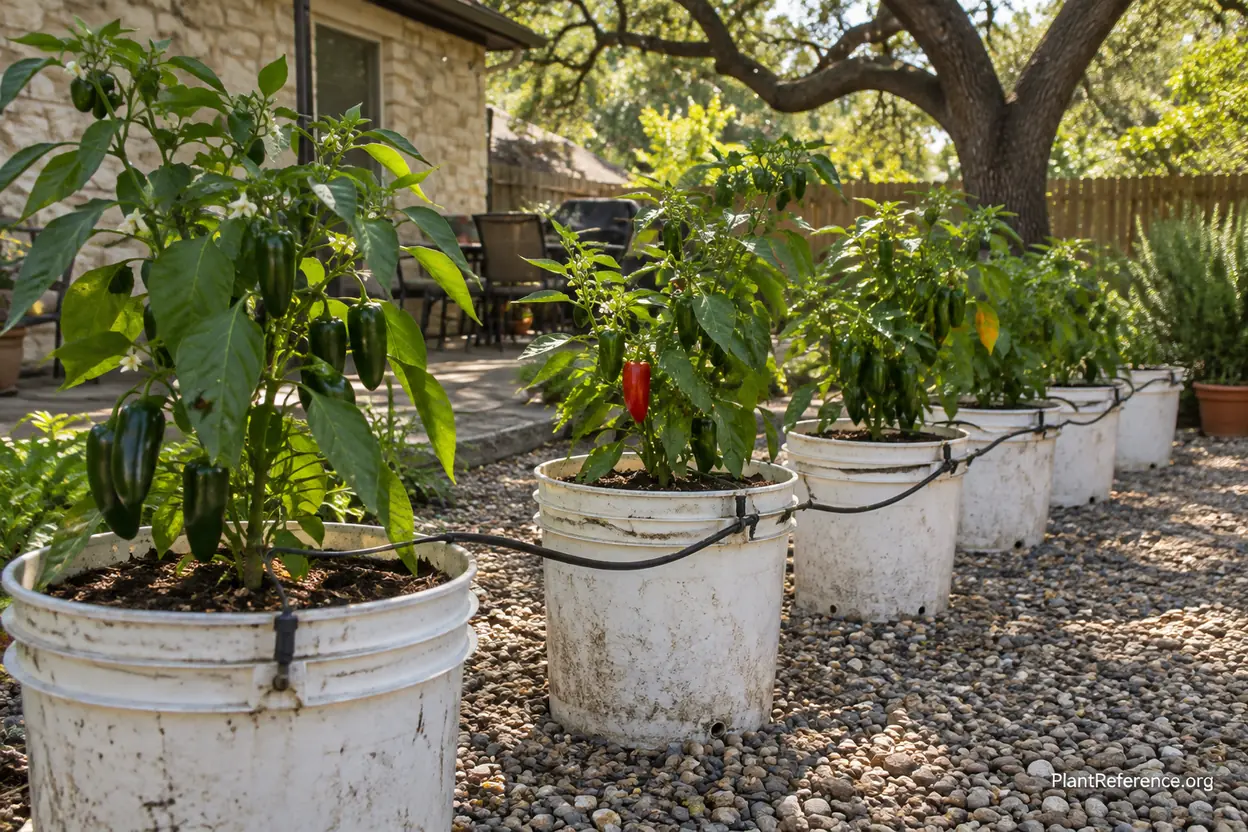
I grow most of my peppers in five-gallon buckets. Here's why: they cost about three dollars if you source used food-grade buckets from restaurants, they bypass the limestone entirely, you control the soil, and you can move them around for sun or shade as needed. Drill 4-6 drainage holes in the bottom. Fill with 70% potting mix and 30% compost. Each bucket supports one pepper plant. Set buckets on a gravel pad for drainage—don't place them directly on limestone or concrete that gets scorching hot in summer. Best Soil Mix for Raised Beds: Creating the Perfect Growing Medium
Raised Bed Option
For gardeners who want larger production, raised beds work well. Build at least 12 inches (30 cm) deep with 60% topsoil, 30% compost, and 10% perlite or coarse sand. West Austin's thin limestone soil means you're building entirely above ground. East Austin's Blackland clay needs the raised bed for drainage more than depth. Add sulfur to lower pH toward 6.0-6.8—both Austin soil types run alkaline. How to Build a Raised Garden Bed: Step-by-Step Construction Guide
Transplanting
Harden off seedlings for 7-10 days. Set transplants 18-24 inches (45-60 cm) apart in beds, or one plant per five-gallon bucket. Plant slightly deeper than the nursery pot. Water deeply at transplanting. Austin's spring weather is erratic—keep floating row cover on hand for late cold fronts. The February 2021 freeze taught every Austin gardener to respect late-season cold snaps. Raised Bed Vegetable Garden Layout: Planning for Maximum Production
Watering
Austin gets about 34 inches of annual rainfall, but distribution is wildly uneven—flash floods from Gulf storms followed by weeks of drought. Peppers need 1-2 inches per week consistently. Drip irrigation is the standard for beds. Containers need daily watering during summer—twice daily during triple-digit stretches. Austin's alkaline city water compounds soil pH issues over time. Raised Bed Irrigation Systems: Watering Solutions for Consistent Growth
Fertilizing
Apply balanced 10-10-10 fertilizer at planting. Switch to low-nitrogen, high-phosphorus formula (5-10-10) when flowering starts. Too much nitrogen means lots of leaves but few peppers—I learned that the hard way. Container plants need more frequent feeding than bed plants because nutrients wash through with every watering. Feed containers every 2-3 weeks; beds every 4-6 weeks. Compost tea is a good supplement for container plants between regular feedings and helps maintain soil biology in the confined bucket environment. Best Soil for Raised Beds: 6 Commercial Mixes Tested and Compared
Mulching
Apply 2-3 inches (5-8 cm) of straw or shredded hardwood bark after transplants establish. Mulch conserves moisture during Austin's dry stretches, keeps roots cooler when limestone radiates stored heat upward, and suppresses the aggressive weeds that Austin's long growing season encourages. Pull mulch 1-2 inches away from stems to prevent crown rot. Raised Bed Soil Settling and Compaction: Prevention and Solutions
Troubleshooting Austin-Specific Problems
Erratic Spring Weather
Austin spring is unpredictable. A 80°F afternoon can be followed by a 35°F cold front 48 hours later. Keep floating row cover or old sheets ready for late-season cold protection through mid-April. Containers have the advantage here—move them against the house or into the garage during cold events. The February 2021 freeze was extreme, but Austin gets milder cold snaps every spring. When to Plant Tomatoes in Austin: Complete Guide + Best Varieties for Zone 8b
Limestone and Alkaline Soil
Edwards Plateau limestone sits 3-12 inches below the surface in many West Austin neighborhoods. Containers and raised beds solve this completely. Even in beds, alkaline city water (pH 7.5-8.0) pushes soil pH upward. Test annually and amend with sulfur. Chelated iron (EDDHA form) corrects yellowing foliage from alkaline lockout. When to Plant Kale in Austin: Complete Guide + Best Varieties for Zone 8b
Summer Heat and Blossom Drop
When Austin hits 100-105°F for consecutive days, pepper flowers may drop. This is temporary—usually 2-3 weeks in late July or early August. Keep watering consistently. Shade cloth (30%) over containers helps during the worst stretches. Fruit that set before the heat spike continues ripening normally. Production rebounds quickly once overnight temperatures drop below 75°F. When to Plant Onions in Austin: Complete Guide + Best Varieties for Zone 8b
Flash Flooding and Drainage
Central Texas is Flash Flood Alley. When Gulf moisture hits the Hill Country terrain, 4-6 inches of rain can fall in hours. Ensure raised beds and containers have excellent drainage. Elevate containers off the ground to prevent sitting in water. Peppers in standing water for more than 24 hours develop root rot that kills plants quickly. Free drainage is insurance against Austin's dramatic rainfall events. Raised Bed Pest Problems: Identification and Organic Control Methods
Harvest & Storage
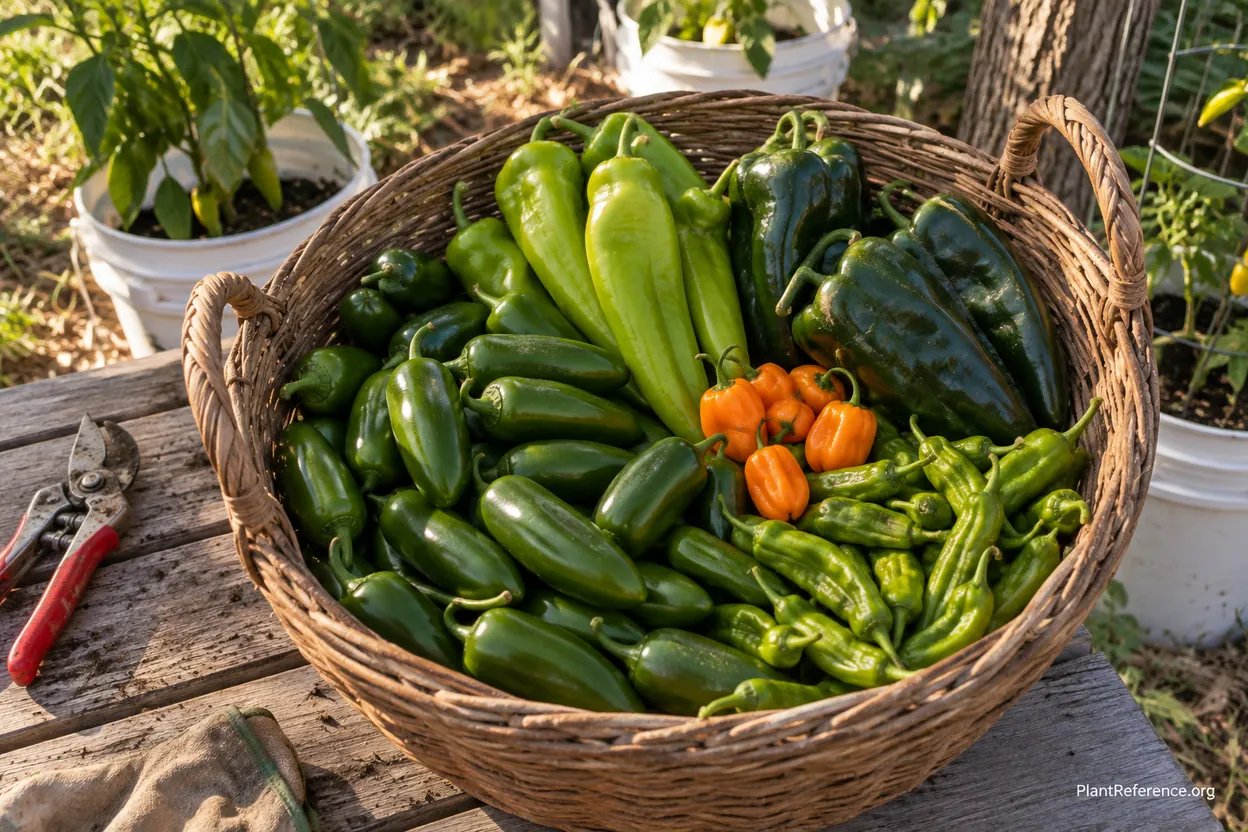
Harvest peppers at any color stage—green jalapeños are the Austin standard, but red-ripe jalapeños (chipotles when smoked) have a sweeter, more complex flavor. Cut stems with pruners rather than pulling, which damages branches. Regular harvesting encourages continued production. A well-maintained 🌿Capsicum annuum 'Jalapeño' plant produces 25-35 fruits over the season in Austin's long warm window. Raised Bed Weeds: Prevention Strategies and Control Methods
🌿Capsicum annuum 'Cayenne' dries well outdoors in Austin's relatively low summer humidity—hang strings in a covered, ventilated area for 1-2 weeks. Fresh peppers store 1-2 weeks refrigerated in a paper bag. Roast and freeze 🌿Capsicum annuum 'Anaheim' and 🌿Capsicum annuum 'Poblano' in portions for year-round use—they're excellent thawed and added to enchiladas or queso. 🌿Capsicum annuum 'Jalapeño' pickles easily and makes Austin-style salsa that stores for months when properly canned. Green jalapeños are the standard, but smoke red-ripe jalapeños low and slow for homemade chipotles. 🌿Capsicum chinense 'Habanero' hot sauce is worth the effort—Austin's farmers market crowd pays premium prices for locally made small-batch hot sauce, and a single healthy plant produces enough fruit for several bottles.
Frequently Asked Questions
Reading about plants and recognising them are different skills. These three build the second.
- Daily PlantIdentify the day’s mystery plant from a close-up photograph.
- Keyed OutWork a dichotomous key, lead by lead, to name a hidden specimen.
- Name That PlantName a specimen from botanical clues dealt hardest first.
Free to play, no account needed
Tagged with
Carlos grew up helping his abuelos tend their backyard garden in San Antonio, Texas, but didn't get serious about growing his own food until he bought his first house in Austin. He works as an HVAC technician during the day and gardens in the early mornings and evenings. Carlos specializes in heat-tolerant vegetables and container growing—essential skills for Texas summers and his south-facing driveway that gets intense sun. He's learned through plenty of failures (multiple dead fig trees, countless bolted lettuce crops) and now helps neighbors troubleshoot their own gardens. His YouTube channel documenting his container tomato experiments has a small but dedicated following. Carlos is passionate about growing food on a budget, often sourcing free containers and building his own compost.