Image 1 of 15
1 / 15
Plant Reference
Wisteria, Genus, floribunda, Species,
- Genus & species
Japanese wisteria
Japan; the species grows wild in mountain forests and along stream banks and has been cultivated in Japanese gardens for centuries; classified as invasive across the southeastern United States where it escapes cultivation and smothers native trees
Overview
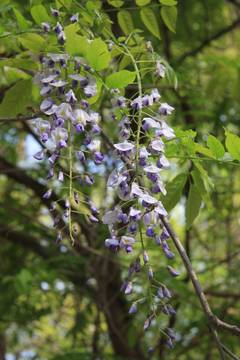
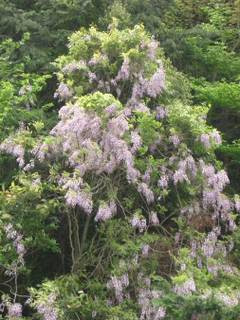
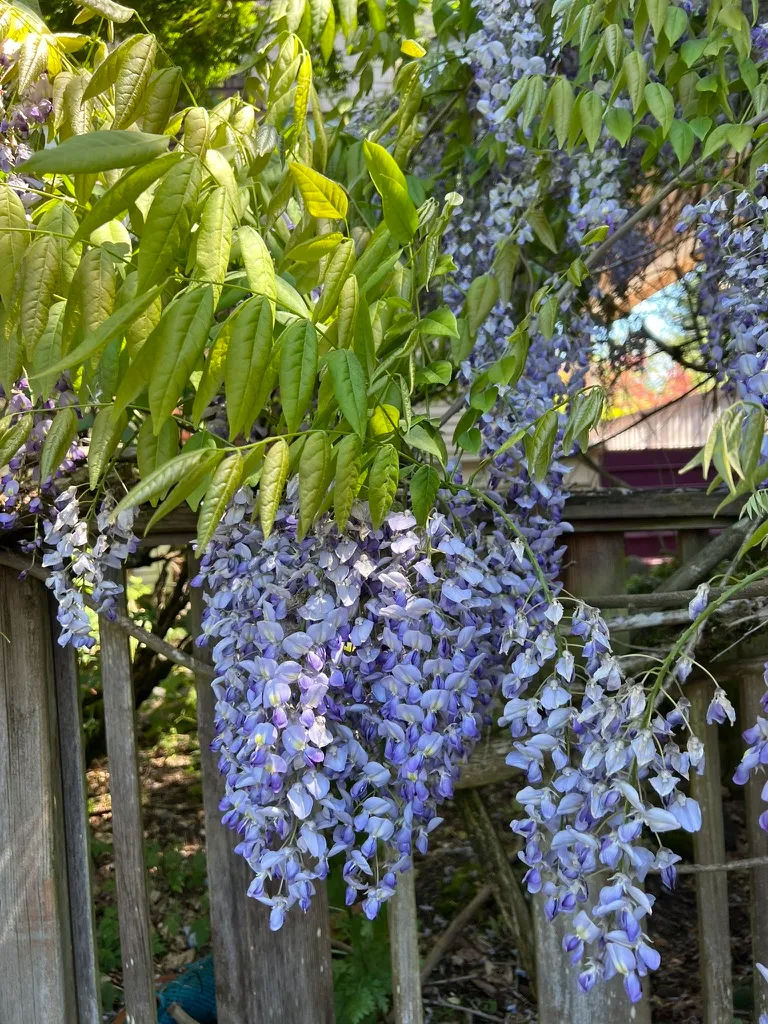
Wisteria floribunda is a vigorous deciduous woody climbing vine in the family Fabaceae native to Japan, reaching 25-35 feet (7.5-10.5 m) or more when supported and covering 15-25 feet (4.5-7.5 m) of lateral space. The species climbs by twining its stems clockwise around any available support when viewed from above, which is the diagnostic field mark that separates it from the closely related Chinese wisteria Wisteria sinensis (counterclockwise twining). Pendant racemes of violet-blue pea-shaped flowers 12-36 inches (30-90 cm) long open during May with flowers expanding gradually from the base of the raceme to the tip, a trait that gives the long racemes their sequential top-to-bottom flowering progression; the species type carries violet-blue flowers, and named cultivars expand the color range into white, pink, and lavender. The cultivar 'Macrobotrys' carries racemes reaching 3-4 feet (0.9-1.2 m) long and is the standard selection where very long racemes are wanted. The raceme length (12-36 inches / 30-90 cm) is substantially longer than that of W. sinensis (6-12 inches / 15-30 cm), which together with the twining direction gives a reliable two-character identification for the species in both flowering and non-flowering conditions. Leaves are alternate and pinnately compound with 13-19 oval leaflets each 1-3 inches (2.5-7 cm) long, emerging medium green in spring and turning yellow in fall. The species is classified as invasive across the southeastern United States, where it escapes cultivation into adjacent woodland and smothers native trees through its combination of vigorous twining growth, shade tolerance of the young seedlings, and persistent seed production; state invasive-species lists including North Carolina, South Carolina, Georgia, and Alabama now include the species, and landscape planting near natural woodland is the primary route by which the invasion expands. The twining stems grow woody with age and exert constricting pressure on whatever they climb — wooden trellises, arbors, gutters, railings, and small tree trunks are routinely girdled, crushed, or pulled down by mature vines, and steel or masonry supports are the only structures strong enough to carry a mature specimen without damage. Seedling-grown plants carry a long juvenile period of 10-15 years before first bloom, while grafted named cultivars flower in 3-5 years. All parts of the plant contain wisterin glycoside and are toxic to humans, dogs, cats, horses, and livestock on ingestion, with the seeds carrying the highest toxin concentration; the seeds are visually similar to small beans and are the most common source of accidental poisoning in both humans and dogs.
Native Range
Wisteria floribunda is native to the Japanese archipelago from Hokkaido south through Kyushu, where it grows wild in mountain forests, along stream banks, and at woodland edges up to mid elevations. The species has been cultivated in Japanese gardens for over a thousand years and is featured in temple and shrine gardens across the country, most famously at Ashikaga Flower Park and Kawachi Fuji Gardens where large mature trained specimens draw tourists during the May flowering season. The species was introduced to Europe and North America in the 19th century, and it has naturalized aggressively across the southeastern United States where climate conditions match those of the native range.Suggested Uses
Planted on strong steel or masonry pergolas, arbors, and wall-mounted steel wire support systems at 15-25 feet (4.5-7.5 m) of lateral support space per plant in zones 4-9. The long pendant flower racemes give the species its main use as an overhead pergola planting where visitors walk beneath the flowering vine during May bloom. Traditional Japanese garden design features trained specimens on wooden frameworks with steel reinforcement for historical presentation. Not suited to planting in the southeastern United States where the species is classified as invasive and escapes cultivation into adjacent woodland, wooden trellises and arbors without steel reinforcement (the twining stems crush the support within a decade of planting), landscapes where the twice-yearly pruning schedule cannot be maintained (neglected vines produce little bloom and grow uncontrollably), gardens with unsupervised access by young children or pets where fallen seeds create an ingestion poisoning risk, or positions adjacent to trees that the vine can climb and smother.How to Identify
Appearance
Size & Dimensions
Height25' - 35'
Width/Spread15' - 25'
Bloom Information
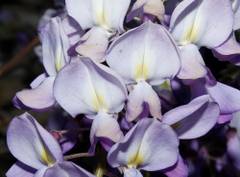
Violet-blue pea-shaped flowers open in long pendant racemes 12-36 inches (30-90 cm) long during May in zones 4-9, averaging 3 weeks of bloom. Flowers expand gradually from the base of the raceme to the tip, so the opening sequence progresses downward over about a week during peak bloom. Flowers carry a moderate sweet fragrance and are visited by bees, butterflies, and other pollinators. Flowers form on short spurs close to the woody framework rather than on vegetative whip growth, and the spur-pruning system used twice a year keeps the flowering framework close to the support structure and exposed to sunlight needed for flower bud formation. Seedling-grown plants carry a long juvenile period of 10-15 years before first bloom; grafted named cultivars begin flowering within 3-5 years of planting.
Detailed Descriptions
Flower Description
violet-blue on the species type, with white, pink, and lavender cultivars available; pea-shaped flowers in long pendant racemes 12-36 inches (30-90 cm) long — substantially longer than the 6-12 inch (15-30 cm) racemes of Wisteria sinensis; flowers open gradually from the base of the raceme to the tip; moderately fragrantFoliage Description
medium green, alternate, pinnately compound with 13-19 oval leaflets each 1-3 inches (2.5-7 cm) long; turns yellow in fallGrowing Conditions
Sun Requirements
Requires 6-12 hours of direct sunlight daily
• Full Sun: 6+ hours of direct sunlight
• Partial Shade: 3-6 hours of direct sunlight
• Full Shade: Less than 3 hours of direct sunlight
Care & Maintenance
Care Guide
Plant in well-drained loamy or clay soil with a pH of 5.5-7.5 in full sun (6+ hours); full sun is essential for flower bud formation and shaded positions produce foliage without bloom. Water weekly through the first 2 growing seasons; established plants are drought-tolerant. A strong steel or masonry support is needed before planting — the twining stems grow woody with age and crush wooden trellises, arbors, and gutters through constricting pressure on the support material. Twice-annual pruning is the central maintenance task on the species and is done on a strict schedule to control size and maintain flowering: in July and August long vegetative whips are shortened to 6 inches (15 cm) or 5-6 leaves from the main framework, and in January and February the same summer-pruned shoots are further shortened to 2-3 buds from the framework, producing the short spurs on which flowers form. The species is classified as invasive across the southeastern United States (including North Carolina, South Carolina, Georgia, and Alabama) where it escapes cultivation into adjacent woodland and smothers native trees; planting in these states requires review of state invasive-species lists and any local prohibitions before installation. All parts of the plant contain wisterin glycoside and are toxic to humans, dogs, cats, horses, and livestock on ingestion, with the seeds carrying the highest toxin concentration and accounting for most accidental poisoning cases. Deer browse is rare.Pruning
Pruning is done twice a year on a strict schedule to control the vigorous growth of the species and maintain flowering on the framework. The summer prune is done in July and August: long vegetative whip growth from the current season is shortened to 6 inches (15 cm) or 5-6 leaves from the main framework, which redirects the plant's energy from vegetative extension into flower bud formation on the remaining short wood. The winter prune is done in January and February while the vine is leafless: the summer-pruned shoots are further shortened to 2-3 buds from the main framework, producing the short flowering spurs characteristic of well-managed wisteria specimens. This spur-pruning system concentrates flowering on short wood close to the framework where flowers are visible and accessible, rather than on long unpruned whips extending away from the support. Neglected vines produce few flowers and grow uncontrollably across the support structure and into adjacent trees.Pruning Schedule
Prune: January–February & July–August
wintersummer