Image 1 of 16
1 / 16
Plant Reference
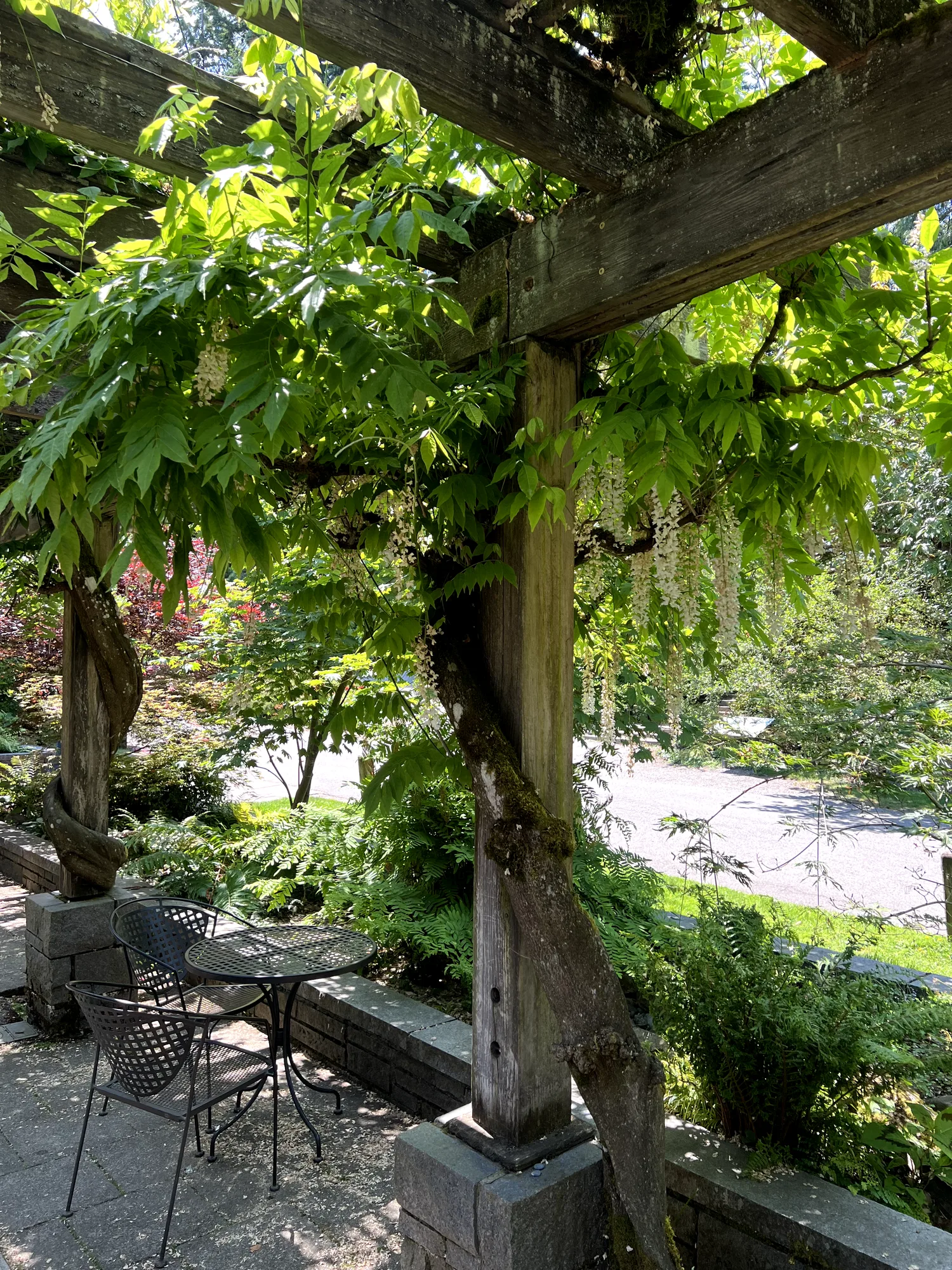
Wisteria, Genus, sinensis, Species,
- Genus & species
Chinese wisteria
China; cultivated for centuries in Chinese gardens
Overview
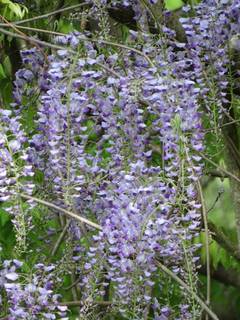
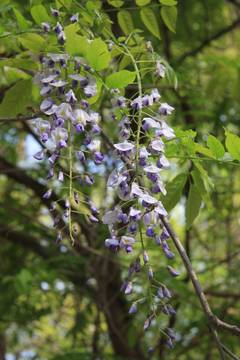
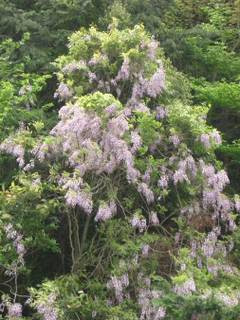
Wisteria sinensis is Chinese wisteria, a vigorous deciduous climbing vine reaching 25-40 feet (7.5-12 m) by twining counterclockwise around supports. Blue-violet to lavender pea-shaped flowers in pendant racemes 6-12 inches (15-30 cm) in April-May — all flowers in the raceme open simultaneously (unlike W. floribunda where flowers open base to tip). Strongly fragrant. Shorter racemes than W. floribunda (12-36 inches / 30-90 cm). Medium green pinnately compound leaves with 7-13 leaflets each 2-3 inches (5-7 cm). In Fabaceae. Native to China. Classified as invasive in many southeastern and mid-Atlantic US states — escapes cultivation by seed and root fragments, smothers native vegetation. This invasive potential is the primary ecological limitation. The vigorous twining stems girdle and crush support structures and tree trunks. Seed-grown plants may take 10-20 years to bloom; grafted cultivars bloom in 3-5 years. Requires twice-annual pruning (summer + winter) to control size and promote flowering. Native alternatives: W. frutescens (American wisteria — non-invasive, zones 5-9). All parts toxic (wisterin glycoside — seeds most toxic). Deer-resistant. Zones 5-9. Full sun. Growth rate is very fast.
Native Range
Native to China. Cultivated for centuries in Chinese gardens.Suggested Uses
Grown on strong steel or masonry pergolas, arbors, and walls with 15-25 feet (4.5-7.5 m) of support. Invasive — not recommended in southeastern US; use native W. frutescens instead. Twice-annual pruning. Not for wood trellises. Toxic. Zones 5-9.How to Identify
Appearance
Size & Dimensions
Height25' - 40'
Width/Spread15' - 25'
Bloom Information
Mid to late spring (April-May). Blue-violet to lavender pea-shaped flowers in pendant racemes 6-12 inches (15-30 cm). All flowers open simultaneously. Strongly fragrant. 2 weeks on old wood (short spurs). Bee- and butterfly-visited.
Detailed Descriptions
Flower Description
Blue-violet to lavender (species type), also white cultivars; pea-shaped, tiny, in pendant racemes 6-12 inches (15-30 cm) — shorter racemes than W. floribunda (12-36 inches / 30-90 cm); all flowers in the raceme open simultaneouslyFoliage Description
Medium green, alternate, pinnately compound with 7-13 leaflets each 2-3 inches (5-7 cm); turns yellow in fallGrowing Conditions
Sun Requirements
Requires 6-10 hours of direct sunlight daily
• Full Sun: 6+ hours of direct sunlight
• Partial Shade: 3-6 hours of direct sunlight
• Full Shade: Less than 3 hours of direct sunlight
Care & Maintenance
Care Guide
Full sun (6+ hours — essential for bloom). Well-drained soil pH 6.0-7.0. Requires strong steel or masonry support. Twice-annual pruning: summer (July-August, shorten whips to 6 inches / 15 cm) and winter (February, shorten to 2-3 buds). Invasive in southeastern and mid-Atlantic US — consider native W. frutescens instead. All parts toxic. Deer-resistant. Zones 5-9.Pruning
Prune twice annually. Summer (July-August): shorten long vegetative whips to 6 inches (15 cm) or 5-6 leaves. Winter (February): shorten summer-pruned shoots to 2-3 buds. This spur-pruning concentrates flowering on short spurs. Remove any root suckers or seedlings.Pruning Schedule
Prune: February & July–August
summerwinter