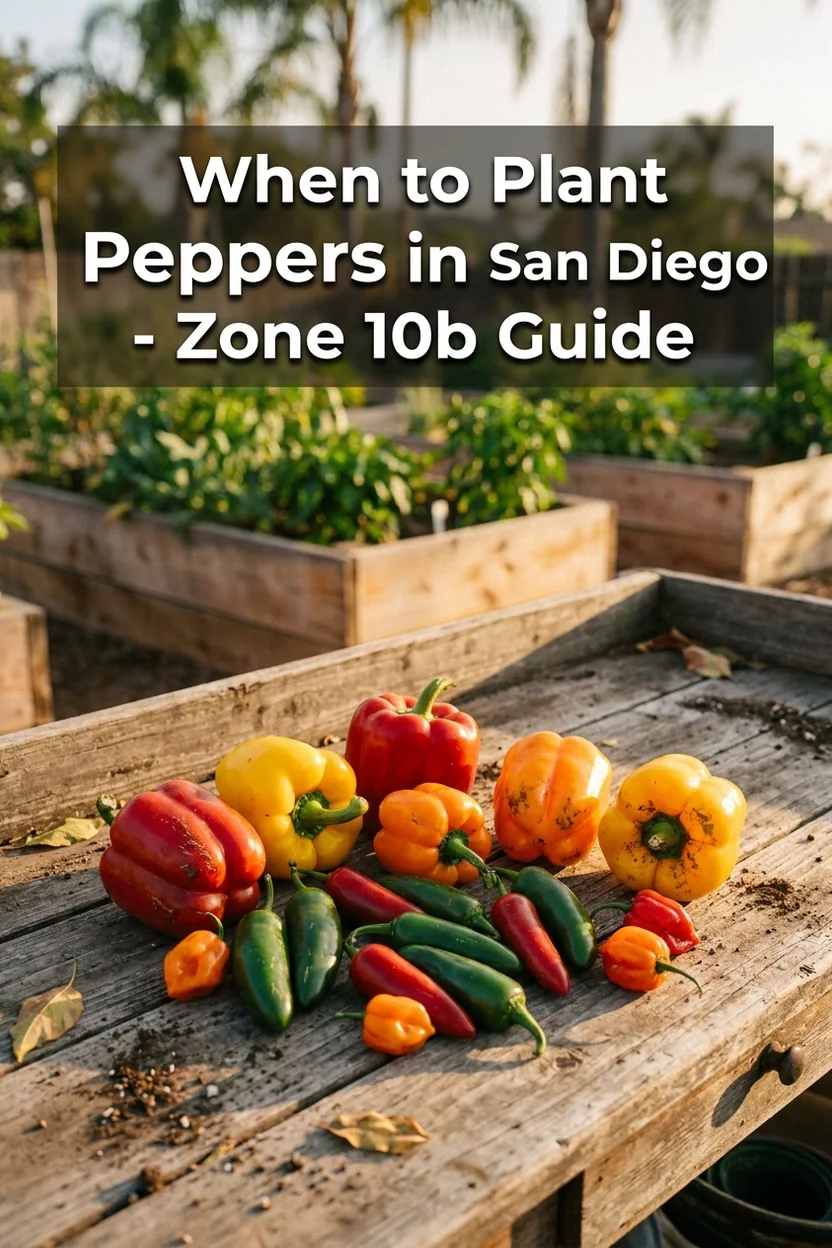
When to Plant Peppers in San Diego: Zone 10b Dates + Best Varieties
Pets & Toxicity
Recorded toxicity for plants linked in this guide. An unknown status is not a safety assessment.
Toxic to pets: Poblano pepperDetailsHide
Capsicum annuum 'California Wonder' — Toxicity
Non-toxicView Capsicum annuum 'California Wonder' plant profileCapsicum annuum 'Jalapeño' — Toxicity: Not assessed
Capsaicin in fruit causes burning sensations in mouth and on skin. Fruit and handling oils are irritating to eyes and mucous membranes but are not toxic in the usual sense. Gloves are used during harvesting and processing; hands are washed thoroughly before touching face. Small amounts are generally safe for pets but can cause digestive upset.View Capsicum annuum 'Jalapeño' plant profileCapsicum annuum 'Poblano' — Toxicity Warning
Toxic to petsView Capsicum annuum 'Poblano' plant profileCapsicum chinense 'Habanero' — Toxicity: Not assessed
Fruit contains capsaicin at 100,000–350,000 Scoville Heat Units — strong enough to cause severe burning on skin, eyes, and mucous membranes through simple contact with cut fruit or the hand that held it. Nitrile gloves are used during handling and food preparation; face and eye contact is avoided. The fruit is irritating rather than toxic in the usual sense, but the heat level can cause significant discomfort and real injury if mishandled. The plant is kept out of reach of children and pets.View Capsicum chinense 'Habanero' plant profile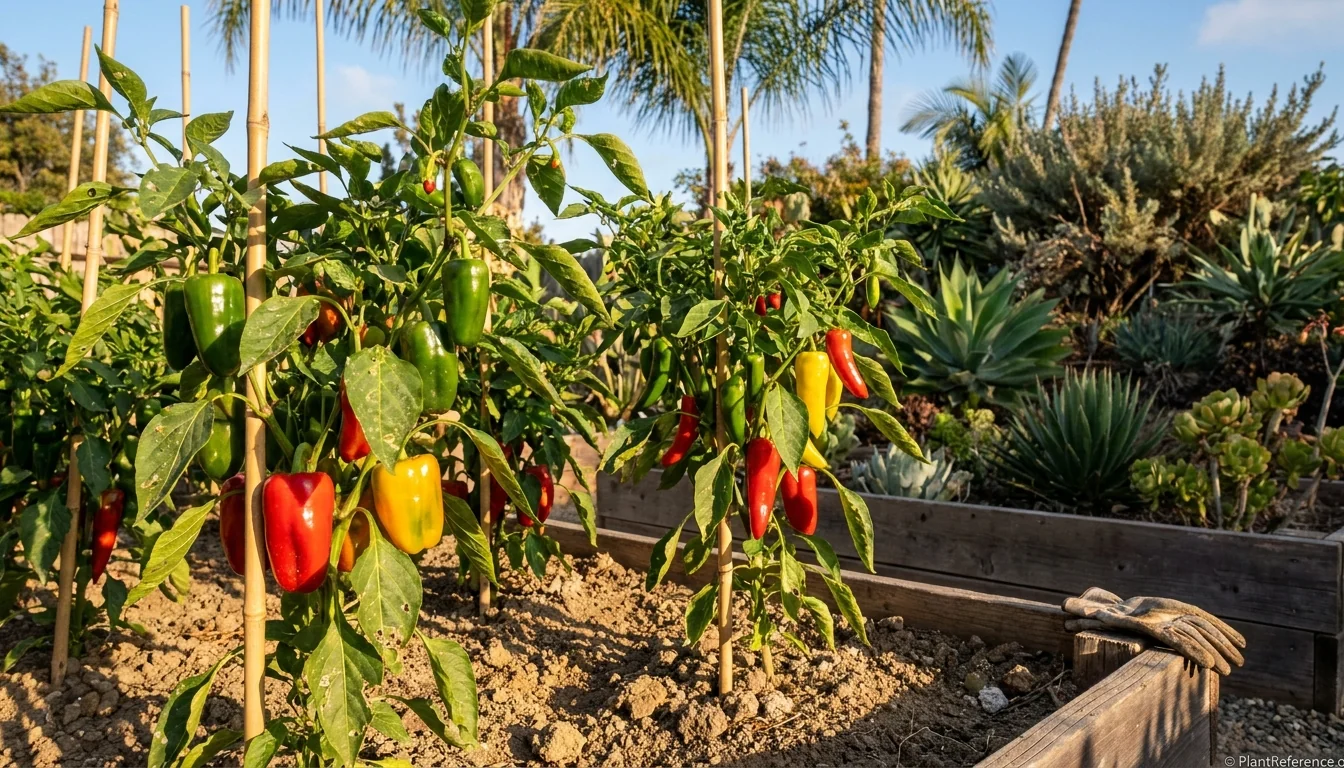
— Image © Plant Reference 2026
San Diego is one of the easiest cities in the country for growing peppers. Our long frost-free season, reliable sunshine, and mild winters mean you can harvest peppers from June through December without much effort. The main variable is where you live in the metro area. Coastal neighborhoods from La Jolla through Coronado stay cooler year-round—great for mild varieties but sometimes too cool for the hottest peppers. Inland areas like El Cajon, Escondido, and Ramona get the sustained heat that hot peppers need to develop their full Scoville potential. Once you understand your microclimate, variety selection becomes straightforward.
Best Pepper Varieties for San Diego's Zone 10b Climate
San Diego's soil varies dramatically across the metro area. Coastal neighborhoods have sandy loam—fast-draining and easy to work. Inland valleys have heavier clay. Hillside neighborhoods throughout the county sit on decomposed granite—shallow and rocky. Peppers adapt to all three with appropriate amendment, but drainage matters most. Peppers tolerate heat far better than wet feet.
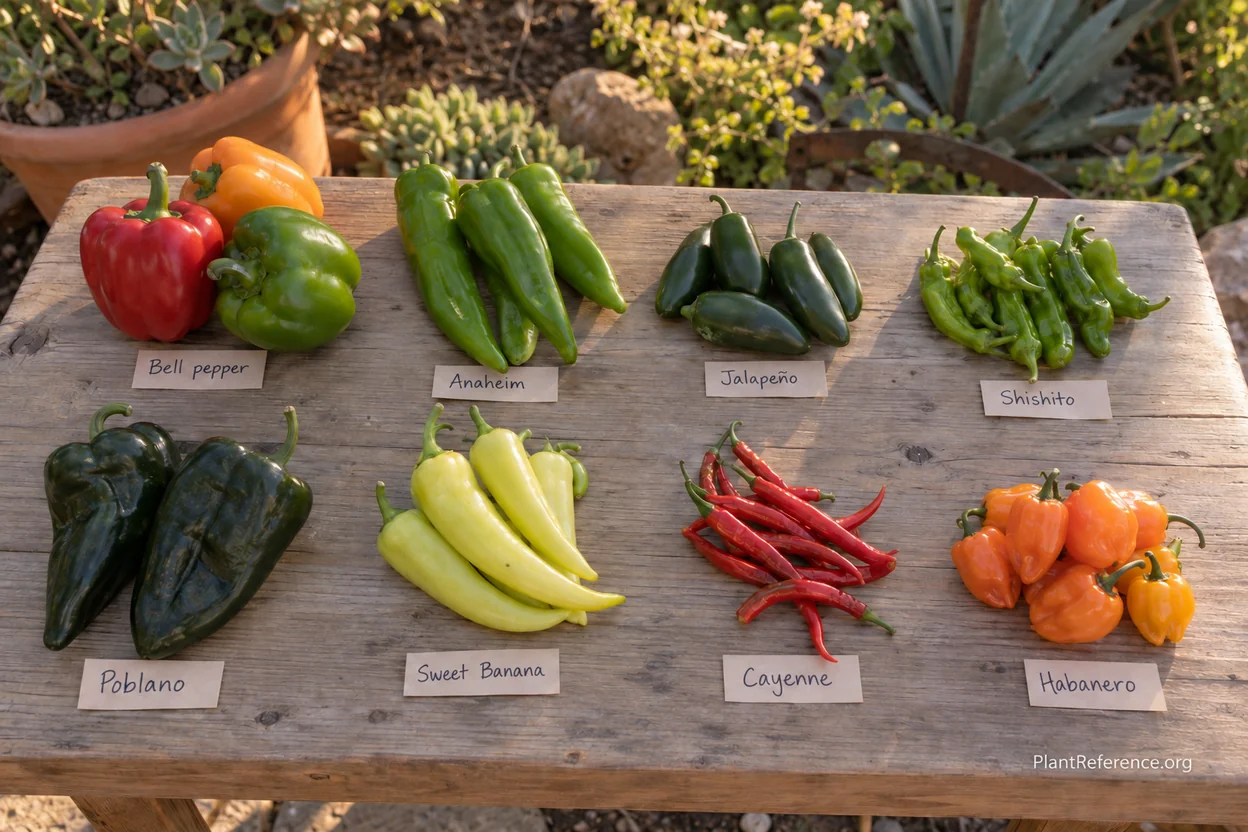
🌿Capsicum annuum 'Anaheim' (KAP-sih-kum AN-yoo-um) was literally developed in Southern California. At 500-2,500 SHU, 🌿Capsicum annuum 'Anaheim' delivers mild, versatile heat perfect for roasting and stuffing. The 70-80 day maturity fits San Diego's window easily, and the plants are vigorous producers in our Mediterranean climate. This is the variety most San Diego gardeners should start with.
🌿Capsicum annuum 'California Wonder' is the classic bell pepper. At 0 SHU and 70-80 days to maturity, 🌿Capsicum annuum 'California Wonder' produces thick-walled fruits ideal for fresh eating. Coastal gardeners often have the best luck with bells—the moderate temperatures prevent sunscald that inland heat can cause. Provide afternoon shade in inland neighborhoods.
🌿Capsicum annuum 'Jalapeño' produces reliably in every San Diego microclimate. At 2,500-8,000 SHU and 70-80 days, 🌿Capsicum annuum 'Jalapeño' is the workhorse hot pepper. Inland plants produce hotter fruits than coastal ones—the heat stress concentrates capsaicin. Succession plant March through June for continuous harvest.
🌿Capsicum annuum 'Shishito' matures in just 60-70 days at 50-200 SHU—the fastest pepper in this lineup. 🌿Capsicum annuum 'Shishito' produces prolifically and fits San Diego's food-forward culture perfectly. Plant in succession for a steady supply of the grilling favorite.
🌿Capsicum annuum 'Poblano' thrives in San Diego's dry warmth. At 1,000-2,000 SHU and 65-80 days, 🌿Capsicum annuum 'Poblano' produces the large, dark green fruits essential for chiles rellenos. Heavy producer in both coastal and inland locations.
🌿Capsicum annuum 'Sweet Banana' matures early at 65-75 days with 0-500 SHU. Good for beginners and for pickling. 🌿Capsicum annuum 'Sweet Banana' works well in containers on patios and balconies—a practical option for San Diego's apartment gardeners.
🌿Capsicum annuum 'Cayenne' needs 70-85 days and produces 30,000-50,000 SHU thin-walled fruits perfect for drying in San Diego's low humidity. 🌿Capsicum annuum 'Cayenne' is one of the best varieties for inland gardens where sustained heat drives capsaicin production.
🌿Capsicum chinense 'Habanero' is the most demanding variety at 90-120 days and 100,000-350,000 SHU. 🌿Capsicum chinense 'Habanero' needs sustained heat that only inland San Diego neighborhoods reliably provide. Coastal gardeners can grow Habaneros but should expect lower heat levels and longer maturation. March transplants give this variety the longest runway.
Variety | Days to Maturity | Heat Level (SHU) | Best For San Diego | Notes for Zone 10b |
|---|---|---|---|---|
70-80 days | 500-2,500 | Roasting, stuffing | Developed in SoCal; top pick for any San Diego garden | |
70-80 days | 0 | Fresh eating, stuffing | Best on coast; provide afternoon shade inland | |
70-80 days | 2,500-8,000 | Salsa, pickling | Hotter fruits inland; reliable everywhere | |
60-70 days | 50-200 | Grilling, appetizers | Fastest variety; great for succession planting | |
65-80 days | 1,000-2,000 | Cooking, rellenos | Thrives in dry heat; heavy producer | |
65-75 days | 0-500 | Pickling, fresh eating | Early variety; excellent for containers | |
70-85 days | 30,000-50,000 | Drying, hot sauce | Best inland; low humidity ideal for drying | |
90-120 days | 100,000-350,000 | Hot sauce, specialty | Inland only for full heat; transplant by March |
Specific Planting Dates for San Diego
San Diego averages a February 1 last frost and December 20 first frost, giving you 322 frost-free days. Peppers are warm-season crops that need soil temperatures above 65°F (18°C) for transplanting and above 75°F for optimal growth. Unlike carrots, peppers love heat—the challenge isn't avoiding it but making sure you have enough of it, especially on the coast.
Transplant Window: Mid-March through July
Start transplanting outdoors in mid-March once nighttime temperatures consistently hold above 55°F (13°C). Coastal neighborhoods reach this threshold a week or two later than inland areas. Continue transplanting through July—even late-season plants have enough time to produce before December frosts. March through May transplants produce the largest harvests because they benefit from the full summer heat cycle.
Seed Starting: January through April
Start seeds indoors 8-10 weeks before your planned transplant date. For March transplants, start seeds in early January. 🌿Capsicum chinense 'Habanero' needs the earliest start—January sowing for mid-March transplant gives this slow variety the full runway it needs. Fast varieties like 🌿Capsicum annuum 'Shishito' can be started as late as May for July transplanting.
Overwintering Potential
San Diego's mild winters allow pepper plants to survive as perennials. Cut back plants to 6-8 inches after the last fall harvest, reduce watering, and protect during the occasional cold event. Second-year plants produce earlier and heavier than first-year transplants. This is one of San Diego's biggest advantages for pepper growers. Raised Bed Too Hot in Summer: Protecting Plants from Heat Stress
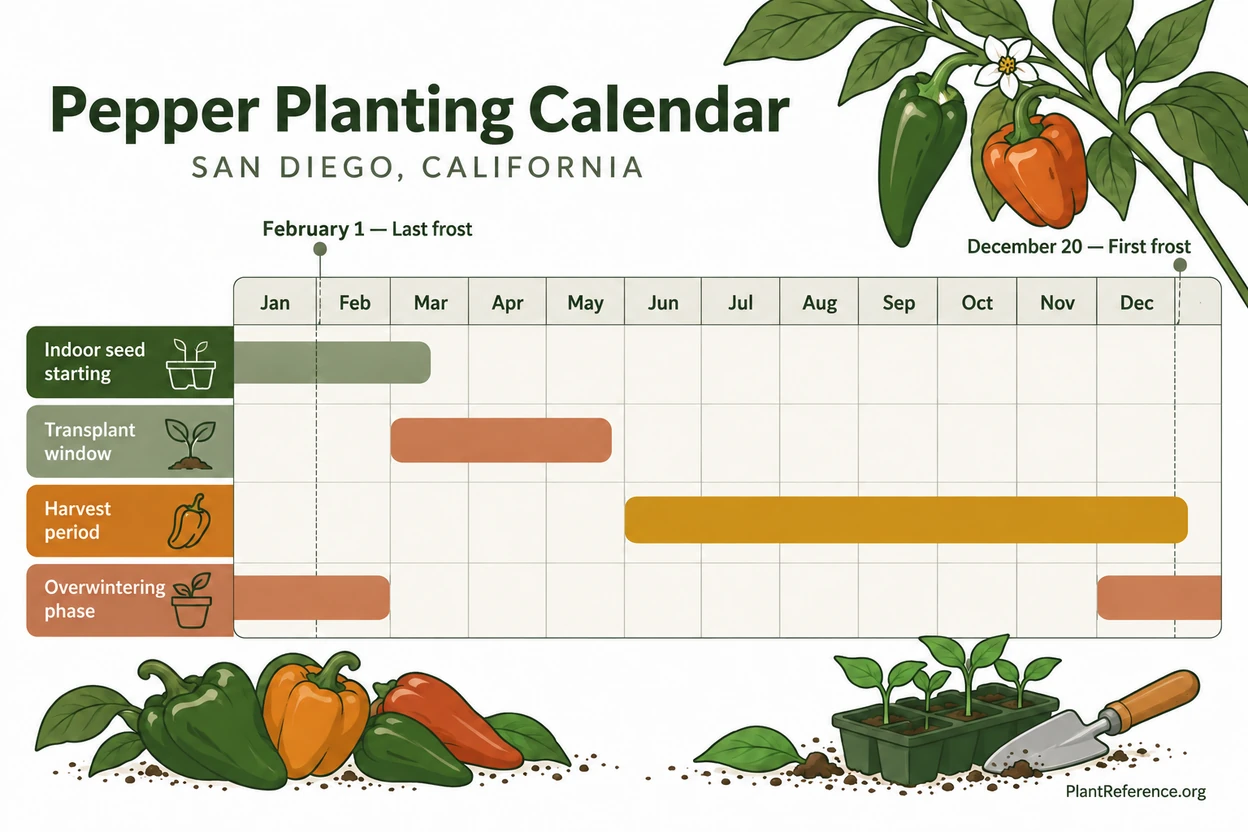
Indoor seed starting: January through April (8-10 weeks before transplant)
Transplant window: Mid-March through July
First harvest: June (from March transplants of fast varieties)
Continuous harvest: June through December
Overwintering: Cut back after last harvest, protect from rare frost events
Best production: March-May transplants benefit from full summer heat
Complete Growing Guide for San Diego
Soil Preparation
San Diego soil types vary by neighborhood. Coastal sandy loam drains well but needs compost for nutrient retention. Inland clay needs compost and coarse sand for drainage. Hillside decomposed granite is too shallow for most peppers—raised beds or containers are necessary. Peppers prefer pH 6.0-6.8, and San Diego soil generally runs 7.0-8.0. Sulfur amendment lowers pH toward the ideal range. Best Soil Mix for Raised Beds: Creating the Perfect Growing Medium
Work 3-4 inches (8-10 cm) of compost into the top 12 inches of soil before transplanting. Add a balanced 10-10-10 fertilizer at planting. For raised beds, use 60% topsoil, 30% compost, and 10% perlite or coarse sand. How to Build a Raised Garden Bed: Step-by-Step Construction Guide
Transplanting
Harden off seedlings for 7-10 days before transplanting. Set transplants 18-24 inches (45-60 cm) apart—peppers need good air circulation in San Diego's occasional humid coastal air. Plant slightly deeper than the nursery pot, burying 1-2 inches of stem. Water deeply at transplanting and provide temporary shade for the first 3-5 days if transplanting during warm weather. Raised Bed Vegetable Garden Layout: Planning for Maximum Production
Watering
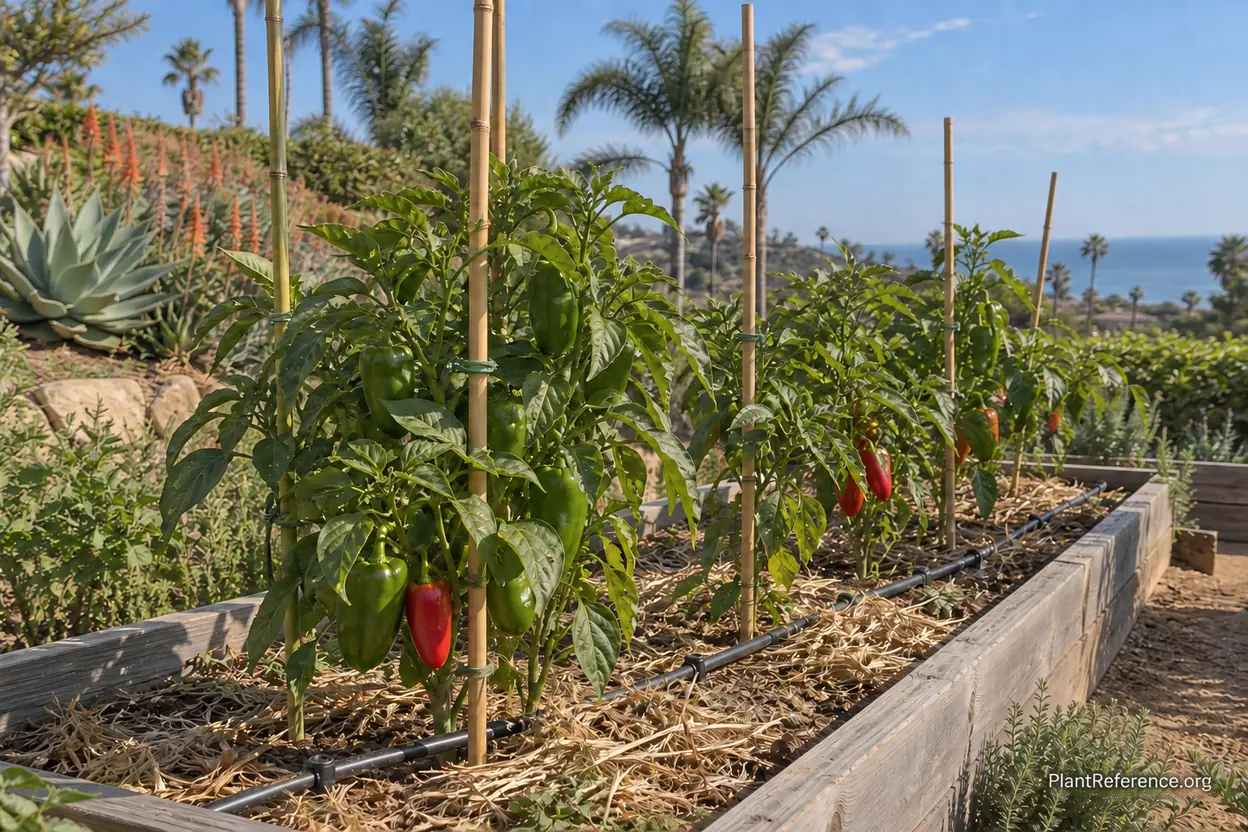
San Diego receives only about 10 inches of annual rainfall. Peppers need 1-2 inches per week during active growth. Drip irrigation is the standard—it delivers water efficiently and keeps foliage dry. Reduce watering slightly when fruits are ripening to concentrate flavor and heat. Inconsistent watering causes blossom end rot and cracking. Raised Bed Irrigation Systems: Watering Solutions for Consistent Growth
Fertilizing
Peppers are moderate feeders. Apply a balanced fertilizer at planting, then switch to a low-nitrogen, high-phosphorus formula (like 5-10-10) when flowering begins. Too much nitrogen produces lush foliage but few fruits—a common mistake for first-time pepper growers who overfeed expecting bigger harvests. Side-dress with compost every 4-6 weeks during the growing season. Calcium supplementation through bone meal or gypsum helps prevent blossom end rot, particularly in sandy coastal soil where calcium leaches quickly. Best Soil for Raised Beds: 6 Commercial Mixes Tested and Compared
Mulching
Apply 2-3 inches (5-8 cm) of straw or shredded bark after transplants establish. Mulch conserves the moisture that San Diego's dry climate pulls from beds, suppresses weeds, and moderates soil temperature. In inland neighborhoods where soil temperatures can exceed 95°F in summer, mulch prevents root stress. Raised Bed Soil Settling and Compaction: Prevention and Solutions
Staking and Support
Most pepper varieties benefit from support in San Diego, where afternoon ocean breezes can stress loaded branches. Stake bell peppers and Poblanos at transplanting with bamboo stakes or tomato cages. Compact varieties like 🌿Capsicum annuum 'Shishito' and 🌿Capsicum annuum 'Jalapeño' usually support themselves but benefit from caging when heavily fruited. Habanero plants grow tall and leggy—stake early to prevent wind damage during Santa Ana wind events in fall.
Companion Planting
Peppers grow well alongside basil, which may help repel aphids and improve flavor in some gardeners' experience. Avoid planting near fennel, which inhibits pepper growth. In San Diego's raised beds, interplanting peppers with low-growing herbs maximizes production per square foot and provides living mulch that reduces water evaporation from exposed soil surfaces.
Troubleshooting San Diego-Specific Problems
Coastal Cool Temperatures
San Diego's coastal neighborhoods sometimes stay too cool for hot pepper varieties. Marine layer and June gloom keep temperatures in the 60s-70s°F—below the 80°F threshold where 🌿Capsicum chinense 'Habanero' and 🌿Capsicum annuum 'Cayenne' develop maximum heat. Grow hot varieties against south-facing walls or use black plastic mulch to increase soil temperature. Coastal gardeners often have better results with mild varieties like 🌿Capsicum annuum 'Anaheim' and 🌿Capsicum annuum 'Shishito'. When to Plant Kale in San Diego: Complete Guide + Best Varieties for Zone 10b
Sunscald on Inland Plants
Inland San Diego temperatures exceeding 100°F cause white, papery patches on fruit—sunscald. Maintain dense foliage canopy by avoiding over-pruning. Provide 30% shade cloth during extreme heat events. Varieties with heavy leaf cover like 🌿Capsicum annuum 'Poblano' resist sunscald better than upright types. When to Plant Green Beans in San Diego: Complete Guide + Best Varieties for Zone 10b
Blossom Drop
Peppers drop flowers when nighttime temperatures exceed 75°F or drop below 55°F. In inland San Diego, midsummer nights occasionally stay warm enough to trigger drop. Coastal areas rarely have this problem. Flower drop is temporary—production resumes when temperatures moderate. Ensure consistent watering during hot spells. When to Plant Onions in San Diego: Complete Guide + Best Varieties for Zone 10b
Aphid and Whitefly Pressure
San Diego's frost-free climate means pest populations never reset. Monitor peppers weekly for aphids and whiteflies. A strong water spray dislodges light infestations. Neem oil every 7-14 days manages heavier pressure. Encourage ladybugs and lacewings—they thrive year-round in San Diego and provide effective biological control. Raised Bed Pest Problems: Identification and Organic Control Methods
Harvest & Storage
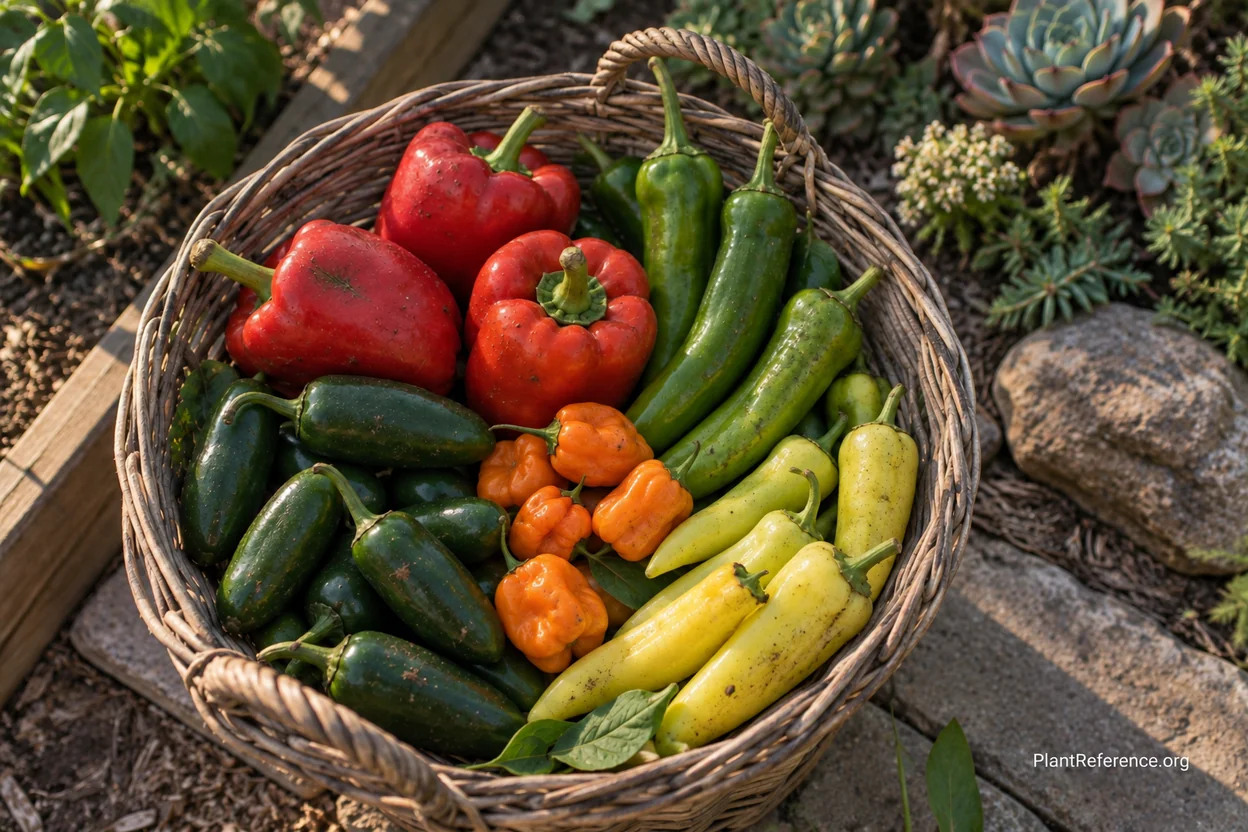
Harvest peppers at any stage—green fruits are perfectly edible, and allowing fruits to ripen to red, orange, or yellow increases sweetness and vitamin content. Cut stems with pruners rather than pulling, which can damage branches and reduce future production. Regular harvesting encourages continued production throughout the season—a single 🌿Capsicum annuum 'Jalapeño' plant can produce 25-35 fruits over a San Diego growing season when picked consistently. Raised Bed Weeds: Prevention Strategies and Control Methods
🌿Capsicum annuum 'Cayenne' and 🌿Capsicum annuum 'Anaheim' dry exceptionally well in San Diego's low humidity. String fruits together and hang in a dry, ventilated area—they'll dry naturally within 2-3 weeks without the mold risk that humid climates create. Fresh peppers store 1-2 weeks refrigerated in a paper bag or perforated plastic. For longer storage, freeze whole or sliced, or roast and freeze in portions. 🌿Capsicum annuum 'Jalapeño' pickles well for year-round use. Hot sauce from 🌿Capsicum chinense 'Habanero' preserves the harvest indefinitely and makes excellent gifts from the garden.
Frequently Asked Questions
Reading about plants and recognising them are different skills. These three build the second.
- Daily PlantIdentify the day’s mystery plant from a close-up photograph.
- Keyed OutWork a dichotomous key, lead by lead, to name a hidden specimen.
- Name That PlantName a specimen from botanical clues dealt hardest first.
Free to play, no account needed
Tagged with
Emma runs a small succulent propagation business from her home in San Diego, shipping starter plants and cuttings across the country. She fell into succulents after college when she realized they were the only plants that survived her travel schedule—she was working as a travel nurse at the time. San Diego's mild, dry climate is ideal for outdoor succulent gardens, and Emma's front yard is a living catalog of over 200 varieties. She completed a certificate program in ornamental horticulture and writes about succulent care, propagation techniques, and drought-tolerant garden design. Her writing is calm and reassuring—she knows people feel bad about killing plants, and she wants them to stop worrying so much.