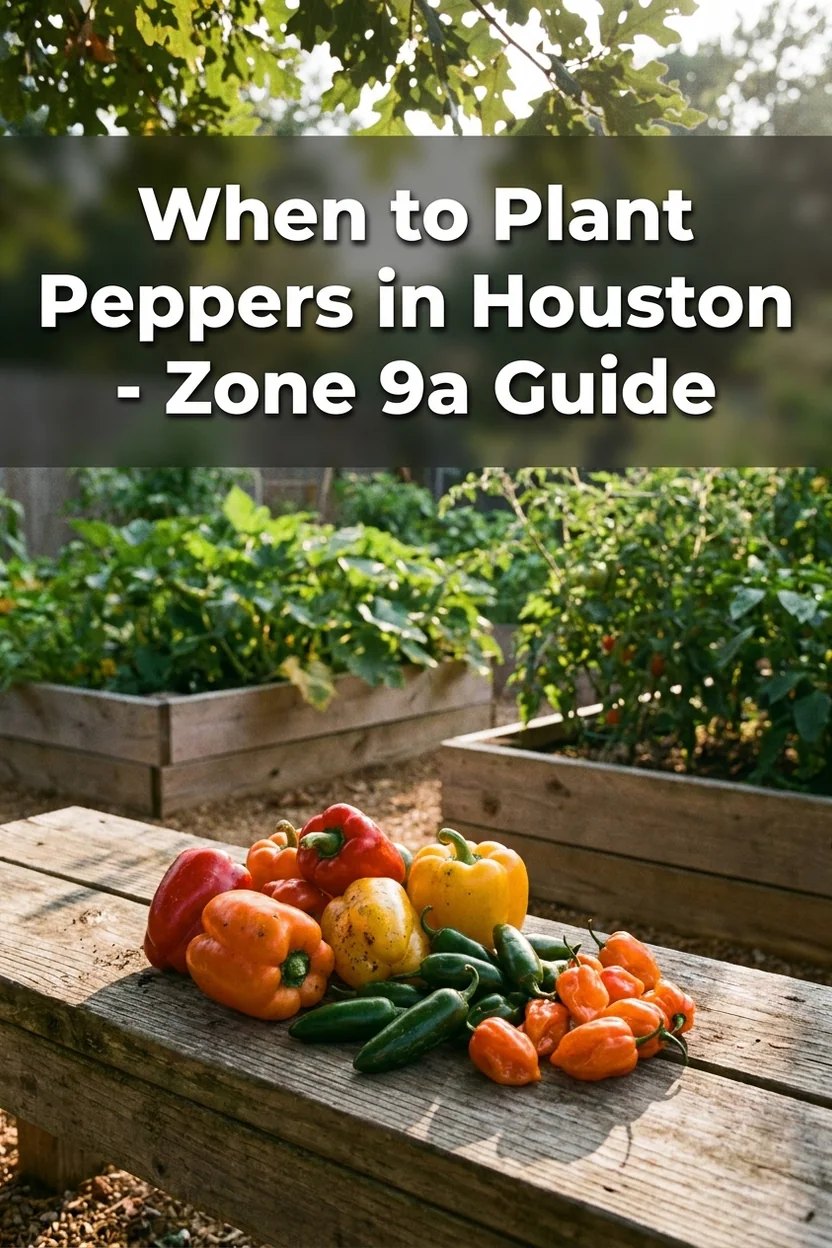
When to Plant Peppers in Houston: Zone 9a Dates + Best Varieties
Pets & Toxicity
Recorded toxicity for plants linked in this guide. An unknown status is not a safety assessment.
Toxic to pets: Poblano pepper (8 linked plants checked)DetailsHide
Capsicum chinense 'Habanero' — Toxicity: Not assessed
Fruit contains capsaicin at 100,000–350,000 Scoville Heat Units — strong enough to cause severe burning on skin, eyes, and mucous membranes through simple contact with cut fruit or the hand that held it. Nitrile gloves are used during handling and food preparation; face and eye contact is avoided. The fruit is irritating rather than toxic in the usual sense, but the heat level can cause significant discomfort and real injury if mishandled. The plant is kept out of reach of children and pets.View Capsicum chinense 'Habanero' plant profileCapsicum annuum 'Jalapeño' — Toxicity: Not assessed
Capsaicin in fruit causes burning sensations in mouth and on skin. Fruit and handling oils are irritating to eyes and mucous membranes but are not toxic in the usual sense. Gloves are used during harvesting and processing; hands are washed thoroughly before touching face. Small amounts are generally safe for pets but can cause digestive upset.View Capsicum annuum 'Jalapeño' plant profileCapsicum annuum 'Poblano' — Toxicity Warning
Toxic to petsView Capsicum annuum 'Poblano' plant profileCapsicum annuum 'California Wonder' — Toxicity
Non-toxicView Capsicum annuum 'California Wonder' plant profile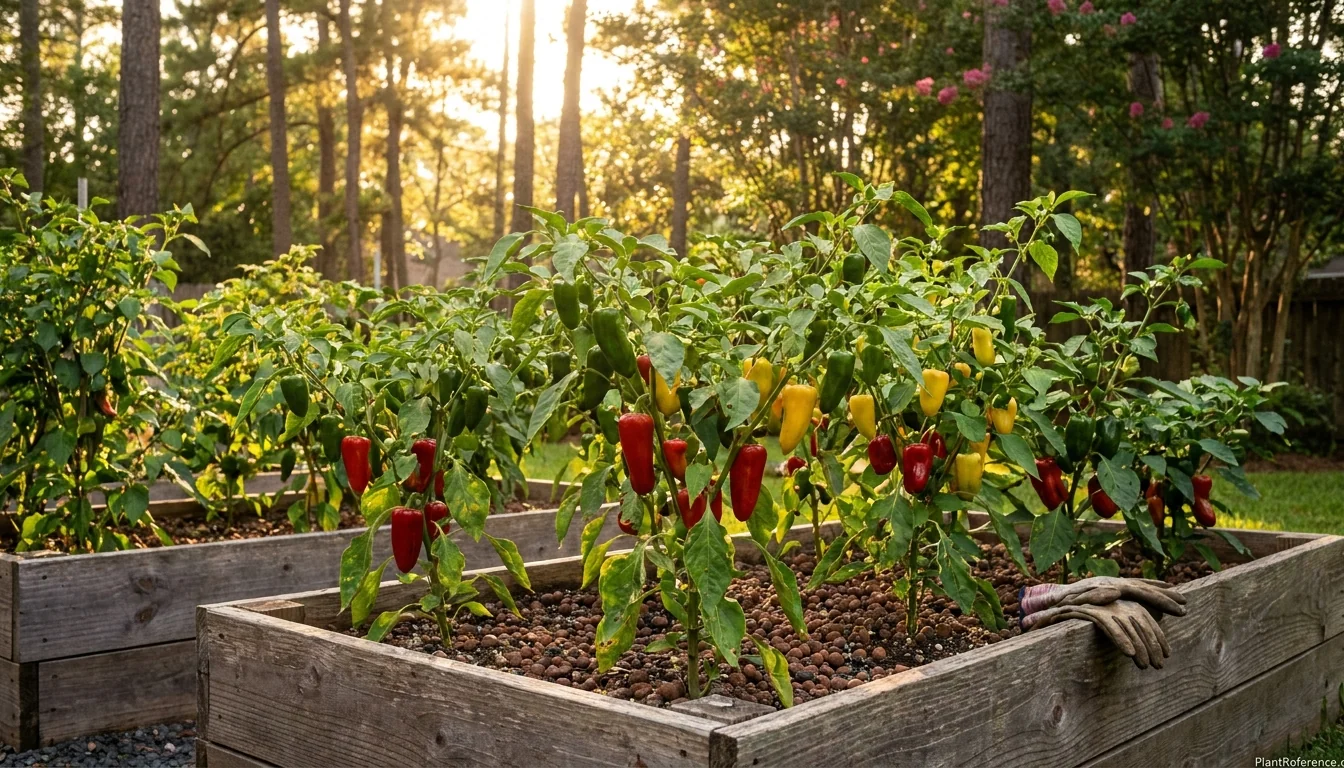
— Image © PlantReference.org 2026
Houston gives peppers exactly the heat they want—and then adds humidity that creates problems no desert gardener ever faces. We get 289 frost-free days and summer temperatures that push capsaicin production to peak levels. But our 50+ inches of annual rainfall, Beaumont gumbo clay that holds water like a bathtub, and sustained humidity above 80% mean bacterial leaf spot and fungal disease are constant companions. The gardeners who succeed with peppers in Houston are the ones who build proper drainage into their beds from the start and treat disease prevention as routine maintenance rather than emergency response. Once you solve drainage and disease, Houston is one of the most productive pepper cities in the country.
Best Pepper Varieties for Houston's Zone 9a Climate
Houston's Beaumont clay is notorious—heavy, dark, sticky when wet, cracked when dry, and almost completely impermeable. Peppers can't survive in it without significant amendment. Raised beds with imported soil are the standard approach, and expanded shale is the amendment that makes Houston gardening work. Unlike compost, which breaks down and recompacts within a season in our heat and humidity, expanded shale creates permanent drainage channels that persist for years.
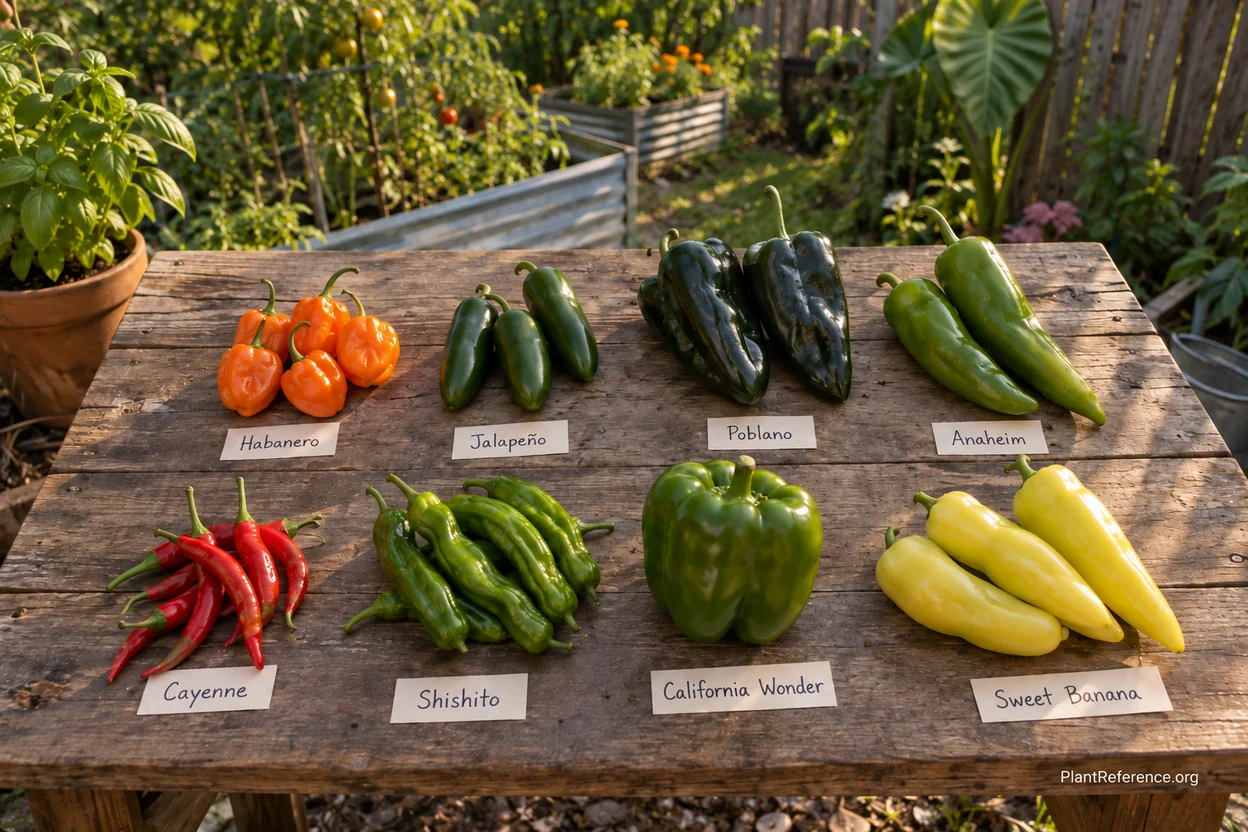
🌿Capsicum chinense 'Habanero' (KAP-sih-kum chi-NEN-see) thrives in Houston's sustained heat. At 100,000-350,000 SHU and 90-120 days, 🌿Capsicum chinense 'Habanero' has enough season length and heat accumulation to reach full Scoville potential. Capsicum chinense species evolved in humid tropical conditions, so Houston's humidity bothers them less than Capsicum annuum varieties. March transplants produce by July and continue through November.
🌿Capsicum annuum 'Jalapeño' (KAP-sih-kum AN-yoo-um) is Houston's most popular pepper at 2,500-8,000 SHU and 70-80 days. Choose disease-resistant cultivars—standard 🌿Capsicum annuum 'Jalapeño' selections struggle with bacterial leaf spot in Houston's humidity. The heat stress of Houston summers pushes Scoville levels toward the upper range.
🌿Capsicum annuum 'Poblano' at 1,000-2,000 SHU and 65-80 days handles Houston well. The large, heavy leaf canopy shades developing fruit and creates enough air movement to reduce disease pressure on fruit surfaces. 🌿Capsicum annuum 'Poblano' is one of the more humidity-tolerant Capsicum annuum varieties.
🌿Capsicum annuum 'Anaheim' produces at 500-2,500 SHU and 70-80 days. The thick fruit walls resist rot better than thin-walled types in humid conditions. Good roasting pepper for Houston gardens.
🌿Capsicum annuum 'Cayenne' at 30,000-50,000 SHU and 70-85 days produces well but the thin walls are vulnerable to rot in humid air. Harvest 🌿Capsicum annuum 'Cayenne' promptly at maturity. Unlike Phoenix, outdoor air-drying doesn't work in Houston—use a food dehydrator instead.
🌿Capsicum annuum 'Shishito' matures fastest at 60-70 days and 50-200 SHU. Quick maturity means harvest before disease accumulates. 🌿Capsicum annuum 'Shishito' is excellent for succession planting every 3-4 weeks from March through May.
🌿Capsicum annuum 'California Wonder' at 0 SHU and 70-80 days is the most disease-susceptible variety in Houston's humidity. 🌿Capsicum annuum 'California Wonder' requires the most intensive fungicide schedule and produces the highest loss rates. Grow only if you're committed to preventative spraying.
🌿Capsicum annuum 'Sweet Banana' at 0-500 SHU and 65-75 days offers better humidity tolerance than bells. Early maturity helps avoid the worst disease pressure of midsummer.
Variety | Days to Maturity | Heat Level (SHU) | Best For Houston | Notes for Zone 9a |
|---|---|---|---|---|
90-120 days | 100,000-350,000 | Hot sauce, specialty | Best humidity tolerance; tropical species; March transplant | |
70-80 days | 2,500-8,000 | Salsa, pickling | Choose disease-resistant cultivars; most popular Houston pepper | |
65-80 days | 1,000-2,000 | Cooking, rellenos | Heavy canopy shades fruit; good humidity tolerance | |
70-80 days | 500-2,500 | Roasting, stuffing | Thick walls resist rot; reliable producer | |
70-85 days | 30,000-50,000 | Hot sauce, cooking | Harvest promptly; dry indoors only; thin walls rot in humidity | |
60-70 days | 50-200 | Grilling, appetizers | Fastest maturity; succession plant; harvest before disease builds | |
70-80 days | 0 | Fresh eating, stuffing | Most disease-susceptible; highest loss rates; intensive care needed | |
65-75 days | 0-500 | Pickling, fresh eating | Better than bells in humidity; early maturity helps |
Specific Planting Dates for Houston
Houston averages a February 15 last frost and December 1 first frost, giving you 289 frost-free days. The long season means every pepper variety has sufficient time, including slow-maturing 🌿Capsicum chinense 'Habanero'. Unlike Miami, Houston does freeze, so peppers are treated as annuals. Unlike Phoenix, Houston doesn't have a prolonged midsummer gap—the humidity moderates nighttime temperatures enough that blossom drop is less severe.
Transplant Window: Mid-March through May
Start transplanting outdoors in mid-March once nighttime temperatures consistently hold above 55°F (13°C) and soil has warmed above 65°F. Continue through May. Earlier transplants establish larger root systems before the intense summer heat arrives. 🌿Capsicum chinense 'Habanero' should go in by late March for maximum season length.
Seed Starting: January through March
Start seeds indoors 8-10 weeks before your planned transplant date. For mid-March transplants, start seeds in early January. Starting from seed gives access to disease-resistant cultivars that Houston nurseries may not carry. Use bottom heat mats—pepper seeds germinate best at 80-85°F soil temperature.
Late-Season Extension
Houston's mild fall extends pepper production well into November. October and November are often the best harvest months—summer's worst humidity has broken, disease pressure drops, and temperatures settle into the 70s-80s°F range that peppers prefer. Protect plants with frost cloth during the occasional early cold front to extend the season as far as possible. Raised Bed Too Hot in Summer: Protecting Plants from Heat Stress
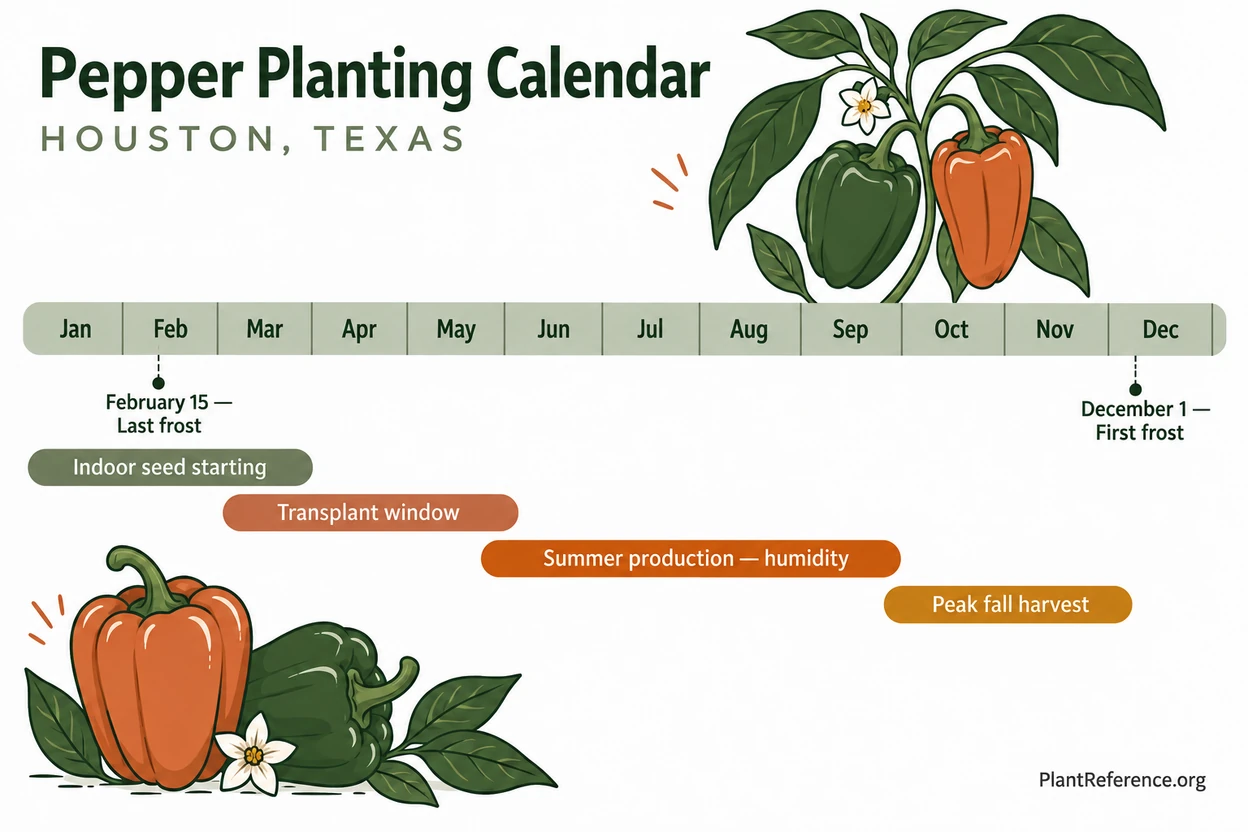
Indoor seed starting: January through March (8-10 weeks before transplant)
Transplant window: Mid-March through May
Summer production: June through September (highest disease pressure)
Peak harvest: October through November (lower humidity, best quality)
Season end: December frost terminates plants
Disease management: Continuous from transplant through season end
Complete Growing Guide for Houston
Soil Preparation and Expanded Shale
Houston's Beaumont clay doesn't drain. I've tested this more times than I'd like to admit—compost alone breaks down in our climate and compacts back to something resembling concrete within a season. Expanded shale is the answer. This lightweight aggregate creates permanent drainage channels that don't decompose in Houston's heat and humidity. Best Soil Mix for Raised Beds: Creating the Perfect Growing Medium
Build raised beds at least 12 inches (30 cm) deep, elevated 6-8 inches above grade for flood protection. Mix 50% quality topsoil, 25% compost, 15% expanded shale, and 10% coarse sand. Add a gravel layer at the bed bottom for additional drainage capacity. Houston's clay soil pH runs 6.5-7.5—often near ideal for peppers, which is one advantage over the alkaline soils of western Texas. How to Build a Raised Garden Bed: Step-by-Step Construction Guide
Transplanting
Harden off seedlings for 7-10 days. Set transplants 20-24 inches (50-60 cm) apart—wider spacing than most cities recommend. Air circulation between plants is your most important defense against fungal disease in Houston's humidity. Plant in the morning when temperatures are coolest. Water deeply at transplanting. Raised Bed Vegetable Garden Layout: Planning for Maximum Production
Watering
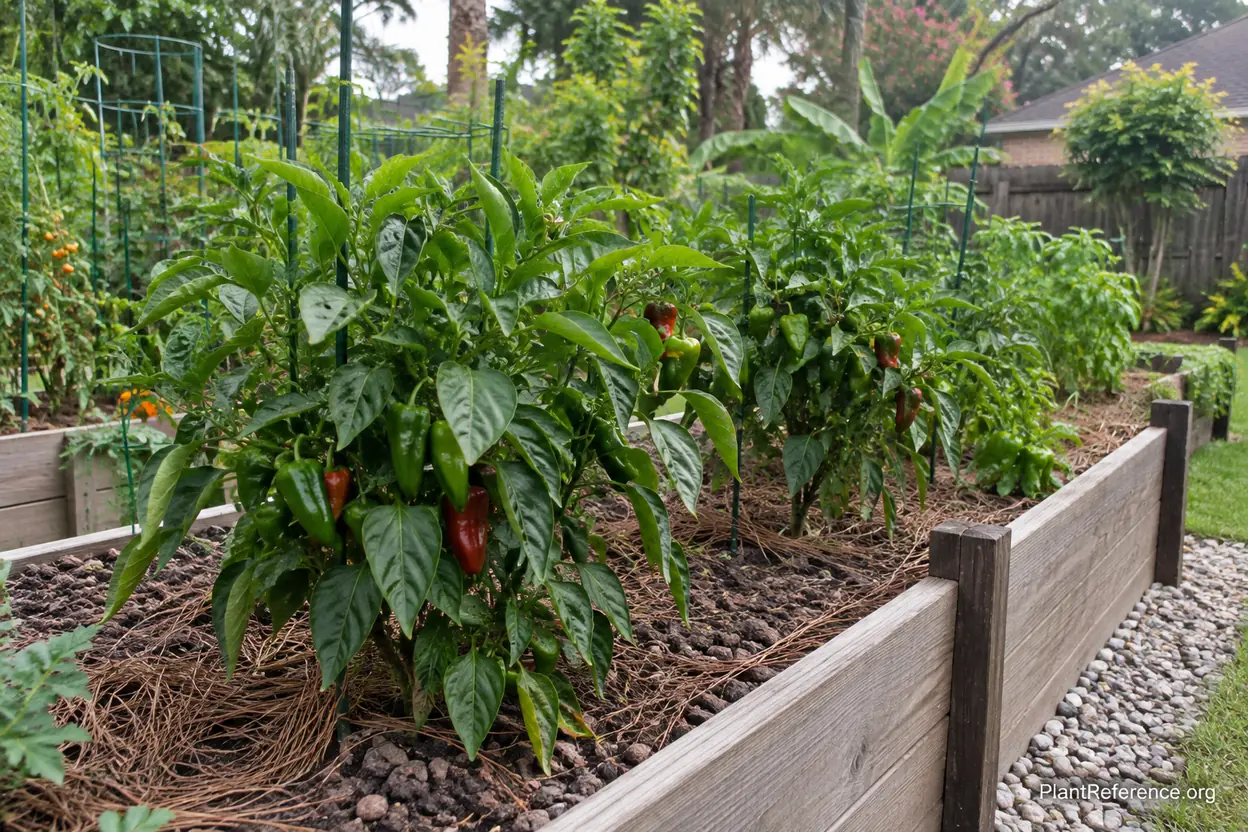
Houston receives 50+ inches of annual rainfall—but like Austin, distribution is wildly uneven. Tropical downpours dump 4-6 inches in hours, then weeks pass with no rain. Peppers need 1-2 inches per week consistently. Drip irrigation is essential—overhead watering promotes the disease pressure that Houston's humidity already creates. During wet periods, focus on drainage rather than irrigation. Check beds after every heavy rain and remove standing water. Raised Bed Irrigation Systems: Watering Solutions for Consistent Growth
Fertilizing
Apply balanced fertilizer at transplanting. Switch to low-nitrogen, high-phosphorus formula (5-10-10) at flowering. Houston's heavy rainfall leaches nutrients faster than dry climates—fertilize every 3-4 weeks rather than the 4-6 most cities recommend. Calcium supplementation through gypsum helps prevent blossom end rot and improves clay soil structure simultaneously. Best Soil for Raised Beds: 6 Commercial Mixes Tested and Compared
Mulching
Apply 2 inches (5 cm) of pine straw or hardwood mulch—thinner than dry-climate recommendations. Thick mulch in Houston's humidity traps moisture against stems and promotes crown rot. Pull mulch 2-3 inches away from plant stems. Pine straw resists matting better than shredded bark in Houston's frequent heavy rain. Avoid straw or hay, which decomposes too rapidly in our heat and humidity. Raised Bed Soil Settling and Compaction: Prevention and Solutions
Disease Prevention
Preventative disease management is non-negotiable in Houston. Apply copper-based fungicide every 10-14 days from transplant through season end. Rotate copper with biological fungicides to prevent resistance. Remove spotted or diseased foliage immediately—bag it and dispose in trash, not compost. Prune lower branches to improve air circulation at the plant base where humidity concentrates most. Never work with wet plants. Sanitize pruners between plants with rubbing alcohol.
Staking and Support
Houston's thunderstorms and tropical weather bring sudden wind gusts that snap loaded pepper branches. Stake all varieties at transplanting using bamboo stakes or tomato cages. 🌿Capsicum chinense 'Habanero' grows tall and leggy in Houston's heat—it needs staking from the start. Heavy producers like 🌿Capsicum annuum 'Jalapeño' and 🌿Capsicum annuum 'Poblano' benefit from caging that supports branches from all sides. Position beds near fences or walls for additional wind protection during storm season.
Troubleshooting Houston-Specific Problems
Bacterial Leaf Spot
Houston's number one pepper disease. Dark, water-soaked spots spread rapidly in humid air. Choose resistant cultivars—this is the single most important decision for Houston pepper success. Apply copper spray preventatively. Remove infected foliage immediately. The pathogen overwinters in soil and plant debris—rotate pepper locations between beds each year. When to Plant Tomatoes in Houston: Complete Guide + Best Varieties for Zone 9a
Beaumont Clay Drainage
The clay holds water indefinitely. Peppers in waterlogged soil develop root rot within 24-48 hours—and Houston delivers enough rain to waterlog unimproved beds regularly. Raised beds with expanded shale are the solution. Elevate beds above grade so heavy rain drains away from, not into, the growing area. After tropical storms, check beds immediately and remove any standing water. When to Plant Kale in Houston: Complete Guide + Best Varieties for Zone 9a
Hurricane Season
Hurricane season (June-November) overlaps the entire pepper growing season. Tropical storms bring wind, flooding, and salt spray that can destroy an entire season's production overnight. Harvest everything before an approaching storm. Stake all plants securely. After a storm, remove damaged foliage, check drainage, and apply fungicide to prevent disease from entering wounds. Container peppers can be moved to protected locations. When to Plant Onions in Houston: Complete Guide + Best Varieties for Zone 9a
Summer Humidity and Fruit Rot
Mature fruit left on plants in humid conditions rots quickly. Harvest promptly once peppers reach full size. Don't wait for color change if humidity is extreme—green peppers ripen indoors on a countertop with less disease risk than ripening on the plant in Houston's August air. Generous plant spacing improves airflow around fruit. Raised Bed Pest Problems: Identification and Organic Control Methods
Harvest & Storage
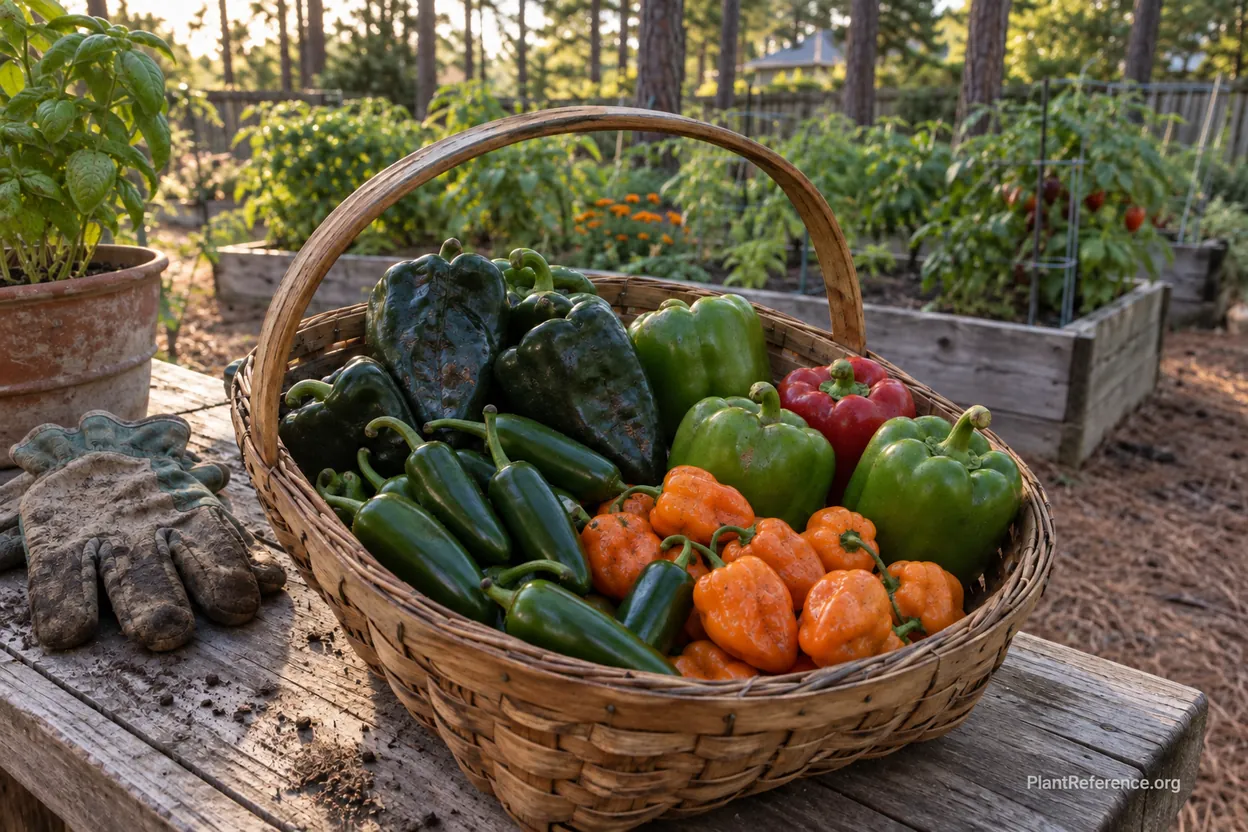
Harvest peppers at any color stage. In Houston, harvest promptly—leaving mature fruit on plants invites the rot that our humidity promotes. Cut stems with pruners rather than pulling. Regular harvesting keeps plants productive and reduces disease vectors. October and November are often Houston's best harvest months—the humidity drops, temperatures settle into comfortable ranges, and disease pressure finally eases. Raised Bed Weeds: Prevention Strategies and Control Methods
Don't attempt outdoor air-drying in Houston—fruits mold before they dry. Use a food dehydrator for 🌿Capsicum annuum 'Cayenne' and other thin-walled varieties. Fresh peppers store 1-2 weeks refrigerated. Roast and freeze 🌿Capsicum annuum 'Poblano' and 🌿Capsicum annuum 'Anaheim' in portions. 🌿Capsicum annuum 'Jalapeño' pickles well for year-round use. 🌿Capsicum chinense 'Habanero' makes exceptional hot sauce—Houston's heat produces maximum Scoville levels that create a premium product worth the effort of growing through our challenging humidity.
Frequently Asked Questions
Reading about plants and recognising them are different skills. These three build the second.
- Daily PlantIdentify the day’s mystery plant from a close-up photograph.
- Keyed OutWork a dichotomous key, lead by lead, to name a hidden specimen.
- Name That PlantName a specimen from botanical clues dealt hardest first.
Free to play, no account needed
Tagged with
Aisha manages a small tropical nursery on the east side of Houston, specializing in plants that can handle the Gulf Coast's humidity, heat, and unpredictable flooding. She studied horticulture in college and worked at a wholesale grower before opening her own operation. Growing up, her parents kept a kitchen garden with okra, bitter gourd, and curry leaf plants—a tradition she's continued. Houston's subtropical climate lets her grow things most of the country can't, but it also means dealing with fungal issues, standing water, and summers where it's too hot for even tomatoes. Aisha writes about tropical and subtropical plant care, humidity management, and working with heavy clay soils.