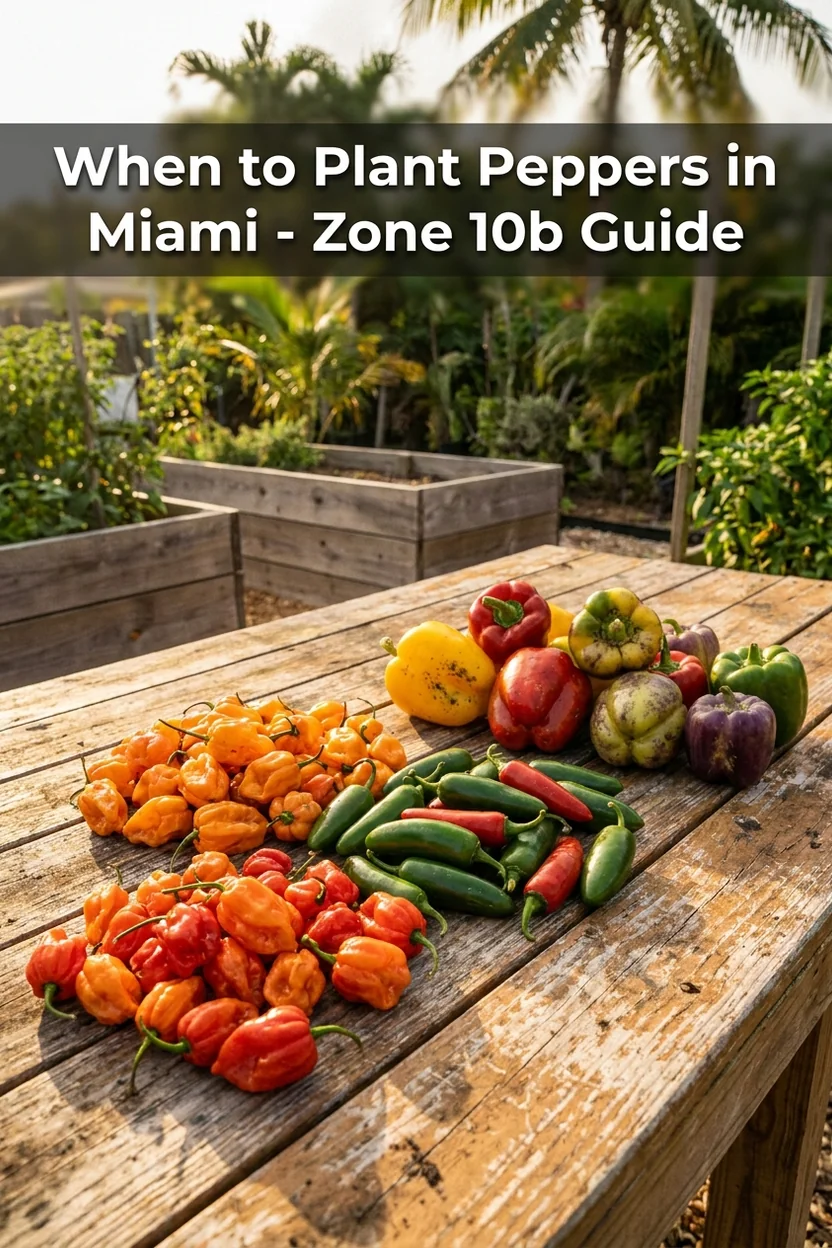
When to Plant Peppers in Miami: Zone 10b Dates + Best Varieties
Pets & Toxicity
Recorded toxicity for plants linked in this guide. An unknown status is not a safety assessment.
Toxic to pets: Poblano pepperDetailsHide
Capsicum chinense 'Habanero' — Toxicity: Not assessed
Fruit contains capsaicin at 100,000–350,000 Scoville Heat Units — strong enough to cause severe burning on skin, eyes, and mucous membranes through simple contact with cut fruit or the hand that held it. Nitrile gloves are used during handling and food preparation; face and eye contact is avoided. The fruit is irritating rather than toxic in the usual sense, but the heat level can cause significant discomfort and real injury if mishandled. The plant is kept out of reach of children and pets.View Capsicum chinense 'Habanero' plant profileCapsicum annuum 'Jalapeño' — Toxicity: Not assessed
Capsaicin in fruit causes burning sensations in mouth and on skin. Fruit and handling oils are irritating to eyes and mucous membranes but are not toxic in the usual sense. Gloves are used during harvesting and processing; hands are washed thoroughly before touching face. Small amounts are generally safe for pets but can cause digestive upset.View Capsicum annuum 'Jalapeño' plant profileCapsicum annuum 'Poblano' — Toxicity Warning
Toxic to petsView Capsicum annuum 'Poblano' plant profileCapsicum annuum 'California Wonder' — Toxicity
Non-toxicView Capsicum annuum 'California Wonder' plant profile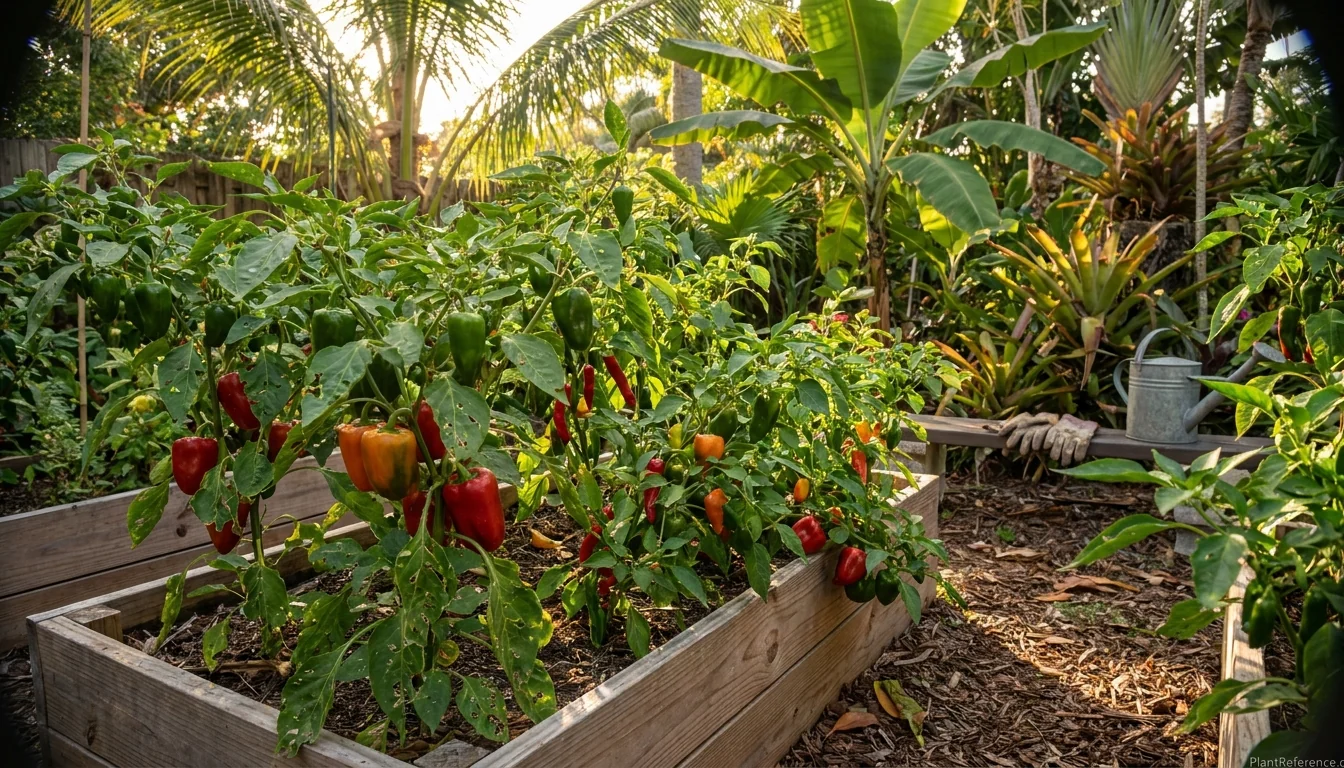
— Image © Plant Reference 2026
Miami isn't like anywhere else in this series. We don't have frost dates. We don't have a defined growing season. Peppers can technically grow here 365 days a year, and established plants survive for years as true perennials. But "can grow" and "will produce well" are different things. Miami's wet season—roughly May through October—dumps most of our 60+ inches of annual rainfall while humidity stays above 80% for weeks at a time. That's a recipe for bacterial leaf spot, fungal disease, and fruit rot that destroys pepper production. The dry season from October through March is when smart Miami gardeners focus their pepper growing. Lower humidity, less rain, comfortable temperatures, and far less disease pressure make winter our best production window.
Best Pepper Varieties for Miami's Zone 10b Climate
Miami sits on oolitic limestone—porous, alkaline bedrock with almost no natural topsoil. You can't dig a planting hole without hitting rock. Raised beds with imported soil are the only option for vegetable gardening. The limestone also makes irrigation water alkaline (pH 7.5-8.5), which gradually raises even imported soil pH. On the other hand, Miami's tropical warmth and humidity provide exactly what Capsicum chinense species evolved to handle.
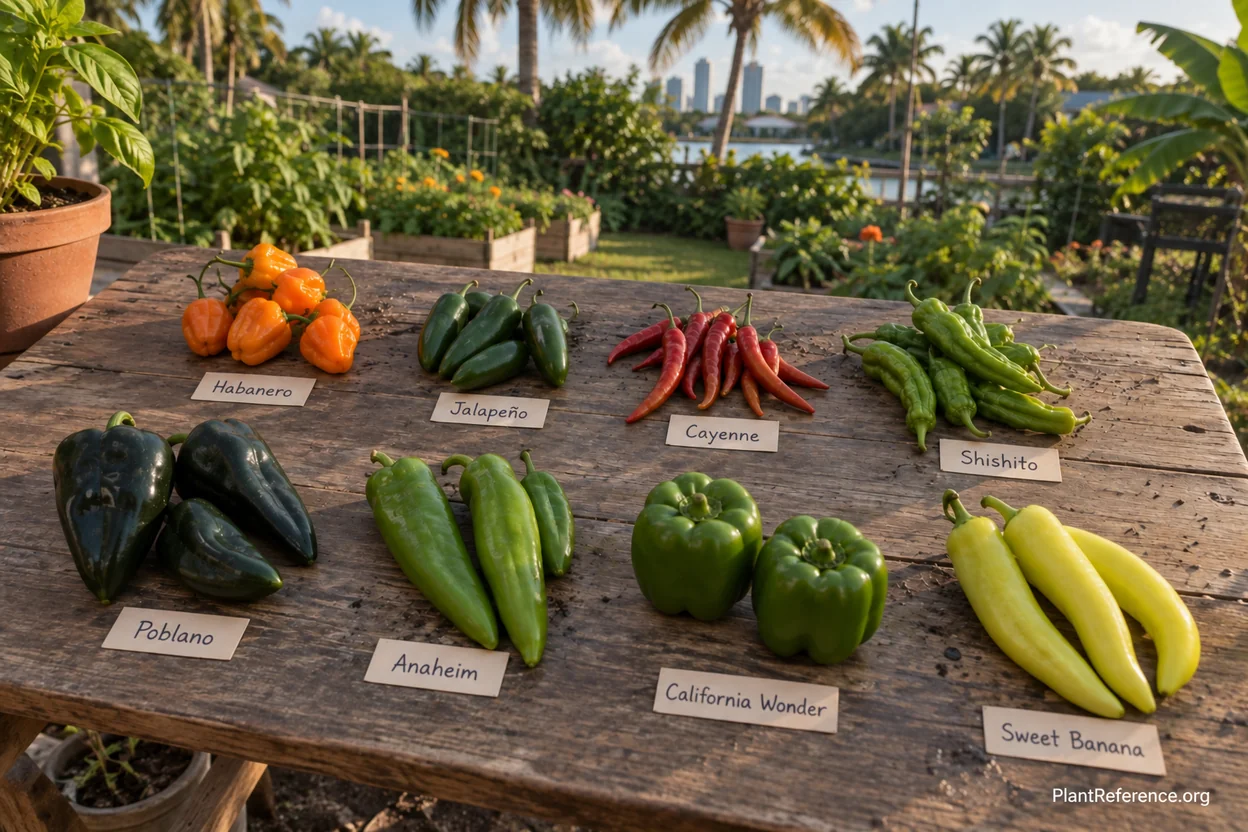
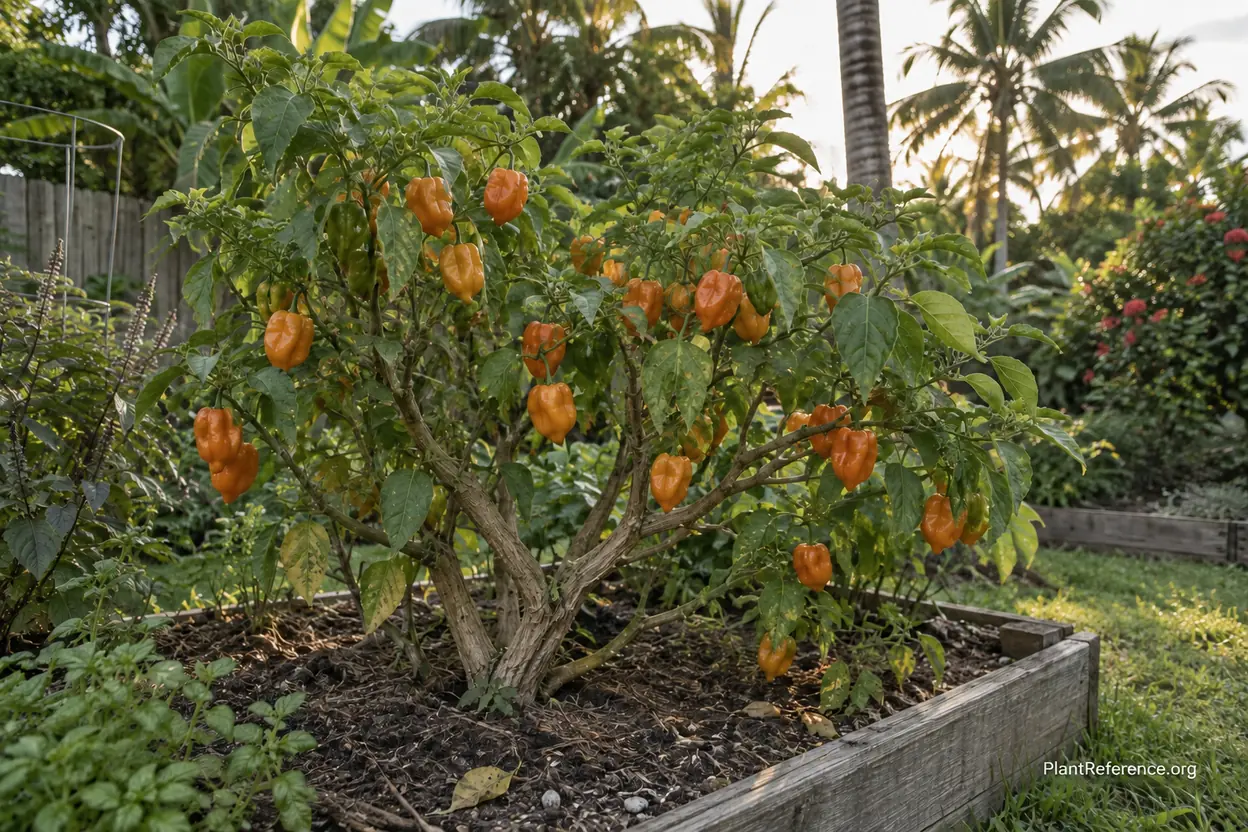
🌿Capsicum chinense 'Habanero' (KAP-sih-kum chi-NEN-see) is in its natural element in Miami. This species evolved in the tropical Americas—Miami's climate is closer to its native habitat than any other US city. At 100,000-350,000 SHU and 90-120 days, 🌿Capsicum chinense 'Habanero' thrives year-round here. The sustained heat produces maximum capsaicin, and the plants grow as productive perennials. This is Miami's signature pepper.
🌿Capsicum annuum 'Jalapeño' (KAP-sih-kum AN-yoo-um) produces reliably in Miami with disease-resistant cultivar selection. At 2,500-8,000 SHU and 70-80 days, 🌿Capsicum annuum 'Jalapeño' is the workhorse hot pepper. Choose cultivars bred for bacterial leaf spot resistance—standard varieties struggle in Miami's humidity.
🌿Capsicum annuum 'Cayenne' at 30,000-50,000 SHU and 70-85 days produces well in the dry season. The thin walls that make 🌿Capsicum annuum 'Cayenne' ideal for drying in Phoenix are a liability in Miami—fruits rot faster in humid conditions. Harvest promptly and dry indoors with a dehydrator rather than air-drying.
🌿Capsicum annuum 'Shishito' matures fastest at 60-70 days and 50-200 SHU. 🌿Capsicum annuum 'Shishito' is excellent for Miami because the quick turnaround allows harvest before disease pressure builds. Plant in succession every 3-4 weeks during the dry season.
🌿Capsicum annuum 'Poblano' at 1,000-2,000 SHU and 65-80 days handles Miami's heat but the large fruits are susceptible to fungal rot in humid conditions. Grow 🌿Capsicum annuum 'Poblano' during the driest months—December through February—for best results. The heavy leaf canopy actually helps in Miami by shading fruit from intense sun.
🌿Capsicum annuum 'Anaheim' produces at 500-2,500 SHU and 70-80 days. Reasonable Miami performer during the dry season. The thick walls hold up better than Cayenne in humid air.
🌿Capsicum annuum 'California Wonder' at 0 SHU and 70-80 days struggles more in Miami than most varieties. Bell peppers are the most disease-susceptible type in humid tropical conditions. Grow 🌿Capsicum annuum 'California Wonder' only during peak dry season (December-February) and expect higher loss rates.
🌿Capsicum annuum 'Sweet Banana' at 0-500 SHU and 65-75 days is a reasonable mild option. The early maturity helps avoid the worst disease pressure. Better humidity tolerance than bells.
Variety | Days to Maturity | Heat Level (SHU) | Best For Miami | Notes for Zone 10b |
|---|---|---|---|---|
90-120 days | 100,000-350,000 | Year-round production | Natural tropical habitat; grows as perennial; Miami's signature pepper | |
70-80 days | 2,500-8,000 | Dry season workhorse | Choose disease-resistant cultivars; reliable producer | |
70-85 days | 30,000-50,000 | Dry season drying | Thin walls rot in humidity; harvest promptly; dry indoors | |
60-70 days | 50-200 | Quick succession crops | Fastest variety; harvest before disease builds; dry season focus | |
65-80 days | 1,000-2,000 | Peak dry season only | Large fruits rot in humidity; grow December-February | |
70-80 days | 500-2,500 | Dry season roasting | Thick walls resist rot better than thin types | |
70-80 days | 0 | Peak dry season only | Most disease-susceptible; highest loss rates; December-February | |
65-75 days | 0-500 | Mild dry season option | Early maturity helps avoid disease; better than bells |
Specific Planting Dates for Miami
Miami has no frost dates—the city essentially never freezes. Peppers grow year-round as perennials. But production quality varies dramatically between seasons. The dry season (October-April) provides far better conditions than the wet season (May-September).
Primary Window: October through March
Begin transplanting in early October as the wet season winds down. October and November still carry residual humidity, but conditions improve weekly. December through February is peak production—lowest humidity, minimal rainfall, comfortable temperatures in the 70s-80s°F. Continue transplanting through March before wet season humidity builds.
Wet Season: May through September
Peppers survive the wet season but production drops significantly. Constant humidity above 80%, afternoon thunderstorms dumping 1-2 inches daily, and temperatures in the 90s create intense disease pressure. Established 🌿Capsicum chinense 'Habanero' perennials continue producing through the wet season—they evolved for exactly these conditions. Most Capsicum annuum varieties struggle.
Year-Round Perennial Management
Established pepper plants in Miami don't die back in winter—they keep growing. Prune heavily in September, removing dead wood and reducing plant size by one-third. This stimulates fresh growth that produces vigorously during the dry season. Perennial plants produce earlier than new transplants each year. Raised Bed Too Hot in Summer: Protecting Plants from Heat Stress
Primary transplant window: October through March
Peak production months: December through February (lowest humidity)
Wet season survival: May through September (reduced production)
Habanero perennial production: Year-round with wet season tolerance
September pruning: Cut back perennials by one-third for dry season flush
Best disease-free growing: December through February
Complete Growing Guide for Miami
Soil Preparation
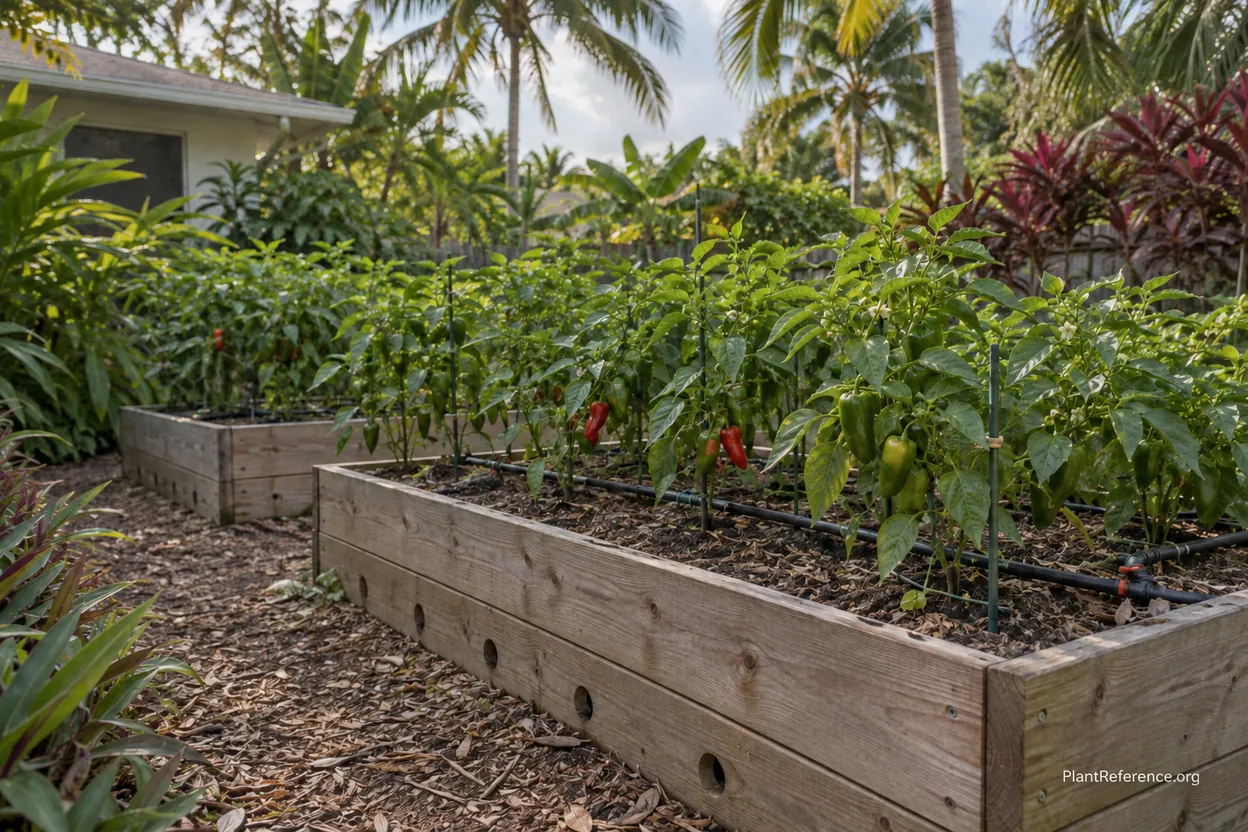
Miami's oolitic limestone bedrock sits at or near the surface across most of the metro area. There is no natural soil to work with—just a thin organic layer over porous rock. Raised beds are the only option. Build to at least 12 inches (30 cm) deep with 50% quality topsoil, 30% compost, and 20% perlite or coarse sand. The perlite is critical for drainage—Miami's 60+ inches of rain can waterlog beds even with raised construction. Best Soil Mix for Raised Beds: Creating the Perfect Growing Medium
Limestone contact and alkaline irrigation water push soil pH toward 7.5-8.0 even in raised beds. Test pH every season and amend with elemental sulfur to maintain 6.0-6.8. Add extra drainage holes to bed frames—standard construction isn't enough for Miami's rainfall intensity. How to Build a Raised Garden Bed: Step-by-Step Construction Guide
Transplanting
Transplant seedlings 18-24 inches (45-60 cm) apart. Generous spacing is more important in Miami than any other city in this series—air circulation between plants is your primary defense against fungal disease. Plant in the morning to avoid afternoon heat stress. Water deeply at transplanting. Raised Bed Vegetable Garden Layout: Planning for Maximum Production
Watering
Miami's dry season still produces occasional rain, and humidity maintains soil moisture better than arid climates. Peppers need 1-2 inches per week. Drip irrigation keeps foliage dry—critical for disease management. Overhead watering promotes the bacterial and fungal diseases that Miami's climate already encourages. During the wet season, you may need to reduce irrigation to zero and focus instead on drainage. Raised Bed Irrigation Systems: Watering Solutions for Consistent Growth
Fertilizing
Apply balanced fertilizer at transplanting. Switch to low-nitrogen, high-phosphorus formula (5-10-10) at flowering. Miami's alkaline conditions lock out iron and manganese—chelated iron (EDDHA form) corrects yellowing foliage. Heavy rainfall leaches nutrients faster than in dry climates, so fertilize every 3-4 weeks rather than the 4-6 weeks most cities recommend. Best Soil for Raised Beds: 6 Commercial Mixes Tested and Compared
Mulching
Apply 1-2 inches (2.5-5 cm) of mulch—thinner than in dry climates. Thick mulch in Miami's humidity traps moisture against stems and promotes crown rot. Pull mulch 2-3 inches away from plant stems. Use pine bark or cypress mulch that resists the rapid decomposition Miami's heat and moisture cause. Avoid hay or straw, which mats and holds water. Raised Bed Soil Settling and Compaction: Prevention and Solutions
Disease Prevention
Preventative disease management is mandatory in Miami—not optional. Apply copper-based fungicide every 10-14 days throughout the growing season. Rotate fungicide types to prevent resistance. Remove any spotted or diseased foliage immediately and dispose of it away from the garden—not in your compost pile, where pathogens survive Miami's warm temperatures. Prune lower branches to improve air circulation at the base where humidity concentrates. Avoid working with plants when foliage is wet, as handling spreads bacterial leaf spot between plants. Sanitize pruning tools with rubbing alcohol between plants during any pruning session.
Container Growing
Containers are an excellent alternative to raised beds in Miami. They bypass the limestone entirely, provide superior drainage during the wet season, and can be moved to protected locations ahead of tropical storms. Use 5-gallon or larger pots with premium potting mix. Position containers where they receive morning sun and afternoon shade during the hottest months. Miami apartment and condo gardeners can grow productive pepper plants on east-facing balconies year-round.
Troubleshooting Miami-Specific Problems
Bacterial Leaf Spot
Miami's number one pepper problem. Dark, water-soaked spots on leaves that spread rapidly in humid conditions. Choose resistant cultivars. Apply copper spray preventatively. Remove infected leaves immediately. This disease overwinters in Miami because we don't have freezing temperatures to kill the pathogen. Rotation between beds helps but doesn't eliminate the issue. When to Plant Tomatoes in Miami: Complete Guide + Best Varieties for Zone 10b
Oolitic Limestone Bedrock
You can't grow peppers in Miami's native ground—there isn't any. Raised beds with imported soil are the only approach. Even container growing works well and avoids limestone contact entirely. The porous limestone does provide one advantage: it prevents true waterlogging because water drains through the rock. When to Plant Kale in Miami: Complete Guide + Best Varieties for Zone 10b
Root-Knot Nematodes
These microscopic soil parasites are endemic to South Florida. They cause galls on roots, stunted growth, and wilting even when soil is moist. Solarize beds during summer with clear plastic to reduce populations. Rotate crops between beds each season. Nematodes build up faster in Miami's warm soil than in cooler climates—they never go dormant here. When to Plant Green Beans in Miami: Complete Guide + Best Varieties for Zone 10b
Hurricane Season Overlap
Hurricane season (June-November) overlaps with both the late wet season and early dry season planting window. Tropical storms can destroy pepper plants with wind, flooding, and salt spray. Container peppers can be moved to protected locations. For raised beds, harvest everything ahead of an approaching storm. Perennial 🌿Capsicum chinense 'Habanero' plants recover faster than annual varieties after storm damage. When to Plant Onions in Miami: Complete Guide + Best Varieties for Zone 10b
Harvest & Storage
Harvest peppers at any color stage—green fruits are edible, colored fruits have more sugar and vitamins. In Miami, harvest promptly once fruits reach full size. Leaving mature peppers on plants in humid conditions invites fruit rot that spreads to developing fruits. Cut stems with pruners. Regular harvesting keeps plants productive year-round. Raised Bed Weeds: Prevention Strategies and Control Methods
Don't attempt to air-dry peppers outdoors in Miami—the humidity causes mold. Use a food dehydrator for 🌿Capsicum annuum 'Cayenne' and other thin-walled varieties. Fresh peppers store 1-2 weeks refrigerated. 🌿Capsicum chinense 'Habanero' makes excellent hot sauce—and Miami's year-round production means you can make it fresh whenever you want. Freeze surplus in portions for cooking.
Perennial plants produce continuously with proper management. Prune in September, fertilize heavily in October, and the dry season flush delivers your largest harvests of the year.
Frequently Asked Questions
Reading about plants and recognising them are different skills. These three build the second.
- Daily PlantIdentify the day’s mystery plant from a close-up photograph.
- Keyed OutWork a dichotomous key, lead by lead, to name a hidden specimen.
- Name That PlantName a specimen from botanical clues dealt hardest first.
Free to play, no account needed
Tagged with
Maria is a tropical plant grower in Miami who maintains a half-acre property packed with palms, fruit trees, and tropical ornamentals. She grew up in Puerto Rico surrounded by tropical plants and moved to South Florida for college, earning a biology degree. Maria worked at a major tropical botanic garden for several years before transitioning to freelance writing and consulting. She specializes in tropical fruit growing, hurricane-resilient landscaping, and the particular challenges of gardening in South Florida—salt air, limestone soil, intense rain, and the threat of tropical storms. Maria's practical about the realities of tropical gardening: it's not paradise if you don't understand what you're dealing with.