Image 1 of 18
1 / 18
Plant Reference
Hesperis, Genus, matronalis, Species,
- Genus & species
dame's rocket
Europe and western Asia — Mediterranean region through central Europe to the Caucasus and southwestern Russia; meadows, woodland edges, roadsides, and disturbed ground; the species has been in European garden cultivation since at least the 16th century and has naturalized widely outside its native range across temperate North America where it is classified as invasive or noxious in many jurisdictions
Overview
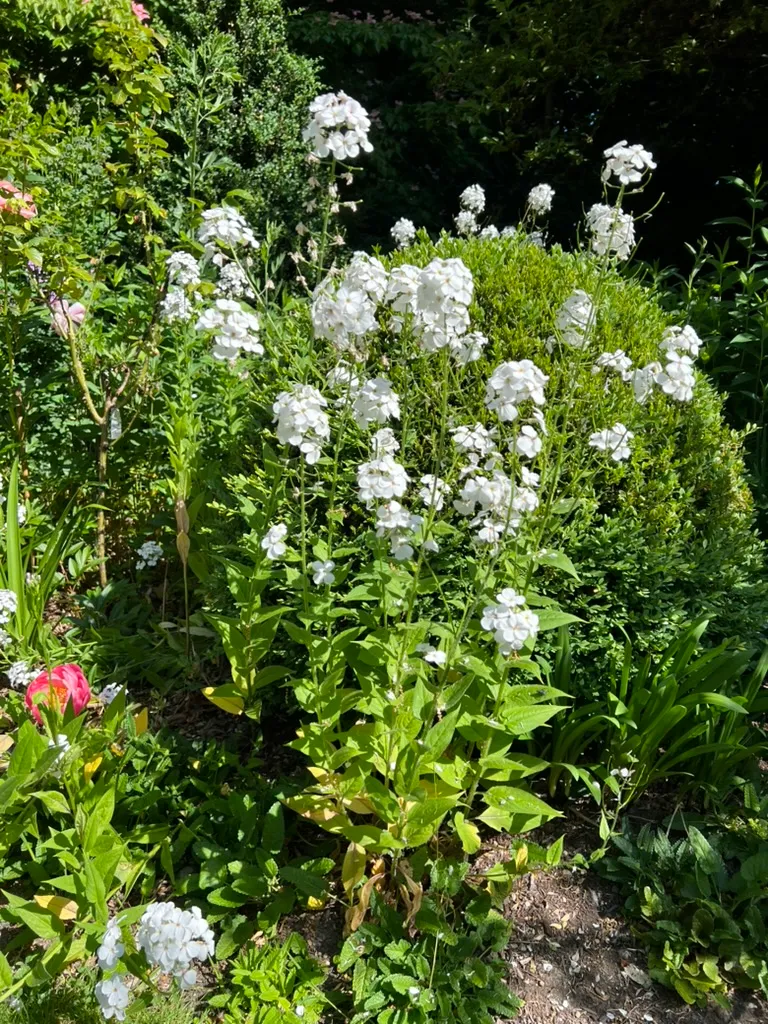
Hesperis matronalis is an upright biennial (occasionally a short-lived perennial) in the family Brassicaceae growing 24-48 inches (60-120 cm) tall and 12-18 inches (30-45 cm) wide, with white, pink, or lavender-purple four-petaled cruciform flowers 0.75 inch (2 cm) across in loose terminal racemes from May through July. The species follows a strict two-year lifecycle in most sites: seeds germinate in late summer or fall and develop into a flat basal rosette of lance-shaped hairy leaves that overwinters through the first year, then the rosette bolts in the second spring to produce the tall flowering stem, sets seed in early to midsummer, and dies after reproduction. Colonies are maintained by abundant self-sown seedlings that occupy the ground around the parent plant, with a typical colony carrying rosettes and flowering plants in parallel during any given season. The four-petaled flowers are the main vegetative separator from garden phlox (Phlox paniculata), which carries five-petaled flowers in a similar pink-to-purple color range and a similar flowering habit — the two species are frequently confused in roadside and woodland-edge settings and many wildflower seed mixes marketed as 'wildflower blends' contain Hesperis seed under the assumption that the plant is a native phlox relative when in fact it is a non-native invasive. Flowers are strongly fragrant in the evening hours with a sweet scent that intensifies at dusk and through the night — the genus name Hesperis derives from the Greek word 'hespera' meaning 'evening,' a reference to this nocturnal fragrance pattern that is adapted to attract night-flying moth pollinators in the native Mediterranean range. The species is classified as invasive or a noxious weed in many U.S. states (including Connecticut, Massachusetts, Colorado, Wisconsin, Indiana, and others) and Canadian provinces where the abundant self-sowing displaces native woodland wildflowers along shaded forest edges and moist bottomland habitats that share the cultural preferences of the species — this invasive ecological status is the central consideration for any garden use of H. matronalis in North America, and the plant should be treated as an ornamental that trades colonizing ability for ecological cost rather than as a harmless wildflower garden addition. The strongly drought-tolerant biennial root system allows establishment in poor soils and disturbed ground where many garden perennials fail. Non-toxic. Deer browse the foliage readily.
Native Range
Hesperis matronalis is native to Europe and western Asia, with a natural range spanning the Mediterranean region through central Europe to the Caucasus mountains and southwestern Russia. The species grows in meadows, woodland edges, roadsides, stream banks, and disturbed open ground where the biennial self-sowing lifecycle can establish and regenerate. European garden cultivation extends back to at least the 16th century — the plant was grown in European monastery gardens and cottage plantings for its strong evening fragrance and the color range of the flowers, and this long cultivation history predates modern understanding of invasive plant ecology. The species was carried to North America by early European settlers as a cottage-garden ornamental and has since naturalized widely across the temperate eastern and central United States and Canada, with particular colonization of moist shaded forest edges, stream banks, and woodland openings that match its native habitat preferences. The species is now classified as invasive or a noxious weed across many U.S. states including Connecticut, Massachusetts, Colorado, Wisconsin, Indiana, Tennessee, and others, and across several Canadian provinces. Regulatory status varies by jurisdiction and some areas prohibit sale or planting of the species entirely.Suggested Uses
Planted in cottage gardens, naturalistic mixed-species meadow plantings, woodland-edge plantings, and informal border settings at 12-18 inch (30-45 cm) spacing in zones 3-9, with the clear caveat that planting H. matronalis in North America carries the ecological cost of invasive spread and regulatory risk that varies by jurisdiction. The evening fragrance and the early-summer flowering window carry the main garden value where the plant can be grown responsibly. Combined with other self-sowing cottage-garden biennials and short-lived perennials such as Digitalis purpurea, Lunaria annua (money plant — another fragrant Brassicaceae species), Verbascum, and Myosotis in mixed plantings where the lifecycle turnover and the informal appearance align. Not suited to formal plantings where the biennial die-off creates gaps, North American plantings adjacent to natural woodland or riparian areas where escape is likely, states or provinces where the species is prohibited or regulated as a noxious weed, or gardens where deer browse is a significant problem. North American native alternatives that fill a similar color and habit role without the invasive concern include Phlox divaricata (woodland phlox), Phlox paniculata (garden phlox — five-petaled flowers in the same color range), and native Oenothera species for evening fragrance.How to Identify
Appearance
Size & Dimensions
Height2' - 4'
Width/Spread1' - 1'6"
Bloom Information
White, pink, or lavender-purple four-petaled cruciform flowers 0.75 inch (2 cm) across open in loose terminal racemes at the stem tops from May through July in zones 3-9, lasting approximately 6 weeks in a typical second-year plant. Flowers are strongly evening-fragrant with a sweet scent that intensifies at dusk and continues through the night hours, the pattern adapted to attract night-flying moth pollinators in the native Mediterranean range. Day-flying bumblebees, native bees, and butterflies also visit the flowers during daylight hours. Each flower matures into a slender silique (the seed capsule characteristic of Brassicaceae) containing multiple small seeds that are released as the silique dries and splits; seeds germinate readily in moist disturbed ground and produce basal-rosette seedlings within a few weeks of dispersal, which then overwinter and bloom the following spring.
Detailed Descriptions
Flower Description
white, pink, or lavender-purple; four-petaled cruciform flowers 0.75 inch (2 cm) across in loose terminal racemes at the stem tops during May through July; strongly evening-fragrant with a sweet scent that intensifies at dusk and through the night hoursFoliage Description
medium green; alternate lance-shaped hairy leaves 2-6 inches (5-15 cm) long with toothed margins, arranged on upright unbranched to sparsely branched stems; first-year plants form a flat basal rosette and second-year plants carry leaves progressively up the flowering stemGrowing Conditions
Sun Requirements
Requires 3-8 hours of direct sunlight daily
• Full Sun: 6+ hours of direct sunlight
• Partial Shade: 3-6 hours of direct sunlight
• Full Shade: Less than 3 hours of direct sunlight
Care & Maintenance
Care Guide
Plant in well-drained soil with a pH of 6.0-7.5 in part sun to full sun (3-8 hours); tolerated soil types include loam, clay, and sand. The species is drought-tolerant once the biennial root system is established and needs minimal supplemental water after the first establishment season, matching its native Mediterranean-climate origin. The biennial lifecycle is the central cultural consideration: first-year plants are a flat basal rosette only (with no flowering) and the flowering display in year two follows the rosette year — gardeners planting seeds should expect no bloom in the first season and plan for the staggered rosette-and-flowering-plant appearance of an established colony where both lifecycle stages are present simultaneously. Abundant self-sown seedlings maintain the colony after the parent plants die following seed production. The species is classified as invasive or a noxious weed in many U.S. states and Canadian provinces — Connecticut, Massachusetts, Colorado, Wisconsin, Indiana, Tennessee, and others prohibit or discourage planting, and several jurisdictions ban commercial sale. Gardeners in North America are advised to verify the regulatory status in their state or province before adding H. matronalis to a planting, and to consider native alternatives such as Phlox divaricata or Phlox paniculata that fill a similar color and habit role without the ecological cost. Seed-head removal before maturity limits the self-sowing pressure that drives colony expansion and escape into adjacent natural areas. Non-toxic to humans and pets. Deer browse the foliage readily and the species carries no significant deer resistance.Pruning
Spent flowering stems are cut at the base after bloom finishes in late June or July, before the siliques mature and release seed, to limit the self-sowing pressure that expands the colony and drives escape into adjacent natural areas — this single annual pruning pass is the central maintenance task for the species in garden cultivation. Gardeners aiming to maintain a stable colony rather than expand it can leave a small number of seed heads to ripen while cutting the majority, and gardeners actively working to reduce or eliminate a planting cut all flowering stems before seed maturity and follow up by removing first-year basal rosettes during late summer and fall. Spent second-year plants die naturally after seed production and can be pulled from the ground by hand in midsummer.Pruning Schedule
Prune: June–July
summer
Toxicity
Non-toxicPlanting Guide
Planting Methods & Timing
Planting Method
direct sow
Direct Sow Timing
Direct sow outdoors in late spring to early summer for bloom the following year. Seeds germinate in 14-21 days. Thin to 12-18 inches (30-45 cm). Or allow self-sowing — once established, the colony persists without replanting.
Days to Maturity
365–540 days
Plant Spacing
15 inches