Growing Peppers in Containers: Pots, Mix & Feeding
Pets & Toxicity
Recorded toxicity for plants linked in this guide. An unknown status is not a safety assessment.
Toxic to pets: Pepper, Poblano pepper (4 linked plants checked)DetailsHide
Capsicum annuum 'California Wonder' — Toxicity
Non-toxicView Capsicum annuum 'California Wonder' plant profileCapsicum annuum 'Poblano' — Toxicity Warning
Toxic to petsView Capsicum annuum 'Poblano' plant profile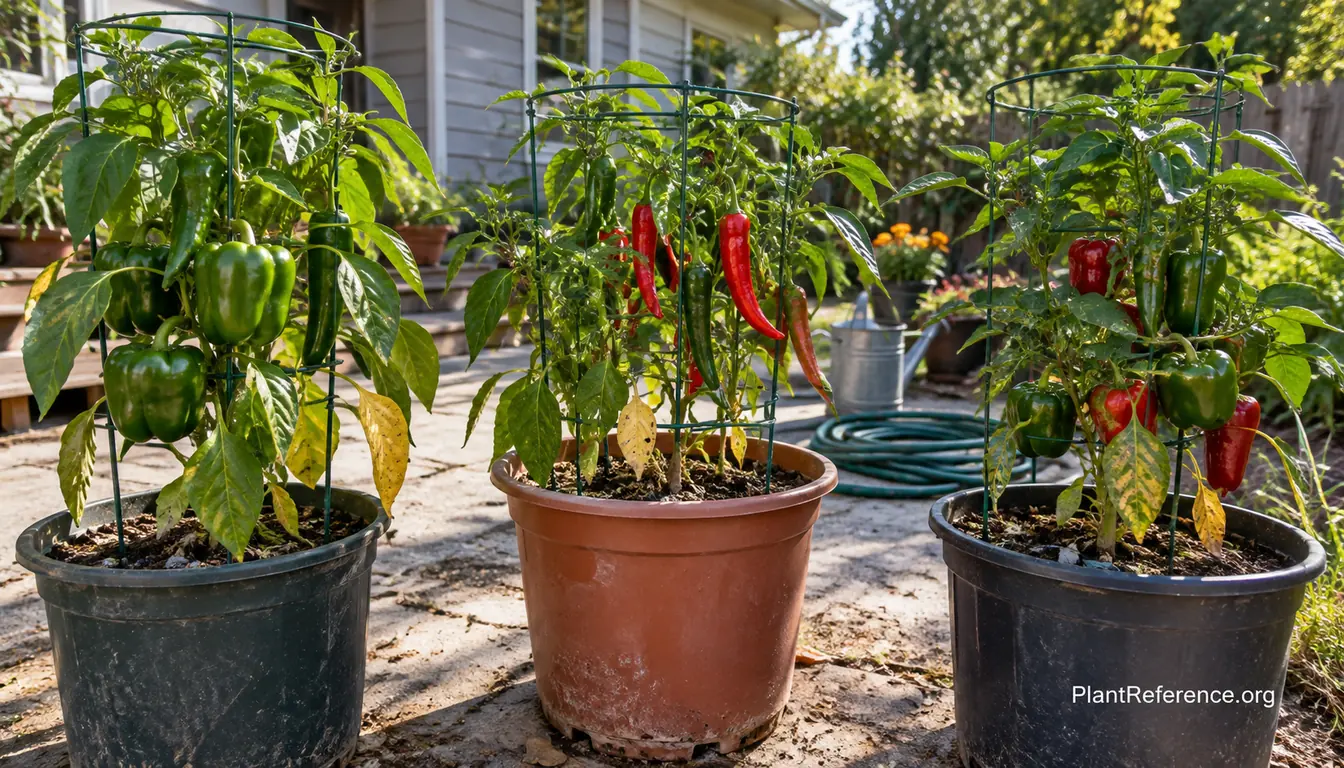
— Image © PlantReference.org 2026
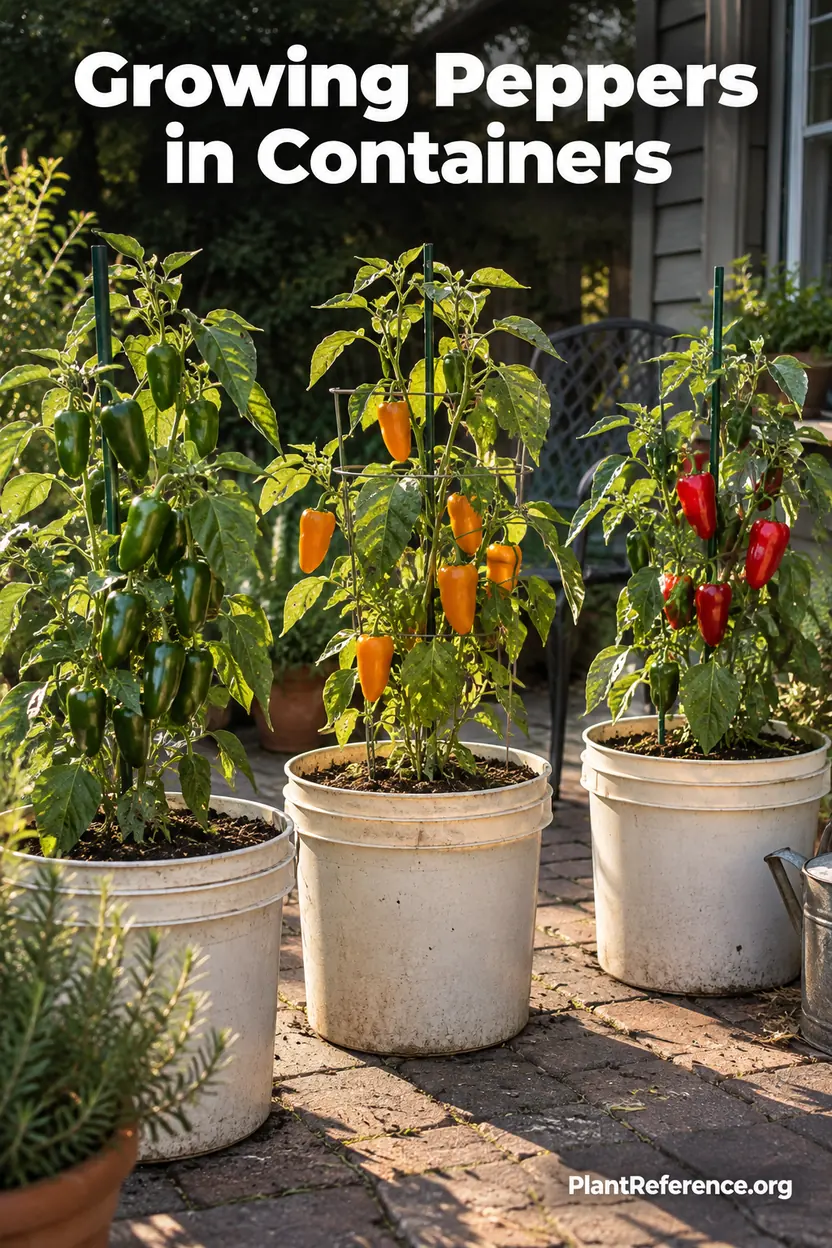
Growing peppers in containers works when the pot is sized for the mature plant rather than the transplant. Give one pepper at least 3–5 gallons (11–19 L) of airy mix, with 5 gallons (19 L) as the safer baseline for full-size varieties. Set the pot in strong light, water before the root ball becomes bone dry, and change the feeding approach when the plant moves from leaf growth into flowering.
Match Pepper Variety to Pot and Season
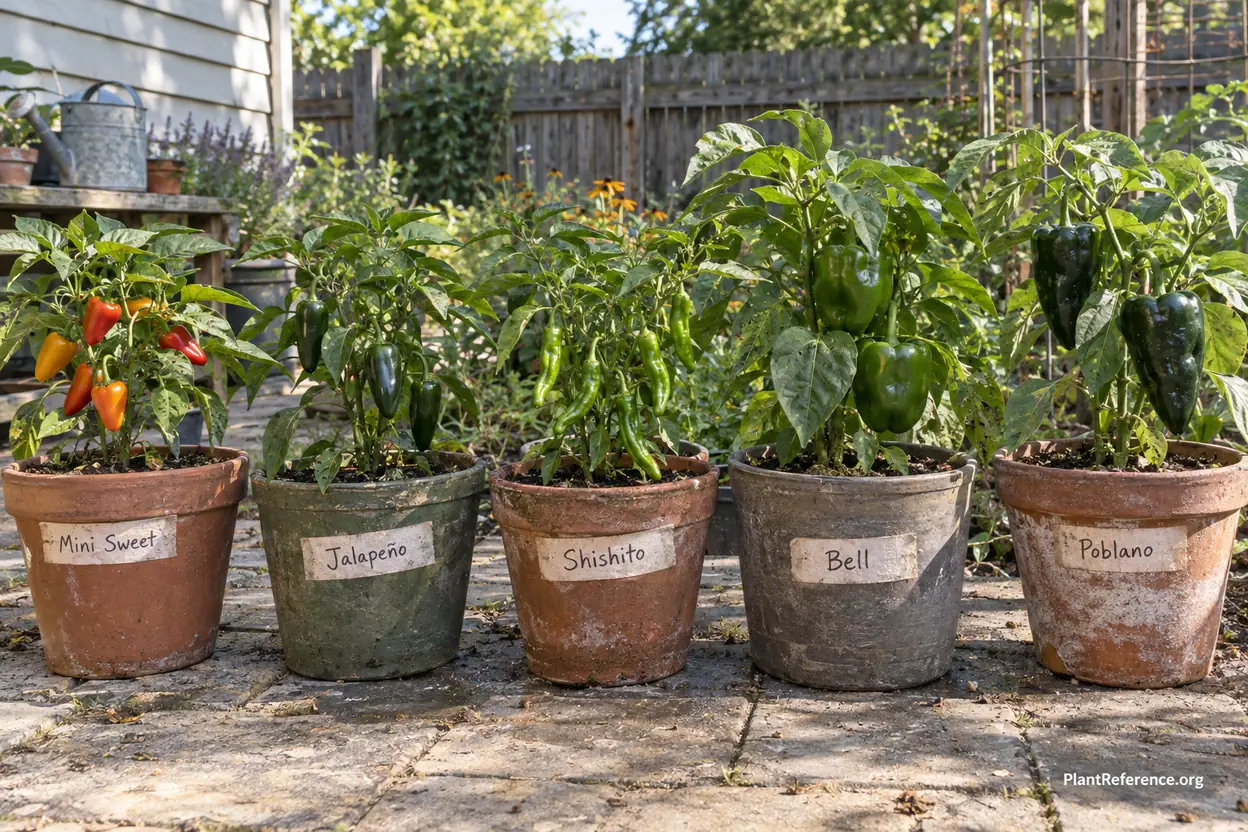
Most garden peppers belong to 🌿Capsicum annuum (KAP-sih-kum AN-yoo-um), but their mature size and fruit load vary widely. A compact hot pepper can be comfortable in 3 gallons (11 L); a tall bell or poblano performs more reliably in 5 gallons (19 L) or more. Small fruit does not always mean a small plant. Read the seed description for plant height and days to maturity before matching a cultivar to your patio.
Compact choices make container gardening easier. Capsicum annuum 'Lunchbox Red' produces small sweet fruit on a manageable plant. Capsicum annuum 'Jalapeño M' gives familiar hot peppers without the broad canopy of a large bell. 🌿Capsicum annuum 'Shishito' carries many slender fruit and benefits from early support. For full-size sweets, 🌿Capsicum annuum 'California Wonder' needs more root volume and a long warm period. 🌿Capsicum annuum 'Poblano' can become tall and top-heavy, so plan its stake before planting.
Cultivar | Fruit type | Minimum practical pot | Container note |
|---|---|---|---|
Capsicum annuum 'Lunchbox Red' | Mini sweet | 3 gallons (11 L) | Compact crop with frequent picking |
Capsicum annuum 'Jalapeño M' | Hot | 3–5 gallons (11–19 L) | Productive with steady warmth |
Mild frying | 5 gallons (19 L) | Many fruit; cage branches early | |
Sweet bell | 5 gallons (19 L) | Needs warmth and consistent feeding | |
Mild chile | 5 gallons (19 L) | Tall plant; stake before fruit set |
Season length determines whether fruit ripens. Peppers germinate and grow slowly in cool conditions, then accelerate with warm nights. Gardeners with short summers often start seeds indoors eight to ten weeks before safe outdoor planting, while warm-climate gardeners may work around extreme midsummer heat. Compare When to Plant Peppers in Minneapolis: Complete Guide + Best Varieties for Zone 4a with When to Plant Peppers in Miami: Zone 10b Dates + Best Varieties instead of copying one national date.
Container mobility helps at both ends of the season. A light pot can move into shelter during a cold night or out of reflected afternoon heat, but avoid carrying a mature fruiting plant repeatedly. Place it where it will receive at least six hours of direct sun, then use a caddy if seasonal adjustments are likely. The right cultivar and warm window matter more than buying the most elaborate pot.
Give One Plant Enough Root Volume
Under-potting is the most common container-pepper mistake because a transplant looks tiny in a 5-gallon (19 L) vessel. By midsummer, that same plant has a woody stem, a broad canopy, and fruit drawing water every day. A cramped root ball dries too quickly, sheds flowers during stress, and leaves little buffer against fertilizer salts. Start with the final pot whenever practical instead of stepping through several small containers.
Use one plant per 3–5 gallons (11–19 L). Reserve the smaller end for genuinely compact cultivars and attentive watering. A standard sweet pepper or poblano deserves at least 5 gallons (19 L); a 7-gallon (26 L) pot offers more stability in heat. The vessel should be roughly 12 inches (30 cm) across, with multiple open holes. Width also keeps the plant from tipping when fruit loads one side.
Plant habit | Suggested volume | Typical use |
|---|---|---|
Compact mini pepper | 3 gallons (11 L) | Sheltered patio with frequent checks |
Standard hot pepper | 3–5 gallons (11–19 L) | One plant with light support |
Bell or poblano | 5–7 gallons (19–26 L) | Full fruit load and steadier moisture |
Overwintered mature plant | 7 gallons (26 L) or root-pruned | Multi-season structure and reserve |
Plastic and glazed pots retain moisture longer than terracotta, which helps in dry wind. Pale colors keep the root zone cooler than thin black plastic in strong sun. Fabric bags exchange air through the walls and discourage circling roots, but a 5-gallon (19 L) bag can dry surprisingly fast. Best Grow Bags for Tomatoes: Fabric vs Plastic Container Comparison discusses a different nightshade, yet the evaporation and stability tradeoffs also apply to peppers.
Do not add gravel to the bottom. Use potting mix from the base to the top, leaving 1 inch (2.5 cm) below the rim. Gravel shortens the root zone and can keep a saturated layer higher in the fine mix. Raise the pot slightly if a flat surface blocks its holes, and empty any saucer after drainage. A clean food-grade bucket with enough holes can grow an excellent pepper for a fraction of a decorative planter's cost.
Mix and Plant for Fast Establishment
Choose a container mix that holds moisture without collapsing. Coir or peat supplies water retention; perlite and bark preserve air space; compost or castings provide some nutrient reserve. Yard soil compacts inside a pot and can stay saturated near the bottom. A packaged mix is the simplest starting point. 6 Best Potting Soils for Container Tomatoes (Tested for Drainage and Nutrients) is tomato-focused, but its balance of aeration, structure, and water retention is directly relevant.
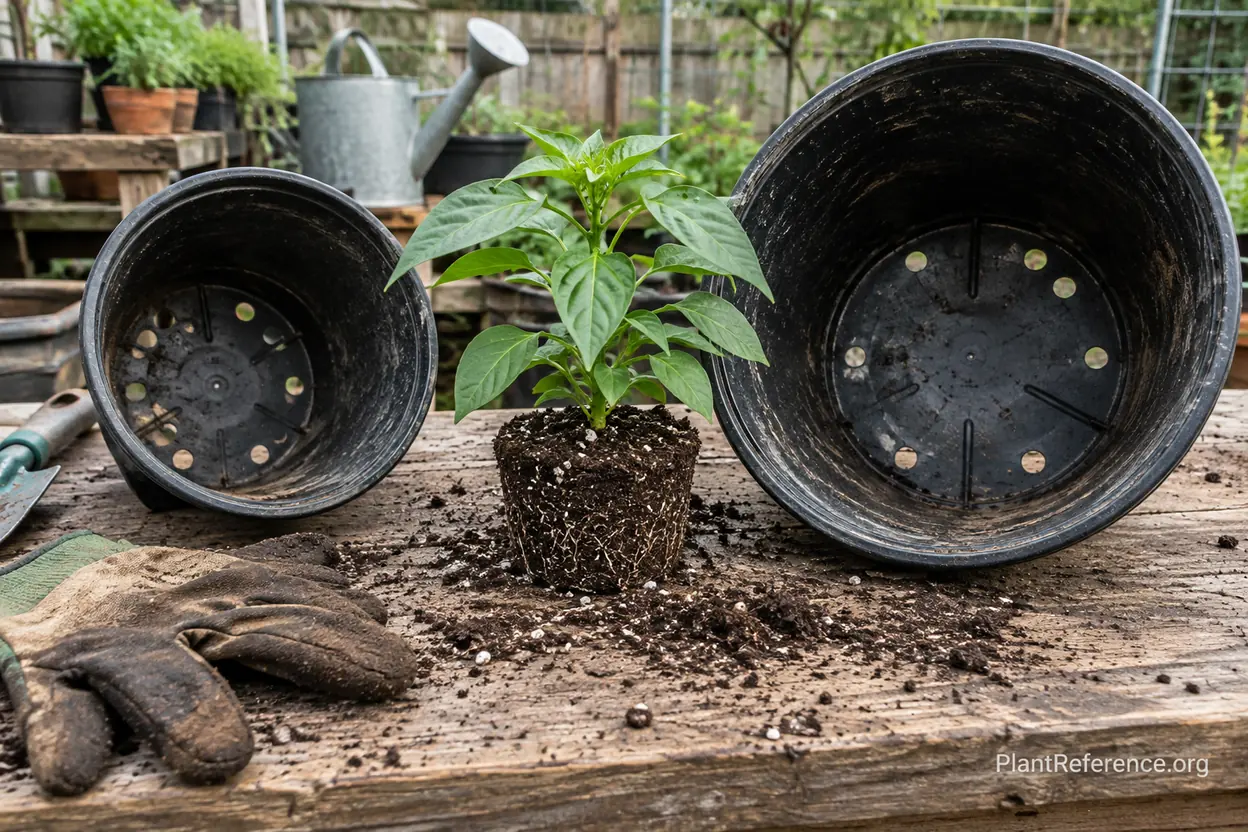
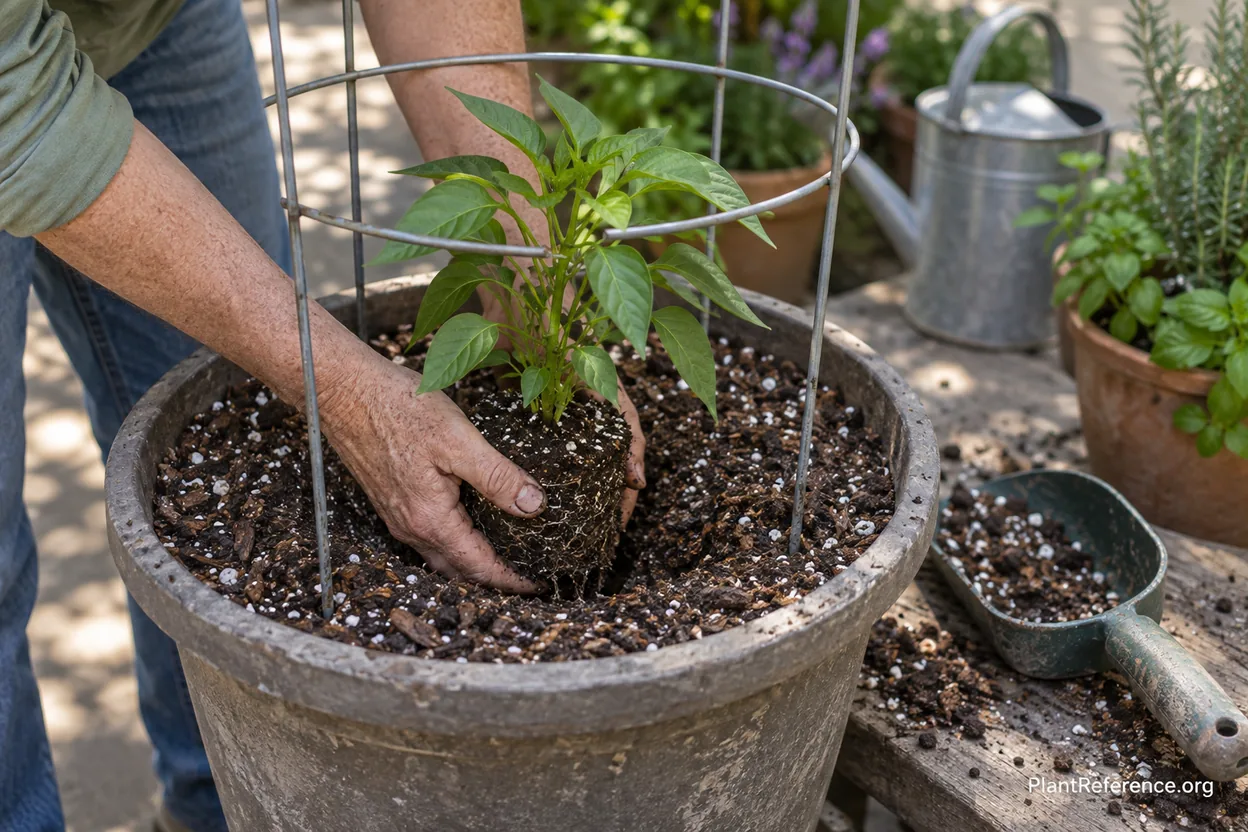
Pre-moisten dry mix until it feels evenly damp. Fill the container, settle it gently, and avoid pressing it into a dense block. Plant the pepper at the same depth it occupied in the nursery pot. Unlike tomatoes, pepper stems are not routinely buried deeply. Tease only the outer circling roots, set the crown level, and water slowly until drainage appears.
Harden transplants over seven to ten days. Begin with sheltered outdoor light, then increase sun and wind exposure. A pepper moved from a warm indoor shelf directly into cold soil and full sun may stop growing for weeks. Wait for consistently warm conditions in your region. When to Plant Peppers in Denver: Complete Guide + Best Varieties for Zone 5a and When to Plant Peppers in Phoenix: Zone 9b Dates + Best Varieties show why the safe outdoor window differs so sharply.
Install a stake or short cage while the root ball is still small. Push it near the pot wall rather than through the stem base. Tie the main stem loosely with soft material and add support as branches carry fruit. Waiting until a laden branch bends means working through foliage and risking root damage. Even compact peppers appreciate support during thunderstorms or balcony gusts.
Water Without Swinging Between Extremes
Consistent moisture supports calcium movement into developing fruit and reduces flower drop. Check the mix 1–2 inches (2.5–5 cm) below the surface. Water when that layer begins to dry, applying enough to wet the full root zone and create a little runoff. A 5-gallon (19 L) pot may need daily checks in hot wind, while the same pot can remain moist for several days in mild cloudy weather.
Do not water by the clock alone. Lift or tilt the pot to learn its wet and dry weight. Wilting with a light pot usually means drought; wilting with a heavy wet pot points toward poor aeration, heat-damaged roots, or disease. Overwatering vs Underwatering Container Tomatoes: How to Tell the Difference provides a useful visual comparison for another nightshade crop. Always confirm moisture below the surface before pouring more.
A 1–2 inch (2.5–5 cm) layer of clean straw or shredded leaves slows evaporation after the mix warms. Keep mulch away from the stem. A reservoir planter can stabilize water delivery, but keep the overflow clear and check that the wicking system works. The plant still needs air around its roots. Never let a conventional pot stand in a full saucer for days.
Hot roots can make a wet pepper wilt. Shade the side of a dark pot, slide it behind a larger pale container, or move it away from reflective masonry. Preserve sun on the leaves if temperatures remain suitable. Watering Container Tomatoes: The Complete Guide to Preventing Common Problems explains why a deep, complete watering is better than repeated surface sips.
Feed for Leaves, Flowers, and Fruit
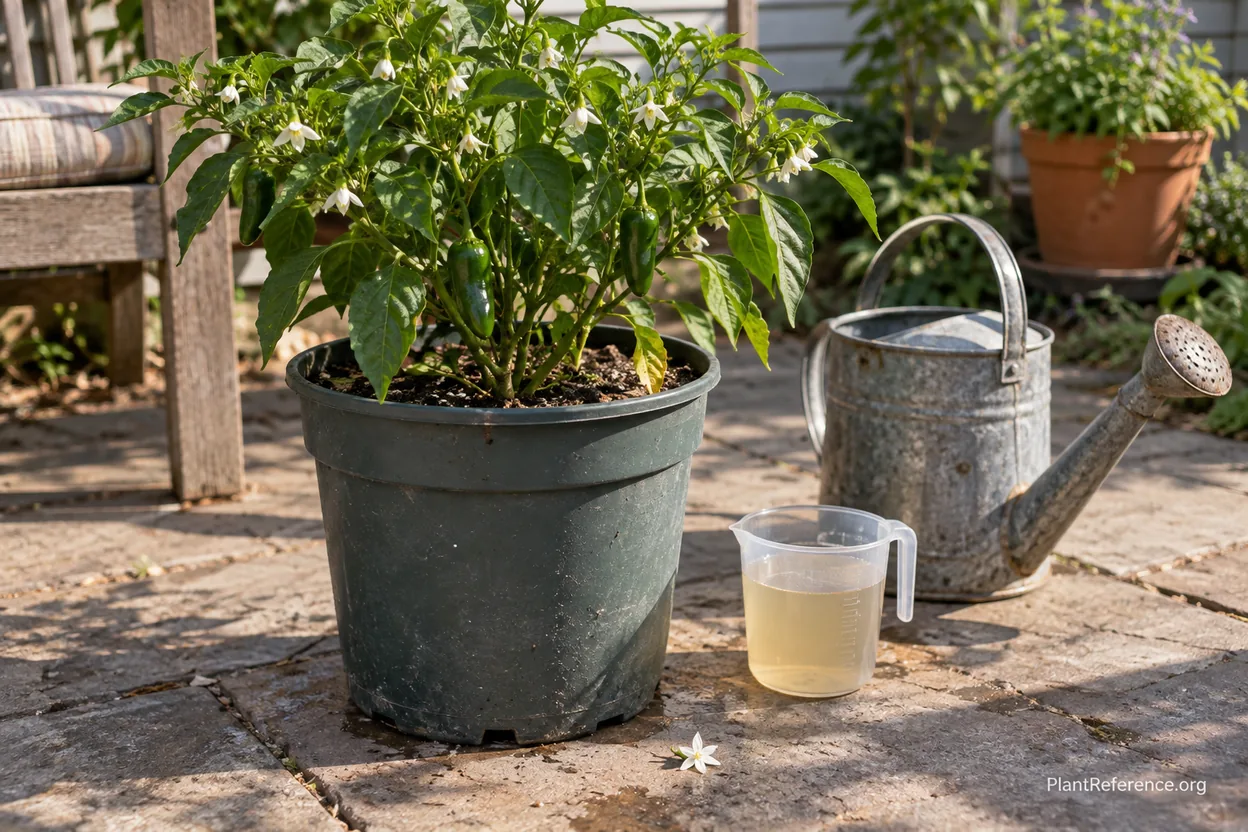
Container feeding has two phases. During establishment, the pepper needs enough nitrogen to build leaves and roots. Once buds appear, excessive nitrogen can keep the plant leafy while flower and fruit production lag. That does not mean phosphorus should be dumped into the pot. Use a fertilizer labeled for fruiting vegetables, follow its container rate, and avoid stacking several products with the starter charge already in the mix.
If the potting mix includes slow-release fertilizer, note how long the label says it feeds. Begin supplemental feeding only as that period ends or growth shows a need. A balanced liquid feed at reduced strength every two to three weeks is easier to adjust than a heavy dose. At flowering, choose a product whose label supports bloom and fruit production without extreme nitrogen. Measure carefully; pot roots cannot escape salt buildup.
Growth stage | Nutrition priority | Practical check |
|---|---|---|
First 2–3 weeks after transplant | Root establishment; modest balanced nutrition | Avoid feeding over a charged mix |
Strong vegetative growth | Enough nitrogen for healthy leaves | Stop if growth becomes soft and excessive |
Bud and flower stage | Balanced fruiting-vegetable feed | Follow label; avoid doubling products |
Heavy fruit load | Consistent potassium and micronutrients | Feed lightly and watch leaf color |
Overwintered rest | Little or no fertilizer | Resume only with active new growth |
White crust on the mix or pot rim signals accumulated salts. Stop feeding and flush with plain water, allowing the runoff to drain where permitted. Brown leaf margins can have other causes, so check heat and moisture too. Yellow Leaves on Container Tomatoes: Diagnosing and Fixing Nutrient Deficiencies shows why leaf color alone is not a fertilizer prescription.
Blossom-end rot appears as a dark sunken patch on the fruit base. It reflects a calcium-delivery problem often triggered by irregular water, root damage, or rapid growth rather than simply low calcium in the mix. Stabilize moisture and avoid root stress before adding supplements. The detailed explanation in Why Your Container Tomatoes Have Blossom End Rot (And How to Fix It Fast) applies to peppers because both crops move calcium through the transpiration stream.
Support, Pollinate, and Harvest
Pepper flowers are self-fertile, but movement helps pollen transfer. Outdoor wind and insects usually handle the job. On a sheltered balcony, gently tap the cage or shake a flowering branch at midday when blossoms are dry. Avoid rough handling during extreme heat, when pollen may already be less viable. If flowers drop, check night temperature, daytime heat, moisture swings, and excess nitrogen before blaming pollination.
Tie loaded branches before they split. A three-ring cage works for bushy plants; a central stake with side ties works for a taller poblano. Keep ties loose enough for stem expansion. Rotate a pot only a quarter turn at a time if growth leans toward the sun. Large sudden changes in exposure can scorch leaves and shift heavy fruit against unsupported branches.
Harvest green peppers whenever they reach usable size and feel firm. Leaving fruit to turn red, orange, or yellow develops fuller flavor and often more heat, but it occupies the plant longer. Frequent picking encourages continued flowering while conditions remain favorable. Cut fruit with clean pruners, leaving a short stem; pulling can tear a whole branch from a container plant.
At the end of a warm season, peppers can sometimes be overwintered. Before bringing one inside, inspect thoroughly for pests, harvest remaining fruit, and reduce the canopy modestly. Provide strong light and water less as growth slows. A mature plant may be root-pruned and refreshed in spring, but do not force active feeding in a dim winter room. Overwintering is optional; a healthy new transplant may be simpler.
Diagnose Container Pepper Problems
Flower drop is usually a stress signal. Temperatures outside the crop's comfortable range, dry roots, saturated mix, excess nitrogen, or a sudden move can all contribute. Correct the environmental problem and let new flowers form. Adding more fertilizer to a heat-stressed pepper often makes the imbalance worse.
Small pale leaves can mean hunger, crowded roots, or chronically wet mix. Check whether roots circle the pot and whether water drains freely. If the plant dries within hours despite thorough watering, move it into a larger container. Container Too Small? How to Save Root-Bound Tomato Plants describes the same hydraulic problem in tomatoes. Step up one size rather than surrounding a small damaged root ball with a huge volume of wet mix.
Aphids gather on tender tips, while spider mites thrive in hot dry conditions and leave fine stippling. Inspect leaf undersides every week. A firm water spray can remove early aphids; isolate a badly affected pot and use only products labeled for edible peppers, observing their preharvest intervals. Good spacing and clean fallen leaves reduce hiding places.
Sunscald creates pale papery patches on fruit suddenly exposed after pruning or leaf loss. Keep a healthy canopy and avoid stripping foliage in midsummer. If strong wind breaks branches, lower the pot below the railing and secure the support. The anchoring methods in Protecting Container Tomatoes on Windy Balconies and Exposed Patios transfer directly to a fruit-heavy pepper.
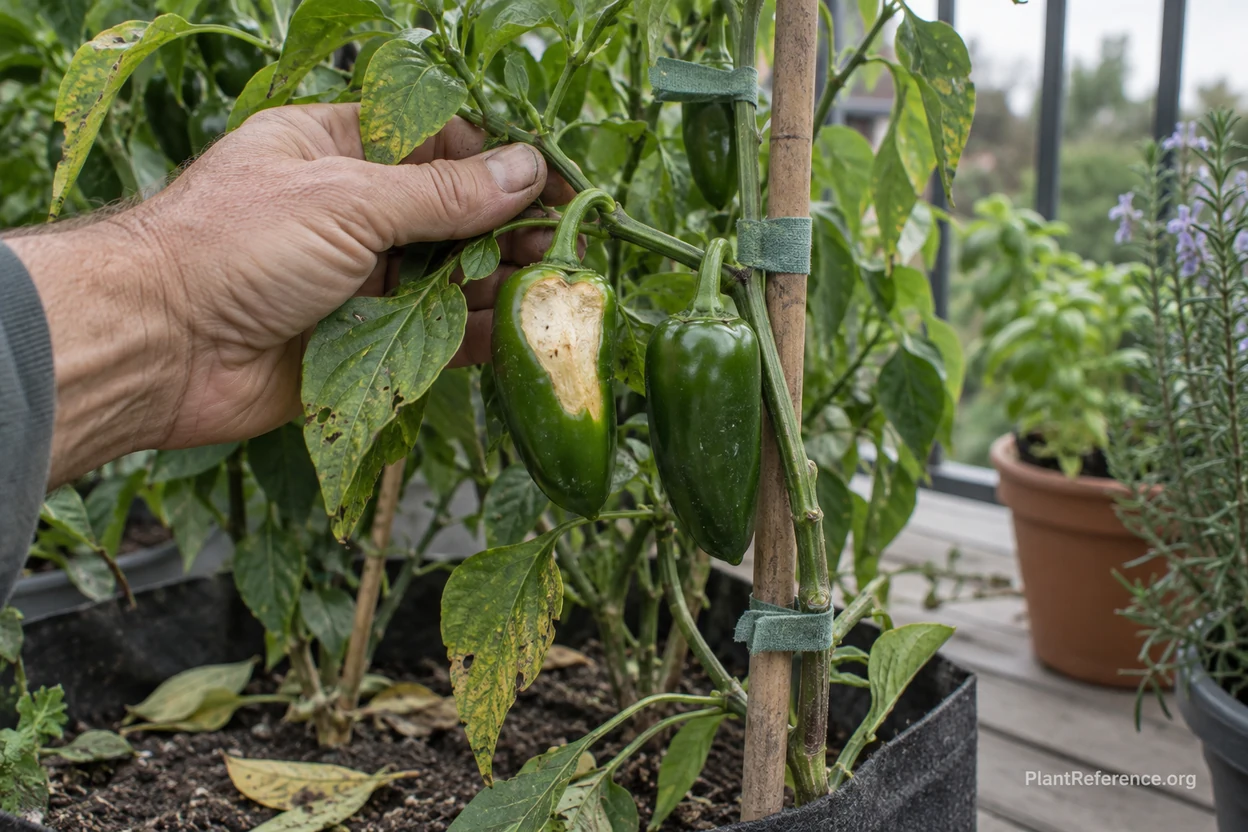
Choose one correction at a time and watch new growth. Old damaged leaves and fruit will not turn perfect, so judge the next flowers, leaves, and fruit. A roomy pot, consistent moisture, warm conditions, and measured feeding solve more container pepper problems than a shelf full of emergency products.
Frequently Asked Questions
Three daily games
Can you name a plant on sight?
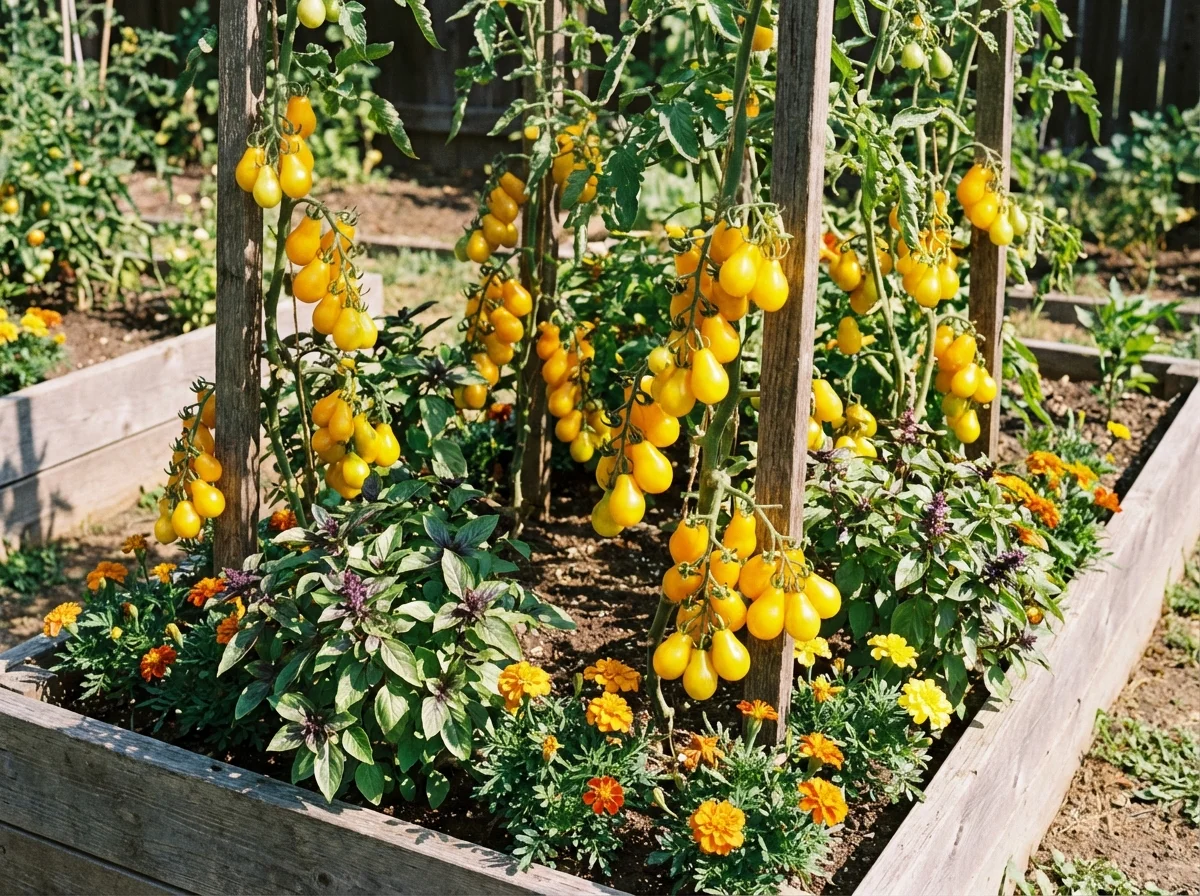
Saturday’s specimenSolanum lycopersicum 'Yellow Pear'Reading about plants and recognising them are different skills. These three build the second.
- Daily PlantIdentify the day’s mystery plant from a close-up photograph.
- Keyed OutWork a dichotomous key, lead by lead, to name a hidden specimen.
- Name That PlantName a specimen from botanical clues dealt hardest first.
Free to play, no account needed
Tagged with
Carlos grew up helping his abuelos tend their backyard garden in San Antonio, Texas, but didn't get serious about growing his own food until he bought his first house in Austin. He works as an HVAC technician during the day and gardens in the early mornings and evenings. Carlos specializes in heat-tolerant vegetables and container growing—essential skills for Texas summers and his south-facing driveway that gets intense sun. He's learned through plenty of failures (multiple dead fig trees, countless bolted lettuce crops) and now helps neighbors troubleshoot their own gardens. His YouTube channel documenting his container tomato experiments has a small but dedicated following. Carlos is passionate about growing food on a budget, often sourcing free containers and building his own compost.