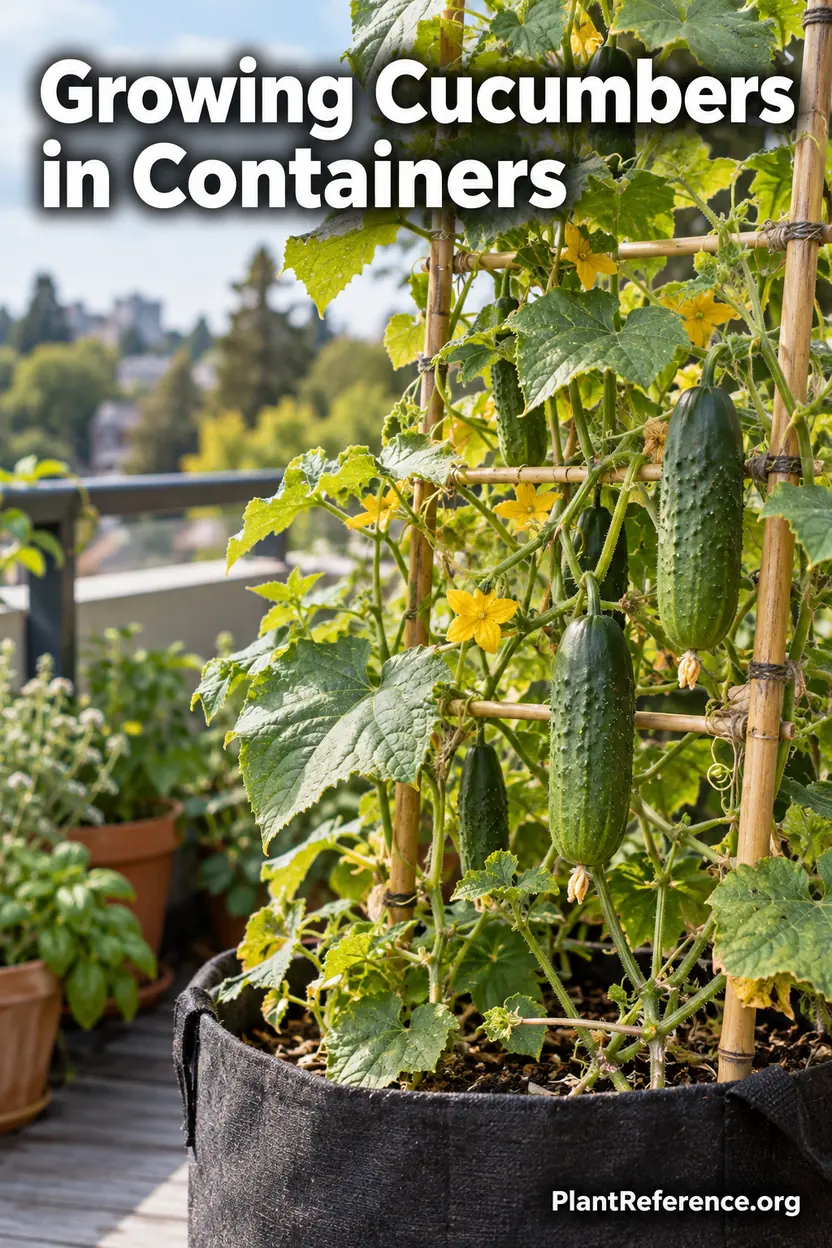
Growing Cucumbers in Containers: Pots, Trellis & Varieties
Pets & Toxicity
Recorded toxicity for plants linked in this guide. An unknown status is not a safety assessment.
No linked plant is recorded as toxicDetailsHide
Cucumis sativus 'Bush Champion' — Toxicity
Non-toxicView Cucumis sativus 'Bush Champion' plant profileCucumis sativus 'Boston Pickling' — Toxicity
Non-toxicView Cucumis sativus 'Boston Pickling' plant profileCucumis sativus 'Marketmore 76' — Toxicity
Non-toxicView Cucumis sativus 'Marketmore 76' plant profile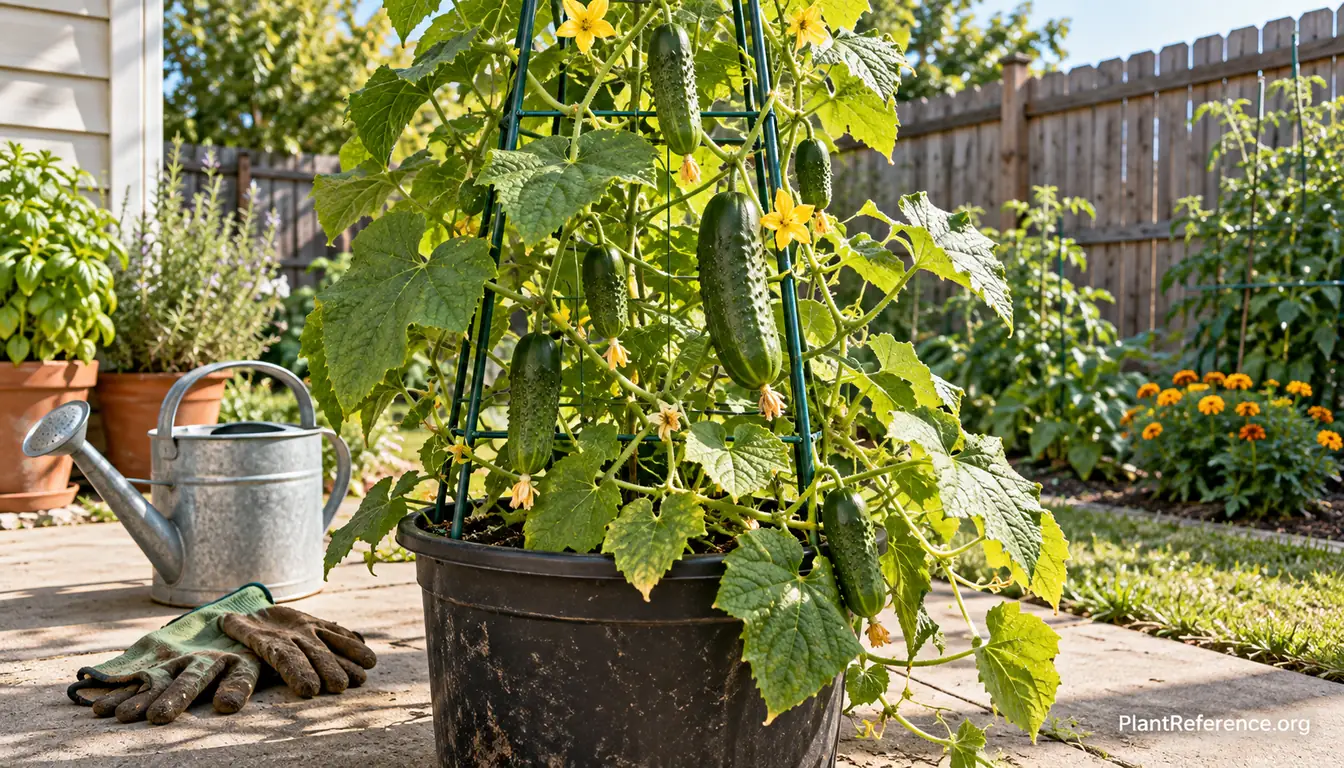
— Image © PlantReference.org 2026
Growing cucumbers in containers is one of the best deals in small-space gardening. A single healthy vine can hand you a couple of dozen fruits in a season, and it does it while taking up about two square feet (0.2 sq m) of floor. I've grown them in five-gallon buckets on a hot driveway, and the trick is never the plant. It's the pot size, the trellis, and staying ahead of the watering.
Best Cucumber Varieties for Containers
The cucumber 🌿Cucumis sativus (KYU-kuh-mis sah-TY-vus) comes in two growth habits, and your container decides which one you should buy. Bush and "patio" types stay compact, with vines of 2-3 feet (60-90 cm), so they suit smaller pots and railing planters. Vining types run 6 feet (1.8 m) or more, but they give you far more fruit per square foot as long as you give them a trellis and a 5-gallon pot.
For a small balcony, start with Cucumis sativus 'Spacemaster 80'. It matures in about 60 days, holds its vines to roughly 2-3 feet (60-90 cm), and produces 7-8 inch (18-20 cm) slicers that taste like a normal cucumber. 🌿Cucumis sativus 'Bush Champion' is a heavier producer if you have a bit more room, though the fruit runs longer, up to 10 inches (25 cm).
If you want snacking cucumbers, Cucumis sativus 'Patio Snacker' is the workhorse. It's a compact vine that fruits in 50-55 days, and the 6-7 inch (15-18 cm) cukes are sweet with thin skin. Cucumis sativus 'Picolino' is a Persian-type mini that sets seedless fruit without pollination, which is a big win on a high balcony where bees rarely visit.
Pickle fans should look at 🌿Cucumis sativus 'Boston Pickling'. It's a fast 50-55 day variety, and you can pick a jar's worth in one flush. For classic slicers on a sturdy trellis, 🌿Cucumis sativus 'Marketmore 76' is a reliable vining option with good disease resistance, and it handles a 5-gallon pot fine if you keep up with water and feed. Your local climate matters for timing, so if you want date guidance for your city, check When to Plant Cucumbers in Chicago: Zone 6a Dates + Best Varieties for an example of how frost dates translate into a schedule.
Variety | Days to Maturity | Habit | Best Container Size | Notes for Pots |
|---|---|---|---|---|
Cucumis sativus 'Spacemaster 80' | 60 days | Compact vine, 2-3 ft (60-90 cm) | 3-5 gallons (11-19 L) | Best all-round slicer for small balconies |
Cucumis sativus 'Patio Snacker' | 50-55 days | Compact vine, 2-3 ft (60-90 cm) | 3-5 gallons (11-19 L) | Sweet snacking fruit, handles tight spaces |
55-62 days | Bushy vine, 3 ft (90 cm) | 5 gallons (19 L) | Heavy yields, needs steady feeding | |
Cucumis sativus 'Picolino' | 50-55 days | Vining, 5-6 ft (1.5-1.8 m) | 5 gallons (19 L) | Seedless Persian type, sets fruit without pollinators |
50-55 days | Vining, 4-5 ft (1.2-1.5 m) | 5 gallons (19 L) | Concentrated harvest, great for pickling | |
58-68 days | Vining, 6 ft (1.8 m) | 5+ gallons (19+ L) | Disease resistant slicer, needs a tall trellis |
When and How to Plant Cucumbers in Pots
Cucumbers are tender. A single frost kills them, and cold nights stall them for weeks. In a container the soil warms faster than ground soil, which helps, but it also swings cold quickly on a chilly night, so wait until the danger of frost has passed in your area before you put anything outside.
Timing for Your Climate
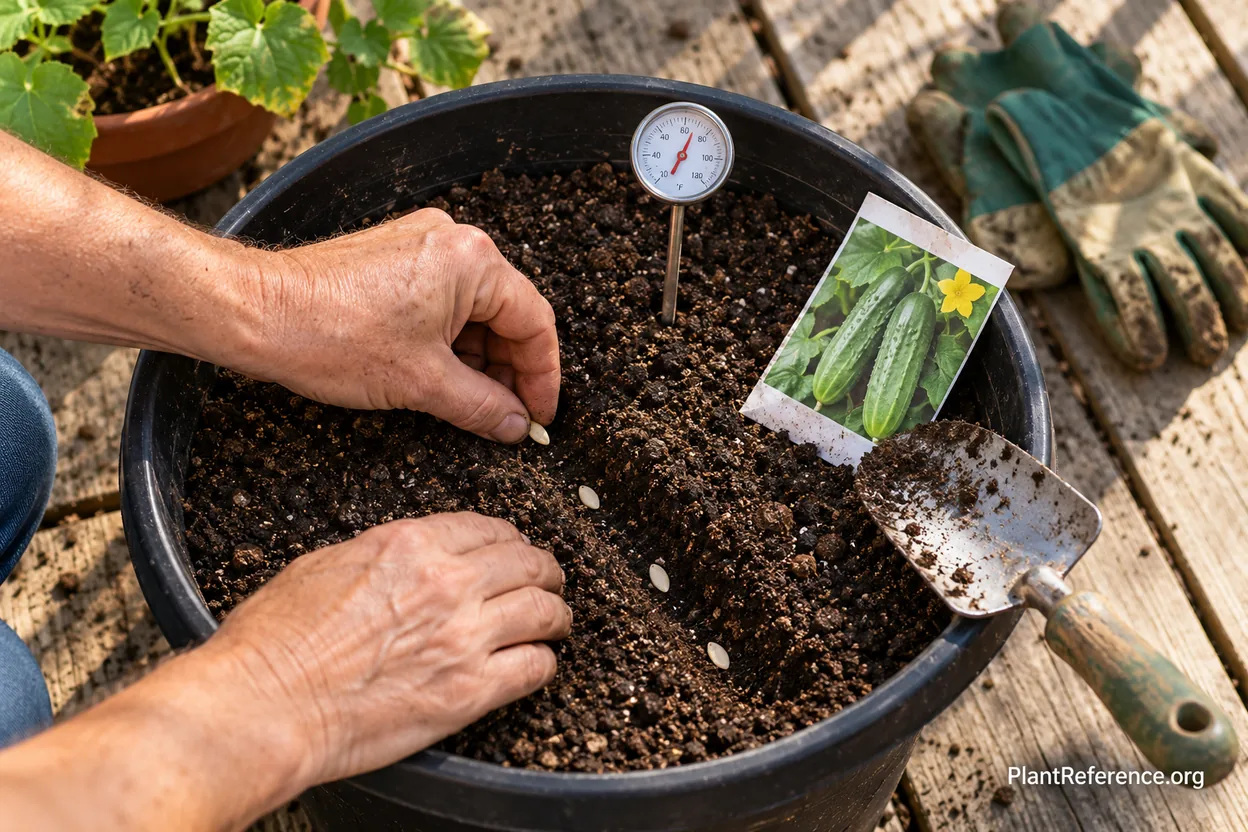
Sow seeds directly in the pot once nights stay above 50°F (10°C) and the potting mix has warmed to at least 70°F (21°C). Check with a cheap soil thermometer pushed 2 inches (5 cm) deep. If you want a head start, sow indoors 3-4 weeks before your last frost date, in biodegradable pots so you never disturb the roots. Harden seedlings off for 7 days and move them out about two weeks after the last frost.
In hot climates, flip the calendar. You can sow in early spring and again in late summer, because temperatures above 95°F (35°C) cause flower drop and bitter fruit. A container helps here since you can drag it into afternoon shade.
Pot Size and Type
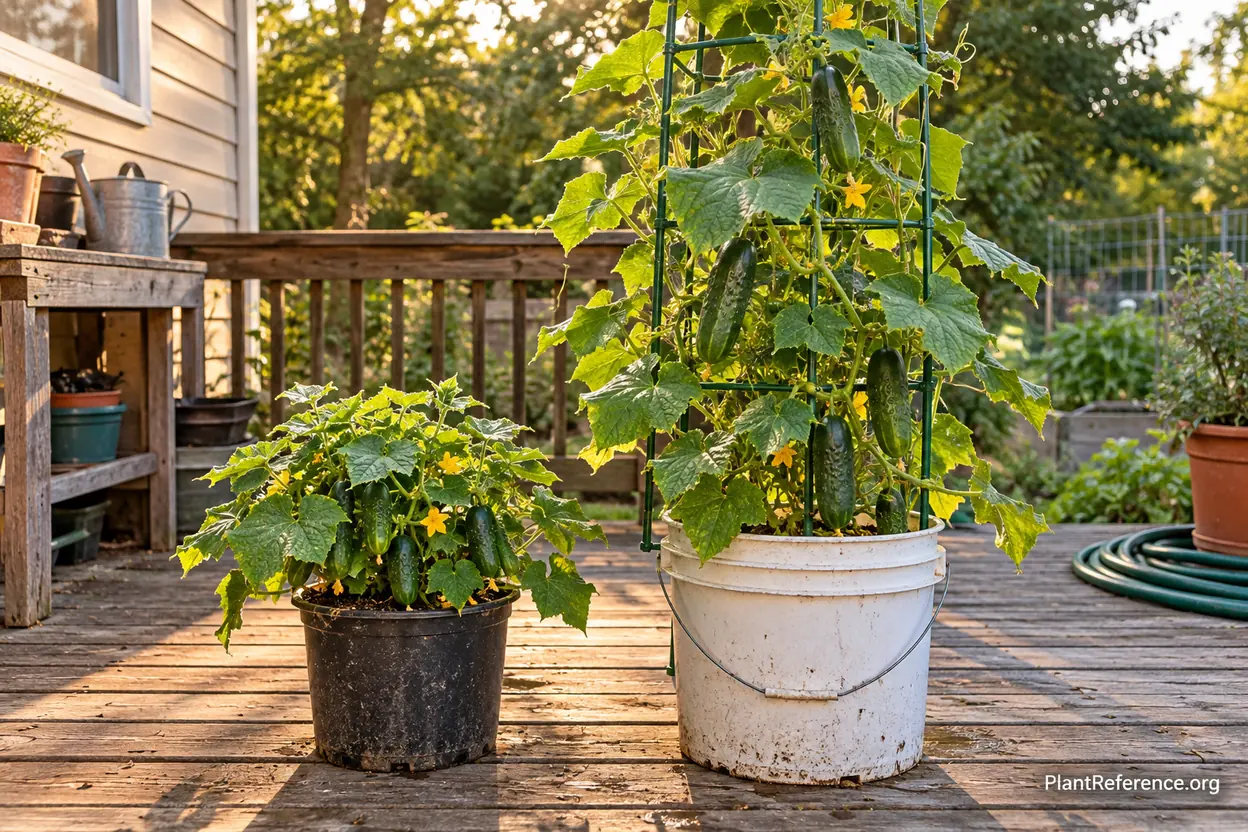
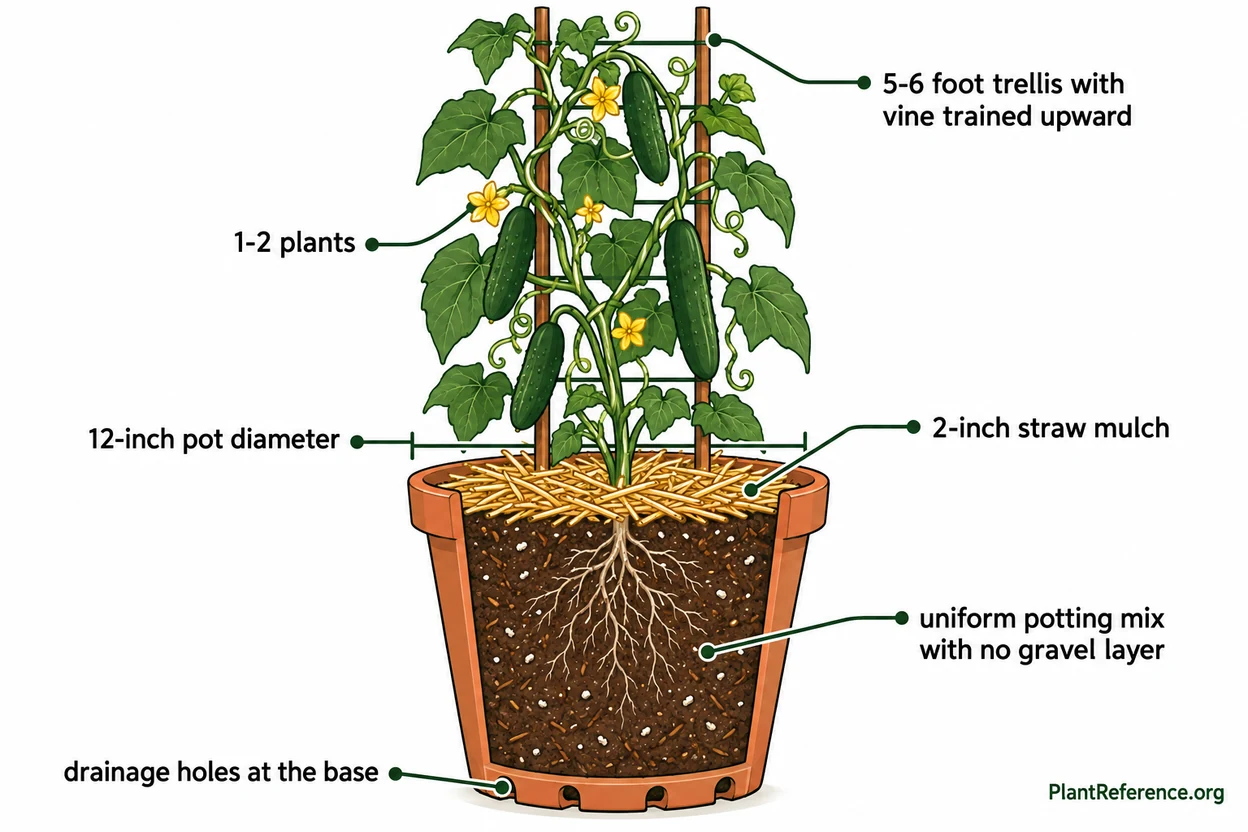
The research on container sizing is consistent: a 12-inch (30 cm) diameter pot holding about 5 gallons (19 L) is the standard for cucumbers, with one to two plants per pot if you provide vertical support. Without a trellis, the vines sprawl, the leaves stay wet, and pests move in. So treat the trellis as part of the container size, not an accessory.
Plastic or resin pots are cheap and hold water well, but dark colors can heat the roots above 110°F (43°C) in full summer sun.
Fabric grow bags breathe, prune roots with air, and stay cooler, though they dry out faster and need watering more often.
Terra cotta cools roots through evaporation but dries out very quickly and is heavy once it's full of wet soil.
Five-gallon food-grade buckets with drainage holes are the budget option. Drill six to eight 1/2 inch (13 mm) holes in the bottom.
If you're deciding between plastic and fabric, Best Grow Bags for Tomatoes: Fabric vs Plastic Container Comparison breaks down the tradeoffs, and the same logic applies to cucumbers.
Potting Mix
Never fill a container with garden soil. It compacts, drains poorly, and drags in weed seeds and disease. Use a light, soilless potting mix that combines peat or coir with perlite and some compost. A good rule is roughly 60 percent potting mix, 30 percent compost, and 10 percent perlite for extra air. Skip the layer of gravel in the bottom. It sounds smart, but it actually raises the soggy zone closer to the roots. Fill the pot with the same mix all the way down. For more on mixes, see Container Tomato Soil: Creating the Perfect Growing Mix for Maximum Yields, which works just as well for cucumbers.
Mix a slow-release granular fertilizer into the top half of the pot at planting, following the label rate for a 5-gallon container. That gives the plant a baseline for the first two months.
Sowing and Spacing
Plant three seeds 1 inch (2.5 cm) deep in the center of the pot, then thin to the strongest one or two seedlings once they have two true leaves. Snip the extras with scissors instead of pulling them, so you don't disturb the roots of the keeper. If you're planting two, space them 6 inches (15 cm) apart on either side of the trellis base.
Complete Container Growing Guide
Once the seedlings are up, your job is to keep conditions steady. Cucumbers are 95 percent water, and a small pot can go from fine to wilted in a single hot afternoon.
Sun and Site
Cucumbers want at least 6-8 hours of direct sun. On a balcony, put the pot where it gets morning and midday light, and pick a spot where wind can't slam the trellis around. Wind is a real problem on exposed balconies, so read Protecting Container Tomatoes on Windy Balconies and Exposed Patios for anchoring tips that transfer directly to cucumbers. If your balcony bakes in the afternoon, a light shade cloth from 2 to 5 pm saves flowers and fruit set.
Building the Trellis
Set the trellis before the plant needs it. Push it 8-10 inches (20-25 cm) deep into the pot or fasten it to the pot rim with zip ties, and make sure the whole thing is heavy enough not to tip once the vines fill out. A 5-6 foot (1.5-1.8 m) trellis is right for most vining types. A simple DIY option is a bamboo teepee with garden twine wound between the poles, or a piece of cattle panel bent into an arch and lashed to the wall.
Train the vine gently by weaving the growing tip through the netting every day or two. Cucumbers use tendrils to climb, but the young stem needs a hand at first. Vertical growth also puts the fruit at eye level, so cucumbers hang straight and stay clean.
Watering
Water is where container cucumbers succeed or fail. In hot weather, a 5-gallon pot can need water once or even twice a day, once in the early morning and again in the early evening if the top inch (2.5 cm) is dry. Aim for evenly moist mix, not soggy, and water until it runs from the drainage holes. Water at the base, not on the leaves, so the foliage stays dry.
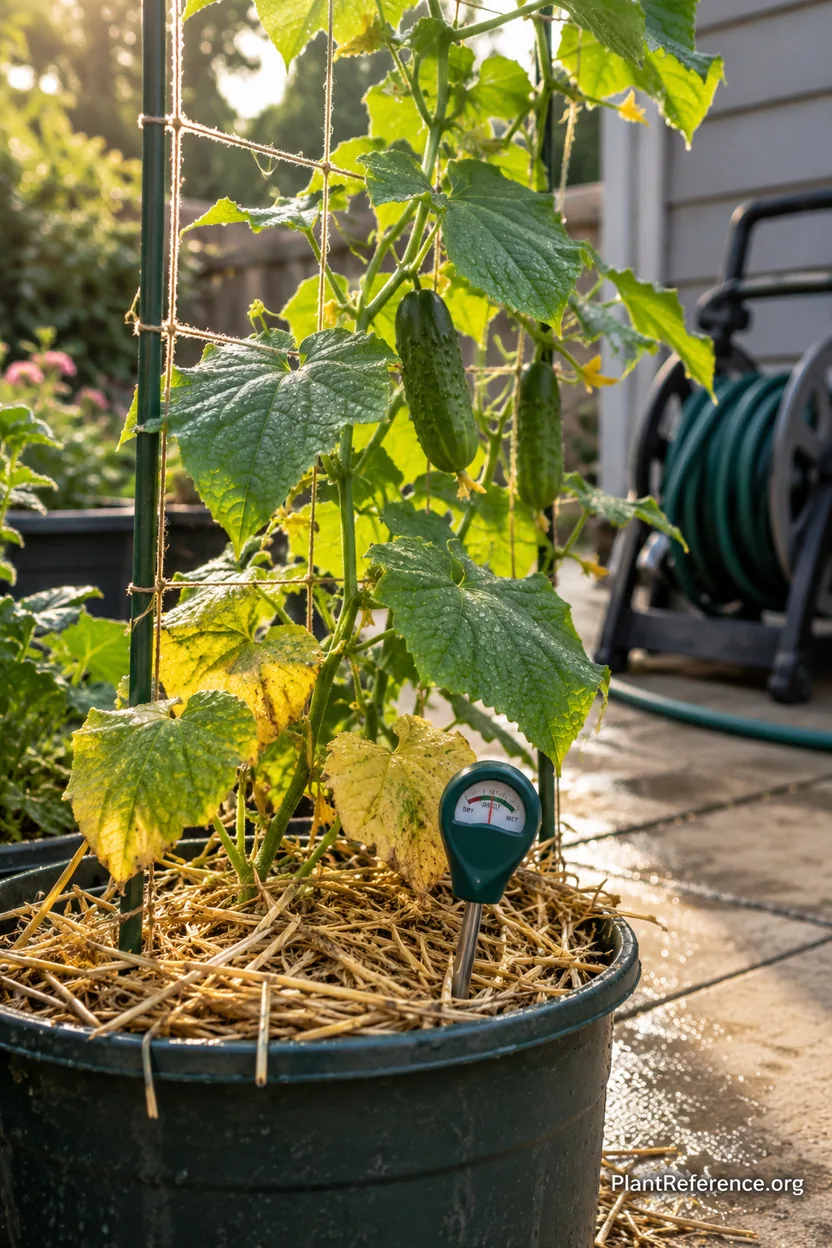
Uneven watering makes cucumbers bitter and causes curled, pinched fruit, so consistency matters more than volume. A 2-inch (5 cm) layer of straw or shredded leaves on top cuts evaporation and keeps roots cooler. If you travel or forget, add a drip line or a self-watering reservoir. Watering Container Tomatoes: The Complete Guide to Preventing Common Problems covers watering habits that carry over, and Overwatering vs Underwatering Container Tomatoes: How to Tell the Difference helps you read the signs before the plant crashes.
A cheap soil moisture meter with a long probe takes out the guesswork. Push it 4-6 inches (10-15 cm) deep, and water when it reads dry at that depth.
Feeding
Container plants can't send roots out to find nutrients, and every watering flushes some out the bottom. Research from Michigan State University found that letting 25 percent of the water run out the drain can wash away about half the fertilizer in the mix. That's why cucumbers in pots need supplemental feeding.
Here's a simple schedule:
At planting: Mix in slow-release granular fertilizer.
Vine growth (weeks 3-5): Feed a balanced or slightly nitrogen-rich liquid fertilizer every 2 weeks.
Flowering and fruiting: Switch to a tomato-style fertilizer higher in phosphorus and potassium, every 2 weeks.
Every 4-6 weeks: Flush the pot with plain water, about twice the pot's volume, to wash out built-up salts.
White crust on the soil surface or brown, burnt leaf edges usually mean salt buildup, and a flush fixes it. For a more detailed feeding plan, Container Tomato Fertilization Schedule: When and What to Feed gives amounts and timing that adapt well to cucumbers.
Pollination
Standard cucumbers make separate male and female flowers, and the female ones (the ones with a tiny cucumber behind the petals) need a bee or a helping hand. On a high balcony, pollinators are scarce. Use a small soft paintbrush to move pollen from the male flowers to the females in the morning, or grow a parthenocarpic (seedless) type such as Cucumis sativus 'Picolino', which sets fruit on its own. Don't plant a pollinated type next to a seedless one, or you'll get seedy, bitter fruit.
Pruning
Pinch the growing tip when the vine reaches the top of the trellis, and remove any side shoots below the first flower cluster on the lowest 12 inches (30 cm) of the stem. That improves airflow and pushes energy into fruit. Take off yellowing lower leaves as you see them.
Troubleshooting Container Cucumber Problems
Most container cucumber trouble comes back to water, heat, or airflow. Here are the ones I see most.
Bitter Fruit
Bitterness comes from stress, usually heat, uneven watering, or a root system that has run out of room. Keep the mix evenly moist, add mulch, and shade the pot during heat waves. Peel the stem end, which holds the most bitter compounds, and taste before you toss a whole fruit.
Yellow Leaves
Older leaves near the base yellow naturally as the plant matures. If leaves higher up are turning pale, suspect overwatering, poor drainage, or nitrogen loss from repeated flushing. Check that drainage holes are clear, then feed with a liquid fertilizer. Yellow Leaves on Container Tomatoes: Diagnosing and Fixing Nutrient Deficiencies walks through the same diagnostic logic.
Powdery Mildew
White, powdery patches on leaves appear in warm, humid, crowded conditions. Enclosed balconies with poor airflow are prime territory. Prevent it with a trellis, good spacing, morning watering at the base, and by removing crowded leaves. If it starts, remove the worst leaves and spray with a diluted milk or potassium bicarbonate solution, and choose resistant types like 🌿Cucumis sativus 'Marketmore 76' next season.
Flowers but No Fruit
If you see male flowers only, that's normal early on, because males appear first. If female flowers drop, the culprit is usually heat above 95°F (35°C), a lack of pollination, or stress. Hand-pollinate, shade the pot in the afternoon, and keep watering steady.
Wilting
Cucumbers wilt on hot afternoons even with wet soil, because the leaves lose water faster than the roots can supply it. If the plant perks up by evening, it's fine. If it stays limp in wet soil, suspect root rot from poor drainage. If the soil is dry, water right away and mulch. Dark pots in full sun cook roots, so wrap the pot in white cloth or move it if you see repeated afternoon wilt. Raised Bed Too Hot in Summer: Protecting Plants from Heat Stress has cooling tricks that work for pots too.
Root-Bound Plants
If roots are pushing out of the drainage holes and the plant needs water twice a day even in mild weather, it may have outgrown its home. Cucumbers dislike repotting, so start with a big enough pot instead. If you do need to rescue a plant, the steps in Container Too Small? How to Save Root-Bound Tomato Plants apply.
Problem | Symptom | Likely Cause | Quick Fix |
|---|---|---|---|
Bitter fruit | Sharp taste near stem end | Heat, uneven water | Mulch, shade, steady watering |
Powdery mildew | White powder on leaves | Poor airflow, humidity | Trellis, prune, water at the base |
Flower drop | Blossoms fall off | Heat above 95°F (35°C) | Afternoon shade, consistent water |
Yellow leaves | Pale lower or mid leaves | Overwatering or low feed | Check drainage, liquid feed |
Curled fruit | Crooked, pinched cukes | Irregular watering | Mulch, water evenly |
Harvest & Storage
Most cucumbers are ready 50-70 days from sowing, depending on the variety. Pick them young. Slicers are best at 6-8 inches (15-20 cm), pickling types at 3-5 inches (7-13 cm), and snacking types at 4-6 inches (10-15 cm). A cucumber that's turned yellow and fat has gone past its prime and will sap the plant's energy.
Harvest every day or two once the plant starts producing. Leaving a ripe fruit on the vine tells the plant its job is finished and slows new flowers. Cut the stem with clean scissors instead of pulling the fruit, so you don't damage the vine.
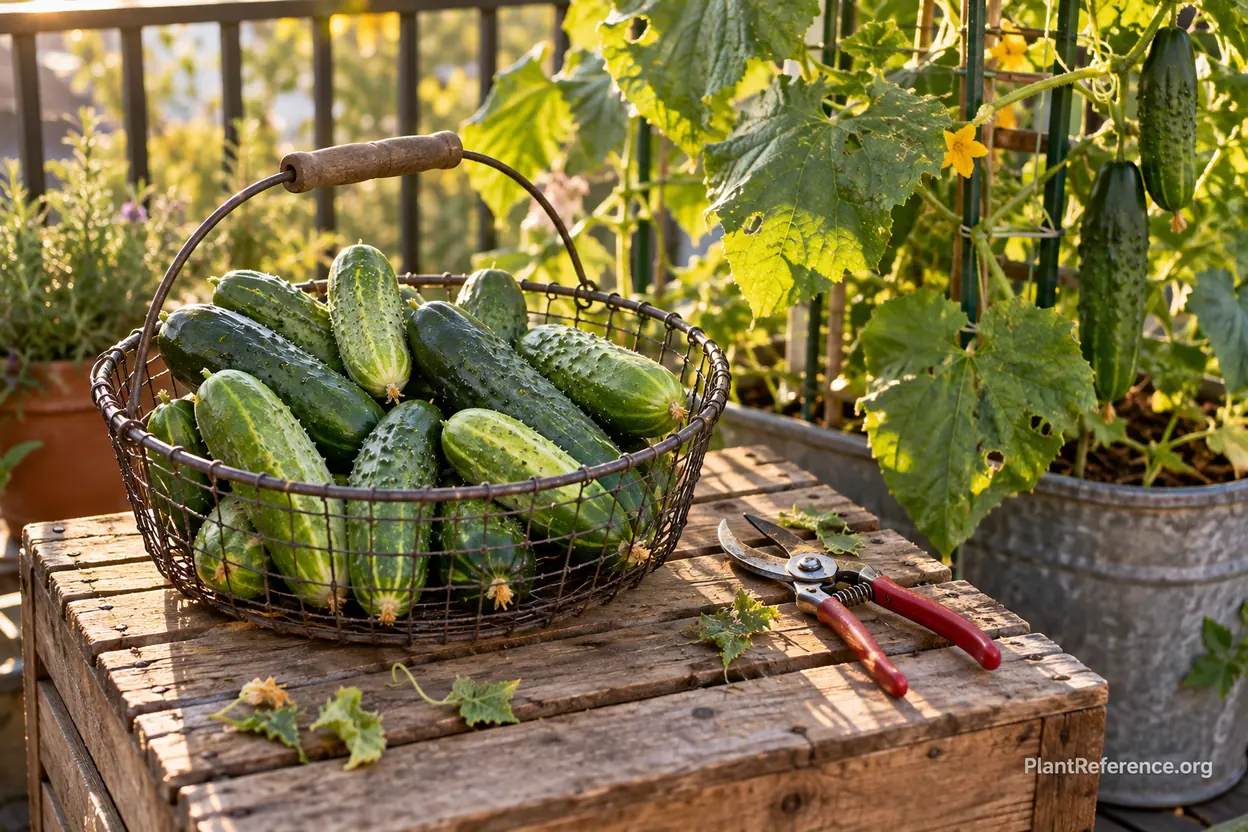
Store unwashed cucumbers in the refrigerator's crisper drawer, ideally wrapped in a paper towel inside a loose bag, for up to a week. Keep them away from ethylene producers like tomatoes and apples, which speed up yellowing. Don't store below 50°F (10°C) for long stretches, as cold damage can cause pitting. If you're facing a glut, pickle them, make refrigerator pickles, or slice and freeze for smoothies. If you're just getting started with beginner-friendly crops, Best Raised Bed Vegetables for Beginners: Top 10 Easy-Growing Crops has more ideas that also do well in big pots.
If a balcony or patio is all you've got, you can still eat like you have a full garden. See Growing Tomatoes in Small Spaces: Apartment, Balcony, and Patio Solutions for a companion plan that pairs nicely with cucumbers.
Frequently Asked Questions
Reading about plants and recognising them are different skills. These three build the second.
- Daily PlantIdentify the day’s mystery plant from a close-up photograph.
- Keyed OutWork a dichotomous key, lead by lead, to name a hidden specimen.
- Name That PlantName a specimen from botanical clues dealt hardest first.
Free to play, no account needed
Tagged with
Carlos grew up helping his abuelos tend their backyard garden in San Antonio, Texas, but didn't get serious about growing his own food until he bought his first house in Austin. He works as an HVAC technician during the day and gardens in the early mornings and evenings. Carlos specializes in heat-tolerant vegetables and container growing—essential skills for Texas summers and his south-facing driveway that gets intense sun. He's learned through plenty of failures (multiple dead fig trees, countless bolted lettuce crops) and now helps neighbors troubleshoot their own gardens. His YouTube channel documenting his container tomato experiments has a small but dedicated following. Carlos is passionate about growing food on a budget, often sourcing free containers and building his own compost.