When to Plant Carrots in San Diego: Zone 10b Dates + Best Varieties
Pets & Toxicity
Recorded toxicity for plants linked in this guide. An unknown status is not a safety assessment.
No linked plant is recorded as toxicDetailsHide
Daucus carota ssp. sativus 'Nantes' — Toxicity
Non-toxicView Daucus carota ssp. sativus 'Nantes' plant profileDaucus carota ssp. sativus 'Rainbow' — Toxicity
Non-toxicView Daucus carota ssp. sativus 'Rainbow' plant profileDaucus carota ssp. sativus 'Chantenay' — Toxicity
Non-toxicView Daucus carota ssp. sativus 'Chantenay' plant profileDaucus carota ssp. sativus 'Imperator' — Toxicity
Non-toxicView Daucus carota ssp. sativus 'Imperator' plant profile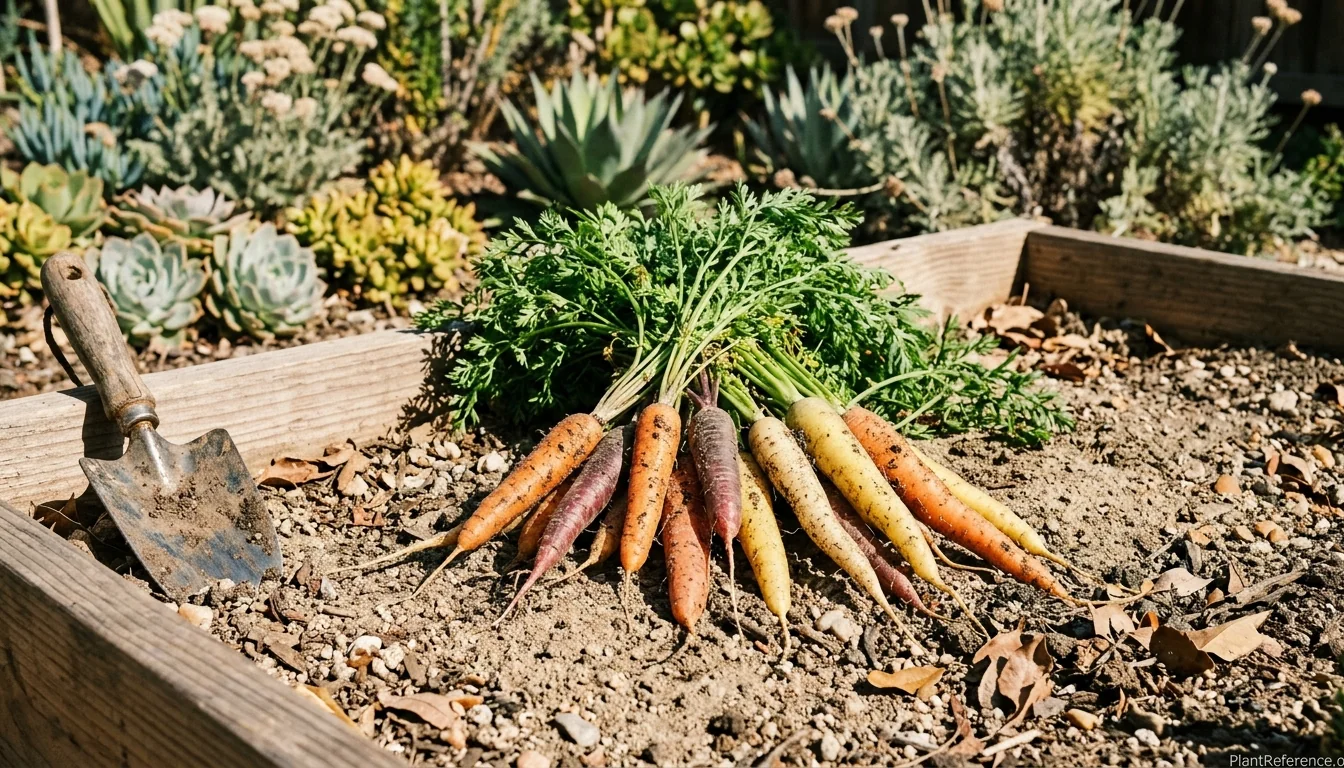
— Image © Plant Reference 2026
Growing carrots in San Diego is honestly one of the most forgiving crops you can choose for a Zone 10b garden. The Mediterranean climate—mild, dry winters and a long frost-free window from roughly February 1 through December 20—gives you about 323 usable growing days. Carrots are a cool-season crop, so the real question for San Diego gardeners isn't whether you can grow them, it's when to grow them. Aim for the cooler months and you'll harvest sweet, crunchy Daucus carota ssp. sativus (DAW-kus kar-OH-tah) roots from your own beds with very little fuss.
Best Carrot Varieties for San Diego's Zone 10b Climate
San Diego gardeners have an advantage most of the country envies: you don't need to chase cold-hardiness or aggressive disease resistance. You need varieties that handle mild winters gracefully, tolerate a touch of late-spring warmth without bolting, and—most importantly—match the soil you actually have. Coastal San Diego often runs sandy loam, while inland neighborhoods from Escondido to El Cajon tend toward decomposed granite or clay. That soil texture matters more than anything else for shaping your carrot crop.
🌿Daucus carota ssp. sativus 'Nantes' is my first recommendation for nearly every San Diego garden. The cylindrical, blunt-tipped roots reach 6-7 inches (15-18 cm) in 65-75 days, and the flesh stays tender and sweet even when temperatures climb into the high 70s°F (24-26°C). The shorter root length means 🌿Daucus carota ssp. sativus 'Nantes' performs beautifully in shallower beds and rockier soils—exactly what most San Diego yards offer without major amendments.
Daucus carota ssp. sativus 'Danvers' is the workhorse for inland gardens with heavier soil. The tapered roots grow 6-8 inches (15-20 cm) long and have the muscular structure to push through clay and decomposed granite. They mature in 70-80 days, store well in the refrigerator for weeks, and hold their flavor through warm spells better than most varieties.
🌿Daucus carota ssp. sativus 'Rainbow' is the variety I plant for the joy of it. The mix produces orange, yellow, purple, and white roots, and the purple ones hold their color when raw—great for salads and crudités platters. Maturity runs 70-75 days, and the varietal mix means staggered harvest windows even from a single sowing.
🌿Daucus carota ssp. sativus 'Chantenay' suits the dense soils of inland East County particularly well. The stout, conical roots only reach 5-6 inches (13-15 cm), but they're broader at the shoulder and absolutely refuse to fork in compacted ground. Maturity is fast at 65-75 days, and the flavor sweetens noticeably after a cool night.
🌿Daucus carota ssp. sativus 'Imperator' is the long, slender supermarket-style carrot most people picture. The roots reach 8-10 inches (20-25 cm) at maturity in 75-85 days, but they need at least 12 inches (30 cm) of deeply worked, rock-free soil. If you've built a raised bed with proper amended soil, 🌿Daucus carota ssp. sativus 'Imperator' rewards the effort. In native San Diego ground, they tend to fork and twist.
Variety | Days to Maturity | Root Length | Best For San Diego |
|---|---|---|---|
65-75 days | 6-7 in (15-18 cm) | All-purpose; most forgiving for beginners | |
Daucus carota ssp. sativus 'Danvers' | 70-80 days | 6-8 in (15-20 cm) | Inland clay and decomposed granite |
70-75 days | 6-8 in (15-20 cm) | Color variety; staggered harvest | |
65-75 days | 5-6 in (13-15 cm) | Heavy, compacted, or shallow soil | |
75-85 days | 8-10 in (20-25 cm) | Deep raised beds with loose soil only |
Specific Planting Dates for San Diego
Here's where San Diego differs from almost every planting guide you'll read online: your "last frost date" of February 1 doesn't really matter for carrots. Frost itself is rare and light—carrots laugh at the kind of cold San Diego serves up. What actually drives your calendar is heat. Carrots stop forming good roots and develop a bitter, woody texture above about 80°F (27°C), and they bolt to seed quickly when daytime highs sit in the mid-80s°F (29-30°C) for more than a week. So your San Diego calendar is built around avoiding heat, not avoiding cold.
Fall Planting (The Best Window)
Plant carrots September 1 through November 30 for the highest-quality, sweetest harvest of the year. As nights cool into the 50s°F (10-15°C), carrot foliage grows steadily without heat stress, and the cool finish concentrates sugars in the roots. A September 15 sowing typically harvests from mid-November through December, depending on variety. This is the window I recommend for first-time carrot growers in San Diego—it's the easiest by a wide margin.
Winter Planting
Plant carrots December 1 through January 31 for late-winter and early-spring harvests. Coastal gardens see fewer issues than inland gardens during these months. Light winter rains often handle most of your watering. December and January sowings mature roughly two weeks slower than the fall plantings because day length is shorter and temperatures cooler, but the quality remains excellent.
Spring Planting
Plant carrots February 1 through April 15 for late-spring harvests, but choose bolt-resistant varieties and harvest promptly. 🌿Daucus carota ssp. sativus 'Nantes' and Daucus carota ssp. sativus 'Danvers' handle the warming weather better than 🌿Daucus carota ssp. sativus 'Imperator', which prefers a cooler finish. By mid-April, watch your forecast—if a week-long warm spell appears, plan to pull mature roots before flavor degrades.
Summer (When to Stop)
Avoid planting carrots mid-June through August. Inland gardens almost always see summer highs in the mid-80s to 90s°F (29-35°C), which produces forked, woody, bitter roots and triggers bolting. Coastal San Diego gardeners with consistent marine layer cover can stretch one more sowing into late May or early June, but plan to harvest before the July heat sets in. If you absolutely must grow through summer, shade cloth at 30-40% density helps, but honestly, take a break and plant heat-loving crops like Daucus carota ssp. sativus relatives' tropical cousins. Beans, peppers, eggplant, and basil love your summer.
Succession Planting
Sow a new short row every two weeks from September through April. With maturity windows of 65-85 days and a 240-day cool-season planting window, you can run 8-12 successions a year. Each row only needs to be 3-4 feet (90-120 cm) long for a household harvest. This is the secret to having fresh, perfect-sized carrots on the table from October through May without ever facing a glut.
Key Date Summary
Fall planting (best window): September 1 - November 30
Winter planting: December 1 - January 31
Spring planting: February 1 - April 15
Avoid: mid-June - August (heat stress and bolting)
Succession sowing: every 2 weeks during cool season
Expected first harvest: 65-85 days after sowing
Last reliable frost: February 1 (rarely consequential)
Complete Growing Guide for San Diego
Site Selection and Soil Preparation
Carrots need at least 6 hours of direct sun, though afternoon shade is actually a bonus during the warmer spring months in San Diego. The single most important factor for a successful carrot crop is soil texture, not sun exposure. Carrots are taproots—they need to push straight down into loose, friable soil free of rocks, clods, and undecomposed organic matter for the entire depth of the variety you're growing.
If you're working with native San Diego soil—whether it's coastal sandy loam or inland decomposed granite—you'll need to amend before planting. Work compost 12 inches (30 cm) deep at a ratio of about 2-3 inches (5-7.5 cm) of finished compost mixed into the top foot of native soil. Raised Bed Soil Settling and Compaction: Prevention and Solutions Avoid fresh manure or chunky organic matter, both of which cause forking. If your inland soil is heavy clay, switch to a raised bed filled with a quality blended mix. Best Soil for Raised Beds: 6 Commercial Mixes Tested and Compared
Target soil pH between 6.0-6.8. Most San Diego soils run slightly alkaline at 7.2-7.8, so a soil test before planting saves frustration. Adding compost moves pH closer to neutral over time, and sulfur amendments can correct severe alkalinity. Raised Bed Soil pH Problems: Testing, Adjusting, and Maintaining Balance
Direct Sowing Method
Always direct sow—carrots hate transplanting and almost always fork when their taproots are disturbed. Make shallow furrows 1/4 inch (0.5 cm) deep, spaced 12-18 inches (30-45 cm) apart. Sow seeds thinly, aiming for one seed every inch (2.5 cm). The Complete Guide to Raised Bed Gardening for Beginners (2025) Cover lightly with sifted compost or vermiculite rather than heavy garden soil—the fine cover lets the tiny seedlings break through easily.
Carrot seeds are notoriously slow to germinate (10-21 days) and need consistent surface moisture to start. In San Diego's dry fall weather, this is the trickiest part of growing carrots. A piece of burlap or a thin board laid over the row holds moisture without crushing seedlings. Check daily and remove the cover the moment you see green sprouts emerging.
Thinning (Don't Skip This)
Once seedlings reach 2 inches (5 cm) tall, thin to 3 inches (7.5 cm) apart. This step is non-negotiable—crowded carrots produce twisted, undersized roots, and you'll harvest a tangle of pencils instead of full-sized carrots. The thinned seedlings make excellent micro-greens for salads, so nothing goes to waste.
Watering
Carrots need consistent moisture—about 1 inch (2.5 cm) per week, including rainfall. In San Diego's dry climate, that usually means drip irrigation or a soaker hose running 30-45 minutes twice weekly during cool months and three times weekly during warmer spring weather. Inconsistent watering causes the roots to crack as they alternately swell and dehydrate. Too Much Water in Raised Beds: Signs and Solutions for Overwatering
Fertilizing
Carrots are light feeders that actually perform worse with heavy fertilization. Too much nitrogen produces lush green tops and forked, hairy roots. If your bed received compost at planting, you typically need nothing else. For inland soils that test low in phosphorus and potassium, a light side-dressing of bone meal or wood ash 4-5 weeks after sowing supports root development without the nitrogen overload.
Mulching
A light 1-inch (2.5 cm) layer of straw mulch between rows helps moderate San Diego's dry winds and keeps soil moisture even. When to Plant Lettuce in San Diego: Complete Guide + Best Varieties for Zone 10b During warmer spring weather, mulch lowers root-zone temperatures noticeably and extends the planting window by a week or two.
Troubleshooting San Diego-Specific Problems
Forked or Twisted Roots
This is the most common San Diego carrot complaint, and it's almost always a soil problem. Rocks, undecomposed compost chunks, hardpan layers, and excess nitrogen all cause forking. The fix is double-digging or building raised beds with screened, amended soil. Inland gardeners on decomposed granite especially need to sift the top 12 inches (30 cm) before sowing. Choose 🌿Daucus carota ssp. sativus 'Chantenay' or 🌿Daucus carota ssp. sativus 'Nantes' for shorter roots that find their way through imperfect soil. When to Plant Squash in San Diego: Complete Guide + Best Varieties for Zone 10b
Slow or Patchy Germination
Carrot seeds dry out fast in San Diego's typical 40-60% humidity and need consistent moisture for 10-21 days. The fix is keeping the soil surface visibly damp—not soaking—with a board, burlap, or floating row cover until you see sprouts. A light daily misting with a watering can rose works on small plantings. Once seedlings emerge, gradually back off to normal watering.
Carrot Rust Fly
San Diego sees occasional carrot rust fly pressure, especially in older established gardens. The adult flies lay eggs at the soil line, and the maggots tunnel into the roots, leaving rusty brown trails through the flesh. Floating row covers from sowing through harvest are the cleanest solution. Crop rotation—never planting carrots in the same bed two seasons in a row—dramatically reduces the problem.
Premature Bolting
If your carrots send up a flower stalk before reaching full size, heat or temperature swings are the cause. Spring plantings that hit a sudden warm spell often bolt within days. Pull bolting plants immediately—once they flower, the root becomes woody and bitter. The fix is timing: keep spring sowings to varieties with bolt resistance like 🌿Daucus carota ssp. sativus 'Nantes' and Daucus carota ssp. sativus 'Danvers', and finish all spring crops by mid-May.
Bitter or Woody Flavor
Heat stress, dry soil, and over-mature roots all cause bitterness. 🌿Daucus carota ssp. sativus 'Imperator' is especially prone to woody texture if left in the ground past full maturity. Harvest at the size listed on the seed packet, not larger. Consistent watering throughout root development keeps flavor sweet and texture tender. Nutrient Deficiencies in Raised Beds: Visual Diagnosis and Treatment
Harvest & Storage
Begin checking carrot size by gently brushing soil away from a shoulder of one root in your row. 🌿Daucus carota ssp. sativus 'Nantes' and 🌿Daucus carota ssp. sativus 'Chantenay' pull at 65-75 days when the shoulders reach roughly 3/4 inch (2 cm) in diameter. Daucus carota ssp. sativus 'Danvers' and 🌿Daucus carota ssp. sativus 'Rainbow' are ready at 70-80 days. 🌿Daucus carota ssp. sativus 'Imperator' needs the longest 75-85 days and shoulders closer to 1 inch (2.5 cm).
Water the bed thoroughly the day before harvest to soften soil and reduce snapping. Pull carrots straight up with a slight twist, using a hand fork to loosen if needed. Cut the tops off immediately, leaving 1/2 inch (1.25 cm) of stem—the foliage pulls moisture from the root and softens stored carrots fast.
Store unwashed carrots in the refrigerator crisper drawer wrapped in a damp paper towel inside a plastic bag for 4-6 weeks. For longer storage, layer them in damp sand inside a lidded container kept at 40°F (4°C) where they hold for 3-4 months. Best Raised Bed Vegetables for Beginners: Top 10 Easy-Growing Crops
Save the tops if they're young and tender—carrot greens make a peppery pesto or a tasty addition to a stock. The flavor is herbaceous and grassy, somewhere between parsley and cilantro.
Frequently Asked Questions
Reading about plants and recognising them are different skills. These three build the second.
- Daily PlantIdentify the day’s mystery plant from a close-up photograph.
- Keyed OutWork a dichotomous key, lead by lead, to name a hidden specimen.
- Name That PlantName a specimen from botanical clues dealt hardest first.
Free to play, no account needed
Tagged with
Emma runs a small succulent propagation business from her home in San Diego, shipping starter plants and cuttings across the country. She fell into succulents after college when she realized they were the only plants that survived her travel schedule—she was working as a travel nurse at the time. San Diego's mild, dry climate is ideal for outdoor succulent gardens, and Emma's front yard is a living catalog of over 200 varieties. She completed a certificate program in ornamental horticulture and writes about succulent care, propagation techniques, and drought-tolerant garden design. Her writing is calm and reassuring—she knows people feel bad about killing plants, and she wants them to stop worrying so much.