When to Plant Carrots in Chicago: Zone 6a Dates + Best Varieties
Pets & Toxicity
Recorded toxicity for plants linked in this guide. An unknown status is not a safety assessment.
No linked plant is recorded as toxicDetailsHide
Daucus carota ssp. sativus 'Danvers 126' — Toxicity
Non-toxicView Daucus carota ssp. sativus 'Danvers 126' plant profile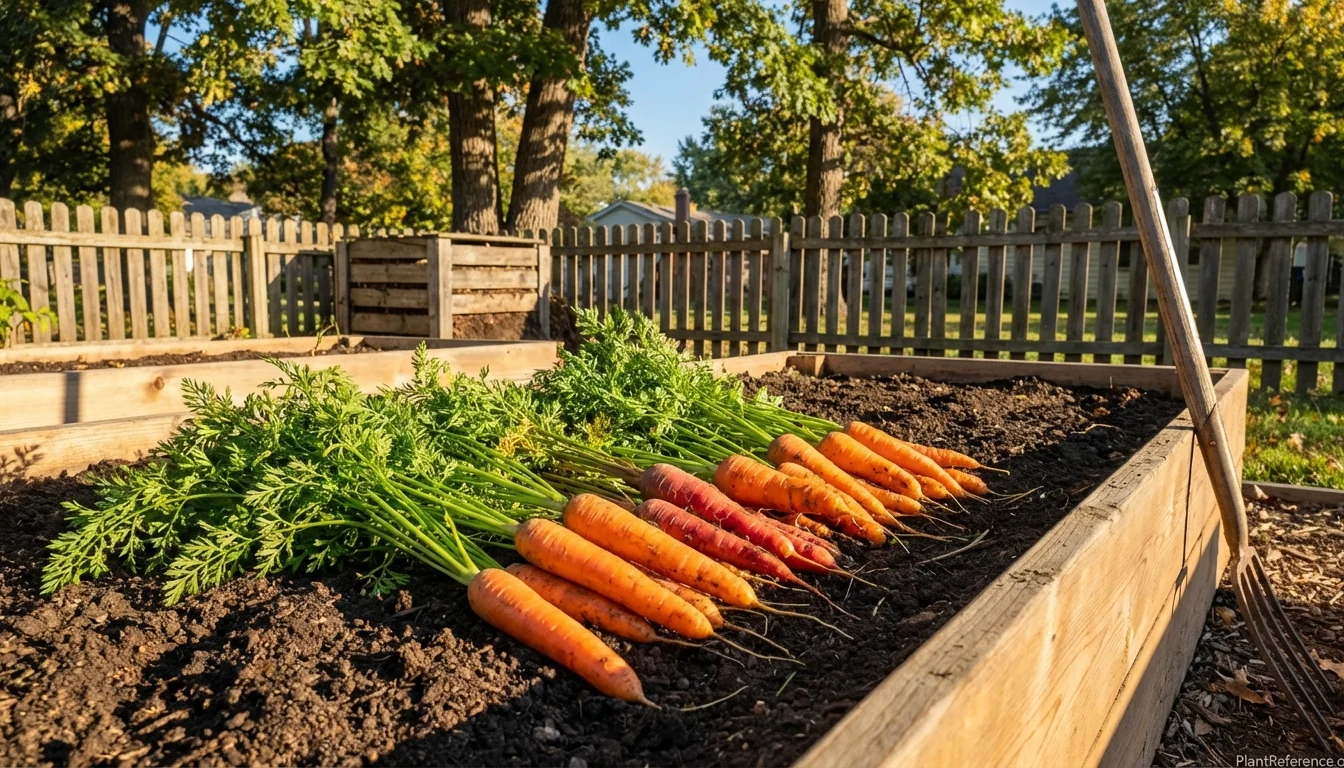
— Image © Plant Reference 2026
If you have been gardening in Chicago for any length of time, you already know the soil here has opinions. That heavy Lake Michigan clay can grow a fine lawn, but straight carrots? That takes a bit more planning. The good news is that our Zone 6a climate is actually well suited to carrots. We get a full 158-day growing season between the May 10 last frost and October 15 first frost, and carrots prefer the cool stretches on either end of that window far more than the hot middle. With the right variety selection, proper soil prep, and a little patience, you can pull sweet, straight carrots from a Chicago garden twice a year.
Best Carrot Varieties for Chicago's Zone 6a Climate
Choosing the right carrot variety for Chicago comes down to one question: what is your soil situation? If you are working with the heavy clay that covers most of the metro area, you need a variety built to push through dense ground. If you have amended beds or raised beds with loose soil, you have more options. Either way, our 158-day season in Illinois gives every standard variety plenty of time to mature.
🌿Daucus carota ssp. sativus 'Danvers 126' (DAW-kus kah-ROH-tah) is a cool-season root crop that grows best when soil temperatures sit between 60 and 70 degrees F (16-21 degrees C). Here in Chicago, that lines up perfectly with our spring and fall windows.
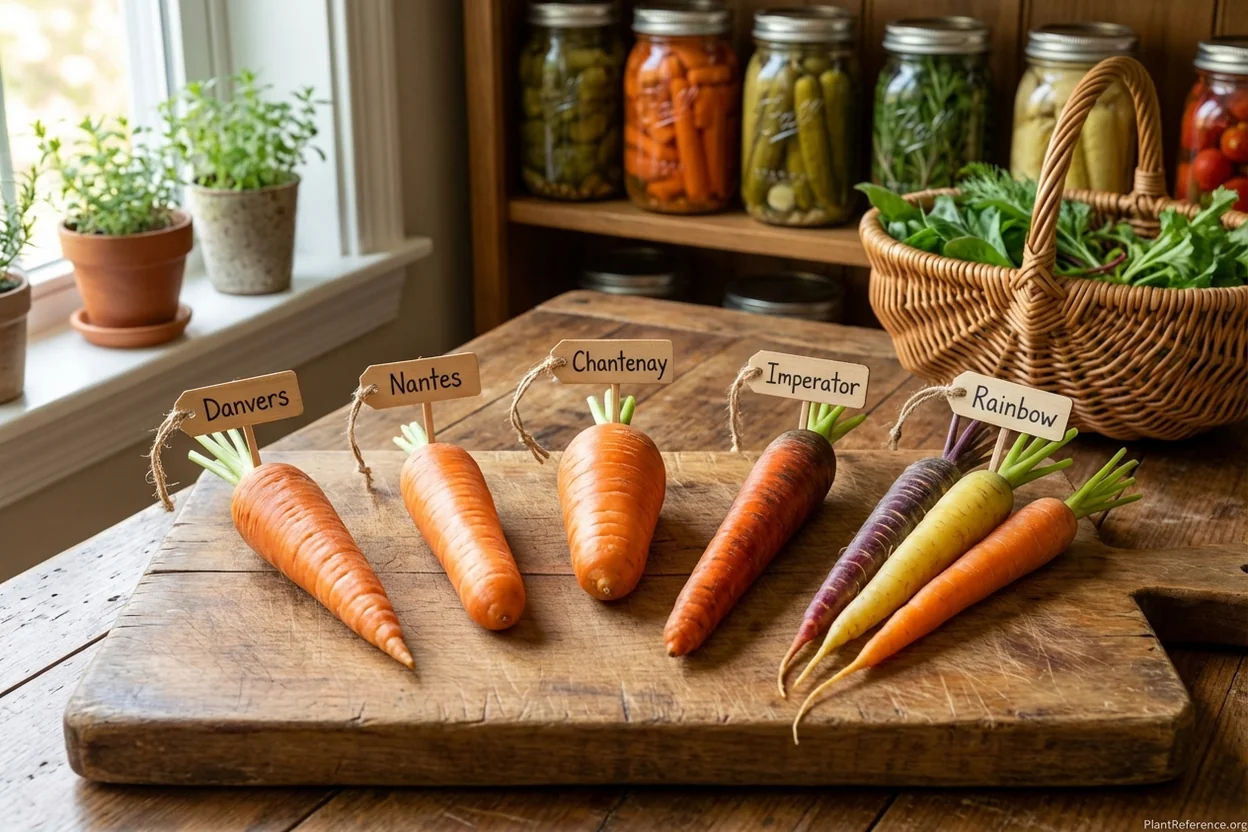
🌿Daucus carota ssp. sativus 'Danvers 126' is my top pick for Chicago gardeners who have not invested in raised beds yet. This variety was bred specifically for heavy soils—it originated in Danvers, Massachusetts, in soil not so different from ours. The tapered shape acts like a wedge, shouldering clay aside as it grows. It reaches 6-8 inches (15-20 cm) in 70-80 days and stores well through winter. If you only plant one variety, make it this one.
Daucus carota ssp. sativus 'Scarlet Nantes' is the gold standard for flavor. Cylindrical roots with a blunt tip, crisp and sweet with almost no fibrous core. It needs loose, friable soil to perform, so reserve it for your Best Soil Mix for Raised Beds: Creating the Perfect Growing Medium or deeply amended beds. Plan on 65-70 days to maturity and 6-7 inches (15-18 cm) of root.
Daucus carota ssp. sativus 'Chantenay Red Core' is the short, stout clay-buster of the carrot world. At just 4-5 inches (10-13 cm) long, it does not need to penetrate deep into that Chicago hardpan. Broad shoulders and a sweet red-orange core make it excellent for soups, stews, and roasting. Harvest in 65-75 days before roots exceed 2 inches (5 cm) in diameter, or the texture turns woody.
Daucus carota ssp. sativus 'Imperator 58' produces those long, slender supermarket-style roots at 8-10 inches (20-25 cm). Beautiful carrots, but they demand deep, loose, stone-free soil—at least 12 inches (30 cm) of amended or sandy ground. Only attempt this in a well-built raised bed. Allow 75-85 days to maturity.
Daucus carota ssp. sativus 'Rainbow Mix' brings color variety to your harvest with white, yellow, orange, and purple roots in a single planting. Most roots reach 7-8 inches (18-20 cm) in 70-75 days. The purple varieties contain anthocyanin antioxidants in the skin, so resist the urge to peel them. A fun choice for families and a reliable conversation starter at neighborhood potlucks.
Variety | Days to Maturity | Best For | Notes for Chicago |
|---|---|---|---|
70-80 days | Clay soil, storage | Top pick for unamended Chicago clay; wedge shape pushes through dense ground | |
Daucus carota ssp. sativus 'Scarlet Nantes' | 65-70 days | Fresh eating, salads | Best flavor but needs raised beds or deeply loosened soil |
Daucus carota ssp. sativus 'Chantenay Red Core' | 65-75 days | Heavy soil, cooking | Short roots handle shallow beds and compacted clay without forking |
Daucus carota ssp. sativus 'Imperator 58' | 75-85 days | Deep raised beds | Long slender roots require 12+ inches of loose obstruction-free soil |
Daucus carota ssp. sativus 'Rainbow Mix' | 70-75 days | Color variety, fresh eating | Mix of pigmented roots adds visual interest and diverse antioxidants |
Specific Planting Dates for Chicago
Everything in your Chicago carrot calendar revolves around two dates: the May 10 average last frost and the October 15 average first frost. Carrots are a cool-season crop that actually perform poorly in midsummer heat, so we aim for maturity during the cooler bookends of the growing season. That gives us two distinct planting windows here in Illinois.
Your spring planting window opens as soon as the ground thaws and soil temperature reaches 40 degrees F (4 degrees C), typically late March in Chicago. Seeds germinate slowly in cold soil—expect 14-21 days at 40-50 degrees F—but carrots tolerate light frost, so there is no risk in getting them in early. The optimal soil temperature for germination is 55-65 degrees F (13-18 degrees C), which we usually hit by mid-April. Sow spring carrots through mid-April at the latest to ensure roots size up before July heat pushes soil temperatures above 80 degrees F (27 degrees C).
The fall planting window is where Chicago really shines for carrots. Sow seeds in early to mid-August, roughly 10-12 weeks before the October 15 first frost. This timing lets seeds germinate in warm soil (fast germination in 7-10 days) while roots bulk up during the cooling days of September and October. Fall carrots harvested after frost are noticeably sweeter than spring carrots—the cold converts stored starches into sugars as a natural frost protection mechanism.
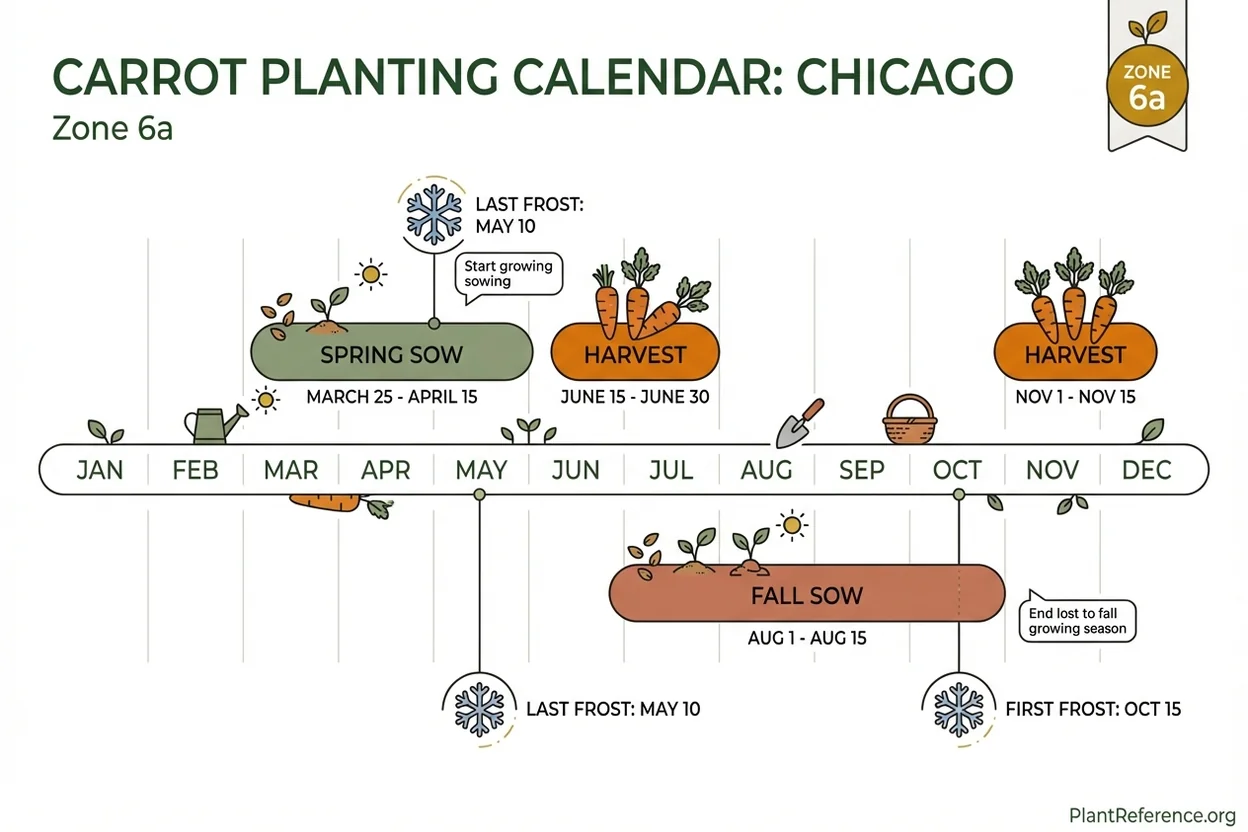
Spring direct sow: Late March through mid-April (soil above 40 degrees F)
Optimal germination window: Mid-April when soil reaches 55-65 degrees F (13-18 degrees C)
Spring harvest: Late June through early July (60-80 days after sowing)
Fall direct sow: Early August through mid-August
Succession sowing: Sow every 2-3 weeks from late March through late April for staggered harvest
Fall harvest: Late October through November (after frost sweetening)
Season ends: October 15 average first frost (mulched carrots extend into December)
Complete Growing Guide for Chicago
Soil Preparation for Chicago Clay
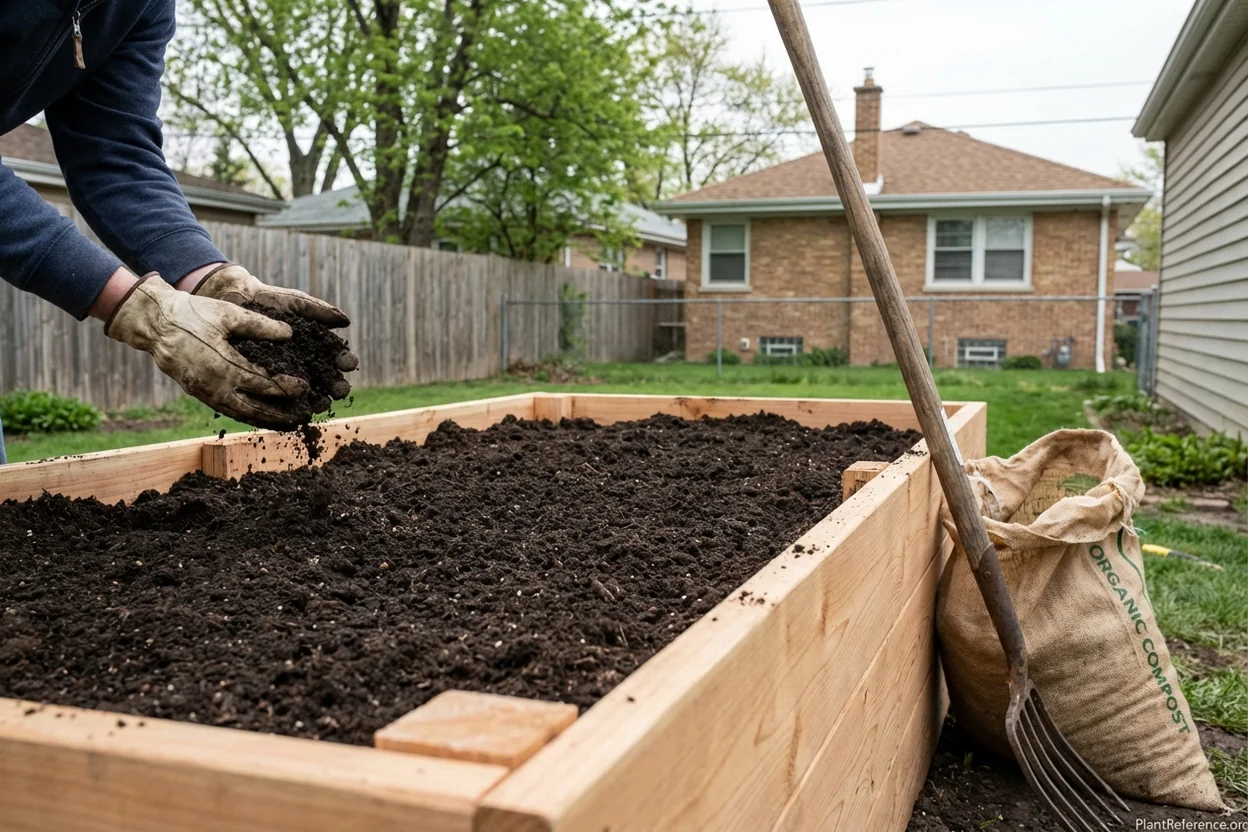
Let me be straight with you: if you skip soil prep, your carrots will fork, stunt, or just refuse to grow. Chicago's clay-heavy soil compacts when wet and turns to concrete when dry. Carrots need loose, friable ground to send their taproots straight down. You have two paths forward.
Raised beds are the easier route. Build beds at least 12 inches (30 cm) deep and fill with a mix of 60% topsoil, 30% compost, and 10% coarse sand or perlite. This gives you the drainage and texture carrots demand without fighting the native clay. Check our 7 Best Raised Garden Bed Kits for Beginners (2025 Reviews) for options that work in Chicago yards.
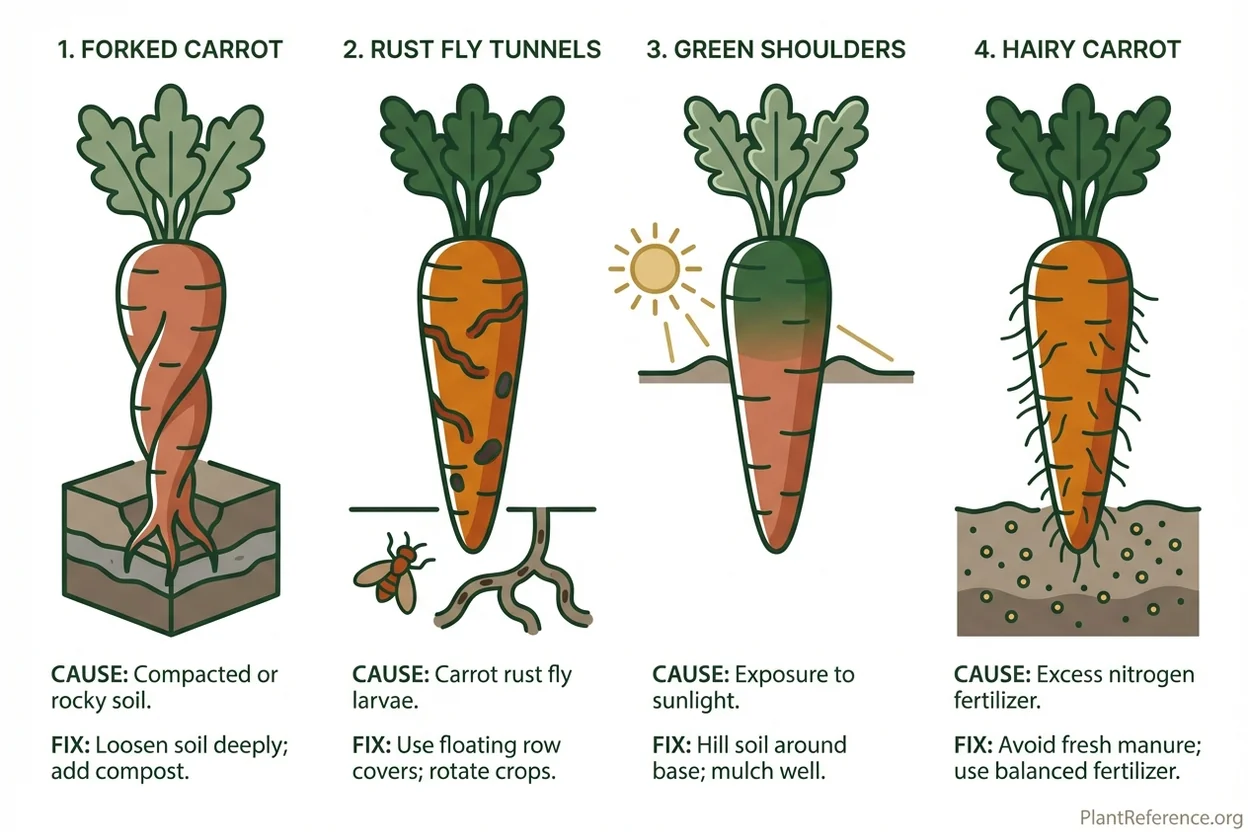
In-ground beds take more effort but absolutely work. Double-dig to 12-15 inches (30-38 cm), breaking up that clay subsoil with a broadfork. Work in 3-4 inches (8-10 cm) of finished compost and 1-2 inches (3-5 cm) of coarse sand to improve drainage and reduce compaction. Do not use fresh manure—it causes hairy, forked roots. Amend beds in fall so the clay has winter to settle and mellow.
Sowing and Germination
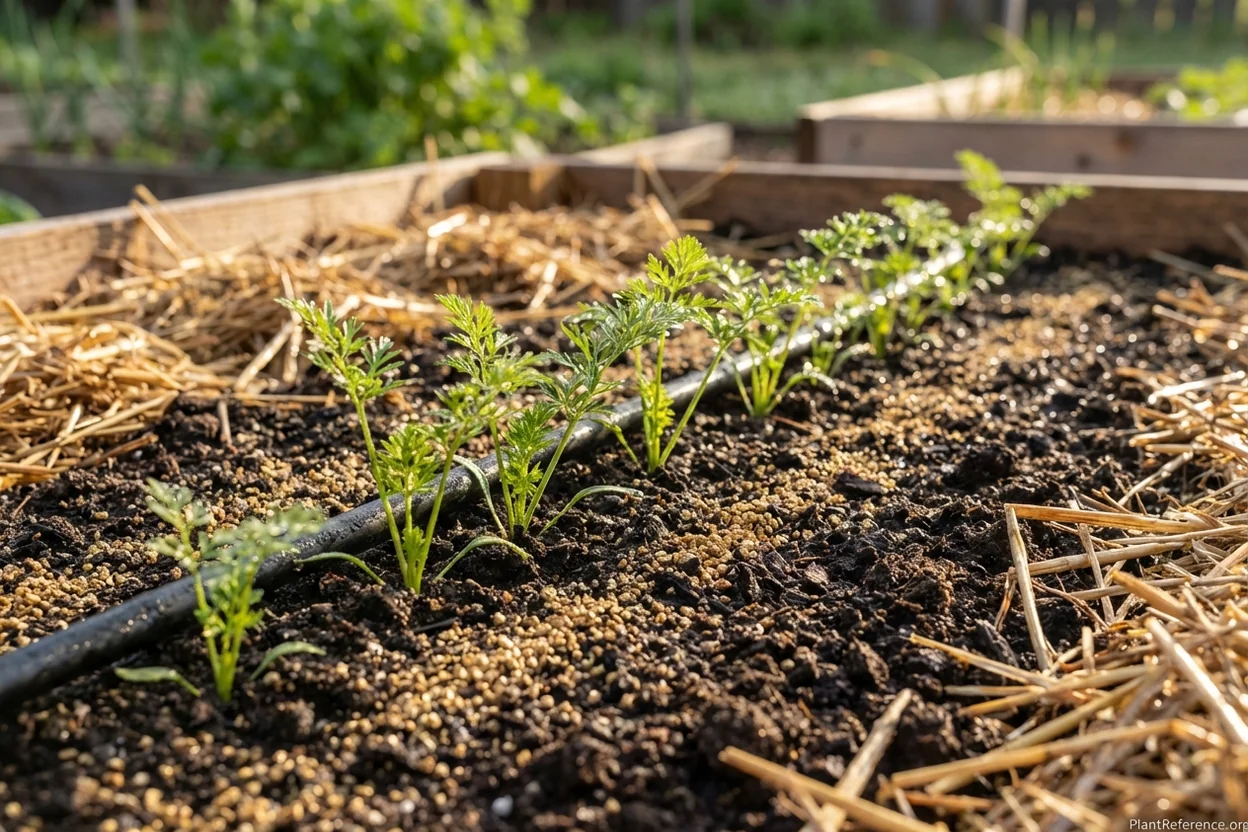
Carrot seeds are tiny and slow to germinate, which is why many gardeners struggle with stand establishment. Sow seeds 1/4 inch (6 mm) deep in rows spaced 12 inches (30 cm) apart. Space seeds about 1/2 inch (1.3 cm) apart—you will thin later. Cover seeds with a fine layer of vermiculite or sifted compost rather than garden soil. This prevents the clay crust that forms after spring rains and smothers seedlings trying to break through.
Keeping the seedbed moist for 14-21 days is the real challenge. A board laid directly over the row traps moisture effectively, but you must check daily starting at day five and remove it the moment you see white seedling loops. A strip of burlap or floating row cover works just as well with less risk of forgetting. For more on managing soil moisture in beds, see Best Soil for Raised Beds: 6 Commercial Mixes Tested and Compared.
Thinning
Thin seedlings in two passes. First, when tops are 1-2 inches (3-5 cm) tall, snip extras at soil level to 1 inch (2.5 cm) apart—use small scissors rather than pulling, which disturbs neighboring roots. Second, when tops reach 4-5 inches (10-13 cm), thin to final spacing: 2-3 inches (5-8 cm) for 🌿Daucus carota ssp. sativus 'Danvers 126' and Daucus carota ssp. sativus 'Scarlet Nantes', and 2 inches (5 cm) for Daucus carota ssp. sativus 'Chantenay Red Core'. Those second thinnings are true baby carrots and taste wonderful in salads.
Watering and Mulching
Carrots need about 1 inch (2.5 cm) of water per week, increasing to 1.5-2 inches (4-5 cm) as roots bulk up. Consistency matters more than volume—a dry spell followed by heavy watering causes roots to split. Drip irrigation or soaker hoses deliver water at soil level without wetting foliage, which helps prevent the leaf blight that Chicago humidity encourages. For more watering strategies, check Raised Bed Irrigation Systems: Watering Solutions for Consistent Growth.
Mulch with 2-3 inches (5-8 cm) of straw or shredded leaves once seedlings are 4 inches (10 cm) tall. Mulch keeps soil temperature cool during July heat, retains moisture, and suppresses weeds during that critical first six weeks when carrot seedlings are too small to compete. See Raised Bed Weeds: Prevention Strategies and Control Methods for more weed management options.
Fertilizing
Carrots are light feeders compared to tomatoes or squash. If you worked compost into the bed before planting, that is likely sufficient for the entire crop. Avoid high-nitrogen fertilizers—they produce lush tops but hairy, forked roots. If your soil tests low in potassium, a side dressing of wood ash or a balanced organic fertilizer (like 4-4-4) at the midpoint of growth helps roots bulk up properly. Carrots are heavy potassium users, and that nutrient drives sugar production and root expansion.
Troubleshooting Chicago-Specific Problems
Carrot Rust Fly
The carrot rust fly is the primary insect pest for northern-zone growers, and Chicago falls squarely in its range. Adults emerge in May and again in August, laying eggs at the base of carrot plants. Larvae tunnel into roots, leaving rust-colored channels. Floating row covers installed at sowing are the most effective organic control. Delayed spring planting until mid-April can help avoid the first generation, and harvesting fall carrots before late October reduces second-generation damage. See Raised Bed Pest Problems: Identification and Organic Control Methods for broader pest strategies.
Carrot Weevil
This snout beetle is prevalent across the Great Lakes region and specifically targets Chicago-area gardens. Unlike the rust fly, weevil larvae feed in the upper third of the root near the crown. Crop rotation is your best defense—move carrot plantings at least 6 feet (2 m) from last year's bed, since the weevil walks rather than flies.
Aster Yellows
Aster yellows is a phytoplasma disease spread by leafhoppers that migrate north from the Gulf Coast each spring. Infected plants develop yellowing leaves, stunted hairy roots, and a bitter off-flavor. There is no cure—pull and destroy affected plants immediately. Control dandelions and wild carrot weeds in your yard, as they serve as disease reservoirs. Row covers block the leafhoppers that spread it.
Clay Soil Forking
The number one complaint from Chicago carrot growers. Roots hit a compacted clay layer and split into multiple legs. The fix is soil preparation, not variety selection alone—though Daucus carota ssp. sativus 'Chantenay Red Core' and 🌿Daucus carota ssp. sativus 'Danvers 126' handle heavy ground much better than longer types. Deep bed preparation to 12-15 inches (30-38 cm), rock removal, and annual compost additions gradually improve soil structure over time. See Raised Bed Soil Settling and Compaction: Prevention and Solutions for long-term strategies.
Harvest & Storage
Spring-sown carrots are ready to harvest in late June through early July, typically 60-80 days after sowing depending on variety. Check maturity by brushing soil away from the crown—Daucus carota ssp. sativus 'Scarlet Nantes' is ready when shoulders reach 1-1.5 inches (3-4 cm) in diameter. Daucus carota ssp. sativus 'Chantenay Red Core' should come out before exceeding 2 inches (5 cm) wide, or the core turns woody.
Fall carrots are the real prize. Leave them in the ground through several hard frosts—the cold converts root starches to sugars, producing noticeably sweeter carrots than anything you pull in summer. After the October 15 first frost, pile 6-8 inches (15-20 cm) of straw or dry leaves over the bed and cover with a tarp to keep mulch dry. This extends your harvest window through November and into December. I have dug fall carrots from mulched beds on Thanksgiving more than a few times, and they are always the sweetest of the year.
For storage, twist off the green tops immediately after pulling—leaves draw moisture out of the root. Do not wash until ready to eat. Pack unwashed carrots in damp sand or perforated plastic bags and store at 32-38 degrees F (0-3 degrees C) with high humidity. A spare refrigerator or unheated garage works well. Keep carrots away from apples and pears; those fruits release ethylene gas that turns carrots bitter. With good storage conditions, Chicago-grown 🌿Daucus carota ssp. sativus 'Danvers 126' will keep 4-5 months. For more on extending your raised bed season, see Raised Bed Too Hot in Summer: Protecting Plants from Heat Stress.
Frequently Asked Questions
Reading about plants and recognising them are different skills. These three build the second.
- Daily PlantIdentify the day’s mystery plant from a close-up photograph.
- Keyed OutWork a dichotomous key, lead by lead, to name a hidden specimen.
- Name That PlantName a specimen from botanical clues dealt hardest first.
Free to play, no account needed
Pat has been gardening in Milwaukee for over thirty years, through every kind of Wisconsin weather. She worked as a school librarian and started gardening seriously when her kids were small—she wanted them to know where food came from. Now retired, she's a certified Master Gardener and runs the plant sale at her local garden club every spring. She specializes in cold-hardy perennials, native wildflower meadows, and the art of getting a vegetable garden producing in Wisconsin's short but intense growing season. Pat is practical and patient—she's seen enough Wisconsin winters to know that gardening here is a long game, and she writes with the steady confidence of someone who's been doing this a long time.