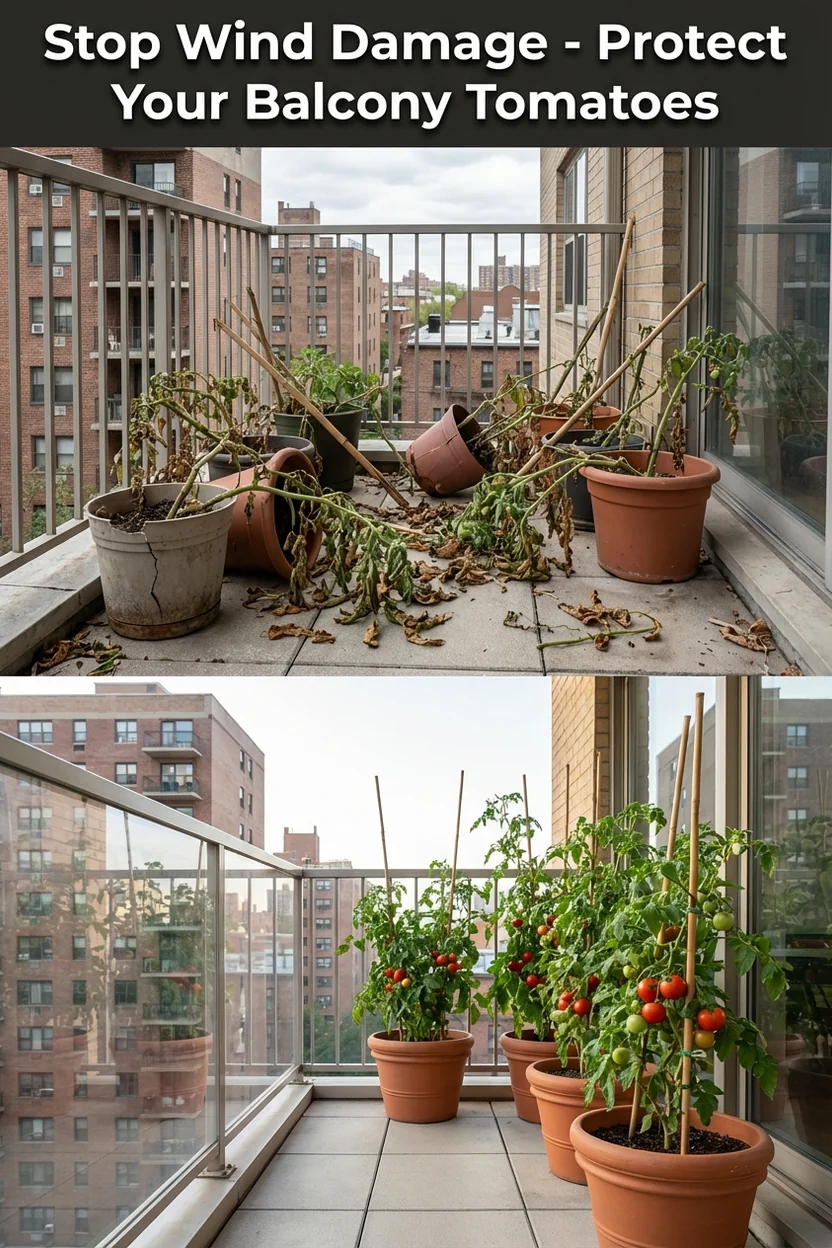
Protecting Container Tomatoes on Windy Balconies and Exposed Patios
Pets & Toxicity
Recorded toxicity for plants linked in this guide. An unknown status is not a safety assessment.
Toxic to pets: phoenix tomato, Surefire red tomato, yellow pear tomato and 2 moreDetailsHide
Solanum lycopersicum 'Phoenix' — Toxicity Warning
Toxic to petsView Solanum lycopersicum 'Phoenix' plant profileSolanum lycopersicum 'Surefire Red' — Toxicity Warning
Toxic to petsView Solanum lycopersicum 'Surefire Red' plant profileSolanum lycopersicum 'Yellow Pear' — Toxicity Warning
Toxic to petsView Solanum lycopersicum 'Yellow Pear' plant profileSolanum lycopersicum 'Bush Early Girl' — Toxicity Warning
Toxic to petsView Solanum lycopersicum 'Bush Early Girl' plant profileSolanum lycopersicum 'Patio Princess' — Toxicity Warning
Toxic to pets. Ripe red fruits are safe for human consumption. All green plant parts (leaves, stems, unripe green fruits) contain solanine and related glycoalkaloids that are mildly toxic if consumed in significant quantities.View Solanum lycopersicum 'Patio Princess' plant profile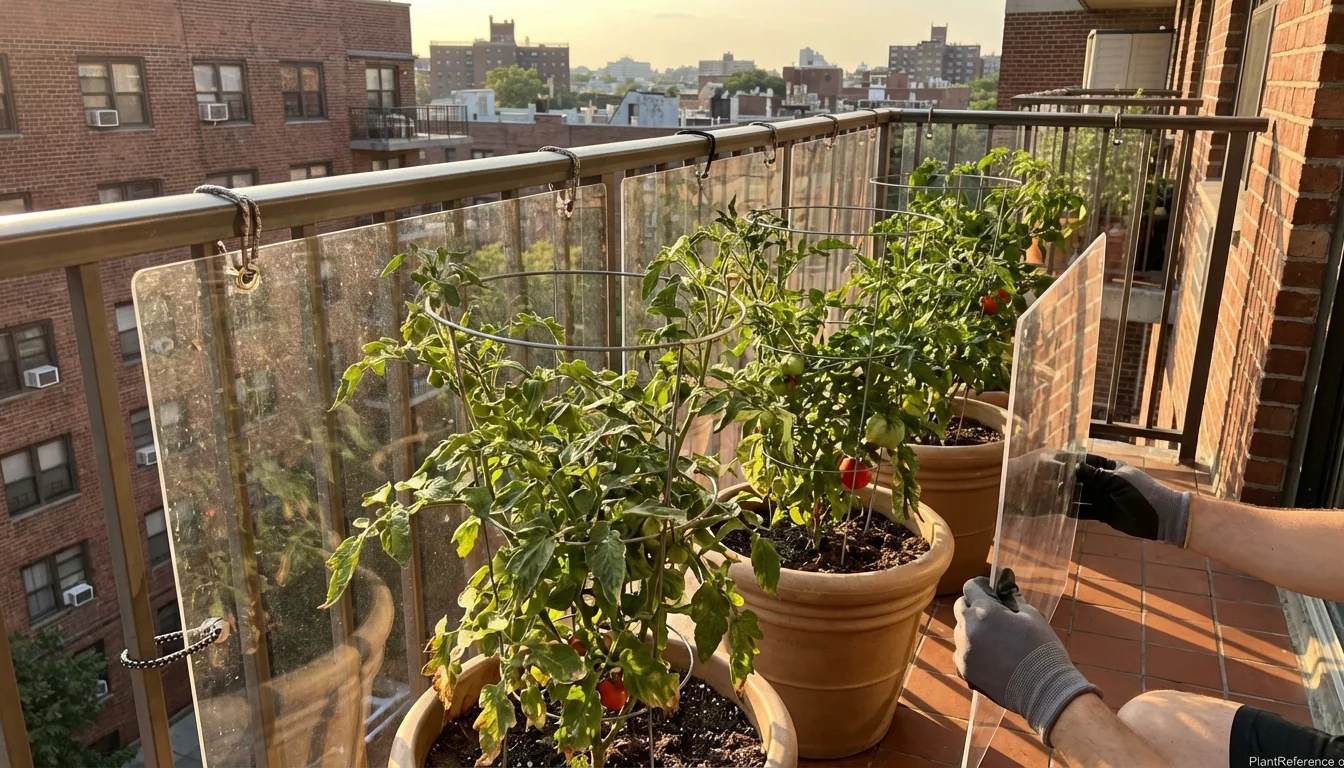
— Image © Plant Reference 2026
Growing tomatoes on windy balconies feels impossible when you watch your plants get battered daily. I learned this the hard way during my first year trying to grow tomatoes on my eighth-floor balcony—constant 15-20 mph winds turned my beautiful plants into broken, stressed survivors that barely produced fruit.
After five seasons of trial and error, I've cracked the code for growing tomatoes on windy balconies. The secret isn't fighting the wind—it's working with it through smart protection strategies.
Understanding Wind Damage on Container Tomatoes
Wind damages container tomatoes 🌿Solanum lycopersicum 'Yellow Pear' (so-LAH-num ly-ko-PER-si-kum) in three main ways: physical damage to stems and leaves, rapid moisture loss through transpiration, and container instability that stresses root systems.
Physical damage happens first. Winds over 15 mph snap tender growing tips and crack main stems at support points. The constant movement weakens cell walls, creating entry points for disease. I've seen a single afternoon storm destroy weeks of growth on unprotected plants.
Moisture stress follows quickly. Wind strips humidity from around leaves, forcing plants to transpire water faster than roots can replace it. Even well-watered containers show wilting symptoms in steady winds above 20 mph. This stress reduces fruit production and increases blossom end rot risk.
Container movement creates the most lasting damage. When pots rock back and forth, root systems tear and growing medium compacts. Small feeder roots that absorb nutrients get damaged, leading to nutrient deficiency symptoms even when soil contains adequate fertilizer.
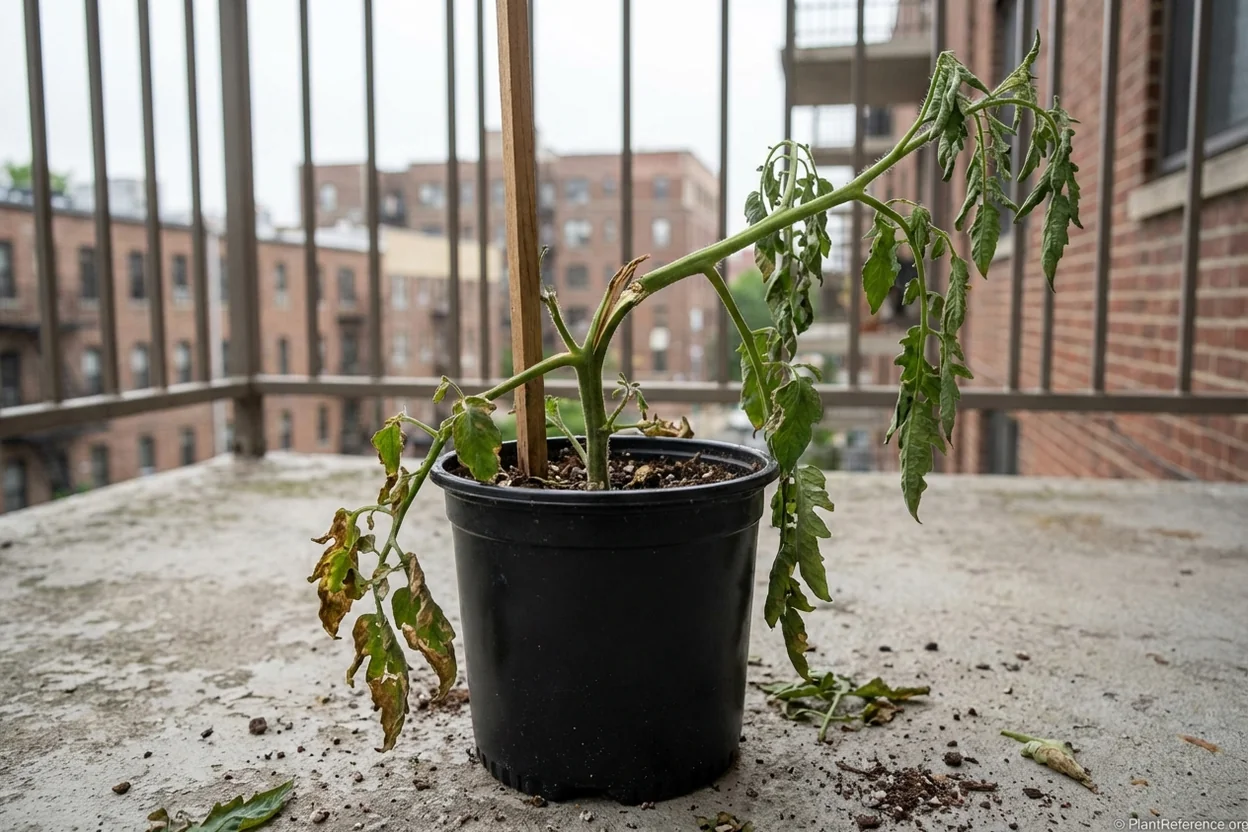
Wind speeds above 25 mph cause severe damage within hours. At 30+ mph, even protected plants struggle. Check your balcony's typical wind patterns by observing for several weeks before planting. Note peak wind times—usually late afternoon when thermal currents are strongest.
Effective Windbreak Solutions for Balconies
Clear windbreak panels provide the most effective protection without blocking essential sunlight. I use 1/4-inch (6mm) thick acrylic sheets cut to fit my balcony railing height. They reduce wind speed by 60-70% while maintaining full light transmission.
Install panels on the windward side of your balcony first—typically the side facing prevailing winds. Most urban balconies receive wind from the southwest, but check your local weather patterns. Mount panels securely to railings using stainless steel clamps or heavy-duty zip ties.
Acrylic panels: 1/4-inch thick, cut to railing height
Polycarbonate sheets: Lighter weight, impact resistant
Outdoor fabric screens: 30-50% wind reduction, easy installation
Living windbreaks: Tall grasses or bamboo in containers
Temporary solutions: Shower curtains or plastic sheeting (short-term only)
For partial windbreaks, install screens that reduce wind by 40-60% rather than blocking completely. Total wind blocking creates turbulence that can be worse than steady moderate wind. Screens with 30-40% porosity work perfectly.
Living windbreaks add beauty while providing protection. I grow ornamental grasses like fountain grass 🌿Pennisetum setaceum in tall containers along my balcony's windy edge. They flex with wind while protecting tomatoes behind them.
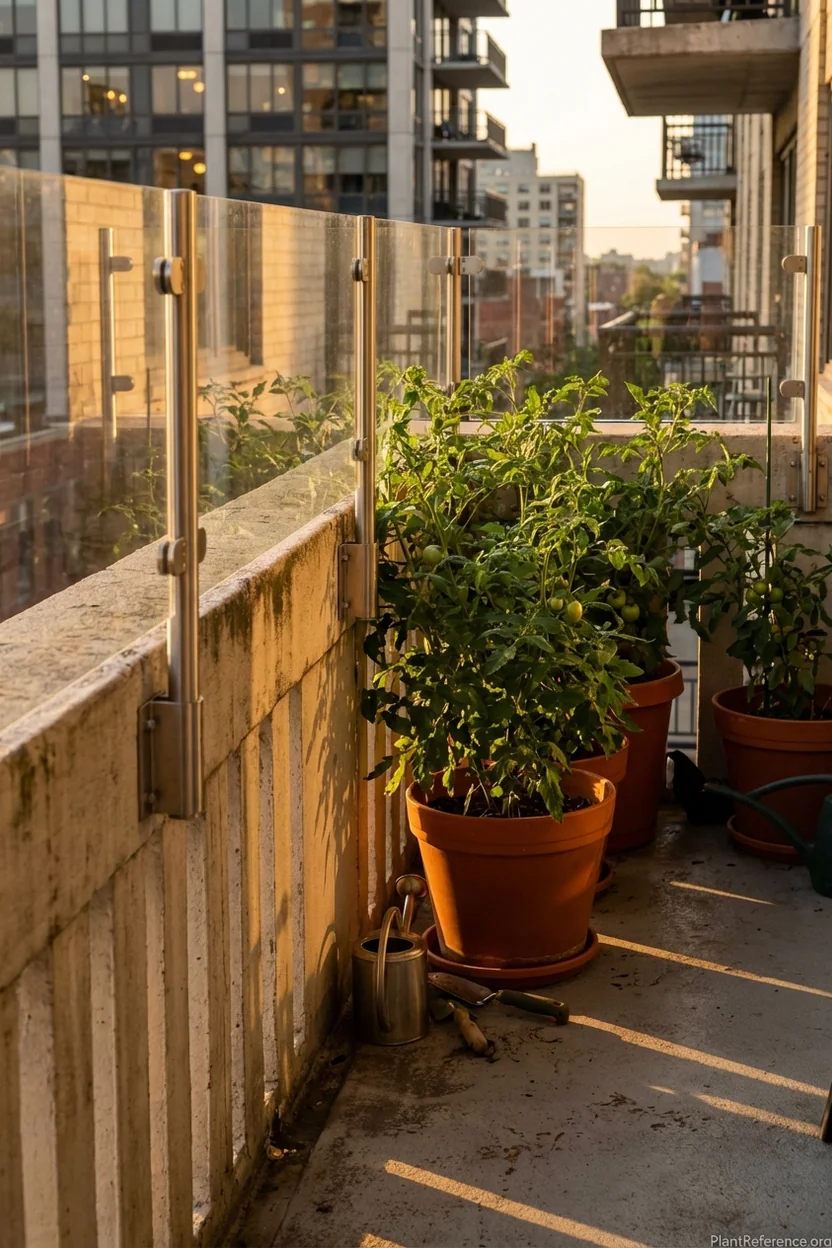
Position windbreaks 2-3 feet (60-90 cm) away from plants when possible. This creates a calm zone without completely stagnant air. Air circulation prevents fungal diseases that develop in completely still conditions.
Container Selection and Anchoring Techniques
Heavy containers resist wind better than lightweight ones. I use ceramic or concrete pots weighing 20-40 pounds (9-18 kg) empty for my larger tomato plants. The weight prevents tipping and provides root zone stability during wind events.
Calculate total weight including soil and water. A 5-gallon (19L) container with wet soil and mature plant weighs 60-80 pounds (27-36 kg). This mass creates natural wind resistance but requires balcony load calculations for safety.
Ceramic containers: Maximum stability, attractive appearance
Concrete planters: Heaviest option, excellent thermal mass
Weighted plastic pots: Add sand to bottom drainage layer
Grow bags with ballast: Place inside decorative heavy containers
Metal containers: Moderate weight with durability
For lightweight containers, add ballast to the bottom. I place 2-3 inches (5-7 cm) of clean sand or gravel below the drainage layer. This adds 10-15 pounds (4.5-7 kg) of stability without affecting drainage.
Anchor systems prevent container movement during extreme winds. I attach bungee cords from container handles to balcony railings or permanent fixtures. Use multiple anchor points—two cords minimum per large container.
Create anchor points using eye bolts screwed into concrete balcony floors or walls. Check building regulations first, as some apartments prohibit permanent installations. Temporary weights like sandbags around container bases work for renters.
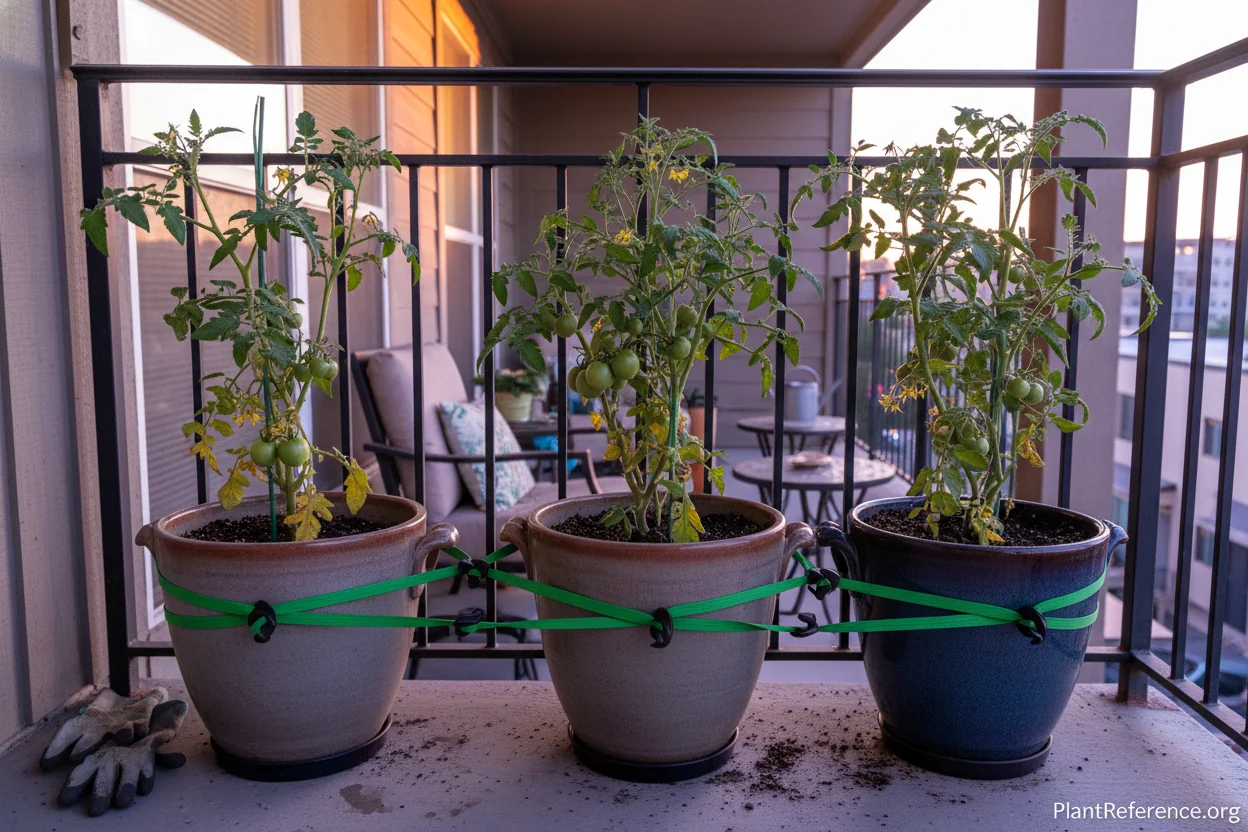
Test your anchoring system before relying on it. Gently try to tip containers to ensure anchor points hold. Replace bungee cords annually as UV exposure degrades rubber over time.
For apartment balconies, weight becomes critical. Most residential balconies support 40-60 pounds per square foot (195-293 kg/m²). A large container garden can approach these limits, especially when soil is waterlogged.
Wind-Resistant Tomato Varieties That Thrive
Determinate varieties handle wind better than indeterminate types because of their compact, sturdy growth habit. I've had excellent results with 'Bush Early Girl' 🌿Solanum lycopersicum 'Bush Early Girl' and 'Patio Princess' 🌿Solanum lycopersicum 'Patio Princess' on my windiest balcony sections.
Cherry tomatoes resist wind damage better than large-fruited varieties. Their smaller fruits create less sail area, and flexible branches bend rather than break. 'Surefire Red' 🌿Solanum lycopersicum 'Surefire Red' produces heavily even in 20+ mph winds.
Bush Early Girl: Compact determinate, 18-24 inches tall
Patio Princess: Dwarf variety, 12-18 inches, perfect for containers
Surefire Red: Wind-resistant cherry type, heavy producer
Bush Champion: Sturdy stems, medium-sized fruit
Red Robin: Micro-dwarf, 8-12 inches, ornamental yet productive
Stupice: Cold-hardy, flexible growth, early production
Dwarf and micro-dwarf varieties like 'Red Robin' Solanum lycopersicum 'Red Robin' grow only 8-12 inches (20-30 cm) tall, making them virtually windproof. While fruit size is smaller, production per plant remains impressive for their size.
Avoid tall indeterminate varieties like 'Better Boy' or 'Celebrity' on windy balconies unless you can provide extensive wind protection. These varieties can reach 6+ feet (1.8m) tall with large leaves that catch wind like sails.
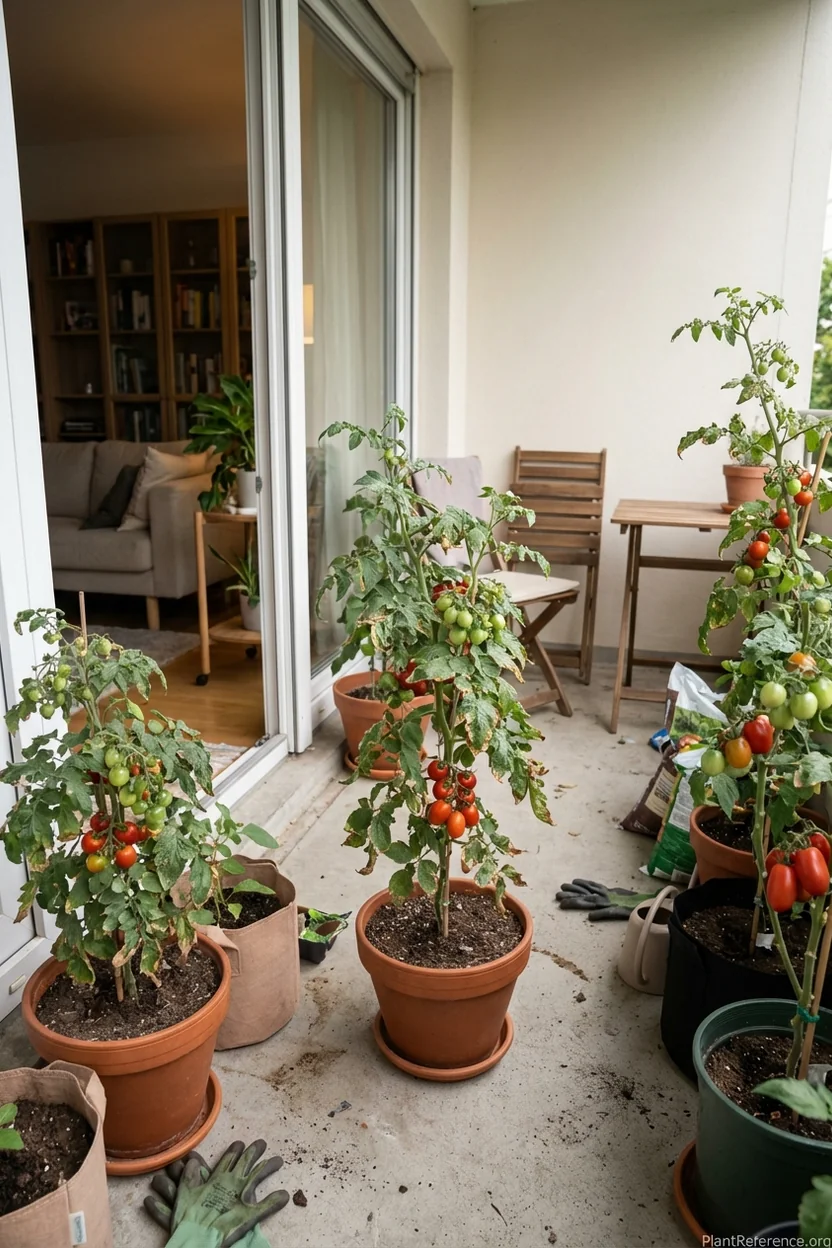
Look for varieties described as "sturdy-stemmed" or "compact habit" in seed catalogs. These phrases indicate breeding for mechanical strength and wind resistance.
DIY Wind Protection Systems You Can Build Today
Building effective wind protection doesn't require expensive materials or professional installation. My most successful DIY system uses PVC pipe frames with clear shower curtain liners—total cost under $30 and assembles in an hour.
Create a simple frame using 1/2-inch (12mm) PVC pipe with elbow and tee connectors. Build it tall enough to protect your plants' mature height plus 12 inches (30 cm). Cover with heavy-duty clear shower curtain liner secured with zip ties.
PVC pipe wind screens: Lightweight, portable, customizable
Bamboo and fabric panels: Natural appearance, partial wind reduction
Accordion-style barriers: Adjustable width, easy storage
Hinged panel systems: Fold flat when not needed
Temporary plastic sheeting: Emergency protection, short-term use only
For permanent installations, build a three-sided wind shelter leaving the sun-facing side open. Use 2x2 inch (5x5 cm) lumber for the frame with clear polycarbonate panels. This creates a microclimate that's 10-15°F (5-8°C) warmer than ambient temperature.
Position DIY barriers to channel wind up and over plants rather than around the sides. This prevents turbulence that can be more damaging than steady wind flow.
→ Gardener's Supply Wind-Resistant Plant Shelter ($89.95-$119.95) - Three-sided clear protection with adjustable height
Three-panel clear polycarbonate shelter creates protected microclimate for container plants on windy balconies and patios. Assembly requires no tools with snap-together design. Adjustable height from 36-48 inches accommodates growing plants. Includes ground anchors and guy wires for stability in winds up to 40 mph. Panels fold flat for off-season storage. UV-resistant materials withstand multiple seasons of outdoor exposure.
Product link unavailable
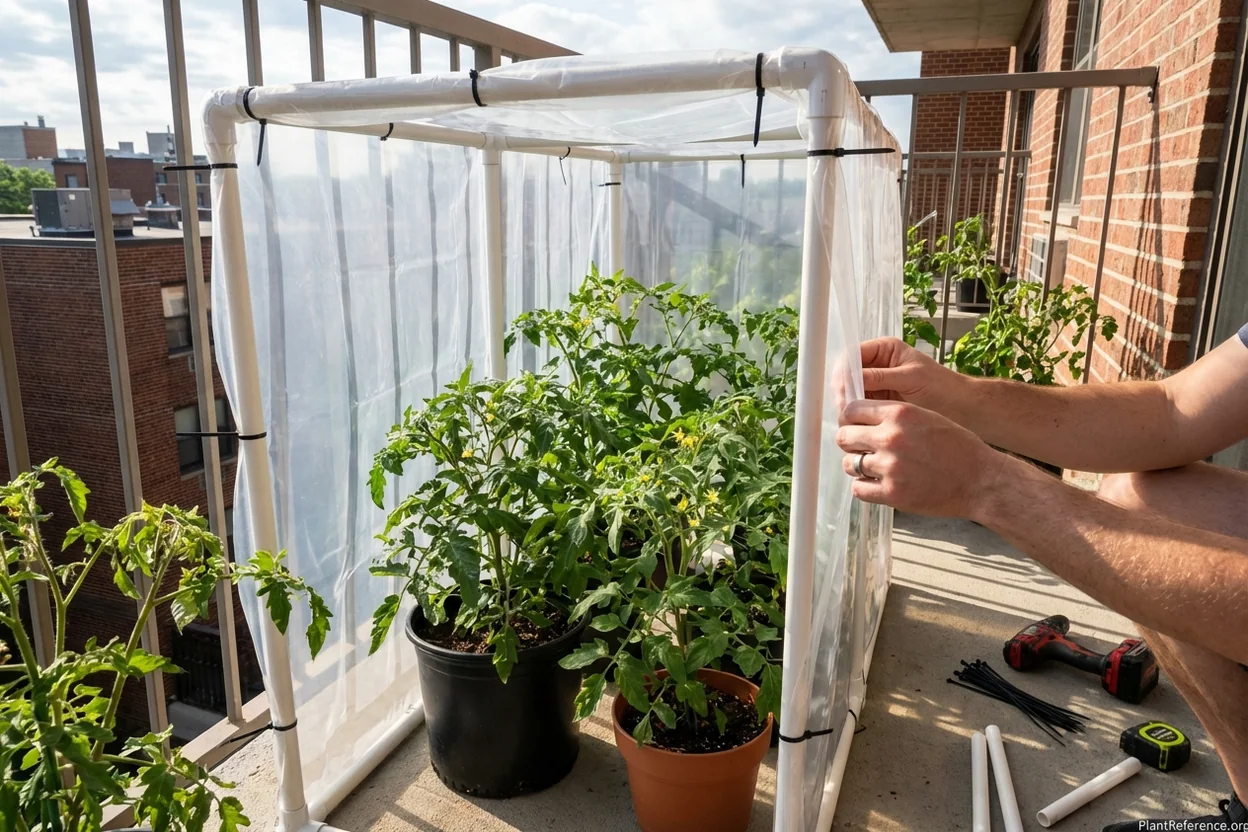
Test your DIY protection in moderate winds before relying on it during storms. Make adjustments to anchor points and panel tensions based on real-world performance.
Staking and Support for Windy Conditions
Standard tomato cages fail in windy conditions because they're designed for calm garden environments. Windy balconies require heavy-duty support systems anchored to permanent structures, not just containers.
I use galvanized steel cages with 1/4-inch (6mm) wire thickness instead of flimsy garden center cages. Anchor cage legs to balcony railings or walls using guy wires or bungee cords. This prevents the entire support system from lifting during gusts.
Install support at planting time, not after plants are established. Disturbing mature root systems weakens plants' wind resistance. Drive stakes all the way to container bottoms for maximum stability.
Heavy-duty galvanized cages: 1/4-inch wire, anchored to permanent structures
Bamboo stake tripods: Natural appearance, flexible in wind
Spiral plant supports: Grow with plant, less wind resistance
Wall-mounted trellis systems: Maximum stability for indeterminate varieties
Guy wire systems: Multiple anchor points prevent support failure
For tall varieties, use wall-mounted trellis systems anchored to balcony walls or railings. This distributes wind load across multiple attachment points instead of concentrating stress on container-mounted supports.
→ Gardener's Supply Lifetime Tomato Cage (Heavy-Duty) ($39.95-$49.95) - Galvanized steel construction withstands high winds
Commercial-grade galvanized steel cage with 1/4-inch wire thickness designed for extreme weather conditions. Five-foot height supports indeterminate varieties with four-leg stability system. Square design prevents rolling and provides 360-degree plant access. Folds flat for storage with hinged construction. Legs can be anchored to containers or permanent structures for wind resistance. Includes guy wire attachment points at multiple heights. Guaranteed for 15+ years outdoor use.
Product link unavailable
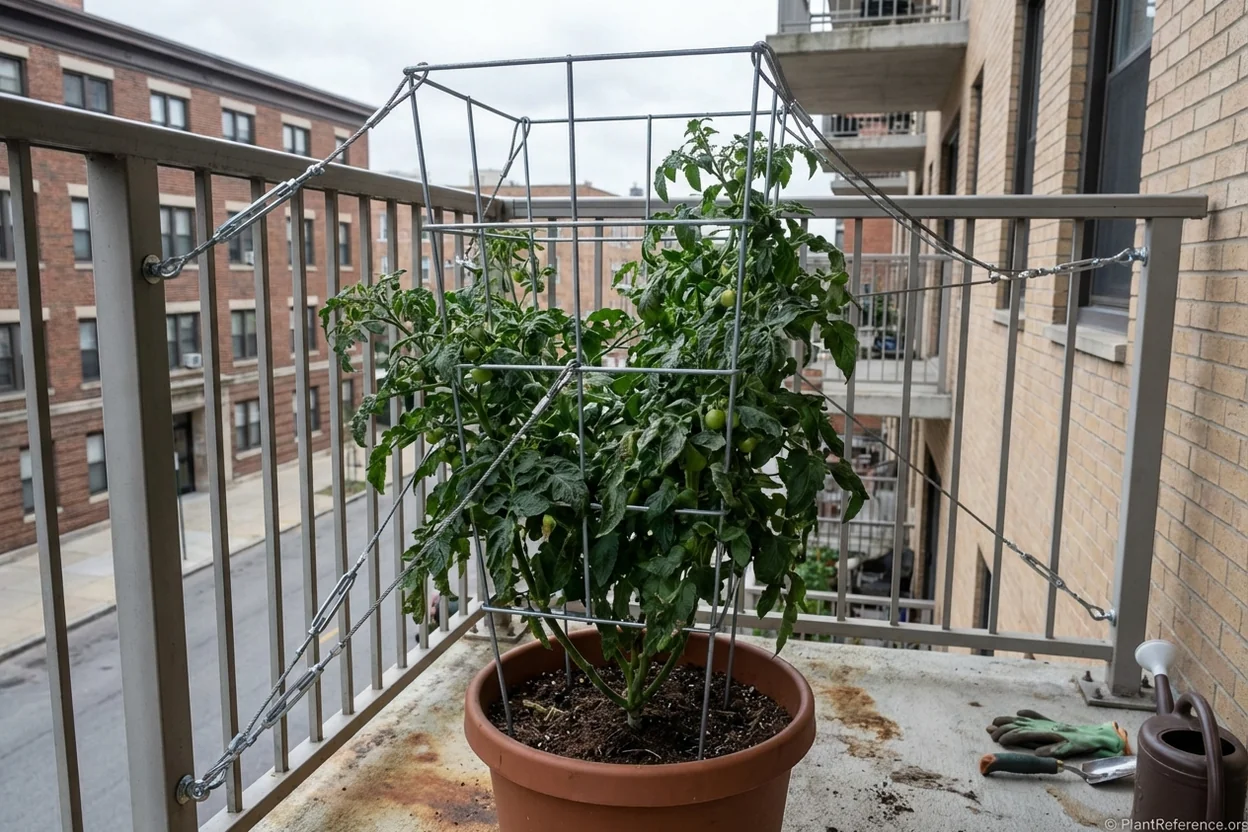
Tie plants to supports using soft materials that won't cut stems during movement. I use strips of old t-shirts or specialized plant ties with built-in stretch. Check and adjust ties weekly as stems thicken.
Emergency Repairs for Wind-Damaged Plants
When wind damage occurs despite protection, quick action saves plants that might otherwise die. I keep emergency repair supplies ready during windy seasons: plant tape, stakes, and rooting hormone for propagation.
For broken main stems, immediately support both sides of the break with splints made from pencils or small stakes. Wrap firmly with plant tape or electrical tape, leaving the wrapping for 4-6 weeks until the plant heals.
Severely damaged plants can often be saved through emergency propagation. Cut undamaged growing tips 6-8 inches (15-20 cm) long and root them in water while the mother plant recovers. You'll have backup plants ready if the original doesn't survive.
Plant tape and splints for broken stems
Emergency stakes for immediate support
Rooting hormone for propagating damaged plants
Sharp clean pruning shears for removing damaged growth
Clear plastic bags for creating humidity chambers around stressed plants
Remove severely damaged leaves and stems immediately to prevent disease and redirect energy to healthy growth. Clean cuts with sharp tools prevent further damage and heal faster than torn tissue.
After major wind events, reduce watering temporarily since damaged plants can't process water normally. Monitor for signs of shock including wilting, yellow leaves, or slowed growth. Most plants recover within 2-3 weeks with proper care.
Recovery time depends on damage severity and plant age. Younger plants bounce back faster than mature ones. Don't give up on wind-damaged plants for at least a month—tomatoes are remarkably resilient when given time to heal.
Frequently Asked Questions
Reading about plants and recognising them are different skills. These three build the second.
- Daily PlantIdentify the day’s mystery plant from a close-up photograph.
- Keyed OutWork a dichotomous key, lead by lead, to name a hidden specimen.
- Name That PlantName a specimen from botanical clues dealt hardest first.
Free to play, no account needed
Carlos grew up helping his abuelos tend their backyard garden in San Antonio, Texas, but didn't get serious about growing his own food until he bought his first house in Austin. He works as an HVAC technician during the day and gardens in the early mornings and evenings. Carlos specializes in heat-tolerant vegetables and container growing—essential skills for Texas summers and his south-facing driveway that gets intense sun. He's learned through plenty of failures (multiple dead fig trees, countless bolted lettuce crops) and now helps neighbors troubleshoot their own gardens. His YouTube channel documenting his container tomato experiments has a small but dedicated following. Carlos is passionate about growing food on a budget, often sourcing free containers and building his own compost.