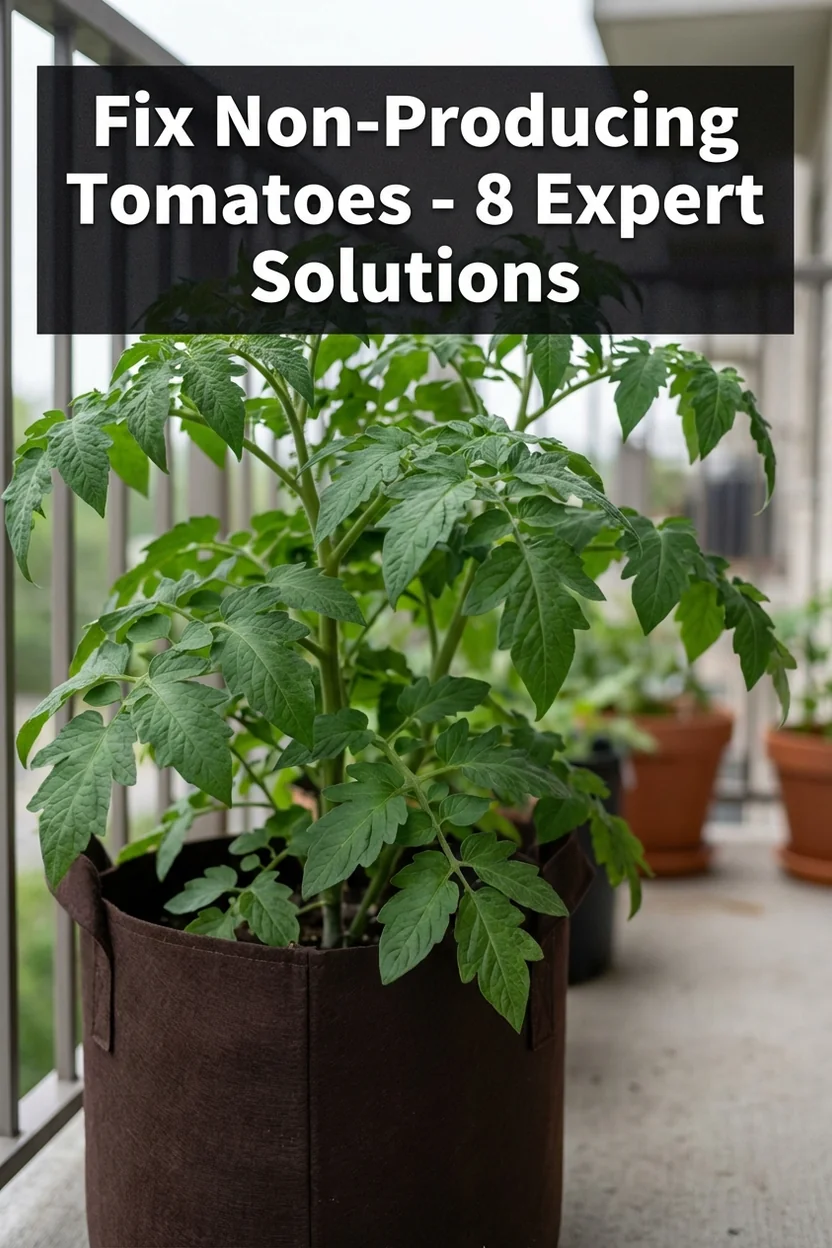
Container Tomatoes Not Producing Fruit? 8 Reasons Why (Plus Solutions)
Pets & Toxicity
Recorded toxicity for plants linked in this guide. An unknown status is not a safety assessment.
Toxic to pets: early girl tomato, Roma tomato, celebrity tomato and 4 moreDetailsHide
Solanum lycopersicum 'Early Girl' — Toxicity Warning
Toxic to petsView Solanum lycopersicum 'Early Girl' plant profileSolanum lycopersicum 'Roma' — Toxicity Warning
Toxic to petsView Solanum lycopersicum 'Roma' plant profileSolanum lycopersicum 'Celebrity' — Toxicity Warning
Toxic to petsView Solanum lycopersicum 'Celebrity' plant profileSolanum lycopersicum 'Yellow Pear' — Toxicity Warning
Toxic to petsView Solanum lycopersicum 'Yellow Pear' plant profileSolanum lycopersicum 'Patio Princess' — Toxicity Warning
Toxic to pets. Ripe red fruits are safe for human consumption. All green plant parts (leaves, stems, unripe green fruits) contain solanine and related glycoalkaloids that are mildly toxic if consumed in significant quantities.View Solanum lycopersicum 'Patio Princess' plant profileSolanum lycopersicum 'Bush Early Girl' — Toxicity Warning
Toxic to petsView Solanum lycopersicum 'Bush Early Girl' plant profileSolanum lycopersicum 'Stupice' — Toxicity Warning
Toxic to petsView Solanum lycopersicum 'Stupice' plant profile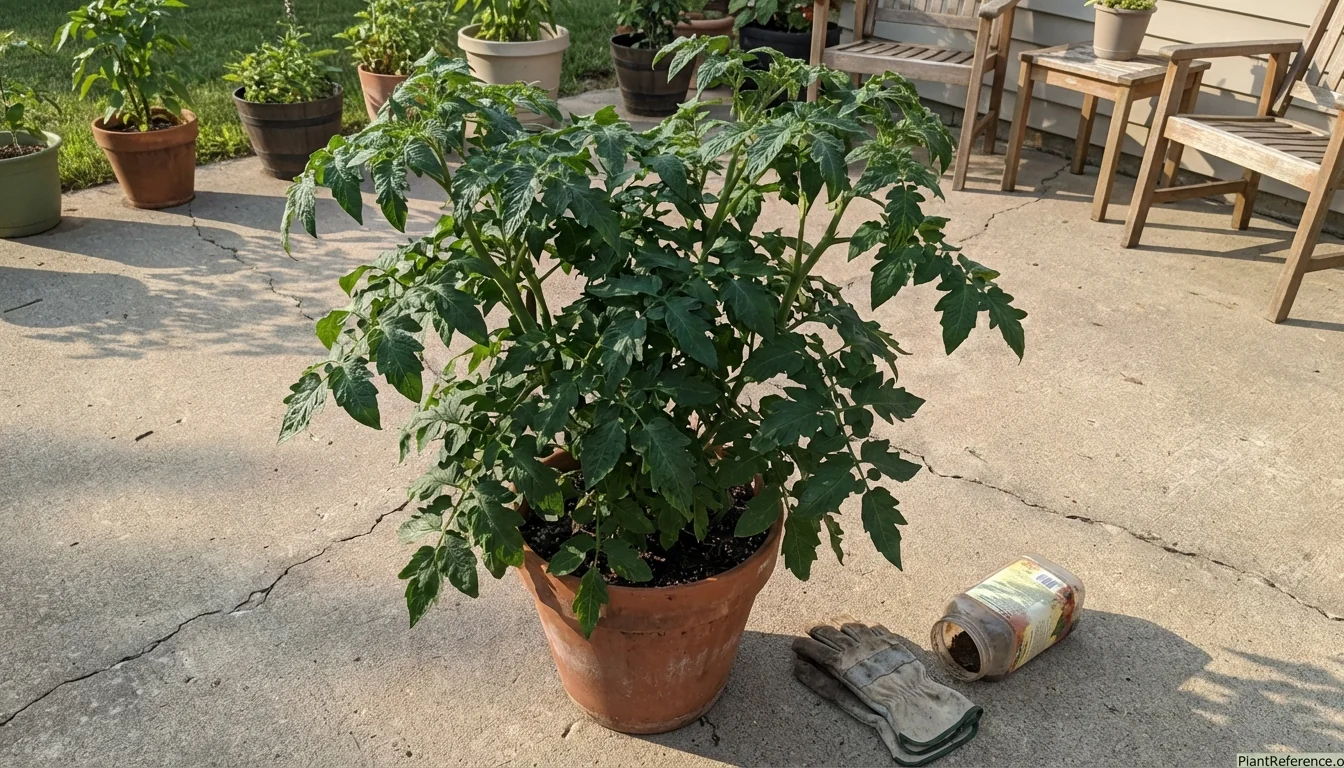
— Image © Plant Reference 2026
After growing container tomatoes on my apartment balcony for eight years, I've seen this frustrating scenario dozens of times: beautiful, healthy-looking tomato plants 🌿Solanum lycopersicum 'Yellow Pear' (so-LAH-num ly-ko-PER-si-kum) with gorgeous green foliage that refuse to produce a single fruit. You're doing everything right—watering, fertilizing, providing support—but your tomato plants not producing fruit despite looking perfectly healthy.
Why Container Tomatoes Stop Producing Fruit
Container-grown tomatoes face unique challenges that don't affect their in-ground cousins. The restricted root zone, controlled soil environment, and often sheltered locations create specific conditions that can prevent fruit production even when plants appear healthy.
I've tested dozens of tomato varieties in containers ranging from 5-gallon buckets to 20-gallon fabric grow bags, and certain problems crop up repeatedly. The good news? Most causes of non-producing tomato plants are completely fixable once you identify the specific issue.
The key is understanding that lush, green growth doesn't always mean your plant is healthy—sometimes it means exactly the opposite. Let me walk you through the eight most common reasons container tomatoes fail to produce fruit, based on my years of troubleshooting on my own balcony and helping other container gardeners.
Problem 1: Too Much Nitrogen (The #1 Culprit)
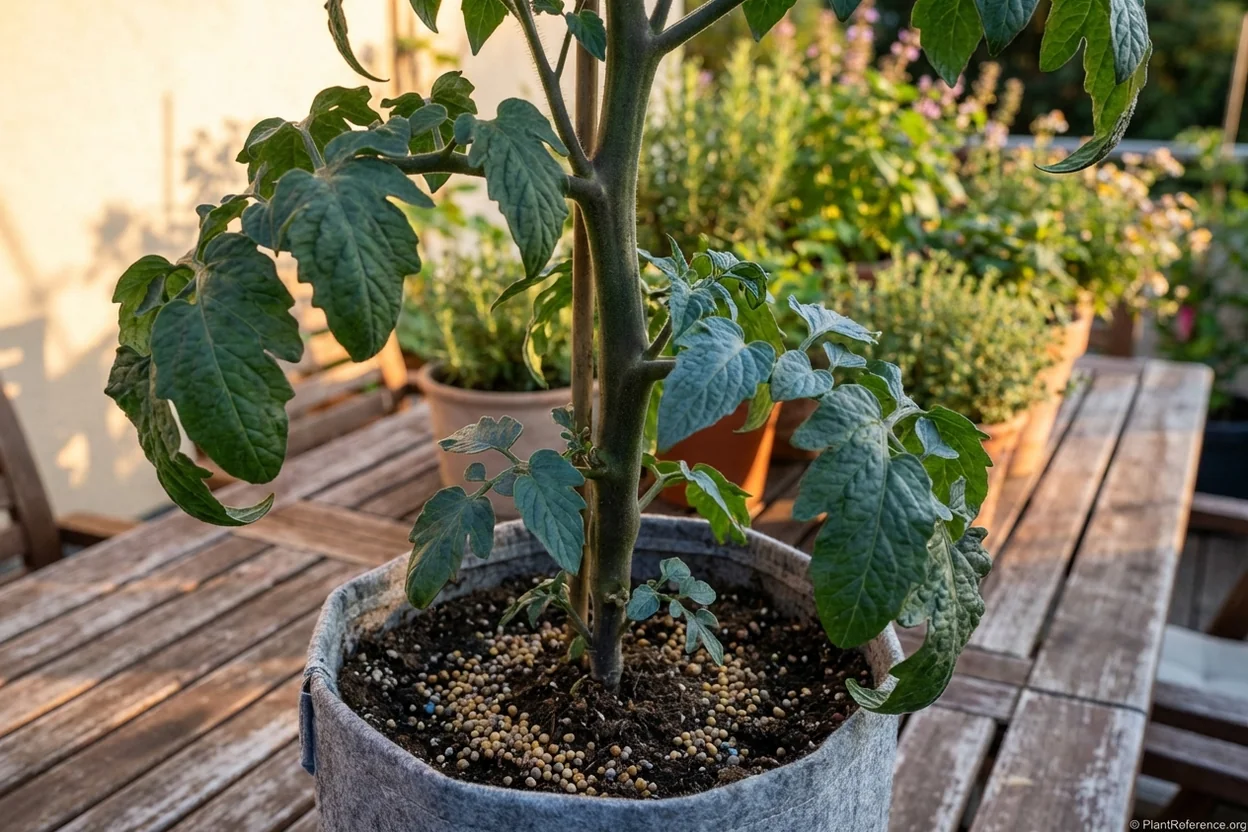
This is hands down the most common reason container tomatoes won't produce fruit, and it's completely counterintuitive. You think you're helping by feeding your plant, but too much nitrogen—especially early in the season—causes plants to focus entirely on leaf and stem growth while skipping flower production.
Here's what nitrogen overfertilization looks like:
Lush, dark green foliage that's almost too perfect
Thick, sturdy stems with rapid vertical growth
Delayed flowering or no flower clusters at all
Plants that grow quickly but never transition to fruiting
Leaves that are larger than normal for the variety
I learned this lesson the hard way when I started container gardening. My first season, I was so excited about my "healthy-looking" plants that I kept feeding them weekly with high-nitrogen fertilizer. Beautiful plants, zero tomatoes.
The Fix: Stop all nitrogen-heavy fertilizers immediately. Switch to a low-nitrogen, high-phosphorus fertilizer like a 2-10-10 or 4-12-12 formula. Even better, use a tomato-specific fertilizer that's designed to promote flowering rather than foliage growth.
For plants already overfertilized, patience is key. It can take 2-3 weeks for the excess nitrogen to work through the plant's system. During this time, reduce watering slightly (but don't let plants wilt) and absolutely no fertilizer until you see flower buds forming.
Problem 2: Temperature Extremes Blocking Production
Container tomatoes are much more sensitive to temperature swings than ground-planted ones because containers heat up and cool down faster than soil. I've measured 15°F (8°C) temperature differences between my containers and the ambient air temperature on hot summer days.
Tomatoes stop producing flowers when temperatures fall outside their comfort zone:
Night temperatures below 55°F (13°C) prevent fruit set
Day temperatures above 90°F (32°C) cause pollen sterility
Rapid temperature swings stress plants into survival mode
Container walls that get too hot cook the roots
Cold snaps can abort existing flower clusters
I've tested tomatoes in various light conditions on my balcony, and there's a clear production drop-off when plants get less than 6 hours of direct sun. Plants in 4-5 hours of sun grow fine but produce maybe 20% of the fruit compared to full-sun locations.
The Fix: Monitor both air and soil temperatures. Use a soil thermometer—you might be surprised how hot your containers get. For overheating containers, provide afternoon shade or move them to a location that gets morning sun but afternoon protection.
For cold protection, bring containers against a south-facing wall or use row covers on chilly nights. I keep lightweight frost cloth handy for unexpected temperature drops that can kill flower production even if they don't kill the plant.
Problem 3: Poor Pollination in Container Gardens
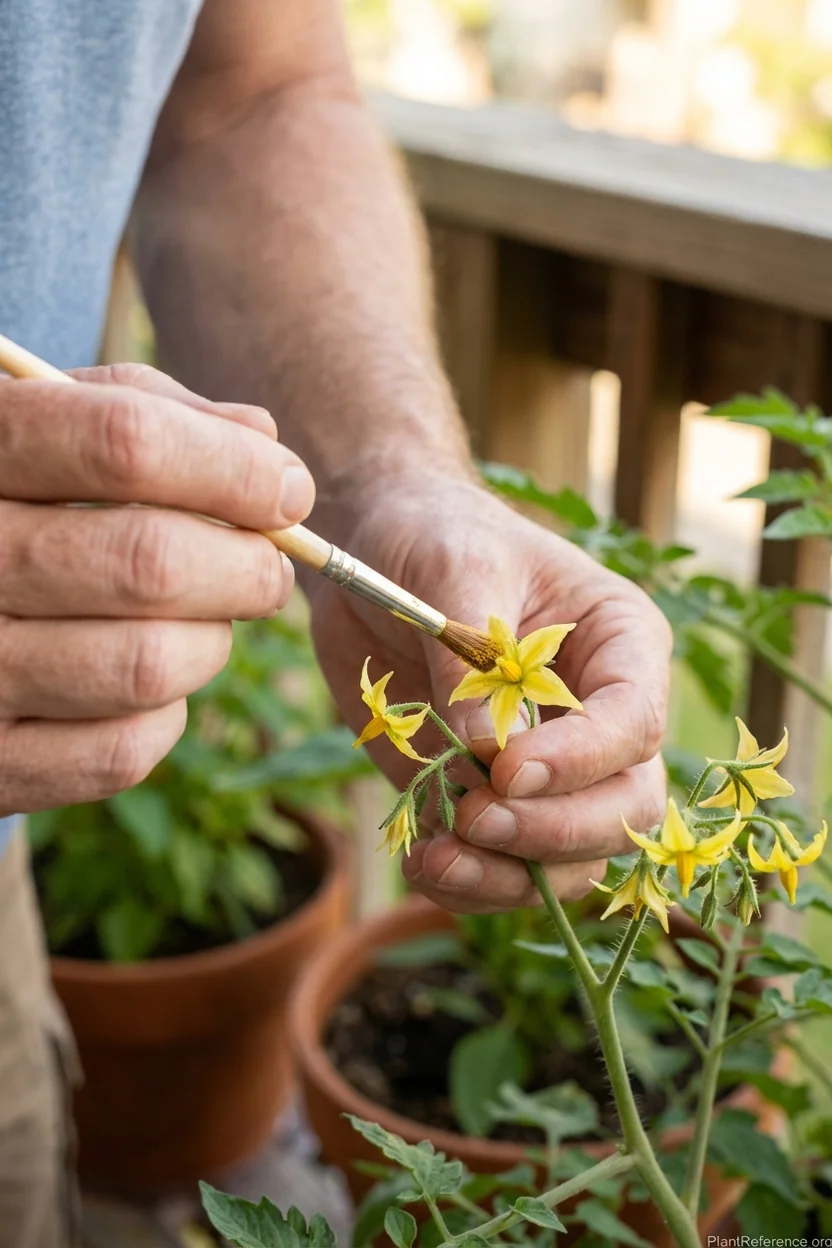
This problem is especially common for balcony and patio gardeners. Container tomatoes often lack adequate pollination because they're isolated from natural pollinators or don't get enough air movement to distribute pollen naturally.
Signs of pollination problems include:
Flowers that appear and drop off without forming fruit
Small fruits that develop but then abort and fall
Uneven fruit set with some clusters producing and others not
Perfect growing conditions but inconsistent production
More problems on upper flower clusters than lower ones
The Fix: Hand pollination is remarkably effective and takes just a few minutes every other day. Use a small, clean paintbrush or cotton swab to transfer pollen from flower to flower. Gently tap or shake the flowers—if you see a small puff of yellow pollen, you're doing it right.
Do this in mid-morning (9-11 AM) when pollen is most viable. I hand-pollinate all my container tomatoes as standard practice, and my fruit set improved dramatically once I started this routine.
You can also improve natural pollination by providing gentle air circulation with a small fan, but don't create strong winds that can damage the plants.
Problem 4: Wrong Variety for Your Container
Not all tomato varieties are suited for container growing, and variety mismatch is a common cause of production problems. I've tested over 30 varieties in containers, and some just don't adapt well to restricted root zones. See Growing Determinate vs. Indeterminate Tomatoes: Which Type Should You Grow? for detailed variety comparisons.
Indeterminate varieties can struggle in containers because:
They need extensive root systems that containers can't provide
Energy goes into continuous vertical growth instead of fruit production
They require larger containers (20+ gallons) that many gardeners don't use
They're more sensitive to container-specific stress factors
They need more consistent feeding that's harder to maintain in containers
The Fix: Switch to determinate varieties bred specifically for container growing. These compact plants put their energy into fruit production rather than endless growth. Some of my most reliable producers include:
🌿Solanum lycopersicum 'Patio Princess' - determinate, 2-3 feet (60-90 cm), heavy producer
🌿Solanum lycopersicum 'Bush Early Girl' - determinate, perfect for 5-gallon containers
🌿Solanum lycopersicum 'Roma' - paste type, reliable in containers
🌿Solanum lycopersicum 'Celebrity' - determinate, disease-resistant, consistent producer
For cherry tomatoes, Solanum lycopersicum 'Tumbling Tom' and Solanum lycopersicum 'Tiny Tim' are specifically bred for containers and hanging baskets.
→ Burpee Container Tomato Seed Collection ($12.99-$16.99) - Proven container varieties
Six determinate tomato varieties specifically selected for container growing success. Collection includes Patio Princess, Bush Early Girl, Tumbling Tom Red, Tiny Tim, Roma, and Celebrity varieties. All varieties mature in 60-80 days and adapt well to 5-15 gallon containers. Seeds are tested for high germination rates and disease resistance. Each packet contains 20-30 seeds with detailed growing instructions for container cultivation.
Product link unavailable
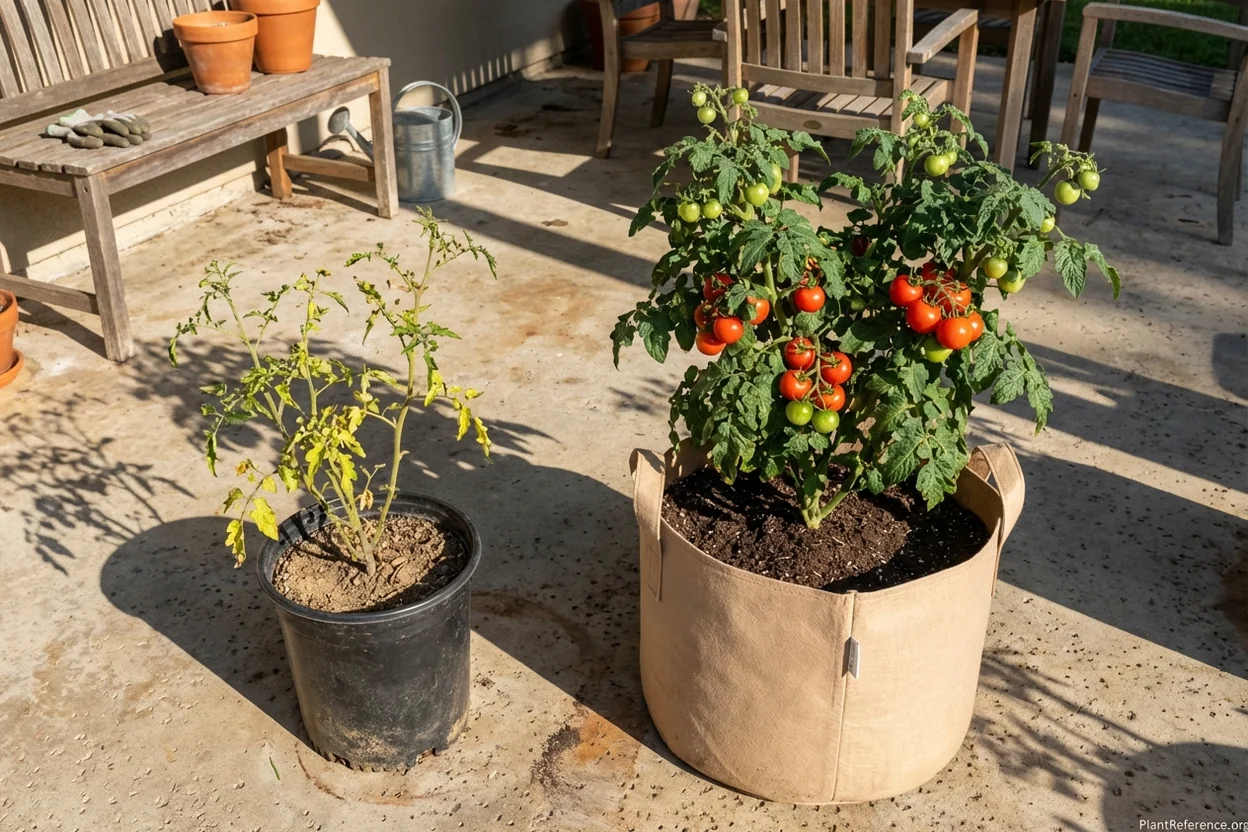
Problem 5: Insufficient Light for Fruit Development
Container gardeners often underestimate how much light tomatoes need for fruit production. While plants can survive and even grow in partial shade, they won't produce fruit without adequate direct sunlight. For detailed guidance, see Light Requirements for Vegetables: Complete Guide to Sun, Shade, and Grow Lights.
Minimum light requirements for fruit production:
6-8 hours of direct sunlight daily
Morning sun is most important for flower development
Afternoon sun drives fruit development and ripening
Reflected light from walls or pavement doesn't count as direct sun
Indoor grow lights need to be 40+ watts per square foot for fruiting
I've tested tomatoes in various light conditions on my balcony, and there's a clear production drop-off when plants get less than 6 hours of direct sun. Plants in 4-5 hours of sun grow fine but produce maybe 20% of the fruit compared to full-sun locations.
The Fix: Move containers to the sunniest location available. If your space is limited, prioritize morning sun over afternoon sun—flower development happens in the morning hours. Consider reflective surfaces like white walls or aluminum reflectors to increase available light.
For seriously light-limited spaces, stick with cherry tomato varieties that can produce decent crops with 5-6 hours of sun, or invest in proper grow lights designed for fruiting plants.
Problem 6: Watering Issues Affecting Production
Both overwatering and underwatering can prevent fruit production, but inconsistent watering is the worst culprit. Container tomatoes need steady, consistent moisture for proper flower development and fruit set. Learn more about Watering Containers: Best Practices for Consistent Plant Health.
Signs of watering-related production problems:
Blossom end rot on developing fruits (calcium uptake issues from inconsistent water)
Flowers dropping without forming fruit (water stress)
Cracking on fruits that do form (irregular watering)
Wilting during the day even with moist soil (root damage from overwatering)
Yellow leaves starting from the bottom (overwatering symptoms)
The Fix: Establish a consistent watering schedule based on container size and weather. I check my containers daily by sticking my finger 2 inches (5 cm) deep into the soil. Water when it's dry at that depth but still slightly moist below.
For consistent moisture, consider self-watering containers or drip irrigation systems. These maintain steady soil moisture that promotes continuous flower and fruit development.
→ XLUX Soil Moisture Meter ($10.99-$12.99) - Eliminates watering guesswork
No-battery soil moisture meter with 7-inch probe perfect for container gardening. Color-coded dial shows dry, moist, and wet readings instantly. Durable construction withstands repeated use in multiple containers. Helps prevent both overwatering and underwatering by providing accurate soil moisture readings at root zone depth. Essential tool for maintaining consistent moisture levels that tomatoes need for steady fruit production.
Product link unavailable
Problem 7: Plant Age and Timing Problems
Timing issues often frustrate new container gardeners who expect immediate results. Tomatoes have specific growth stages, and trying to rush the process or starting too late in the season can result in plants that never reach productive maturity.
Common timing problems:
Starting seeds too late for your growing season length
Transplanting outdoors before soil temperatures reach 60°F (16°C)
Expecting fruit before plants reach maturity (60-90 days from transplant)
Growing season too short for indeterminate varieties
Heat stress during critical flowering period (mid-summer in hot climates)
Most determinate varieties need 60-80 days from transplant to first ripe fruit. Indeterminate varieties take 70-90 days. If you're starting in late June in a climate with early fall frosts, you simply won't get a full harvest.
The Fix: Plan backwards from your first expected frost date. For a September 30th first frost, your plants need to be transplanted outdoors by early July at the latest for determinate varieties. Start seeds 6-8 weeks before your planned transplant date.
For short-season areas, choose early-maturing varieties like 🌿Solanum lycopersicum 'Stupice' (60-65 days) or Solanum lycopersicum 'Sub Arctic Plenty' (45-55 days).
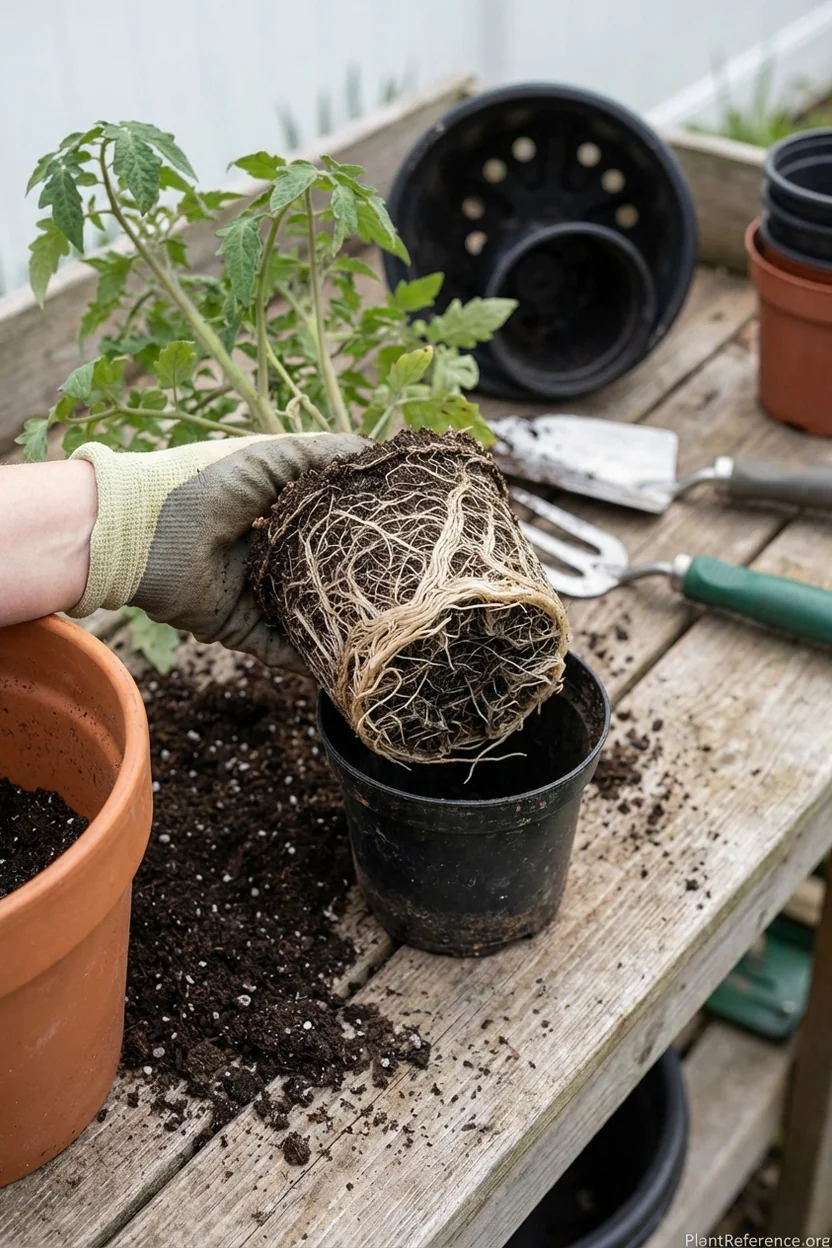
Problem 8: Root Restriction in Small Containers
This is probably the second most common cause of production problems in container tomatoes. Plants in containers that are too small spend all their energy trying to develop adequate root systems and never transition to fruit production.
Signs of root restriction:
Frequent wilting even with adequate soil moisture
Stunted growth that plateaus after initial transplant growth
Yellowing leaves despite adequate fertilization
Roots visible growing out of drainage holes
Plants that look healthy but seem "stuck" and won't progress to flowering
I've tested the same varieties in different container sizes, and the results are dramatic. 🌿Solanum lycopersicum 'Celebrity' in a 3-gallon container produced 2-3 fruits per plant. The same variety in a 10-gallon container produced 15-20 fruits.
Minimum container sizes for fruit production:
Cherry tomatoes: 3-5 gallons (11-19 liters)
Determinate varieties: 5-10 gallons (19-38 liters)
Indeterminate varieties: 10-20 gallons (38-76 liters)
The Fix: If your plants are already root-bound, transplant immediately to larger containers. Don't worry about disturbing roots—tomatoes handle transplanting well, and the temporary stress is worth the long-term production gains.
For future plantings, match container size to variety from the beginning. It's better to have fewer plants in appropriately sized containers than many plants in containers that are too small.
→ VIVOSUN 5-Pack 10-Gallon Grow Bags ($19.99-$24.99) - Perfect for indeterminate varieties
Heavy-duty fabric grow bags with reinforced handles for easy moving. 300G thickened nonwoven fabric allows air pruning of roots preventing root binding. Excellent drainage prevents overwatering while retaining adequate moisture. BPA-free materials safe for food production. Bags fold flat for winter storage and are reusable for multiple growing seasons. Perfect size for full-season indeterminate tomato production.
Product link unavailable
Quick Diagnostic Flowchart
When your tomato plants not producing fruit, work through this diagnostic sequence:
Step 1: Check the leaves
Dark green, oversized leaves = nitrogen excess
Yellowing from bottom up = overwatering or nutrient deficiency
Curling or dropping = temperature stress or inconsistent watering
Step 2: Examine the flowers
No flowers at all = nitrogen excess or insufficient light
Flowers dropping without forming fruit = pollination or temperature issues
Flowers present but not setting = hand pollinate immediately
Step 3: Assess growing conditions
Less than 6 hours direct sun = insufficient light
Night temps below 55°F (13°C) or day temps above 90°F (32°C) = temperature stress
Container under 5 gallons = root restriction
Step 4: Review your care routine
High-nitrogen fertilizer in past month = overfertilization
Irregular watering = moisture stress preventing fruit development
Wrong variety for container size = variety mismatch
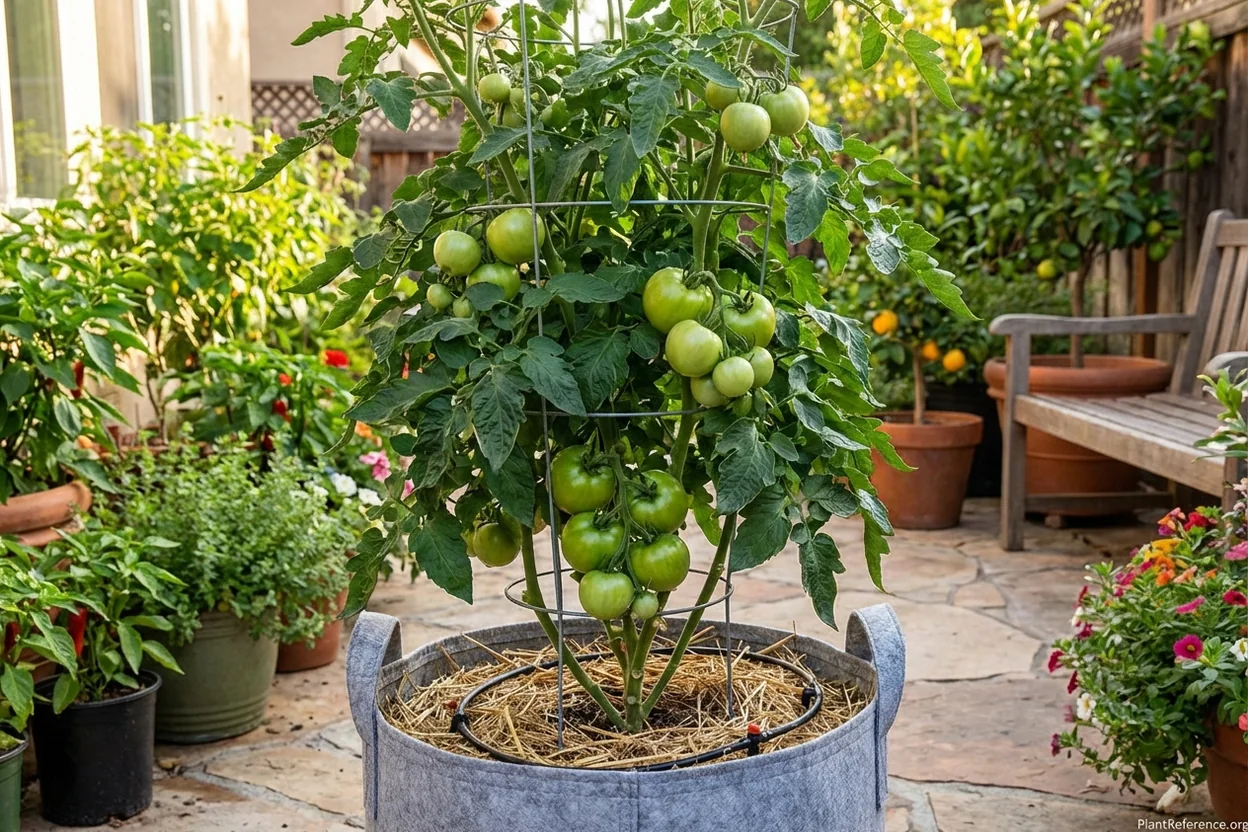
Getting Your Tomatoes Back to Producing
Once you've identified the problem, here's your action plan for getting fruit production back on track:
Immediate fixes (within 1 week):
Stop high-nitrogen fertilizers completely
Begin hand-pollinating flowers every other day at 9-11 AM
Move containers to maximize sunlight hours
Establish consistent daily watering schedule
Check container size and transplant if root-bound
Medium-term adjustments (2-4 weeks):
Switch to low-nitrogen, high-phosphorus fertilizer formulated for tomatoes
Monitor soil and air temperatures, providing protection as needed
Assess variety suitability for your container setup
Install consistent watering system if needed
Remove excess foliage to redirect energy to fruit production
Long-term improvements (next season):
Choose container-appropriate varieties from the start
Size containers properly for planned varieties
Plan planting timing based on your specific climate zone
Set up proper support systems before plants need them
Develop seasonal care schedules for consistent management
With proper diagnosis and corrections, most container tomatoes will begin setting fruit within 2-3 weeks. Remember that container growing requires more attention than ground planting, but the rewards—fresh tomatoes steps from your kitchen—make the extra effort worthwhile.
The key is being observant and responsive to what your plants are telling you. Healthy foliage without flowers usually means overfertilization. Flowers without fruit typically indicates pollination or temperature issues. Once you learn to read these signals, keeping your container tomatoes producing becomes much more manageable.
For comprehensive container tomato guidance, see our The Complete Guide to Growing Tomatoes in Containers: From Seedling to Harvest which covers all aspects of successful container production. Also check Container Size Matters: The Ultimate Guide to Choosing the Perfect Pot for Tomatoes for detailed sizing recommendations and Best Tomato Varieties for Containers: 25+ Proven Winners to select varieties that actually produce well in containers.
Frequently Asked Questions
Reading about plants and recognising them are different skills. These three build the second.
- Daily PlantIdentify the day’s mystery plant from a close-up photograph.
- Keyed OutWork a dichotomous key, lead by lead, to name a hidden specimen.
- Name That PlantName a specimen from botanical clues dealt hardest first.
Free to play, no account needed
Tagged with
Linda's been growing tomatoes in containers on her suburban Pittsburgh balcony—ever since her kids grew up and she finally had time for hobbies again. She's a medical billing specialist by day and a tomato enthusiast by night and weekend. Linda started documenting her container growing experiments on a simple blog and discovered other renters and condo dwellers were desperate for practical advice. She tests different varieties every season, tracking yields, disease resistance, and flavor in a detailed spreadsheet. Linda's approach is practical and budget-conscious—she saves seeds, reuses containers, and makes her own fertilizer from kitchen scraps. Her specialty is maximizing production in small spaces, and she's perfected the art of growing full-size tomatoes in 5-gallon buckets. She's a Pennsylvania Master Gardener and teaches container growing workshops at her local library.