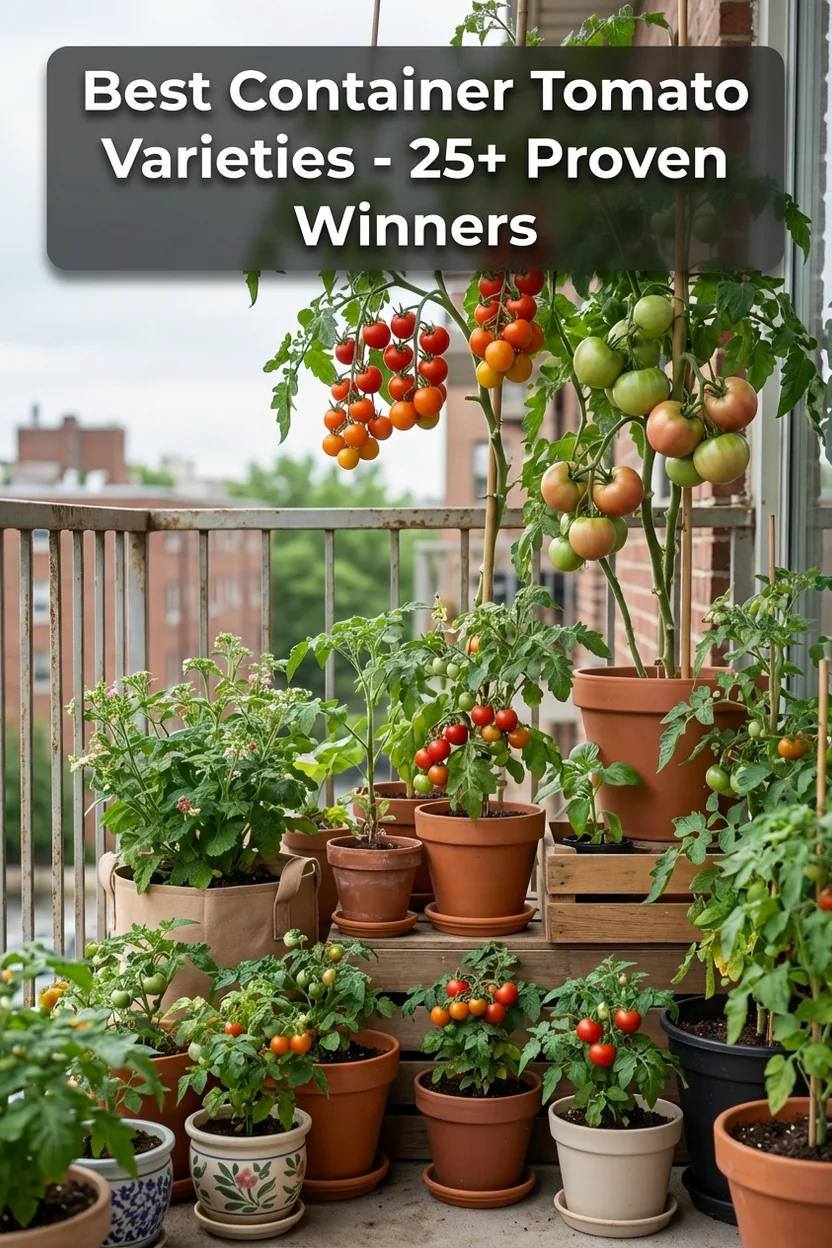
Best Tomato Varieties for Containers: 25+ Proven Winners
Pets & Toxicity
Recorded toxicity for plants linked in this guide. An unknown status is not a safety assessment.
Toxic to pets: yellow pear tomatoDetailsHide
Solanum lycopersicum 'Yellow Pear' — Toxicity Warning
Toxic to petsView Solanum lycopersicum 'Yellow Pear' plant profile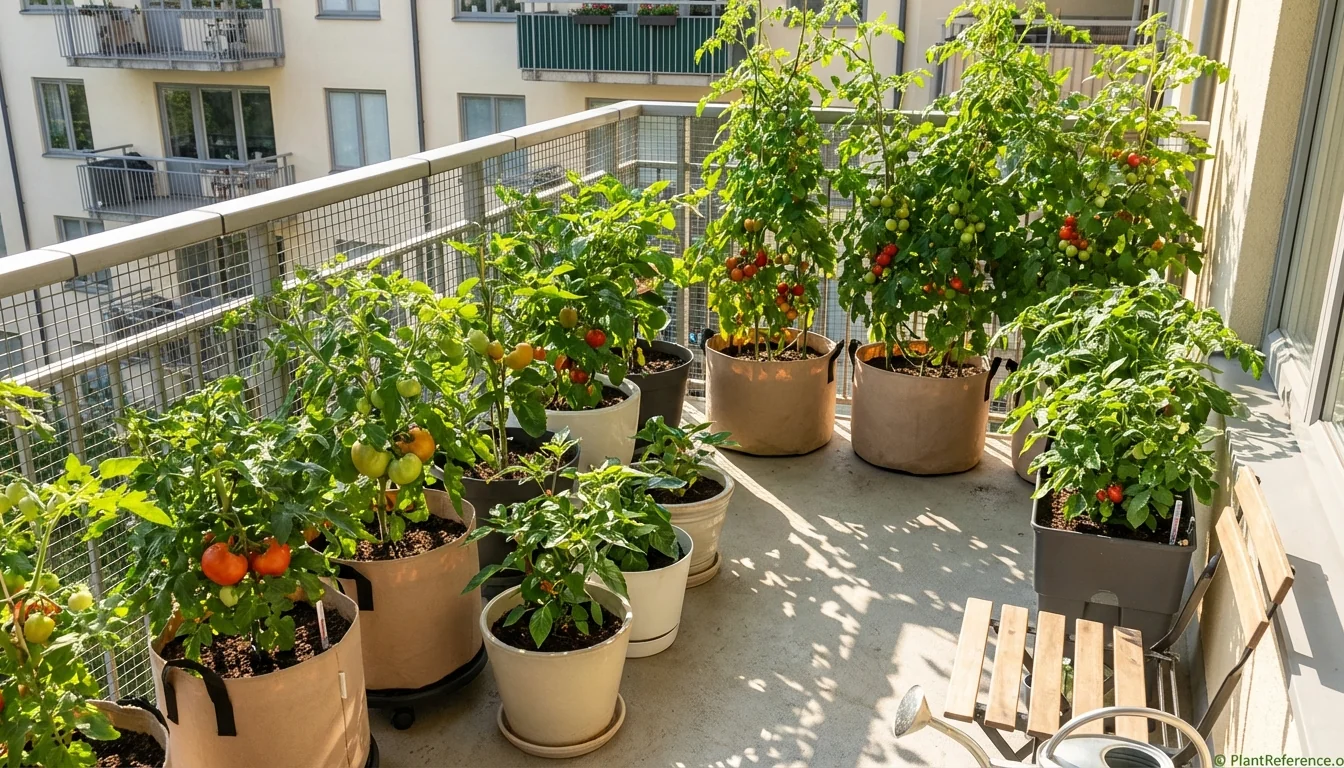
— Image © Plant Reference 2026
Choosing the right tomato variety can make or break your container gardening success. After growing over 50 different tomato varieties 🌿Solanum lycopersicum 'Yellow Pear' (so-LAH-num ly-ko-PER-si-kum) on my apartment balcony over the past eight years, I can tell you exactly which ones thrive in containers and which ones are a waste of your limited space and effort.
The best tomato varieties for containers fall into specific categories based on their growth habits, space requirements, and productivity. While ground gardeners can grow almost any variety, container gardeners need to be strategic about their choices to maximize harvests in limited space.
Understanding Container Tomato Types: Determinate vs Indeterminate
The most crucial decision you'll make is choosing between determinate and indeterminate varieties. This choice will determine your container size, support needs, and harvest schedule.
Determinate varieties are the workhorses of container gardening. These compact plants grow to a predetermined height (usually 2-4 feet), produce most of their fruit within a 2-3 week window, then decline. They're perfect for beginners and small containers because they require minimal staking and fit in 5-10 gallon containers.
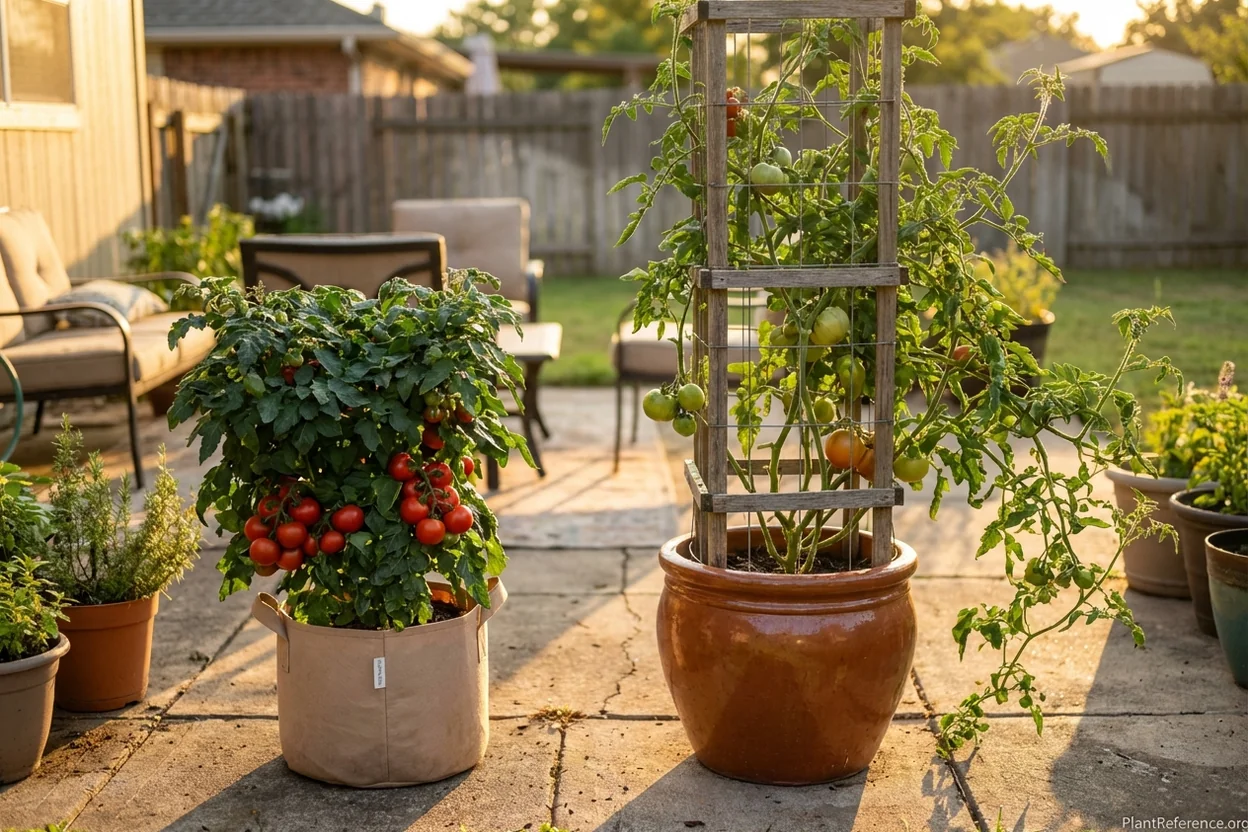
Indeterminate varieties are the marathon runners—they grow continuously throughout the season, reaching 6-12 feet tall, and produce fruit until frost kills them. These varieties need 15+ gallon containers and substantial support systems, but they reward you with harvests all season long.
For most container gardeners, I recommend starting with determinate varieties. They're more forgiving, require less maintenance, and still produce impressive harvests when you choose the right varieties.
Best Determinate Varieties for Container Success
After testing dozens of determinate varieties, these consistently deliver the best combination of productivity, flavor, and container adaptability:
Top Performing Determinates
'Patio Princess' remains my top recommendation for beginners. This variety produces 4-6 ounce red slicers on 20-inch plants that thrive in 5-gallon containers. The fruit has excellent flavor—not the bland taste associated with many container varieties—and the plants are incredibly productive. I've harvested 8-12 pounds per plant consistently.
'Bush Early Girl' delivers the classic Early Girl flavor in a compact 18-24 inch package. These plants produce medium-sized red fruit with that perfect balance of sweet and tangy that makes tomatoes addictive. They're also one of the most reliable varieties for cooler climates and shorter seasons.
'Celebrity' - 4-ounce red slicers, disease resistant, 3-4 foot plants
'Mountain Fresh Plus' - Large 10-12 ounce fruit, late blight resistant
'Phoenix' - Heat tolerant, crack resistant, perfect for hot climates
'Stupice' - Early variety, excellent for short seasons
'Sub Arctic Plenty' - Ultra-early, handles cool weather
'Celebrity' deserves special mention for its disease resistance. This variety shrugs off common container problems like fusarium wilt and verticillium wilt that can devastate other varieties. The 4-ounce fruit is perfect for slicing, and the plants consistently produce 6-8 pounds of fruit per container.
Heat-Tolerant Determinates
If you garden in zones 8-10, standard varieties often struggle with extreme heat. These varieties handle high temperatures and humidity:
'Phoenix' - Specifically bred for desert climates
'Heatmaster' - Productive even above 95°F (35°C)
'Homestead 24' - Old-fashioned variety that loves heat
'Bella Rosa' - Disease resistant with excellent heat tolerance
Top Cherry Tomato Varieties for Continuous Harvests
Cherry tomatoes are the candy of the container garden. They're incredibly productive, most varieties are indeterminate (meaning continuous harvests), and they're perfect for snacking straight off the plant.
Indeterminate Cherry Champions
'Sweet 100' is the gold standard for container cherry tomatoes. These plants produce impossibly long clusters of 1-inch sweet red fruit from July until frost. I've counted over 100 tomatoes per cluster on mature plants. They need 10+ gallon containers and 6-foot cages, but the productivity is staggering.
'Surefire Red' offers the productivity of Sweet 100 with better disease resistance. The fruit is slightly larger (about 1.5 inches) and has excellent flavor with that perfect sweet-tart balance. These plants handle container stress better than most indeterminates.
'Sun Gold' - Orange cherry, incredibly sweet flavor
'Black Cherry' - Dark purple fruit, complex flavor
'Yellow Pear' - Pear-shaped yellow fruit, mild flavor
'Chocolate Cherry' - Brown cherry, rich flavor
'Sweet Million' - Improved Sweet 100, disease resistant
'Sun Gold' produces orange cherry tomatoes that are so sweet they taste like candy. These are often the first variety to ripen and continue producing until frost. The only downside is that the fruit tends to crack in heavy rain, so they're better suited to covered patios.
Determinate Cherry Options
If you prefer the "harvest and be done" approach, these determinate cherries deliver concentrated harvests:
'Garden Pearl' - Pink cherry, 12-inch plants
'Red Robin' - Tiny red fruit, 8-inch plants perfect for windowsills
'Tiny Tim' - Classic red cherry, 12-inch compact plants
'Balcony' - Bred specifically for containers, 2-foot plants
Compact and Dwarf Varieties for Small Spaces
For apartment dwellers with limited space, these micro varieties prove that good things come in small packages. I've grown all of these successfully in containers as small as 2-3 gallons.
'Tiny Tim' remains the classic choice for small spaces. These 12-16 inch plants produce clusters of ½-inch red fruit that's perfect for salads and garnishing. While the individual fruit is small, the plants are so productive that you'll still get meaningful harvests.
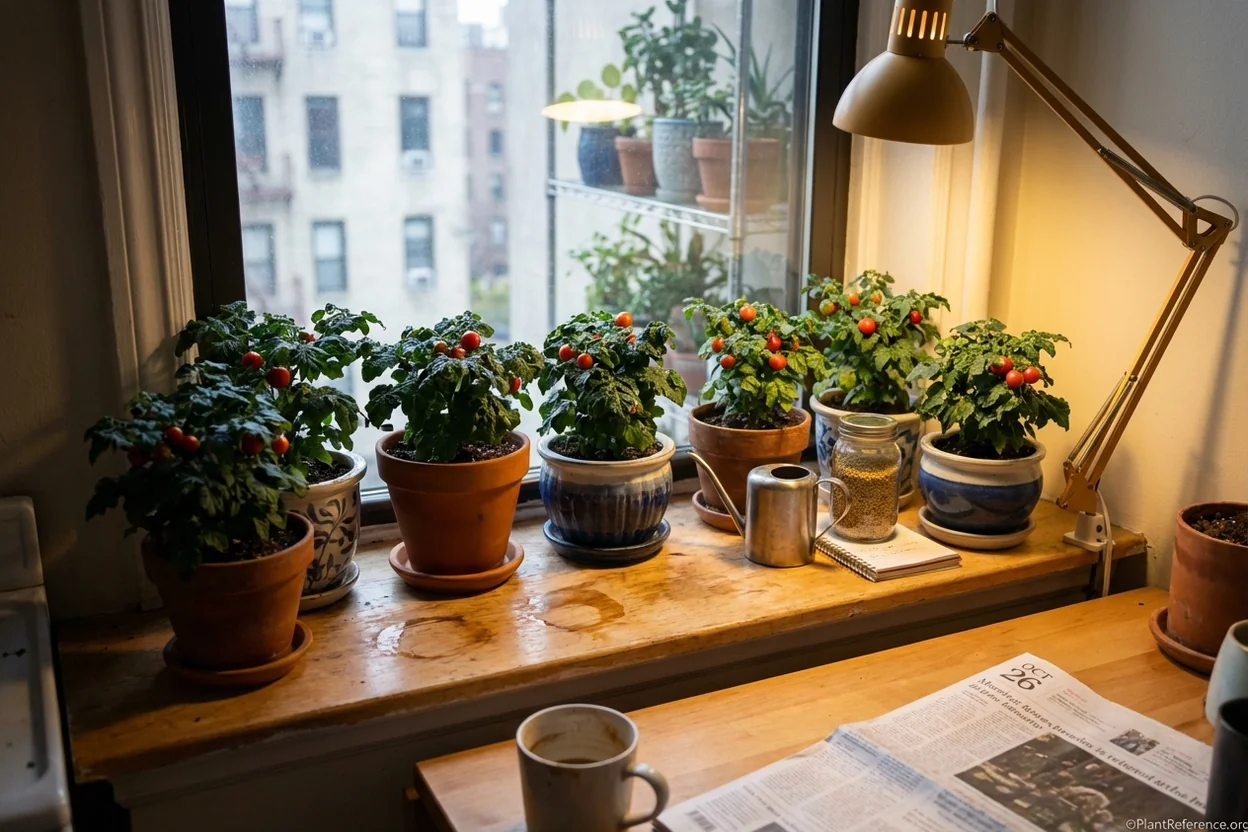
'Red Robin' is even more compact, growing only 6-8 inches tall but producing surprising amounts of tiny red fruit. These are perfect for hanging baskets or decorative containers where you want the visual appeal of tomato plants without dominating the space.
Micro-Dwarf Varieties
'Micro Tom' - 5-inch plants, developed for space stations
'Florida Petite' - 6-inch plants, pink fruit
'Minibel' - 8-inch plants, good flavor despite size
'Vilma' - 10-inch plants, relatively large fruit for size
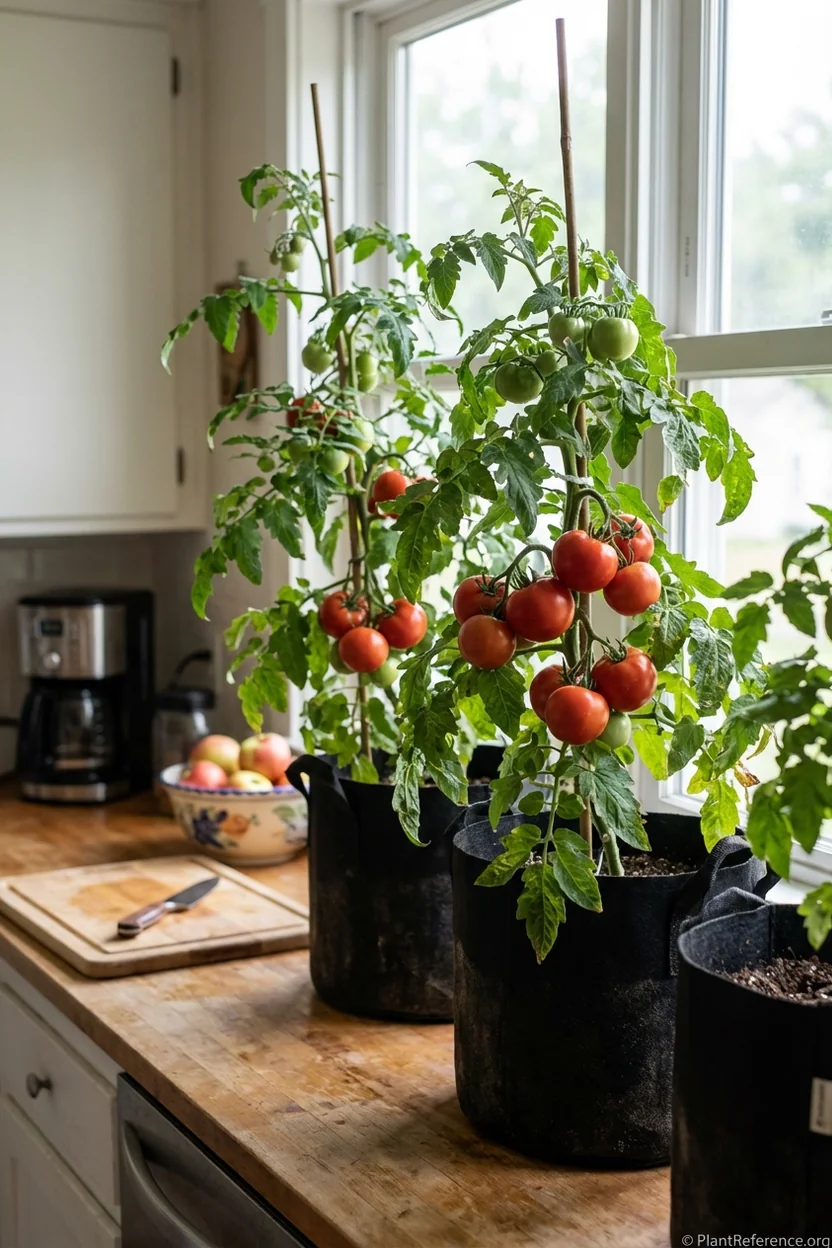
These micro varieties are perfect for kitchen counters, office desks, or anywhere you want fresh tomatoes but have extremely limited space. While the harvests are small, there's something magical about picking fresh tomatoes from a plant sitting next to your coffee maker.
Best Slicing Varieties for Large Containers
If you have space for 15+ gallon containers and want full-sized slicing tomatoes, these varieties deliver restaurant-quality fruit:
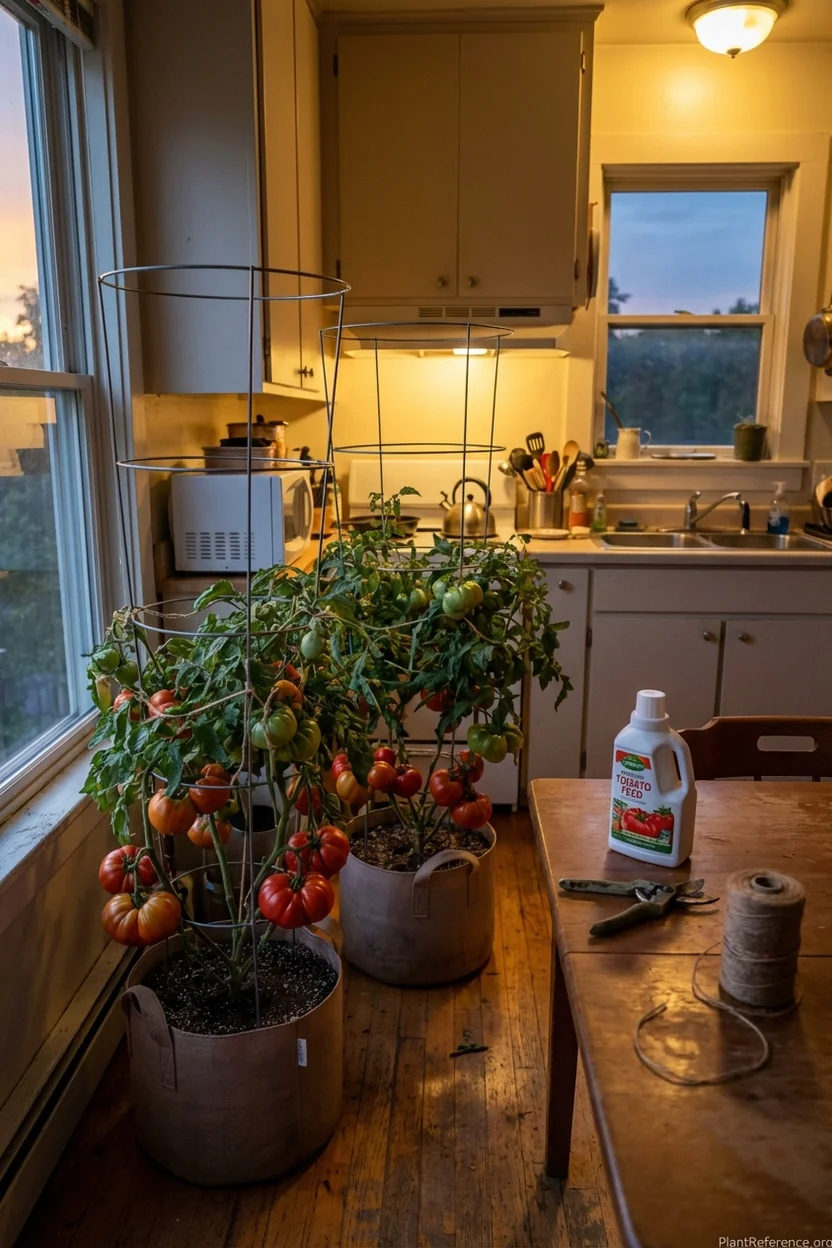
'Big Beef' produces 10-12 ounce red beefsteak tomatoes with excellent flavor and disease resistance. These indeterminate plants need strong support and consistent watering, but the fruit quality rivals anything you'll find at farmers' markets.
'Cherokee Purple' is an heirloom variety that produces large purple-black fruit with complex, smoky flavor. The fruit can crack in heavy rain, so these are better suited to covered growing areas, but the flavor is worth the extra care.
'Better Boy' - 8-10 ounce red slicers, disease resistant
'Early Girl' - 4-6 ounce fruit, early production
'Brandywine' - Large pink heirloom, incredible flavor
'German Johnson' - Large pink fruit, southern heirloom
'Mortgage Lifter' - Can reach 2+ pounds per fruit
Paste and Sauce Varieties Perfect for Containers
For gardeners who want to make sauce, paste, or preserve their harvest, these varieties offer the meaty texture and low moisture content that processing requires:
'San Marzano' is the gold standard for sauce tomatoes. These indeterminate plants produce 3-4 inch elongated fruit with few seeds and concentrated flavor. True San Marzano varieties can be difficult to find, so look for 'San Marzano Redorta' or other verified selections.
'Roma' - Classic paste tomato, determinate plants
'Amish Paste' - Large paste tomato, excellent flavor
'Opalka' - Polish heirloom, massive 6-inch paste tomatoes
'Howard German Johnson' - Large paste variety
'Speckled Roman' - Beautiful striped paste tomato
'Roma' offers the advantage of determinate growth, making it manageable in 7-10 gallon containers. The plants produce concentrated harvests of 3-4 ounce paste tomatoes perfect for sauce making.
Climate-Specific Variety Recommendations
Your growing zone dramatically affects which varieties will succeed in containers. Here are my recommendations by climate:
Short Season Areas (Zones 3-5)
'Sub Arctic Plenty' - Ripens in 45 days
'Glacier' - Early cherry, handles cool weather
'Stupice' - Czechoslovakian variety, very early
'Early Cascade' - Cherry variety, cold tolerant
'Sophie's Choice' - Canadian variety, short season
Hot, Humid Areas (Zones 8-9)
'Celebrity' - Disease resistant, handles humidity
'Better Boy' - Heat tolerant with good production
'Phoenix' - Bred for desert conditions
'Homestead 24' - Traditional southern variety
'Heat Wave II' - Compact determinate, heat loving
Desert/Arid Climates (Zones 9-10)
'Phoenix' - The standard for hot, dry climates
'Heatmaster' - Produces even in extreme heat
'Stupice' - Surprisingly heat tolerant
'Early Girl' - Adapts well to desert conditions
Disease-Resistant Varieties for Container Growing
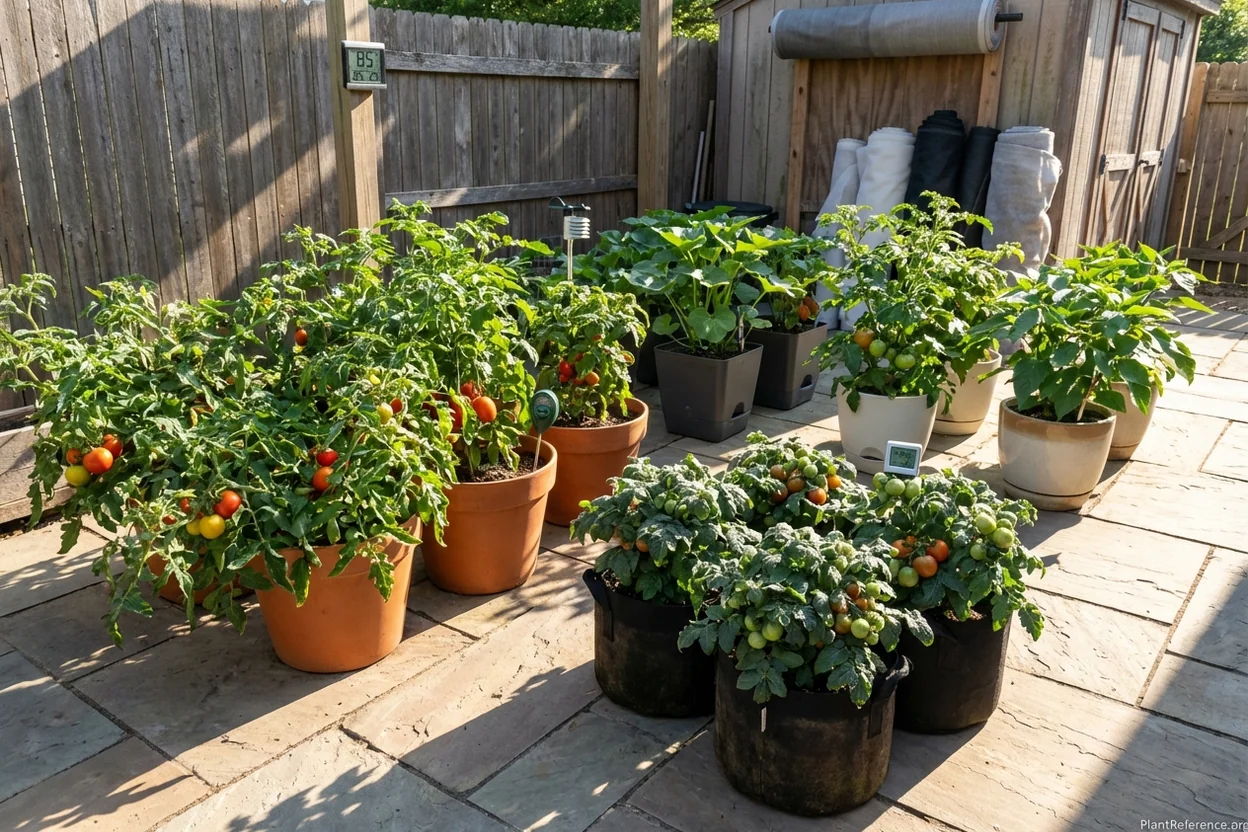
Container plants face more stress than ground-grown tomatoes, making disease resistance crucial. These varieties consistently resist common problems:
Fusarium and Verticillium Wilt Resistant
'Celebrity' - VFN resistant, excellent for beginners
'Big Beef' - VFNT resistant, great for large fruit
'Better Boy' - VFN resistant, reliable producer
'Mountain Fresh Plus' - Multiple disease resistance
'Iron Lady' - Exceptionally disease resistant
Late Blight Resistant
Late blight can destroy entire crops in wet seasons. These varieties show good resistance:
'Mountain Magic' - Cherry variety with LB resistance
'Defiant PhR' - Large red slicers with LB resistance
'Iron Lady' - Determinate with excellent LB resistance
'Mountain Fresh Plus' - Multiple resistance including LB
Heirloom vs Hybrid: Which Works Better in Containers
This question comes up constantly, and my experience shows that both have their place in container gardens, but hybrids generally perform better for beginners.
Hybrid advantages in containers:
Better disease resistance
More uniform ripening
Higher productivity in stressful conditions
More predictable growth habits
Heirloom advantages:
Superior flavor in many cases
Seed saving capability
Unique colors and shapes
Connection to gardening history
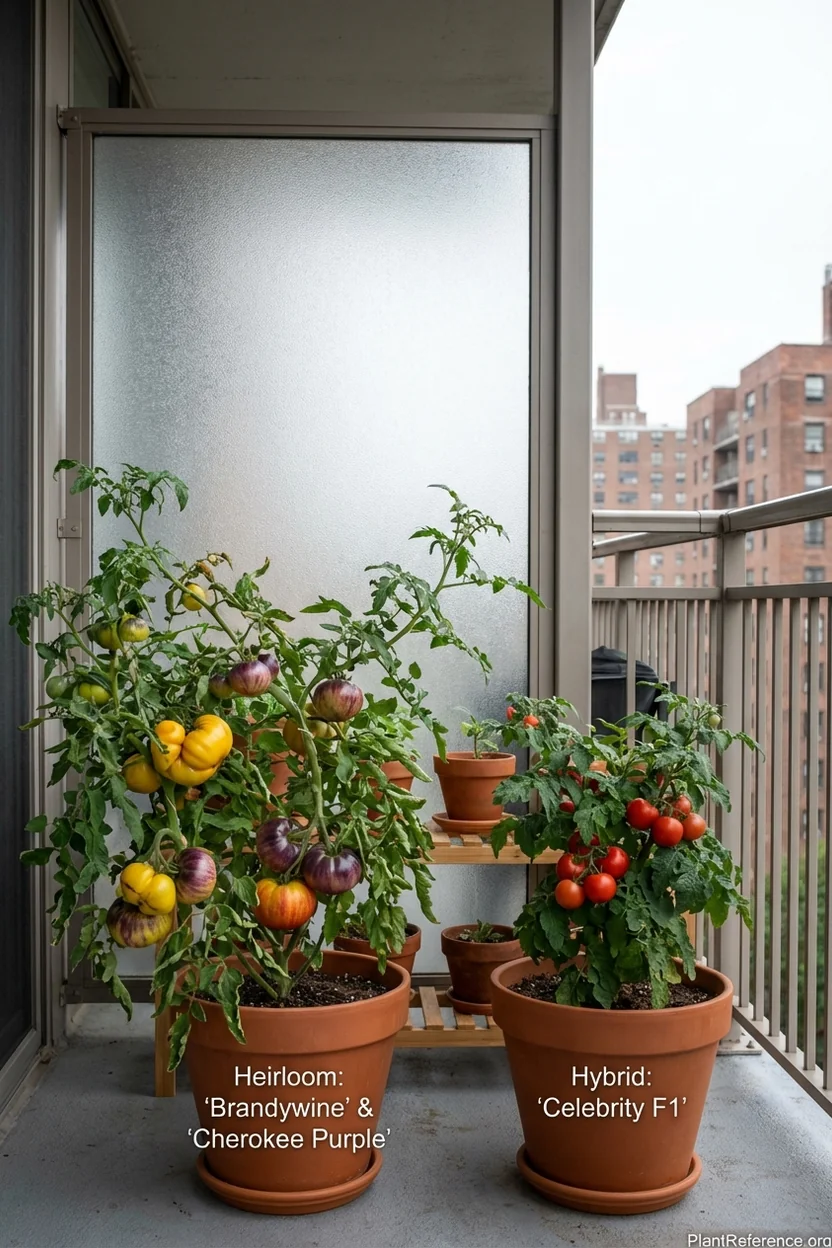
My recommendation: Start with disease-resistant hybrids like Best Determinate Tomato Varieties|'Celebrity' or Best Beefsteak Tomato Varieties|'Big Beef' to build confidence, then experiment with heirlooms like Growing Heirloom Tomatoes|'Brandywine' or Black Tomato Varieties|'Cherokee Purple' once you've mastered Container Growing Basics|container growing basics.
Container Size Matching by Variety Type
Matching container size to variety type is crucial for success. Here's my proven sizing guide:
Small Containers (2-5 gallons)
All micro-dwarf varieties
'Tiny Tim', 'Red Robin'
'Garden Pearl'
Small determinate cherries
Medium Containers (5-10 gallons)
Most determinate varieties
'Celebrity', 'Roma', 'Bush Early Girl'
Compact paste varieties
Short-season varieties
Large Containers (10-15 gallons)
Most indeterminate cherries
'Sweet 100', 'Sun Gold'
Medium indeterminate slicers
'Early Girl', 'Stupice'
Extra-Large Containers (15+ gallons)
Large beefsteak varieties
'Big Beef', 'Cherokee Purple'
Long-season heirlooms
'Brandywine', 'Mortgage Lifter'
The key is providing adequate root space. Cramped roots lead to stressed plants, reduced yields, and increased susceptibility to problems like blossom end rot.
Seasonal Variety Planning
I've learned to plan variety selections seasonally to maximize harvests:
Spring plantings: Focus on early varieties and determinates for quick harvests before extreme summer heat.
Summer plantings: Choose heat-tolerant varieties and cherry types that can handle temperature swings.
Fall plantings: Select fast-maturing varieties that can ripen before first frost.
This approach extends the growing season and provides fresh tomatoes from May through October in most climates.
The varieties I've shared represent eight years of trial and error on my apartment balcony. Some performed spectacularly, others disappointed, and a few surprised me with their adaptability. The key is starting with proven performers, then experimenting with more challenging varieties as your skills develop.
Success with container tomatoes comes down to matching variety characteristics to your specific growing conditions—container size, climate, experience level, and harvest goals. Choose wisely, and you'll be amazed at the productivity possible in even the smallest spaces.
Frequently Asked Questions
Reading about plants and recognising them are different skills. These three build the second.
- Daily PlantIdentify the day’s mystery plant from a close-up photograph.
- Keyed OutWork a dichotomous key, lead by lead, to name a hidden specimen.
- Name That PlantName a specimen from botanical clues dealt hardest first.
Free to play, no account needed
Linda's been growing tomatoes in containers on her suburban Pittsburgh balcony—ever since her kids grew up and she finally had time for hobbies again. She's a medical billing specialist by day and a tomato enthusiast by night and weekend. Linda started documenting her container growing experiments on a simple blog and discovered other renters and condo dwellers were desperate for practical advice. She tests different varieties every season, tracking yields, disease resistance, and flavor in a detailed spreadsheet. Linda's approach is practical and budget-conscious—she saves seeds, reuses containers, and makes her own fertilizer from kitchen scraps. Her specialty is maximizing production in small spaces, and she's perfected the art of growing full-size tomatoes in 5-gallon buckets. She's a Pennsylvania Master Gardener and teaches container growing workshops at her local library.