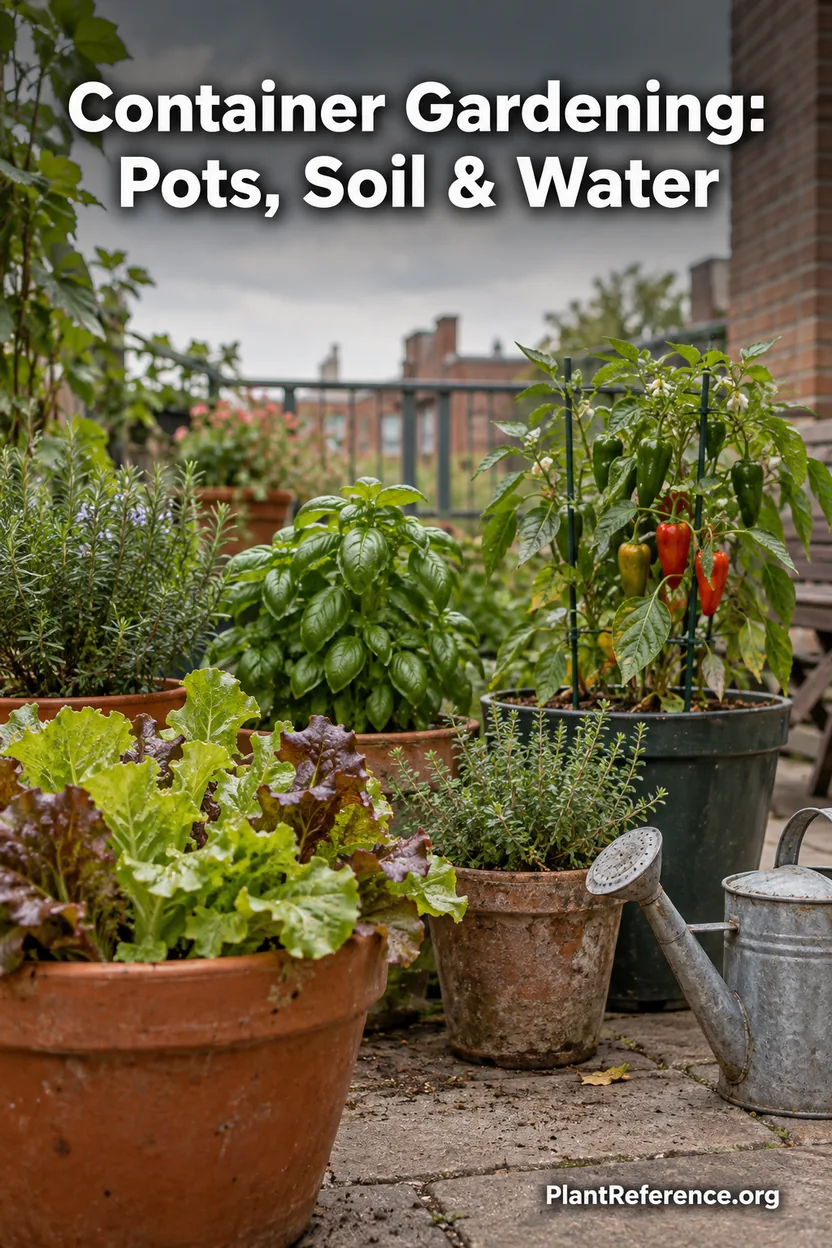
Container Gardening: Pots, Soil, Water & Yields
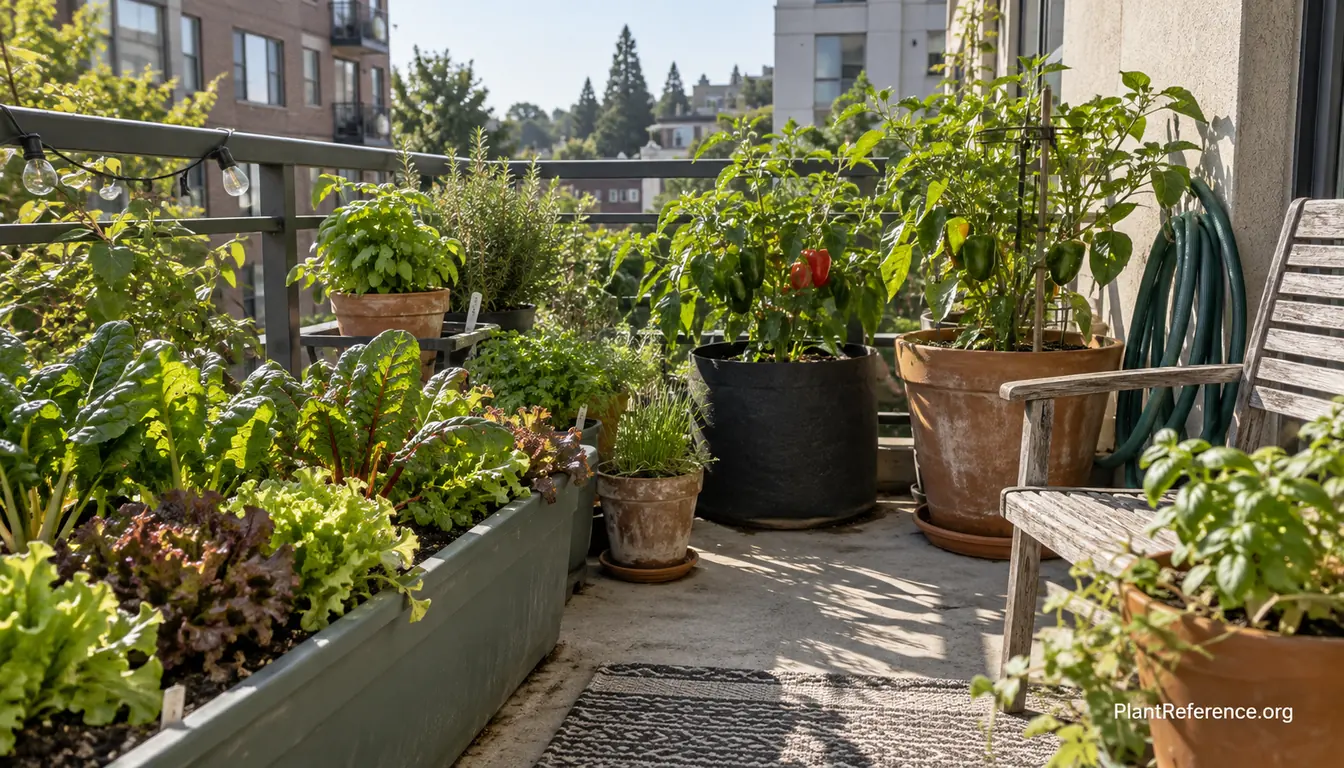
— Image © PlantReference.org 2026
Container gardening is a way to grow food and flowers in small spaces, but a pot is more than a portable patch of soil. Its walls control heat and evaporation; its depth controls the air and water around roots; and its limited volume makes every missed watering more noticeable. Start with a pot large enough for the mature plant, a uniform potting mix, clear drainage holes, and a place with the light your crop actually needs.
Start With the Space You Have
Before buying a plant, watch your growing space for a day. Count direct-sun hours in the spot where a pot will stand, not the hours listed for the whole balcony. A neighboring wall can turn a supposed sunny patio into a half-day site. Fruiting crops such as peppers usually need at least six hours of direct light; many leafy greens tolerate less, especially when afternoons are hot. A plant cannot compensate for a dim site just because its pot is expensive.
Then mark the areas that dry fastest. A corner against warm masonry heats differently from a shaded floor, and a railing exposes leaves and pots to wind. Wind raises transpiration, the water plants lose through their leaves, while a dark wall can heat the root ball. Place large containers where you can reach them with a watering can and where runoff will not damage a neighbor's space. If the site is exposed, the practical fixes in Protecting Container Tomatoes on Windy Balconies and Exposed Patios also apply to many other tall container crops.
Start smaller than your ambition. Two or three well-sized pots are easier to learn from than a dozen tiny ones that require urgent watering every afternoon. Sketch where each pot will go, where you will store mix, and how you will carry water. Put tall plants to the north of short ones in the Northern Hemisphere so they do not steal midday light. Leave room to turn a container and inspect the back of its leaves.
A simple first layout
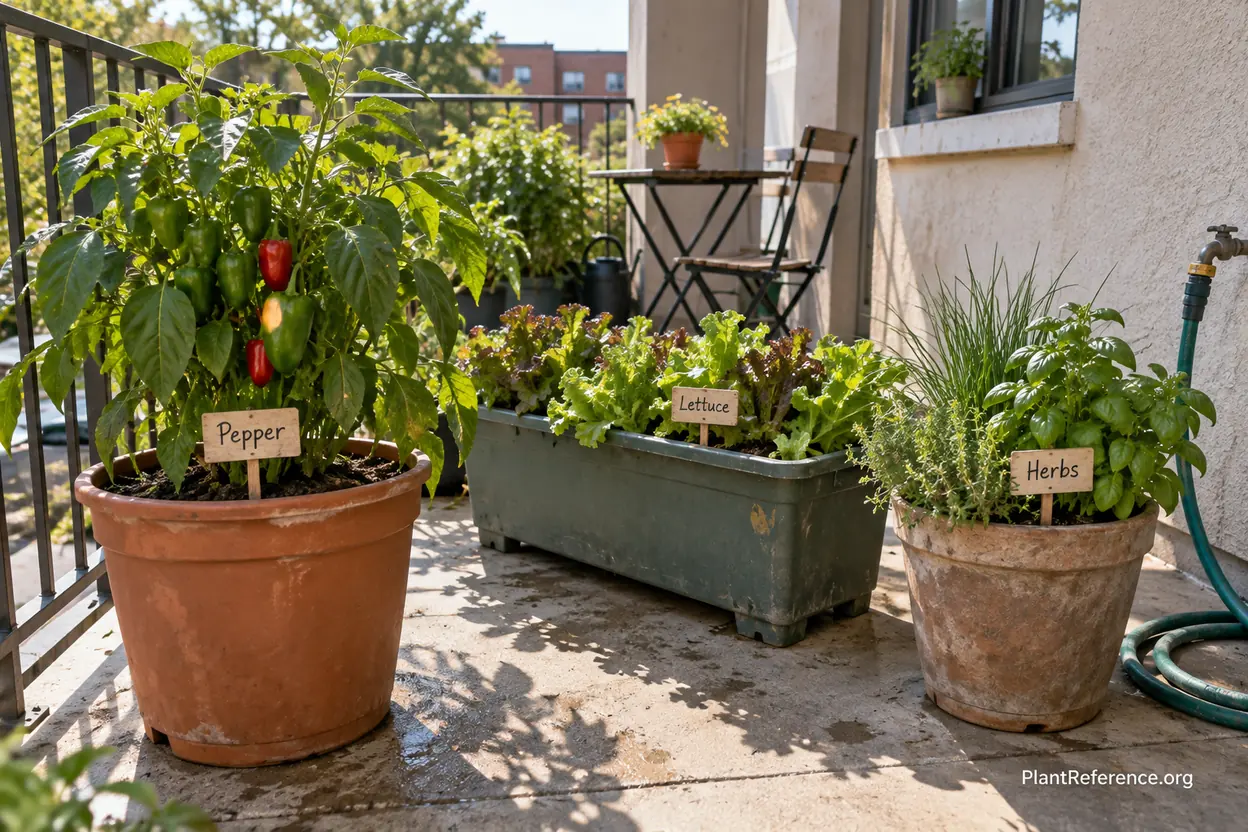
For a compact edible garden, use one deep pot for a fruiting crop, one shallow but wide pot for greens, and one pot for herbs with similar moisture needs. This gives you three different root systems to observe without crowding the floor. Keep each pot on feet or a stand if the surface traps drainage water, and protect wood decking with a tray that you can empty. A saucer is useful for catching runoff; standing water left there for days is not.
Choose Pots for Water, Heat, and Weight
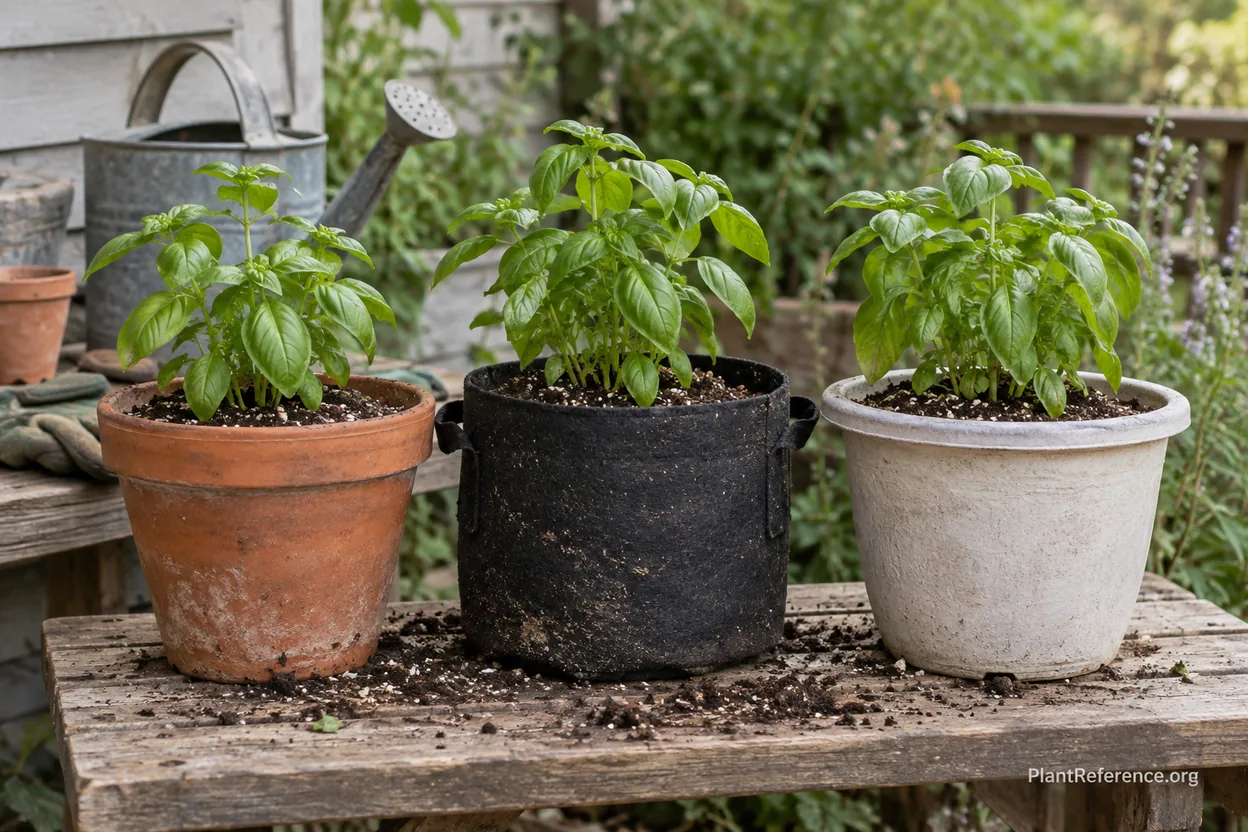
The right container material depends on how quickly your site dries and how often you can check it. Unglazed terracotta loses water through its walls; that evaporation can cool roots in heat, but it also shortens the interval between waterings. Plastic and glazed ceramic hold moisture longer because their walls are effectively impermeable. Fabric bags exchange air across the whole sidewall and can discourage circling roots, yet they dry quickly on a windy deck. None of these materials makes a poor potting mix safe.
Material | Water loss through wall | Root-zone behavior | Best practical fit |
|---|---|---|---|
Unglazed terracotta | High | Evaporative cooling; fast drying | Attentive watering in warm sites |
Plastic or resin | Low | Retains water; dark walls can heat | Lightweight, affordable gardens |
Glazed ceramic | Low | More thermal mass and weight | Stable sheltered patios |
Fabric | Very high | Air exposure at wall; rapid drying | Large annuals with frequent checks |
Wood | Moderate | Insulates somewhat; eventually ages | Broad planters on supported ground |
Check for several open drainage holes before thinking about style. A decorative outer pot without an outlet can hold a nursery pot, but lift the inner pot out to water and drain it. A single narrow hole that clogs with fine mix is a poor safeguard. Set the pot where you can see water leave its base; otherwise, it is hard to distinguish a thorough watering from a wet surface over a dry core. If you are weighing fabric against rigid containers for tomatoes, Best Grow Bags for Tomatoes: Fabric vs Plastic Container Comparison offers crop-specific comparisons.
Color matters as much as material. In full sun, dark thin plastic can run much hotter than the air; roots close to the wall may suffer before leaves show obvious damage. A light-colored outer sleeve, afternoon shade on the pot rather than the foliage, or a second empty pot around the first can reduce heat exposure. In cold weather, every pot loses the ground's insulating buffer. Perennial roots may need a protected position even when the top growth is hardy outdoors.
The balcony load question
Water makes a large planter much heavier than its empty label suggests. For a rough estimate, multiply the pot's internal volume by the saturated bulk density of its mix, then add the vessel, plant, and any water reservoir. The research report gives a broad saturated-media range of 800–1,200 kg per cubic meter (50–75 lb per cubic foot). A 20-gallon (76 L) container can therefore hold a substantial load before counting the pot itself. This is an estimate, not a structural rating for your balcony.
Ask building management or a qualified structural professional for the actual permitted load and placement, especially when grouping large pots. Keep heavy planters near structural support as directed by that advice; do not treat a generic residential live-load number as permission to build a dense garden anywhere. Avoid a waterlogged false bottom filled with loose objects: it complicates drainage and does not make an undersized root zone larger. Use genuinely lighter vessels and correctly sized pots instead.
Build a Potting Mix That Roots Can Breathe In
Garden soil behaves differently after it is confined. In the ground, water can move into the surrounding soil. In a pot, drainage stops at the bottom opening while capillary forces retain a wet layer above it, often called a perched water table. Fine mineral soil compresses into small pores and leaves less room for oxygen around roots. A plant with constantly wet roots can wilt because damaged roots cannot supply its leaves, even though the pot feels heavy.
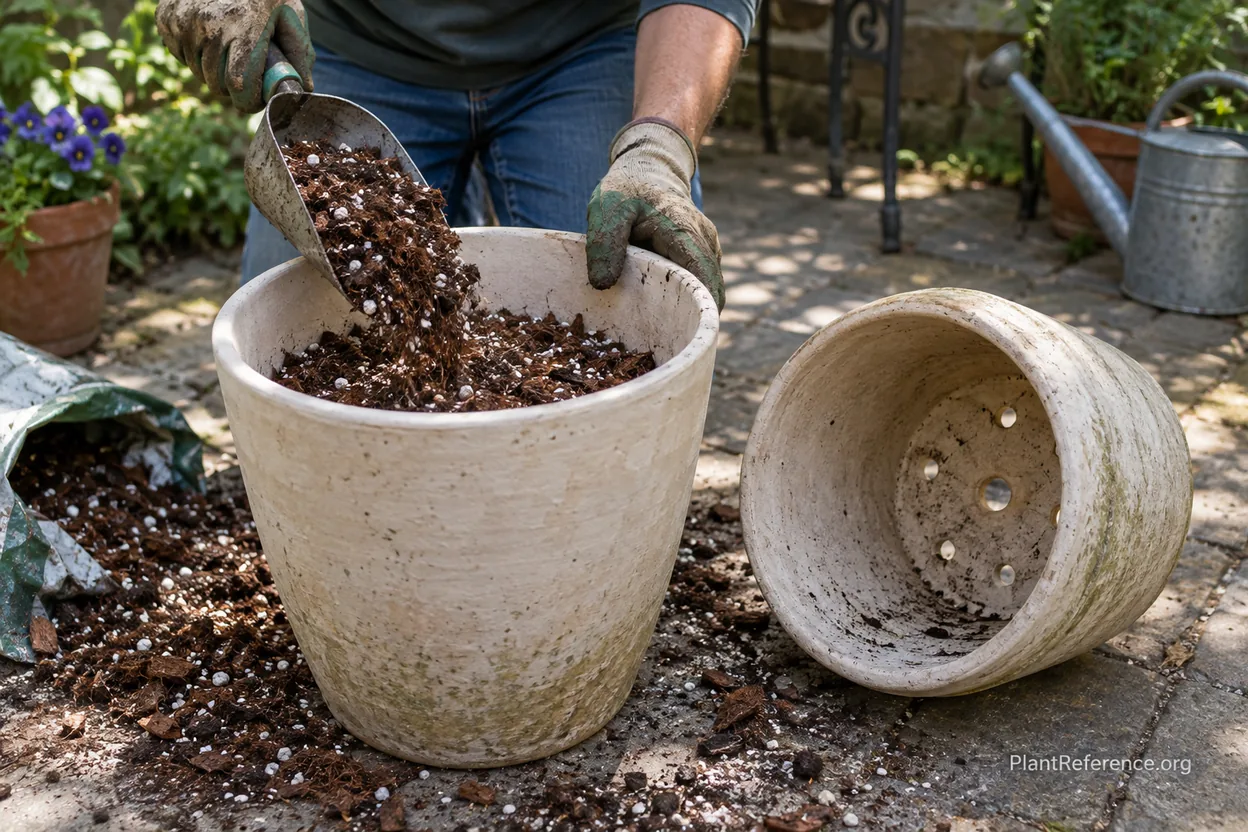
Use a potting mix designed to hold moisture and maintain air spaces. Coir or peat provides water-holding capacity; bark fines and perlite help preserve larger pores; compost or worm castings contribute some nutrients and biological activity. Different packaged mixes combine these ingredients differently, so use the bag as a starting point rather than a promise. When you squeeze a damp handful, it should hold together loosely and then break apart, not form a dense mud ball.
Do not put gravel under the mix in hopes of improving drainage. Water stays in the finer material above the gravel until that layer is saturated enough to cross the texture boundary. The gravel shortens the depth available to roots and can lift the wet zone closer to them. Fill the pot with a consistent mix from bottom to top, leaving about 1 inch (2.5 cm) of space below the rim for watering. Ensure holes remain open. Raised-bed soil has different constraints; Best Soil Mix for Raised Beds: Creating the Perfect Growing Medium is useful for comparing those systems, but a raised-bed recipe is not automatically a potting recipe.
Refresh rather than endlessly top off
Organic components break down with time. A mix that was springy in April may be fine and compact by the next season. For annual crops, empty the container after harvest, remove old roots, assess the mix, and replace a substantial portion if it has lost structure. For perennials, step up only one or two pot sizes when roots fill the available volume. A small plant in a much larger wet pot may struggle because the unused mix stays damp too long. The warning signs described in Container Too Small? How to Save Root-Bound Tomato Plants are broadly useful even outside tomato growing.
Match Container Volume to the Crop
Pot size is a root-volume decision, not a styling decision. A plant in too little mix runs out of both water and nutrient reserve rapidly. Width matters for spreading roots and stability, while depth matters for long taproots and the balance of air and water at the bottom. Use the mature crop as your guide. A seedling may look lonely in a properly sized pot for a few weeks, but it will grow into the space.
Crop | Starting container guidance | Why the space matters |
|---|---|---|
Lettuce or spinach | 1–2 gallons (4–8 L), about 6–8 inches (15–20 cm) deep | Shallow roots and repeat leaf harvests |
Common culinary herbs | 1–2 gallons (4–8 L), about 6–8 inches (15–20 cm) across | Enough reserve for repeated clipping |
Pepper or eggplant | 3–5 gallons (11–19 L) per plant | Fruit set needs steady water |
Trellised cucumber | At least 5 gallons (19 L) | Large leaves and rapid transpiration |
Standard carrots | About 12 inches (30 cm) deep | Roots need unobstructed depth |
Potatoes | 10–30 gallons (38–114 L) | Room for tubers and staged filling |
Large indeterminate tomato | Roughly 15–25 gallons (57–95 L) | Long season and extensive roots |
These are working ranges, not guarantees of yield. A larger vessel buffers against rapid drying, but it cannot make up for shade, soggy mix, or a crop that has no support. A trellised cucumber can use vertical space efficiently; the trellis must be anchored to carry the mature vine and fruit, especially in wind. Tomatoes have their own extensive container guidance, including 6 Best Potting Soils for Container Tomatoes (Tested for Drainage and Nutrients).
Do not squeeze several large crops into one small pot because the leaves fit on planting day. Pepper, eggplant, and most full-size tomatoes usually deserve separate containers. A wide shallow pot, by contrast, can hold several lettuce plants if you leave enough airflow and harvest outer leaves regularly. Herbs with similar water demand can share a generous container, but vigorous mint is better on its own. Plant spacing is about mature foliage and root demand, not how many nursery plugs will physically fit.
The volume table also helps you budget. One 5-gallon (19 L) pot uses more mix than five tiny pots, but a single productive pepper is easier to water well than five cramped peppers. Spend first on enough root space and sound mix. Decorative upgrades can wait until you know what survives in your conditions.
Water and Feed Without Guesswork
Watering on a fixed calendar ignores weather, pot material, plant size, and root growth. Instead, check the mix 1–2 inches (2.5–5 cm) below the surface and feel the pot's weight. When that upper layer begins to dry for a typical vegetable crop, water slowly until the entire profile is moistened and some water exits the holes. Empty a catch tray after drainage. A hot, windy day may require another check by evening; a cool cloudy stretch may extend the interval by days.
If water races down the side and out before the center becomes moist, the mix may have dried into a hydrophobic block or developed channels. Rewet slowly in repeated passes, or stand the inner pot in shallow water briefly and then let it drain fully. If the top remains wet for days and the plant wilts, check blocked holes, compacted mix, and damaged roots before adding more water. The visual distinctions in Overwatering vs Underwatering Container Tomatoes: How to Tell the Difference apply to many container crops.
Container nutrients leave with drainage water. The research report describes leaching as a normal cost of keeping a pot well watered. Start with the fertilizer already present in your purchased mix, if any, and follow its label before adding more. A measured slow-release feed can supply a baseline; growing fruiting crops may benefit from diluted liquid feed during peak growth. Read the product label for dose and frequency rather than assuming more food means more harvest. Too much fertilizer can burn roots and leave a white crust at the rim.
For annual vegetables, inspect growth every week. Pale new leaves, stalled growth, and weak fruiting can signal nutrition problems, but they can also follow root saturation or insufficient light. Feed only after checking those conditions. The nutrient diagnosis in Yellow Leaves on Container Tomatoes: Diagnosing and Fixing Nutrient Deficiencies is a useful example of why one symptom rarely has a single cause.
Flush accumulated fertilizer salts when a white mineral crust develops or the pot has received repeated feeding: run plain water through the mix and let it drain away where runoff is permitted. The research report suggests a flush every 4–6 weeks in heavily fertilized containers, using water up to about twice the container volume. That is a maintenance tactic, not a substitute for using the right fertilizer dose. Avoid letting fertilizer runoff reach storm drains.
Plan the Season and Protect Roots
Plan planting by the crop's temperature needs, not only a calendar date. Cool-season greens can start when conditions are mild; warm-season peppers and cucumbers need warm soil and nights. Start seeds indoors if your season is short, but harden seedlings off gradually before setting them into wind and full sun. A container warms faster than garden ground in spring, yet it also cools quickly during a late cold snap.
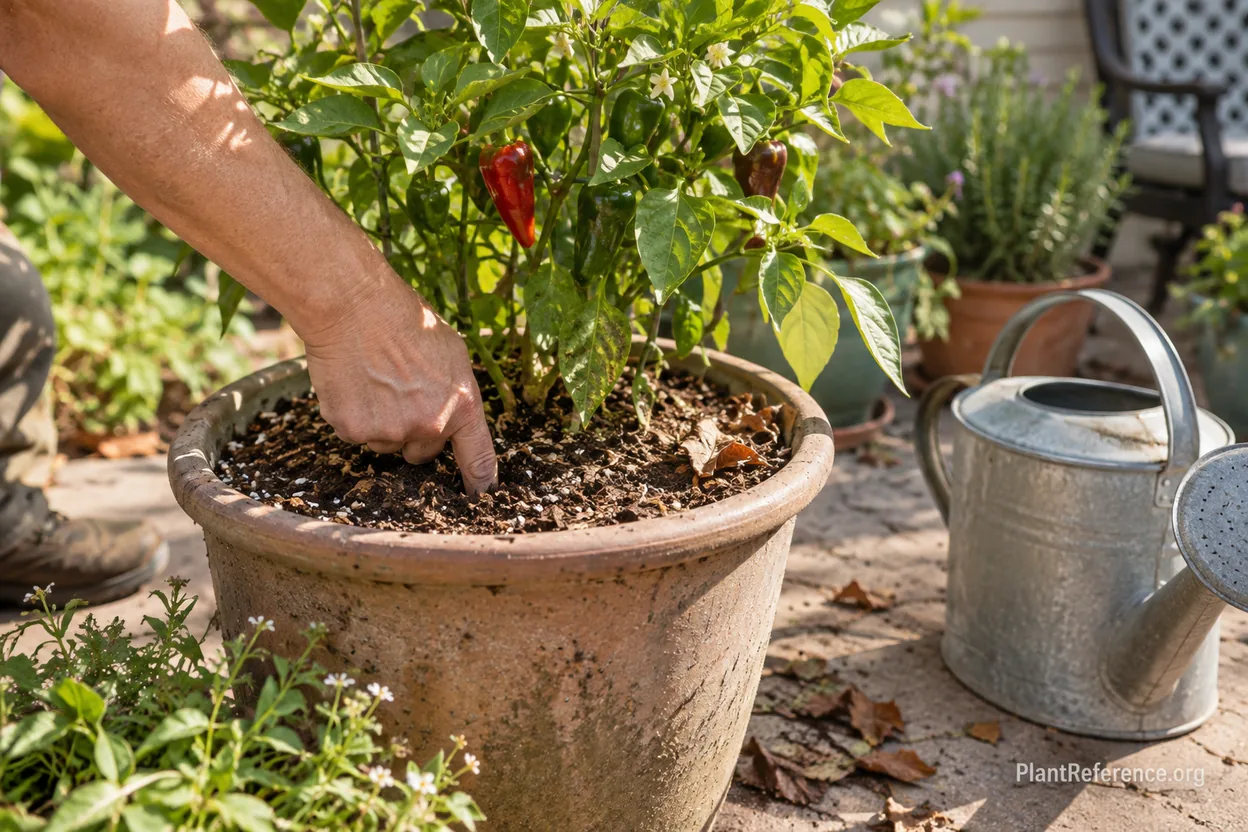
In midsummer, protect the root zone first. Move a portable pot out of reflected afternoon heat or shade the vessel while preserving the crop's light. Add a 1–2 inch (2.5–5 cm) layer of clean organic mulch on a large pot, keeping it away from the stem. Grouping containers can modestly reduce wind exposure, but leave leaf space for airflow. A self-watering reservoir may help when you cannot check every afternoon, provided the system is kept clean and the crop's roots are not permanently submerged.
Autumn is for choosing what to keep. Harvest annuals, compost healthy plant debris, and wash containers before storing them. A perennial in a pot faces colder roots than the same plant in the ground. The report's cautious rule is to choose a perennial rated roughly two hardiness zones colder than your own if it must remain outdoors in a container. Move sensitive pots to a protected but suitable space, cluster them, or insulate the sides; still check moisture in winter when the mix is not frozen. No plant benefits from sitting bone dry for months.
Set aside time for one end-of-season review. Note which containers dried too fast, which crops outgrew their pots, and where wind caused damage. Those observations are more useful than copying someone else's watering schedule. If a heavy crop blew over, read Protecting Container Tomatoes on Windy Balconies and Exposed Patios before rebuilding support next year. If a small pot produced little despite good light, root volume may be the limiting factor.
Diagnose Problems Before Changing Everything
Container plants respond quickly to stress, and that speed can tempt you to make several changes at once. Resist it. Check four things in order: moisture in the root zone, drainage from the base, light over the day, and recent temperature extremes. Then inspect leaves, stems, and the surface of the mix. Change one likely cause and watch the next few days of new growth.
What you see | Check first | Practical next step |
|---|---|---|
Wilt with dry, light pot | Moisture below surface | Water slowly until the mix rewets |
Wilt with heavy, wet pot | Drainage and root condition | Clear holes; assess whether mix is compacted |
White crust on rim | Fertilizer history and runoff | Reduce dose and flush with plain water |
Scorched edge near hot wall | Pot-wall heat and reflected sun | Shade or sleeve the vessel |
Rapid drying and little growth | Root crowding | Move up one or two pot sizes |
Weak, leaning stems | Daily light and wind | Improve light and secure support |
The same leaf can signal different failures. Yellowing may come from a nutrient shortage, roots that cannot breathe, or ordinary aging of lower leaves. Blossom-end rot on fruit is often linked to irregular water delivery rather than a simple lack of calcium in the bag. The tomato-specific explanation in Why Your Container Tomatoes Have Blossom End Rot (And How to Fix It Fast) shows why stable moisture beats a hurried additive.
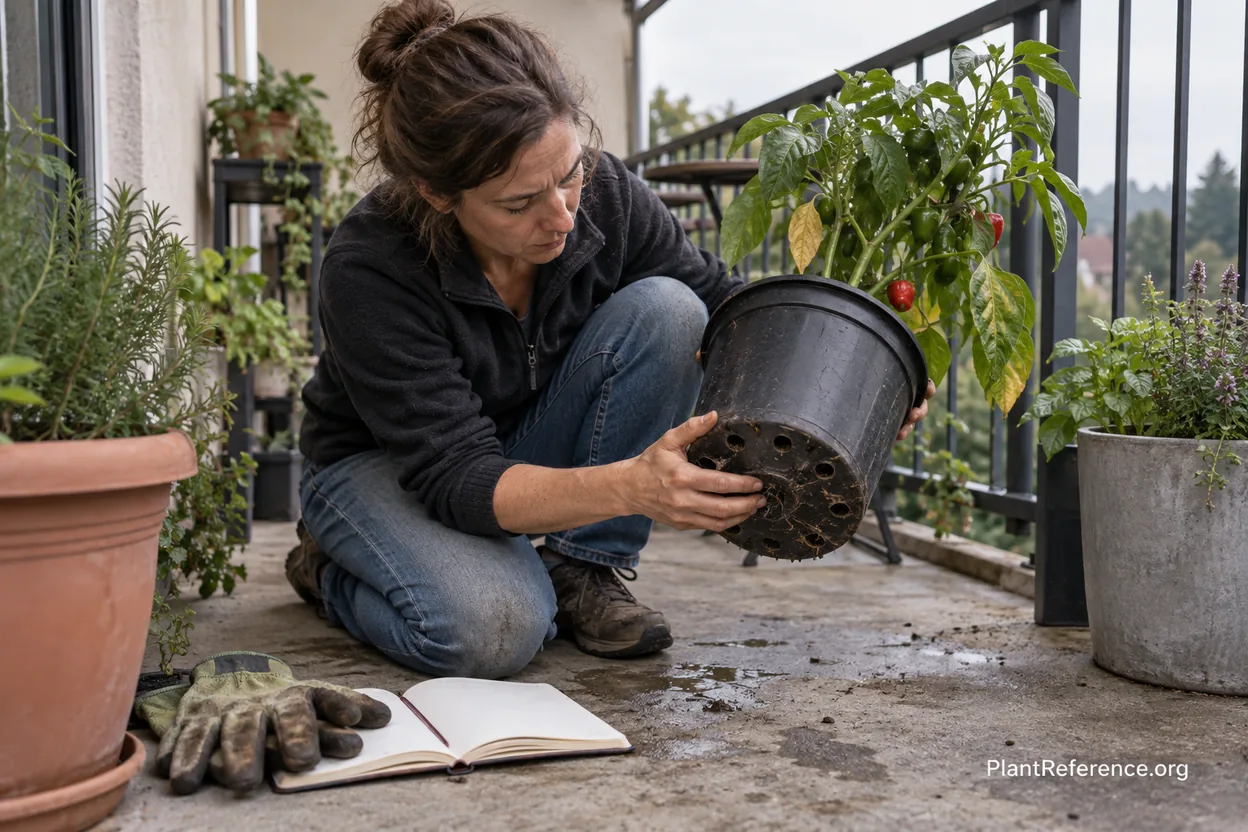
When roots circle densely at the wall or push through holes, repot at the start of active growth if possible. Loosen the outer root layer and move into a pot only modestly larger. If the mix is severely compacted, replace it rather than drilling extra holes in a decorative shell and hoping the core improves. If repeated overwatering has damaged roots, cut back the watering frequency only after improving aeration. The principle is simple: roots need both water and oxygen in the same container.
A good small-space garden is not a miniature field. It is a set of manageable root environments you can observe and adjust. Begin with a few pots that fit your site, record what happens after watering and heat, and expand only when you know how each crop behaves. That habit makes the next season easier, even if this one teaches you through a wilted leaf or two.
Frequently Asked Questions
Reading about plants and recognising them are different skills. These three build the second.
- Daily PlantIdentify the day’s mystery plant from a close-up photograph.
- Keyed OutWork a dichotomous key, lead by lead, to name a hidden specimen.
- Name That PlantName a specimen from botanical clues dealt hardest first.
Free to play, no account needed
Tagged with
Sarah earned her doctorate in plant biology and spent time working in botanical garden education before transitioning to freelance writing and consulting. Now based in Portland, Oregon, she teaches plant identification workshops at local community centers and maintains a modest collection of over 60 houseplants in her small apartment. Sarah specializes in helping beginners understand plant science without the jargon—her approach focuses on practical observation over theory. She's killed her fair share of fiddle leaf figs and finally cracked the code on keeping them alive.