Container Plants Drying Out Fast? 7 Ways to Slow It Down
Pets & Toxicity
Recorded toxicity for plants linked in this guide. An unknown status is not a safety assessment.
Toxic to pets: tomatoDetailsHide
Solanum lycopersicum — Toxicity Warning
Toxic to pets and humansView Solanum lycopersicum plant profile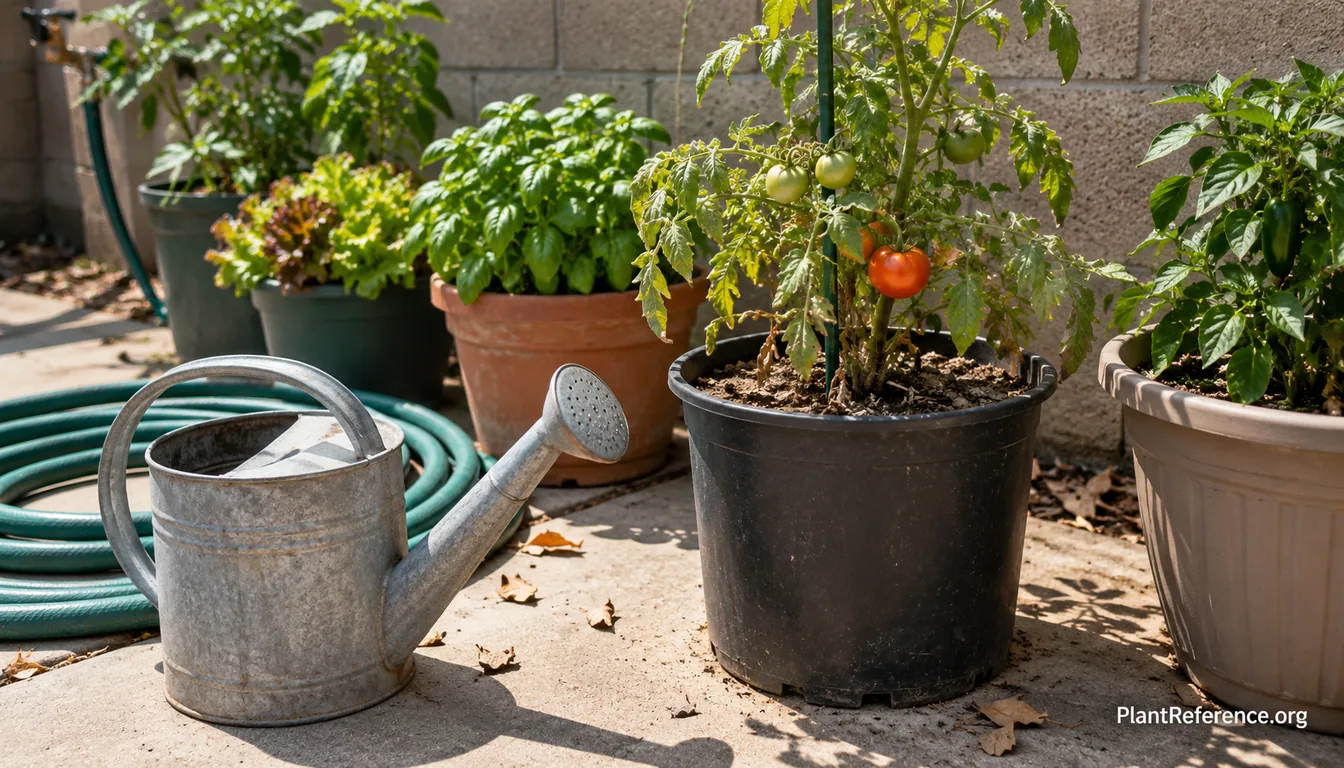
— Image © PlantReference.org 2026
If your container plants are drying out by lunchtime, you are not doing anything wrong. Small pots behave differently from garden beds, and the fix is mostly about slowing evaporation, not watering more. I've kept vegetables alive in pots through brutal Texas summers on a budget, and these seven changes did the most work for the least money.
Why Container Plants Dry Out So Fast
A tomato 🌿Solanum lycopersicum (so-LAY-num lie-koh-PER-sih-kum) in the ground reaches into a huge reservoir of soil moisture. The same plant in a pot gets whatever water fits inside the pot, and that is not much. A 5-gallon (19 L) container holds only a little over a gallon (4 L) of usable water, while a mature plant in full sun can use that much on a hot day.
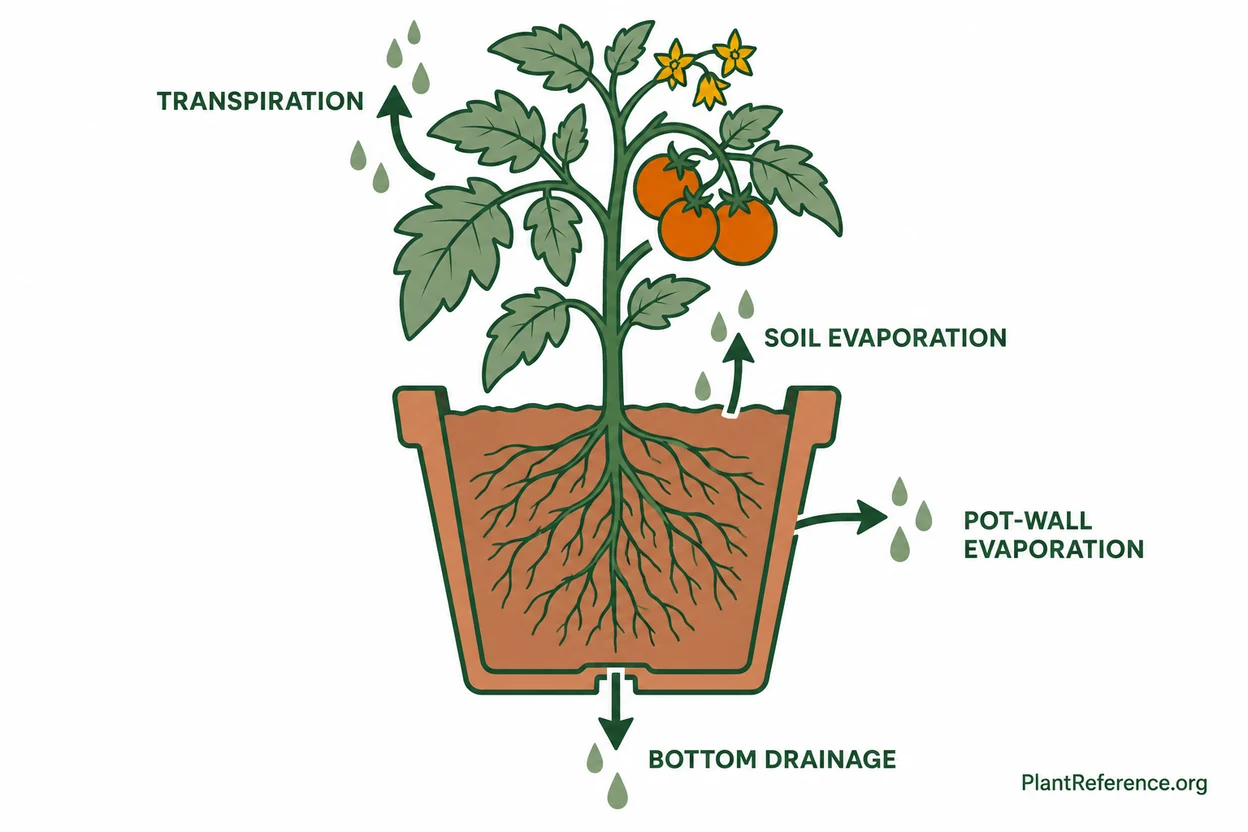
Three things drain the pot at once. The plant pulls water up and releases it through its leaves, the surface evaporates, and in porous pots the sides evaporate too. Gravity also pulls water out the bottom every time you irrigate. Unlike garden soil, a container has no deeper layer to pull moisture up from, so it swings from soaked to bone dry quickly.
Heat makes it worse. When the air passes 90°F (32°C), soil in a dark plastic pot can reach 110°F (43°C) or more, and roots stall in that heat. If your plants wilt in the afternoon even though the soil is damp, read Protecting Container Tomatoes on Windy Balconies and Exposed Patios for the wind side of this problem.
Fix 1: Choose the Right Vessel
The pot itself sets how fast water disappears. Unglazed terra cotta breathes, which is great for roots but means water evaporates through the walls, so it dries quickly. Plastic and glazed ceramic hold water longer because nothing escapes through the sides. Fabric grow bags are the most breathable of all and dry fastest, though they keep roots cooler in summer.
Container Material | Water Loss Through Walls | Heat Behavior | Best For |
|---|---|---|---|
Terra cotta | High | Evaporation cools roots | Herbs and drought-tolerant plants |
Plastic (HDPE) | None | Dark colors heat up fast | Thirsty vegetables, low-maintenance setups |
Glazed ceramic | None | Holds heat longer | Decorative patio plants |
Fabric grow bag | Very high | Breathable, stays cooler | Roots that need air pruning |
On a hot, dry balcony, a light-colored plastic or glazed pot usually wins for water saving. If you love terra cotta, line the inside with a plastic bag with holes punched in the bottom, or use it as the outer pot in a pot-in-pot setup (Fix 5). Size matters too. Bigger volume buffers everything, so read Container Size Matters: The Ultimate Guide to Choosing the Perfect Pot for Tomatoes before you buy another undersized pot. For fabric bag comparisons, see Best Grow Bags for Tomatoes: Fabric vs Plastic Container Comparison.
Fix 2: Mulch the Surface
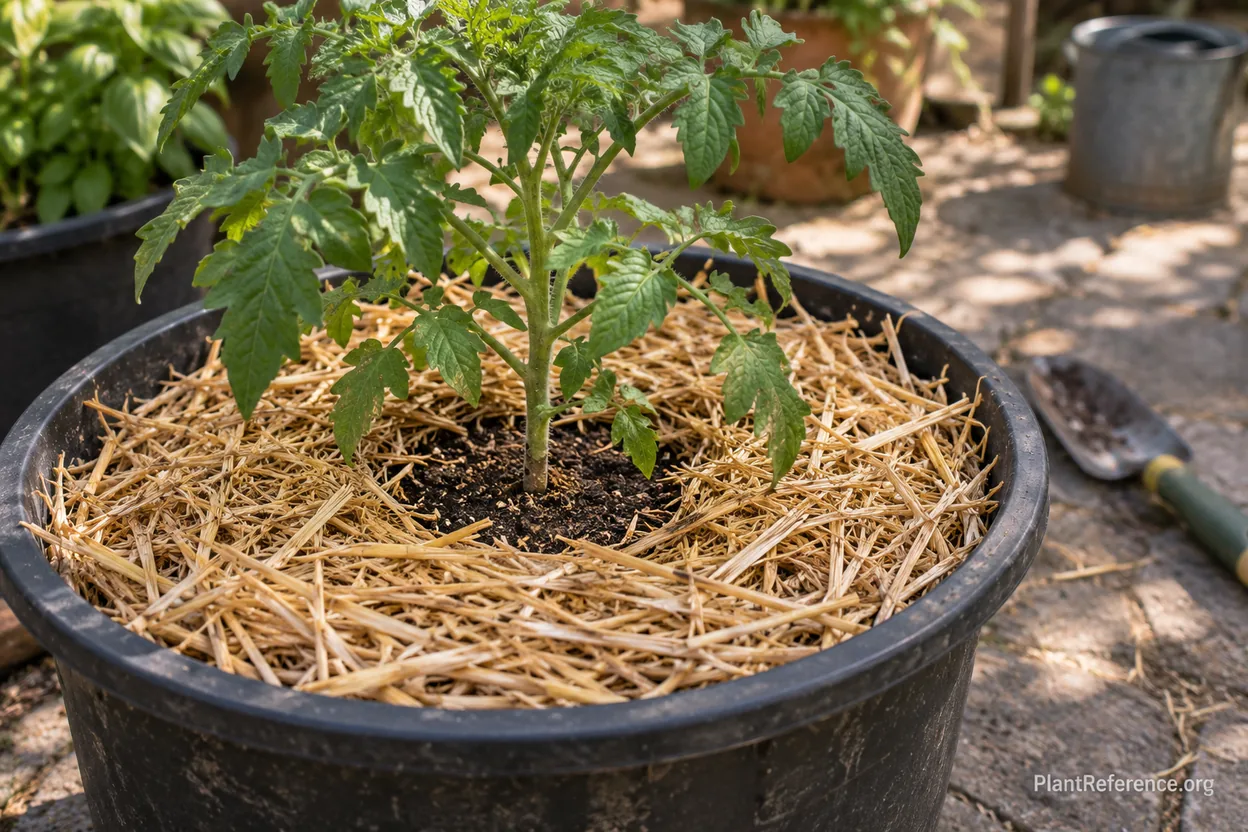
Mulch is the cheapest fix on the list. A 2-inch (5 cm) layer of straw, wood chips, or shredded newspaper cuts surface evaporation and shields the upper roots from direct sun. Keep it a finger's width away from the stems so they stay dry.
You do not need to buy fancy mulch. Shredded cardboard, dry grass clippings, or leaf mold from the yard all work. Refresh the layer when it thins out. A mulched pot can go noticeably longer between waterings than a bare one, especially in wind.
Fix 3: Group Your Pots
Pots lined up in a tight cluster shade each other's sides and slow air movement between them, which reduces evaporation from the walls. Put the tallest plants on the sunny or windy side and the smaller ones behind them so they get some shade.
Group by water need too. Basil Ocimum basilicum (OSS-ih-mum bass-IL-ih-kum) and lettuce Lactuca sativa (lak-TOO-kuh sah-TY-vuh) like steady moisture, while rosemary and thyme want to dry out. Mixing them means someone is always unhappy. If you grow herbs, Growing Herbs in Containers: Pots, Soil & Harvest shows how to sort them.
Fix 4: Convert to Self-Watering
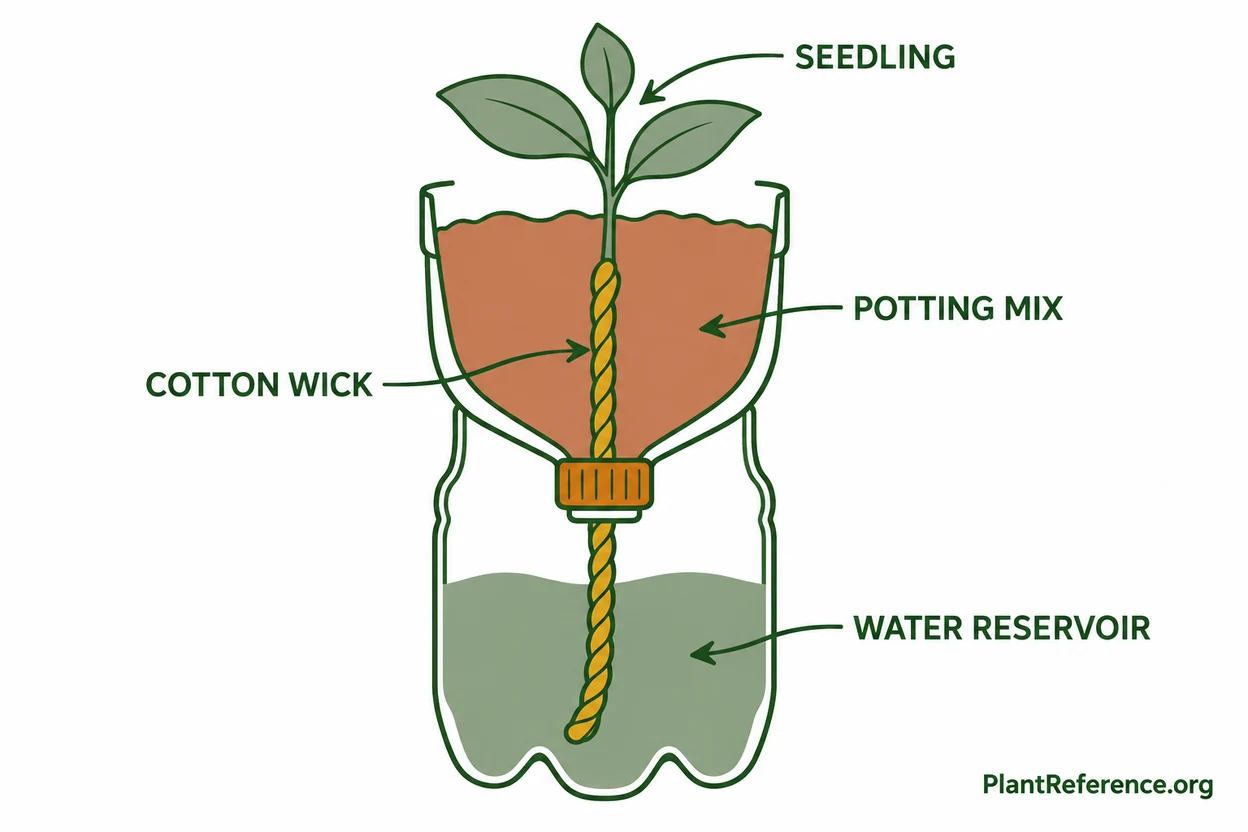
A self-watering planter holds a reservoir below the soil and wicks water upward as the plant needs it. That gives you days instead of hours between refills. If you're on a budget, you can build one yourself.
Cut a 2-liter bottle in half and poke small holes in the cap
Flip the top half upside down into the bottom half as a reservoir
Thread a cotton rope through the cap as a wick and fill the top with potting mix
Fill the lower half with water and let the wick draw it up
For ready-made options, see 7 Best Self-Watering Planters for Tomatoes in 2026 (Tested and Reviewed). Consistent moisture also protects fruit, which is why self-watering setups show up in Watering Container Tomatoes: The Complete Guide to Preventing Common Problems.
Fix 5: Try Pot-in-Pot
Pot-in-pot means setting your growing pot inside a slightly larger one and filling the gap with mulch, gravel, or damp soil. The outer pot blocks sun and wind from the walls of the inner pot, so the root zone stays cooler and loses less water. It works especially well with terra cotta and dark plastic.
Use the cheapest outer pot you can find. Any container that leaves about an inch (2.5 cm) of gap around the inner pot will do, and you can pack the gap with straw or shredded paper. Lift the inner pot once a month to make sure roots are not escaping through the drainage holes.
Fix 6: Use Saucers Carefully
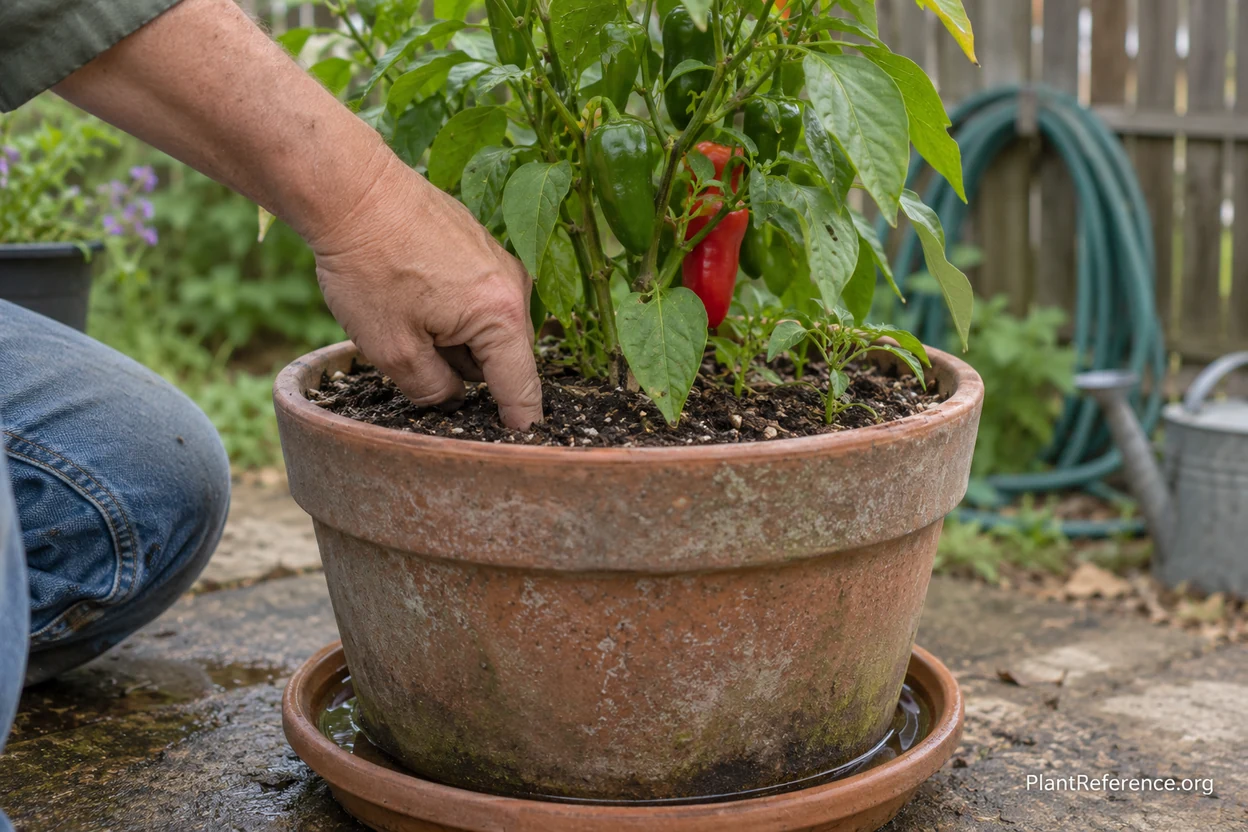
A saucer catches drainage and lets the pot drink it back up, which helps during a heatwave. Leaving water in the saucer all the time, though, can keep the bottom of the mix soggy and push roots toward rot. A good rule is to fill the saucer in hot weather, let the pot drink for an hour, then empty it.
In cooler weather, skip the saucer or keep it dry. If you can't tell whether you are overwatering or underwatering, Overwatering vs Underwatering Container Tomatoes: How to Tell the Difference walks through the signs.
Fix 7: Water at the Right Time
Timing matters as much as amount. Water in the early morning so plants are hydrated before the sun peaks, then check again in the evening. In extreme heat, containers may need water twice a day, and that's normal for small pots even with every fix above.
Check first with your finger. Push it 2 inches (5 cm) into the soil, and water if it feels dry. Water slowly until liquid drains from the bottom, then stop. If water runs straight through without soaking in, the mix may have become hydrophobic. Set the pot in a tub of water for 20 minutes to rewet it from below. Coconut coir mixes rewet more easily than peat-heavy ones, so consider that when you repot with Container Tomato Soil: Creating the Perfect Growing Mix for Maximum Yields.
If roots are packed and circling, the plant may simply have outgrown the pot. See Container Too Small? How to Save Root-Bound Tomato Plants for how to tell and what to do.
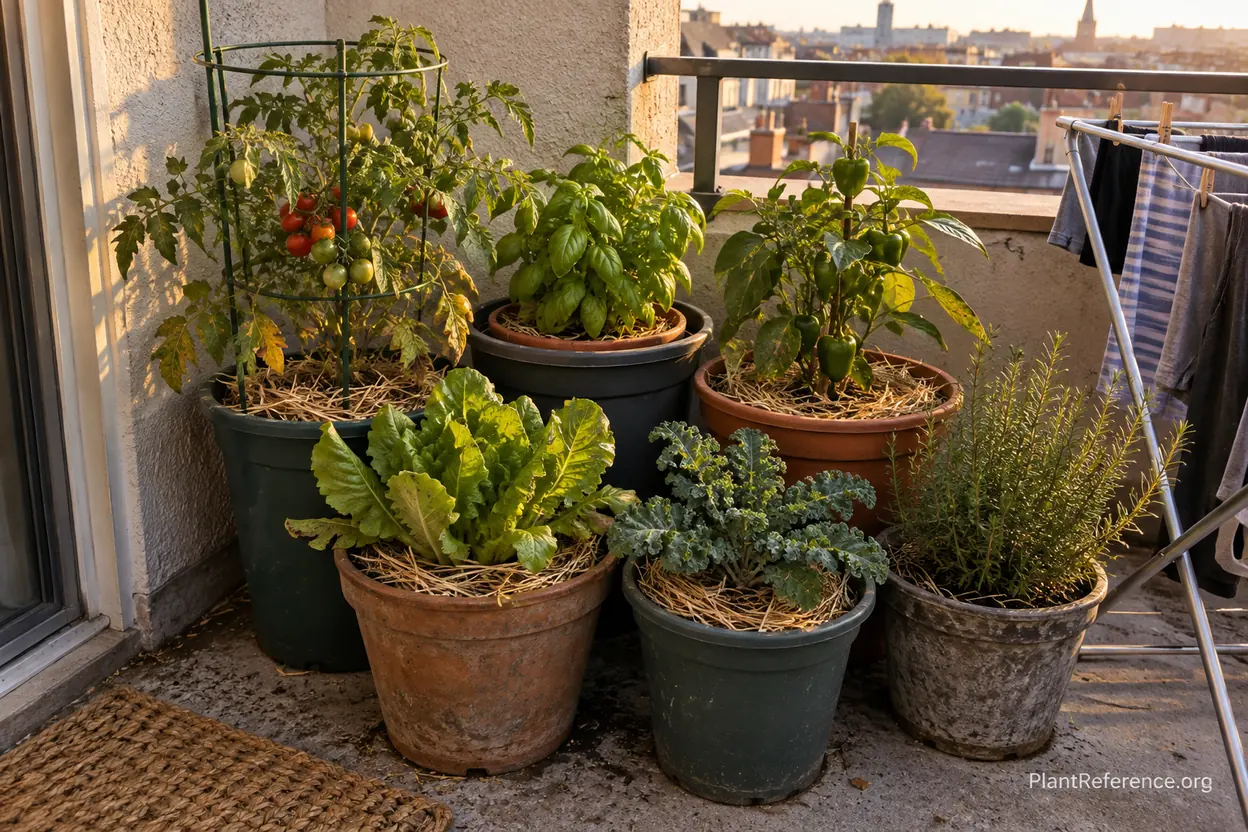
Small spaces make all of this matter more. For balcony-scale setups, Growing Tomatoes in Small Spaces: Apartment, Balcony, and Patio Solutions and the broader Container Gardening: Pots, Soil, Water & Yields cover layout and yield.
Frequently Asked Questions
Reading about plants and recognising them are different skills. These three build the second.
- Daily PlantIdentify the day’s mystery plant from a close-up photograph.
- Keyed OutWork a dichotomous key, lead by lead, to name a hidden specimen.
- Name That PlantName a specimen from botanical clues dealt hardest first.
Free to play, no account needed
Tagged with
Carlos grew up helping his abuelos tend their backyard garden in San Antonio, Texas, but didn't get serious about growing his own food until he bought his first house in Austin. He works as an HVAC technician during the day and gardens in the early mornings and evenings. Carlos specializes in heat-tolerant vegetables and container growing—essential skills for Texas summers and his south-facing driveway that gets intense sun. He's learned through plenty of failures (multiple dead fig trees, countless bolted lettuce crops) and now helps neighbors troubleshoot their own gardens. His YouTube channel documenting his container tomato experiments has a small but dedicated following. Carlos is passionate about growing food on a budget, often sourcing free containers and building his own compost.