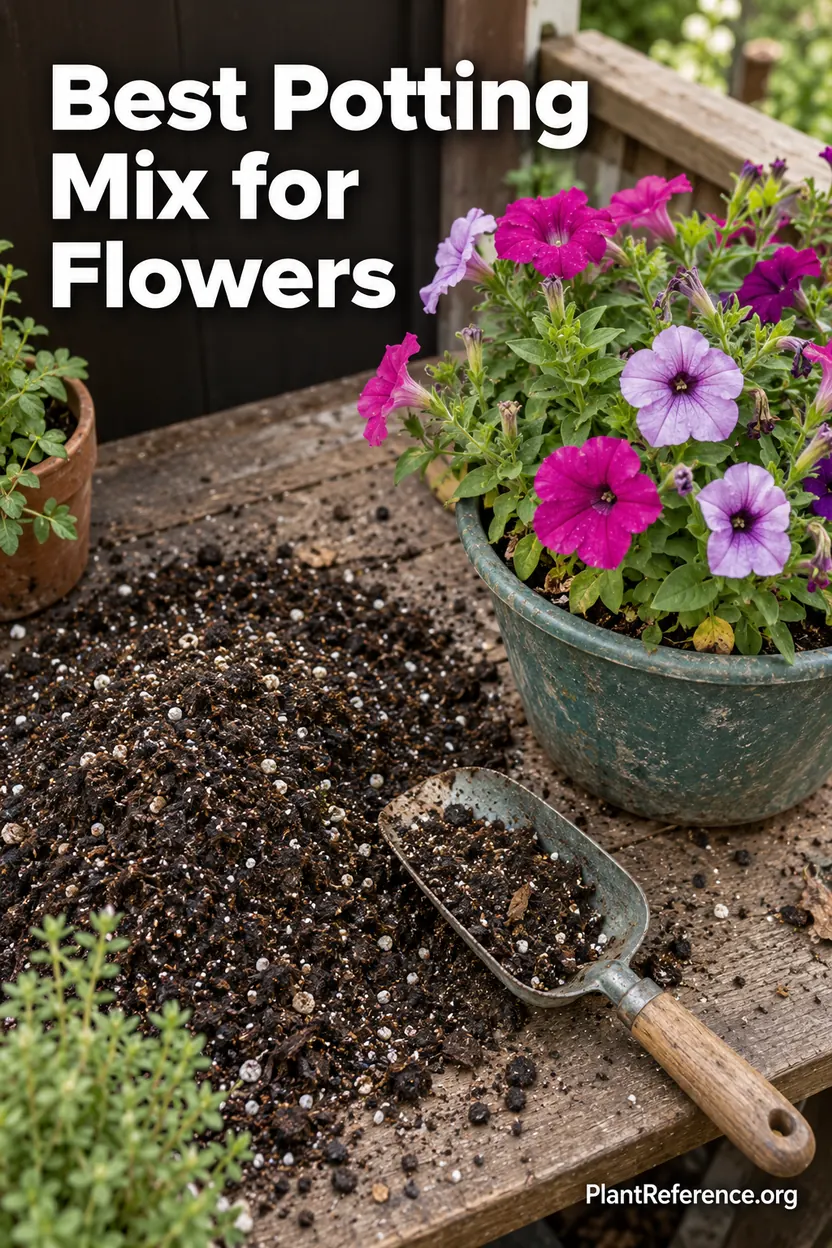
Best Potting Mix for Flowers: Annual Container Choices
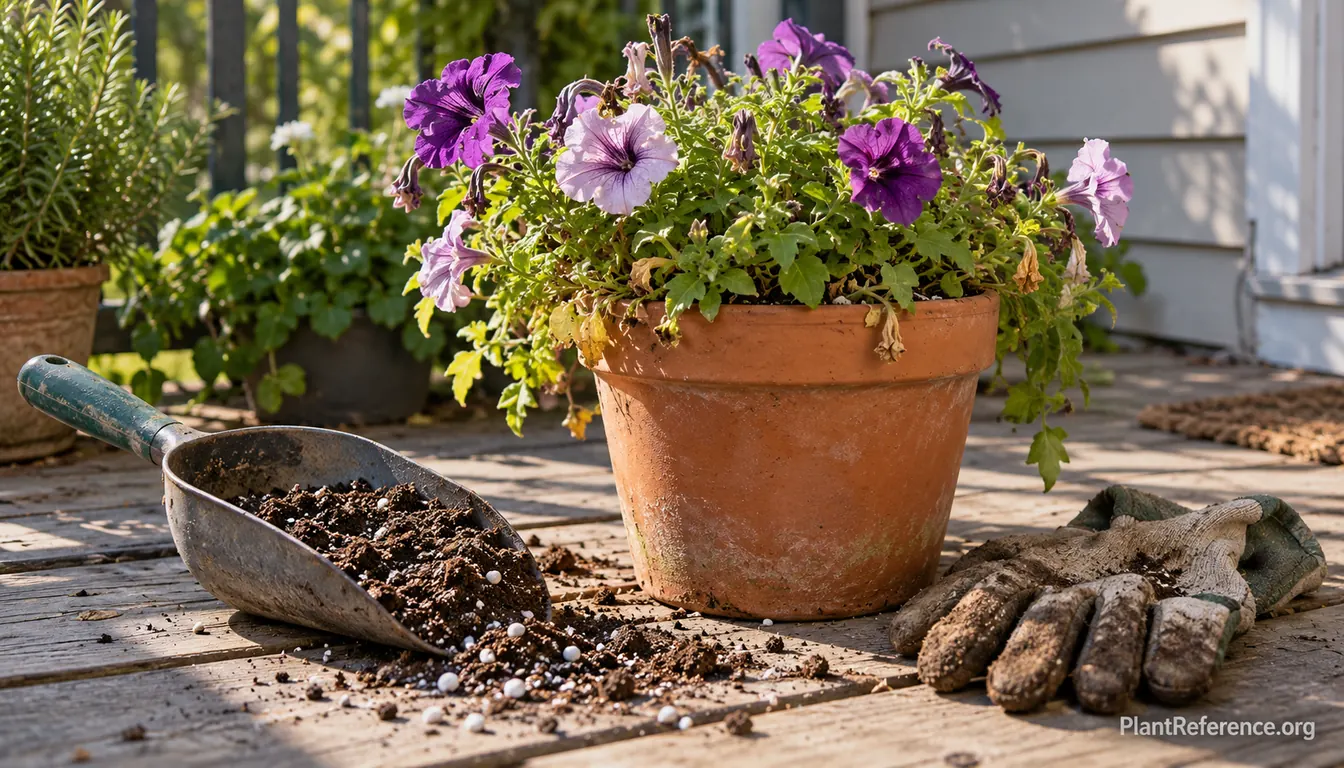
— Image © PlantReference.org 2026
Pets & Toxicity
Recorded toxicity for plants linked in this guide. An unknown status is not a safety assessment.
Toxic to pets: bedding impatiensDetailsHide
The best potting mix for flowers is a container blend that stays open around the roots while holding enough moisture between waterings. For most annual porch pots, start with peat or coir plus an aerating ingredient such as perlite, then adjust your choice to the site—not the prettiest bag.
Best Potting Mix for Flowers: Start With the Container
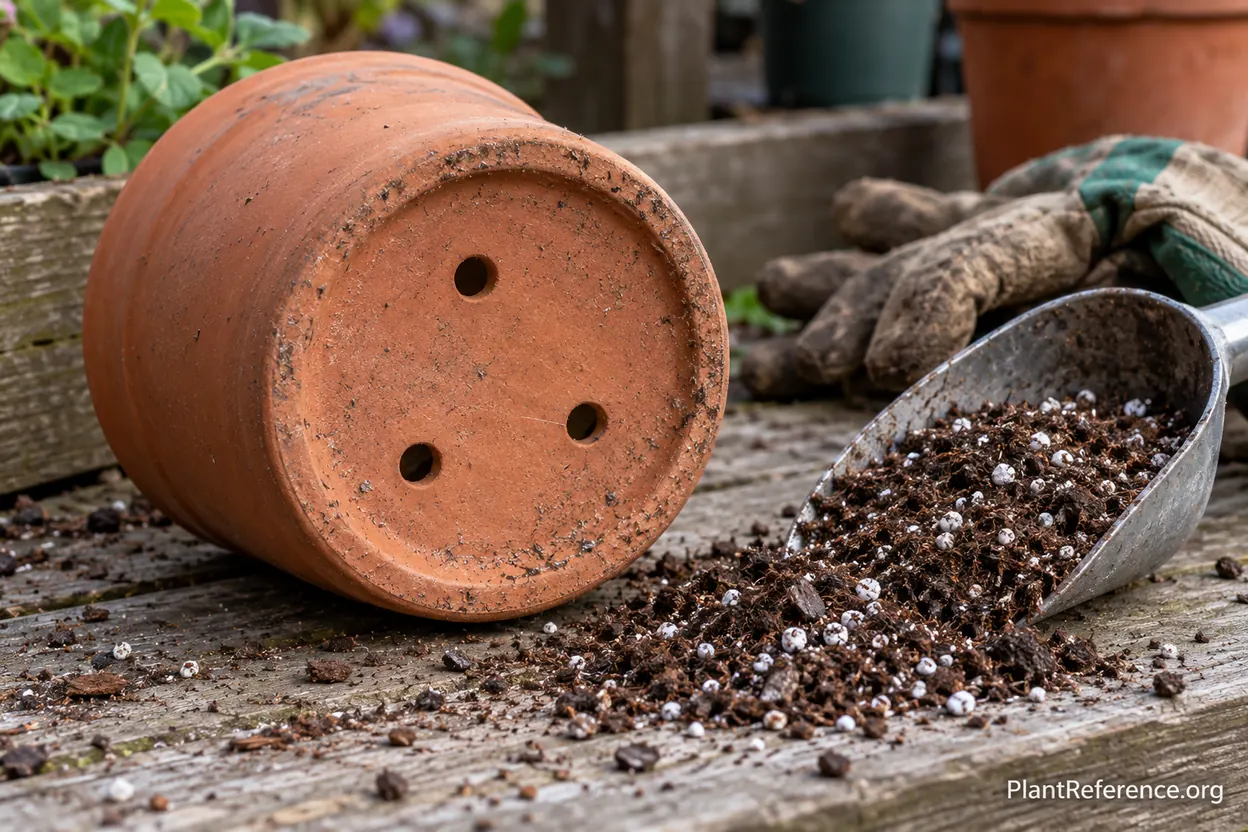
A pot is a small, managed root zone. Its mix has to support a whole summer of growth without behaving like a shovel of wet garden soil. The container, its drainage openings, the weather, and your watering habits all affect that result.
Start with Container Gardening: Pots, Soil, Water & Yields if you are choosing the pot and mix together. A well-drained container does not mean a container that becomes bone dry every afternoon. It means excess water can leave while the remaining mix provides moisture and air.
Garden soil and potting mix have different jobs
Do not choose a heavy bag simply because it says soil. Products intended for garden beds are not automatically suitable for pots. Read the intended-use statement and look for container or potting directions rather than assuming that topsoil, raised-bed soil, and potting mix are interchangeable.
Soil Health 101: How to Build Living, Productive Garden Soil explains the broader work of building soil outdoors. That is a different project from filling a hanging basket. Likewise, the mineral texture discussed in Soil Types by Region: Diagnose and Fix Your Garden Soil helps explain your yard, but does not dictate the recipe inside a movable porch pot.
Compare Peat, Coir, and Moisture-Control Mixes
There is no research-supported winner for every annual and every container here. These are useful categories to compare, not results from a side-by-side product trial. Ingredient proportions and added fertilizer can matter as much as whether peat or coir appears first on the label.
Mix category | Useful starting situation | What to check | Main caution |
|---|---|---|---|
Peat-based mix with perlite | General annual flower containers | Container directions, pH information, fertilizer charge | Do not assume every peat blend drains identically |
Coir-containing mix with perlite | General containers where moisture retention matters | Complete ingredient list and feeding directions | Coir alone is not a complete planting and nutrition plan |
Moisture-control container mix | Exposed pots that repeatedly dry between checks | Watering directions and actual moisture below the surface | Extra retention is less useful in persistently wet conditions |
Fine seed-starting mix | Germination and small seedlings | Sowing directions and nutrition guidance | Seed-starting suitability does not establish summer-container suitability |
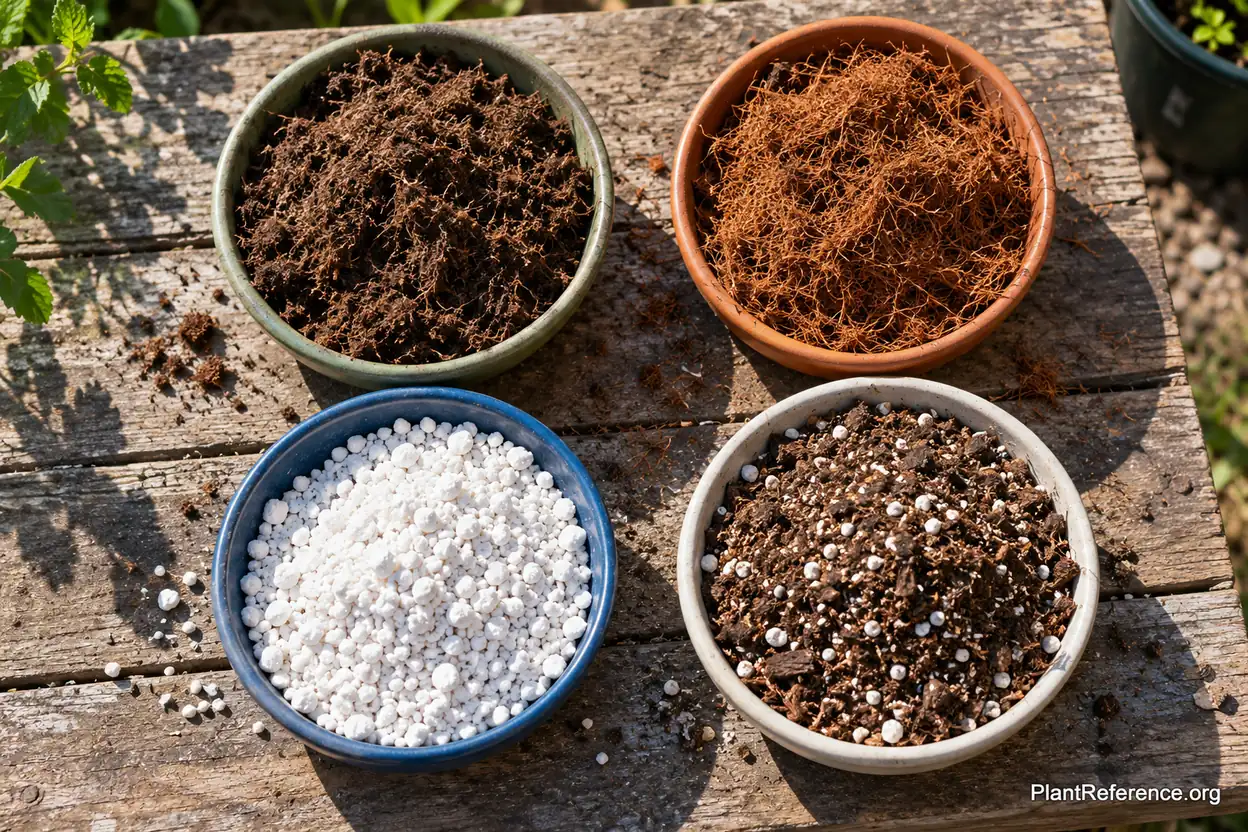
Peat and coir hold moisture; perlite helps create a more open blend. Buying a finished container mix is a sensible first step because it gives you one product to evaluate. Adding several amendments immediately makes it harder to know what helped or caused trouble.
Where moisture-control blends belong
Consider this category when a sunny container repeatedly dries before you can reasonably water again. First check whether the pot is simply too small for its plants. A crowded basket and a generously sized porch pot should not be expected to behave alike.
For hot, exposed sites, Container Gardening in the Desert: Pots, Mix & Watering adds useful climate context. In a cool, shaded corner, do not select extra moisture retention as an automatic upgrade. Check the mix before watering and reduce watering frequency when weather turns cooler or wetter.
Match the Mix to Your Annual Flowers
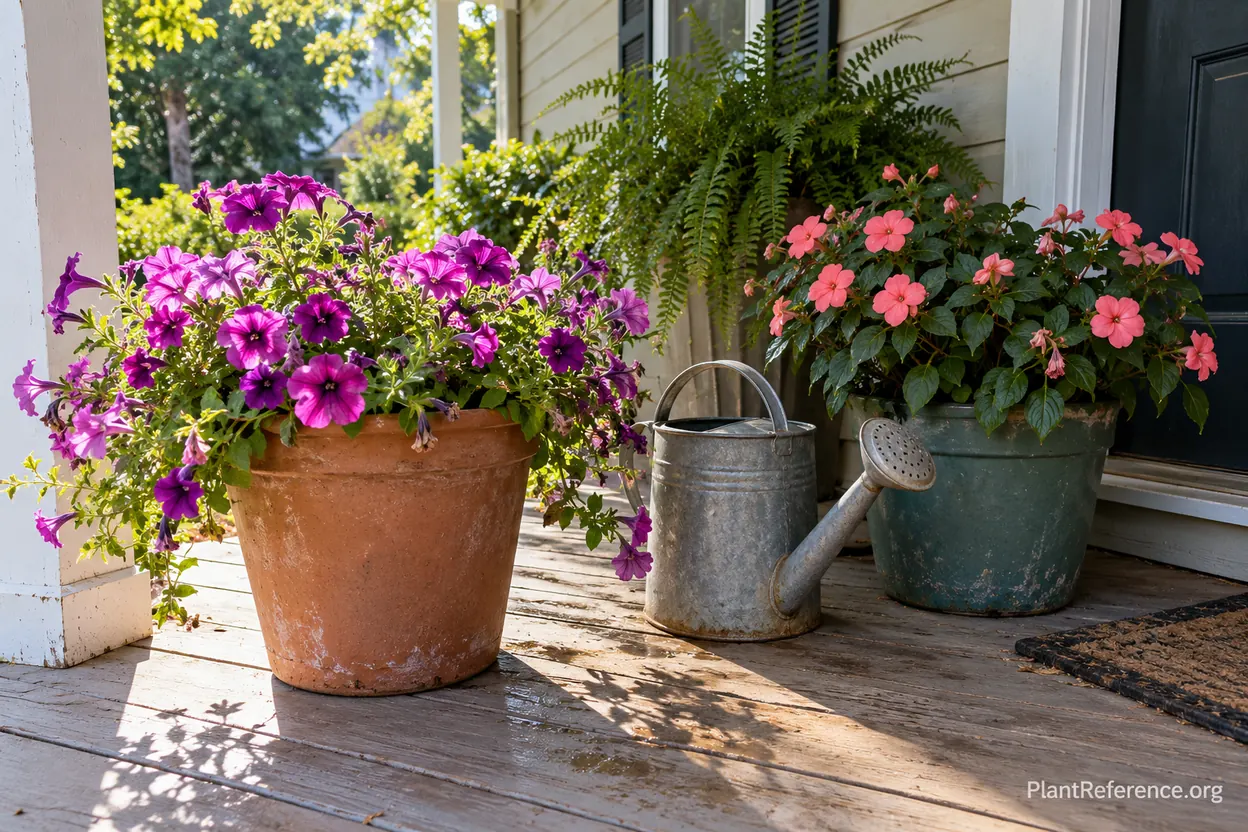
Petunias Petunia x hybrida (peh-TOON-ee-uh) are familiar container flowers, but their vigorous growth does not justify keeping roots constantly saturated. Begin with a container blend, give water a clear exit, and watch how the pot behaves as its canopy fills out.
Shade pots need a different rhythm. Impatiens 🌿Impatiens walleriana (im-PAY-shenz wall-er-ee-AH-nuh) may share a porch with sun-loving flowers, yet receive less drying sun. Water each pot according to its condition rather than applying one schedule across the whole porch.
Calibrachoa hybrids 🌿Calibrachoa spp. (kal-ih-bruh-KOH-uh) deserve particular attention to pH. The research places their preferred range at 5.5–6.0. A mix described as suitable for tomatoes is not automatically the best choice for these flowers, especially if its stated pH is higher.
Separate a pH question from a watering question
Yellow leaves are not a reliable shopping list. Review drainage, moisture, feeding, and the plant's requirements before deciding that a bag of new mix or extra iron will solve the problem. A product label describing pH adjustment is useful information, not a promise that conditions will remain unchanged all season.
How to Test Garden Soil: Jar, Ribbon & pH Tests introduces testing concepts, but mineral-soil texture tests are not a recipe for judging peat-based potting media. When arranging testing, explain that your sample is container media. Best Soil Test Kits for Home Gardeners helps frame the questions to ask before buying a testing tool.
Read the Bag Before Adding Fertilizer
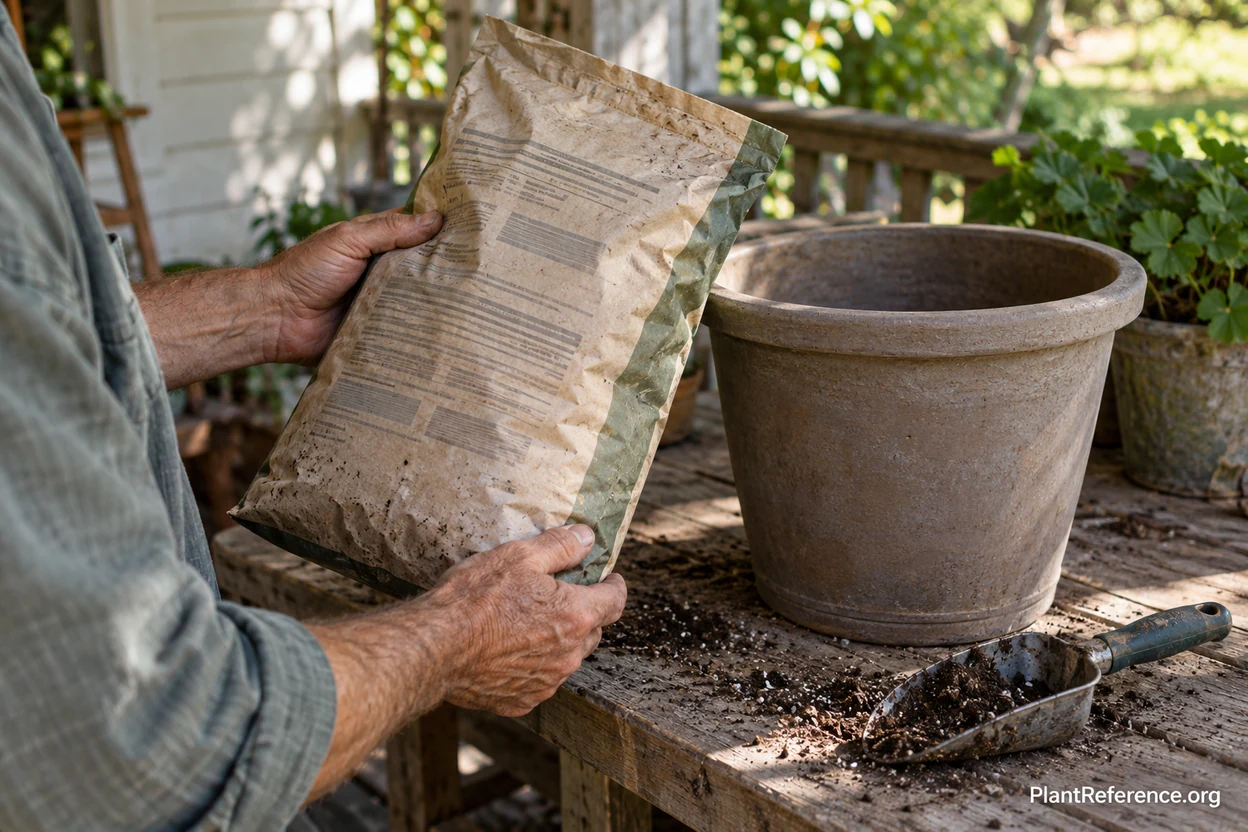
Some potting mixes contain fertilizer; others expect you to provide it. Do not add a full dose of slow-release feed and a frequent liquid feed merely because the flowers are hungry-looking. Start with the mix directions, then consider the plant and its growth stage.
DIY Organic Fertilizer Blends: A Soil-Test-First Guide reinforces the value of choosing nutrients deliberately. For a ready-made container mix, the practical first question is simpler: what nutrition is already included? Keep the bag or photograph its directions so that answer remains available after planting.
The supported catalog options below illustrate different ingredient approaches. FoxFarm Happy Frog is listed with bark, peat, perlite, castings, and other nutritional ingredients; its recorded pH range is 6.3–6.8. That makes it a candidate for general annual containers, not the first match for the acidic preference of 🌿Calibrachoa spp..
Miracle-Gro Performance Organics All Purpose Container Mix is recorded as a compost, coir, and perlite blend with added fertilizer. It offers a coir-containing option to compare. These are catalog-based recommendations, not a tested ranking, and the stored price ranges do not establish today's checkout price or availability.
Pot Up, Water, and Evaluate the Result
Choose a healthy transplant and a container appropriate to its mature spread. Follow the mix's preparation directions, preserve the plant's established planting depth, and avoid packing the growing medium into a hard mass. Water after planting, then confirm that excess water can escape.
Check the drainage openings before filling the pot.
Read the mix label for premoistening and fertilizer instructions.
Plant at the transplant's existing depth and settle the mix gently.
Water the root zone, then let excess water drain away.
Check moisture below the surface before watering again.
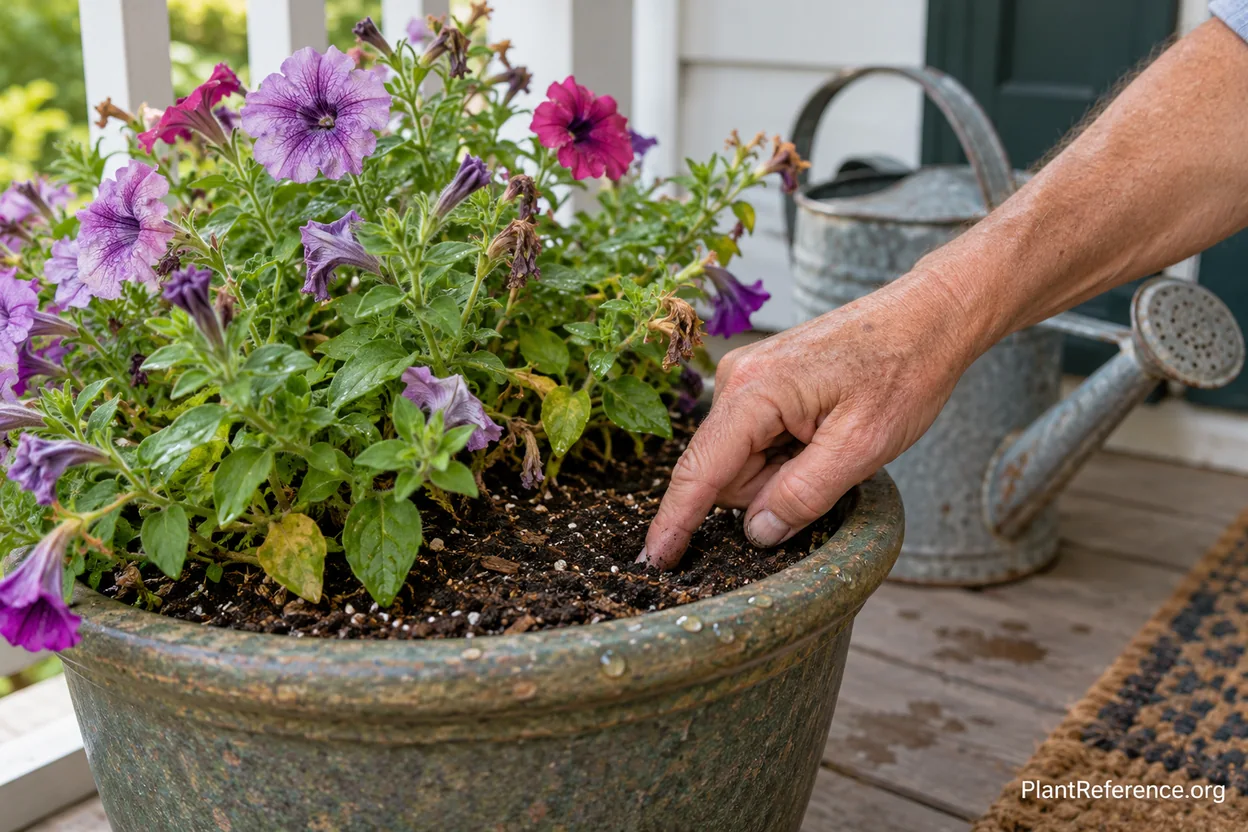
For a practical moisture check, feel roughly 1 inch (2.5 cm) below the surface while also considering pot weight and plant condition. That is an observation point, not a universal dryness target for every annual. A damp surface after a light shower can hide a drier root zone; a dry-looking crust can hide moisture underneath.
Judge the whole system
If a pot remains wet, check blocked outlets and standing water before buying another amendment. If it dries rapidly, review root crowding, exposure, and container size. A new mix cannot compensate indefinitely for a basket that is too small or a watering routine that misses the root ball.
If a white deposit develops, investigate the salts and watering history described in White Crust on Potting Soil: Causes and How to Flush It. Do not respond by adding more fertilizer automatically. Record the mix you used, the exposure, and how often the pot actually needed water; those observations make next season's purchase more useful than a brand ranking detached from your garden.
Frequently Asked Questions
Reading about plants and recognising them are different skills. These three build the second.
- Daily PlantIdentify the day’s mystery plant from a close-up photograph.
- Keyed OutWork a dichotomous key, lead by lead, to name a hidden specimen.
- Name That PlantName a specimen from botanical clues dealt hardest first.
Free to play, no account needed
Tagged with
Claire runs a small cut flower farm on two acres outside Asheville, North Carolina, where she grows annual flowers for farmers market bouquets and a subscription CSA. She studied art in college and fell into flower farming after volunteering at a community garden during graduate school. What started as a few rows of zinnias and cosmos turned into a full-time business within three years. Claire grows over 40 annual flower varieties from seed each season, managing succession plantings from February through October. She teaches seed-starting workshops at the local cooperative extension office and mentors new flower farmers through their first seasons. Claire writes from direct growing experience — she has started tens of thousands of seeds, trialed hundreds of varieties, and made every mistake in the annual flower book at least once. Her advice is specific, seasonal, and grounded in what actually works in the field, not what looks good in a catalog photo.