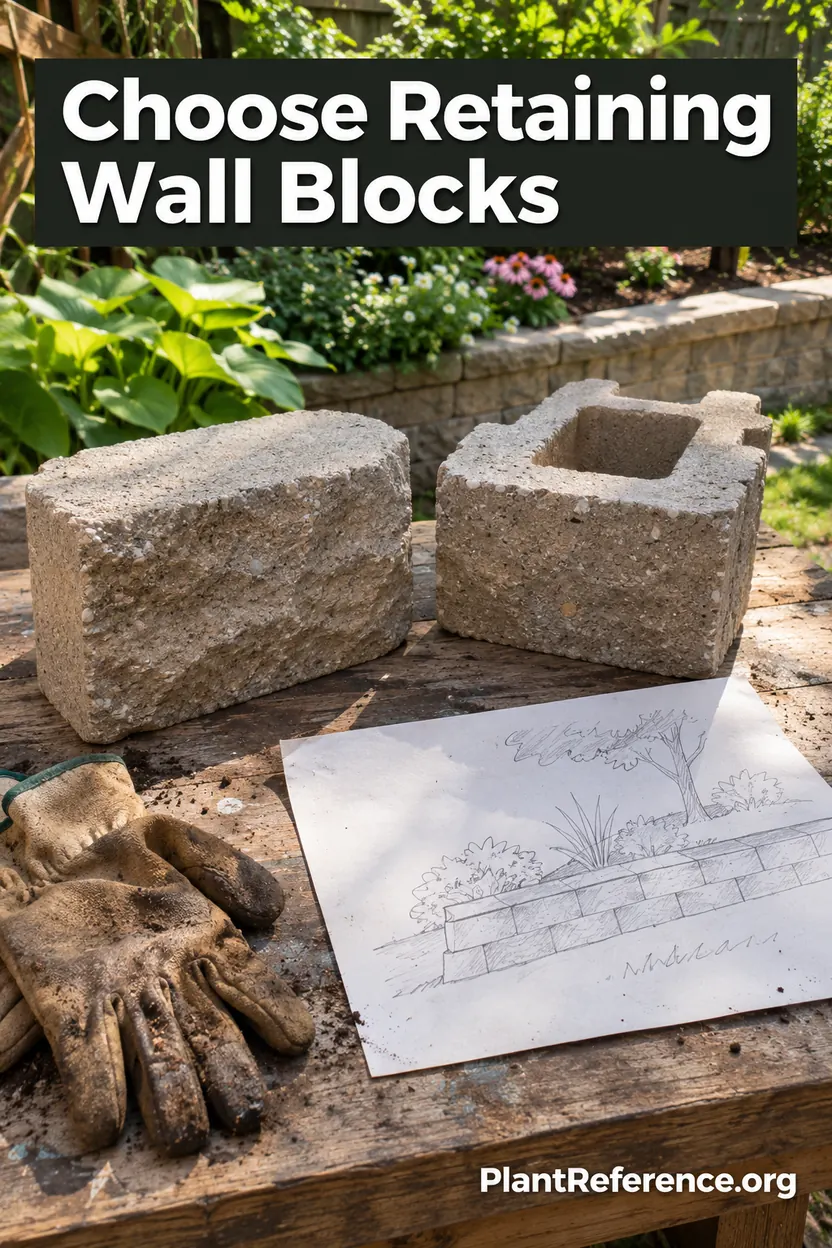
Best Retaining Wall Blocks for DIY: Systems Compared
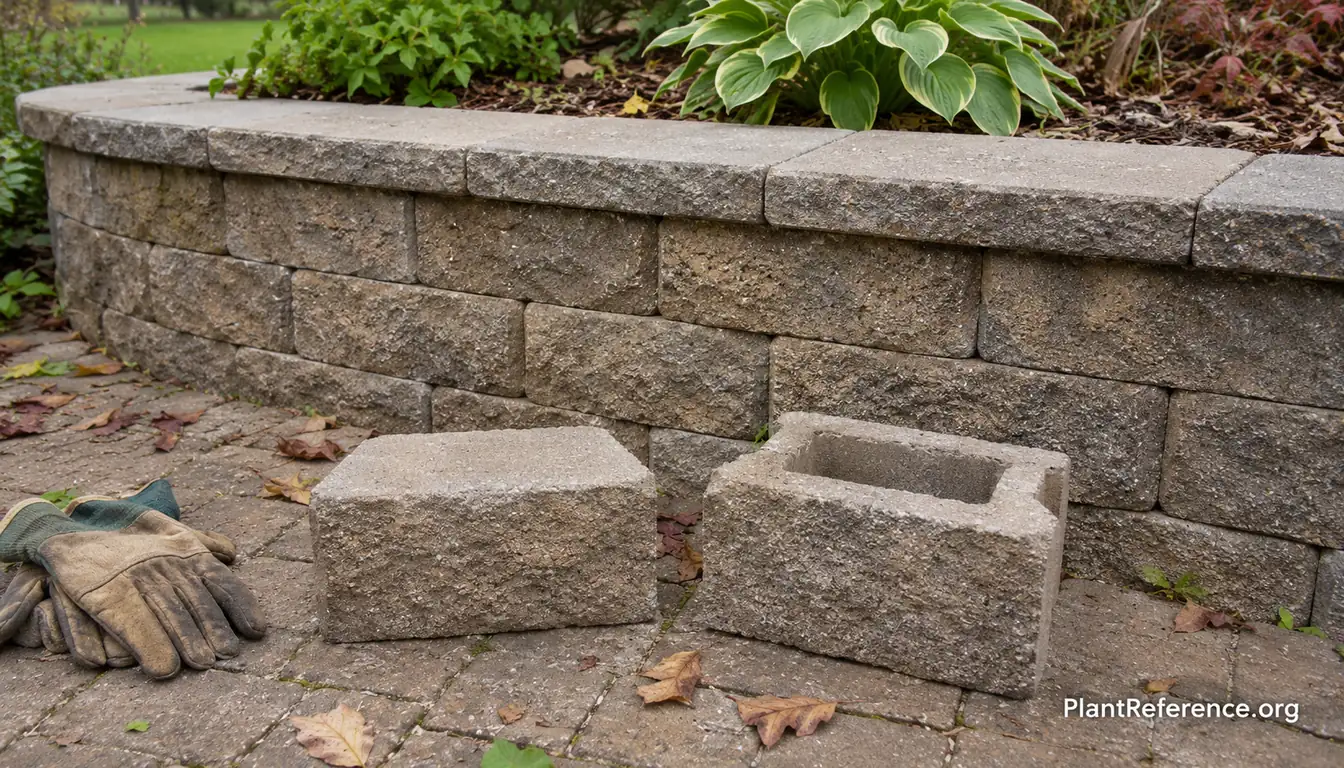
— Image © PlantReference.org 2026
The best retaining wall blocks for DIY work are not simply the lightest blocks or the cheapest pallet. They are the units that fit a manageable, properly assessed project and come with a complete installation method you can follow without improvising structural details.
Start with Retaining Wall Materials Guide: Blocks, Stone, Timber & More if you are still comparing block walls with timber or stone. This guide compares block-system features and the research-supported examples, not an unsupported universal brand ranking or a substitute for engineered design.
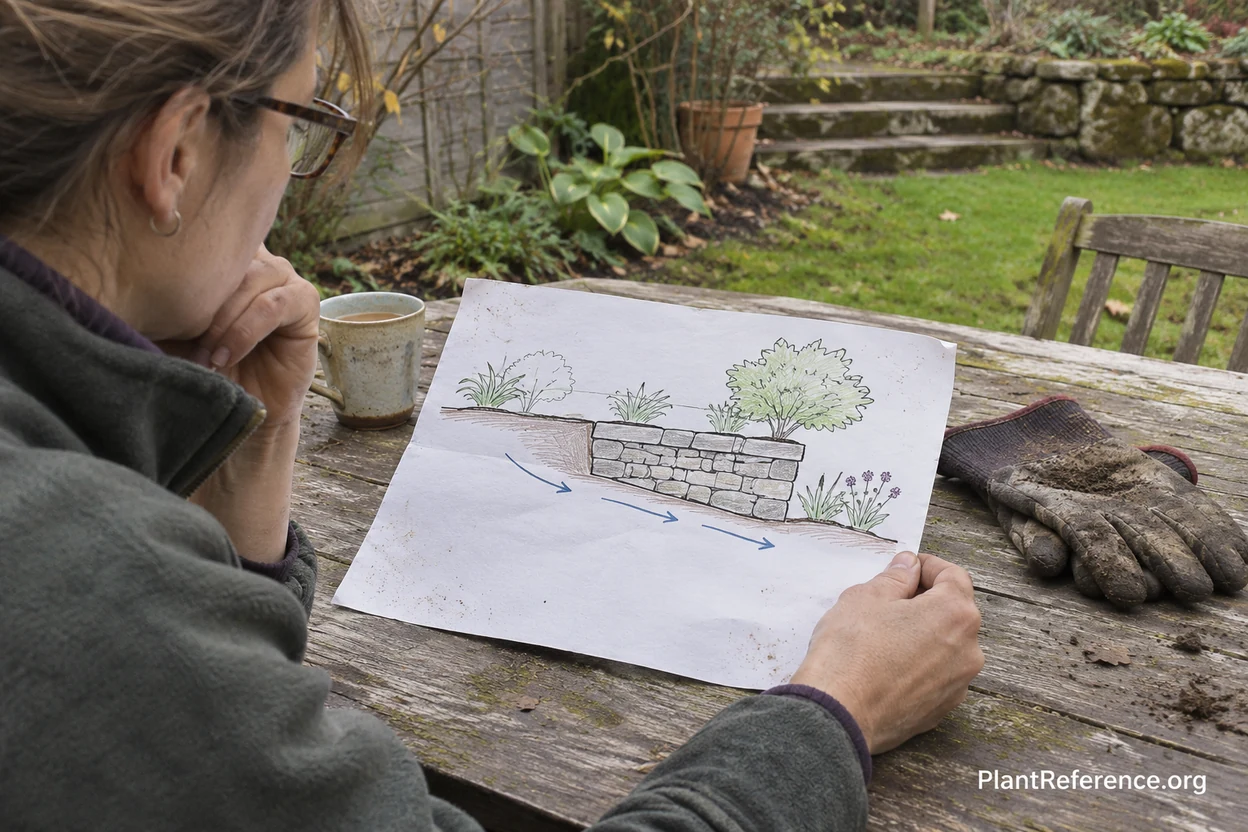
Best Retaining Wall Blocks Start With the Site
A short wall can still have a demanding job
Identify what the wall retains and what sits above or below it. A driveway, building, pool, slope, or another wall can change the loads and consequences of failure. Do not use a simple height rule to declare a project safe for DIY construction.
For vehicle areas, Driveway Materials Compared: Costs and Lifespans gives context for the surface and loading nearby, but the retaining wall needs its own assessment. A wall beneath a driveway is not the same project as a freestanding decorative garden edge.
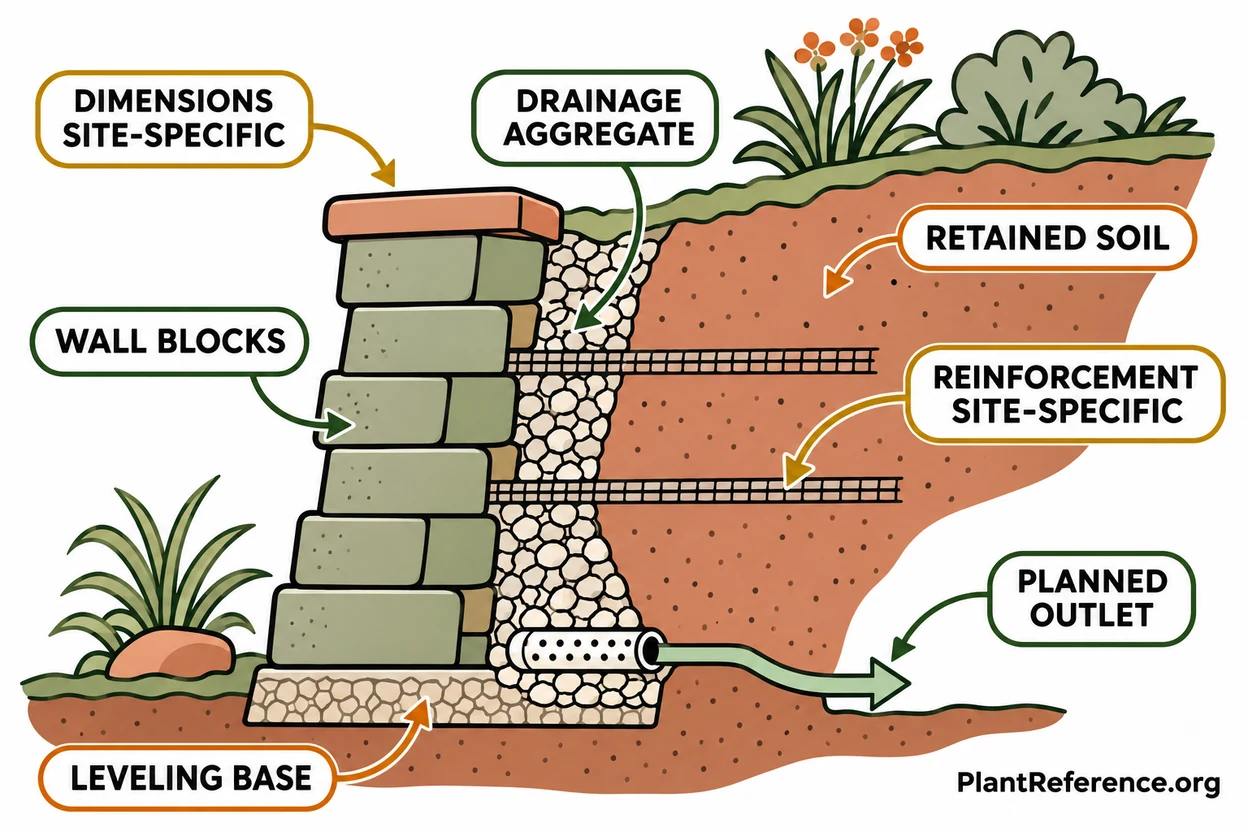
Check local requirements and obtain appropriate professional advice before choosing materials for complex conditions. Manufacturer diagrams are useful, but they apply only within their stated assumptions. If those assumptions do not match the site, the diagram is not your design.
Understand the soil and space behind the wall
The wall needs room for its base, drainage, backfill, and any specified reinforcement. A narrow strip between a boundary and a patio may not provide the space shown in a typical illustration. Confirm that the complete assembly fits before ordering blocks.
Soil Types by Region: Diagnose and Fix Your Garden Soil explains why ground conditions vary, while Fix PNW Garden Drainage: Glacial Till, Hardpan & Raised Beds highlights difficult drainage settings. Neither attractive blocks nor extra adhesive can compensate for unsuitable support or trapped water.
Pin-Connected and Lipped Systems Compared
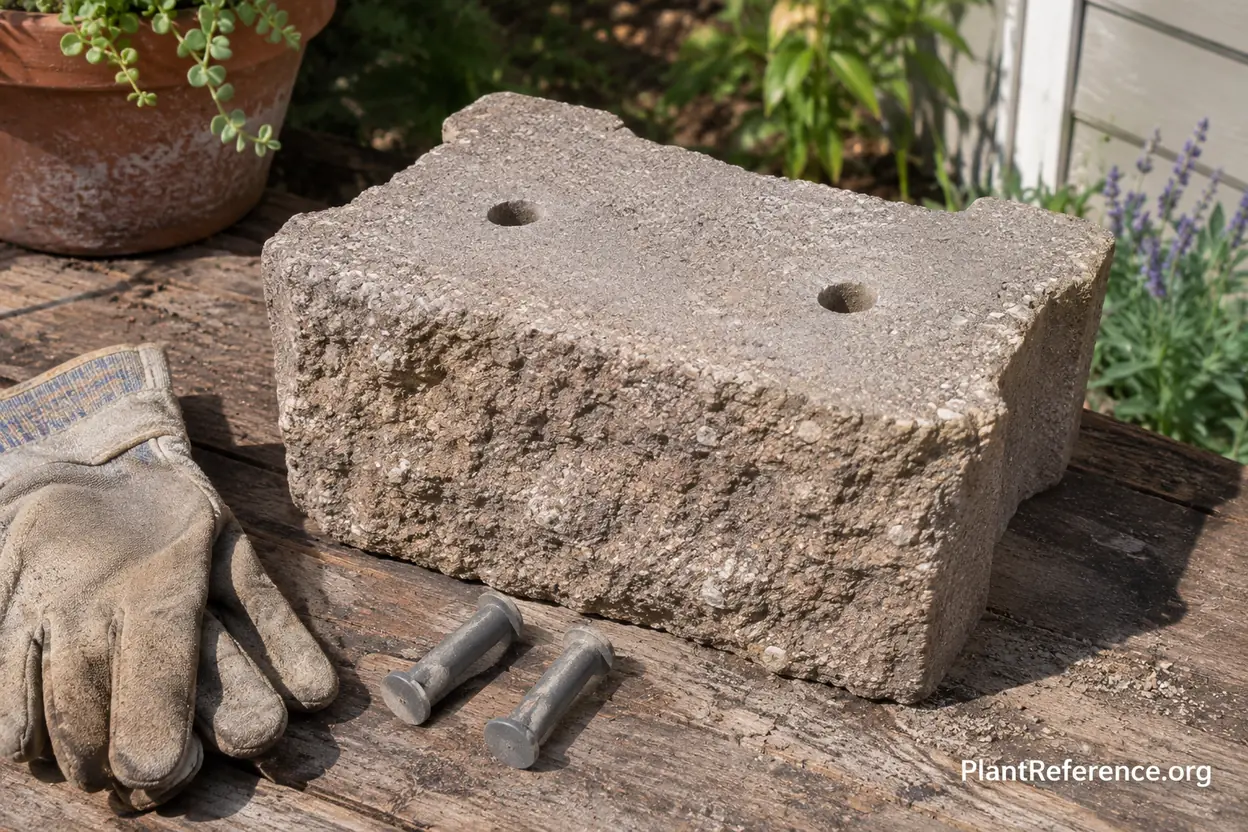
Pin-connected blocks give a defined connection detail
Pin-connected systems use designated holes and pins to help locate and connect courses. The research identifies Versa-Lok Standard and Keystone Compac as examples of this broad approach. Their specific components and installation details should not be treated as interchangeable.
Pins can provide a positive assembly reference, but only when placed according to the system instructions. Check how the selected unit handles setback, corners, curves, and any reinforcement connection. A pin is one component of the wall, not a substitute for drainage or a correct base.
This category deserves consideration when its geometry and complete system fit the project. The tradeoff is managing the correct hardware and following the placement details carefully. Do not replace missing pins with improvised fasteners because they seem to fit the holes.
Lipped blocks simplify one part of positioning
Lipped systems use a molded feature to locate the course above or below and establish the intended setback. Allan Block Classic is a research-supported example with a built-in raised front lip. Other systems use different geometry, so inspect the actual unit rather than assuming every lipped block works alike.
The appeal is a positioning feature built into the block instead of separate pins. The limitation is that debris, incorrect orientation, or damaged locating features can interfere with seating. Clean contact surfaces and check alignment as the wall progresses.
Do not remove a lip simply to make a block fit an unplanned detail. Corners, caps, and transitions need the manufacturer's approved method. A small alteration can change the way the course engages or the wall sets back.
Solid, Hollow, and Smaller Garden Blocks
Solid blocks: straightforward mass, demanding handling
Solid units provide their mass in the block itself, which can make each piece substantial to move. The research lists Versa-Lok Standard at about 82 pounds (37 kg) as an example of the handling burden. Confirm the exact locally supplied unit rather than assuming that figure applies across a brand.
Think about repeated handling, not just whether you can lift one sample once. Delivery location, access, tools, and help determine whether the work remains manageable. A block that fits the design can still be impractical for the crew and site access available.
Hollow units reduce block mass but add fill work
Hollow-core systems use the specified aggregate fill as part of their installation. The research identifies Allan Block Classic as a hollow-core example. Compare the complete installed work, including filling cores and compacting adjacent material as directed, rather than only the weight of an empty unit.
Hollow does not mean weak, and solid does not automatically mean superior. The system design determines how the unit, fill, connection, and reinforcement work together. Follow the approved assembly rather than transferring details between products with similar faces.
Smaller garden blocks have specific limits
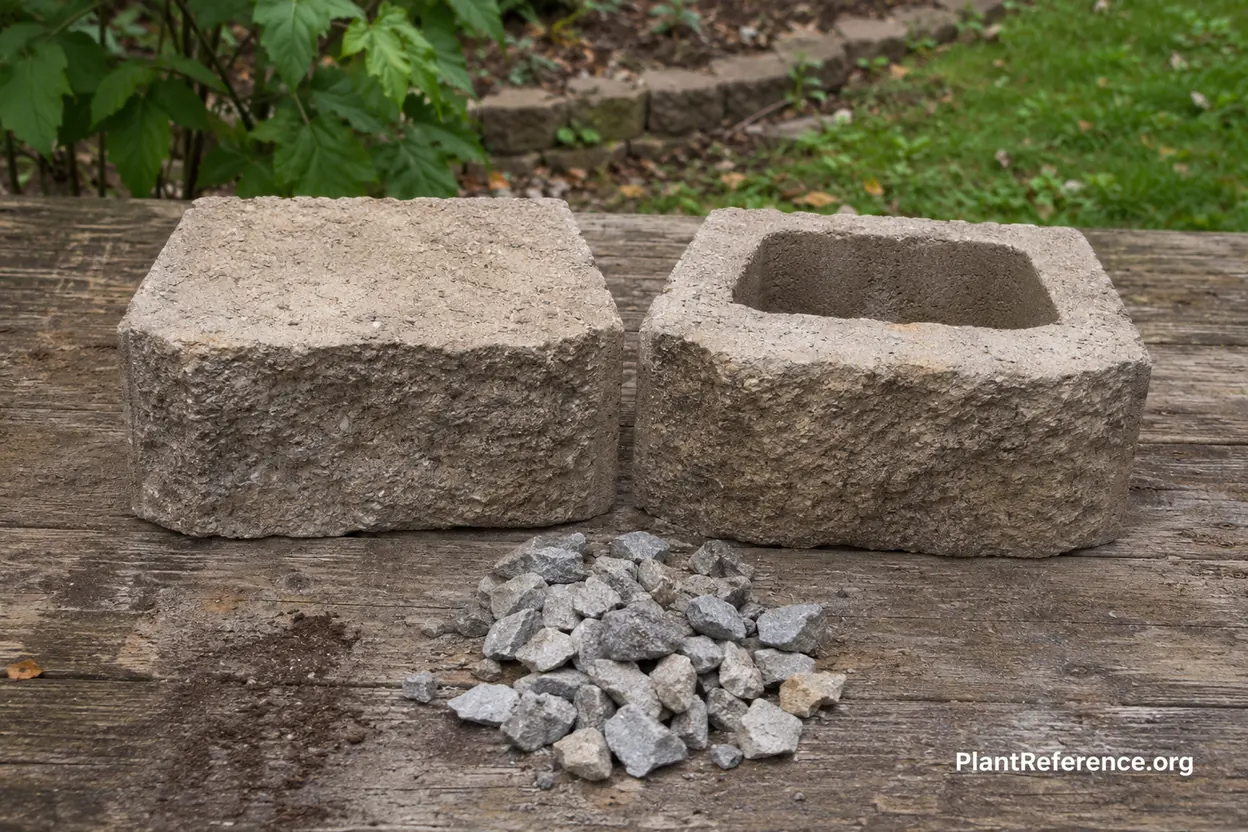
Smaller landscape blocks can be easier to handle for a modest garden edge, but convenience does not establish retaining capacity. Check the exact product's intended use and limitations. A decorative border unit is not automatically a structural retaining wall component.
If comparing Pavestone with Versa-Lok or Allan Block, identify the exact product first. Brand families can contain different types of units, and the available research does not justify a blanket ranking. Compare documented applications rather than a familiar logo or a matching color.
System feature | Potential advantage | Main check | Avoid assuming |
|---|---|---|---|
Pin connection | Defined connection locations | Correct pins and course detail | Hardware can be improvised |
Molded lip | Built-in positioning feature | Orientation and clean seating | All lipped blocks share details |
Solid unit | Mass within the block | Repeated handling and access | Weight alone proves suitability |
Hollow core | System uses specified aggregate fill | Filling and assembly requirements | Empty weight describes total work |
Smaller garden unit | Easier individual handling | Intended use and design limits | Decorative blocks retain any slope |
Compare Drainage and Complete System Details
Water management is not an accessory
A retaining wall must handle water in the retained ground and runoff arriving from above. Ask how the selected design provides drainage, filters soil from drainage aggregate, and sends collected water to a suitable outlet. A pipe with no resolved destination is not a complete plan.
Nearby paving changes the water entering the area. Patio Materials Compared: Pavers, Stone, Concrete & More helps frame surface choices, and Permeable Pavers: Stormwater Guide for Homeowners explains why infiltrating pavement still needs a designed water route. Do not casually direct either system's water behind the wall.
Compare all required components: base material, drainage aggregate, connectors, reinforcement where specified, corner units, caps, and compatible finishing products. A low block price can conceal an incomplete order. Ask the supplier to review the whole materials schedule against the design.
Protect roots and growing soil
Excavation behind a wall can reach farther than the visible face suggests. How Much Soil Do Urban Trees Actually Need? The Root Volume Guide explains why mature root zones deserve assessment before digging or compaction. Moving the wall may be preferable to damaging a valuable tree.
Keep structural backfill separate from planting-soil objectives. Soil Health 101: How to Build Living, Productive Garden Soil applies to the beds restored around the work, not as a substitute for specified wall backfill. Rich garden soil and load-bearing construction fill have different jobs.
Budget, Handling, and the DIY Decision
Price the project, not the face block
Include excavation, disposal, delivery, base preparation, drainage, fill, caps, and any professional design in the comparison. Count the units required by the exact wall layout, including buried courses and corners where specified. A visible-face estimate alone can leave essential materials out.
Ask how deliveries reach the work area and whether equipment can operate without damaging adjacent features. Repeatedly moving heavy blocks across a finished garden adds time and risk. Practical access can influence the system choice as much as the final texture.
Choose a manageable scope
Confirm the wall's purpose and all nearby loads.
Obtain the required design and local approvals.
Use one compatible block system and its instructions.
Plan safe handling, delivery, and excavation access.
Resolve drainage before construction begins.
DIY is most reasonable where the project is modest, conditions are straightforward, and the required details are understood. Slopes, tiered walls, nearby structures, significant loads, and uncertain soils justify professional assessment. Do not dismantle a distressed retaining wall without understanding what it supports.
The best retaining wall blocks for DIY are the ones that fit both the design and your ability to build it correctly. Choose the system first, then the finish. A good-looking face is the final result of sound support and water management, not a replacement for them.
Frequently Asked Questions

Reading about plants and recognising them are different skills. These three build the second.
- Daily PlantIdentify the day’s mystery plant from a close-up photograph.
- Keyed OutWork a dichotomous key, lead by lead, to name a hidden specimen.
- Name That PlantName a specimen from botanical clues dealt hardest first.
Free to play, no account needed
Tagged with
Mike's been designing residential landscapes in the Seattle area, with a particular focus on Pacific Northwest natives and sustainable practices. He's a Washington State Master Gardener and worked in construction before landscaping, which gives him a practical edge when it comes to building raised beds and hardscaping projects. He runs a small side business propagating and selling unusual perennials at farmers markets on weekends. His property serves as a testing ground for low-maintenance, wildlife-friendly garden designs. Mike's philosophy: if it requires weekly maintenance, it's not sustainable.