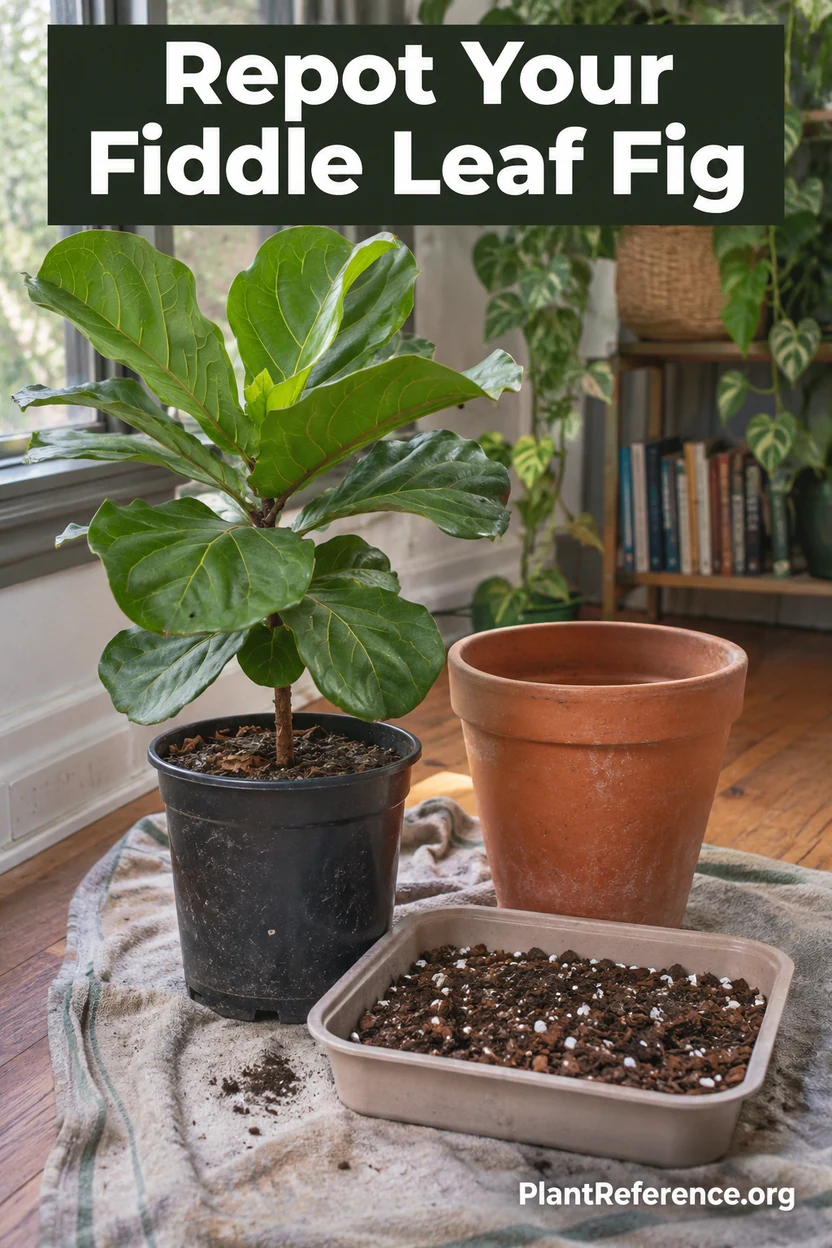
How to Repot a Fiddle Leaf Fig (Step-by-Step)
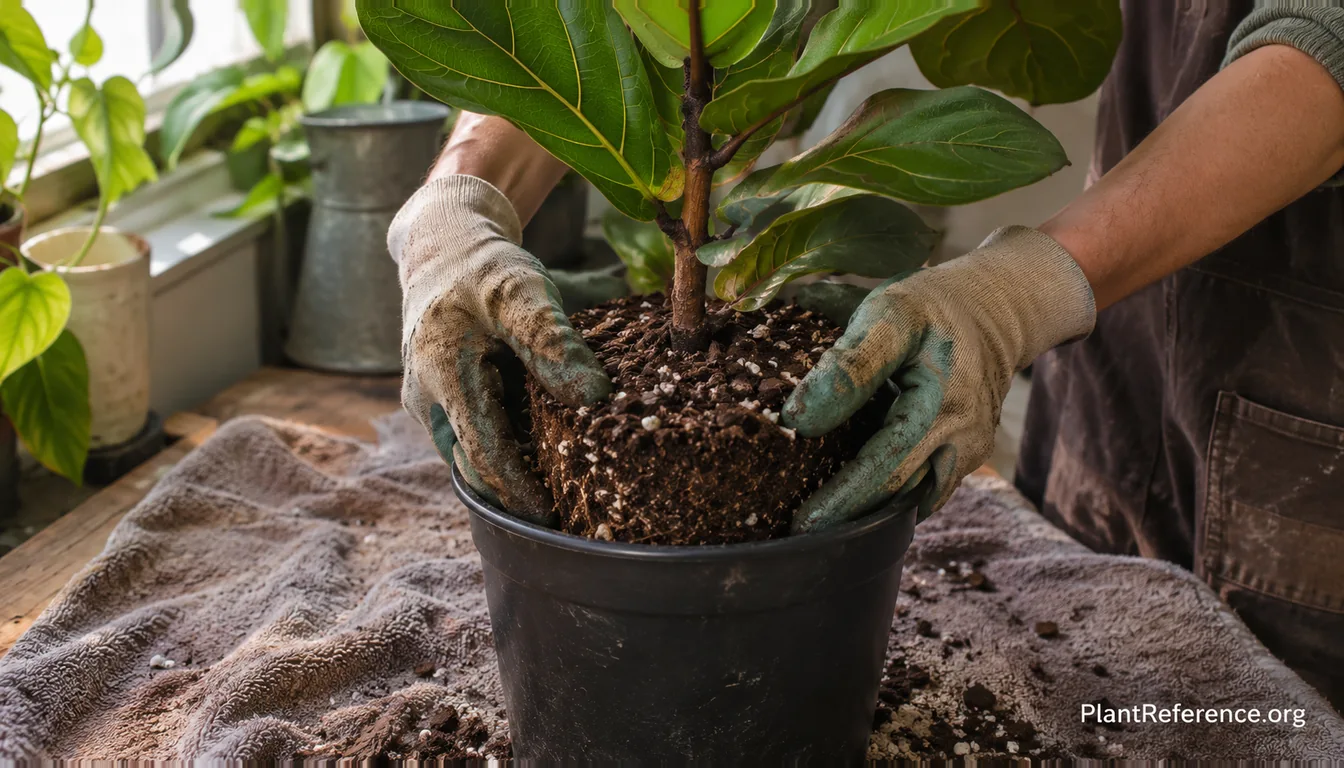
— Image © PlantReference.org 2026
Pets & Toxicity
Recorded toxicity for plants linked in this guide. An unknown status is not a safety assessment.
Toxic to pets: fiddle leaf figDetailsHide
Repotting fiddle leaf fig does not have to mean wrestling a tree across your apartment or buying the biggest planter you can carry. The goal is to give your fiddle leaf fig 🌿Ficus lyrata (FYE-kus lye-RAY-tuh) a suitable root environment while disturbing healthy roots as little as practical.
Decide Whether Repotting Fiddle Leaf Fig Is Necessary
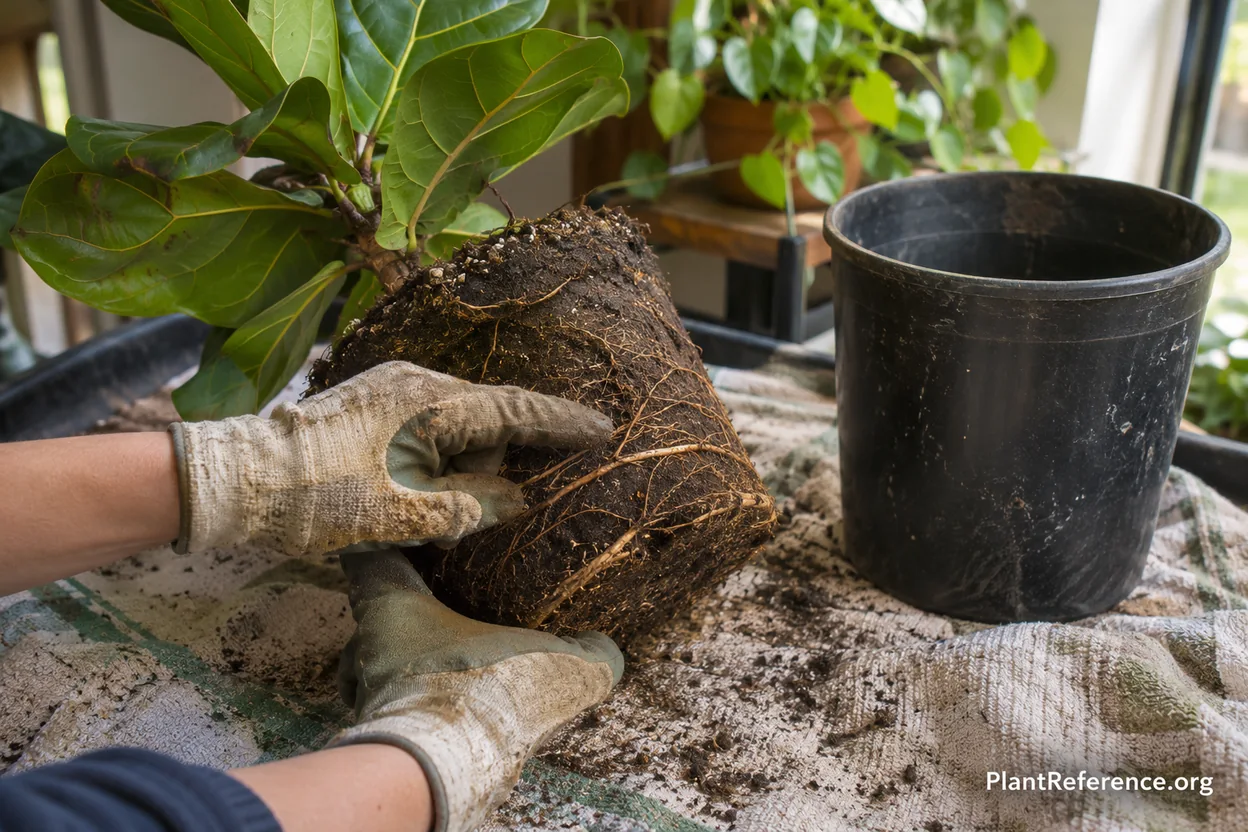
Check the reason before opening a bag of mix. A densely filled root ball, difficulty watering evenly, or deteriorated compacted medium can justify repotting. A root peeking through a drainage hole is a prompt to investigate, not proof that the plant needs an enormous upgrade.
Slow growth can reflect limited light or a seasonal pause rather than crowding. Use Why is My Fiddle Leaf Fig Not Growing? 9 Reasons before disturbing an otherwise stable plant. Yellowing and brown spots also need diagnosis rather than automatic pot replacement.
For routine work on a healthy plant, choose a period of active growth when possible. An urgent root problem should not be ignored merely because the calendar is inconvenient. Fiddle Leaf Fig Root Rot: How to Save Your Plant covers the distinct rescue situation.
A new plant does not need immediate repotting just to match your decor. A draining nursery pot can sit inside a suitable decorative cover while you learn its moisture needs. Review Fiddle Leaf Fig Care: The Complete Guide (2026) for a stable starting routine.
Choose a Pot and Mix Before Removing the Plant
Fit the pot to the roots
For a healthy crowded root ball, choose a modestly larger container rather than a dramatic jump. Compare the roots with the new pot directly: you need room for fresh mix around them, not a wide reservoir of unused wet medium.
If roots have been lost to rot, the right container may be the same size or smaller. Pot height should allow the plant to remain at its previous soil level. Drainage holes are essential, and you need a way to empty runoff easily.
7 Best Pots for Fiddle Leaf Fig (2026 Reviews) compares container choices. A stable pot matters for a tall plant, but stability and extra growing-medium volume are separate decisions.
Choose a structured potting medium
Use fresh potting mix that balances moisture retention with drainage. Prepared blends containing coarse ingredients such as perlite and bark are convenient when storage space is limited. Do not assume that a specialty label makes the plant impossible to overwater.
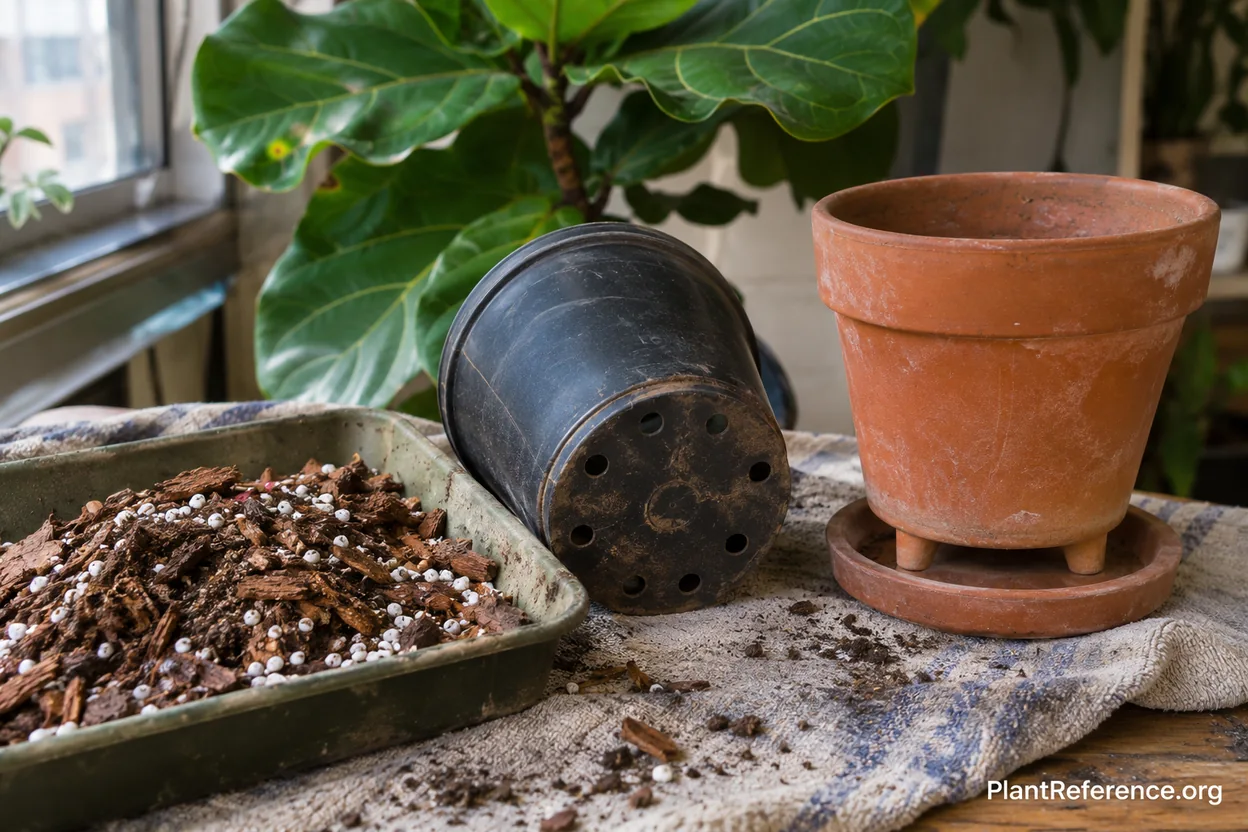
Best Soil for Fiddle Leaf Fig (Tested & Compared) discusses mix choices. Check whether a purchased blend already contains fertilizer, because that affects later feeding. Avoid adding several products simply to make repotting feel more complete.
Prepare Your Workspace and Remove the Root Ball
Protect a stable surface with a tray or washable covering. Set out the pot, mix, gloves, and clean tools before lifting the plant. Keep the work area away from children and pets, and get help if the plant is heavy.
Support the root ball rather than pulling the trunk. Gently loosen a flexible nursery container where possible, then ease the plant out. Do not leave the roots hanging unsupported while you search for supplies.
Remove the decorative outer pot and empty any runoff.
Support the plant and ease the nursery pot away.
Set the root ball on the protected surface.
Inspect roots before choosing how much disturbance is necessary.
Wear gloves when cutting because the milky sap can irritate skin. Keep food and kitchen items clear of the workspace, and clean the area afterward.
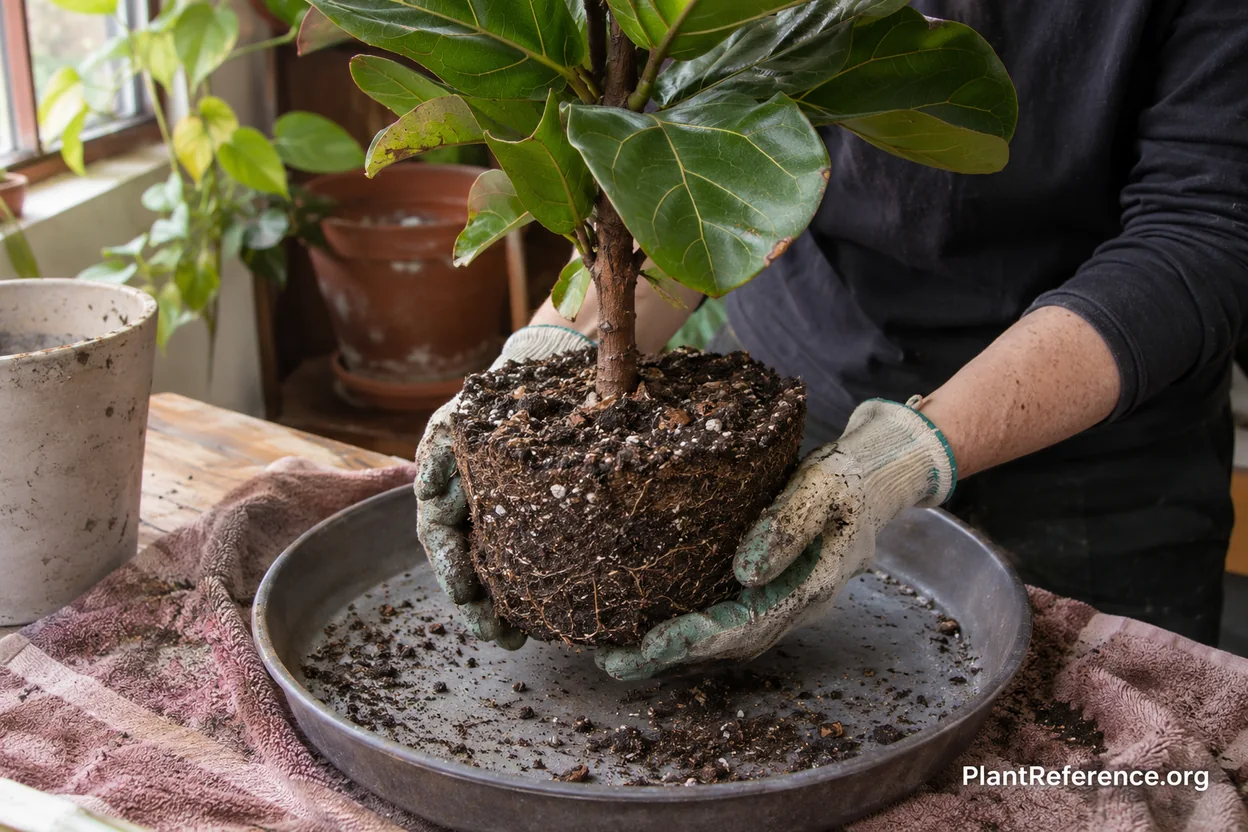
For a healthy root ball, gently loosen accessible outer roots as needed without aggressively stripping all the mix away. Routine repotting does not require washing every root bare or pruning healthy tissue for appearance.
Soft, collapsing roots need a different response from firm, naturally darker roots. If you find decay, remove clearly deteriorated tissue with clean tools and reassess container size. Do not treat root color alone as a reason to cut.
Set the Plant at Its Original Depth
Place enough fresh mix beneath the root ball to maintain its previous planting depth. Position the plant upright, then fill around the sides gently. Keep the trunk base from becoming buried under an extra layer of mix.
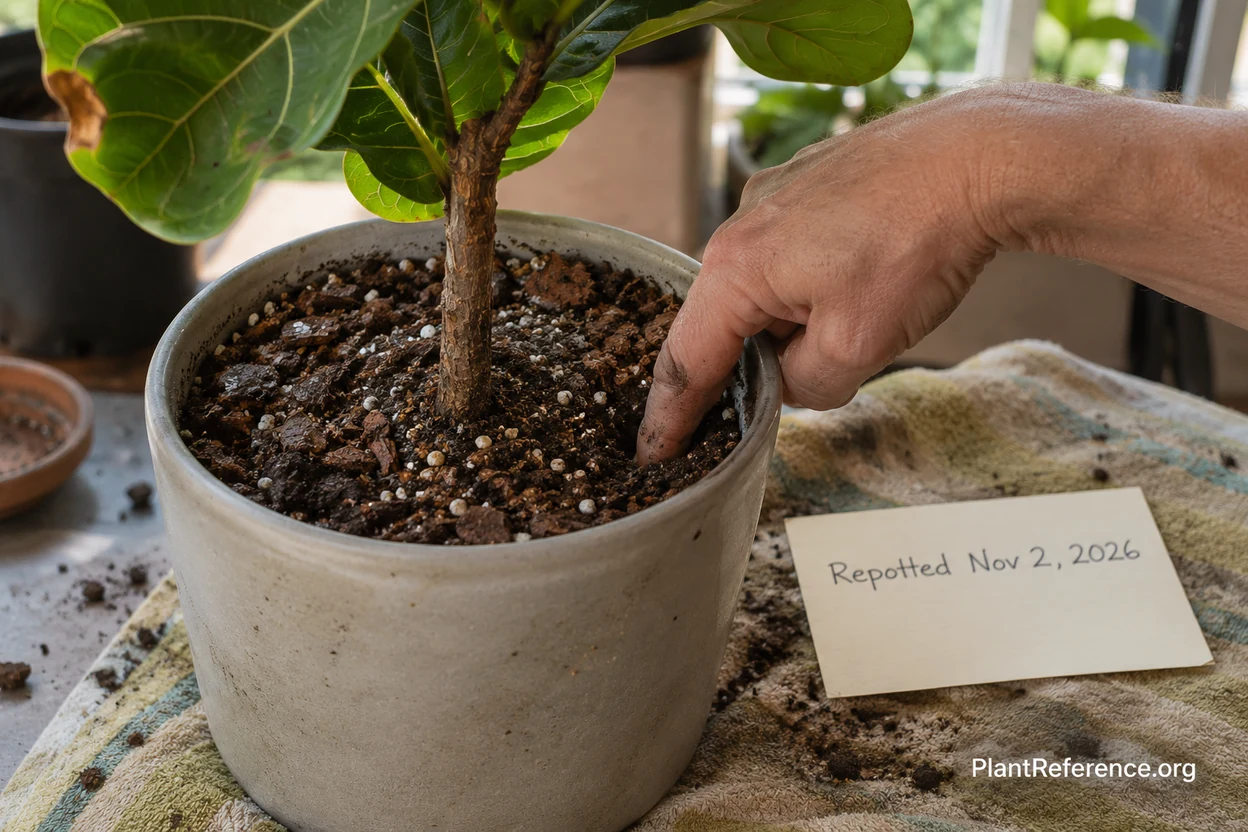
Settle the medium without packing it into a dense mass. You want contact around the roots, not heavily compressed soil. Leave practical watering space below the rim so water does not immediately spill over the edge.
If the plant leans, check whether its base is positioned correctly rather than forcing the trunk straight. Fiddle Leaf Fig Leaning? Here's How to Fix It Fast explains gentle support and light-related leaning.
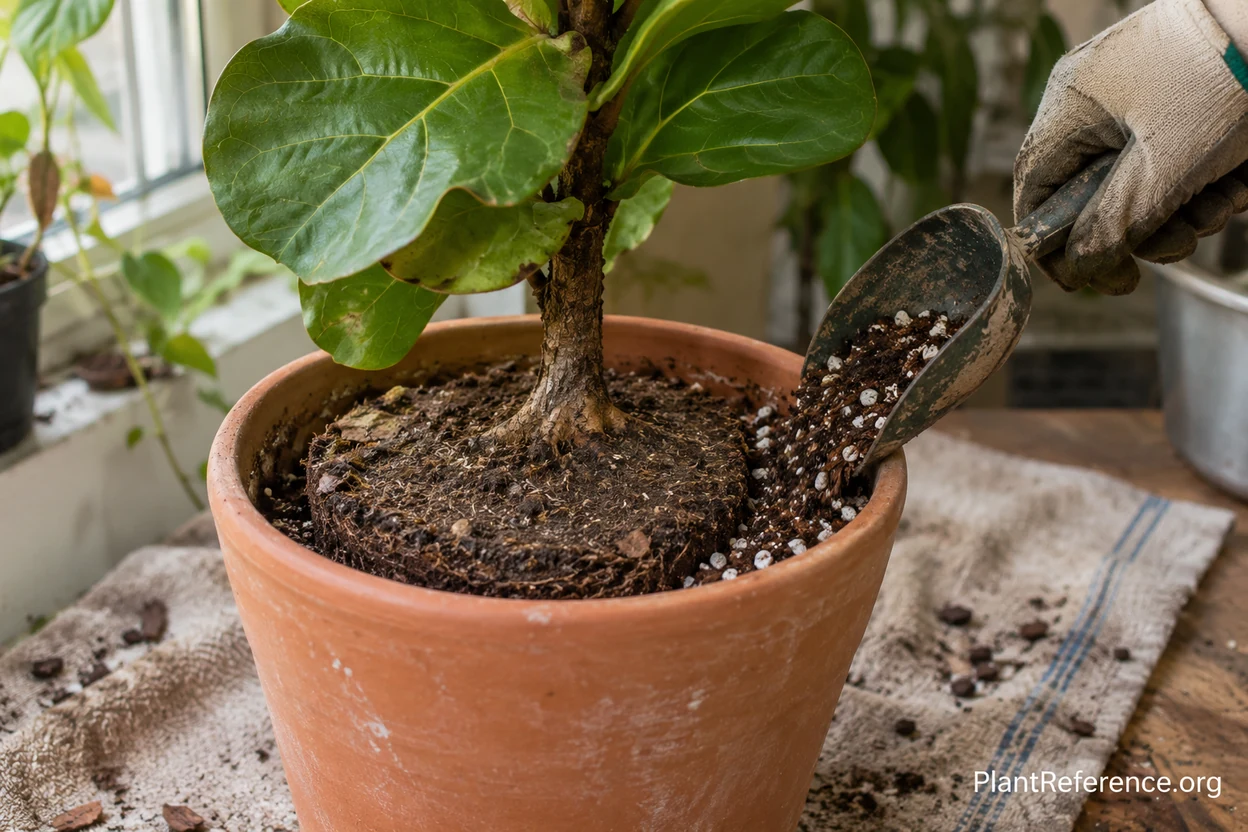
Before returning the pot to its cover, confirm that drainage is unobstructed and the arrangement is stable. A beautiful outer container becomes a problem when it conceals standing water. Make runoff checks easy enough that you will actually do them.
Water Thoughtfully After Repotting Fiddle Leaf Fig
Assess both the old root ball and the new mix. Dry medium needs careful, even wetting followed by drainage; already moist medium does not automatically need another soaking. Avoid a fixed instruction to water heavily or withhold water for an arbitrary number of days.
Afterward, check the upper 2–3 inches (5–8 cm) and deeper moisture before watering again. The new mix and container can change drying time, so the previous weekly routine may no longer fit.
How to Water a Fiddle Leaf Fig (Never Kill Yours Again) explains thorough watering and drainage. Monitor whether water reaches the old root ball as well as the fresh surrounding mix; different textures can dry unevenly.
Keep the plant in stable bright indirect light and avoid a sudden move into strong sun. Fiddle Leaf Fig Light Requirements: The Ultimate Guide helps with positioning. Maintain comfortable indoor conditions around 65–75°F (18–24°C), away from direct heating blasts or cold drafts.
Do not add fertilizer to force immediate recovery. Review any fertilizer already supplied in the mix, wait for stable healthy growth, and follow the chosen product's label when feeding is due. 5 Best Fertilizers for Fiddle Leaf Fig (Tested) can help later; it is not a required repotting purchase.
Troubleshoot the Adjustment Without Repeating the Repot
Some change in posture after handling needs observation, but ongoing decline deserves investigation. Check moisture and drainage before assuming transplant shock explains everything. Repeatedly unpotting a stable plant adds disturbance without giving it time to settle.
If leaves yellow or fall, compare current photos with your starting record. Fiddle Leaf Fig Yellow Leaves: Complete Troubleshooting helps separate moisture, light, and other causes. Existing damage will not necessarily disappear when the root environment improves.
Record the repotting date, mix used, and moisture observations. Look for stable foliage and eventually healthy new growth rather than a guaranteed deadline. A successful repot is a better foundation for ongoing care, not an instant transformation of every old leaf.
Frequently Asked Questions
Reading about plants and recognising them are different skills. These three build the second.
- Daily PlantIdentify the day’s mystery plant from a close-up photograph.
- Keyed OutWork a dichotomous key, lead by lead, to name a hidden specimen.
- Name That PlantName a specimen from botanical clues dealt hardest first.
Free to play, no account needed
Tagged with
Jessica transformed her small Brooklyn balcony into a thriving container garden after moving to New York City. What started as a pandemic hobby turned into a plant care consulting business serving urban apartment dwellers across the city. She specializes in small-space gardening, indoor plant troubleshooting, and helping clients keep houseplants alive in less-than-ideal conditions (dim light, dry heat, tiny spaces). Jessica completed a home gardening certificate program and shares her plant wins and failures on her modest Instagram following. Her partner, Maya, jokes that their apartment is now 40% plants, 60% living space. Jessica's passionate about making plant care accessible to renters who think they don't have room to garden.