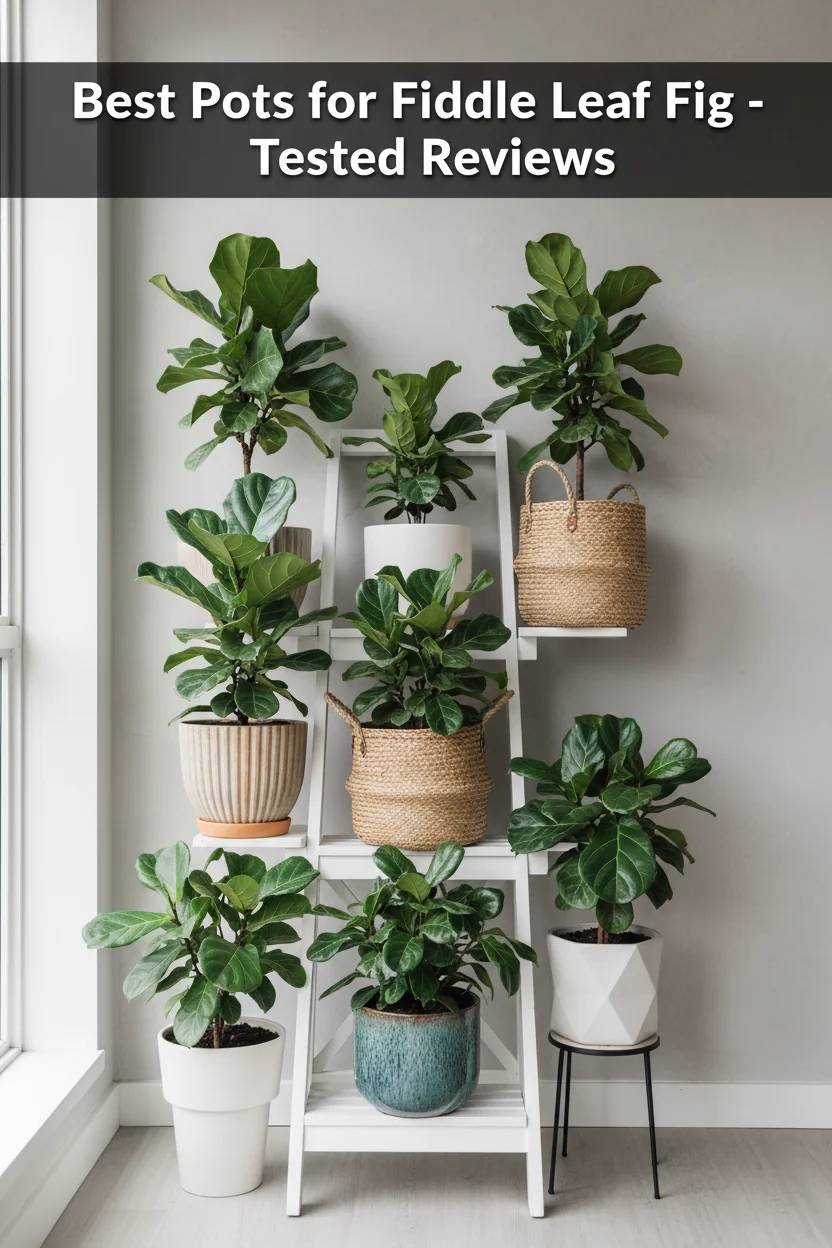
7 Best Pots for Fiddle Leaf Fig (2026 Reviews)
Pets & Toxicity
Recorded toxicity for plants linked in this guide. An unknown status is not a safety assessment.
— Image © Plant Reference 2026
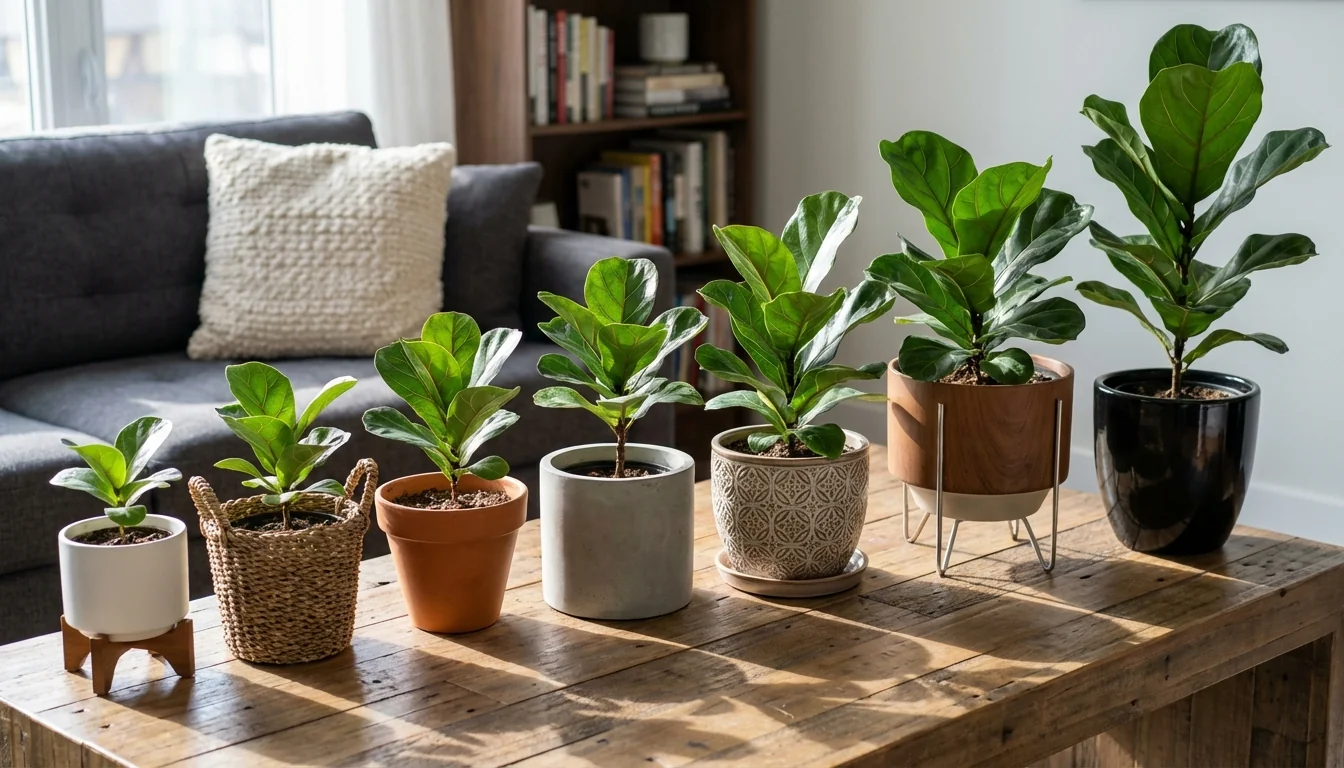
Choosing the right pot for your fiddle leaf fig 🌿Ficus lyrata (FY-kus ly-RAY-tuh) can make the difference between a thriving plant and constant care struggles. After testing dozens of planters in my small apartment over the past three years, I've learned that the best pots for fiddle leaf fig aren't always the prettiest ones on Instagram—they're the ones that balance drainage, stability, and your space's aesthetic needs.
Why Your Pot Choice Matters for Fiddle Leaf Fig Health
Your fiddle leaf fig's pot affects every aspect of its health, from root development to watering frequency. I've seen too many beautiful plants suffer in gorgeous pots that looked perfect but lacked proper drainage or appropriate sizing.
The relationship between pot choice and plant health comes down to three critical factors: drainage efficiency, root space management, and moisture retention balance. Fiddle leaf figs evolved in well-draining African rainforest soil, so they need pots that mimic these conditions—allowing excess water to escape quickly while maintaining enough moisture for steady growth.
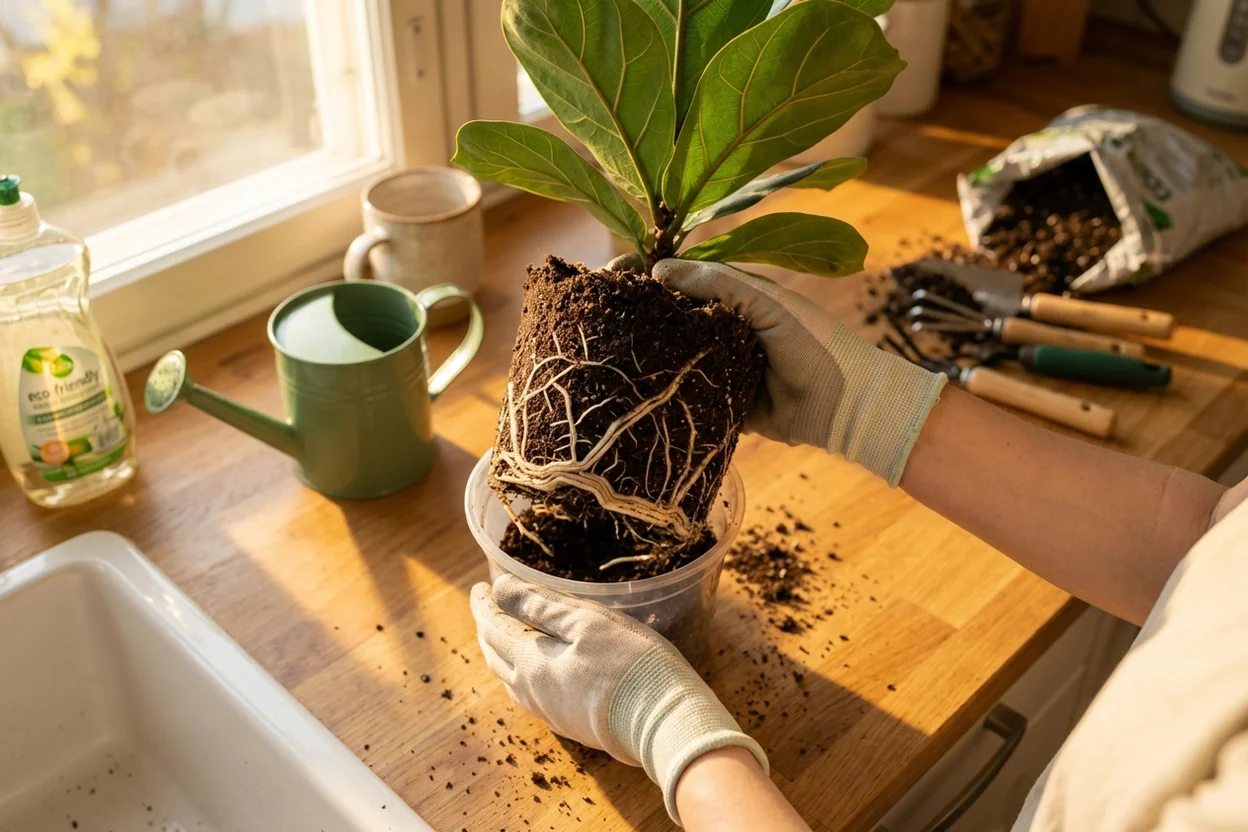
Size directly impacts growth patterns. Too small, and your fiddle leaf fig becomes root-bound, leading to stunted growth and increased watering needs. Too large, and the excess soil stays wet longer, increasing root rot risk. The sweet spot is typically 2-4 inches (5-10 cm) larger in diameter than your plant's current pot.
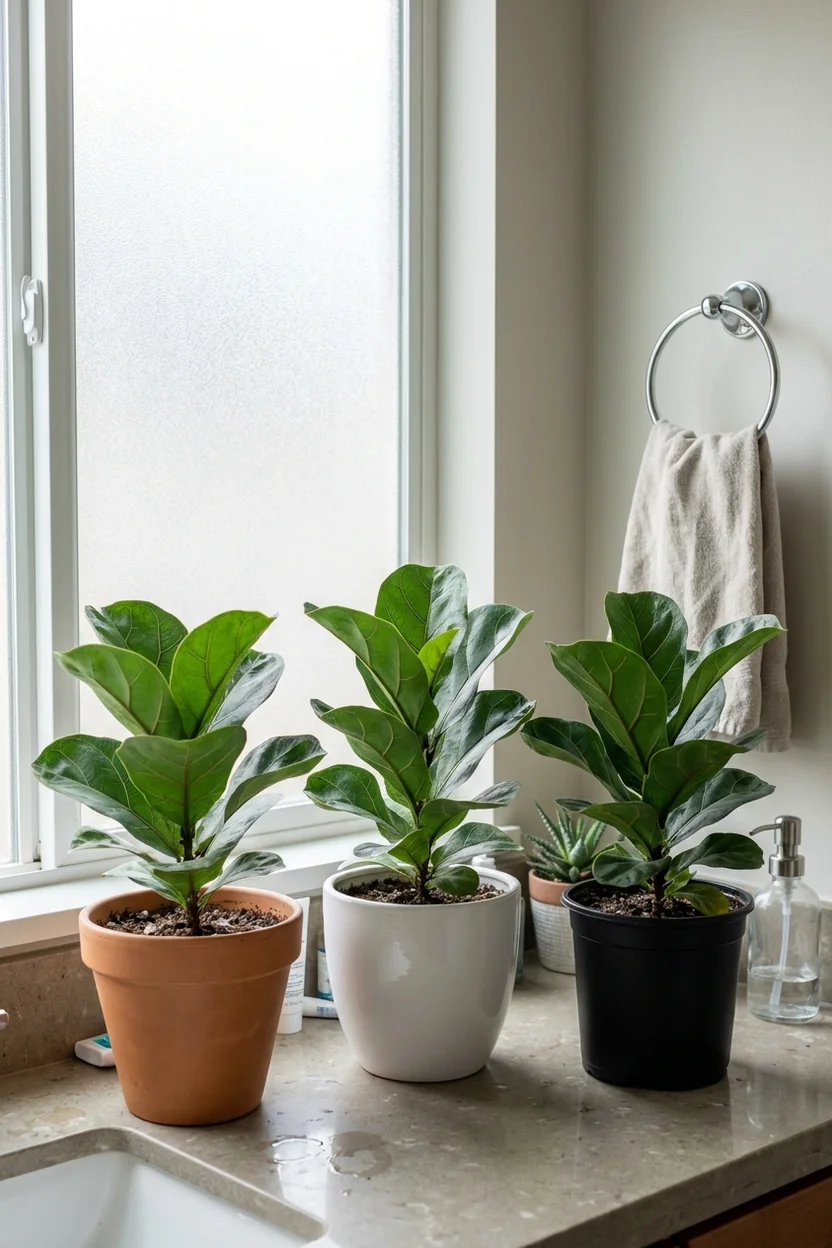
Material affects watering frequency. Terracotta dries out faster than ceramic, while plastic retains moisture longest. In my experience, this means I water my fiddle leaf fig in terracotta every 5-7 days, ceramic every 7-10 days, and plastic every 10-14 days during growing season.
What Makes a Great Fiddle Leaf Fig Pot
Through trial and error with over 20 different pots, I've identified the non-negotiable features that separate excellent fiddle leaf fig pots from disappointing ones.
Essential Features
Drainage holes are absolutely mandatory. I learned this the hard way when I lost a $60 plant to a beautiful ceramic pot without drainage. No matter how careful you are with watering, fiddle leaf figs need escape routes for excess moisture.
Stability matters more than you think. Fiddle leaf figs develop top-heavy growth, especially as they mature. I've had plants tip over in lightweight or narrow pots, damaging both plant and surrounding furniture. The pot base should be at least one-third the width of the plant's canopy.
Drainage holes (minimum 1, preferably 2-3)
Stable base width (at least 1/3 of plant canopy width)
Appropriate depth (pot height = 1/3 to 1/2 of plant height)
Smooth interior (no sharp edges that damage roots)
Quality construction (no cracks or weak points)
Material Considerations
Ceramic with drainage offers the best balance of aesthetics, weight for stability, and moisture management. It's my go-to recommendation for most fiddle leaf fig owners because it holds just enough moisture without staying soggy.
Terracotta works beautifully if you tend to overwater or live in humid climates. The porous material wicks excess moisture away from roots, but requires more frequent watering in dry environments.
Plastic gets unfairly criticized but can work well for beginners who are still learning watering patterns. Choose thicker, higher-quality plastic that won't crack or become brittle over time.
7 Best Pots for Fiddle Leaf Fig (Detailed Reviews)
After extensive testing in my apartment and gathering feedback from my plant-obsessed friends, here are the seven pots that consistently deliver excellent results for fiddle leaf figs. For more information on companion plants, see Fiddle Leaf Fig Care Guide.
1. LA JOLIE MUSE Woven Seagrass Basket Planter
→ LA JOLIE MUSE Woven Seagrass Basket ($28-35) - Perfect blend of natural style and practical function
This handwoven seagrass basket combines Instagram-worthy aesthetics with practical functionality. The 12-inch diameter works perfectly for medium fiddle leaf figs, while the belly shape provides excellent stability. I use this as a cachepot with a plastic liner pot inside for easy drainage management. The natural texture complements any decor style, from boho to Scandinavian minimalist. The handles make moving your plant effortless—crucial for following light throughout the day. After two years of use, mine shows minimal wear and still looks fresh. The only downside is you'll need to add your own drainage solution, but the versatility makes it worth the extra step.
Product link unavailable
2. Perfect Plants Ceramic Planter with Bamboo Stand
→ Perfect Plants Mid-Century Ceramic Planter ($45-60) - Elevated design with built-in drainage
This elevated ceramic planter solved my small apartment's floor space issues while adding sophisticated style. The bamboo stand raises your fiddle leaf fig to perfect eye level and improves air circulation around the pot. The ceramic pot features a drainage hole and includes a matching saucer that fits perfectly in the stand's circular opening. I appreciate that it comes in three sizes, making it easy to size up as your plant grows. The white ceramic is easy to clean and matches virtually any decor. The bamboo develops a beautiful patina over time. Construction quality is excellent—mine has survived two moves and daily use. The elevated position also makes it easier to check soil moisture and spot any issues early.
Product link unavailable
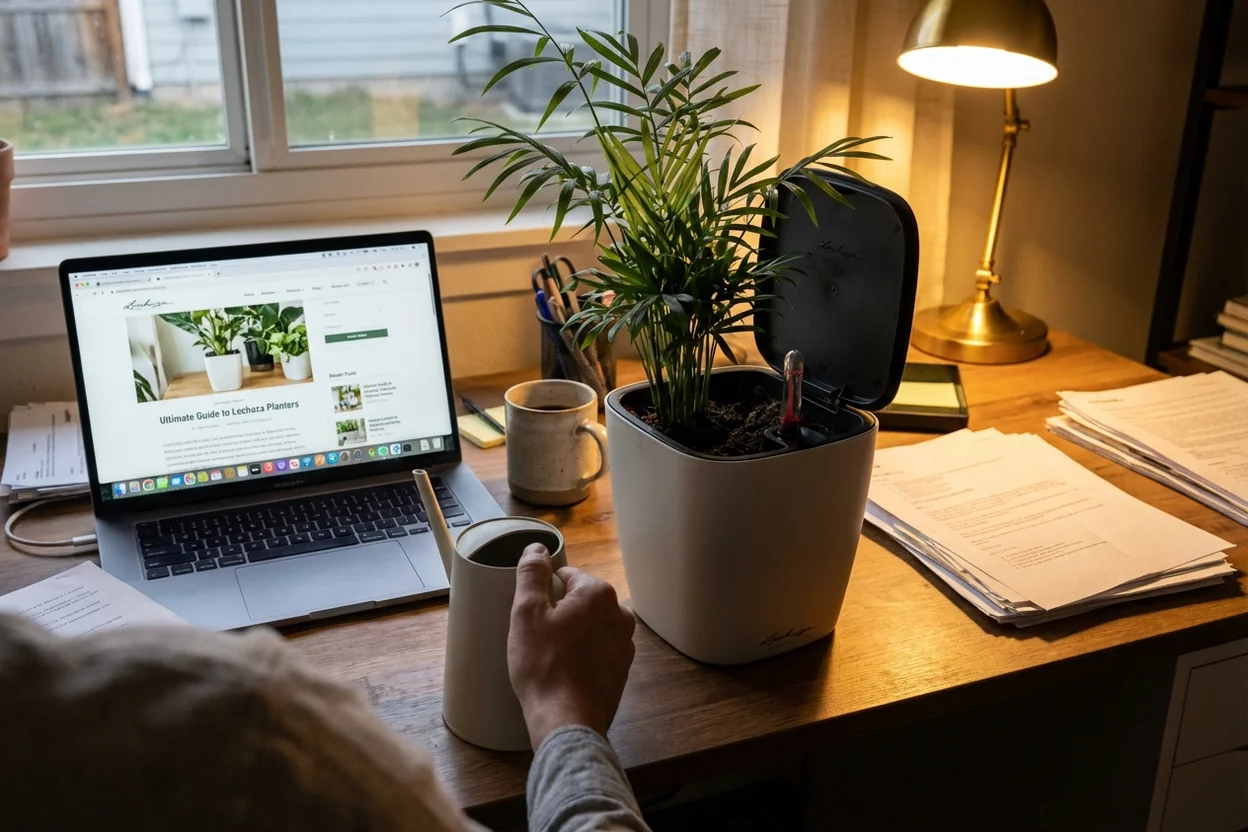
3. Lechuza Classico Self-Watering Planter
→ Lechuza Classico Self-Watering Planter ($89-120) - German engineering meets plant care convenience
The Lechuza system revolutionized how I care for my fiddle leaf fig, especially during busy work periods or travel. The sub-irrigation system maintains consistent soil moisture without the risk of overwatering that kills so many fiddle leaf figs. The water reservoir lasts 2-3 weeks depending on season and plant size. I was skeptical about self-watering systems, but this German-engineered design works flawlessly. The included LECHUZA-PON growing medium provides perfect drainage and aeration. The sleek design looks expensive but justifies the investment through reduced plant stress and care convenience. The water level indicator takes guesswork out of maintenance. After 18 months, both my plant and the planter look better than ever. Worth every penny for busy plant parents or anyone who travels frequently.
Product link unavailable
4. West Elm Mid-Century Turned Wood Planter
→ West Elm Mid-Century Wood Planter ($79-99) - Sustainable hardwood construction with timeless appeal
This sustainably-sourced mango wood planter brings warmth and natural texture that complements fiddle leaf fig's organic beauty perfectly. The turned wood construction creates subtle ridges that add visual interest without overwhelming the plant. At 14 inches diameter, it provides excellent stability for larger fiddle leaf figs. I use a plastic liner pot inside for drainage management, which protects the wood from moisture damage. The natural wood grain means each planter is unique. Over two years, mine has developed a beautiful patina while maintaining structural integrity. The substantial weight provides stability, but it's not excessive for apartment living. West Elm's quality control is consistent, and their customer service handles any issues promptly. This planter works in both modern and traditional settings, making it versatile for changing decor preferences.
Product link unavailable
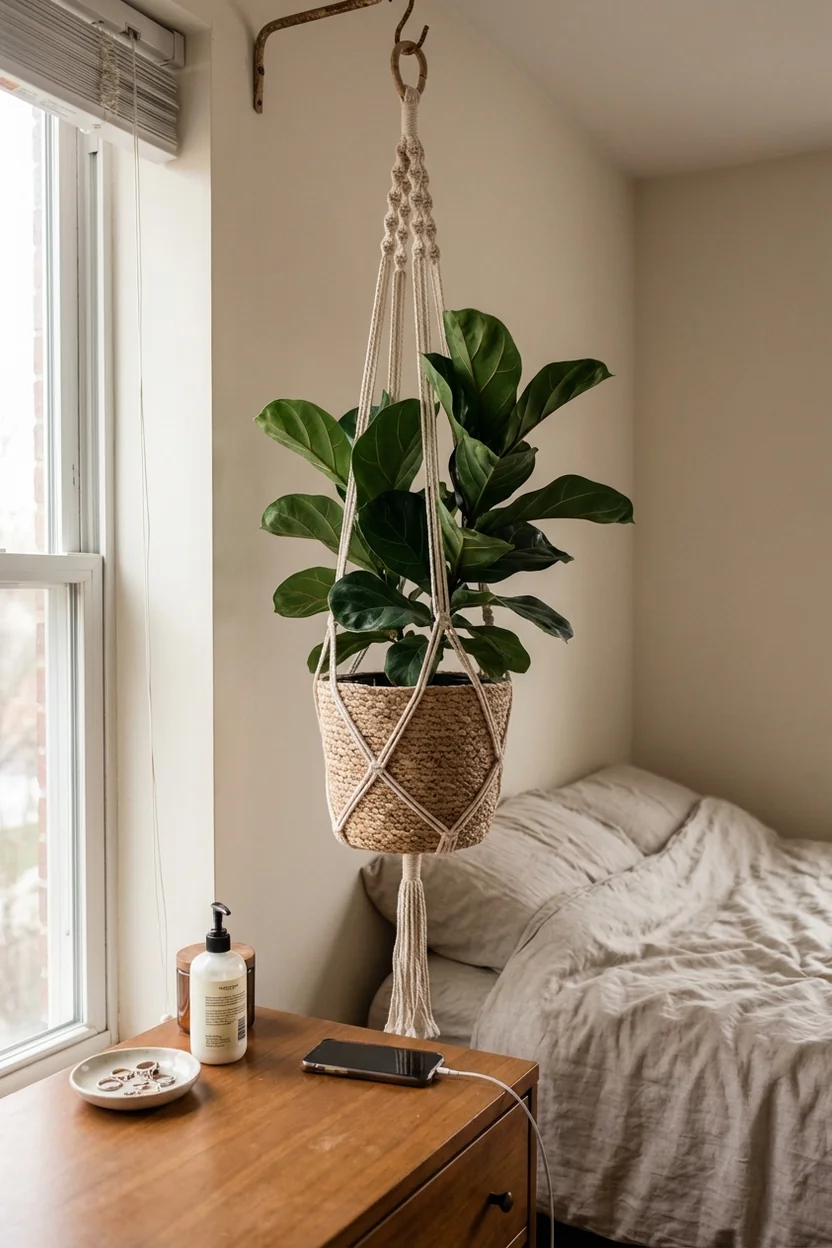
5. Mkono Macrame Plant Hanger with Ceramic Pot
→ Mkono Macrame Hanging Planter ($35-45) - Space-saving vertical solution with boho appeal
Perfect solution for small apartments where floor space is precious, this macrame hanger supports medium-sized fiddle leaf figs beautifully. The included ceramic pot features proper drainage and a matching saucer. I was initially concerned about weight capacity, but the cotton cord construction has safely held my 4-foot (120 cm) plant for over a year. The 41-inch (104 cm) cord length provides flexibility for ceiling height adjustments. Installation requires a strong ceiling hook rated for 25+ pounds (11+ kg), but the dramatic visual impact is worth it. The macrame design adds textural interest and complements the plant's natural beauty. This setup improved my plant's health by positioning it closer to light sources and improving air circulation. The ceramic pot is high quality and matches the neutral cord perfectly.
Product link unavailable
6. Rivet Modern Ceramic Planter Set
→ Rivet Modern Ceramic Planter Set ($52-68) - Clean lines with functional design
Amazon's Rivet brand delivers surprising quality at competitive prices with this modern ceramic set. The matte finish looks expensive and resists showing water spots or fingerprints. Both pots feature large drainage holes and perfectly fitted saucers that protect furniture. The clean cylindrical design works in contemporary, minimalist, or Scandinavian interiors. I appreciate getting two sizes in one purchase—perfect for a large fiddle leaf fig and a smaller companion plant. The ceramic feels substantial and durable after 15 months of daily use. The neutral color palette (white, black, or gray options) ensures these planters never clash with changing decor. At this price point, you're getting excellent value without sacrificing quality. The included saucers fit snugly and prevent wobbling, which I've experienced with other brands.
7. Article Encircle Planter
→ Article Encircle Large Planter ($99-129) - Designer quality with statement-making presence
This premium planter from Article represents the best of contemporary design with practical functionality. The distinctive circular cutout design creates visual lightness while maintaining structural strength. Available in matte black or white ceramic with subtle texture variations that catch light beautifully. The 14-inch (35 cm) diameter accommodates large fiddle leaf figs while the substantial base prevents tipping. Drainage hole placement is thoughtfully designed for optimal water flow. Quality control is exceptional—my white version arrived perfectly packaged with no chips or defects. The sophisticated design makes this planter a room's focal point even without plants. Article's customer service and return policy provide confidence in the investment. While expensive, the build quality and timeless design justify the cost for those wanting furniture-quality plant containers.
Product link unavailable
Sizing Guide: Choosing the Right Pot Size
Getting pot size right prevents both root binding and root rot—two of the most common fiddle leaf fig killers I've encountered in three years of apartment plant parenting. Learn more about sizing with Fiddle Leaf Fig Repotting Guide.
The 2-4 Inch Rule
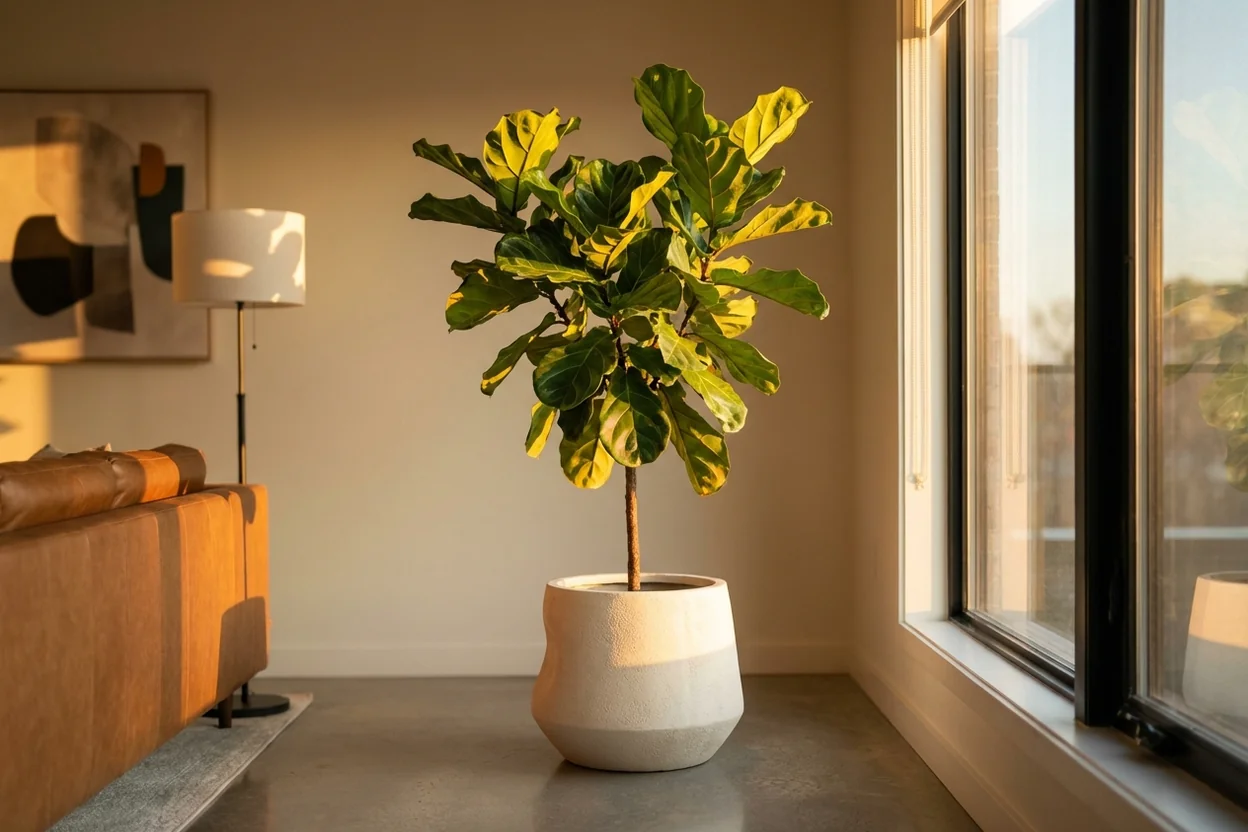
For healthy fiddle leaf figs, choose a pot 2-4 inches (5-10 cm) larger in diameter than the current pot. This provides room for growth without creating excessive soil volume that stays wet too long.
For struggling plants, stick to 2 inches (5 cm) maximum. Stressed fiddle leaf figs can't utilize large amounts of soil efficiently, and excess moisture becomes dangerous.
Size Progression Chart
6-inch pot: Young plants, 1-2 feet (30-60 cm) tall
8-10 inch pot: Medium plants, 2-4 feet (60-120 cm) tall
12-14 inch pot: Large plants, 4-6 feet (120-180 cm) tall
16+ inch pot: Mature specimens, 6+ feet (180+ cm) tall
I learned this progression through expensive mistakes. My first fiddle leaf fig went from a 6-inch to 14-inch pot in one jump—it developed root rot within six weeks because the massive soil volume stayed soggy. Now I upsize gradually and my plants thrive.
Depth Considerations
Pot depth should equal 1/3 to 1/2 of your plant's total height. Too shallow, and the plant becomes unstable. Too deep, and you're wasting space and creating drainage issues.
For a 4-foot (120 cm) fiddle leaf fig, I use pots 16-24 inches (40-60 cm) deep. This provides adequate root space while maintaining proper proportions.
Drainage Solutions for Any Pot
Even the most beautiful pot becomes useless without proper drainage. Here's how I've solved drainage challenges in every pot type I've tested. For detailed care instructions, see Fiddle Leaf Fig Watering Schedule.
Standard Drainage Setup
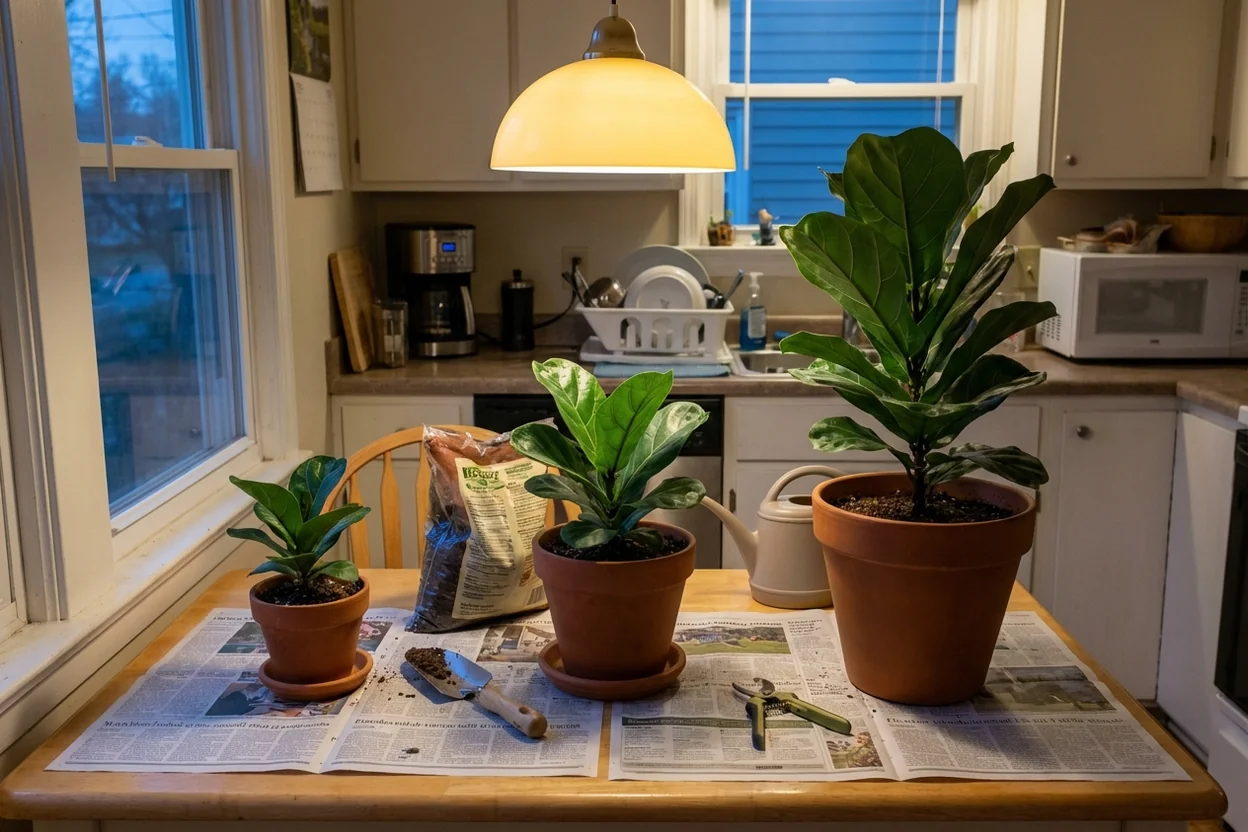
Layer system works consistently: 1-2 inches (2.5-5 cm) of drainage material (perlite, gravel, or pottery shards), then well-draining potting mix, leaving 1-2 inches (2.5-5 cm) at the top for watering space.
Drainage hole size matters. I prefer 1/2 to 3/4 inch (1.3-1.9 cm) holes. Smaller holes clog easily; larger holes lose too much soil during watering.
Solutions for Pots Without Drainage
Double potting is my preferred method for decorative pots without drainage. Place a plastic grower's pot inside the decorative container, with drainage material between them. This protects both plant and planter while maintaining aesthetics.
Drill drainage holes in ceramic or terracotta using a masonry bit and steady pressure. I've successfully modified dozens of pots this way. Start with a small bit and work up to desired size, drilling slowly to prevent cracking.
Budget vs. Premium: Which Pots Are Worth It
After testing pots from $15 to $150, I've learned where to invest and where to save money without compromising plant health. For additional information on plant health, see Fiddle Leaf Fig Troubleshooting.
Budget Winners ($15-40)
The LA JOLIE MUSE Seagrass Basket proves you don't need to spend heavily for style and function. For $28-35, it rivals pots costing twice as much.
Simple ceramic pots with drainage from big box stores work beautifully for $15-25. Focus on proper drainage holes and stable construction rather than fancy design details.
Worth the Investment ($50-100+)
Self-watering systems like Lechuza justify their cost through convenience and reduced plant stress. If you travel frequently or have a busy schedule, the $89-120 investment pays for itself in peace of mind.
Quality ceramic planters with stands provide years of reliable service and timeless aesthetics that adapt to changing decor trends.
Overpriced Categories
Decorative pots without drainage holes rarely justify premium pricing. You'll need drainage solutions anyway, negating much of their convenience.
Trendy materials like concrete often cost more without providing functional benefits over quality ceramic or terracotta.
Common Pot Mistakes to Avoid
Learn from my expensive mistakes—here are the pot problems that have cost me plants, money, and frustration over three years. See Fiddle Leaf Fig Common Problems for more troubleshooting.
The "Too Big Too Fast" Mistake
My worst plant loss happened when I moved a fiddle leaf fig from a 6-inch to 14-inch pot in one repotting. The massive soil volume stayed wet for weeks, causing fatal root rot. Always upsize gradually—2-4 inches (5-10 cm) maximum per repotting.
The "Looks Over Function" Trap
That gorgeous pot without drainage holes will kill your plant faster than poor light or irregular watering. I've learned to prioritize drainage over aesthetics every single time. Beautiful plants make any pot look good; dead plants make expensive pots look foolish.
The Saucer Neglect Problem
Standing water in saucers creates root rot conditions even with proper drainage holes. I empty all saucers 30 minutes after watering, without exception.
Weight Distribution Issues
Top-heavy plants in narrow pots will eventually tip over. I've had three plants crash because I prioritized sleek aesthetics over stable proportions. Now I ensure pot width equals at least one-third of the plant's canopy width.
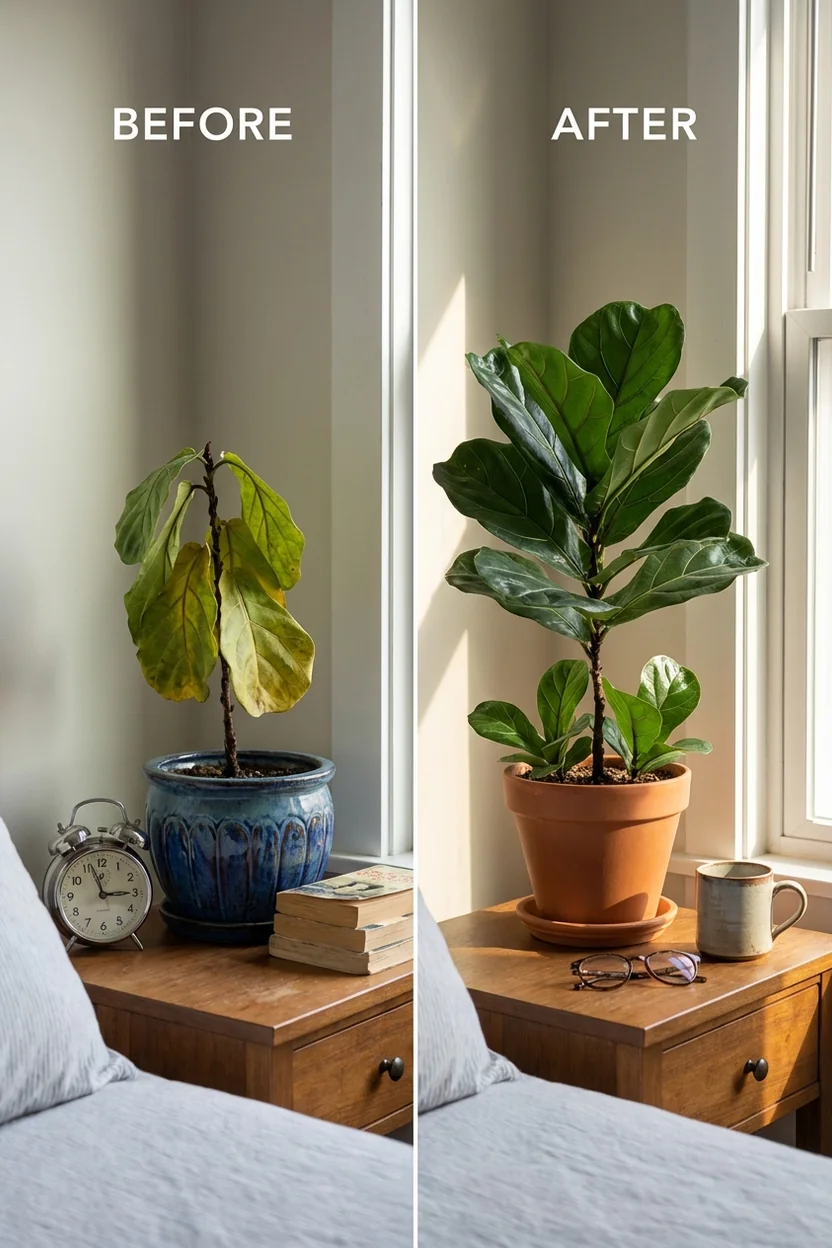
The right pot can transform your fiddle leaf fig from surviving to thriving. Whether you choose a budget-friendly seagrass basket or invest in a premium self-watering system, focus on the fundamentals: proper drainage, appropriate sizing, and stable construction. Your fiddle leaf fig will reward you with years of healthy growth and Instagram-worthy beauty. For additional styling ideas, explore Indoor Plant Decor Ideas.
Frequently Asked Questions
Reading about plants and recognising them are different skills. These three build the second.
- Daily PlantIdentify the day’s mystery plant from a close-up photograph.
- Keyed OutWork a dichotomous key, lead by lead, to name a hidden specimen.
- Name That PlantName a specimen from botanical clues dealt hardest first.
Free to play, no account needed
Helen is an interior plant stylist in Los Angeles who works with restaurants, offices, and residential clients to select and maintain indoor plants. She studied design in college and got into plants when a client asked her to "green up" a mid-century modern home. Helen's expertise sits at the intersection of design and plant care—she thinks about light, scale, texture, and color, but she also knows which plants will actually survive in a given space. She's killed enough fiddle leaf figs in dark corners to know better. Helen maintains her own collection of over 80 houseplants in her apartment and writes about indoor plant selection, styling, and the practical side of keeping plants alive in interior environments.