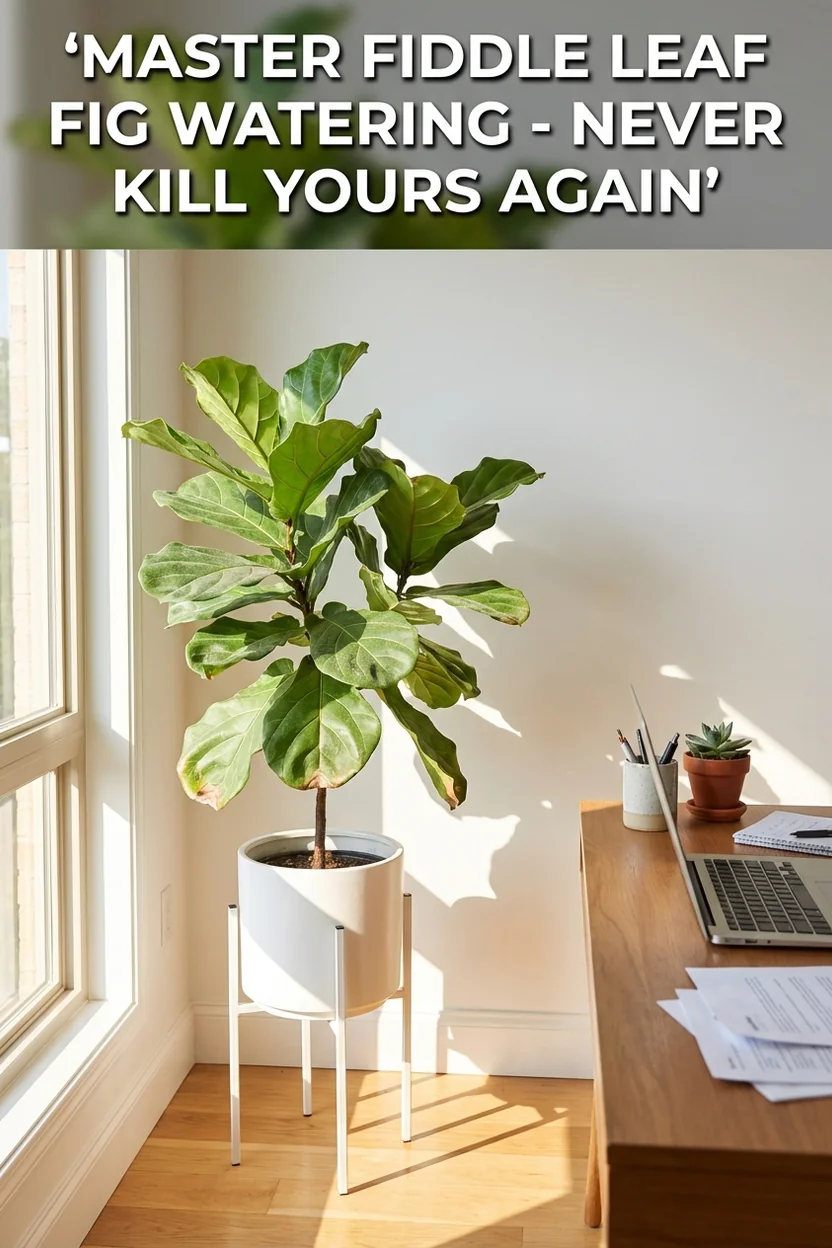
How to Water a Fiddle Leaf Fig (Never Kill Yours Again)
Pets & Toxicity
Recorded toxicity for plants linked in this guide. An unknown status is not a safety assessment.
Toxic to pets: fiddle leaf figDetailsHide
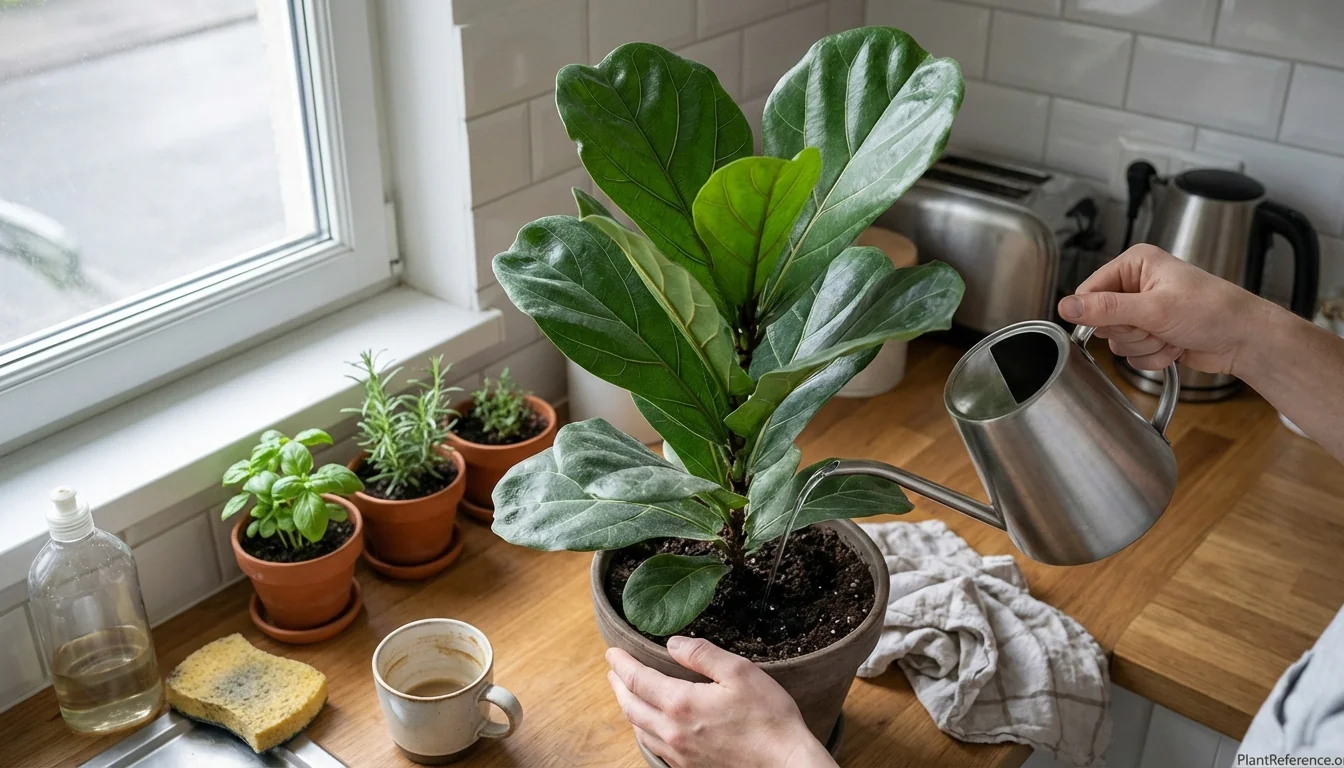
— Image © Plant Reference 2026
Wondering how often to water fiddle leaf fig plants without killing them? The answer isn't a rigid schedule—it's learning to read your plant's actual water needs through soil moisture testing, environmental factors, and visual cues. Most fiddle leaf figs need water every 7-14 days when the top 2-3 inches of soil feel dry, but this varies dramatically based on season, humidity, pot size, and soil composition.
The fiddle leaf fig 🌿Ficus lyrata (FY-kus ly-RAY-tuh) has specific water requirements rooted in its African rainforest origins, where it grows in well-draining soil that dries between rain periods. Understanding these needs—rather than following arbitrary watering schedules—is the key to preventing the root rot that kills 60% of indoor fiddle leaf figs.
Understanding Fiddle Leaf Fig Water Needs
Fiddle leaf figs evolved in West African rainforests where they experience wet periods followed by drying intervals. Their root system developed to absorb water quickly during rains, then tolerate moderate drying as forest soil drains. This natural pattern is crucial to replicate indoors.
The plant's large leaves—often 12-18 inches (30-45 cm) long—create significant water demand through transpiration. A healthy mature fiddle leaf fig transpires approximately 1-2 cups of water daily through its stomata (leaf pores), but this rate fluctuates based on humidity, temperature, and light intensity.
Root anatomy affects watering frequency. Fiddle leaf figs have both thick structural roots for anchoring and fine feeder roots for nutrient absorption. The feeder roots, concentrated in the top 6-8 inches (15-20 cm) of soil, are extremely sensitive to waterlogged conditions. When soil stays wet for more than 48-72 hours, these fine roots begin dying from lack of oxygen.
Container growing changes everything. In nature, excess water drains away through deep soil layers. In pots, water has nowhere to go except through drainage holes, making proper pot selection and soil composition critical for healthy watering practices. Understanding your Fiddle Leaf Fig Light Requirements Guide helps you gauge overall plant health and water uptake efficiency.
The Science Behind Proper Watering
Transpiration drives water uptake. As water evaporates from leaf surfaces through stomata, it creates negative pressure (transpiration pull) that draws water upward from roots through xylem vessels. This cohesion-tension mechanism means the plant only moves water when actively transpiring—typically during daylight hours when photosynthesis occurs.
Root respiration requires oxygen. Plant roots need oxygen for cellular respiration, just like humans need air to breathe. In waterlogged soil, air spaces fill with water, suffocating roots and preventing nutrient uptake. This is why fiddle leaf figs show yellowing leaves when overwatered—the roots literally cannot function without oxygen.
Soil moisture affects nutrient availability. Many essential nutrients dissolve in soil water, making them available for root absorption. However, in constantly wet soil, beneficial soil microorganisms die off, and harmful anaerobic bacteria proliferate, changing soil chemistry and blocking nutrient uptake. Proper fertilization through Best Fiddle Leaf Fig Fertilizer requires healthy root function enabled by correct watering.
Temperature influences water absorption. Fiddle leaf fig roots absorb water most efficiently at soil temperatures between 65-75°F (18-24°C). Cold soil (below 60°F/15°C) slows root function dramatically, meaning plants need less frequent watering in winter even if top soil appears dry.
Signs Your Fiddle Leaf Fig Needs Water
Learning to recognize water stress before damage occurs prevents both underwatering and overwatering problems. Visual cues combined with soil testing provide the most accurate watering timing.
Physical signs of water need:
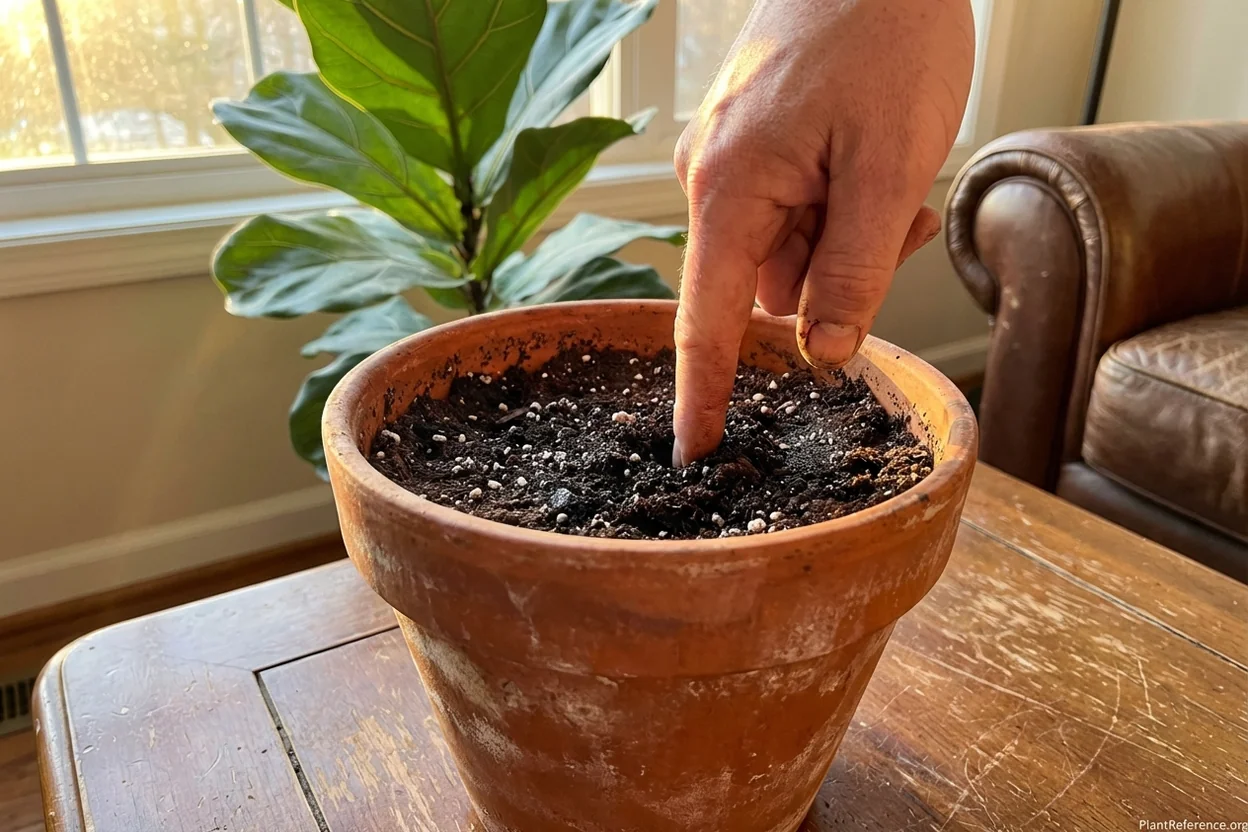
Top 2-3 inches (5-8 cm) of soil feel dry when tested with finger
Soil pulls slightly away from pot edges (in terra cotta or plastic pots)
Plant feels lighter when lifted (after you've learned the weight difference)
Lower leaves show very slight drooping or less rigid posture
New growth appears smaller than normal
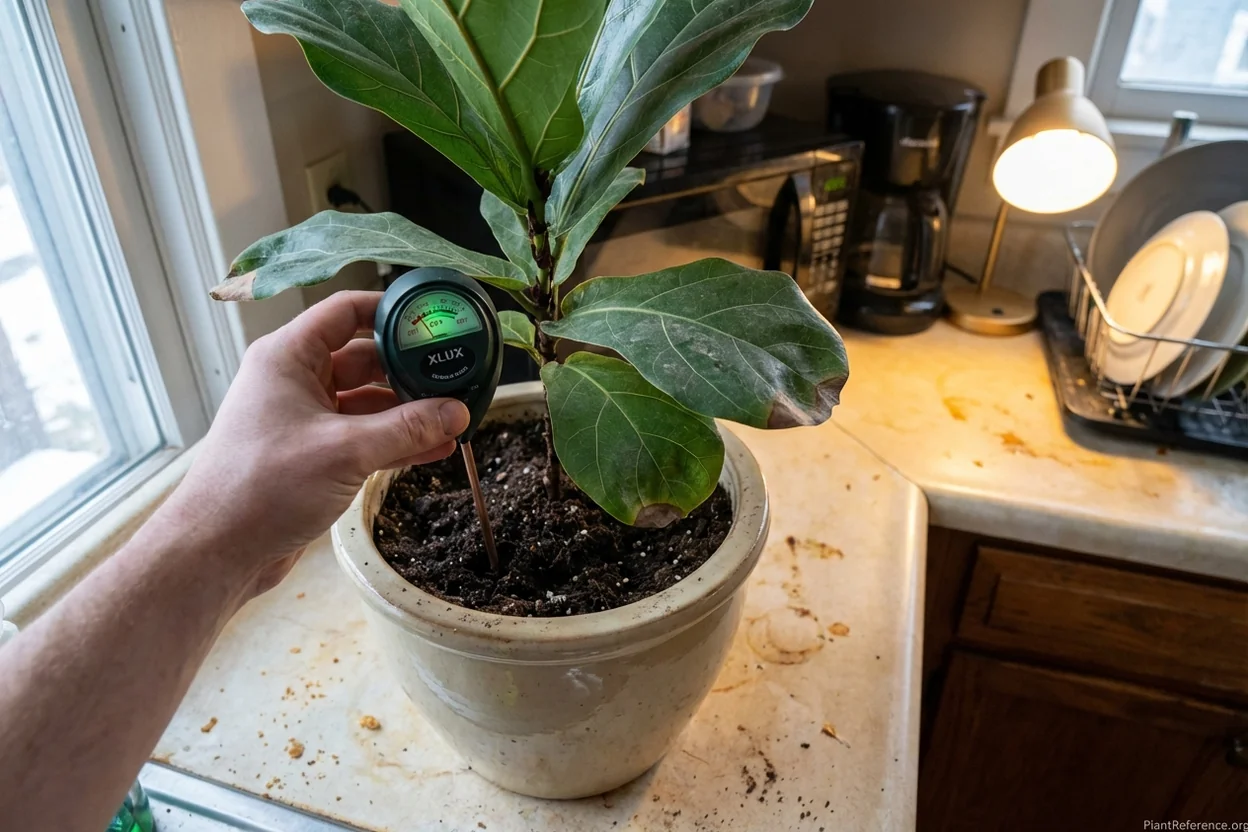
The finger test remains most reliable. Insert your index finger straight down into soil to the second knuckle (approximately 2-3 inches/5-8 cm deep). Soil should feel dry at this depth before watering. If you encounter moist soil, wait 2-3 more days and test again.
Moisture meters can help beginners but aren't always accurate in soil mixes containing bark or other organic materials. The XLUX Soil Moisture Meter provides consistent readings when inserted to 6-8 inches (15-20 cm) deep, giving you data about root zone conditions rather than just surface moisture.
Maintaining Fiddle Leaf Fig Humidity: How to Increase It also supports proper watering practices, as humidity affects transpiration rates and soil drying speed.
How Often to Water Your Fiddle Leaf Fig
Frequency depends on six key factors:
1. Season and light intensity. Spring and summer growth periods require watering every 7-10 days as plants actively transpire and grow. Fall and winter dormancy reduces water needs to every 10-14 days as transpiration slows dramatically.
2. Humidity levels. In low humidity (below 40%), plants transpire faster and need more frequent watering. High humidity (above 60%) slows transpiration, extending time between waterings by 2-4 days.
3. Pot size and material. Smaller pots (6-10 inches/15-25 cm diameter) dry out faster than large pots. Terra cotta allows evaporation through pot walls, requiring more frequent watering than plastic or ceramic. A 6-inch (15 cm) terra cotta pot may need water every 5-7 days, while a 14-inch (35 cm) ceramic pot might last 10-14 days.
4. Soil composition. Fast-draining mixes with bark and perlite dry faster than heavy potting soil. Well-draining fiddle leaf fig soil should dry in the top 2-3 inches within 5-8 days after thorough watering.
5. Plant size and leaf area. Mature plants with large leaf surface area transpire more water than small plants. A 6-foot (1.8 m) fiddle leaf fig may need water every 7-9 days, while a 2-foot (60 cm) plant might last 10-12 days.
6. Environmental conditions. Heating and air conditioning create air movement that increases transpiration. Plants near vents or in drafty locations need more frequent watering than those in stable environments. Reference Common Fiddle Leaf Fig Problems and Solutions to understand how environmental stress affects water needs.
Seasonal watering schedule guidelines:
Spring (March-May): Every 7-10 days as growth resumes
Summer (June-August): Every 7-9 days during peak growing season
Fall (September-November): Every 9-12 days as growth slows
Winter (December-February): Every 10-14 days during dormancy
Remember these are starting guidelines—always test soil moisture rather than following rigid schedules. Environmental factors in your specific home may require adjustments of 2-4 days in either direction.
The Correct Watering Technique
Proper watering technique matters as much as timing. How you apply water affects root health, soil structure, and nutrient distribution throughout the pot.
Step-by-step watering process:
1. Test soil moisture first. Never water based on calendar dates alone. Use the finger test or moisture meter to confirm the top 2-3 inches (5-8 cm) feel dry before proceeding.
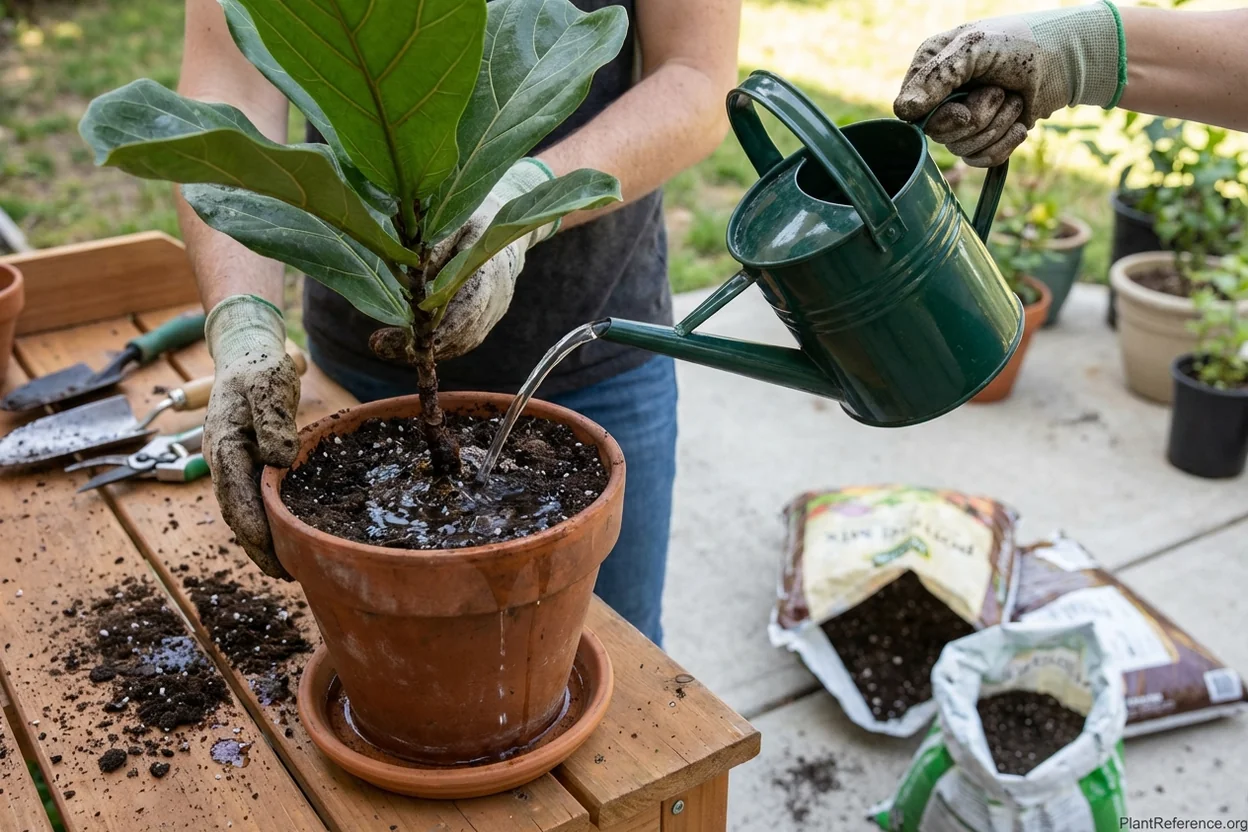
2. Water slowly and evenly. Pour water slowly around the entire soil surface, not just in one spot. This ensures even moisture distribution and prevents channeling—when water runs down one side of the pot without saturating the root zone.
3. Water until drainage appears. Continue watering until you see water flowing from drainage holes. This ensures the entire root system receives moisture and flushes out accumulated salts from fertilizers.
4. Allow complete drainage. Let excess water drain for 15-30 minutes, then empty saucers or cachepots. Never allow plants to sit in standing water, as this creates the anaerobic conditions that cause root rot.
5. Monitor soil settling. Well-draining soil should feel evenly moist (not soggy) throughout the pot immediately after watering, then begin drying from the surface downward over the following days.
Common watering mistakes to avoid:
Giving small amounts of water frequently (creates shallow root system)
Watering on schedule regardless of soil moisture (leads to overwatering)
Only wetting the top inch of soil (roots remain dry)
Leaving plants in drainage water (causes root suffocation)
Using ice cubes or cold water (shocks roots and slows absorption)
The Best Soil for Fiddle Leaf Fig (Tested & Compared) article provides detailed guidance on soil mixes that support proper watering practices.
Water Quality and Temperature Guidelines
Water quality significantly impacts fiddle leaf fig health. Municipal tap water often contains chemicals that accumulate in soil over time, while water temperature affects root function and nutrient absorption.
Optimal water temperature: Room temperature water (65-75°F/18-24°C) promotes best root absorption. Cold water below 60°F (15°C) can shock roots and slow water uptake, while hot water above 85°F (29°C) may damage fine root hairs.
Tap water considerations: Most municipal water is acceptable for fiddle leaf figs, but heavily chlorinated water should sit uncovered for 24 hours to allow chlorine to evaporate. Alternatively, use filtered water or rainwater when possible.
Hard water effects: Water with high mineral content (calcium, magnesium) leaves white deposits on soil surface and pot rims. While not immediately harmful, accumulated minerals can interfere with nutrient uptake over time. Consider using distilled water for monthly watering if you have very hard water.
pH impact: Fiddle leaf figs prefer slightly acidic to neutral soil pH (6.0-7.0). Alkaline water (pH above 7.5) can gradually raise soil pH, affecting nutrient availability. If using well water or very hard municipal water, test soil pH annually and adjust with pH-lowering amendments if necessary.
Understanding water chemistry becomes essential when addressing Yellow Leaves: Causes and Fixes, as mineral accumulation and pH issues frequently contribute to leaf yellowing problems.
Signs of Overwatering vs Underwatering
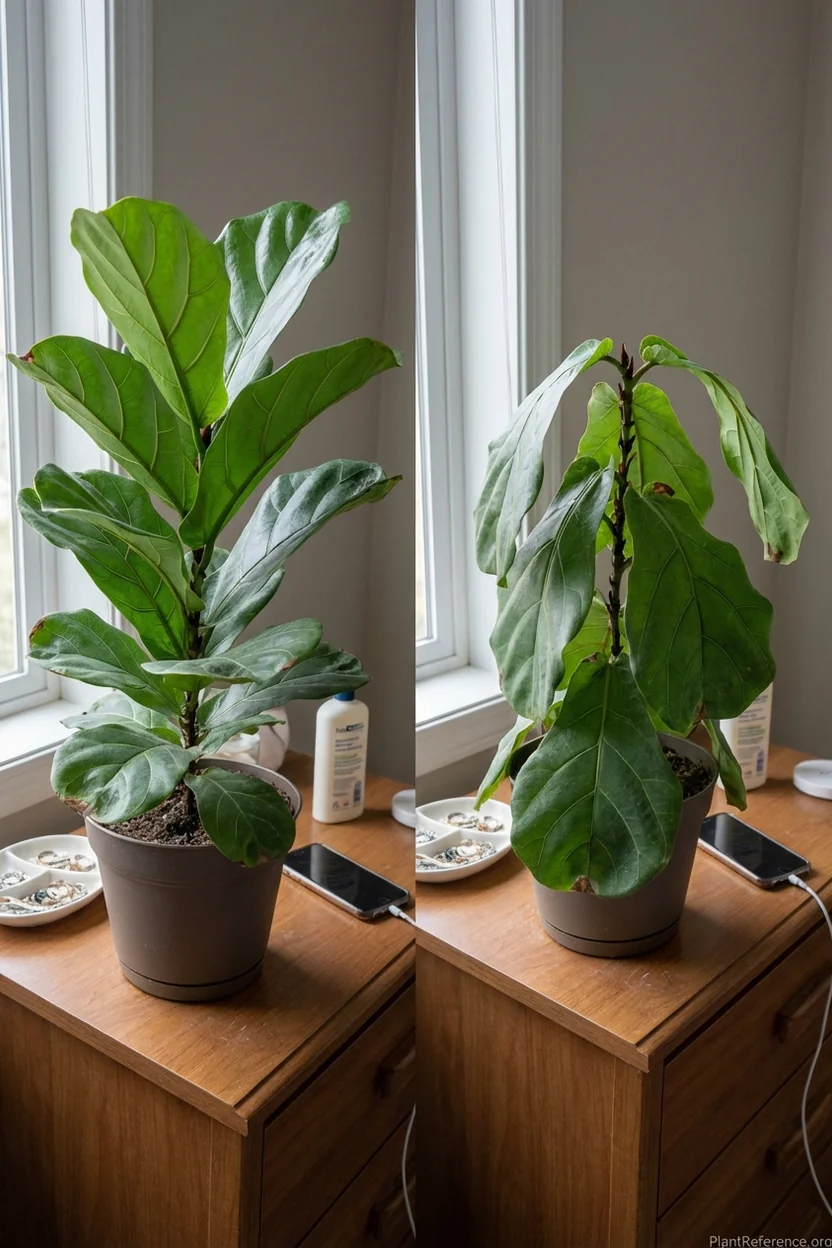
Distinguishing between overwatering and underwatering prevents incorrect treatment that can worsen plant stress. Both conditions can cause yellowing leaves, making visual diagnosis tricky without understanding the underlying mechanisms.
Overwatering symptoms:
Yellow leaves starting with lower/older foliage, progressing upward
Leaves feel soft and may have brown spots in centers
Soil stays wet for more than 5-7 days after watering
Musty smell from soil surface indicating anaerobic bacterial growth
Black or brown mushy roots visible at drainage holes
Fungus gnats hovering around soil surface
New growth appears pale yellow-green instead of vibrant green
Underwatering symptoms:
Yellow leaves start with edges turning crispy brown, then yellowing
Leaves feel dry and papery, may curl or droop significantly
Soil pulls away from pot edges and feels dry 4+ inches deep
Plant feels notably lighter when lifted
New growth is smaller than normal or stunted
Lower leaves may drop suddenly to conserve water for newer growth
Recovery protocols differ significantly:
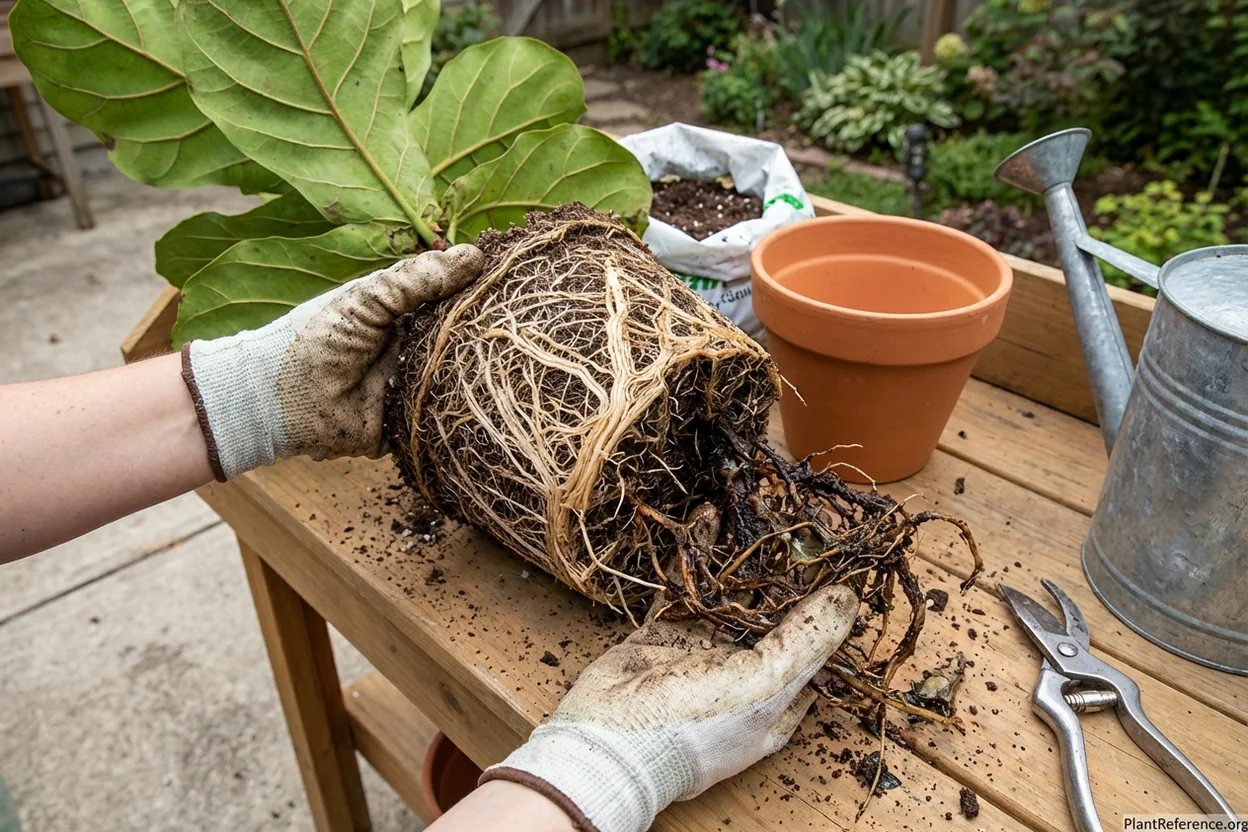
For overwatering: Stop watering immediately. Allow soil to dry until top 3-4 inches (8-10 cm) feel completely dry before resuming normal schedule. If root rot is suspected, remove plant from pot to inspect roots. Black or mushy roots require trimming and repotting in fresh, well-draining soil.
For underwatering: Water thoroughly until drainage appears, but don't flood the plant. Resume normal watering schedule when top 2-3 inches of soil dry out. Severely dehydrated plants may take 2-3 watering cycles to fully recover, with gradual improvement in leaf rigidity and color.
Learn more about Fiddle Leaf Fig Pests: Identification and Treatment, as pest infestations often compound watering stress and create similar symptom patterns.
The Fiddle Leaf Fig Root Rot: How to Save Your Plant guide provides detailed recovery steps for overwatered plants with root damage.
Seasonal Watering Adjustments
Fiddle leaf fig water needs change dramatically with seasons due to variations in light intensity, humidity, temperature, and plant growth activity. Adjusting your watering approach seasonally prevents both drought stress and root rot.
Spring adjustments (March-May): As daylight hours increase and heating systems turn off, plants resume active growth. Increase watering frequency gradually from winter schedule. New growth appears as small, bright green shoots at branch tips. Water when top 2 inches (5 cm) feel dry—typically every 7-10 days.
Summer modifications (June-August): Peak growing season with maximum transpiration rates. Air conditioning and increased light intensity dry soil faster. Water every 7-9 days, testing soil moisture frequently. This is also prime fertilizing season, requiring consistent soil moisture for nutrient uptake.
Fall transitions (September-November): As temperatures drop and daylight decreases, growth slows significantly. Extend watering intervals to every 9-12 days. Stop fertilizing in October to allow plants to enter dormancy naturally. Heating systems may reduce humidity, requiring humidity monitoring.
Winter dormancy (December-February): Minimal growth activity and lowest transpiration rates. Water every 10-14 days, but rely entirely on soil moisture testing rather than schedules. Cold window sills can further slow root activity. Consider moving plants away from cold windows or providing supplemental humidity.
Holiday watering considerations: If traveling during winter, a thoroughly watered fiddle leaf fig in well-draining soil can typically last 14-18 days without water. For longer trips, consider self-watering stakes or ask someone to check soil moisture weekly.
Troubleshooting Common Watering Problems
"My soil dries out too fast": Check pot drainage, humidity levels, and soil composition. Excessively fast drying (every 2-3 days) usually indicates too much perlite or bark in the soil mix, extremely low humidity (below 30%), or pot placement near heating vents. Solutions include adding more moisture-retaining components to soil mix, using a humidity tray, or moving the plant to a less drafty location.
"My soil stays wet for weeks": This indicates poor drainage or compacted soil. Check that drainage holes aren't blocked and that saucers aren't holding standing water. Heavy, moisture-retaining soil needs amendment with bark, perlite, or coarse sand to improve drainage. Consider repotting if soil feels dense or clay-like.
"I keep forgetting to water": Set phone reminders for soil testing (not automatic watering). Create a simple log noting test dates and results. Group plants together in one area to streamline checking routines. Consider self-watering pots or moisture monitoring devices for peace of mind.
"Water runs right through the pot": This suggests either severely dehydrated soil (which becomes hydrophobic) or overly chunky soil mix. For dehydrated soil, water slowly in small amounts, allowing gradual absorption. For chunky mixes, add more fine-textured components like coconut coir or quality potting soil to balance drainage with moisture retention.
"My plant wilts right after watering": This paradoxical response often indicates root rot or damaged roots that cannot absorb water effectively. Remove plant from pot to inspect root health. Healthy roots are white or tan and firm; rotted roots are black, brown, or mushy. Root rot requires immediate action with root trimming and fresh soil.
For comprehensive propagation information if your plant is severely compromised, see Fiddle Leaf Fig Propagation Guide.
The How to Repot a Fiddle Leaf Fig (Step-by-Step) article covers soil selection and drainage improvements in detail.
Emergency watering situations:
Severe dehydration: If soil is bone dry and pulling away from pot walls, water very slowly in multiple stages. Add small amounts of water every 15 minutes until soil begins accepting moisture normally. Severely dehydrated soil can become hydrophobic, causing water to run off rather than absorb.
Root bound plants: When roots fill the entire pot, water may run directly through without soil absorption. These plants need immediate repotting into larger containers with fresh soil. As a temporary measure, use bottom-watering by placing the pot in a tray of water for 30-60 minutes.
Mastering fiddle leaf fig watering takes practice and attention to individual plant needs rather than rigid schedules. By understanding the science behind water uptake, learning to read moisture cues accurately, and adjusting for seasonal changes, you'll develop the skills needed to keep your fiddle leaf fig thriving for years. Remember that slight underwatering is always safer than overwatering—when in doubt, wait an extra day or two before adding water.
The key is consistency in monitoring rather than consistency in schedule. Test soil moisture regularly, observe your plant's responses, and adjust your approach based on environmental conditions in your specific home. With this knowledge-based approach, you'll never again wonder whether it's time to water your fiddle leaf fig.
Frequently Asked Questions
Reading about plants and recognising them are different skills. These three build the second.
- Daily PlantIdentify the day’s mystery plant from a close-up photograph.
- Keyed OutWork a dichotomous key, lead by lead, to name a hidden specimen.
- Name That PlantName a specimen from botanical clues dealt hardest first.
Free to play, no account needed
Sarah earned her doctorate in plant biology and spent time working in botanical garden education before transitioning to freelance writing and consulting. Now based in Portland, Oregon, she teaches plant identification workshops at local community centers and maintains a modest collection of over 60 houseplants in her small apartment. Sarah specializes in helping beginners understand plant science without the jargon—her approach focuses on practical observation over theory. She's killed her fair share of fiddle leaf figs and finally cracked the code on keeping them alive.