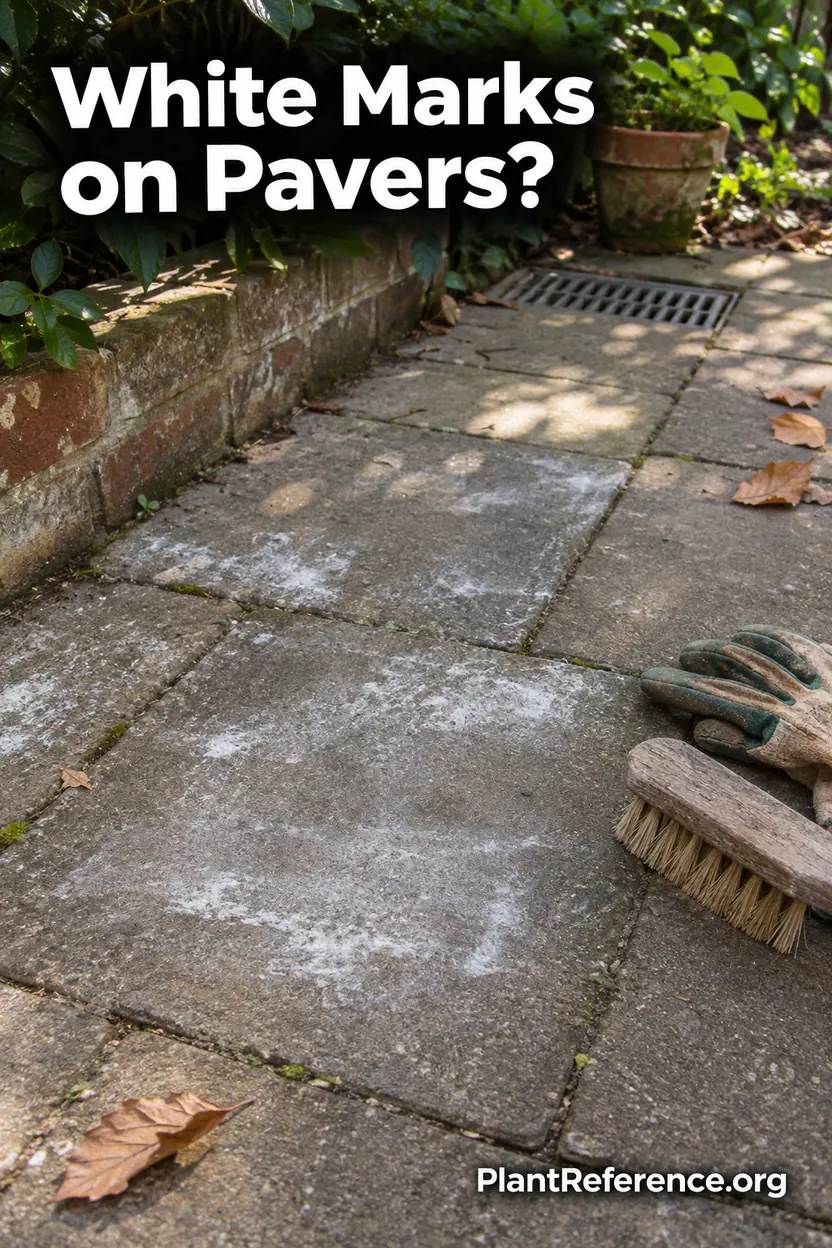
Efflorescence on Pavers: Causes and Safe Removal
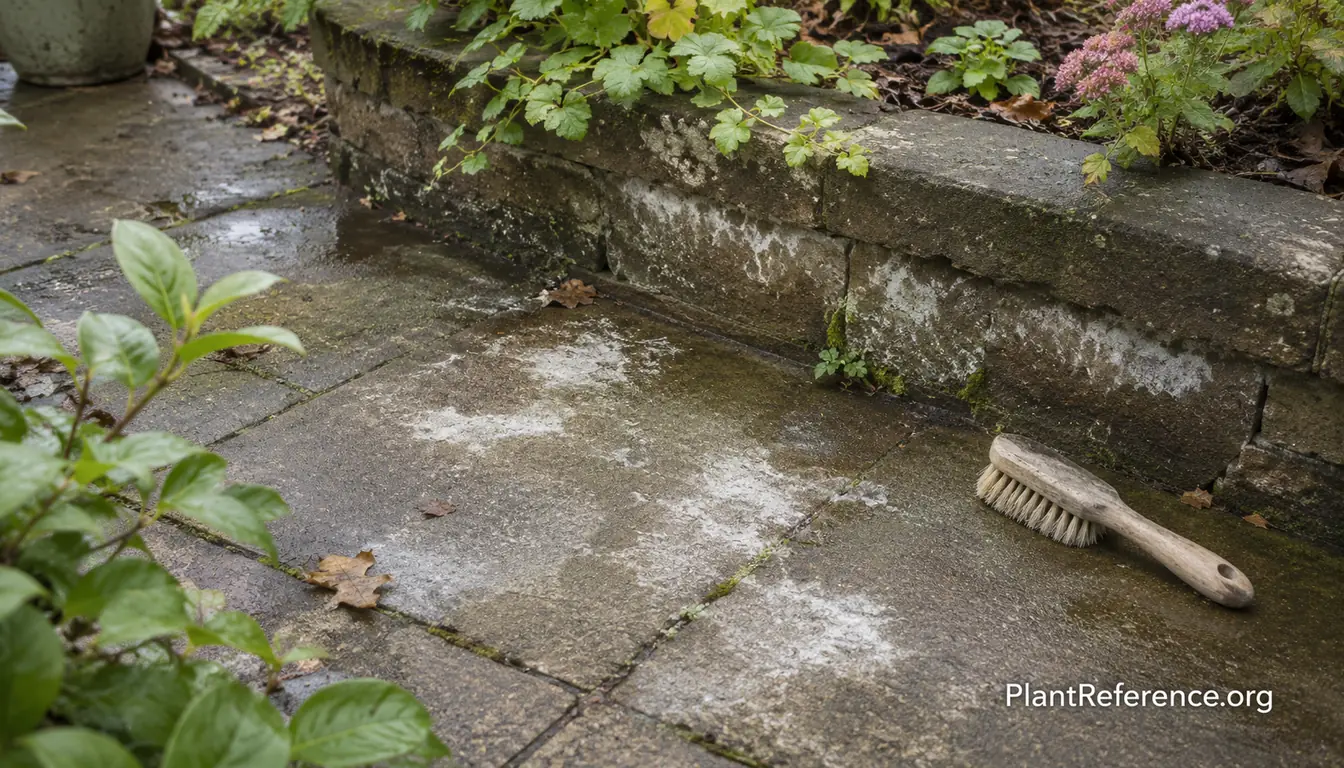
— Image © PlantReference.org 2026
Efflorescence on pavers is frustrating because a sound patio can suddenly look dusty or faded. Before you reach for a strong cleaner, identify what the white material is and why water is carrying it to the surface.
Concrete pavers, clay brick, and natural stone do not tolerate every cleaner equally. Patio Materials Compared: Pavers, Stone, Concrete & More is a useful starting point when you are unsure what the patio is made from.
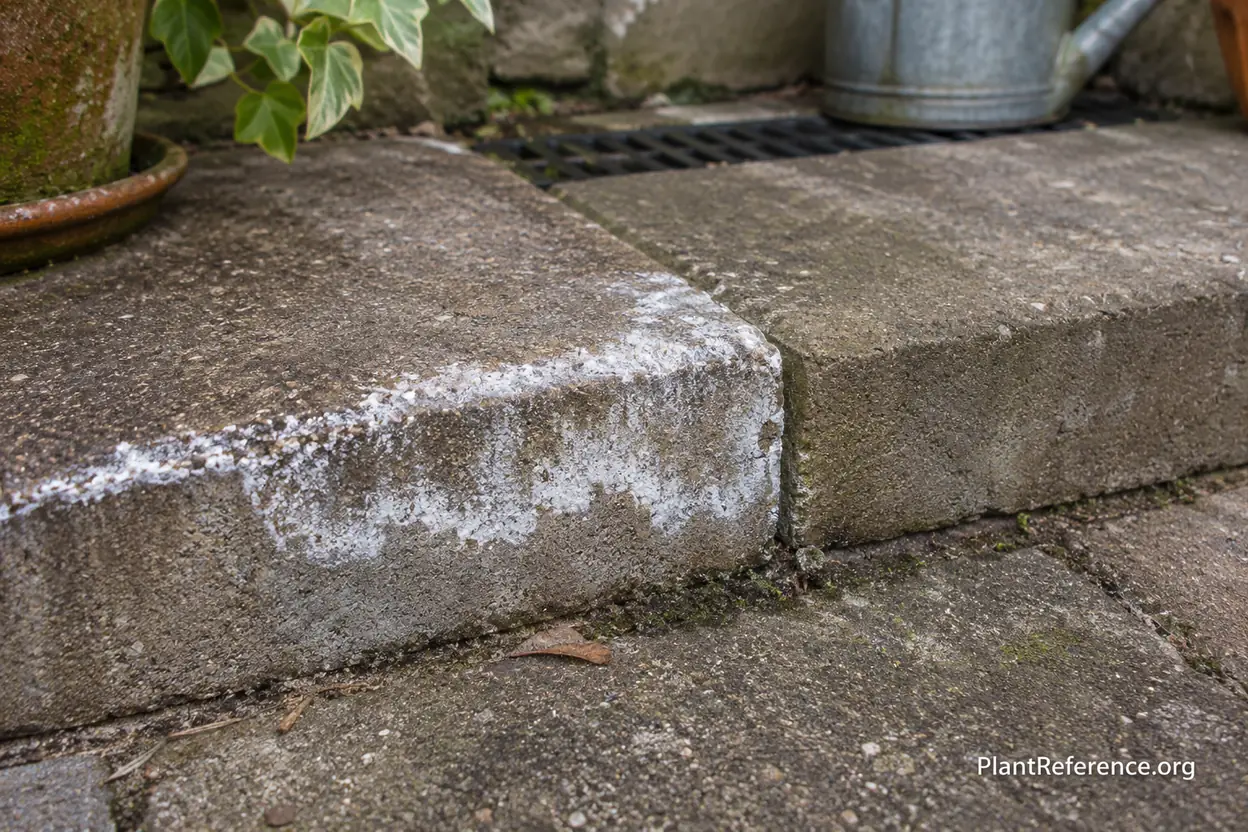
Identify Efflorescence on Pavers and Walls
White does not automatically mean efflorescence
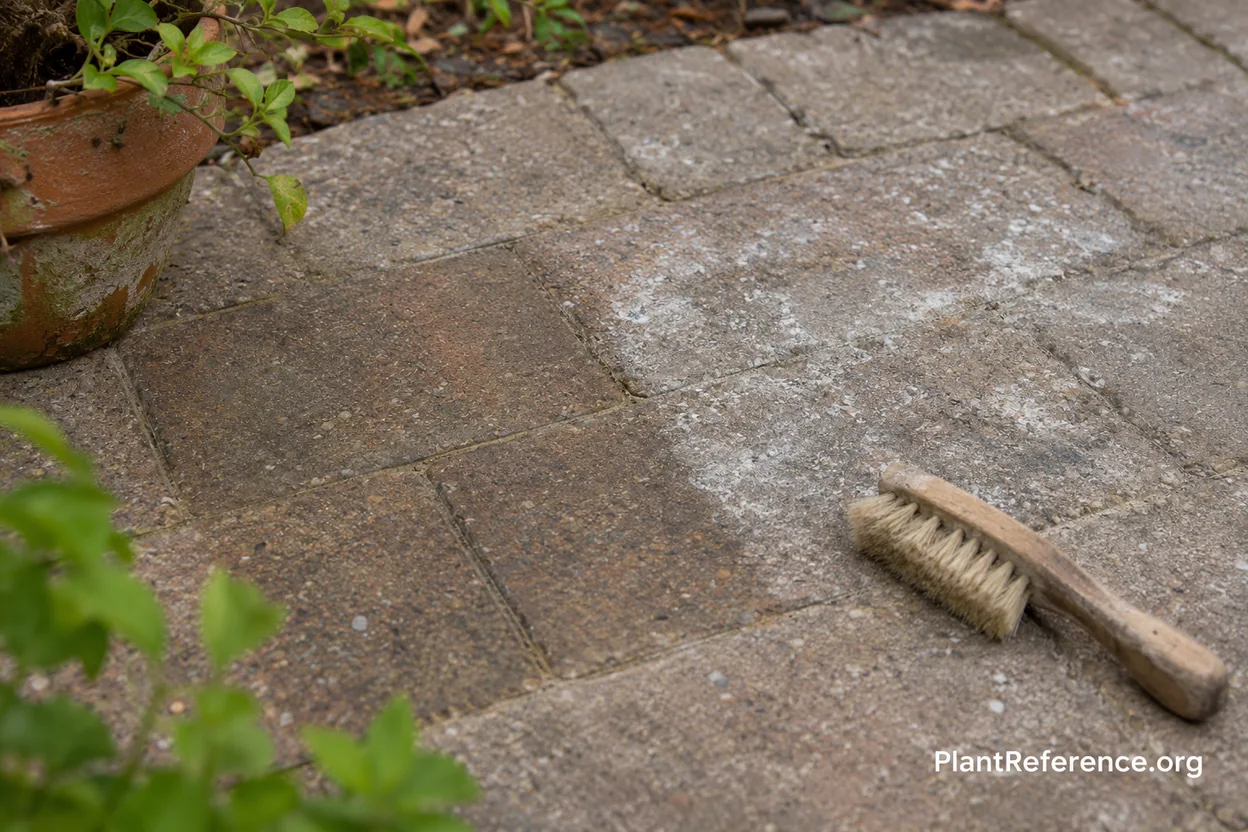
Efflorescence forms when water carries soluble salts through a porous material and leaves deposits as it evaporates. On cement-based paving, the result can be a pale bloom, powder, or more persistent surface deposit. Appearance varies with the material and moisture conditions.
That description is not a diagnosis from color alone. Residue after polymeric jointing, trapped moisture beneath a coating, and other stains can also produce a whitish appearance. The installation history matters: did the marks appear after jointing, sealing, a wet season, or a change in irrigation?
Photograph the surface dry and note where the marks occur. If you have spare pavers, packaging, or an installer invoice, use those to identify the material and finish. Ask the paving manufacturer or a qualified cleaning specialist to assess anything uncertain before choosing chemistry.
Separate cosmetic deposits from damage
A mineral bloom alone does not prove that a wall or patio is structurally unsound. However, flaking faces, loose blocks, widening cracks, settlement, or a leaning wall deserve a separate assessment. Cleaning cannot restore lost support or repair deteriorating material.
Do not climb onto a retaining wall or dig behind it to investigate staining. Restrict access around visible movement and arrange professional inspection. Treat the water marks as useful evidence, not an invitation to open the structure yourself.
Find the Moisture Behind the Deposit
Follow the pattern after rain
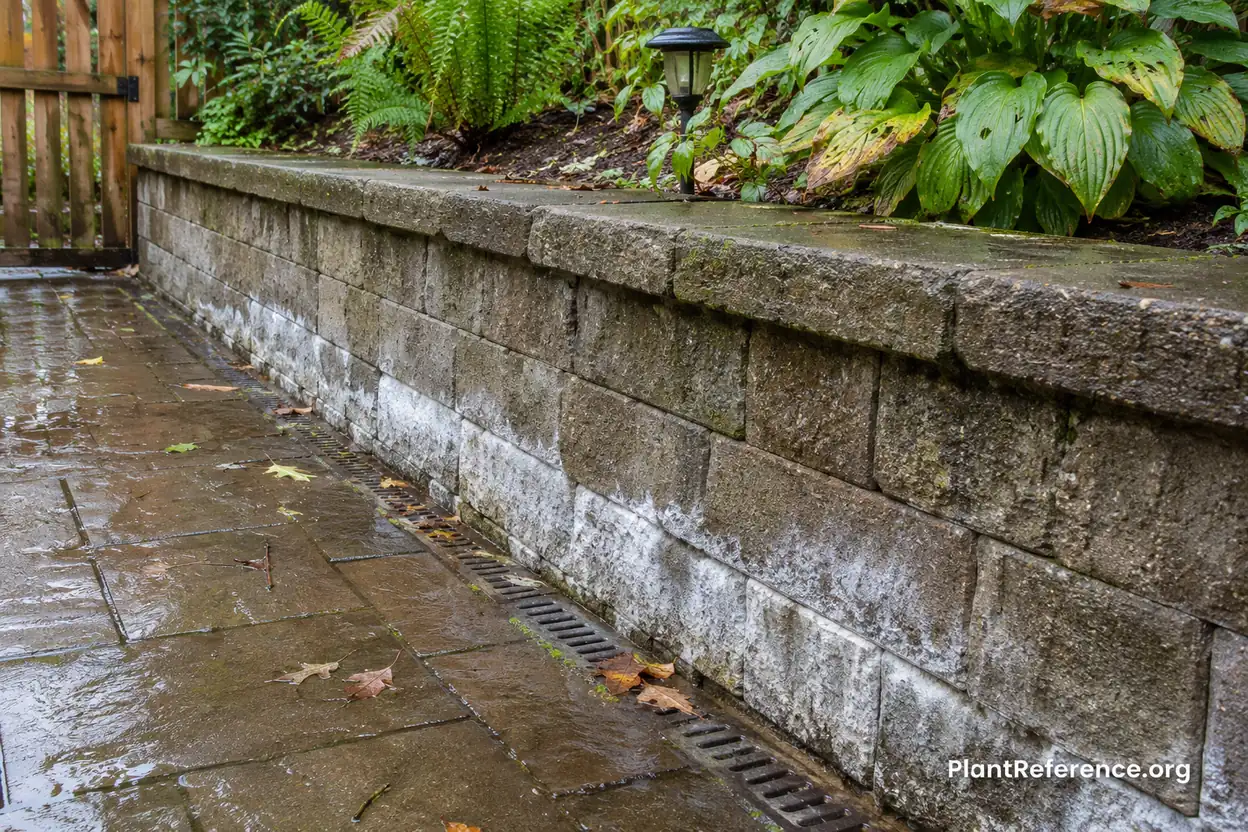
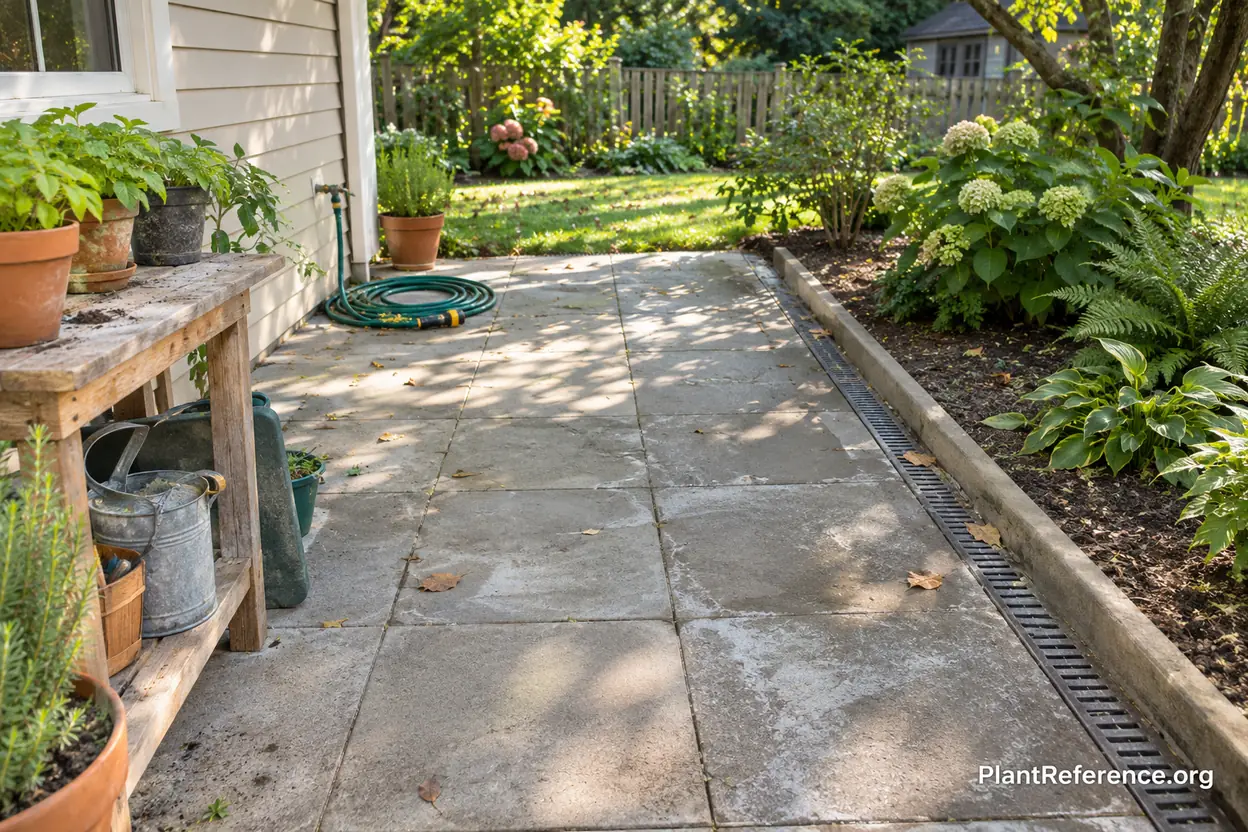
Recurring deposits often point toward repeated wetting. Look for downspout flow, irrigation overspray, persistent puddles, and water emerging through wall joints. Compare affected areas with nearby surfaces that dry more readily; the contrast can help explain why one strip keeps turning white.
Fix PNW Garden Drainage: Glacial Till, Hardpan & Raised Beds explains why restrictive ground layers can keep a site wet. The important question is where the water goes after it reaches the paving, not simply whether the top looks dry for an afternoon.
Retaining-wall drainage needs particular care. A blocked outlet or saturated backfill may require professional work, especially if the wall has moved. Do not drill random holes or excavate along the base as a stain-removal shortcut.
Review nearby planting and watering
Garden beds can contribute runoff when watering exceeds what the soil can accept. Too Much Water in Raised Beds: Signs and Solutions for Overwatering helps identify unnecessary irrigation, while Poor Drainage in Raised Beds: Causes and Fixes for Waterlogged Soil addresses beds that remain saturated.
Redirecting water must not create a problem elsewhere. Do not send patio runoff toward a foundation, neighboring property, or an already wet bed. If the site needs a new drainage route, have the route and outlet designed before changing grades.
On permeable paving, preserve the intended drainage function. Permeable Pavers: Stormwater Guide for Homeowners explains why filling or coating the wrong parts of that assembly can defeat its purpose. A cosmetic treatment should not compromise stormwater performance.
Remove Efflorescence Without Damaging the Surface
Begin with a small, gentle trial
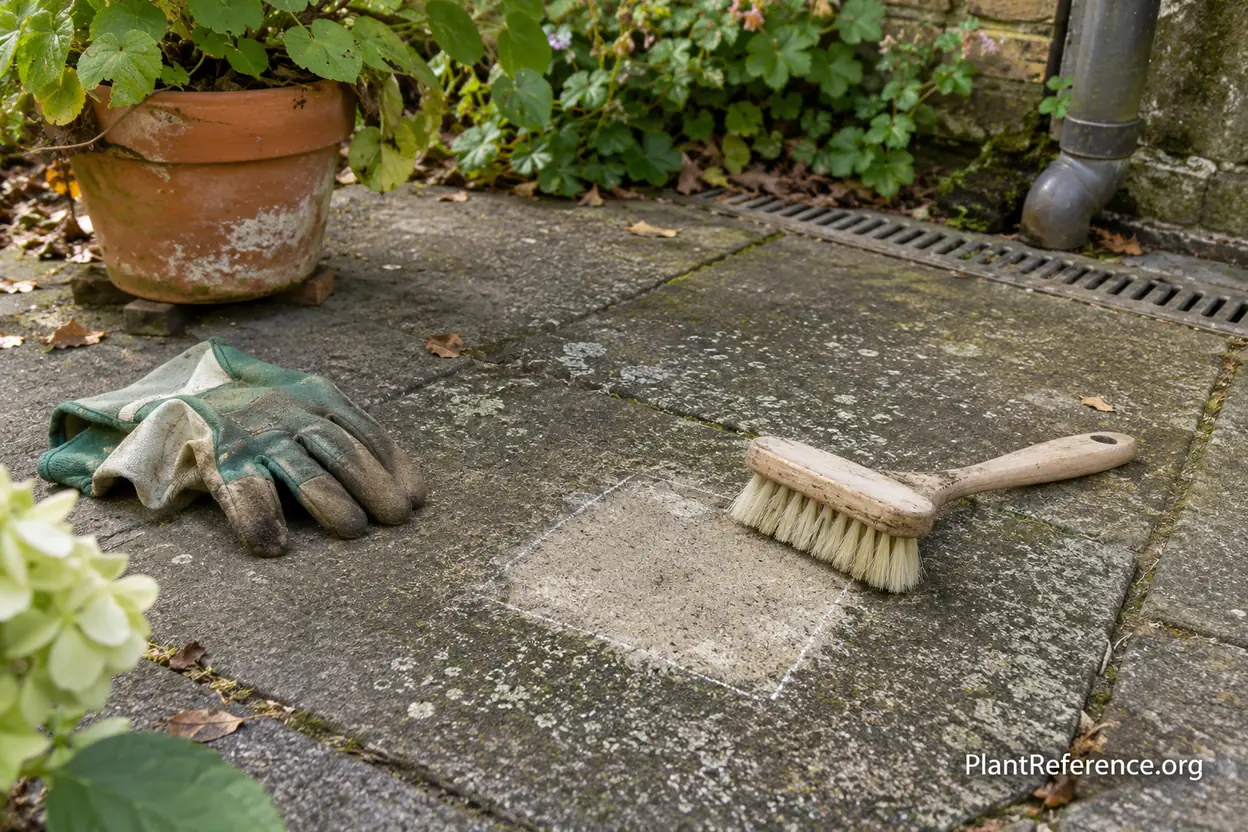
For loose dry deposits on a sound surface, ask the material supplier whether gentle dry brushing is appropriate. Use a nonmetal brush that will not scratch the finish, and avoid aggressive abrasion. Some deposits respond to mild cleaning or weathering; others need a specifically compatible treatment.
Choose an inconspicuous test patch, perhaps 1 square foot (0.09 square meter), rather than treating the whole patio. Compare it with an untreated area after it has fully dried. A wet surface can temporarily hide both residue and cleaning damage.
Keep notes on the method and result. If the color lightens unevenly, texture changes, or the deposit does not respond, stop and seek advice. Repeating a damaging process more forcefully does not turn it into a suitable one.
Choose chemistry by material, not by promises
Only use a cleaner explicitly compatible with the paving, its finish, joint material, and any existing sealer. Acid-sensitive stone, including limestone, can be permanently etched by acidic treatments. A cleaner suitable for one concrete surface is not automatically suitable for every stone patio.
Follow the product directions for dilution, application, dwell time, rinsing, protective equipment, and runoff management. Do not invent a stronger mix, combine products, or substitute household acids because they seem milder. If those instructions cannot be followed safely at the site, use a qualified professional.
Protect adjoining plants, metals, painted surfaces, and water features as directed. Keep children and pets away during treatment and until the area is safe for use. Plan collection and disposal of wash water rather than letting it run into planting beds or drains.
Protect the joints as well as the face
High-pressure cleaning can erode joints or damage a finish when equipment and technique are unsuitable. Ask the paver and joint-material suppliers what cleaning methods they permit. Do not use an aggressive jet simply to make every pale mark disappear in one visit.
After cleaning, inspect for lost joint material and follow the paving system's replenishment instructions if needed. Raised Bed Weeds: Prevention Strategies and Control Methods can help reduce debris and seed sources nearby, but weeds and mineral deposits need different treatments.
Prevent Repeat Deposits and Know When to Stop
Do not seal over the unanswered question
Sealer is not a substitute for diagnosing moisture or identifying a white film. Applying it over deposits can complicate later cleaning, and an unsuitable coating may create additional appearance problems. Confirm readiness and compatibility with the manufacturer before sealing or resealing.
Maintain sensible irrigation around the patio. Raised Bed Irrigation Systems: Watering Solutions for Consistent Growth explains targeted watering, and Growing Tomatoes in Small Spaces: Apartment, Balcony, and Patio Solutions helps organize containers without constant spills across paving.
Keep dated photographs of recurring deposits.
Inspect runoff and drainage after ordinary rain.
Use the least aggressive compatible cleaning method.
Let test areas dry before judging their appearance.
Stop if the surface flakes, changes texture, or shows movement.
Efflorescence on pavers may return while moisture continues to carry salts to the surface. A lasting improvement often combines patience, suitable cleaning, and better water management. Aim to preserve the hardscape, not to force an instant uniform color at the expense of its finish.
Frequently Asked Questions

Reading about plants and recognising them are different skills. These three build the second.
- Daily PlantIdentify the day’s mystery plant from a close-up photograph.
- Keyed OutWork a dichotomous key, lead by lead, to name a hidden specimen.
- Name That PlantName a specimen from botanical clues dealt hardest first.
Free to play, no account needed
Tagged with
Mike's been designing residential landscapes in the Seattle area, with a particular focus on Pacific Northwest natives and sustainable practices. He's a Washington State Master Gardener and worked in construction before landscaping, which gives him a practical edge when it comes to building raised beds and hardscaping projects. He runs a small side business propagating and selling unusual perennials at farmers markets on weekends. His property serves as a testing ground for low-maintenance, wildlife-friendly garden designs. Mike's philosophy: if it requires weekly maintenance, it's not sustainable.