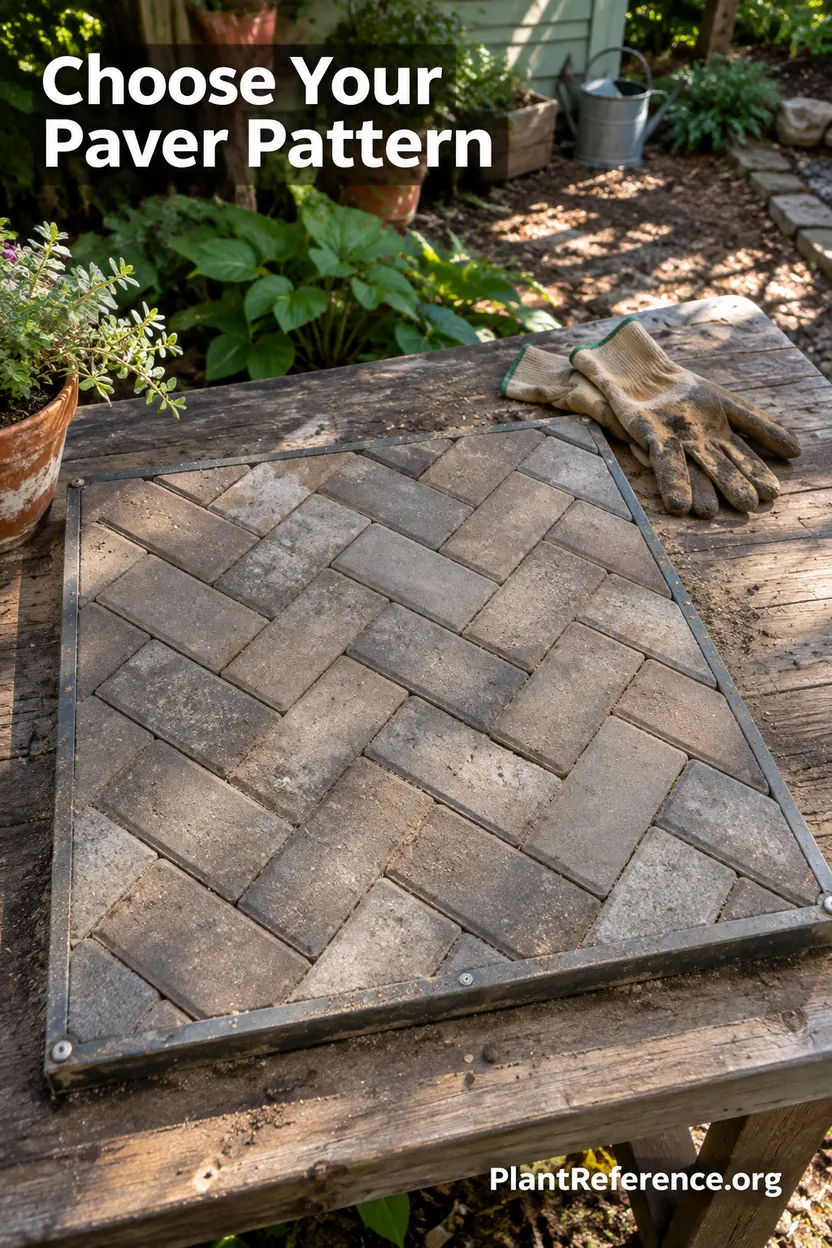
Paver Laying Patterns: Herringbone, Bond, and Basket Weave
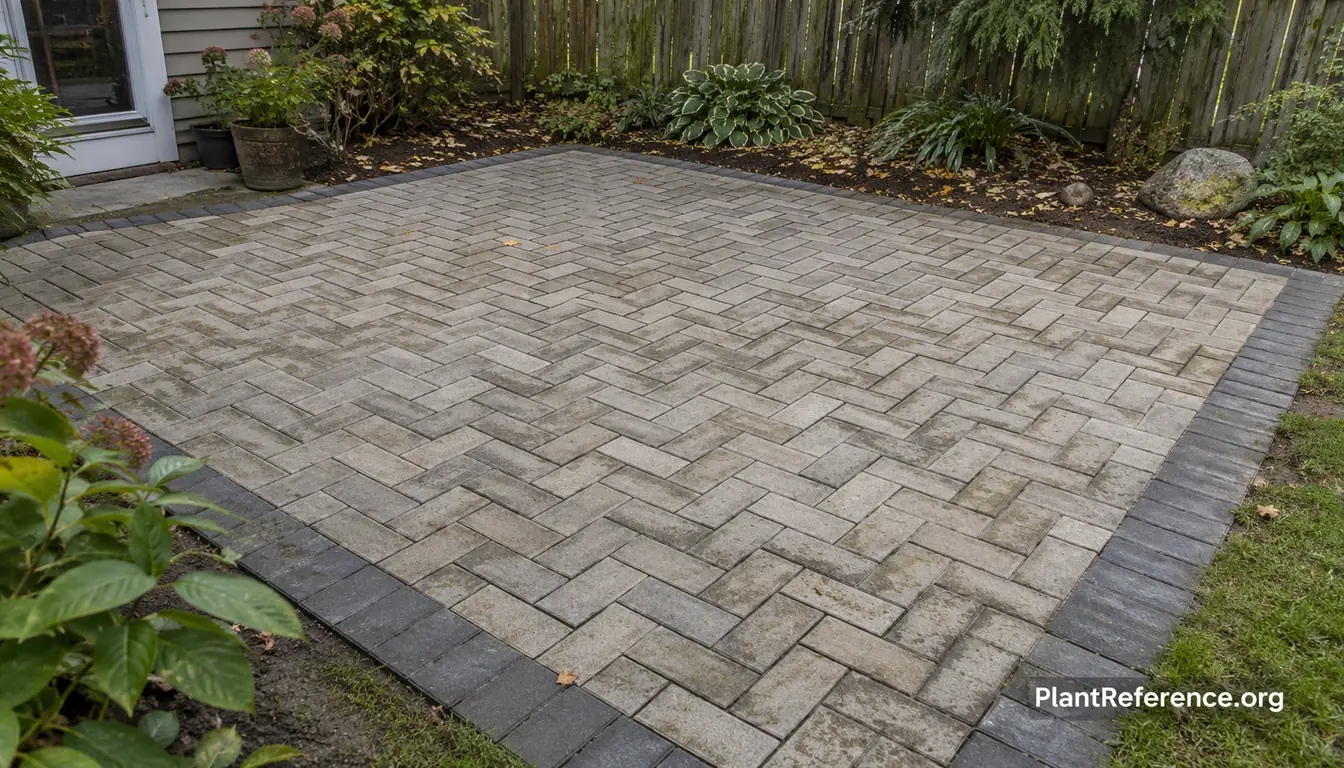
— Image © PlantReference.org 2026
Paver laying patterns do more than decorate a patio. They determine how joints line up, how the surface meets its borders, and how effectively suitable interlocking units resist movement under traffic.
Start with the material rather than a photograph alone. Patio Materials Compared: Pavers, Stone, Concrete & More explains the broader options, while Driveway Materials Compared: Costs and Lifespans helps separate a pedestrian patio decision from a vehicle-bearing pavement design.
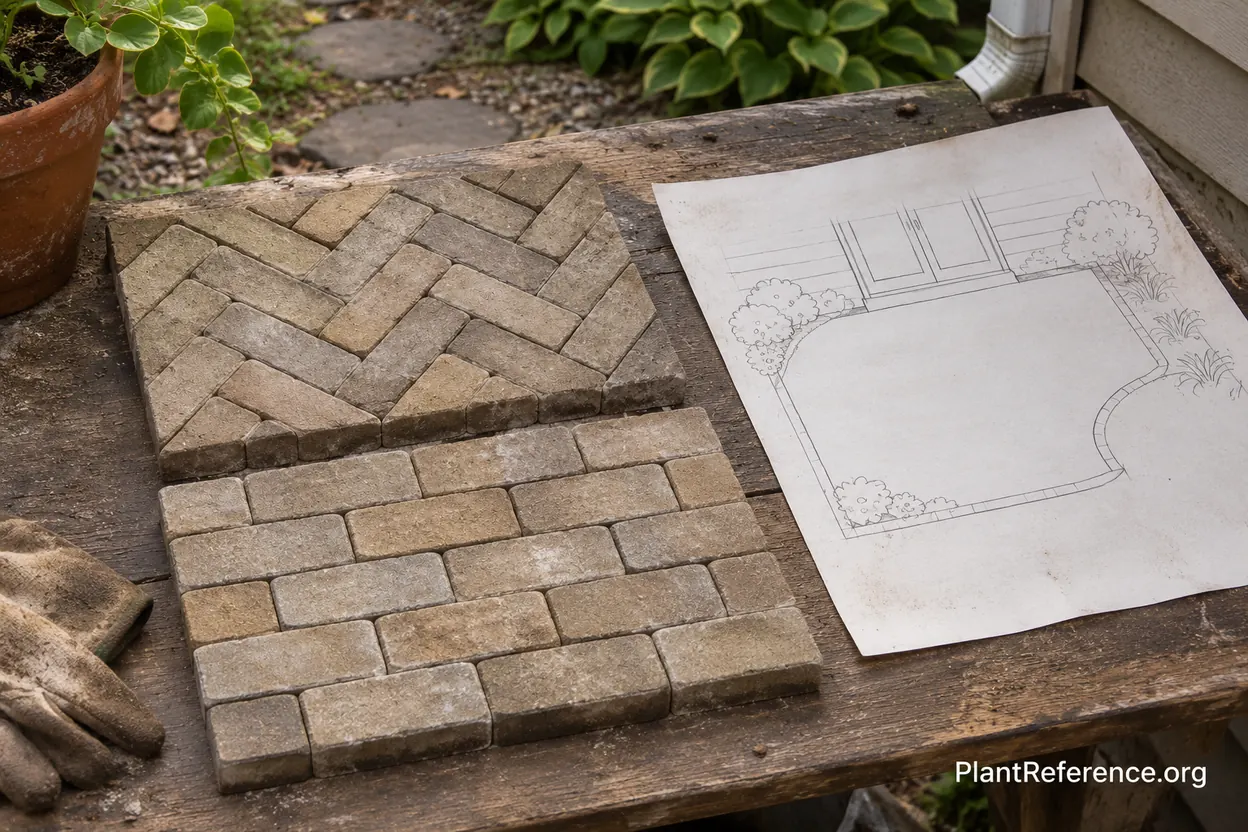
Paver Laying Patterns Start With the Right Units
Match the module to the design
A rectangular paver does not automatically fit every rectangular pattern. Unit dimensions, spacer features, and intended joint widths work together as a module. Check the manufacturer's layout drawing instead of forcing the joints to make an attractive sketch fit.
For a simple paired basket weave, for example, two units placed side by side must work with the length of the neighboring pair once joints are included. Nominal dimensions on a label can differ from the installed module. Dry-lay a small sample using the actual units before ordering the full project.
Large-format slabs also need their own installation instructions. A clean grid made from broad patio slabs should not be assumed suitable for driveway traffic just because smaller concrete pavers are used on driveways. Product approval, supporting layers, and expected loads matter more than the pattern's name.
Separate surface appearance from support
An attractive pattern still needs a stable base, consistent bedding, edge restraint, and planned drainage. Soil Types by Region: Diagnose and Fix Your Garden Soil provides useful site context, but structural base design is different from preparing a productive planting bed.
Nearby garden soil should remain suitable for roots rather than being treated like pavement support. Soil Health 101: How to Build Living, Productive Garden Soil helps keep those two objectives distinct. Establish the pavement's elevations and water route before choosing a decorative border that might obstruct them.
Herringbone and Running Bond Compared
Herringbone: directional strength and movement
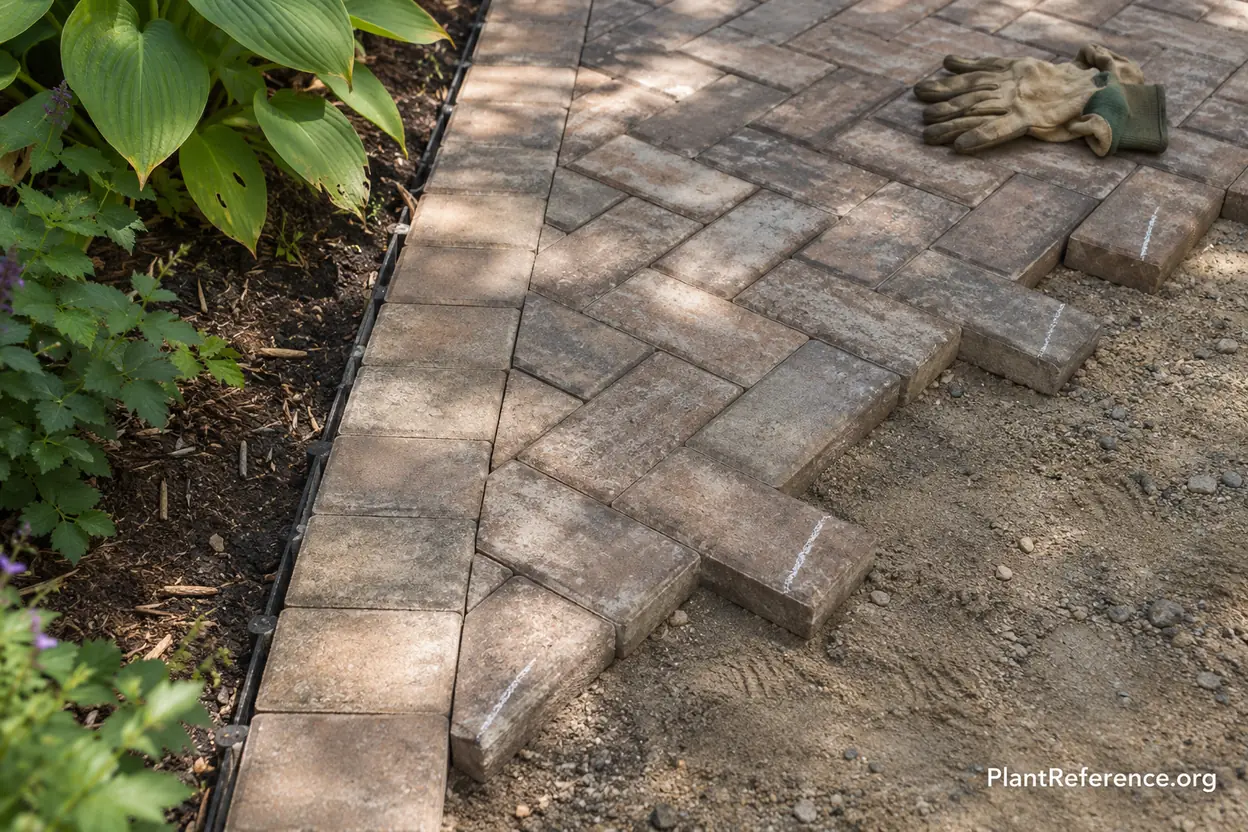
Herringbone turns rectangular units against one another in a repeating zigzag. The pattern interrupts long continuous joint lines and provides strong interlock when used with suitable units and a correctly built pavement. That makes it a sensible pattern to discuss for driveways and heavily used areas.
Both 45-degree and 90-degree orientations use the same basic arrangement. The angle describes how the pattern sits relative to the main boundary, not a different quality grade. A diagonal layout can feel lively across a broad patio, while a square orientation often relates more quietly to the house.
Diagonal layouts can increase edge cutting, but do not apply one waste percentage to every project. Patio shape, unit size, border width, and whether offcuts can be reused all influence the order. Have the supplier or installer calculate quantities from the actual layout.
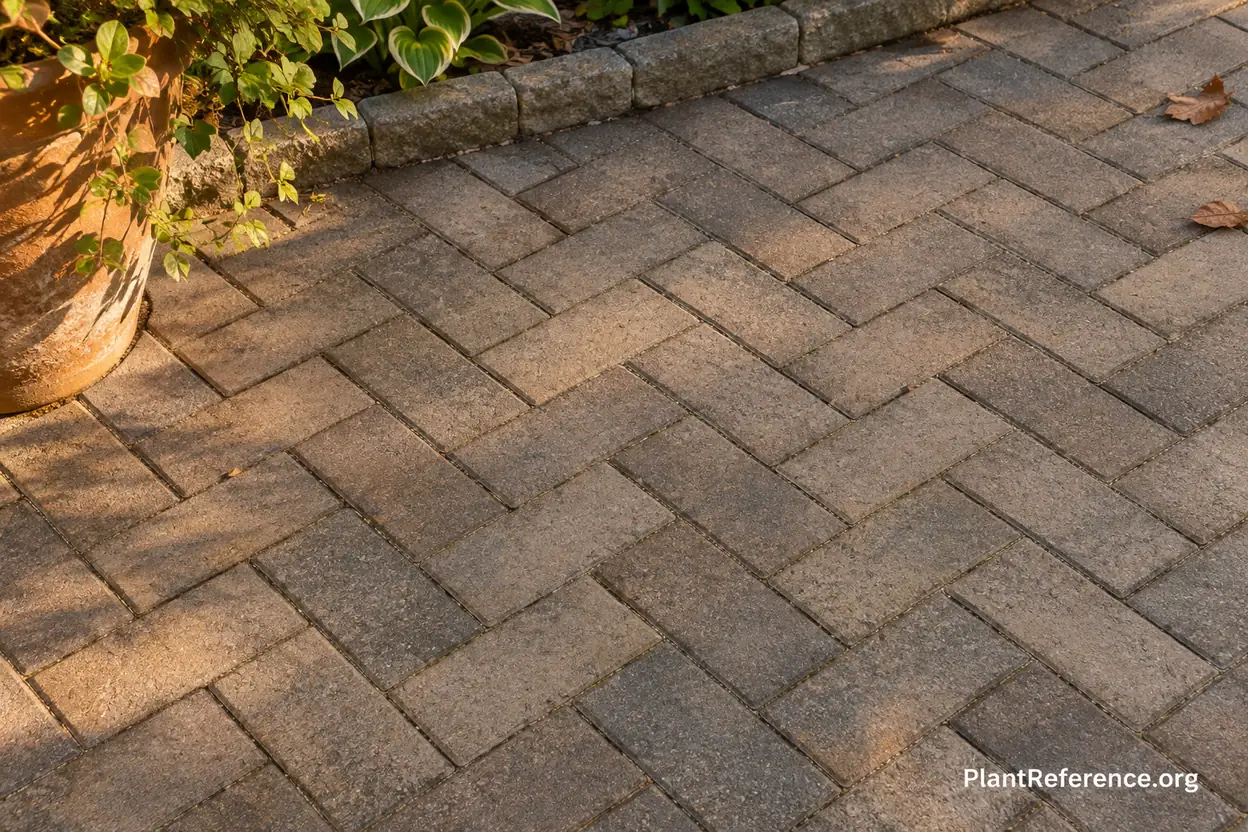
Running bond: simple does not mean careless
Running bond staggers neighboring rows, commonly by half a unit. It creates a familiar brick-like rhythm and can simplify layout along a straight path. Consistent offsets are essential; gradual drift becomes obvious when the rows approach a door, step, or border.
Use reference lines rather than judging straightness from the last row alone. Check several rows at once so a small error does not accumulate across the entire surface. Running bond can suit patios well, but confirm any vehicle application with the selected paving system rather than relying on appearance.
Basket Weave, Stack Bond, and Decorative Patterns
Basket weave creates a paired rhythm
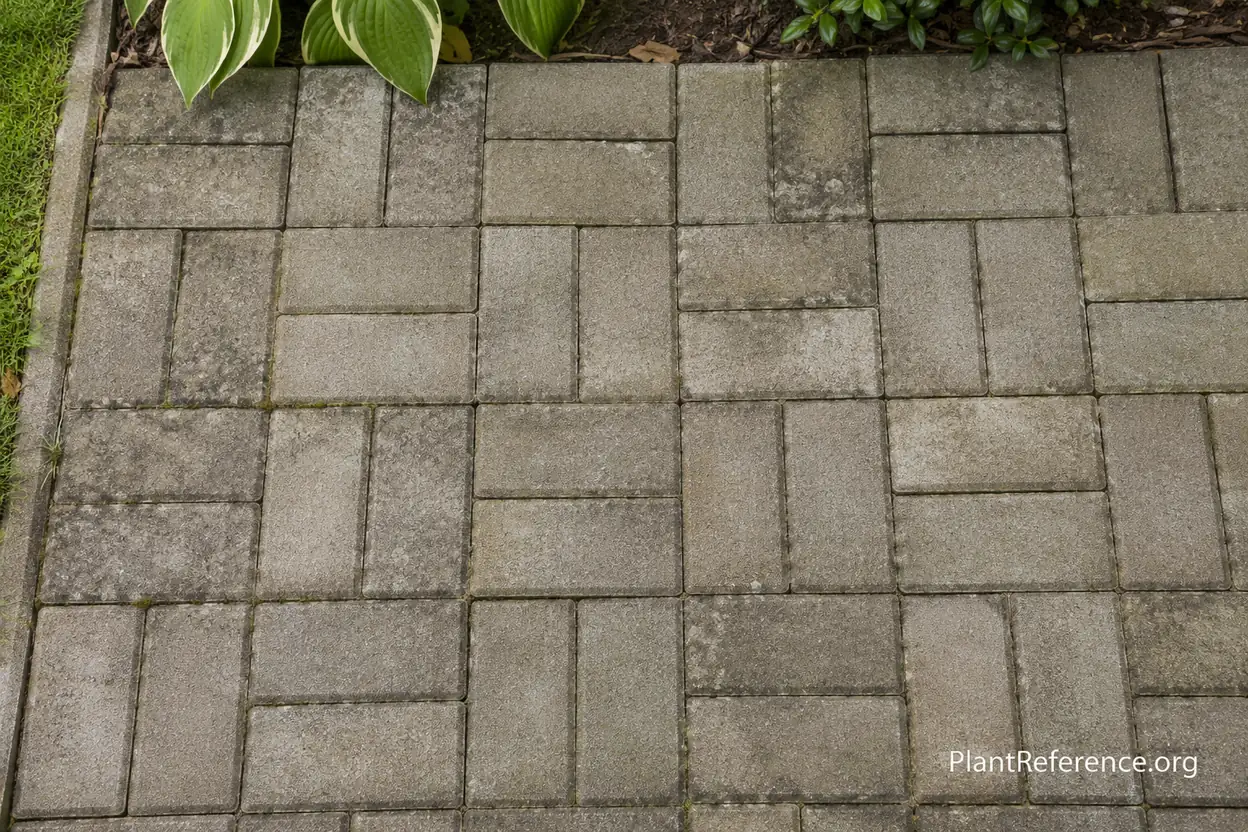
Basket weave alternates groups of pavers in different directions, often using pairs. It suits traditional gardens and smaller spaces where the repeating geometry remains easy to see. Compatible unit proportions are particularly important because the pairs must join without distorted gaps.
Keep a full sample visible while laying. One rotated pair in the wrong position can confuse the pattern several rows later, especially when the paving has strong color variation. Correct the mistake before joint filling and final compaction make adjustment more involved.
Stack bond emphasizes every line
Stack bond aligns joints in a grid. It has a calm, contemporary appearance, especially with large units, but offers weaker interlock than herringbone in conventional rectangular paving. Do not substitute it into a vehicle specification without approval.
The visual simplicity is unforgiving of wandering lines and uneven surfaces. A regular grid makes small errors easy to spot. Choose it because the product and installation method support the design, not because a photograph makes it look effortless.
Decorative and mixed-size layouts need a plan
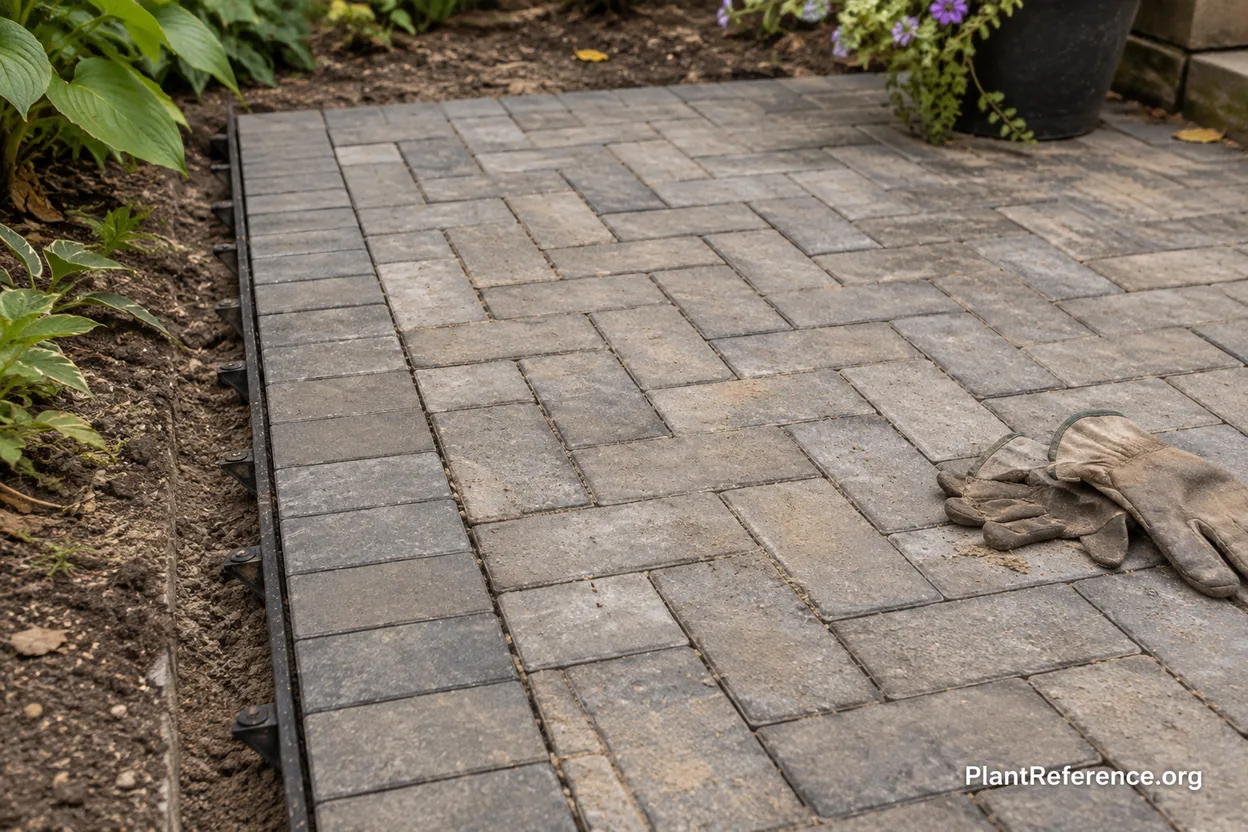
Pinwheel and windmill arrangements can make useful focal points, but they also concentrate attention on alignment. Multi-size layouts should follow the manufacturer's module and quantities. Random-looking paving often requires more planning than a visibly repetitive pattern.
Irregular natural stone is a separate exercise in fitting shape, thickness, and joint width. Do not use a rectangular concrete-paver diagram as its installation guide. Where a patio meets a wall, coordinate the layout with the structure discussed in Retaining Wall Materials Guide: Blocks, Stone, Timber & More.
Plan Borders, Cuts, and Pattern Direction
Work from the edges inward on paper
Sketch the field pattern and border together. Decide which boundary is the primary visual reference, often the house, a main path, or a long straight edge. A patio measuring 12 by 16 feet (3.7 by 4.9 meters) can look quite different depending on which direction the joints lead the eye.
Dry-lay enough units to expose the repeating module, then check where cuts land on opposing sides. Shifting the starting position can avoid narrow slivers without changing the pattern. Borders frame the design, but decorative border units do not automatically replace structural edge restraints.
Coordinate practical details early
Locate drains, utility access, steps, and planting edges before laying the field. A beautiful pattern should not leave an inaccessible cover or a low point against the house. Fix PNW Garden Drainage: Glacial Till, Hardpan & Raised Beds explains why underlying site conditions deserve attention.
For permeable paving, follow the system's joint geometry and aggregate requirements rather than tightening gaps to imitate a conventional patio. Permeable Pavers: Stormwater Guide for Homeowners covers that distinction. Pattern choice must preserve the drainage system rather than merely copy its appearance.
Prevent Common Layout Problems
Check before the surface is locked together
Use repeated checks rather than one final inspection. Stop when joints drift, pavers rock, or the pattern no longer matches the layout. Forcing units into position can conceal the immediate error while creating uneven joints farther along.
Confirm the product's approved pattern and intended traffic.
Dry-lay the module and border before committing to cuts.
Maintain reference lines across the work.
Blend units from multiple packs as the manufacturer directs.
Inspect edges, drainage details, and transitions before jointing.
Protect mature tree roots when considering a larger paved area. How Much Soil Do Urban Trees Actually Need? The Root Volume Guide explains why excavation and compaction deserve planning beyond the patio outline. Moving a boundary can be more practical than repairing repeated root-related movement later.
Repair the cause, not just the picture
If an existing pattern opens at its edge, investigate restraint and support before sweeping in more joint material. If a group of units sinks together, the problem is unlikely to be solved by changing their orientation. Correct the underlying defect before rebuilding the visible pattern.
Photograph the intact pattern before lifting any units for repair, and keep replacement pavers from the original installation when possible. Good paver laying patterns are repeatable systems: the materials, joints, borders, and support all need to work together.
Frequently Asked Questions

Reading about plants and recognising them are different skills. These three build the second.
- Daily PlantIdentify the day’s mystery plant from a close-up photograph.
- Keyed OutWork a dichotomous key, lead by lead, to name a hidden specimen.
- Name That PlantName a specimen from botanical clues dealt hardest first.
Free to play, no account needed
Tagged with
Mike's been designing residential landscapes in the Seattle area, with a particular focus on Pacific Northwest natives and sustainable practices. He's a Washington State Master Gardener and worked in construction before landscaping, which gives him a practical edge when it comes to building raised beds and hardscaping projects. He runs a small side business propagating and selling unusual perennials at farmers markets on weekends. His property serves as a testing ground for low-maintenance, wildlife-friendly garden designs. Mike's philosophy: if it requires weekly maintenance, it's not sustainable.