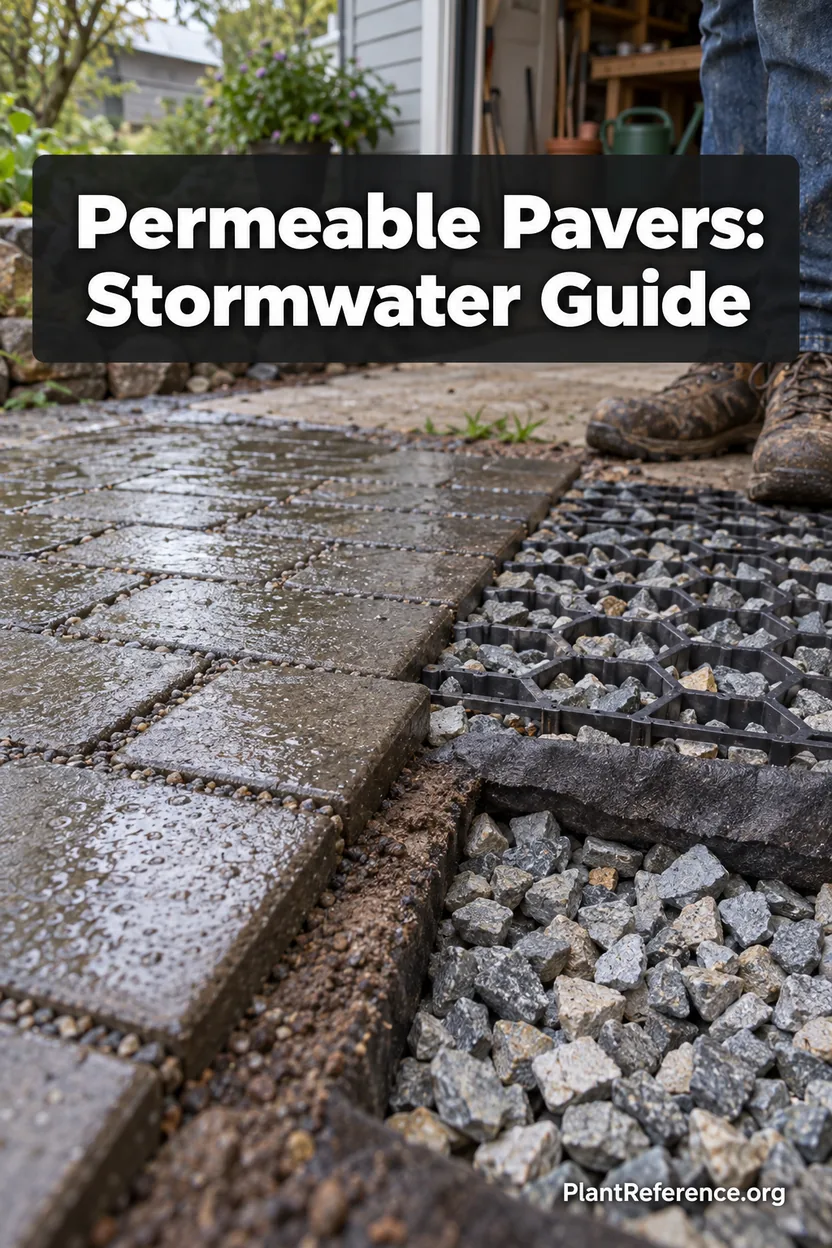
Permeable Pavers: Stormwater Guide for Homeowners
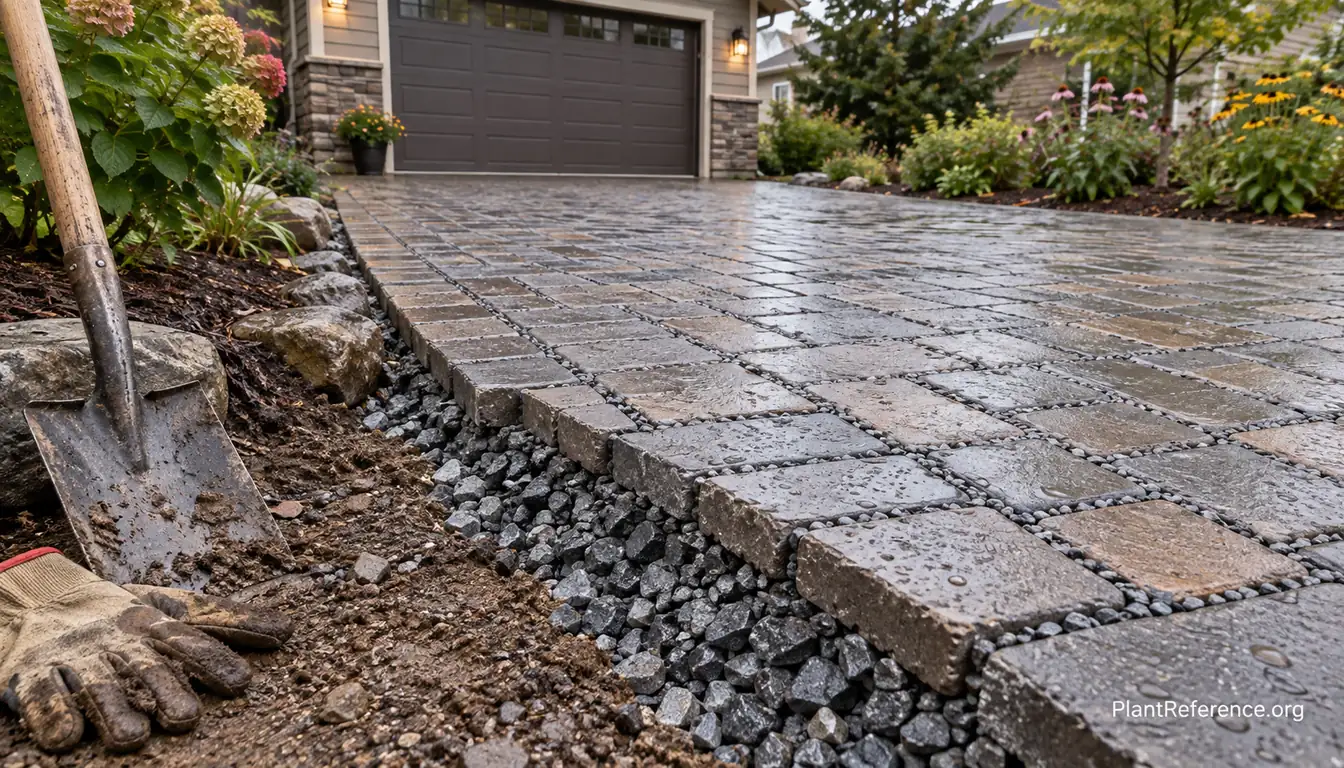
— Image © PlantReference.org 2026
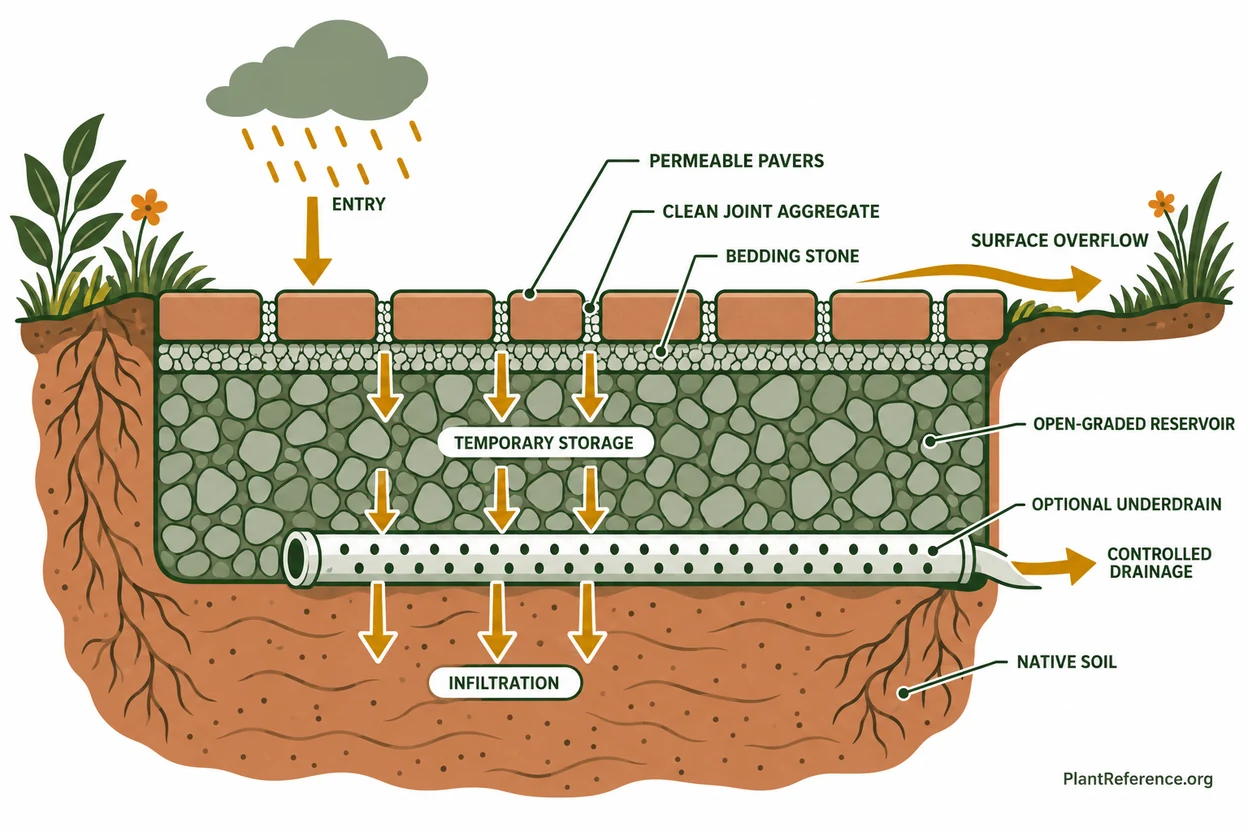
A permeable pavers stormwater guide should answer one question first: where does the water go after it enters the pavement? Good systems send rainfall through clean surface openings into a stone reservoir, then into suitable soil or a controlled drainage outlet. Pavers, gravel grids, and porous concrete can all do that job, but only when the layers beneath them and the maintenance above them work together.
Permeable Pavers Stormwater Guide: Follow the Water
A conventional patio or driveway sends most rain sideways. A permeable surface instead offers openings where rainfall can pass downward before it becomes a fast sheet of runoff. That slows water movement and can reduce the burden on nearby drains, soil, and streams.
The important word is connected. Open joints must lead into compatible bedding and storage stone, and the storage layer must have a way to empty. A porous surface over a clogged or saturated foundation can still overflow. If someone offers a permeable upgrade by changing only the top layer, ask them to draw the complete cross-section.
Entry, storage, and exit
Think of three jobs. The surface admits water, the reservoir holds it temporarily, and the soil or drain releases it over time. Each job has a separate capacity; the entire system performs only as well as its limiting component.
The research describes high infiltration rates for newly installed permeable interlocking concrete pavement, followed by much lower rates as sediment accumulates. Those numbers demonstrate maintenance sensitivity rather than a guarantee for your yard. A fast surface test does not prove that the reservoir can handle runoff from a roof, an adjoining driveway, and a prolonged storm.
For visual and daily-use choices, Patio Materials Compared: Pavers, Stone, Concrete & More is a useful companion. Keep appearance and hydraulic function as separate questions: a material can match the house beautifully and still require a different base, outlet, or maintenance plan.
Compare Pavers, Gravel Grids, and Porous Surfaces
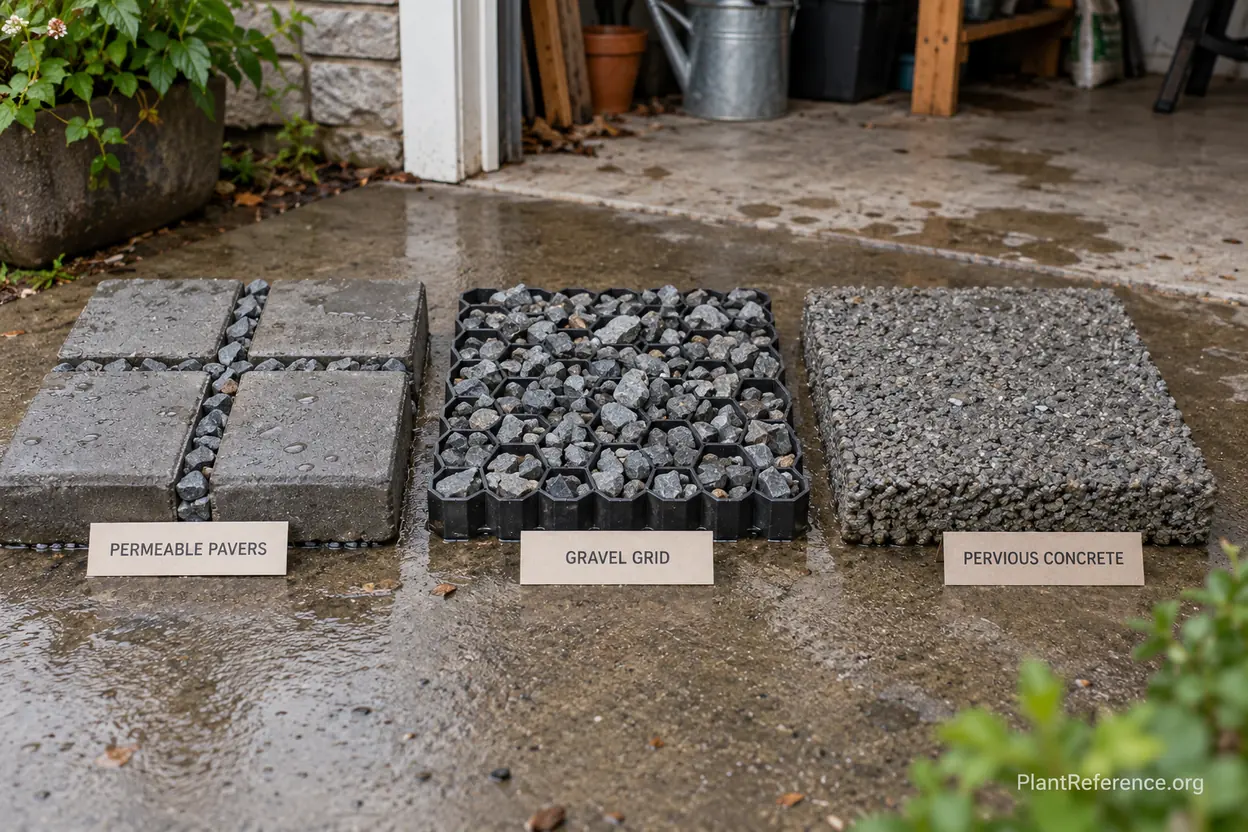
Permeable interlocking concrete pavers usually pass water through joints filled with clean small aggregate. The paver itself need not absorb water. Unit shape and spacers create the openings, while the underlying stone layers maintain flow.
Their practical advantage is repairability. Units can be lifted to address settlement, utilities, or a localized drainage problem, then relaid. Their disadvantage is that joints need inspection and sediment removal. A handsome surface that receives garden soil spills every weekend can clog quickly.
Gravel and grass grids
Gravel grids confine stone within cells and reduce lateral movement under wheels. They suit informal driveways and parking areas where containment improves loose gravel's usability. The grid must be rated for the intended traffic and installed on the specified base; a cellular panel is not a substitute for structural support.
Grass grids create a reinforced vegetated surface. They can soften the appearance of occasional parking, but grass still needs suitable light, soil, water, and recovery from wear. Frequent turning or permanent vehicle parking can leave bare cells rather than a living lawn. Decide whether a turf maintenance obligation fits the way you use the space.
Pervious concrete and porous asphalt
Pervious concrete leaves connected voids within the concrete structure itself. Porous asphalt uses an open pavement structure for a similar hydraulic purpose. Both provide a relatively continuous surface, but installation and curing or compaction must preserve the intended void network.
They are specialist construction systems. Substituting an ordinary mix or improvising the finishing process can destroy permeability even if the pavement looks acceptable. Ask contractors about comparable completed jobs, repair methods, and maintenance equipment before choosing either surface.
System | Water Entry | Useful Strength | Main Responsibility |
|---|---|---|---|
Permeable concrete pavers | Aggregate-filled joints | Liftable units and varied layouts | Keep joints open and aggregate correctly graded |
Gravel grid | Voids around clean fill | Stone containment and informal appearance | Preserve fill depth, edges, and reservoir performance |
Grass grid | Vegetated cells and soil | Reinforced occasional parking | Maintain healthy cover and prevent compaction |
Pervious concrete | Connected voids in concrete | Continuous surface | Use experienced installation and suitable cleaning |
Porous asphalt | Voids in asphalt mix | Smooth pavement character | Control sediment and maintain open pores |
Assess Soil, Groundwater, and Runoff Sources
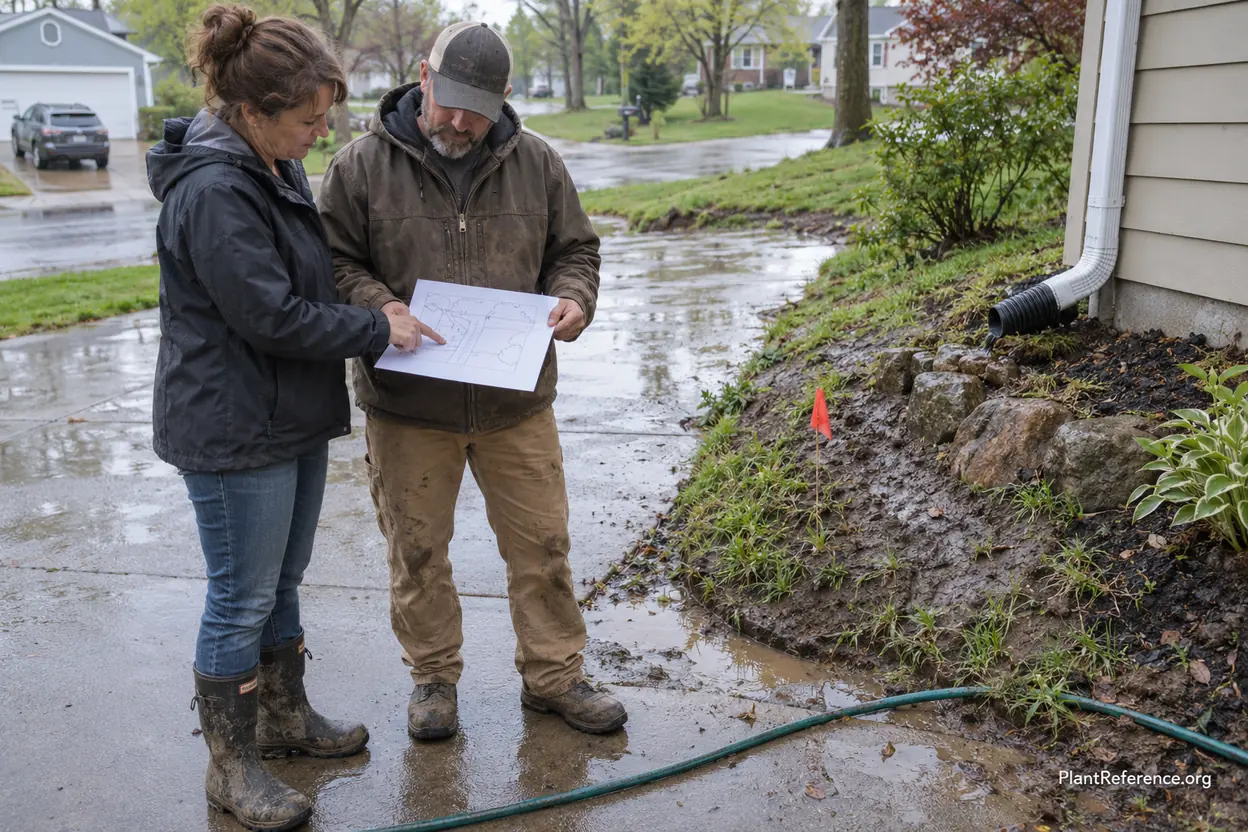
Before choosing a product, observe the site during rain. Note where water arrives, where it pools, and whether the existing ground stays wet after the storm ends. Include roofs, uphill paths, compacted lawns, and neighboring surfaces in that observation.
Do not infer infiltration from soil color or a single dry-day hole. Sandy soil can accept water readily, but buried layers or shallow groundwater can still limit storage. Clay may require controlled drainage rather than a design that assumes rapid infiltration. Fix PNW Garden Drainage: Glacial Till, Hardpan & Raised Beds shows why seemingly similar yards can behave differently beneath the surface.
Check sensitive locations
Locate the proposed pavement relative to foundations, basements, slopes, wells, utilities, and retaining walls. Infiltration is useful only where placing water underground will not create a new problem. A design near a building may need separation, a liner, or an outlet rather than unrestricted flow toward the footing.
Groundwater affects usable storage. Stone that is already submerged before a storm has no empty reservoir space for that event. A qualified designer can evaluate seasonal groundwater and soil testing rather than relying on what an excavation happens to look like on installation day.
Identify sediment before it enters
Rain from a clean paved area is different from muddy runoff off a disturbed bank. Permeable paving should not become a sediment trap for every upslope source. Stabilize exposed soil, divert dirty flows, or provide a maintainable collection feature before routing them across the surface.
The broader drainage lesson in Poor Drainage in Raised Beds: Causes and Fixes for Waterlogged Soil applies here: diagnose the restriction rather than adding a component and hoping. If a raised edge keeps water trapped at the pavement border, fix that grade relationship before blaming the pavers.
Size the Stone Reservoir and Drainage Route
Open-graded aggregate stores water in the spaces between stones. Unlike dense-graded road base, it contains little fine material to fill those voids. That storage function is why the reservoir specification differs from a conventional paver foundation.
Depth should come from both structural and hydraulic needs. Vehicle traffic requires load support; stormwater requires enough empty space and an adequate release route. The research discusses stone reservoirs roughly 12–24 inches (30–61 cm) deep for some permeable systems, but that range is a planning reference, not a universal installation instruction.
A transparent storage calculation
Consider 600 square feet (56 m²) of pavement over a 12-inch (30 cm) stone reservoir. With an assumed 30% effective void space, the rough gross storage is 180 cubic feet (5.1 m³). Three inches (7.6 cm) of rainfall on that surface produces about 150 cubic feet (4.2 m³) before losses.
This arithmetic explains the storage concept, but it does not finish the design. Runoff from extra contributing area, partly occupied voids, groundwater, outlet restrictions, and the desired safety margin change the result. The void fraction must come from the specified stone and design assumptions rather than from a convenient round number.
Infiltration, underdrains, and overflow
Where suitable soil accepts water, the reservoir can drain downward. Where soil releases water slowly, an underdrain may let storage empty predictably through an approved discharge. Some systems combine both approaches, and others use a liner when infiltration must be prevented.
An overflow route still matters. Large storms can exceed the design event, and a clogged inlet or outlet can change behavior. Plan where excess water travels without entering a garage, undermining a slope, or crossing a neighbor's property.
A retaining wall changes the stakes because added water or pavement load can affect the structure. Coordinate the pavement with the principles in Retaining Wall Materials Guide: Blocks, Stone, Timber & More. Do not casually direct the reservoir toward backfill that was designed to stay drained.
Installation Details That Preserve Permeability
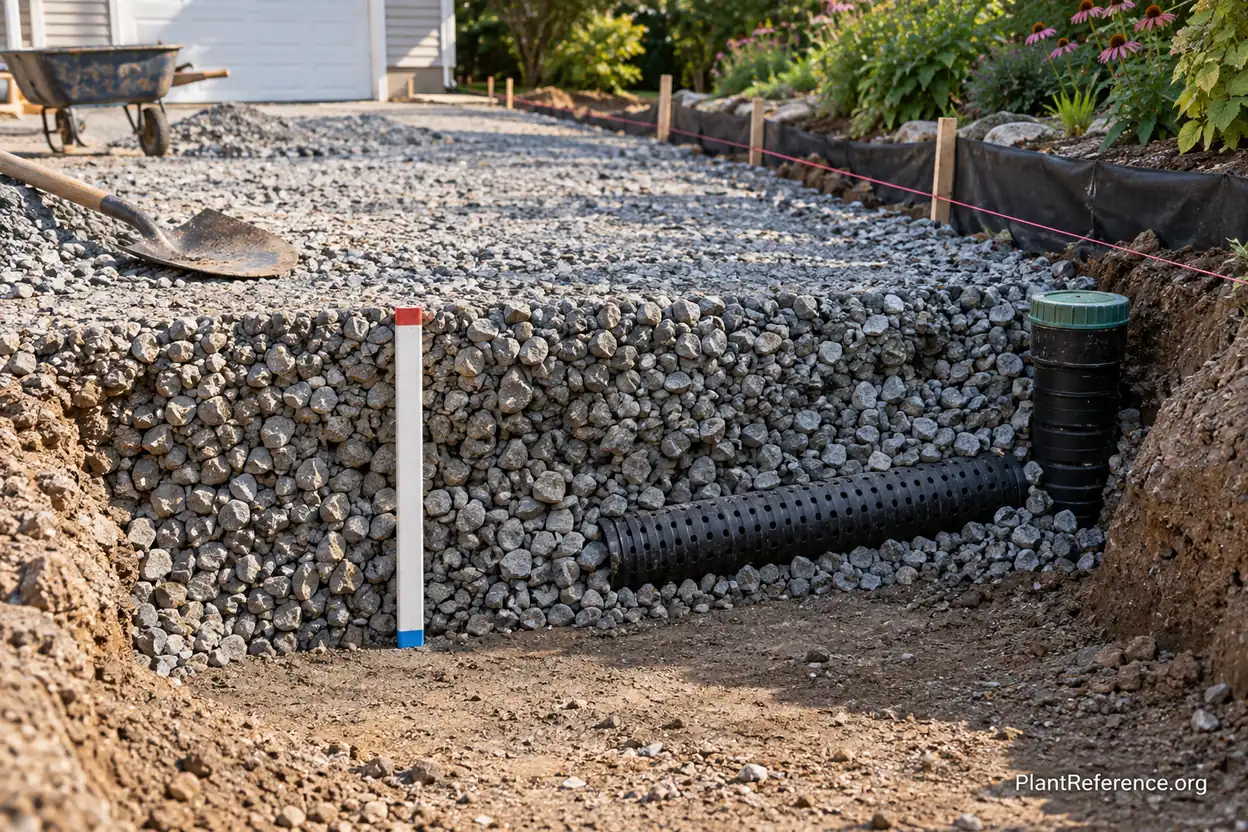
Start with a system-specific cross-section and sequence. Mark final elevations, arrange utility locating, identify private irrigation or lighting lines, and establish where excavated soil and materials will be stored. Protect completed permeable areas from mud before the first excavation begins.
Excavation should expose the intended subgrade without mixing soft soil into the clean stone. If unsuitable or wet material appears, stop and resolve it through the design rather than hiding it beneath another layer. Record the actual conditions and any approved changes.
Keep the aggregate clean
Different layers can require different aggregate sizes. Reservoir stone, bedding aggregate, and joint fill each perform a separate job, so do not substitute one convenient truckload for all three. Fines that improve dense road-base compaction can interfere with water storage and flow in a permeable system.
Geotextile placement also depends on the design. Fabric can separate soil and aggregate, but an indiscriminate wrap or unsuitable product can introduce a restriction. Require its location and function in the drawing rather than accepting the instruction to put fabric everywhere.
Compaction remains necessary for structural support. Equipment, lift depth, number of passes, and verification should match the aggregate and pavement system. A hand tamper is useful in some constrained locations, but it does not replace appropriate mechanical compaction across a vehicle area.
Finish the joints correctly
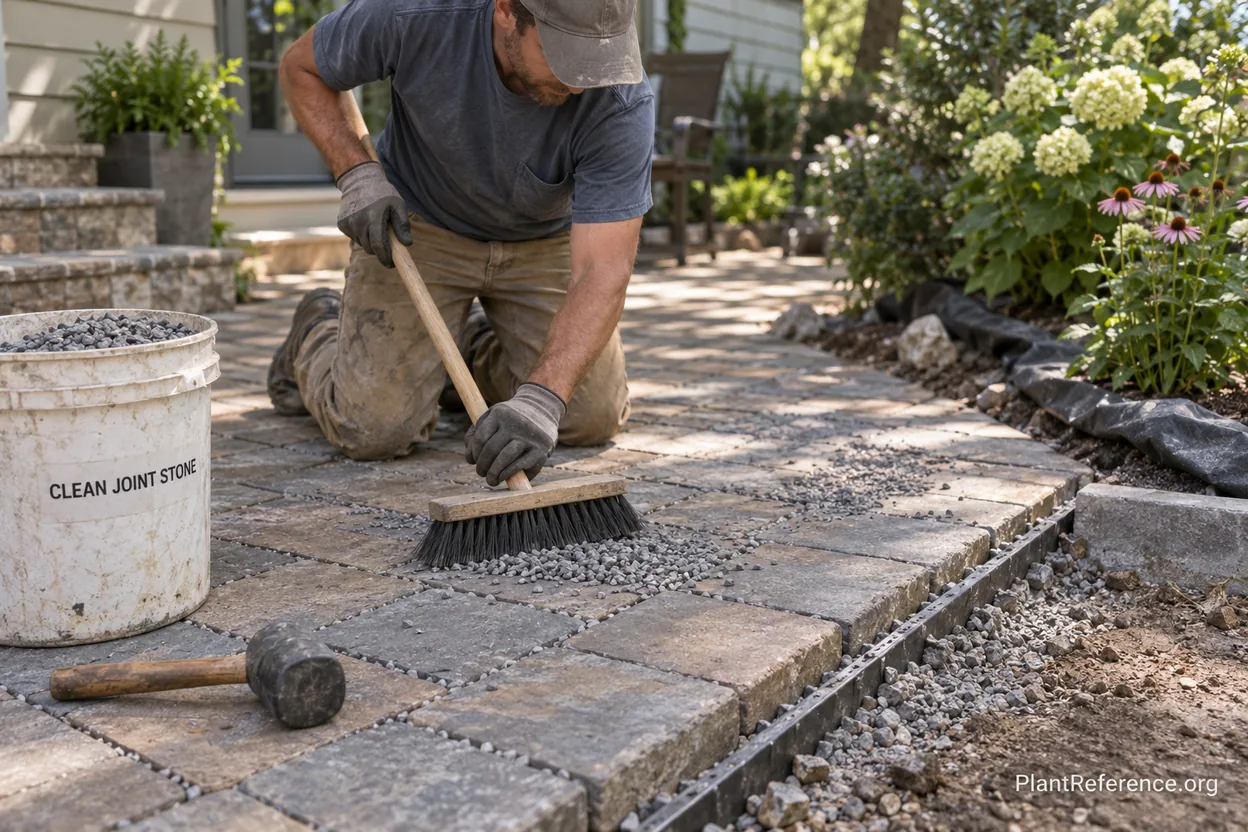
Permeable pavers need the specified clean joint aggregate. Polymeric sand used for conventional paving should not be substituted merely because it resists weeds or washout. A joint that is neatly sealed but hydraulically blocked defeats the purpose of the installation.
Edge restraints must be compatible with the pavement and planned water movement. A rigid border can hold units together while a poorly placed footing or buried barrier interrupts drainage. Inspect edges, joint fill, outlet access, and surface elevations before final acceptance.
Confirm surface units and grid panels are rated for intended loads.
Verify aggregate grading separately for reservoir, bedding, and joints.
Keep muddy equipment and soil stockpiles off clean stone.
Photograph layer depths and drains before they are covered.
Protect the finished surface during nearby landscaping work.
Receive written maintenance and overflow instructions at handover.
Maintain Flow Through the Surface
Permeable surfaces need a maintenance plan from the first season. Leaves, soil, mulch, sand, and tire-borne sediment accumulate at openings where water enters. A pavement can remain structurally sound and attractive while losing much of its hydraulic function.
Inspect after major storms and at least during seasonal cleanup. Look for puddles that last longer than they used to, displaced joint aggregate, muddy deposits, and blocked outlets. Compare the same areas over time rather than treating the absence of a puddle on a dry day as proof of performance.
Cleaning without creating another problem
The research recommends vacuum cleaning once or twice yearly and replenishing displaced aggregate. The right equipment and method depend on the surface. Ask the installer which cleaning process is compatible and whether a maintenance contractor is available locally.
Do not assume pressure washing is always beneficial. It can shift joint material, damage a surface, or push contaminants into another layer if used incorrectly. A cleaning method should remove clogging material and preserve the specified openings, not merely make the pavement look brighter.
Keep winter traction materials compatible with permeability. Sand can clog openings, while aggressive snow-removal equipment can disturb loose fill or damage grid edges. Obtain the system's winter-care instructions before the first freeze.
Keep landscape materials off the pavement
Do not store bulk soil, mulch, or masonry sand on a permeable driveway. Covering the surface with a tarp is better than direct dumping, but staging deliveries elsewhere avoids spills and embedded fines. Complete heavy landscape work before final cleaning and joint acceptance.
The same separation between construction support and living soil discussed in Raised Bed Soil Settling and Compaction: Prevention and Solutions matters at the perimeter. Grade garden beds so loose soil remains in the bed rather than washing across the paving every time irrigation runs.
Connect Hardscape with Trees and Garden Soil
Permeable paving can be one part of a landscape that slows rain and retains useful soil, but it does not replace root protection. Excavating a deep stone reservoir beside a mature tree can cut roots even if the finished surface admits water beautifully.
Evaluate roots and available soil volume before changing grades. How Much Soil Do Urban Trees Actually Need? The Root Volume Guide explains why water entry alone cannot compensate for too little growing space. Where roots conflict with pavement, a different alignment or specialist support system may be more appropriate.
Heat and shade are separate benefits
Surface permeability does not determine surface temperature by itself. A dark permeable paver can still absorb substantial sunlight. Combine water management with thoughtful color, shade, and material selection rather than assuming every green claim describes the same benefit.
Trees can reduce heat and improve the human experience around paved areas. Urban Canopy Equity: Why Tree Cover Matters for Public Health discusses the value of shade at a broader scale, while Tree Ecosystem Services: How to Calculate What Your Trees Are Worth helps explain why preserving a useful canopy can matter more than adding a decorative border.
Permeable pavement also works alongside planted infiltration features when a designer coordinates them. Each feature needs an appropriate receiving area, sediment control, and overflow path. Simply connecting everything together can move a problem from the driveway to a waterlogged garden.

Compare Costs, Bids, and Long-Term Performance
The research estimates a typical permeable-installation premium around 10–30% over a conventional counterpart, largely from excavation and the open-graded reservoir. Actual costs depend on the system, soil, traffic, depth, underdrain, access, and testing. Compare equivalent project scopes rather than paver prices alone.
A permeable pavers stormwater guide cannot promise that a local fee credit or impervious-surface allowance will apply. Ask the responsible local office what documentation, design criteria, inspection, and maintenance obligations are required before treating a potential benefit as a budget saving. Obtain the answer for your project rather than borrowing a neighboring property's approval.
Questions that expose the complete design
Ask how much runoff the pavement is designed to receive, what storm event was used, how soil infiltration was assessed, and how the reservoir empties. Ask where water goes when the design capacity is exceeded. A contractor who only describes the brand of paver has not answered those questions.
Then ask about structural support and serviceability. Vehicle loads, turning areas, edges, utility access, settlement correction, and cleaning must fit everyday use. For patios, wheelchairs, small wheels, and furniture legs also affect the practical choice of unit size and joint arrangement.
Finally, get a maintenance owner and schedule in writing. Permeability is a performance you preserve, not a permanent label attached at purchase. A sound system combines correct materials, documented installation, accessible drainage, and realistic upkeep; that is where its long-term value comes from.
Frequently Asked Questions

Reading about plants and recognising them are different skills. These three build the second.
- Daily PlantIdentify the day’s mystery plant from a close-up photograph.
- Keyed OutWork a dichotomous key, lead by lead, to name a hidden specimen.
- Name That PlantName a specimen from botanical clues dealt hardest first.
Free to play, no account needed
Tagged with
Mike's been designing residential landscapes in the Seattle area, with a particular focus on Pacific Northwest natives and sustainable practices. He's a Washington State Master Gardener and worked in construction before landscaping, which gives him a practical edge when it comes to building raised beds and hardscaping projects. He runs a small side business propagating and selling unusual perennials at farmers markets on weekends. His property serves as a testing ground for low-maintenance, wildlife-friendly garden designs. Mike's philosophy: if it requires weekly maintenance, it's not sustainable.