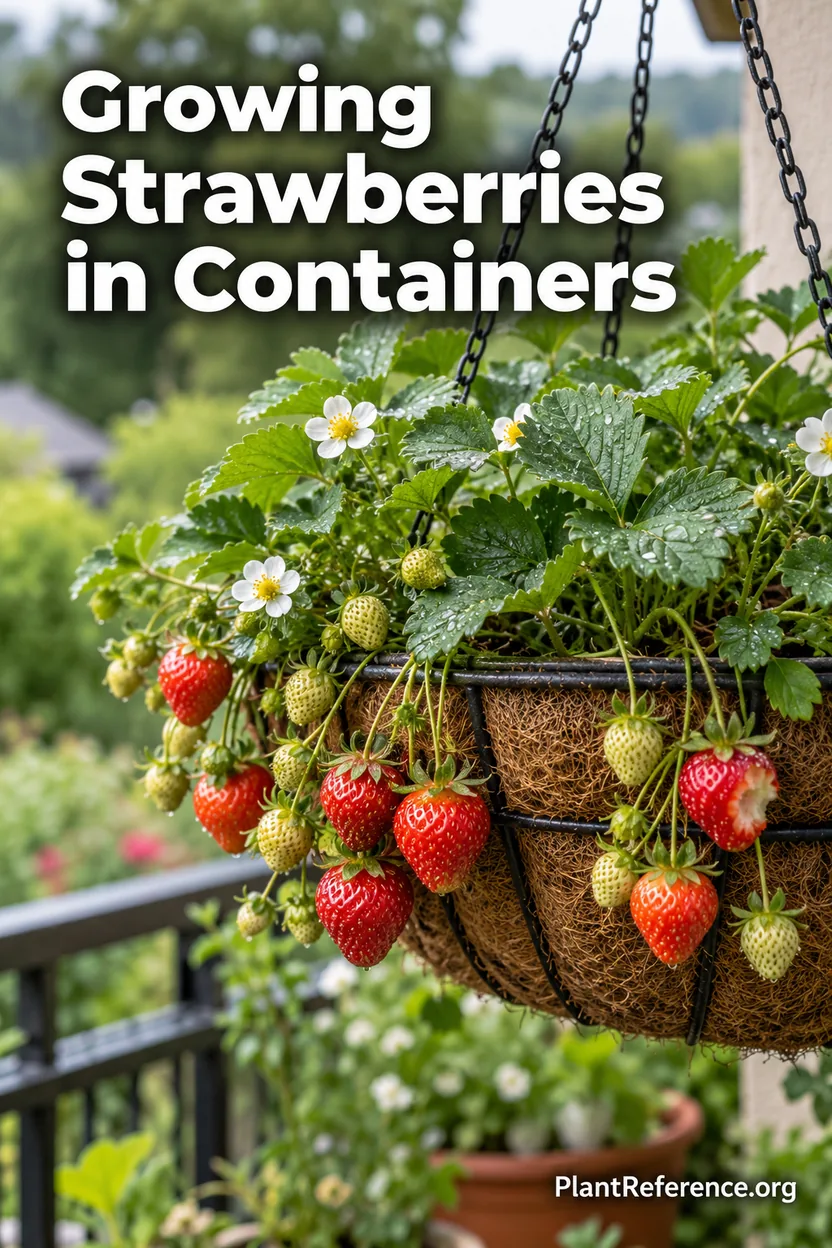
Growing Strawberries in Containers: Pots, Baskets & Towers
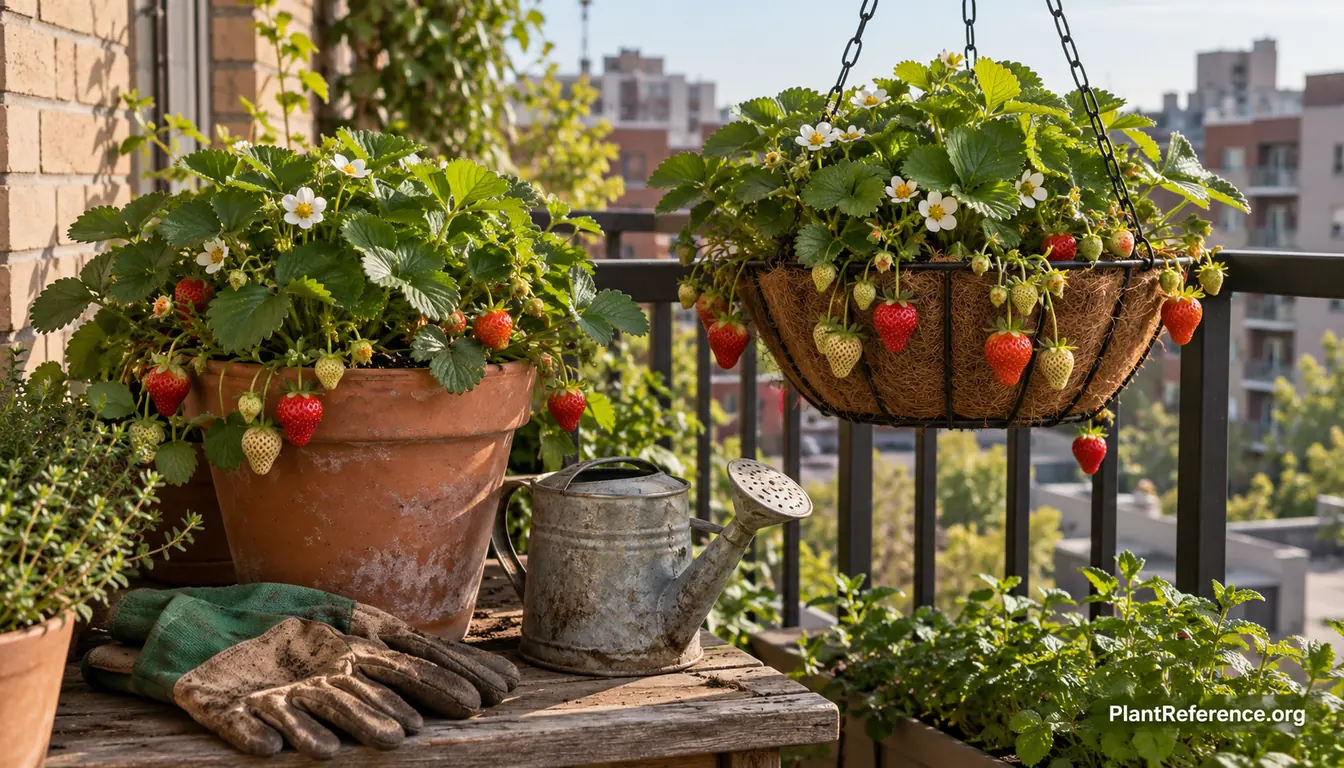
— Image © PlantReference.org 2026
Growing strawberries in containers is the easiest way to fit a real fruit crop onto a balcony or patio. A hanging basket can produce a small bowl of berries every week, and the fruit stays off the ground, away from slugs and rot. I've tracked strawberries in a dozen kinds of pots on my own balcony, and the results were clear: variety, pot depth, and winter protection matter more than anything else.
Best Strawberry Varieties for Containers
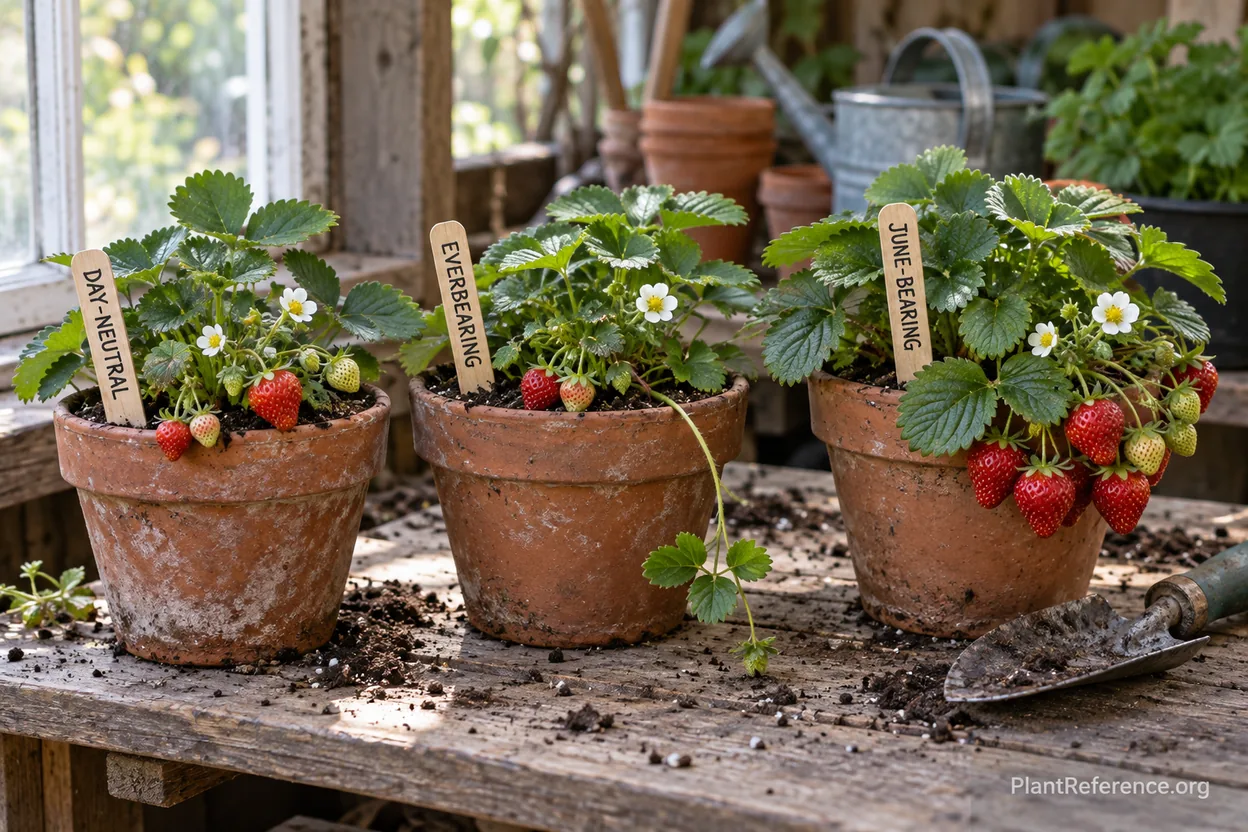
Strawberries Fragaria ananassa (frah-GAIR-ee-uh ah-nah-NAS-uh) fall into three groups, and the group you choose decides how your container performs. Getting this right saves you a season of disappointment.
June-bearing types produce one large crop over 2-3 weeks in early summer and then send out a lot of runners. They give you the heaviest single harvest, which is great for jam, but they're a poor fit for tight containers because runners multiply and the plants spend a year building up for the next crop. Fragaria ananassa 'Earliglow' is the best of the bunch for pots, with excellent flavor and early ripening, and Fragaria ananassa 'Jewel' produces large glossy berries later in the season.
Everbearing types produce two or three smaller flushes, typically in spring, midsummer, and early fall. They make fewer runners than June-bearers. Fragaria ananassa 'Ozark Beauty' is a dependable choice and Fragaria ananassa 'Quinault' produces large fruit through the season.
Day-neutral types flower and fruit continuously as long as temperatures stay between about 40°F and 85°F (4-29°C), and they send out few runners. That's why they're my top pick for containers. Fragaria ananassa 'Albion' has large, firm, sweet fruit and good disease resistance. Fragaria ananassa 'Seascape' handles heat better than most. Fragaria ananassa 'Tristar' is compact, and its smaller, very sweet berries look great trailing from a hanging basket.
If you want something different, Fragaria vesca 'Alexandria' is an alpine strawberry that makes no runners at all. The berries are tiny, but the flavor is intense, and it tolerates part shade better than the other types.
Variety | Type | Harvest | Runners | Notes for Containers |
|---|---|---|---|---|
Fragaria ananassa 'Albion' | Day-neutral | Late spring to fall | Few | Large, firm fruit; best all-round container pick |
Fragaria ananassa 'Seascape' | Day-neutral | Late spring to fall | Moderate | Good heat tolerance for hot balconies |
Fragaria ananassa 'Tristar' | Day-neutral | Late spring to fall | Few | Compact and sweet; ideal for hanging baskets |
Fragaria ananassa 'Ozark Beauty' | Everbearing | Spring, midsummer, fall | Some | Reliable, cold hardy, steady crops |
Fragaria ananassa 'Quinault' | Everbearing | Spring through fall | Some | Large berries, does well in towers |
Fragaria ananassa 'Earliglow' | June-bearing | Early summer, 2-3 weeks | Many | Top flavor, but needs runner control in pots |
Fragaria vesca 'Alexandria' | Alpine | Summer to fall | None | Tiny, intense berries; tolerates part shade |
Choosing and Planting Your Container
Strawberries have shallow, fibrous roots, so they don't need deep pots, but they do need volume for moisture and stability. The container has to be at least 8 inches (20 cm) deep, and 10-12 inches (25-30 cm) is better because a bigger volume of mix holds moisture longer and buffers heat.
Container Options
Standard pots: A 12-inch (30 cm) pot holds 3-4 plants. Use a wide, shallow pot instead of a narrow, tall one.
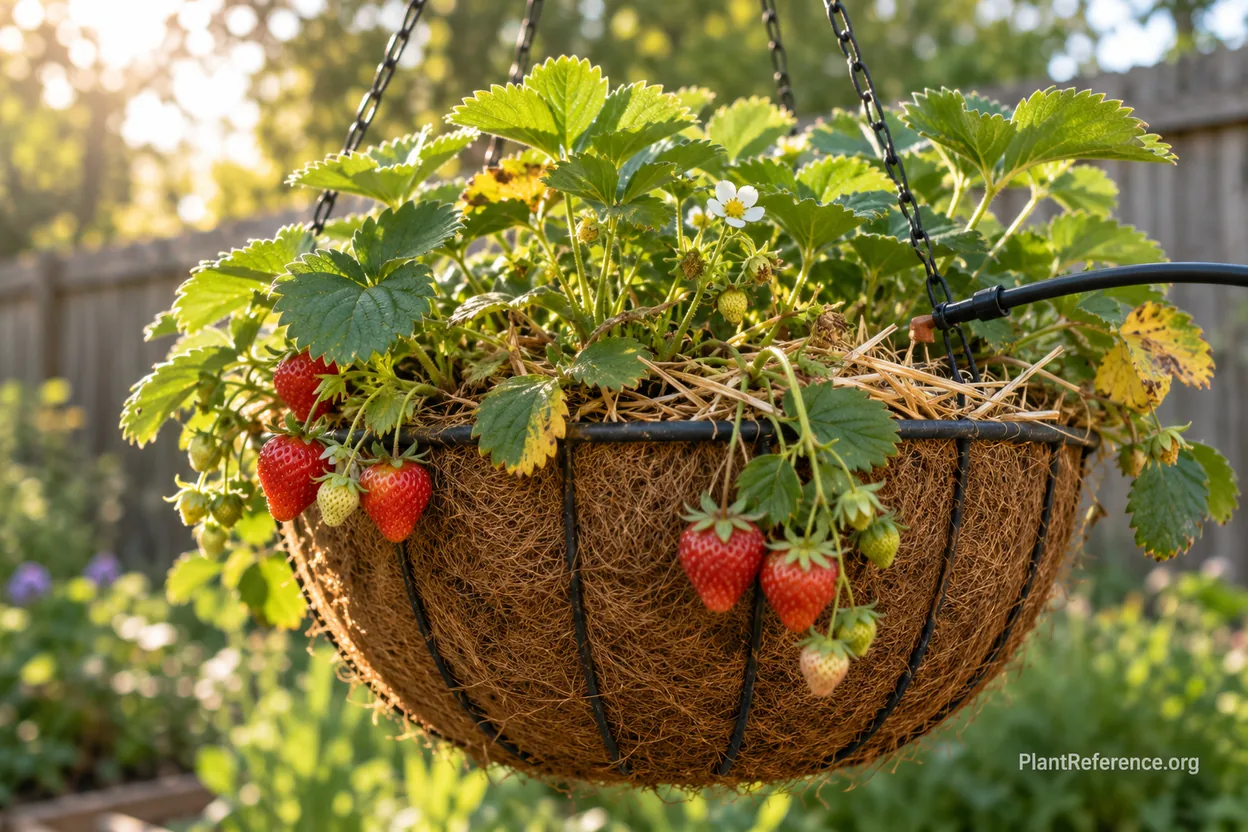
Hanging baskets: A 12-14 inch (30-35 cm) basket holds 4-5 plants and looks great with trailing fruit. Use a coco liner and a heavy-duty hook, since a watered basket weighs a lot.
Strawberry jars: Pockets on the side hold extra plants, but the pockets dry out, and the plants at the base stay wet. Push a central tube of gravel or perforated pipe through the middle to water evenly.
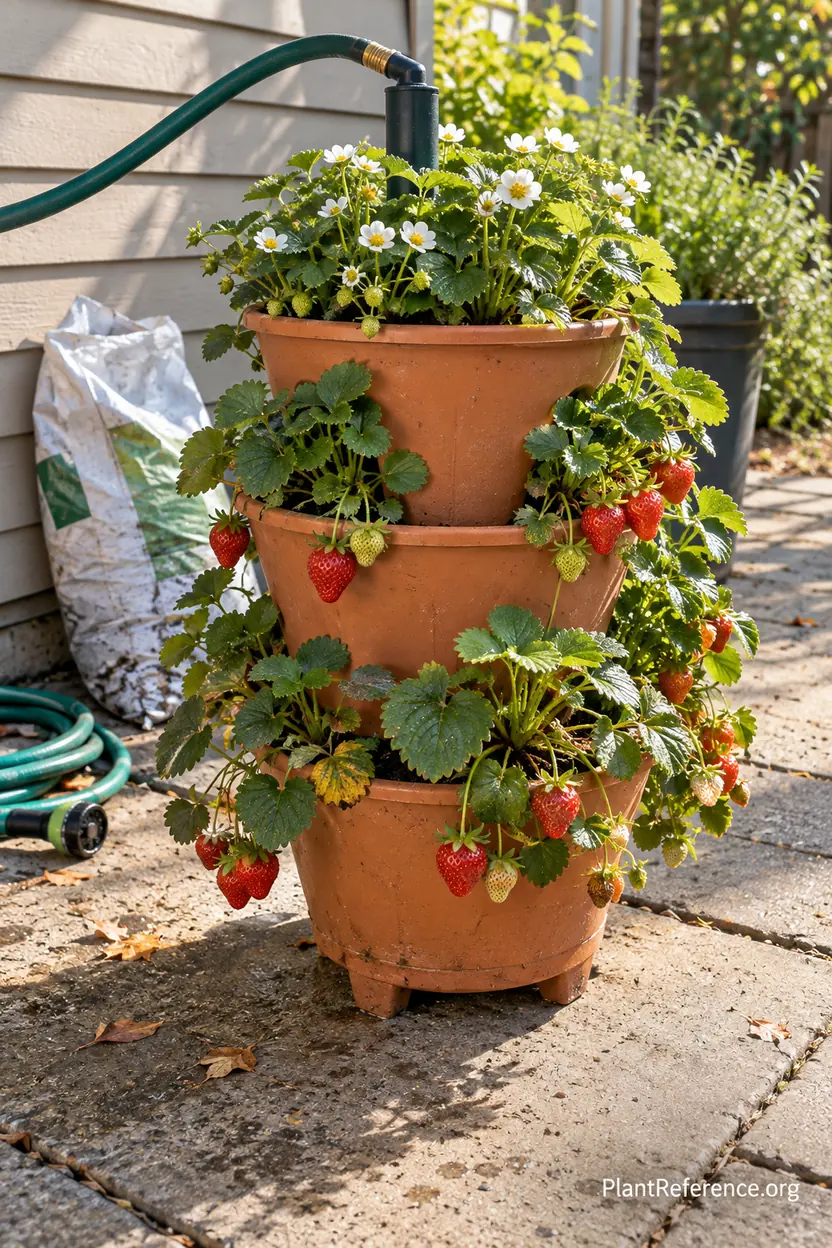
Vertical towers: Stacking planters with 20-40 pockets hold many plants in a 2-foot (60 cm) footprint. Water runs down through the layers, so they need extra feeding.
Grow bags: Fabric bags breathe well and stay cooler, but dry out quickly. See Best Grow Bags for Tomatoes: Fabric vs Plastic Container Comparison for the tradeoffs.
Every container needs drainage holes. Skip the gravel layer at the bottom, which raises the water table toward the roots. Use the same mix all the way down.
Potting Mix
Strawberries want a loose, fertile mix with a slightly acidic pH of 5.5-6.5. Use a quality potting mix blended with about 20-25 percent compost and a handful of perlite for air. Don't use garden soil, which compacts in a pot and can carry soil diseases such as verticillium wilt. If you want to compare products, 6 Best Potting Soils for Container Tomatoes (Tested for Drainage and Nutrients) covers what to look for, and the same principles apply to strawberries. For more on mixes, Container Tomato Soil: Creating the Perfect Growing Mix for Maximum Yields explains what each ingredient does.
Mix in a slow-release granular fertilizer at planting, following the label rate for your container size.
When to Plant
Plant bare-root crowns or nursery plants in early spring, as soon as the soil can be worked and hard frosts are over. Container plants can also go in during late summer or early fall in mild climates, which gives roots time to establish before winter. Bare-root plants should be soaked for an hour before planting, and any long, tangled roots trimmed to about 6 inches (15 cm).
Planting Depth Matters
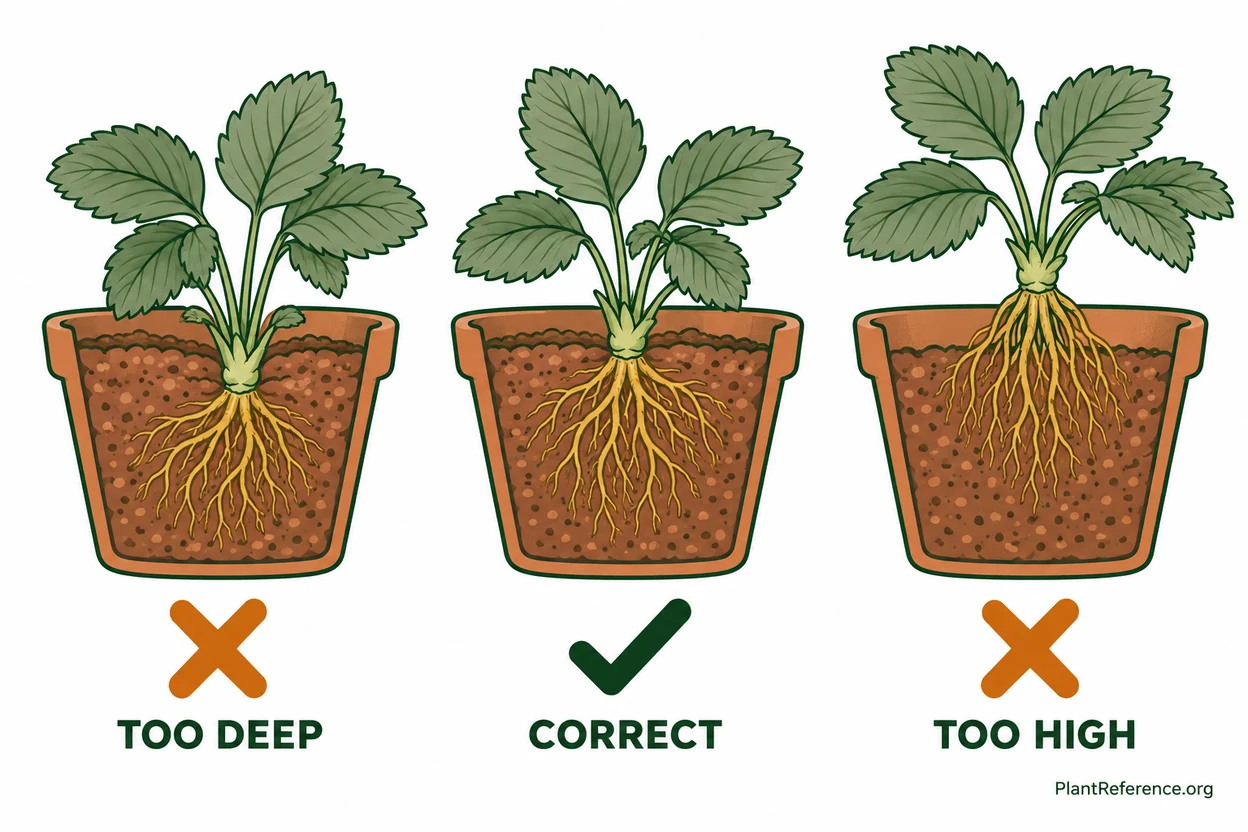
The crown, which is the thick part between roots and leaves, must sit exactly at the soil surface. If it's buried, it rots. If it's too high, roots dry out. Spread the roots out in a shallow hole, fill in, and firm the mix gently. Space plants 8-10 inches (20-25 cm) apart, or 6 inches (15 cm) for day-neutral types in a basket.
Complete Container Growing Guide
Once the plants are in, your work shifts to steady watering, feeding, and light management. Strawberries are forgiving if you don't let them dry out.
Sun and Placement
Strawberries need 6-8 hours of direct sun for good fruiting. In hot climates, provide afternoon shade, since heat above 85°F (29°C) reduces flowering, particularly in day-neutral types. A container gives you the flexibility to move plants as conditions change, so use it. In windy locations, anchor baskets and towers, as Protecting Container Tomatoes on Windy Balconies and Exposed Patios explains.
Watering
Container strawberries dry out fast, and stress shows up quickly as small, seedy fruit. Check the top inch (2.5 cm) of the mix daily in summer and water when it feels dry. Water deeply until it runs out of the drainage holes, and avoid getting water on the fruit, since wet berries rot. Hanging baskets can need water twice a day during heat waves.
A layer of straw or pine needles about 1-2 inches (2.5-5 cm) deep on top of the mix cuts evaporation and keeps berries clean. Drip irrigation on a timer makes watering easier, and Raised Bed Irrigation Systems: Watering Solutions for Consistent Growth covers setups that scale down to a few containers. To avoid overdoing it, Overwatering vs Underwatering Container Tomatoes: How to Tell the Difference shows how to read a plant's signals.
For steady moisture, Watering Container Tomatoes: The Complete Guide to Preventing Common Problems offers habits that transfer directly to strawberries.
Feeding
Container strawberries need regular feeding, because watering leaches nutrients out the bottom of the pot. Research from Michigan State University found that a 25 percent leaching fraction can wash away about half of the fertilizer in the mix. Here's a simple plan:
At planting: Mix in slow-release granular fertilizer.
Early growth: Use a balanced liquid feed, such as 10-10-10, every 2-3 weeks.
Flowering and fruiting: Switch to a fertilizer higher in phosphorus and potassium, such as a tomato feed, every 2 weeks. Too much nitrogen gives you leaves and few berries.
Every 4-6 weeks: Flush with plain water, about twice the volume of the pot, to remove salt buildup.
A white crust on the surface or brown leaf edges points to salt buildup. Flush the pot and ease off the fertilizer. Container Tomato Fertilization Schedule: When and What to Feed gives a fuller feeding calendar you can adapt.
Pollination and Flowers
Strawberry flowers are self-fertile, but they set fruit better with a little help from bees or wind. On a high balcony where bees rarely visit, brush the center of each open flower with a soft paintbrush every couple of days. Poor pollination produces lumpy, misshapen berries.
For June-bearing plants in their first year, pinch off flowers in the first 4-6 weeks so the plant builds roots. Day-neutral and everbearing plants can be pinched until about a month after planting, then left to fruit.
Runner Management
Runners are the long stems that shoot out from the plant and root at their tips. In a container they steal energy from fruiting and crowd the pot. Snip them at the base with scissors as they appear, unless you want new plants. To propagate, pin a runner into a small pot of mix next to the parent, let it root for 3-4 weeks, then cut the connection. Alpine varieties like Fragaria vesca 'Alexandria' make no runners at all.
Renovation and Replacement
Container strawberry plants lose vigor after about 3 years. Replace a third of your plants each year with fresh runners or nursery stock, and refresh the top few inches of mix each spring. After harvest, June-bearing plants benefit from trimming old leaves to about 1 inch (2.5 cm) above the crown and a light feeding to encourage new growth.
Troubleshooting Container Strawberry Problems
Most container strawberry issues trace back to watering, heat, or crowding. Here's how I sort them out.
Small or Seedy Berries
Small fruit points to water stress, poor pollination, or too little sun. Water more consistently, hand-pollinate, and move the pot to a sunnier spot. Feeding with a high-nitrogen fertilizer also reduces fruit size, so switch to a bloom-focused feed.
Gray Mold (Botrytis)
Fuzzy gray mold on berries appears in cool, damp weather. Keep leaves and fruit dry, water at the base, remove infected fruit right away, and give plants room for airflow. Straw mulch keeps berries off wet soil.
Slugs and Birds
Slugs love ripe berries near the ground, and hanging baskets and towers keep fruit out of reach. Birds go for ripe fruit, so cover plants with lightweight netting as berries color up.
Leaf Scorch and Leaf Spot
Purple or brown spots on leaves usually come from fungal leaf spot, which spreads in humid, crowded conditions. Remove affected leaves and improve airflow. Scorched leaf edges point to salt buildup or heat stress. Flush the pot with plain water and give afternoon shade.
Wilting in Hot Weather
Strawberries wilt on hot afternoons even with moist soil, because dark pots can heat roots above 110°F (43°C). Mulch, shade the pot, or wrap it in a lighter material. Raised Bed Too Hot in Summer: Protecting Plants from Heat Stress has cooling ideas that work for containers.
Crowded, Root-Bound Plants
If roots fill the pot and water runs straight through, divide the plants and repot them into fresh mix. The steps in Container Too Small? How to Save Root-Bound Tomato Plants apply to strawberries too.
Problem | Symptom | Likely Cause | Quick Fix |
|---|---|---|---|
Small berries | Tiny, seedy fruit | Water stress, poor pollination | Water evenly, hand-pollinate |
Gray mold | Fuzzy gray patches on fruit | Cool damp weather, crowding | Remove fruit, mulch, improve airflow |
Leaf scorch | Brown, crisp leaf edges | Salt buildup or heat | Flush pot, add shade |
Few flowers | Lots of leaves, little fruit | Too much nitrogen | Switch to bloom feed |
Winter loss | Dead crowns in spring | Frozen roots | Insulate pots, group and mulch |
Overwintering and Harvest
Winter is the biggest risk for container strawberries. In the ground, soil insulates roots at around 32-40°F (0-4°C) even when air temperatures are far lower. In a pot, roots can drop to the same temperature as the air, which can kill them even though the plant is hardy in the ground. Roots are much less cold hardy than crowns and leaves, and this is the most common reason container strawberries fail in cold climates.
The Two-Zone Rule
For any perennial in a pot, choose plants rated two USDA zones colder than your own. If you live in Zone 6, pick varieties hardy to Zone 4. Fragaria ananassa 'Ozark Beauty' and Fragaria ananassa 'Earliglow' are both cold hardy and good picks for northern gardeners.
Insulation Methods
Group pots together against a sheltered wall and pack straw or bags of leaves around and between them.
Bury pots ("heel in") to the rim in a garden bed or a pile of mulch.
Wrap large pots that can't be moved with bubble wrap or a thermal blanket, and cover the top with 4-6 inches (10-15 cm) of straw.
Move pots to an unheated garage or shed once plants go dormant, and water lightly about once a month so the mix doesn't dry out completely.
Skip fertilizer during dormancy. Water only when the mix is dry, since frozen, soggy soil rots crowns. Once temperatures warm up in spring, pull the mulch back gradually and resume normal care.
Harvesting
Pick strawberries when they're fully red, since they don't ripen after picking. Berries are usually ready 4-6 weeks after flowering. Pinch the stem about 1/2 inch (13 mm) above the berry, and harvest in the morning when fruit is cool. Check plants every day or two in peak season.
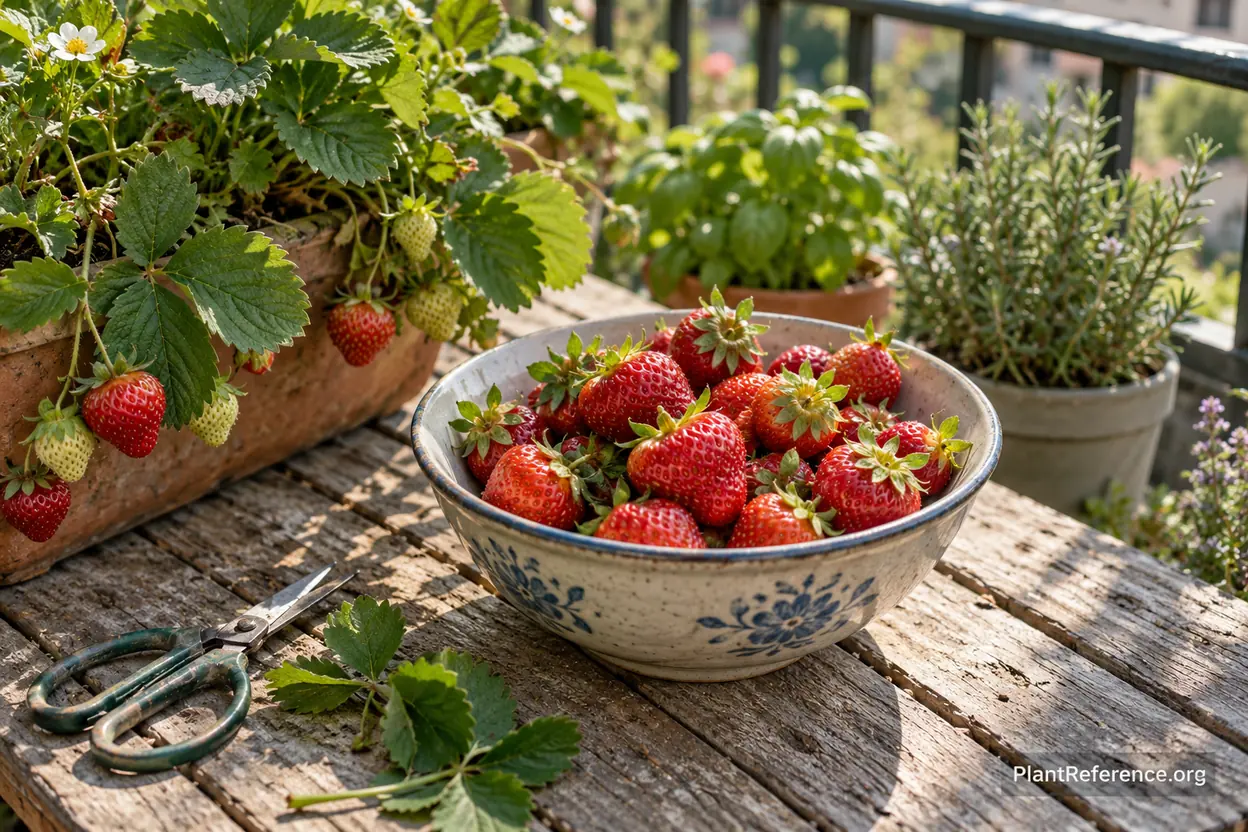
Store unwashed berries in a single layer on a paper towel in the refrigerator, and wash right before eating. They keep about 3-5 days. For larger harvests, freeze whole berries on a tray, then transfer them to a bag, or cook a small batch of jam. If you're growing more crops in small spaces, Growing Tomatoes in Small Spaces: Apartment, Balcony, and Patio Solutions pairs well with strawberries, and Best Raised Bed Vegetables for Beginners: Top 10 Easy-Growing Crops has more easy crops to add.
Frequently Asked Questions
Reading about plants and recognising them are different skills. These three build the second.
- Daily PlantIdentify the day’s mystery plant from a close-up photograph.
- Keyed OutWork a dichotomous key, lead by lead, to name a hidden specimen.
- Name That PlantName a specimen from botanical clues dealt hardest first.
Free to play, no account needed
Tagged with
Linda's been growing tomatoes in containers on her suburban Pittsburgh balcony—ever since her kids grew up and she finally had time for hobbies again. She's a medical billing specialist by day and a tomato enthusiast by night and weekend. Linda started documenting her container growing experiments on a simple blog and discovered other renters and condo dwellers were desperate for practical advice. She tests different varieties every season, tracking yields, disease resistance, and flavor in a detailed spreadsheet. Linda's approach is practical and budget-conscious—she saves seeds, reuses containers, and makes her own fertilizer from kitchen scraps. Her specialty is maximizing production in small spaces, and she's perfected the art of growing full-size tomatoes in 5-gallon buckets. She's a Pennsylvania Master Gardener and teaches container growing workshops at her local library.