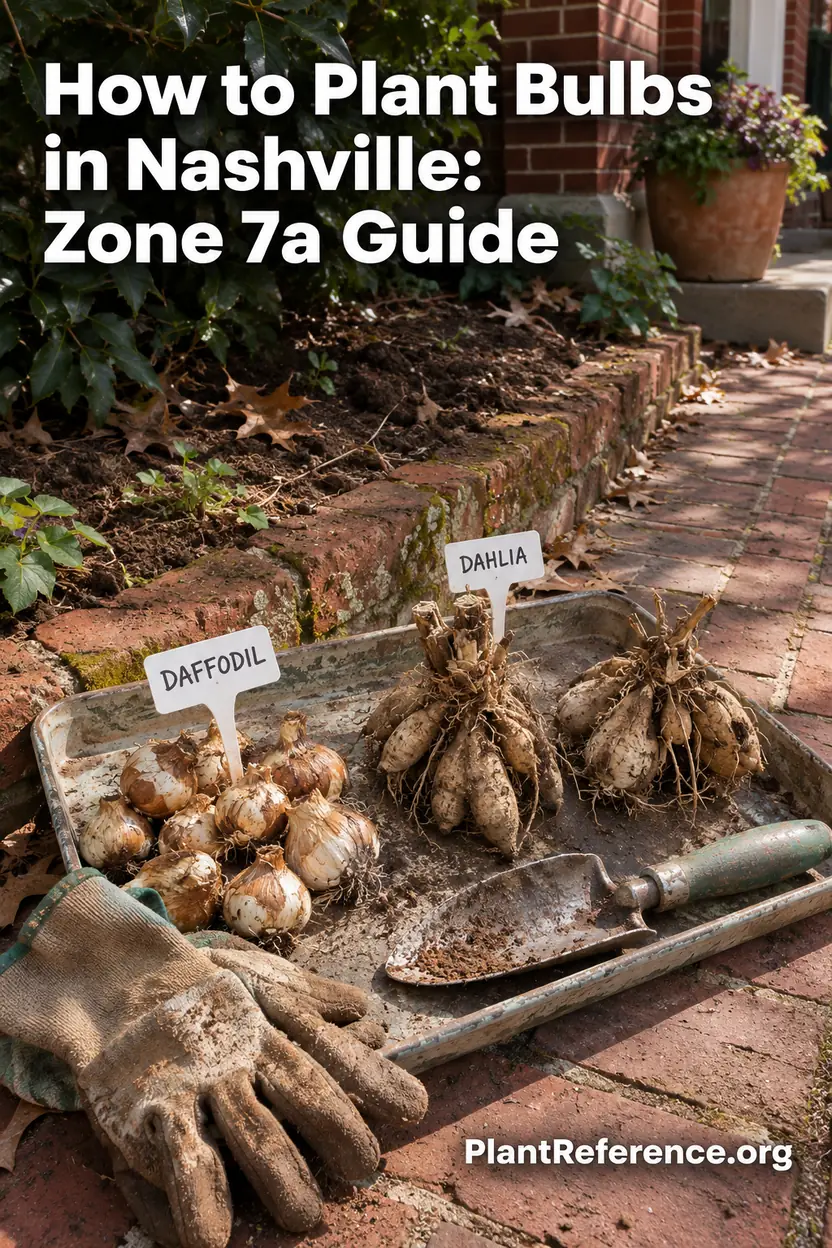
How to Plant Bulbs in Nashville: Zone 7a Guide
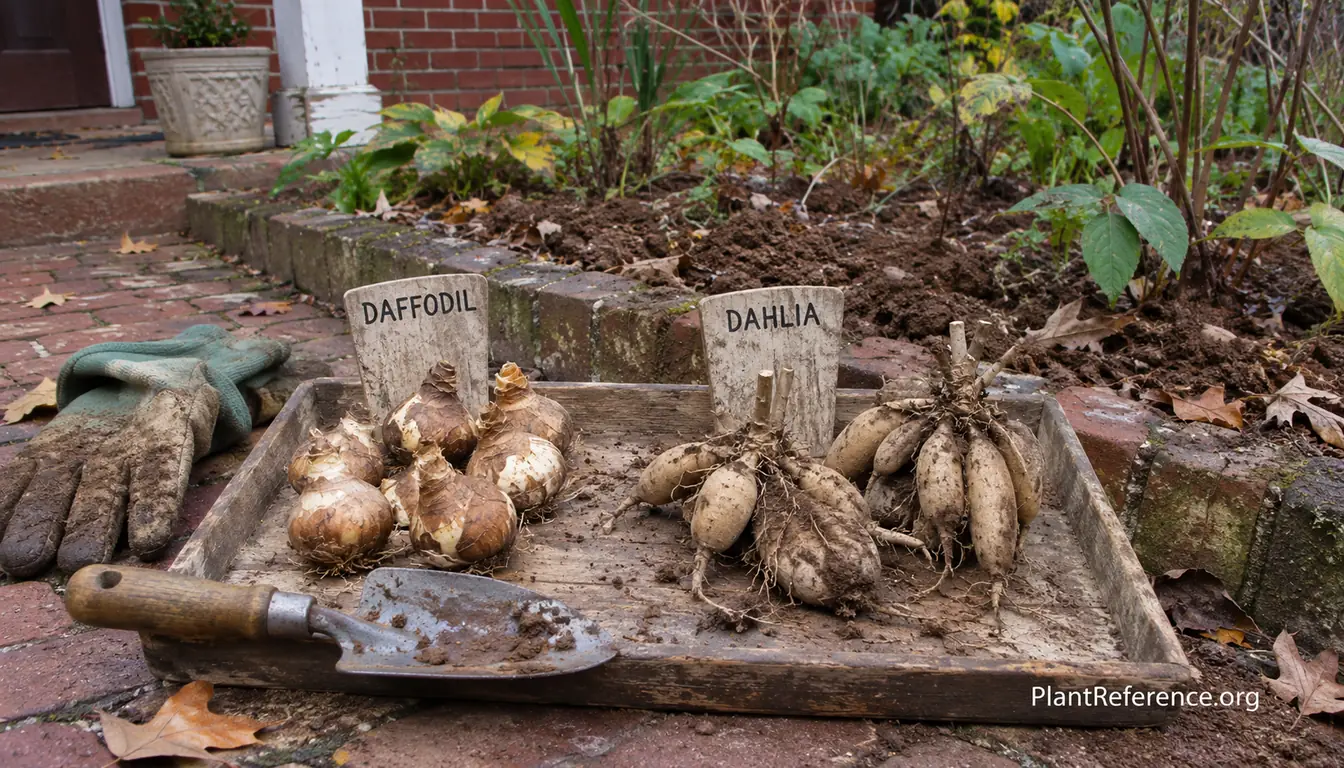
— Image © PlantReference.org 2026
Pets & Toxicity
Recorded toxicity for plants linked in this guide. An unknown status is not a safety assessment.
Toxic to pets: thalia daffodil, dahlia 'Bishop of Llandaff'DetailsHide
Dahlia 'Bishop of Llandaff' — Toxicity Warning
Toxic to petsView Dahlia 'Bishop of Llandaff' plant profileLearning how to plant bulbs in Nashville starts with respecting the difference between a long growing season and a frost-free climate. Plant hardy spring bulbs in late fall as soil cools, then reserve the warm part of spring for dahlias, caladiums, and other tender plants. Good drainage belongs in both plans.
A Southern flower bed can offer spring bloom, summer foliage, and cutting flowers without asking every plant to survive every condition. Put dependable bulbs where they can return, use seasonal accents where you can manage them, and decide on winter storage before buying tender stock. This guide uses the stored Nashville Zone 7a profile and April 10–October 30 frost references as planning anchors, not a forecast for a specific year.
Best Bulbs for Nashville's Climate
Daffodils are a strong foundation for a repeat spring display. The research identifies Narcissus 'Carlton', Narcissus 'Ice Follies', and 🌿Narcissus 'Thalia' as naturalizing candidates. Their value is not just the first spring's flowers; it is the possibility of building a planting that improves over several seasons with appropriate care.
Use tulips with realistic expectations. Darwin hybrids offer better prospects for repeat bloom than many elaborate hybrid groups, while species tulips such as Tulipa tarda (TOO-lih-pah TAR-dah) suit smaller, sunny, well-drained spaces. Warm or wet conditions can still undermine performance, so trial a modest planting before filling an entire border.
Early crocuses and later alliums can extend the spring sequence. Keep low flowers near a walkway, where they are visible, and place taller forms behind them. The broader climate considerations in Southeast Gardening Guide: Heat, Humidity & Clay Soil help explain why drainage and summer conditions belong in the design from the start.
Choose Summer Plants for Their Actual Job
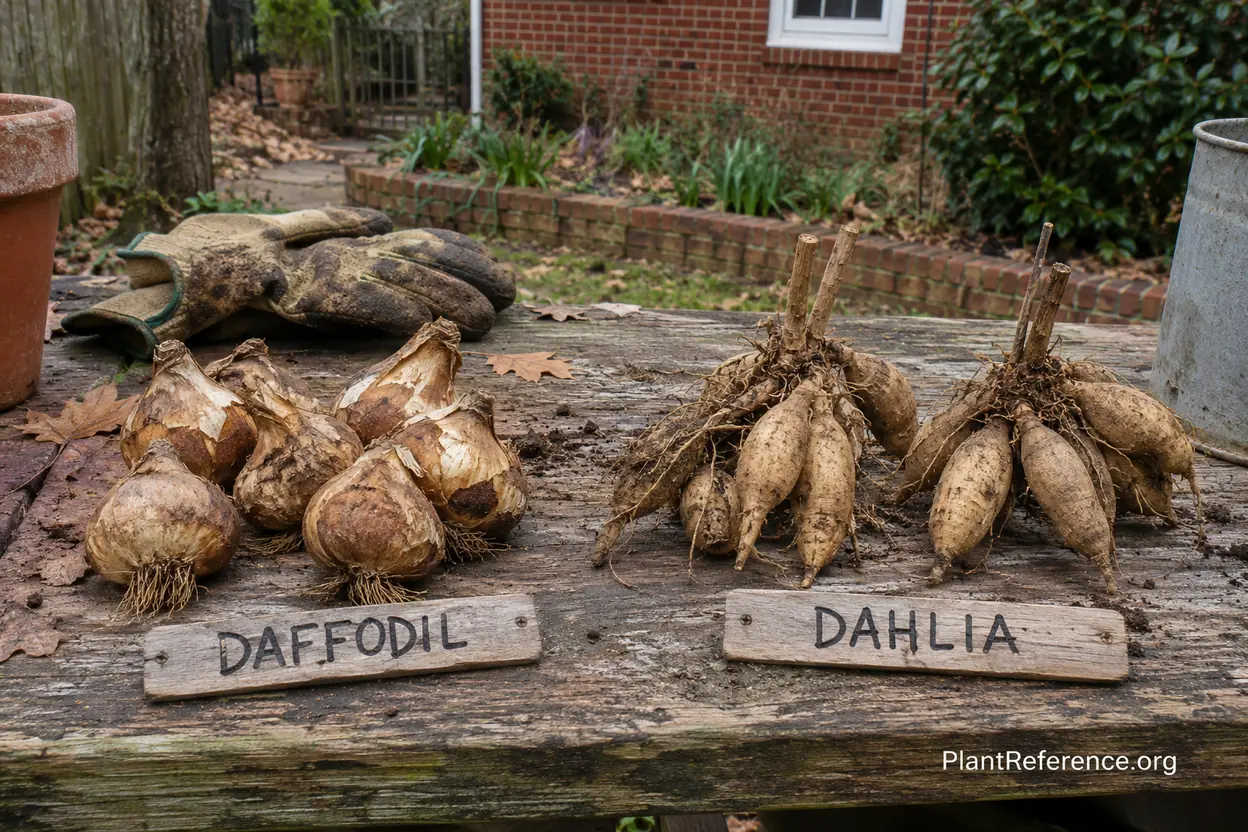
Dahlias such as Dahlia 'Cornel' offer cutting flowers but need sun, support, and a winter storage plan. 🌿Dahlia 'Bishop of Llandaff' provides a different ornamental effect, with dark foliage and open flowers. These are not interchangeable with shade foliage plants simply because they are sold in the same seasonal bulb display.
Caladiums bring foliage to suitable shaded locations and respond to warm soil. Hardy lilies provide summer flowers without the same annual lifting routine. Cannas offer a bold seasonal form, but in this Zone 7a plan, lifting and storage are the dependable approach rather than assuming a protected corner will always be enough.
Choice | Best role | Typical planting depth | Typical spacing | Important limitation |
|---|---|---|---|---|
Narcissus 'Carlton' | Repeat spring groups | 6–8 inches (15–20 cm) | 4–6 inches (10–15 cm) | Keep foliage after bloom |
Naturalizing border | 6–8 inches (15–20 cm) | 4–6 inches (10–15 cm) | Avoid saturated soil | |
Tulipa tarda | Small sunny spring accent | 4–5 inches (10–12 cm) | 3–4 inches (8–10 cm) | Trial local repeat performance |
Giant ornamental allium | Late spring height | 6–8 inches (15–20 cm) | 8–12 inches (20–30 cm) | Confirm selected label |
Dahlia 'Cornel' | Summer cut flowers | 4–6 inches (10–15 cm) | Follow mature spread | Stake and store for winter |
Caladium | Warm-season shade foliage | Follow selected label | Follow mature spread | Wait for warm soil |
Depths refer to the bulb base below finished soil level unless the supplier specifies otherwise. Tubers and rhizomes can have different planting instructions, so do not apply the same depth to every storage organ. Keep labels with each group while working.
Decide What Will Return and What Is Seasonal
Naturalizing requires room, light during leaf growth, and patience after flowering. A planting that is cut down as soon as the blooms fade cannot rebuild well. Put daffodils where their leaves can finish without interfering with a path or a frequently mown patch.
For a formal seasonal tulip display, replacement may be an intentional design choice. That is different from expecting a permanent colony. Choose the approach before spending money so the maintenance and next year's budget are part of the plan, not an unwelcome surprise.
Specific Planting Dates for Nashville
The planned fall window is November to early December, with soil cooling toward about 50°F (10°C). Avoid planting simply because bulbs appear in stores during warm weather. The bed should be cool enough for the intended seasonal cycle and still workable for careful placement.
The research flags this transition climate as a place to consider chilling carefully. That does not mean every bulb needs a refrigerator or that one fixed chilling recipe fits every tulip. Match the variety and supplier's guidance to the site, especially when a dependable formal tulip display matters more than experimenting.
Understand Chilling Without Overgeneralizing
Tulips have substantial cold requirements, with the research giving a broad range of twelve to eighteen weeks. Other spring bulbs have different requirements. The lowest winter temperature alone does not describe the duration of suitable chilling, so the hardiness-zone number cannot answer every flowering question.
If supplied bulbs are already pre-chilled, follow the seller's planting instructions rather than starting the count again. If supplemental chilling is specifically recommended, keep bulbs away from ripening fruit and follow an appropriate temperature and duration schedule. Do not use a freezer, and do not chill tender caladiums as though they were tulips.
Spring Dates for Tender Bulbs
The city record uses April 10 as the last-frost reference and October 30 as the first-frost reference, a 203-day interval. These are stored planning dates, not guaranteed weather boundaries. Adding seven to fourteen days gives April 17–24 as an initial review window for tender planting, with actual conditions deciding the outcome.
Dahlias require soil around 60°F (16°C) or warmer; caladiums need about 65°F (18°C). A warm afternoon does not prove the soil is ready. Measure at the relevant depth and wait through cold, wet conditions rather than planting to satisfy the calendar.
November to early December: plant suitable hardy spring bulbs as soil cools.
Winter: inspect stored tender material and note drainage after rain.
April 10: review the frost reference against current conditions.
April 17–24 or later: assess tender planting, requiring appropriate soil warmth.
Summer: support stems, manage moisture, and harvest flowers.
Before autumn cold: prepare lifting supplies and separate storage areas.
Do not calculate one universal harvest date for a bed containing several bulb types. Spring flowering follows species and weather, while summer performance depends on warm-soil establishment. A sequence of seasonal roles is more useful than an unsupported promise of flowers a fixed number of days after planting.
Complete Growing Guide for Nashville Bulbs
Drainage Is the First Design Decision
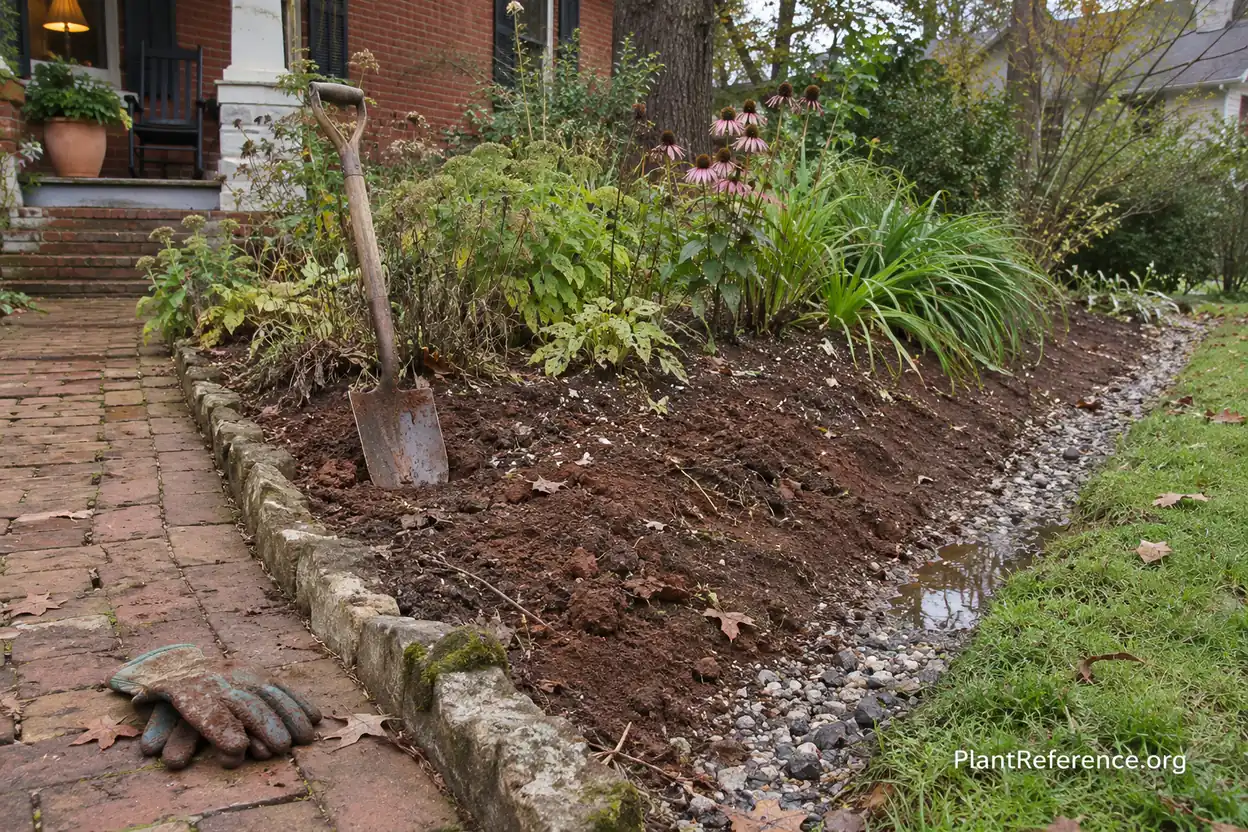
Watch the proposed bed during and after rain. A planting beside a downspout or at the bottom of a slope may receive far more water than the rest of the garden. Bulbs can decay when the soil stays saturated even if the surface looks tidy.
Begin with How to Test Garden Soil: Jar, Ribbon & pH Tests. Determine what soil you have before assuming that every Tennessee bed needs the same amendment. Clay, imported fill, and previously improved borders require different decisions.
Work soil when it is not wet enough to smear. Breaking up sticky clay can damage the structure you are trying to improve. How to Improve Clay Soil Without Making It Worse explains why patience and whole-bed preparation are preferable to a narrow hole full of loose material.
Give Water Somewhere to Go
A pocket of compost surrounded by dense ground can still collect water. A gravel layer under one bulb does not create a drain through the surrounding soil. Improve the planting area or select a better location rather than hoping the bulb will tolerate a persistent wet spot.
Raised beds can help when they provide a real drainage advantage, but a box alone is not a cure. Review Poor Drainage in Raised Beds: Causes and Fixes for Waterlogged Soil before building on a saturated location. The question is where water moves, not whether the bed looks higher.
Plant in Clear Groups
Arrange bulbs while labels are still attached to the bags. Repeat a few varieties through the border for a coherent display rather than mixing every available color in equal amounts. Leave enough space for mature foliage and future clump growth.
Dig to the correct base depth, set the bulb with the basal plate down, and backfill gently. Large daffodils commonly need 6–8 inches (15–20 cm); smaller spring bulbs often need shallower placement. Check the exact label when planting a mixture.
Water if needed to settle soil around the planting. After that, respond to moisture conditions rather than watering automatically every day. Dormant bulbs in cool ground do not need the same routine as leafy summer plants in active growth.
In newly filled beds, allow for changes in soil level after watering. Raised Bed Soil Settling and Compaction: Prevention and Solutions explains why settling matters when measuring planting depth.
Build Soil Without Feeding Blindly
Soil improvements should have a purpose. Compost can support structure, but more is not always better, and fertilizer cannot correct poor drainage. Avoid concentrated fertilizer against bulbs and tubers.
Use DIY Organic Fertilizer Blends: A Soil-Test-First Guide to connect feeding with evidence. A high-phosphorus label does not guarantee more flowers when light, chilling, or foliage management is the real limitation. Change the condition that is failing rather than stacking products on top of it.
The longer-term approach is described in Soil Health 101: How to Build Living, Productive Garden Soil. A bed that improves gradually is easier to manage than one repeatedly disturbed in search of a quick fix.
Manage Foliage Through the Transition
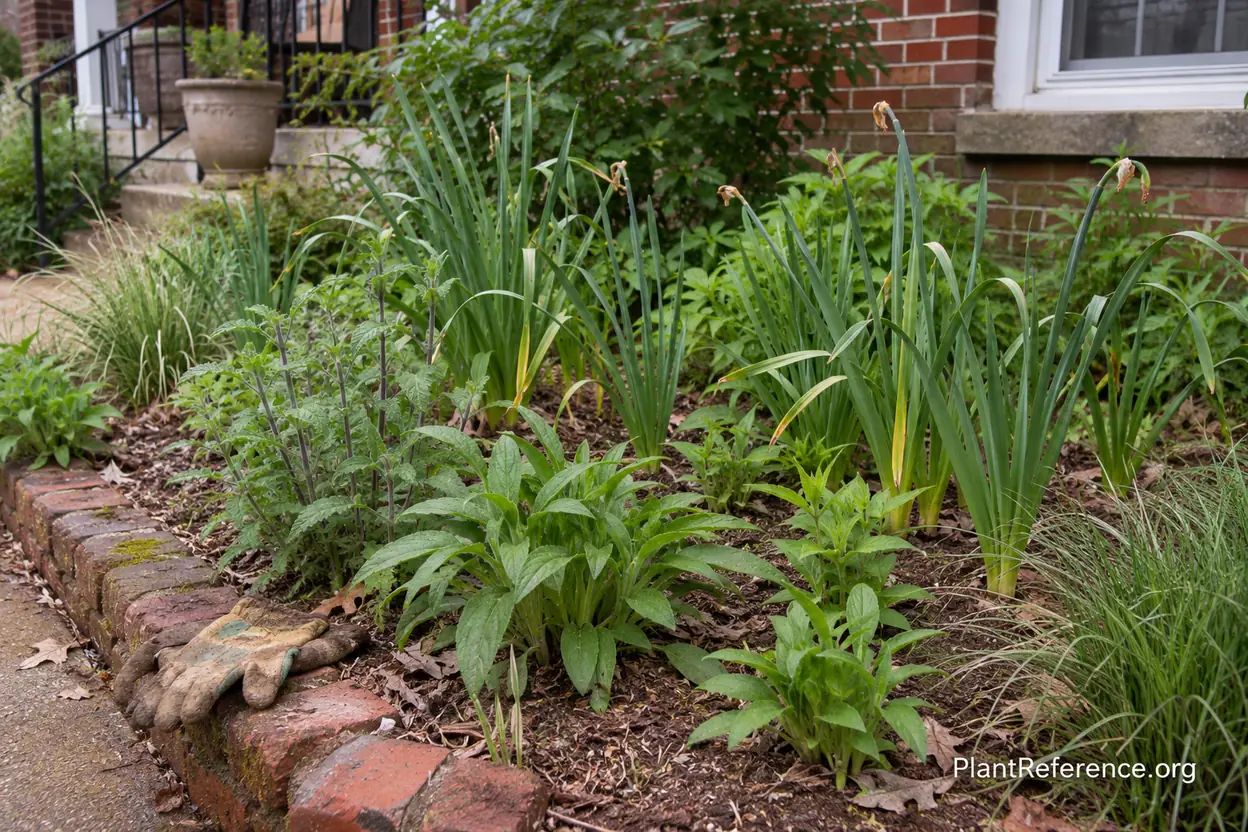
Leave spring bulb leaves until they yellow naturally, often six to eight weeks after flowering. Do not braid, tie, or cut green leaves simply because the flowers are finished. They are rebuilding reserves for future growth.
Use emerging perennials to soften the appearance without burying or heavily shading the bulb leaves. In a Southern border, the transition into summer foliage can be part of the design. Avoid replacing the spring display so aggressively that you damage the bulbs underneath.
Summer Care in a Humid Garden
Install dahlia stakes at planting before roots spread into the space. Pinch above the third or fourth leaf pair once growth is strong if a branching plant is desired. Keep room around supports so you can inspect leaves and harvest without pushing through crowded stems.
Water the soil when needed and avoid keeping an already wet bed wetter. Humid weather does not necessarily mean the root zone has enough moisture, but it also does not justify a fixed irrigation routine. Check both plant condition and soil before deciding.
Give caladiums a suitable shaded site and the warmth they need to establish. They are valued for foliage, not a spring-bulb flower show. Confirm the selected plant's light tolerance rather than assuming every caladium belongs in full sun or the deepest shade.
Containers Need Their Own Routine
Containers can bring bold foliage near a porch and make small seasonal displays easier to arrange. They also dry differently from beds and expose roots to greater temperature swings. Container Gardening: Pots, Soil, Water & Yields explains why pot size and drainage matter as much as appearance.
Decide how the container will be moved or emptied before it is filled. A large wet pot is not an easy last-minute solution when cold weather arrives. Use manageable containers and plan access to storage rather than discovering the lifting problem in autumn.
Troubleshooting Nashville Bulb Problems
Tulips With Short Stems or No Flowers
Insufficient chilling can affect tulip development, but it is not the only explanation for a failed display. Check bulb quality, planting date, drainage, and plant identity. A hybrid that performs well once and declines later may simply be poorly suited to long-term perennial use in that bed.
For important displays, keep notes on variety and supplier handling. Compare performance before committing to a larger planting. Daffodils can provide a more dependable foundation while tulips remain a smaller seasonal or trial component.
Rot, Browsing, and Crowding
Soft, foul-smelling bulbs or collapsing tubers require removal and a look at wet conditions. Replacing them immediately in the same saturated location repeats the risk. A dry outer skin around firm tissue is not the same as active decay.
Tulips attract several digging and browsing animals. Daffodils and ornamental onions are less appealing to many visitors but are not an invisible protective fence for neighboring plants. Consider physical protection where appropriate, while avoiding sharp edges and barriers that obstruct emerging shoots.
Use the Next Season as Feedback
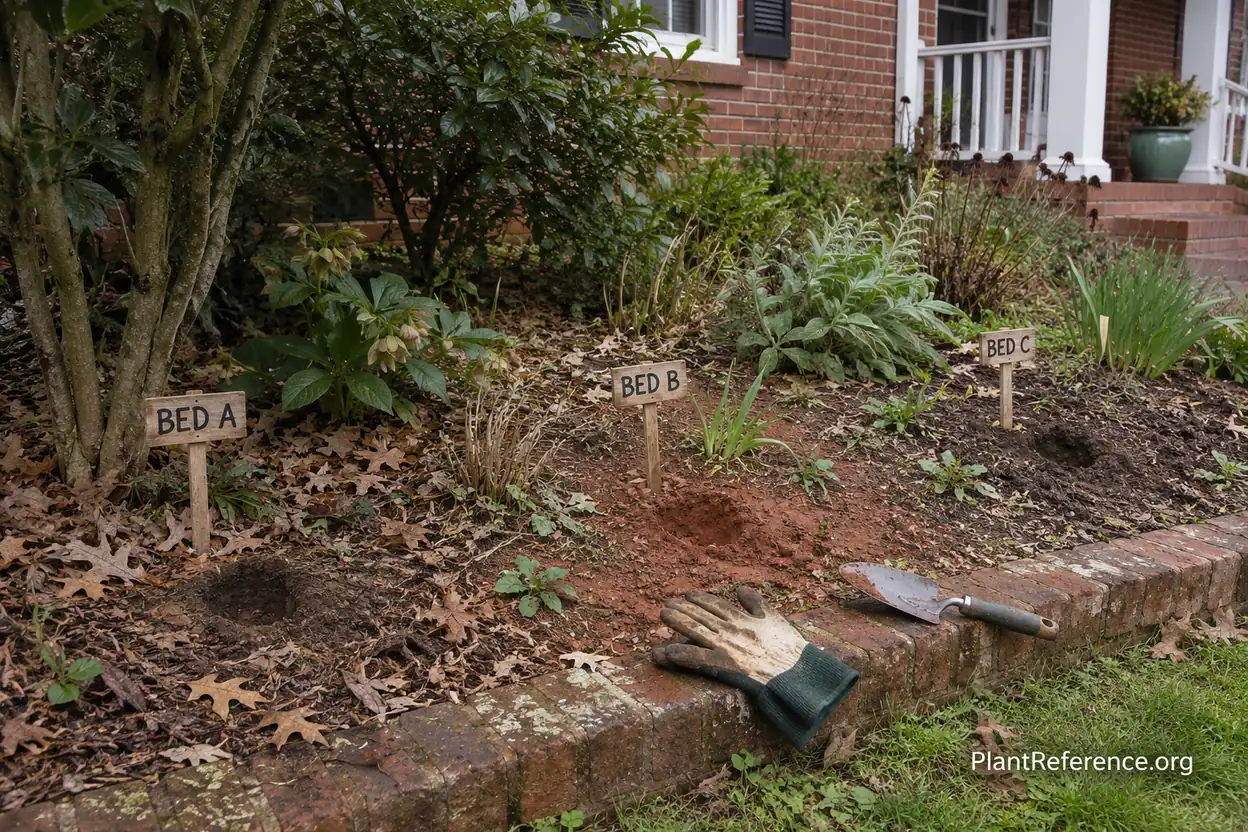
If clumps produce many leaves and fewer flowers, review crowding and the previous year's foliage care. Divide when appropriate for the species rather than breaking up every planting on a fixed annual schedule. Record where each group sits so dormant bulbs are not accidentally cut during summer work.
A soil thermometer helps with temperature decisions, not disease diagnosis. Use the supported product below to check planting conditions, and use observation to assess drainage, damage, and growth. One instrument cannot replace understanding the whole bed.
Harvest and Storage Before Winter
Cut flowers with clean tools and leave enough healthy growth to sustain the plant. A dedicated cutting patch can be managed differently from a permanent naturalized border. For spring bulbs intended to return, avoid removing all the green leaves along with a bouquet.
Hardy daffodils and suitable spring bulbs normally remain in the ground. Tender dahlias and cannas need a more deliberate plan in this Zone 7a guide. Do not rely on the possibility of a mild winter to protect the entire collection.
Lift dahlias after a killing frost damages the tops but before the ground freezes. Preserve the necks and crown, label each clump, and allow surface moisture to dry for roughly one to three days. Store around 40–50°F (4–10°C) in suitable packing material and inspect monthly.
Caladiums need warmer handling. Bring them indoors before temperatures fall below roughly 55°F (13°C), cure according to the stock's needs, and store around 60–65°F (16–18°C). They do not belong in the same cold storage conditions used for gladiolus, which is stored around 35–45°F (2–7°C) after a two-to-three-week cure.
Separate storage groups by temperature needs, not just by available shelf space. Remove decay promptly and watch for excessive shriveling. Tennessee's long growing season offers plenty of opportunity, but keeping tender plants for another year still depends on a sound winter routine.
Frequently Asked Questions

Reading about plants and recognising them are different skills. These three build the second.
- Daily PlantIdentify the day’s mystery plant from a close-up photograph.
- Keyed OutWork a dichotomous key, lead by lead, to name a hidden specimen.
- Name That PlantName a specimen from botanical clues dealt hardest first.
Free to play, no account needed
Tagged with
Marcus manages the grounds at a historic property in Memphis and runs a side business doing residential garden design. He grew up helping his grandfather maintain a large vegetable garden in the Mississippi Delta and carried that knowledge into formal training—he has a degree in landscape technology. Memphis sits in a sweet spot for growing: long warm seasons, decent rainfall, and mild enough winters that many marginally hardy plants survive. Marcus writes about Southern gardening traditions, ornamental garden design, and dealing with the humidity and heavy rainfall that define the Mid-South climate.