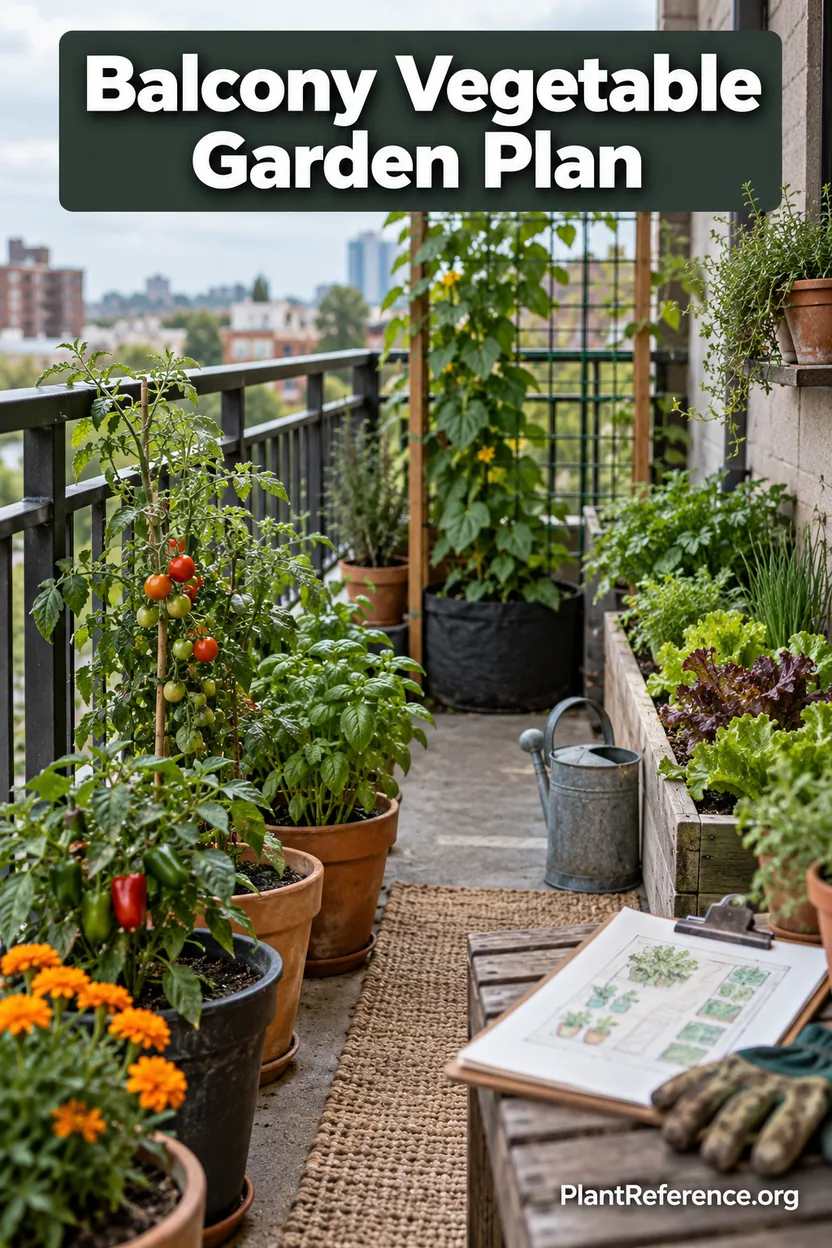
Balcony Vegetable Garden: A Sun, Wind & Space Plan
Pets & Toxicity
Recorded toxicity for plants linked in this guide. An unknown status is not a safety assessment.
No linked plant is recorded as toxicDetailsHide
Lactuca sativa 'Black Seeded Simpson' — Toxicity
Non-toxicView Lactuca sativa 'Black Seeded Simpson' plant profileRaphanus sativus 'Cherry Belle' — Toxicity
Non-toxicView Raphanus sativus 'Cherry Belle' plant profile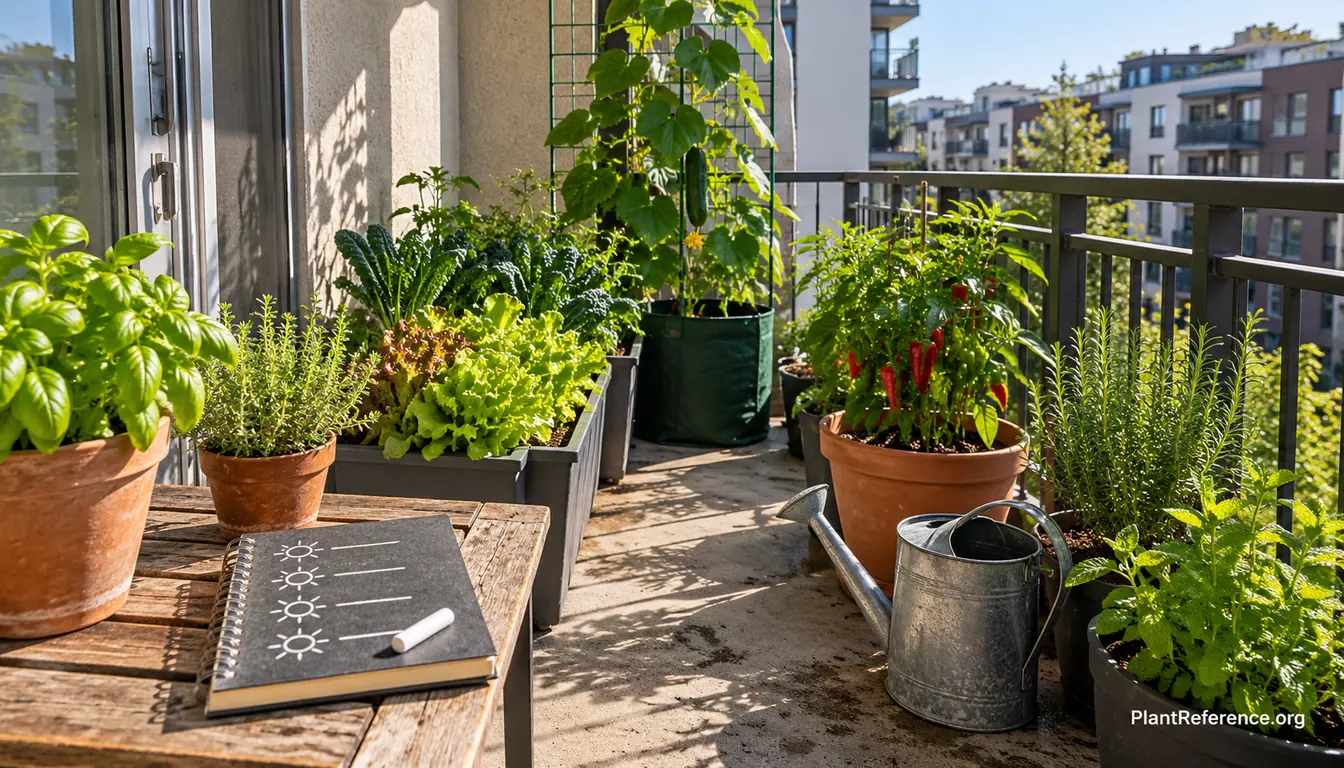
— Image © PlantReference.org 2026
A balcony vegetable garden is a layout problem before it is a shopping list. Record the hours of direct sun in each spot, note where wind funnels around the building, and measure the floor area you can use while leaving a clear walking route. Then place fruiting crops in the brightest secure floor positions, leafy greens where light is gentler, and thirsty containers within easy reach of water. Confirm balcony load and attachment rules before filling any pot.
Measure Sun, Wind, and Usable Floor Space
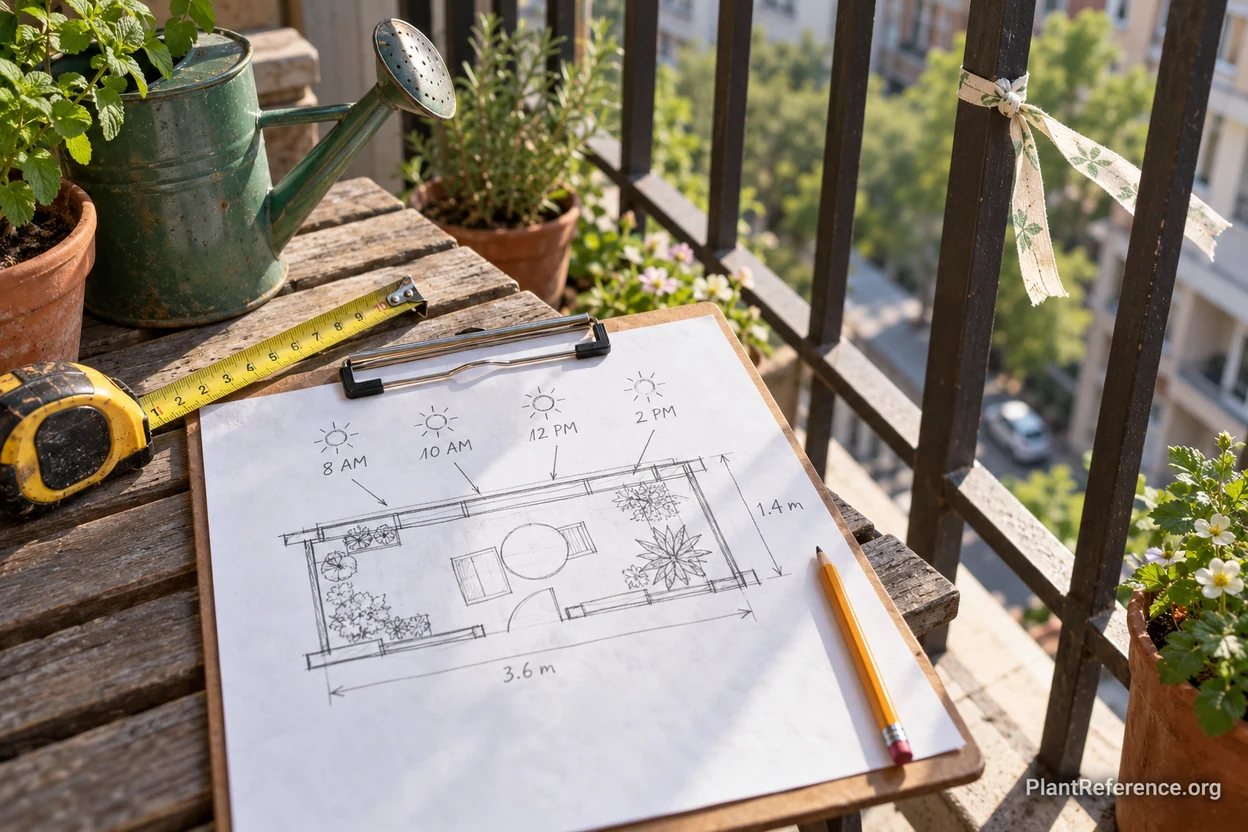
I start with a notebook, not a seed catalog. Draw the balcony to scale, including door swing, drains, wall, railing, outlets, and the route you need for a chair or emergency exit. Measure the length and depth with a tape. A 3-by-8-foot (0.9-by-2.4 m) balcony does not offer 24 square feet (2.2 m²) of plant space if half of it must stay open for access.
On a clear day, mark direct sun at roughly 9 a.m., noon, 3 p.m., and 6 p.m. Repeat once in another season if possible. Buildings, overhangs, and neighboring balconies can cut the light that a compass-facing label promises. Direct sun means actual rays on the leaves, not a bright sky beyond the railing. A simple grid of sun hours is more useful than guessing from orientation alone.
Six or more hours usually gives peppers, compact tomatoes, and cucumbers a fair chance at fruiting. Four to six hours can support leafy greens, chard, many herbs, and a modest radish crop. Under four hours of direct sun, edible yields become less predictable; choose leaf crops, move the garden to a brighter permitted spot, or temper expectations. Season and latitude change these ranges, so observe how the plants respond.
Wind needs its own map. Hang a light ribbon temporarily inside the railing or watch a small flag from different positions. Corners and gaps between towers can accelerate gusts. A solid screen can create turbulence behind it, while a secure, permeable screen can soften airflow. Review Protecting Container Tomatoes on Windy Balconies and Exposed Patios before putting a tall crop in an exposed corner.
Finally, locate the water source and runoff path. If carrying a can through the apartment is the only option, a dozen small fabric bags may turn into a daily chore. A few larger, well-drained containers near the door may deliver more vegetables for the same effort. Place a tray where it can catch occasional drips without leaving roots in standing water or sending runoff to a neighbor below.
Match Vegetable Crops to Balcony Zones
The table below is my first-pass layout. It groups crops by the light and root volume they need, then adds a placement rule. Treat each value as a starting point: the cultivar, heat, and season can change how much water or shade a plant needs. Match the mature plant to the pot rather than the tiny transplant you bring home.
Balcony zone | Crop example | Starting container | Placement note |
|---|---|---|---|
6+ hours of direct sun | Compact pepper Capsicum annuum 'Lunchbox Red' | 5 gallons (19 L) per plant | Stable floor pot, protected from gusts |
6+ hours of direct sun | Bush cucumber Cucumis sativus 'Spacemaster' | 5 gallons (19 L) per plant | Trellis secured inside railing line |
6+ hours of direct sun | Dwarf tomato Solanum lycopersicum 'Patio Choice Yellow' | 5–10 gallons (19–38 L) per plant | Heavy container near approved load area |
4–6 hours of direct sun | Leaf lettuce 🌿Lactuca sativa 'Black Seeded Simpson' | 6–8 inches (15–20 cm) deep | Protected from hot afternoon exposure |
4–6 hours of direct sun | 3 gallons (11 L) per plant | Sheltered middle zone | |
4–6 hours of direct sun | 6–8 inches (15–20 cm) deep | Cool-season shallow box |
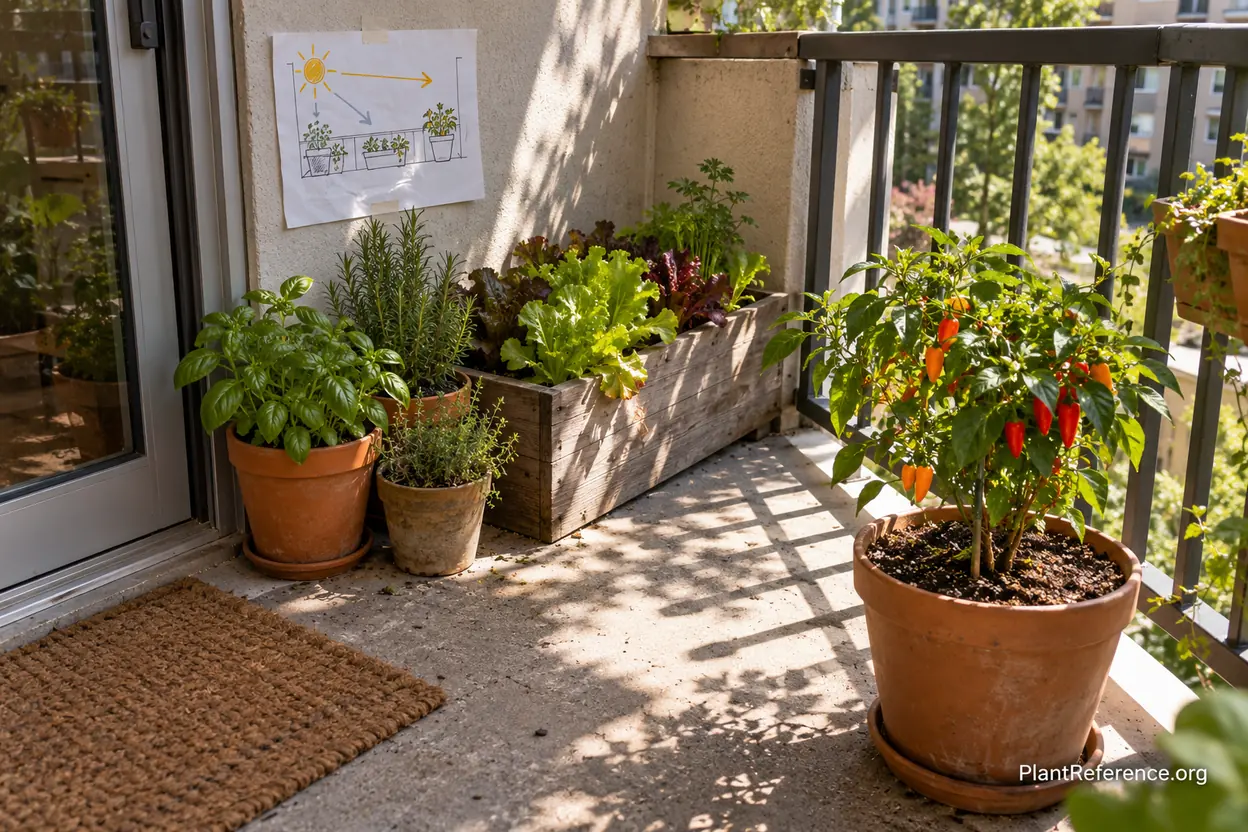
Fruiting plants get the brightest stretch of floor, not the prettiest railing. A 5-gallon (19 L) pepper is easier to stake and water on the floor. I would place only one pepper per pot and keep room to turn it for inspection. Best Tomato Varieties for Containers: 25+ Proven Winners can help choose a genuinely compact tomato rather than an indeterminate vine sold in a small nursery pot.
Use the gentler side of the balcony for lettuce Lactuca sativa (lak-TOO-kah sah-TEE-vah), radish 🌿Raphanus sativus, and chard 🌿Beta vulgaris. Shallow boxes work for salad leaves because their roots do not require the deep volume of a tomato. A 12-inch (30 cm) pot can hold several lettuce plants if you thin them and harvest outer leaves. Raised Bed Vegetable Garden Layout: Planning for Maximum Production provides spacing logic, but account for a pot's limited depth and faster drying.
Herbs earn the reachable spots by the door. Basil Ocimum basilicum likes warmth and regular moisture; rosemary 🌿Salvia rosmarinus wants a freer-draining mix and a drier interval. Do not combine them in the same box just because both go into dinner. Mint 🌿Mentha spicata spreads vigorously, so give it a separate vessel.
Vertical space is useful when it preserves floor access. A cucumber 🌿Cucumis sativus on a trellis takes a narrow footprint, but the trellis, foliage, and fruit create a sail in wind. Set the whole assembly back from the outer edge and secure it to a permitted stable structure. A freestanding support weighted and braced within a floor pot is often easier to manage than an unapproved railing attachment.
Choose Containers and Check Loaded Weight
Containers carry water as well as plants. Check your building's written rules and the actual balcony capacity before installing a heavy garden. A generic residential load figure is not a permission slip for your particular structure. Ask the property manager or a qualified building professional when the rating, condition, or permitted placement is unclear. Keep people, furniture, snow where relevant, and every wet pot in the same assessment.
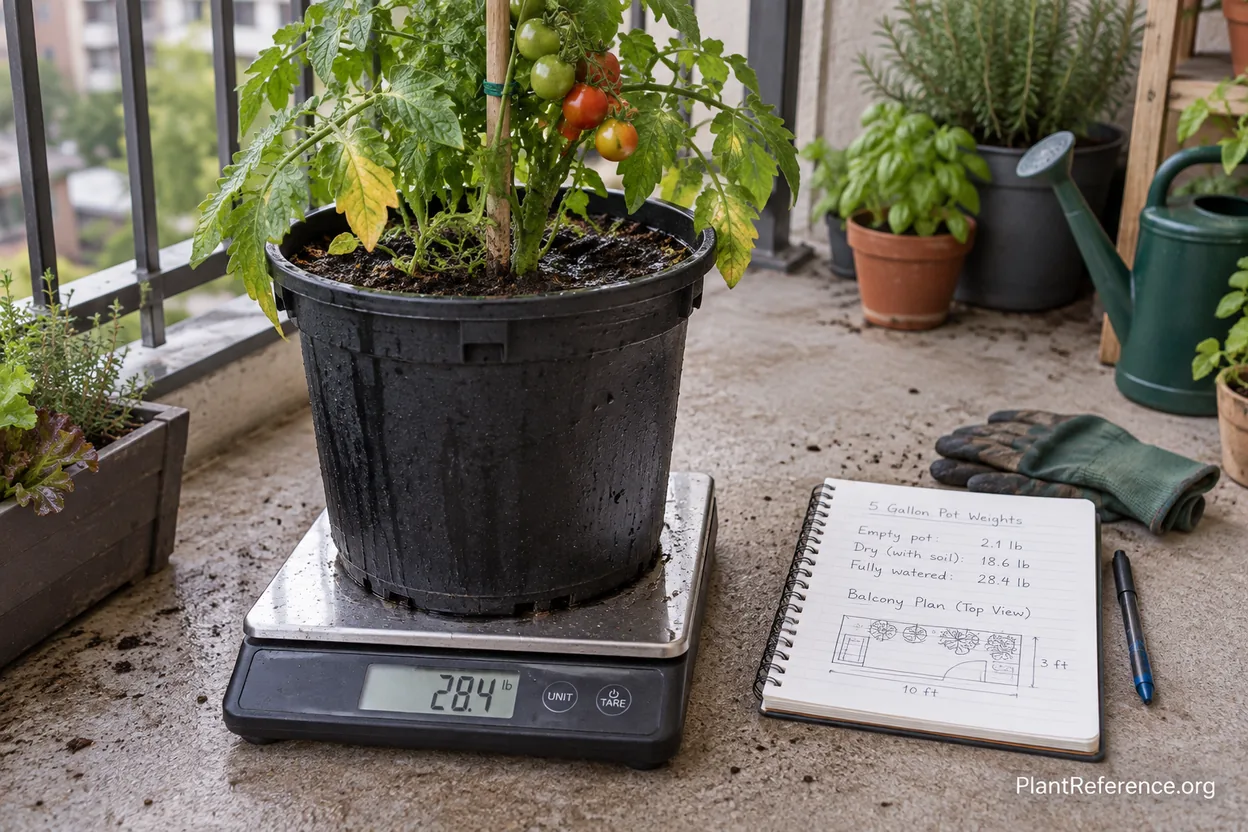
For a planning estimate, calculate the filled volume of each container and add the wet mix, vessel, mature plant, and support. One US gallon is about 0.134 cubic feet (3.79 L). A 20-gallon (76 L) container holds about 2.67 cubic feet (0.076 m³) of mix. If a saturated mix weighs 50–75 pounds per cubic foot (800–1,200 kg/m³), the medium alone could weigh roughly 134–200 pounds (61–91 kg). Your actual mix can differ; weigh a representative filled, thoroughly watered pot when feasible.
Item in a sample layout | Quantity | Estimated wet weight each | Layout implication |
|---|---|---|---|
20-gallon (76 L) filled container | 1 | Mix alone about 134–200 lb (61–91 kg) | Confirm location and total load before use |
5-gallon (19 L) pepper pot | 2 | Weigh each finished pot | Keep on stable floor positions |
2-gallon (7.6 L) herb pot | 3 | Weigh each finished pot | Group near door without blocking it |
Trellis, water can, furniture, people | As used | Add actual weights | Include in the whole balcony assessment |
Choose materials to match the water and weight plan. Plastic and resin are light and retain moisture; fabric bags drain and air-prune roots but dry faster in wind. Terracotta is porous and cools through evaporation, but its own weight adds up. Best Grow Bags for Tomatoes: Fabric vs Plastic Container Comparison explains that tradeoff for edible plants. Whatever the material, use drainage holes and a uniform potting mix. A gravel layer steals root volume and does not fix poor drainage.
Give peppers at least 3–5 gallons (11–19 L), a compact tomato generally 5–10 gallons (19–38 L), and salad greens a wide box 6–8 inches (15–20 cm) deep. These are minimum planning sizes, not a challenge to fit more plants. If capacity is tight, reduce the number of containers first. Lighter pot material helps, but wet mix and people often dominate the total.
Set Up a Stable Layout and Vertical Support
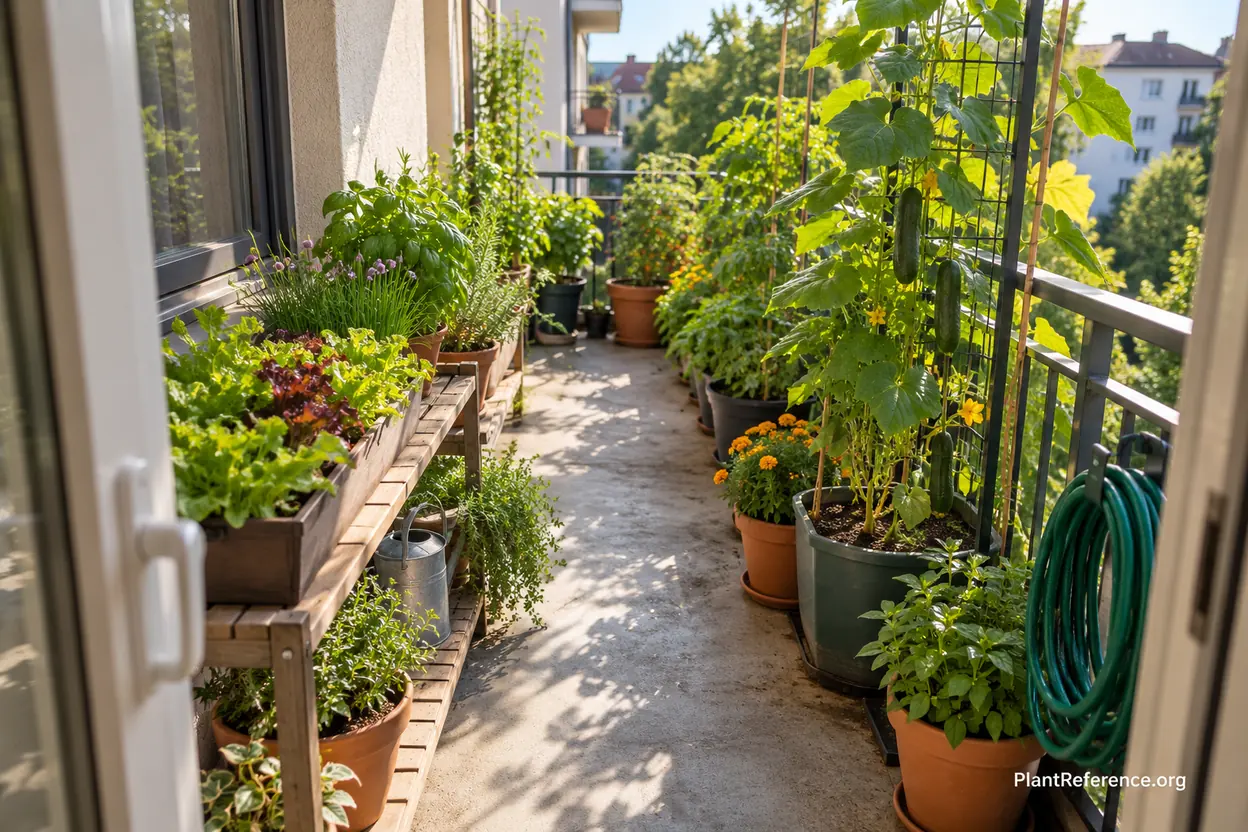
Mark the door swing and leave a comfortable route to every plant. Put the largest permitted containers on the floor in locations approved for their loaded weight. Place small herbs and lettuce where you can harvest without reaching across a hot pepper or bending over the railing. A layout that makes daily care awkward will not stay neat for long.
Arrange pots in loose groups with enough gap for airflow and hand access. Grouping reduces wind exposure and can moderate drying, but leaves should not stay pressed together. Put the tallest trellis where it will not shade the crops that need full sun. Check the shadow at different hours, not just when you install it at noon.
The railing is a boundary, not free planting area. Secure any approved railing box against lifting, sliding, and tipping according to its rated hardware and the building rules. Do not improvise fasteners into facade panels or waterproofing. Keep drainage from dripping outside the balcony. For windy sites, Staking Tomatoes in Containers: 5 Support Methods That Actually Work gives practical ways to brace plants within their pots.
Use a potting mix designed for containers throughout the full depth. Garden soil compacts and leaves too little air after irrigation. Fill to about 1 inch (2.5 cm) below the rim so watering does not wash mix away. Container Tomato Soil: Creating the Perfect Growing Mix for Maximum Yields explains the balance of air space and moisture; the same physics applies to a pepper or a cucumber.
Build a Watering and Feeding Routine
A pot's small root volume means water reserves change faster than in the ground. Check the mix with a finger about 1–2 inches (2.5–5 cm) down and learn the weight of each pot when wet and dry. Water until a little reaches the drain holes, then empty standing runoff from trays. Never water all pots on one rigid schedule: a lettuce box and a fruiting pepper can have different needs on the same balcony.
Wind and reflected heat can make fabric bags dry first. On hot days, inspect in the morning and again later if foliage droops. A thin mulch layer helps protect the surface, but leave room beneath the rim and keep mulch off stems. Watering Container Tomatoes: The Complete Guide to Preventing Common Problems covers the moisture checks that also apply to other fruiting vegetables.
A self-watering planter with a reservoir can reduce daily swings if you follow its fill and overflow instructions. It still needs inspection, especially after rain and during establishment before roots reach the wick. A saucer can catch drips briefly, but a permanently full saucer removes air from the root zone. Decide how to handle runoff before plants are in place.
Feed at the labeled container rate, taking account of fertilizer already in the potting mix. Nutrients leave through drainage water; repeated heavy feeding can leave salts behind when the water evaporates. Pale new growth can signal nutrition, but a pot that is waterlogged or shaded can look similar. Check light, roots, and moisture before adding more food. Best Fertilizers for Container Tomatoes: Organic vs Synthetic Comparison compares release patterns in restricted root volumes.
Adjust the Plan Through the Season
The sun map shifts as the sun angle changes and neighboring trees leaf out. Recheck it after a few weeks. Rotate containers where safe and manageable, moving leafy crops into afternoon shade during heat and giving fruiting plants the longest direct-light window. Do not move a heavy full pot by one fabric handle.
Plant cool-season lettuce 🌿Lactuca sativa 'Black Seeded Simpson' and radish 🌿Raphanus sativus 'Cherry Belle' when conditions favor them, then replace tired crops with warm-season vegetables after local frost risk passes. Exact dates depend on your location, so use local weather and soil temperature rather than a national month. Best Cool-Season Vegetables for Pacific Northwest Gardens is useful for cool-climate crop choices, while your own light and temperature readings determine the balcony schedule.
Harvest frequently. Picking outer lettuce leaves and ripe peppers keeps the planting productive without adding another container. Remove a plant that is persistently diseased or produces almost nothing in its allotted light. Small spaces reward honest decisions. One healthy five-gallon (19 L) pepper can be more satisfying than three crowded pots that all need rescue.
Troubleshoot Shade, Wind, Heat, and Crowding
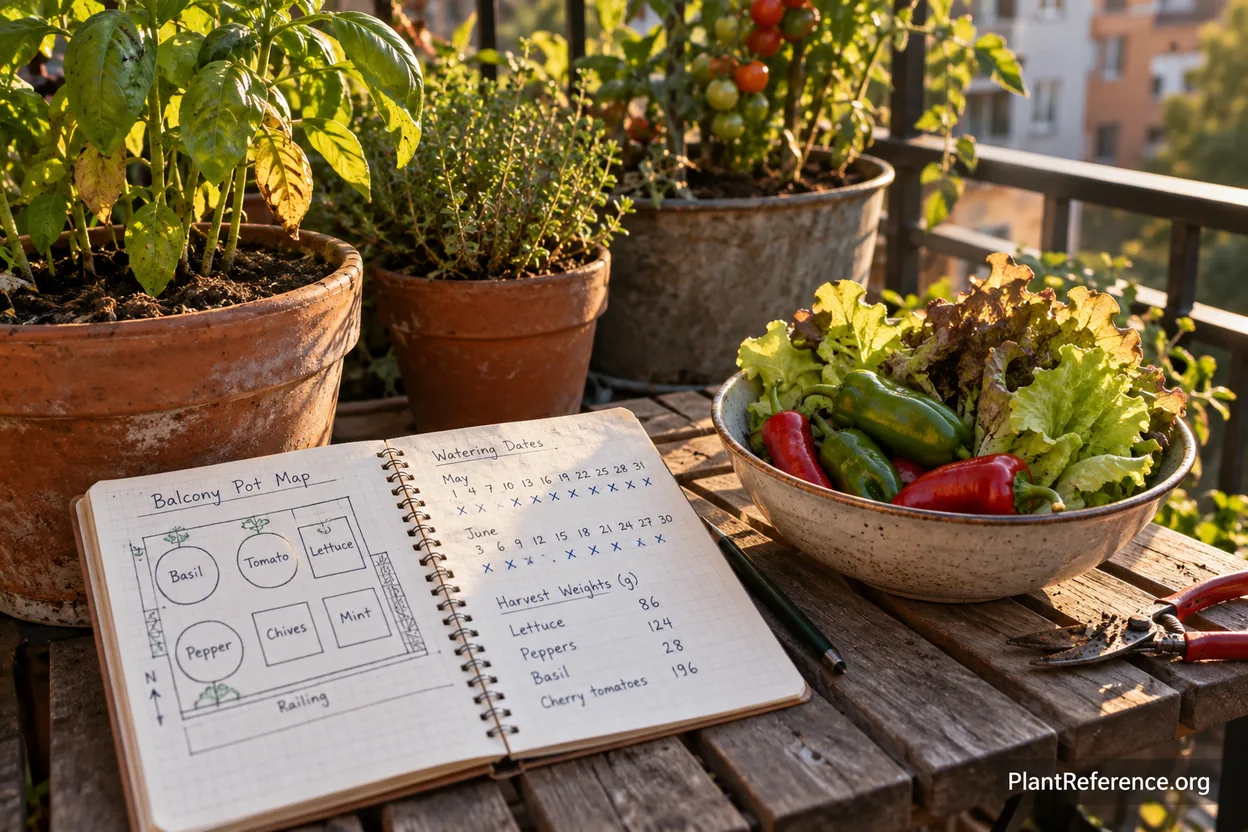
Healthy foliage with few flowers or fruits often means the fruiting crop has too little direct sun. Count actual hours again before changing fertilizer. Move it to a brighter approved floor position or replace it with a leaf crop. Container Tomatoes Not Producing Fruit? 8 Reasons Why (Plus Solutions) gives a fuller diagnosis for tomatoes, including heat and pollination.
Ragged leaves and tipped supports point to wind. Lower the canopy, brace the support, and move vulnerable pots away from the gust corridor. Do not solve a tipping problem by hanging more weight from an unapproved railing. A removable, securely mounted permeable screen may help if building rules permit it.
Midday wilt with wet mix can reflect overheated roots, poor drainage, or damaged roots. Feel the container wall and check below the surface. Shade the wall while preserving light on foliage, and raise a pot whose drain holes are blocked. A plant that perks up overnight without added water may be reacting to heat rather than drought. Persistent wilt in saturated mix calls for a root check.
If all containers dry too fast, reduce exposed surface with mulch, group pots without crowding leaves, and choose larger permitted reservoirs or containers. If one pot alone dries fast, investigate root binding and its position. Container Too Small? How to Save Root-Bound Tomato Plants explains why a dense root ball cannot buffer a warm afternoon.
Start with the measured map, then edit it as plants and conditions change. You do not need every square inch filled. The open space that lets you water, inspect, and harvest safely is part of a productive balcony vegetable garden.
Frequently Asked Questions
Reading about plants and recognising them are different skills. These three build the second.
- Daily PlantIdentify the day’s mystery plant from a close-up photograph.
- Keyed OutWork a dichotomous key, lead by lead, to name a hidden specimen.
- Name That PlantName a specimen from botanical clues dealt hardest first.
Free to play, no account needed
Tagged with
Linda's been growing tomatoes in containers on her suburban Pittsburgh balcony—ever since her kids grew up and she finally had time for hobbies again. She's a medical billing specialist by day and a tomato enthusiast by night and weekend. Linda started documenting her container growing experiments on a simple blog and discovered other renters and condo dwellers were desperate for practical advice. She tests different varieties every season, tracking yields, disease resistance, and flavor in a detailed spreadsheet. Linda's approach is practical and budget-conscious—she saves seeds, reuses containers, and makes her own fertilizer from kitchen scraps. Her specialty is maximizing production in small spaces, and she's perfected the art of growing full-size tomatoes in 5-gallon buckets. She's a Pennsylvania Master Gardener and teaches container growing workshops at her local library.