Image 1 of 7
1 / 7
© No machine-readable author provided. N yotarou assumed (based on copyright claims)., some rights reserved (CC-BY) · Wikimedia Commons
Raphanus, Genus, sativus, Species,
- Genus & species
Radish
Eastern Mediterranean and central Asia
SunFull Sun – Part Shade
WaterMedium
Overview
Raphanus sativus is an annual or biennial in the cabbage family grown for its swollen hypocotyl and root, covering small spring radishes, long white daikon, black winter radishes and rat-tail types raised for their seed pods. Spring forms make a rosette 6-12 inches (15-30 cm) tall of lyre-shaped bristly leaves 3-8 inches (8-20 cm) long over a root 0.75-1.5 inches (2-4 cm) across in red, white, pink, purple or bicolour. Daikon and winter forms build roots 8-18 inches (20-45 cm) long and 2-4 inches (5-10 cm) across across 55-70 days. Flowers open on branched stems 2-4 feet (0.6-1.2 m) tall, four-petalled, white to pale lilac with darker veining, and are followed by a stout beaked silique 1-3 inches (2.5-8 cm) long that stays closed at maturity. Root quality holds within a narrow window: spring types turn pithy and harshly pungent within 5-7 days of reaching size, and long days above 70F (21C) push plants into flower before the root swells. Flea beetle perforates the leaves in spring and cabbage root fly larvae tunnel the roots in warm soil.
Native Range
Raphanus sativus is known only from cultivation, with no confirmed wild ancestral population; genetic evidence points to derivation from material in the Raphanus raphanistrum complex in the eastern Mediterranean or central Asia. Cultivation is documented in Egypt before 2000 BCE and in China by the 7th century BCE, where the large daikon forms were selected. Weedy escapes now grow on roadsides and coastal ground across temperate regions on every inhabited continent.Suggested Uses
Grown in vegetable beds, raised beds and containers 6 inches (15 cm) deep for spring types, at 1-2 inch (2.5-5 cm) final spacing. Fast spring cultivars are sown between slower crops such as carrots and parsnips, holding the ground for 3-4 weeks before those crops fill the space. Daikon and forage cultivars are sown in late summer as a cover crop, where roots 12-18 inches (30-45 cm) long open compacted subsoil and break down over winter.How to Identify
Appearance
Size & Dimensions
Height6" - 1'
Width/Spread4" - 8"
Bloom Information
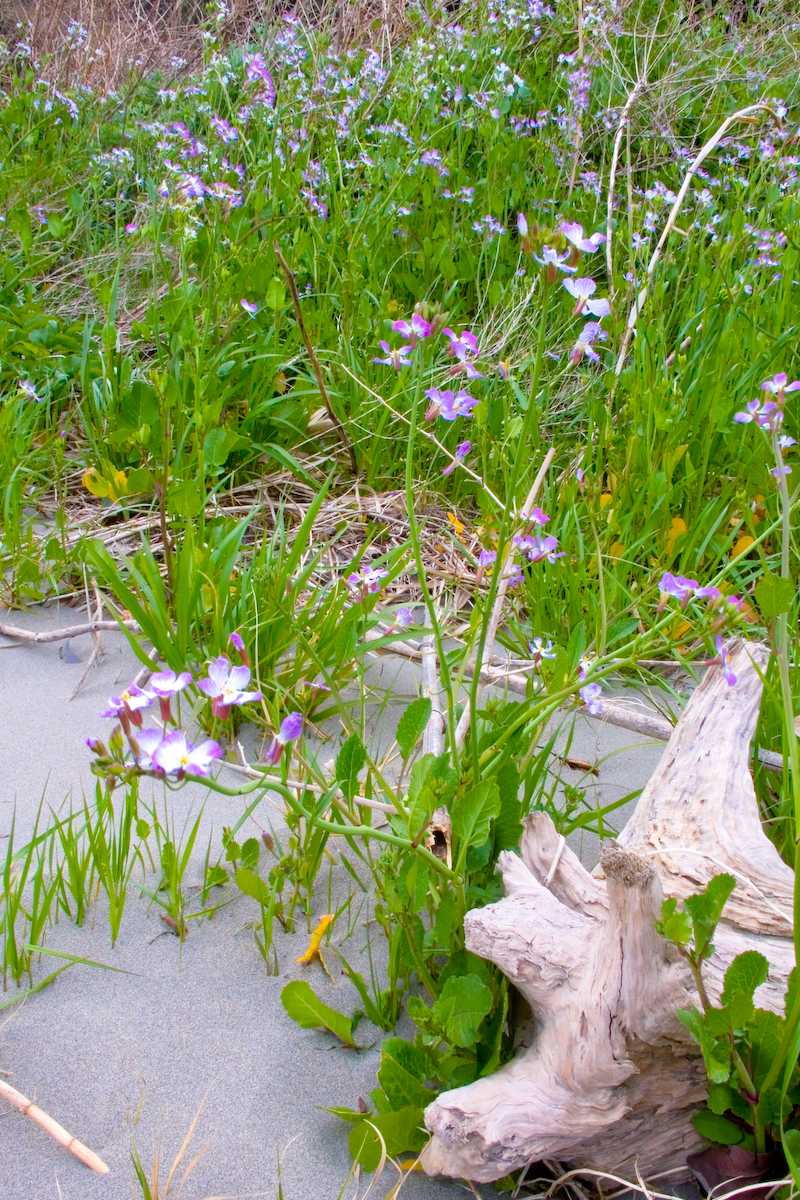
Flowering follows 60-90 days from sowing in spring types left in the ground, or in the second season for winter types held through cold. Four-petalled flowers 0.5-0.8 inch (13-20 mm) across, white to pale lilac with purple veins, open in loose racemes from May to July. Long days and soil above 70F (21C) bring flowering forward, which stops root swelling within days. Flowers are insect-pollinated and the species is self-incompatible, so seed set calls for two or more plants.
Detailed Descriptions
Flower Description
white to pale lilac with purple veinsFoliage Description
medium green with bristly hairsGrowing Conditions
Sun Requirements
Requires 6-10 hours of direct sunlight daily
• Full Sun: 6+ hours of direct sunlight
• Partial Shade: 3-6 hours of direct sunlight
• Full Shade: Less than 3 hours of direct sunlight
Water & Climate
Water Needs
Care & Maintenance
Care Guide
Grows in full sun to part sun with about 6 hours of direct light in loose stone-free soil at pH 6.0-7.0, worked to 8-12 inches (20-30 cm) depth for long-rooted types. Seed is sown direct 0.5 inch (1.3 cm) deep from 4-6 weeks before the last frost, thinned to 1-2 inches (2.5-5 cm) for spring types and 4-6 inches (10-15 cm) for daikon, in rows 12 inches (30 cm) apart. Water use runs 1 inch (25 mm) per week held steady, since alternating dry and wet spells produce split roots and hollow centres. Fertility stays low, as nitrogen above roughly 0.25 lb per 100 sq ft (0.12 kg per 9 sq m) builds leaf in place of root. Flea beetles perforate seedling leaves from the first true leaf and are excluded by insect mesh laid at sowing, while cabbage root fly pressure drops on sowings made after mid-June where a spring flight occurs. Spring roots are lifted 22-30 days after sowing and winter types at 55-70 days, with successional sowings every 10-14 days holding continuity.Pruning
No pruning is carried out on Raphanus sativus. Leaves stay intact through root swelling, since their removal slows growth of the root below. Flowering stems on plants held for pods are left uncut, and the immature siliques of rat-tail cultivars are picked at 3-4 inches (8-10 cm) while still crisp.Container Growing
Suitable for container growing
Minimum container size: 2 gallons
Toxicity
Non-toxicPlanting Guide
Planting Methods & Timing
Planting Method
direct sow
Direct Sow Timing
from 4-6 weeks before the last spring frost once soil reaches 45F (7C), repeated every 10-14 days
Days to Maturity
22–70 days
Plant Spacing
2 inches