Image 1 of 7
1 / 7
Species photo — your cultivar may vary
© No machine-readable author provided. N yotarou assumed (based on copyright claims)., some rights reserved (CC-BY) · Wikimedia Commons
Raphanus, Genus, sativus, Species, 'French Breakfast', Cultivar,
- Genus & species
- Cultivar
French Breakfast Radish
Cultivar of French garden origin (species native to Mediterranean/western Asia)
Overview
Raphanus sativus 'French Breakfast' is a fast-maturing, elongated-root annual radish in the mustard family (Brassicaceae) reaching 4–8 inches (10–20 cm) tall with a 3–6 inch (8–15 cm) spread. This heirloom cultivar (pre-1879) produces an elongated cylindrical root 1–1.5 inches (2.5–4 cm) long and 0.5–0.75 inch (1–2 cm) in diameter, scarlet-red on the upper two-thirds with a distinct white tip — the bicolored pattern is the cultivar diagnostic. Flesh is white, crisp, with a mild to moderately peppery flavor, milder than 'Cherry Belle' when harvested young. Leaves are medium green, oblong to spatulate, 3–6 inches (8–15 cm) long, rough-hairy. Maturity is 25–30 days from direct sowing. Bolts rapidly in heat above 75°F (24°C). Roots become pithy and intensely pungent if harvest is delayed beyond 1.5 inches (4 cm) length. The elongated shape and bicolored appearance distinguish it from globe radishes and from the large white daikon type.
Native Range
The species Raphanus sativus is native to the Mediterranean and western Asia. 'French Breakfast' is a French heirloom cultivar documented since at least 1879, originally sold in Parisian markets as a breakfast table radish served with butter and salt.Suggested Uses
Planted in salad gardens, vegetable gardens, containers (1+ gallon), and market gardens. The traditional French breakfast table radish — served halved with butter and salt. Eaten raw in salads, on tartines, or as crudité. The three-radish cultivar comparison ('Cherry Belle' globe, 'French Breakfast' elongated bicolor, 'Daikon' large white) is a cultivar diversity and root morphology exercise.How to Identify
Appearance
Size & Dimensions
Height4" - 8"
Width/Spread3" - 6"
Bloom Information
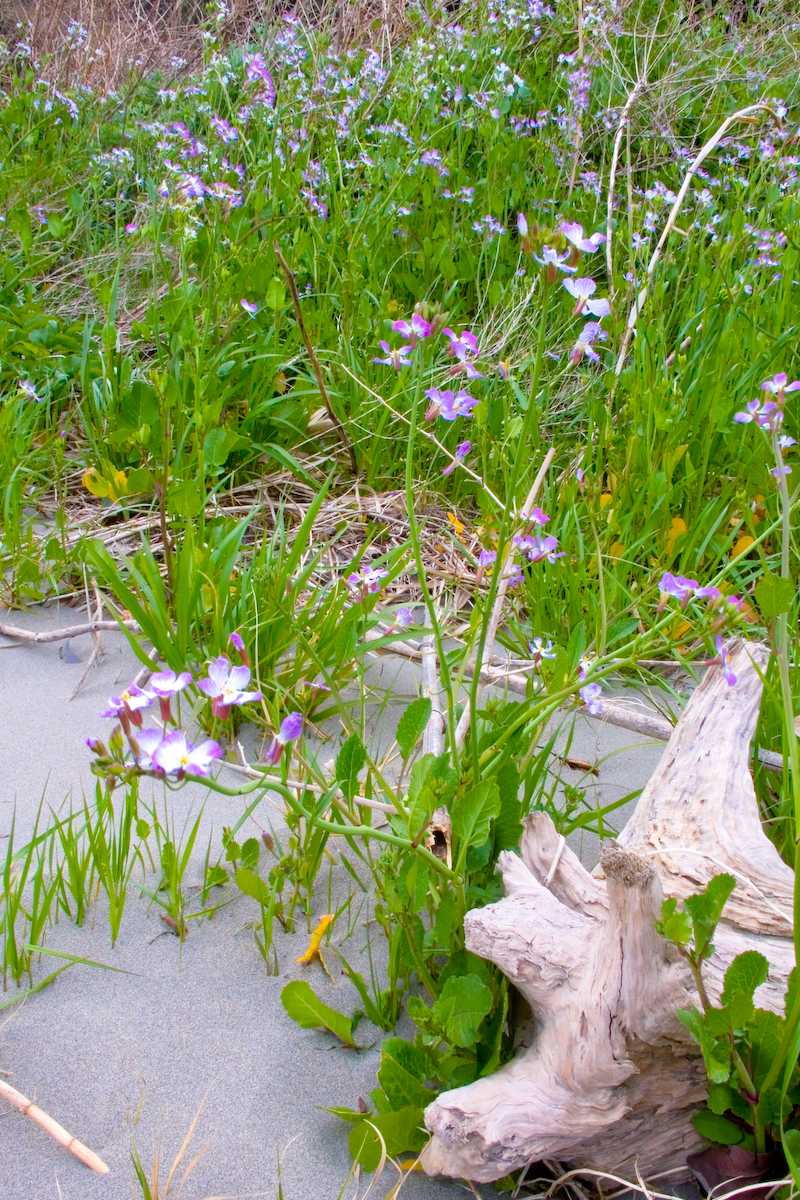
Bolts in response to heat and long days. Flowers are four-petaled (typical Brassicaceae cruciform), white to pale pink. Open-pollinated; crosses with other Raphanus sativus cultivars. For seed saving, isolation of 0.5 mile (0.8 km) is recommended.
Detailed Descriptions
Flower Description
White to pale pink (if bolting)Foliage Description
Medium green, oblong to spatulate, rough-hairy, with irregularly toothed marginsGrowing Conditions
Sun Requirements
Requires 4-10 hours of direct sunlight daily
• Full Sun: 6+ hours of direct sunlight
• Partial Shade: 3-6 hours of direct sunlight
• Full Shade: Less than 3 hours of direct sunlight
Care & Maintenance
Care Guide
Direct sow seeds 0.5 inch (1 cm) deep, 3–5 weeks before the last frost, spacing 2 inches (5 cm) apart in rows 6 inches (15 cm) apart. Successive sowings every 7–10 days extend the harvest. Pause in summer; resume in September for fall harvest. Consistent moisture produces the crispest, mildest roots. Harvest at 1–1.5 inches (2.5–4 cm) length, 25–30 days after sowing. The traditional French serving is halved lengthwise with butter and fleur de sel. Container culture in 1+ gallon pots is feasible.Pruning
No pruning applicable. Harvest entire plants by pulling. Thinnings are edible as microgreens.Container Growing
Suitable for container growing
Minimum container size: 1 gallons
Toxicity
Non-toxicPlanting Guide
Planting Methods & Timing
Planting Method
direct sow
Direct Sow Timing
3-5 weeks before last frost; successive sowings every 7-10 days through spring; resume in early fall
Days to Maturity
25–30 days
Plant Spacing
2 inches