Overview
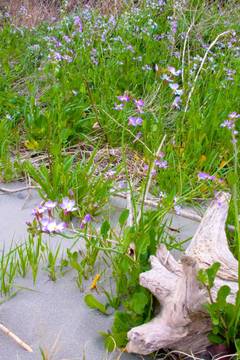
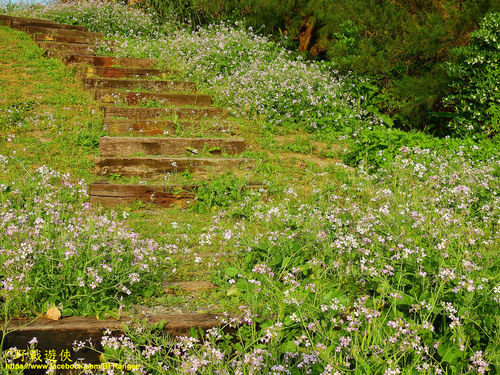
Raphanus raphanistrum is an annual or winter-annual in the mustard family, growing 1 to 3 feet (30-90 cm) tall on branched, bristly stems from a slender taproot. The lower leaves are lyre-shaped and lobed with a large terminal lobe, 2-8 inches (5-20 cm) long, roughly hairy, and reduced upward. From spring through autumn it bears four-petaled flowers about 0.6-0.8 inch (15-20 mm) across in loose clusters, ranging from pale yellow to white or lilac and usually marked with darker veins. The flowers give way to jointed seed pods 1-3 inches (2.5-7.5 cm) long that are constricted between the seeds and break into one-seeded segments. The plant germinates readily in disturbed ground and is a common weed of arable fields, gardens, and roadsides on a wide range of soils. It competes strongly with crops and seeds heavily, with buried seed remaining viable for years. Stems and foliage have a sharp, peppery taste like cultivated radish.
Native Range
Native to the Mediterranean region and western Europe, it has spread as a weed across temperate and subtropical regions worldwide, including most of North America. It grows in cultivated fields, waste ground, gardens, and roadsides.Suggested Uses
Grown occasionally as a fast cover crop or green manure on poor soil, sown thickly and turned in before flowering. Its flowers draw bees and other pollinators where it is left to bloom. In most settings it is managed as an agricultural weed rather than a planted crop.How to Identify
Appearance
Size & Dimensions
Height1' - 3'
Width/Spread8" - 1'6"
Bloom Information
Flowers open from spring through autumn wherever the ground is open, with peak bloom in early summer. Each plant flowers over many weeks, producing successive clusters. Jointed pods follow and ripen to tan, scattering seed as they break apart.
Detailed Descriptions
Flower Description
Pale yellow, white, or lilac with darker veinsFoliage Description
GreenGrowing Conditions
Sun Requirements
Requires 6-12 hours of direct sunlight daily
• Full Sun: 6+ hours of direct sunlight
• Partial Shade: 3-6 hours of direct sunlight
• Full Shade: Less than 3 hours of direct sunlight
Water & Climate
Water Needs
Drought Tolerance
Drought tolerant when established
Care & Maintenance
Care Guide
Grows in full sun on almost any soil, from sand to clay, and tolerates poor fertility and a wide pH range. It germinates whenever soil is disturbed and needs no watering or feeding to complete its cycle. Plants flower and set seed quickly, so a single generation can mature in a few months. Buried seed stays viable for several years, allowing repeated flushes after cultivation. Dense stands compete with crops for light, water, and nutrients. Removing plants before the pods ripen limits the seed bank.Pruning
No pruning is needed for this annual. Pulling or hoeing plants before the pods harden keeps seed from entering the soil. Cut or grazed plants can resprout from the base if the taproot survives.Toxicity Warning
Toxic to petsPlanting Guide
Planting Methods & Timing
Planting Method
direct sow