Beta, Genus, vulgaris, Species,
- Genus & species
Beet
Mediterranean and Atlantic coasts of Europe and North Africa
SunFull Sun – Part Shade
WaterMedium
Overview
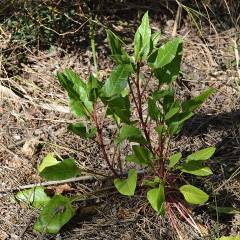
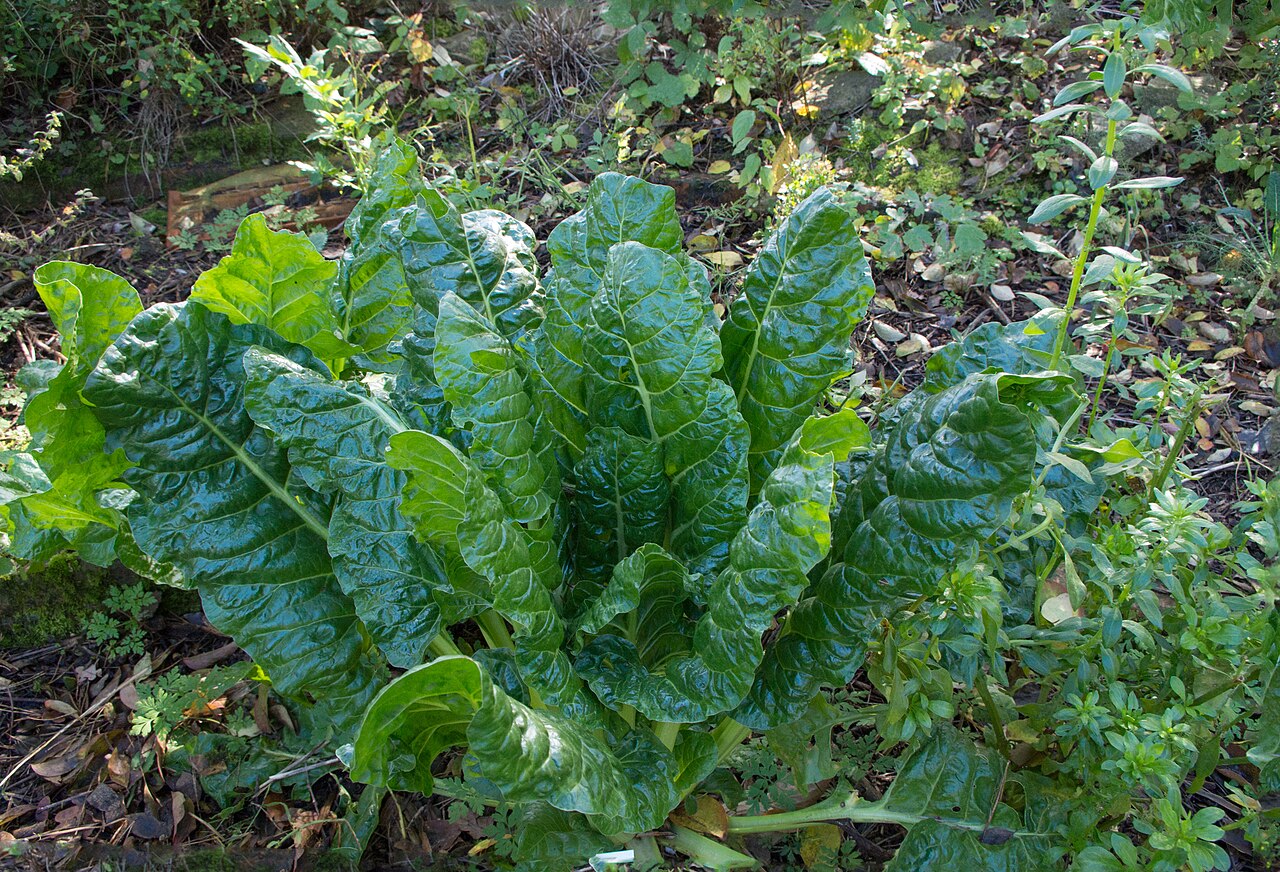
Beta vulgaris is a biennial in the amaranth family grown as an annual for its swollen hypocotyl and upper root, and it covers beetroot, chard, sugar beet and mangel forms within a single species. The first season produces a rosette 12-18 inches (30-45 cm) tall of long-stalked leaves, ovate to heart-shaped, 6-10 inches (15-25 cm) long, glossy dark green over red, white, yellow or orange petioles and veins. The storage root swells to 2-4 inches (5-10 cm) across in garden beetroot, red, golden, white or concentrically ringed inside, and reaches 8-20 inches (20-50 cm) in fodder and sugar types. Each seed unit is a dried multigerm fruit cluster holding 2-4 embryos, so thinning follows germination unless a monogerm cultivar is sown. In the second season, after a cold period below 50F (10C), the crown extends into a branched flowering stem 3-6 feet (0.9-1.8 m) tall carrying small green wind-pollinated flowers. Roots turn woody and the internal rings coarsen once they pass 4 inches (10 cm) across, and sowings made during long cold spells run to seed in the first season. Leaf miner tunnels the foliage from late spring and cercospora leaf spot spreads through warm humid weather.
Native Range
Beta vulgaris descends from sea beet, Beta vulgaris ssp. maritima, which grows on shingle beaches, sea walls and salt marsh margins around the Mediterranean and along Atlantic coasts from North Africa to southern Scandinavia. Leaf forms were cultivated first in the eastern Mediterranean, swollen-rooted forms are recorded from about the 2nd century CE, and sugar beet was selected in Germany from 1747. The species is now grown across temperate agriculture worldwide.Suggested Uses
Grown in vegetable beds, raised beds and containers 10-12 inches (25-30 cm) deep at 3-4 inch (8-10 cm) final spacing. Chard forms of the species, with white, yellow, orange or red petioles on plants 12-24 inches (30-60 cm) tall, are planted in mixed borders and potagers for foliage colour from June to November. Successional sowings at 3 week intervals from spring to midsummer hold a run of roots at picking size.How to Identify
Appearance
Size & Dimensions
Height1' - 1'6"
Width/Spread10" - 1'2"
Bloom Information
Flowering falls in the second season and sits outside a normal vegetable crop cycle. After 2-4 weeks below 50F (10C) the crown extends into a branched stem 3-6 feet (0.9-1.8 m) tall bearing spikes of green flowers 0.1-0.2 inch (3-5 mm) across, from June to August. The flowers are wind-pollinated and cross freely with chard, sugar beet and sea beet within a mile (1.6 km). First-season plants sown before soil reaches 50F (10C) sometimes bolt and flower early, which stops root swelling.
Detailed Descriptions
Foliage Description
glossy dark green with red, white, yellow or orange petioles and veinsGrowing Conditions
Sun Requirements
Requires 6-10 hours of direct sunlight daily
• Full Sun: 6+ hours of direct sunlight
• Partial Shade: 3-6 hours of direct sunlight
• Full Shade: Less than 3 hours of direct sunlight
Water & Climate
Water Needs
Care & Maintenance
Care Guide
Grows in full sun to part sun with at least 6 hours of direct light in deep stone-free soil at pH 6.0-7.5, including alkaline ground at the upper end of that range. Seed is sown direct 0.5-1 inch (1.3-2.5 cm) deep from 4 weeks before the last frost through midsummer, in rows 12-18 inches (30-45 cm) apart, then thinned to 3-4 inches (8-10 cm) between plants at the two-leaf stage. Water use runs 1 inch (25 mm) per week, and roots crack when heavy rain follows a dry period. Boron shortage produces black internal patches, met with 1 tablespoon of borax dissolved in 1 gallon (4 litres) of water spread over 100 sq ft (9 sq m) once per season. Nitrogen is held moderate because surplus builds leaf at the cost of root size, and lime is worked in where soil pH sits below 6.0. Roots are lifted at 2-3 inches (5-8 cm) across, 50-70 days from sowing, and hold 3-5 months at 32-40F (0-4C) with tops trimmed to 1 inch (2.5 cm).Pruning
No pruning is carried out on Beta vulgaris. Outer leaves are picked from the rosette for use as greens, taking no more than a third of the canopy at one time so root swelling continues. A flowering stem rising in the first season is cut at the crown, although the root has already turned woody by that stage.Container Growing
Suitable for container growing
Minimum container size: 3 gallons