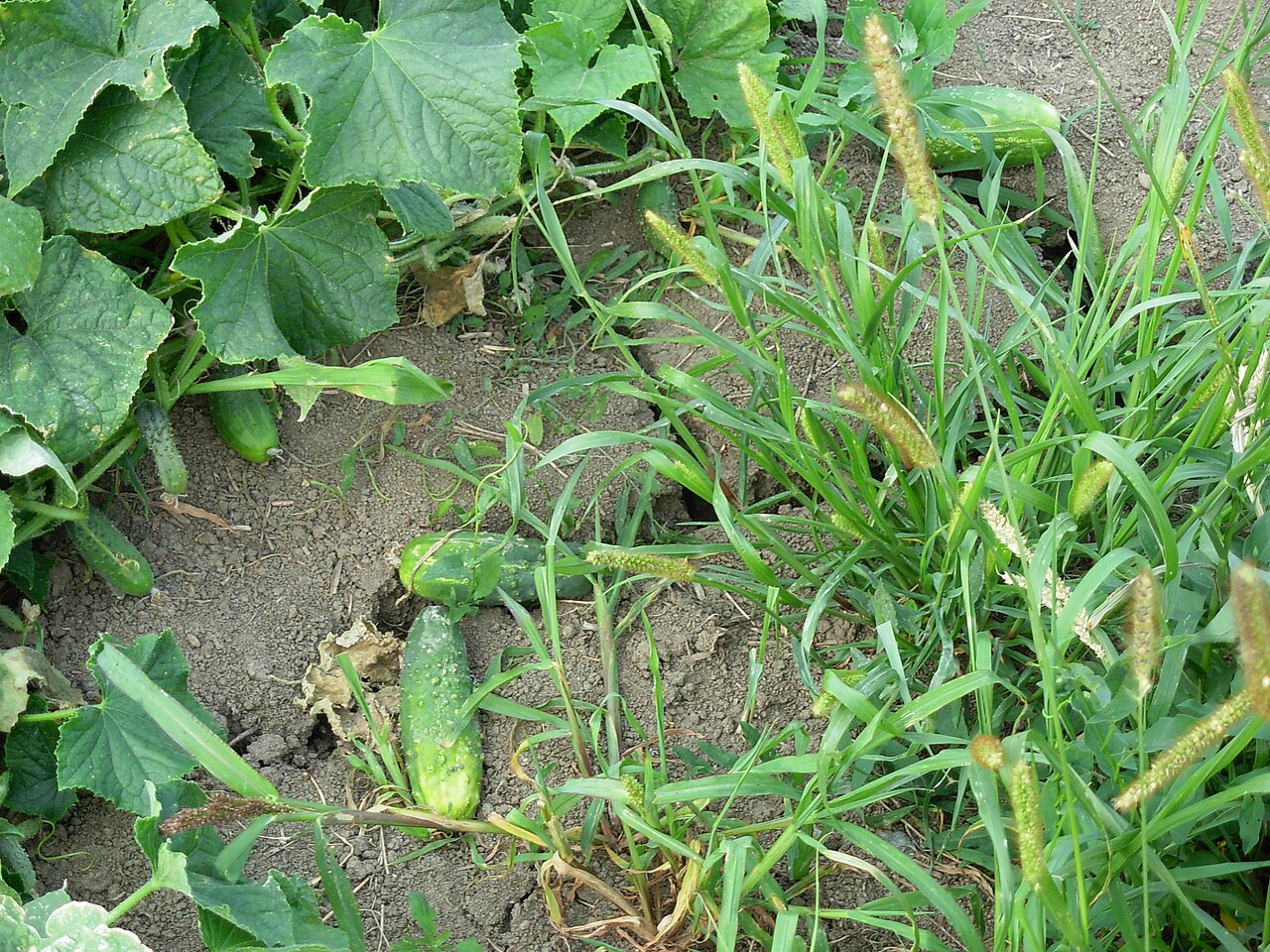
Cucumis, Genus, sativus, Species,
- Genus & species
Cucumber
Himalayan foothills of northern India and Nepal
Overview
Cucumis sativus is a frost-tender annual climber grown for its immature fruit, carrying angular bristly stems 3-8 feet (0.9-2.4 m) long that climb by unbranched tendrils arising singly at each node. Leaves are alternate, triangular to broadly ovate with three to five shallow lobes, 4-8 inches (10-20 cm) across, and roughened by short stiff hairs. Most cultivars are monoecious, with yellow five-petalled flowers 0.8-1.2 inches (20-30 mm) across; gynoecious cultivars carry female flowers only and are grown alongside a pollinator cultivar, while parthenocarpic greenhouse types set fruit without pollination. The fruit is a pepo 3-18 inches (8-45 cm) long according to type, with white or black spines seated on tubercles that rub away at harvest. Bitterness at the skin and stem end comes from cucurbitacins, which climb under drought and wide day-to-night temperature swings. Roots reach only 12-18 inches (30-45 cm), so yield falls sharply after any check in water supply. Downy mildew, powdery mildew, bacterial wilt carried by cucumber beetles, and cucumber mosaic virus each cut the cropping period short in humid summers.
Native Range
Cucumis sativus originates in the Himalayan foothills of northern India and Nepal, where the closely related Cucumis sativus var. hardwickii grows wild bearing small bitter fruit. Cultivation is documented in India more than 3,000 years ago, reaching the Mediterranean by Roman times and China by the second century BCE. It is now grown in open field and protected cropping worldwide, from the tropics to short-season temperate zones.Suggested Uses
Grown in vegetable beds on netting, A-frames or 6 foot (1.8 m) trellises at 12 inch (30 cm) spacing, and in containers of 5 gallons (19 litres) or larger for bush cultivars. Vertical training holds fruit straight and clean and reduces the footprint to about 1 sq ft (0.09 sq m) per plant. Pickling cultivars 3-5 inches (8-13 cm) long are grown for brining, and long greenhouse types 12-18 inches (30-45 cm) are grown under cover.How to Identify
Appearance
Size & Dimensions
Height3' - 8'
Width/Spread1' - 3'
Bloom Information
Flowering begins 35-45 days after sowing and continues until frost or until a heavy fruit load slows the plant. Monoecious cultivars open male flowers 7-10 days ahead of the first females, and the female flower is marked by a miniature cucumber behind the petals. Flowers open at dawn and stay receptive for a single day, so bee visits within that day settle whether the fruit sets or shrivels. Peak bloom in temperate gardens spans June to September.
Detailed Descriptions
Foliage Description
medium greenGrowing Conditions
Sun Requirements
Requires 6-10 hours of direct sunlight daily
• Full Sun: 6+ hours of direct sunlight
• Partial Shade: 3-6 hours of direct sunlight
• Full Shade: Less than 3 hours of direct sunlight
Water & Climate
Water Needs
Care & Maintenance
Care Guide
Grows in full sun with 6-8 hours of direct light in free-draining soil at pH 6.0-7.0 held at steady moisture. Seed is sown direct 0.5-1 inch (1.3-2.5 cm) deep once soil reaches 65F (18C), or started indoors 3 weeks before transplanting, at 12 inch (30 cm) spacing against a trellis or 36 inches (90 cm) apart on open ground. Water use runs 1-2 inches (25-50 mm) per week; an interruption during fruit fill produces curved waisted fruit and raises cucurbitacin levels in the skin. A balanced feed at planting with a nitrogen and potassium side-dressing at first fruit set carries the crop through to frost. Cucumber beetles transmit bacterial wilt, which collapses entire vines within days, and downy mildew arrives on wind-borne spores from midsummer across eastern North America. Fruit cut every 1-2 days at 6-8 inches (15-20 cm) for slicing types holds the plant in production, since one seed-filled fruit halts further flowering.Pruning
Trellised plants are trained to a single stem by taking off side shoots from the lowest 5-7 nodes, which lifts the fruiting zone clear of soil splash. On greenhouse parthenocarpic cultivars, laterals above that point are stopped two leaves beyond the first fruit. Ground-grown plants are left untrained apart from cutting out leaves carrying heavy mildew.Pruning Schedule
Prune: June–July
summer
Container Growing
Suitable for container growing
Minimum container size: 5 gallons
Toxicity
Non-toxicPlanting Guide
Planting Methods & Timing
Planting Method
both
Indoor Start
3 weeks before last frost
Direct Sow Timing
1-2 weeks after the last spring frost, once soil at 2 inches (5 cm) depth holds 65F (18C)
Days to Maturity
50–70 days
Plant Spacing
12 inches