When to Plant Cucumbers in Boise: Complete Guide + Best Varieties for Zone 6a
Pets & Toxicity
Recorded toxicity for plants linked in this guide. An unknown status is not a safety assessment.
No linked plant is recorded as toxicDetailsHide
Cucumis sativus 'Marketmore 76' — Toxicity
Non-toxicView Cucumis sativus 'Marketmore 76' plant profileCucumis sativus 'Straight Eight' — Toxicity
Non-toxicView Cucumis sativus 'Straight Eight' plant profileCucumis sativus 'Boston Pickling' — Toxicity
Non-toxicView Cucumis sativus 'Boston Pickling' plant profile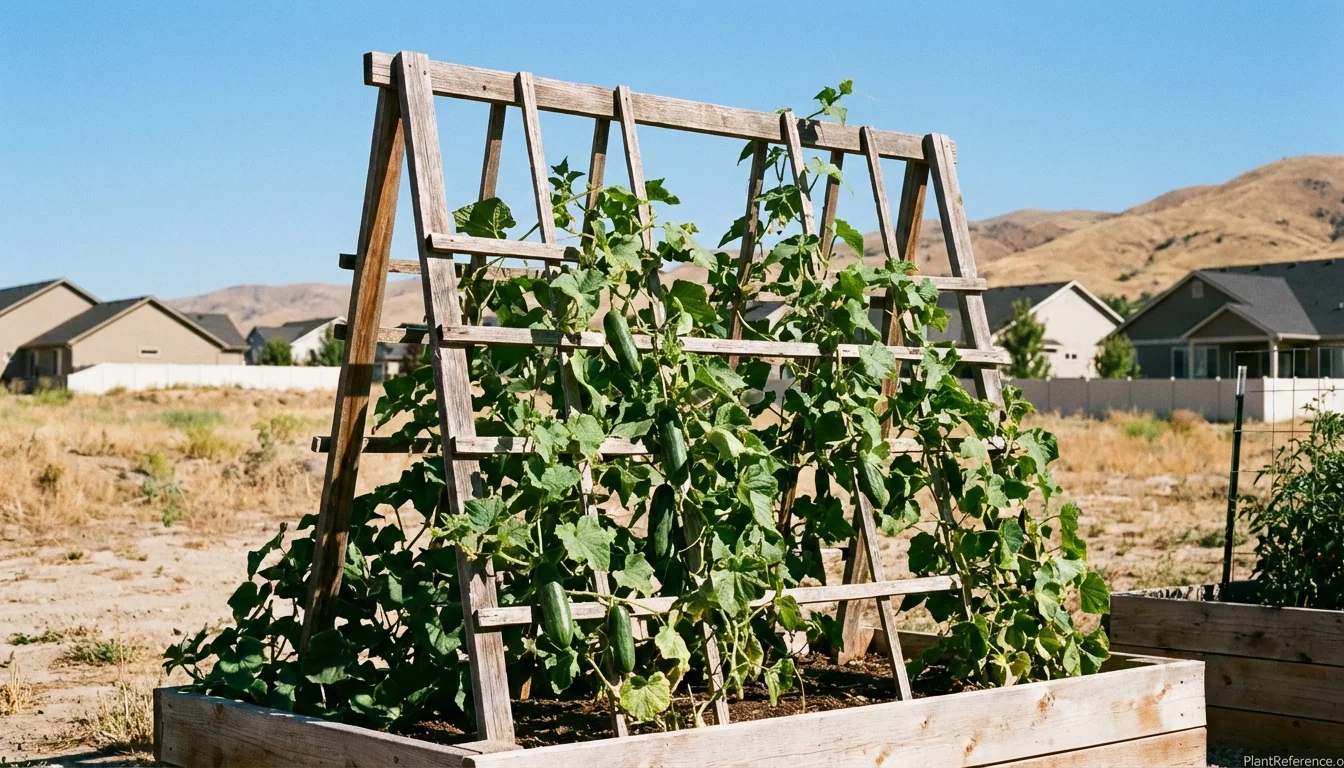
— Image © Plant Reference 2026
Boise soil is alkaline—usually between 7.5 and 8.5 pH—and that single fact shapes more cucumber growing decisions here than any other factor. You can have perfect weather, ideal timing, and the best varieties, but if your soil pH locks up iron and zinc at the root zone, your cucumbers will yellow and stall regardless. Start with a soil test and work from there. Once pH is managed, Boise's Treasure Valley is actually excellent cucumber territory: hot, dry summers with intense sun that drives vigorous growth, minimal disease pressure from the low humidity, and a 158-day season that accommodates most varieties with room for succession planting. Our challenges are specific—alkalinity, spider mites in dry heat, and irrigation dependency in a climate that delivers under 12 inches (30 cm) of annual precipitation—but they're all solvable with the right approach. When to Plant Tomatoes in Boise: Complete Guide + Best Varieties for Zone 6a
Best Cucumber Varieties for Boise's Climate
Boise sits in USDA Zone 6a with a May 5 last frost and October 10 first frost—158 growing days. The Treasure Valley's arid high-desert climate provides hot, sunny summers ideal for cucumber growth when irrigation is consistent. Variety selection here prioritizes drought tolerance, fast maturity, and the ability to produce in low-humidity conditions where spider mites replace foliar diseases as the primary pest concern.
Variety | Type | Days to Harvest | Disease Resistance | Best For |
|---|---|---|---|---|
Specialty | 65 days | Moderate (Rust, drought tolerant) | Best drought tolerance for Idaho | |
🌿Cucumis sativus 'Persian' (Beit Alpha) | Specialty | 55 days | Moderate (PM) | Fast maturity, arid-adapted |
Slicing | 65 days | High (Scab, CMV, moderate DM/PM) | Best slicer with self-shading foliage | |
Pickling | 55 days | Low-Moderate | Fast harvest, pickling | |
Slicing | 63 days | Low (CMV tolerance only) | Traditional slicer with irrigation | |
🌿Cucumis sativus 'Marketmore 76' (succession) | Slicing | 65 days | High | Mid-June planting for extended harvest |
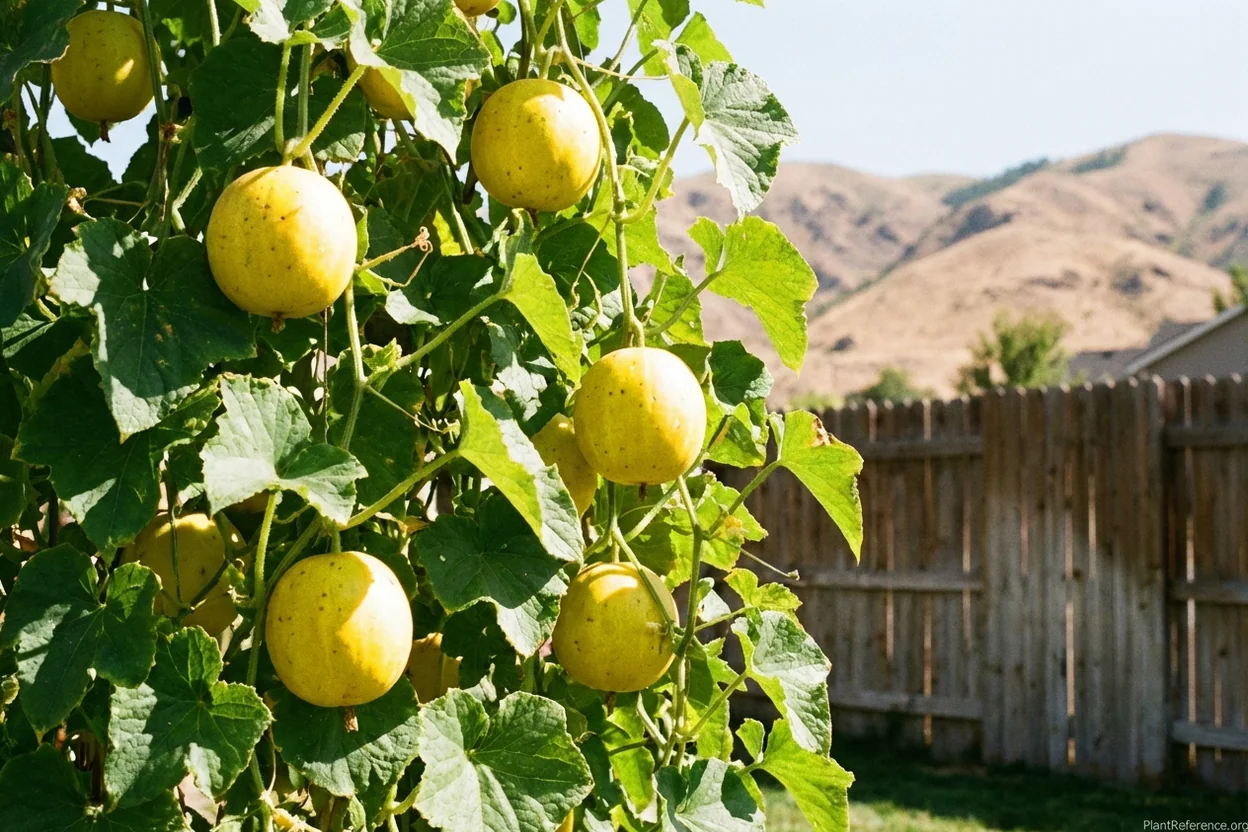
🌿Cucumis sativus 'Lemon' is the variety I recommend most for Boise's conditions. Its drought tolerance from ancestral arid-climate genetics provides genuine resilience during the Treasure Valley's hottest, driest weeks. When July temperatures hit 100°F (38°C) and irrigation schedules tighten, 🌿Cucumis sativus 'Lemon' maintains production while less-adapted varieties stress and turn bitter. The round yellow fruit resists sunscald better than elongated slicers, and the mild, burpless flavor holds even under moderate water stress.
🌿Cucumis sativus 'Persian' types at 55 days maximize Boise's 158-day window. Bred for hot Mediterranean climates, they're genetically suited to our dry conditions. The parthenocarpic fruit set means production continues even during the hottest weeks when pollinators reduce midday activity. Consistent irrigation is essential because their thin skins dehydrate rapidly in our dry air.
🌿Cucumis sativus 'Marketmore 76' is the best slicing variety for Boise because its heavy foliage provides the natural self-shading that protects fruit from sunscald in our intense sun. The "stay-green" gene maintains canopy density through heat stress—critical in Idaho where cloudless skies deliver unrelenting UV from June through September.
🌿Cucumis sativus 'Straight Eight' works with consistent irrigation but produces bitter fruit faster under water stress than drought-adapted varieties. Use for early-season eating and transition to more resilient varieties through summer. When to Plant Peppers in Boise: Complete Guide + Best Varieties for Zone 6a
Specific Planting Dates for Boise Gardens
Boise's May 5 last frost and October 10 first frost provide 158 growing days. The Treasure Valley warms rapidly in spring—soil temperatures rise faster than in humid regions because our dry soil absorbs heat efficiently.
Indoor Seed Starting: April 10-17 (3-4 weeks before last frost). Start at 75°F (24°C) on a heat mat for 3-5 day germination. Boise homes are dry—use a humidity dome or mist seedlings regularly to prevent desiccation during the indoor growing period.
Transplant Outdoors: May 12-20 (one week after last frost, soil at 60°F/16°C). Pre-warm beds with black plastic mulch for 2 weeks before transplanting. Harden off 5-7 days. Boise's May weather is generally warm and settled, but keep row covers available for the occasional cold snap that drops nighttime temperatures into the low 30s through mid-May.
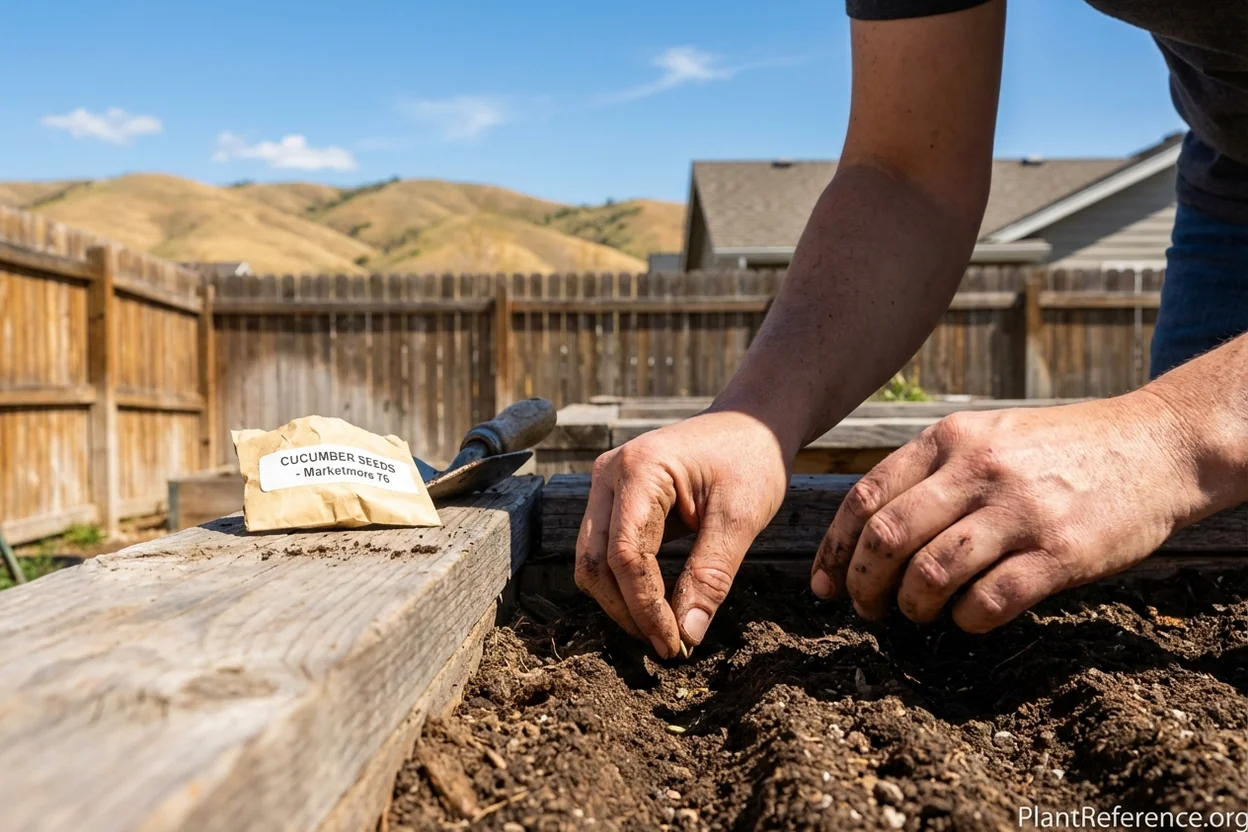
Direct Sow: May 10-June 1. Boise's sandy loam to clay soils warm quickly in our intense spring sun. Check at 4 inches (10 cm) with a thermometer. Direct sowing works well because our warm, dry soils germinate seeds in 4-6 days without the rot risk that wet-climate gardeners face.
Succession Plantings: One to two successions by mid-June. Boise's 158-day season supports 2-3 plantings. The first transplant and one or two follow-up sowings provide harvest from late June through September.
Final Sowing Deadline: June 15. A 55-day variety planted June 15 matures around August 9 with nine weeks of harvest before frost. Sixty-five-day varieties need to go in by June 1 for full maturation. Raised Bed Vegetable Garden Layout: Planning for Maximum Production
Complete Growing Guide for Boise
Soil and Alkalinity Management
Before you plant anything, get a soil test. The University of Idaho Extension provides testing for under $15, and it's the most important investment in your Boise garden. Treasure Valley soils are predominantly alkaline (pH 7.5-8.5) with texture ranging from sandy loam near the river to heavy clay in older neighborhoods. Cucumbers prefer 6.0-6.8 pH, so correction is usually necessary.
Raised beds filled with 60% topsoil, 30% compost, and 10% perlite bypass both alkalinity and drainage issues entirely. For in-ground plots, work 4-6 inches (10-15 cm) of compost into the top 12 inches (30 cm) and amend with elemental sulfur based on soil test recommendations. Apply chelated iron and zinc preventatively—don't wait for deficiency symptoms to appear. Our soils are mineral-rich once pH is corrected, so heavy fertilization is rarely needed beyond pH management and nitrogen supplementation. Avoid the common mistake of throwing lime at Boise soil—unlike acidic Eastern soils, our alkaline conditions need sulfur, not lime, and adding lime makes an already-high pH worse.
Black Plastic Mulch for Spring
For the first planting, black plastic mulch warms soil 5-10°F above ambient—helpful in Boise's cool May soil even though our air temperatures warm rapidly. Lay plastic 2 weeks before transplanting to pre-warm the bed. After mid-June when soil is warm, you can switch to organic straw mulch for its evaporation-prevention benefits while still maintaining comfortable root temperatures. How to Build a Raised Garden Bed: Step-by-Step Construction Guide
Water Management
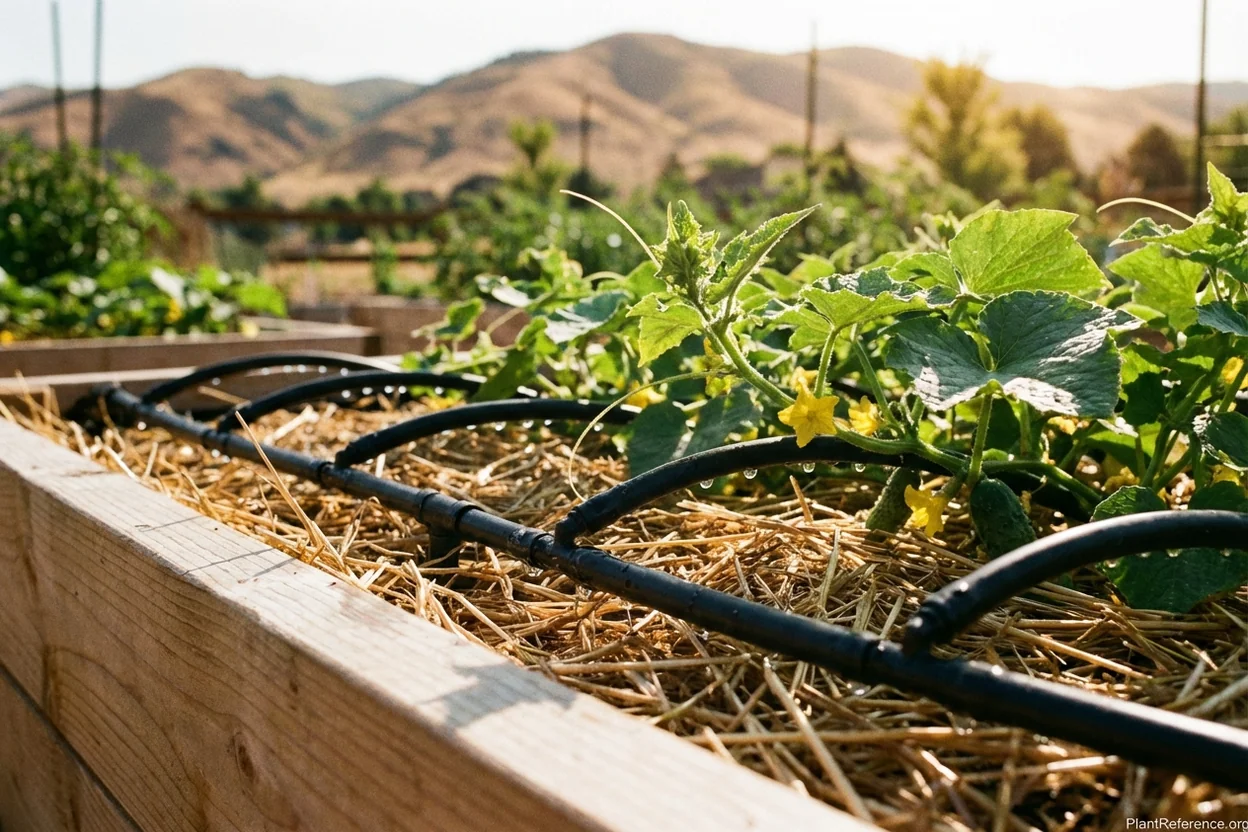
Boise averages under 12 inches (30 cm) of annual precipitation with virtually no rain from July through September. Cucumbers need 1 to 1.5 inches (2.5-4 cm) weekly, delivered entirely through irrigation. Drip irrigation on a timer is the only practical approach—overhead watering wastes 30-50% to evaporation in our dry, sunny conditions.
Mulch 3-4 inches (8-10 cm) with straw or shredded bark after transplanting. In Boise's arid climate, mulch reduces irrigation needs by 25-30% by preventing surface evaporation. Water in the early morning to warm root zones heading into the day's heat. Evening watering is acceptable here because our low humidity makes Powdery Mildew less of a concern than in humid climates, but morning watering maximizes root zone warming and gives plants the best start for the day's intense photosynthesis period. 5 Best Drip Irrigation Kits for Raised Beds (Tested for Easy Installation)
Trellising
Vertical growing in Boise serves primarily for sun management and water efficiency. Our intense summer sun causes sunscald on exposed fruit, and trellising allows foliage to shade the fruit below. A 6-foot (1.8 m) trellis oriented north-south maximizes sun exposure while creating natural shade on fruit. Trellised cucumbers also use water more efficiently because less ground area needs irrigation, and the elevated fruit stays cleaner and develops better shape than ground-level cucumbers. Our dry climate makes foliar diseases rare, so disease management is a secondary benefit of trellising rather than the primary reason as in humid climates.
Feeding
Side-dress with balanced fertilizer at flowering and every two weeks during production. The critical nutrient issue in Boise is micronutrient lockout from alkaline pH—iron, zinc, and manganese become unavailable above pH 7.5. Apply chelated iron as a foliar spray every 2-3 weeks preventatively, not just when symptoms appear. Fish emulsion provides balanced feeding without raising soil pH further. Avoid high-phosphorus fertilizers in alkaline conditions because excess phosphorus locks up zinc. When to Plant Squash in Boise: Complete Guide + Best Varieties for Zone 6a
Pollination
Standard varieties need pollinators. Boise supports excellent bee populations throughout the growing season—our dry, warm, sunny conditions are ideal for pollinator activity. Fruit set is generally reliable from May through September. 🌿Cucumis sativus 'Persian' parthenocarpic types provide insurance during the rare cool or windy periods when pollinator activity decreases. Plant sunflowers and herbs near cucumber beds to maintain pollinator presence through the season. When to Plant Kale in Boise: Complete Guide + Best Varieties for Zone 6a
Troubleshooting Boise-Specific Problems
Alkaline Soil and Micronutrient Lockout
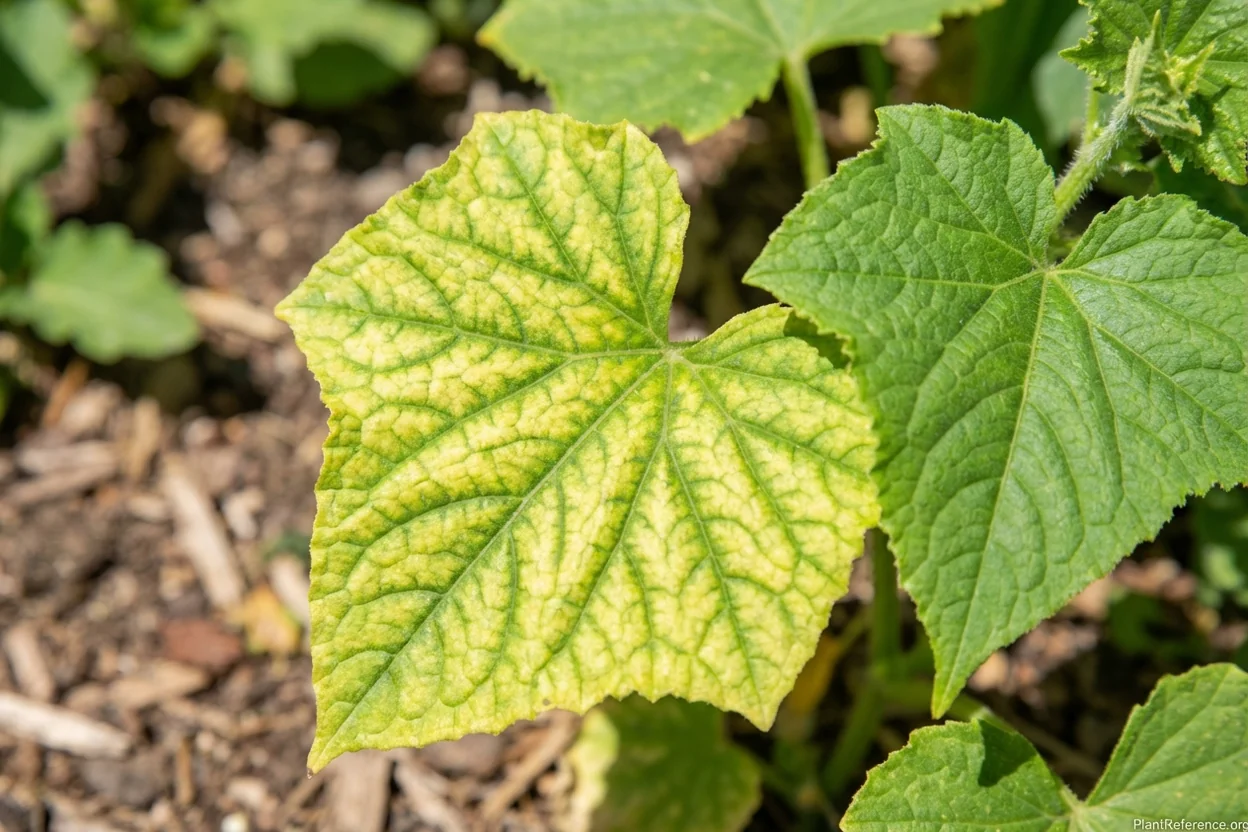
The defining soil challenge for Boise vegetable gardeners. Interveinal chlorosis—yellowing between green veins—is the classic symptom of iron deficiency caused by high pH, not insufficient iron in the soil. Our soils contain adequate iron, but pH above 7.5 makes it chemically unavailable to roots. Apply chelated iron as a foliar spray for immediate correction. Amend with elemental sulfur over time to gradually lower pH. Raised beds with controlled soil mix are the most reliable long-term solution. Raised Bed Pest Problems: Identification and Organic Control Methods
Spider Mites
Boise's hot, dry, dusty summers create ideal spider mite conditions. Stippled, bronzed leaves with fine webbing on undersides indicate infestation. Brief overhead misting from a hose disrupts mite populations by raising leaf humidity. Neem oil every 7-10 days provides preventative organic control. Insecticidal soap for active infestations. Heavy infestations defoliate vines, exposing fruit to sunscald from our intense summer sun.
Sunscald
Exposed cucumber fruit develops white, papery patches under Boise's cloudless summer skies. Choose varieties with dense foliage like 🌿Cucumis sativus 'Marketmore 76' for natural self-shading. Trellis so fruit hangs below the leaf canopy. Apply 30% shade cloth if spider mites thin foliage. 🌿Cucumis sativus 'Lemon' cucumber's light color and round shape resist sunscald better than dark green elongated slicers. Raised Bed Too Hot in Summer: Protecting Plants from Heat Stress
Late Spring Frost
Boise averages a May 5 last frost but cold snaps can hit through mid-May. Row covers and Wall-o-Water protectors provide insurance during the establishment period. Cold-stunted transplants recover slowly, and in a 158-day season, a two-week setback is proportionally significant. Watch forecasts closely and protect transplants until nighttime temperatures consistently stay above 45°F. Best Soil Mix for Raised Beds: Creating the Perfect Growing Medium
Harvest & Storage
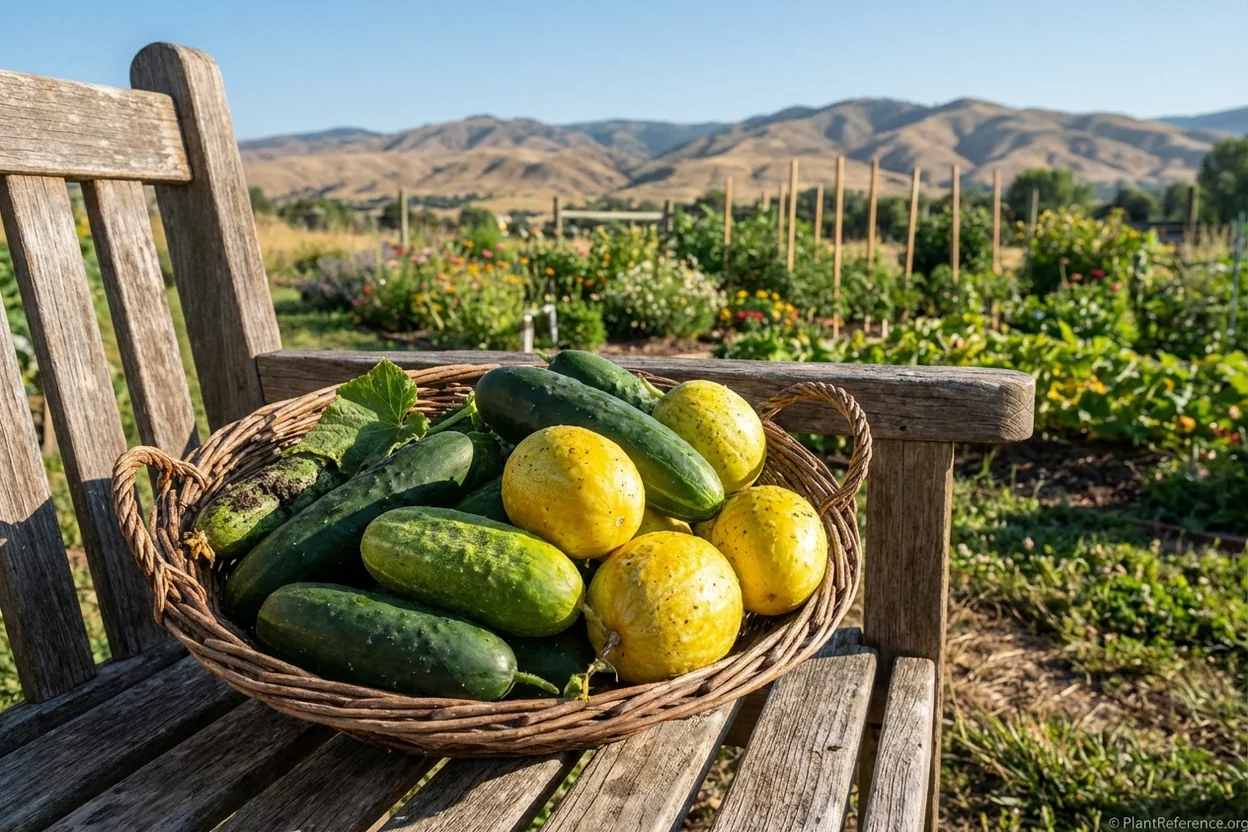
Harvest slicing cucumbers at 6-8 inches (15-20 cm) and pickling types at 2-4 inches (5-10 cm). Check vines every 2-3 days during peak production in July and August. Boise's dry heat drives moderate to fast fruit development—faster than cool-climate Pacific Northwest cities but without the explosive growth of humid Southern gardens. Consistent picking keeps vines productive through the season.
Cut with pruners rather than pulling. Harvest in the early morning before intense Treasure Valley sun heats fruit—cucumbers picked at peak temperature in Boise's dry air lose moisture rapidly and store poorly. A healthy 🌿Cucumis sativus 'Marketmore 76' plant produces 10-15 slicers; 🌿Cucumis sativus 'Lemon' yields 12-18 round yellow fruit. 🌿Cucumis sativus 'Persian' produces 14-18 snacking cucumbers with consistent picking. Total season yield per row across 2-3 successions reaches 40-55 cucumbers in a well-managed Boise garden.
Fresh cucumbers store 7-10 days refrigerated in a towel inside a loose bag. Boise-grown cucumbers develop exceptional flavor from our intense sun and dry growing conditions. The consistent UV exposure and low humidity create clean, concentrated cucumber taste without the bitterness that humidity and water stress produce in other climates. Well-irrigated Treasure Valley gardens produce some of the best-tasting cucumbers in the Intermountain West. The Complete Guide to Raised Bed Gardening for Beginners (2025)
Frequently Asked Questions
Reading about plants and recognising them are different skills. These three build the second.
- Daily PlantIdentify the day’s mystery plant from a close-up photograph.
- Keyed OutWork a dichotomous key, lead by lead, to name a hidden specimen.
- Name That PlantName a specimen from botanical clues dealt hardest first.
Free to play, no account needed
Lily is a Master Gardener and high-desert homesteader outside Boise. She and her husband moved to Idaho from the Bay Area and had to completely relearn gardening for a climate with alkaline soil, intense sun, hard freezes, and limited water. Lily now grows a large vegetable garden, maintains a small orchard of cold-hardy fruit trees, and raises cut flowers for the local farmers market. She writes about the specific challenges of intermountain gardening—short seasons, temperature swings, and the importance of soil amendment in high-pH soils. Lily is honest about the learning curve: high-desert gardening is humbling, and she thinks more gardening writers should admit when conditions are genuinely difficult.