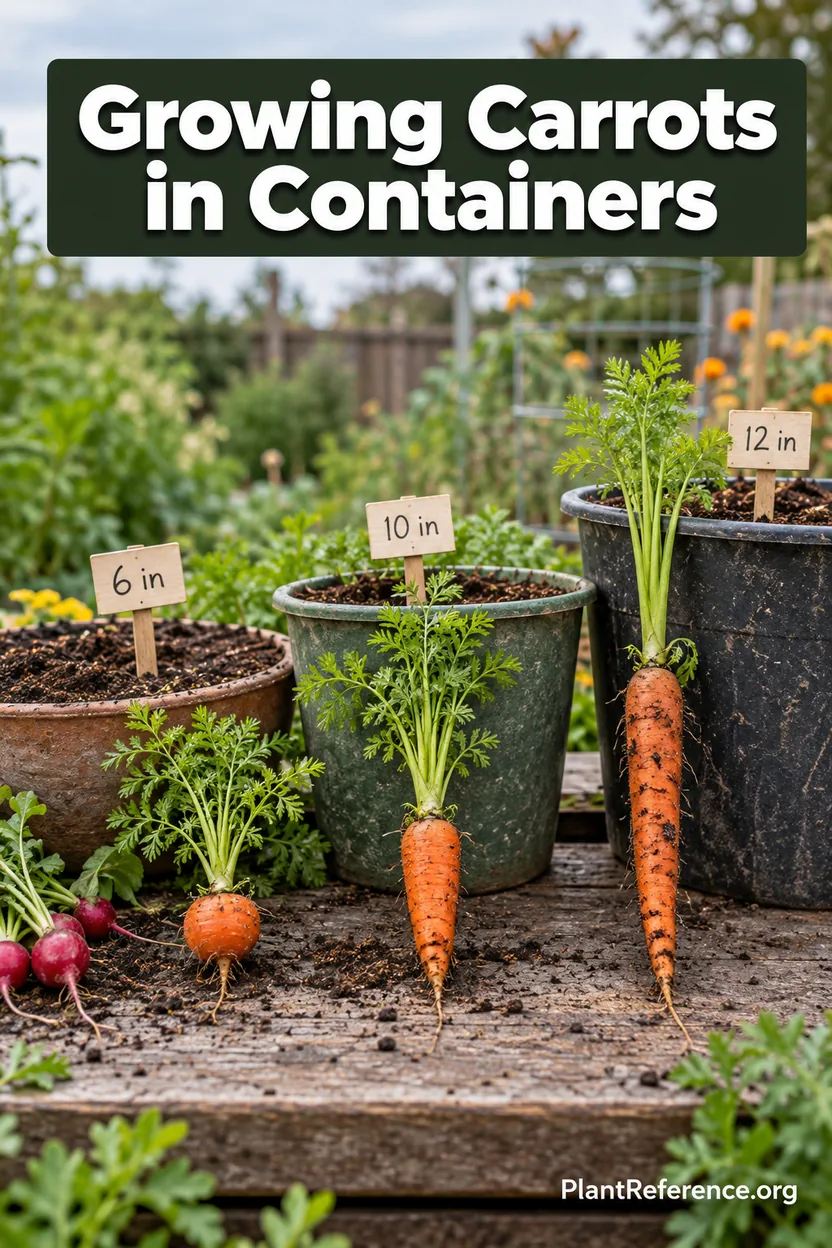
Growing Carrots in Containers: Depth, Mix & Thinning
Pets & Toxicity
Recorded toxicity for plants linked in this guide. An unknown status is not a safety assessment.
No linked plant is recorded as toxicDetailsHide
Daucus carota ssp. sativus 'Danvers 126' — Toxicity
Non-toxicView Daucus carota ssp. sativus 'Danvers 126' plant profileRaphanus sativus 'Cherry Belle' — Toxicity
Non-toxicView Raphanus sativus 'Cherry Belle' plant profileRaphanus sativus 'French Breakfast' — Toxicity
Non-toxicView Raphanus sativus 'French Breakfast' plant profile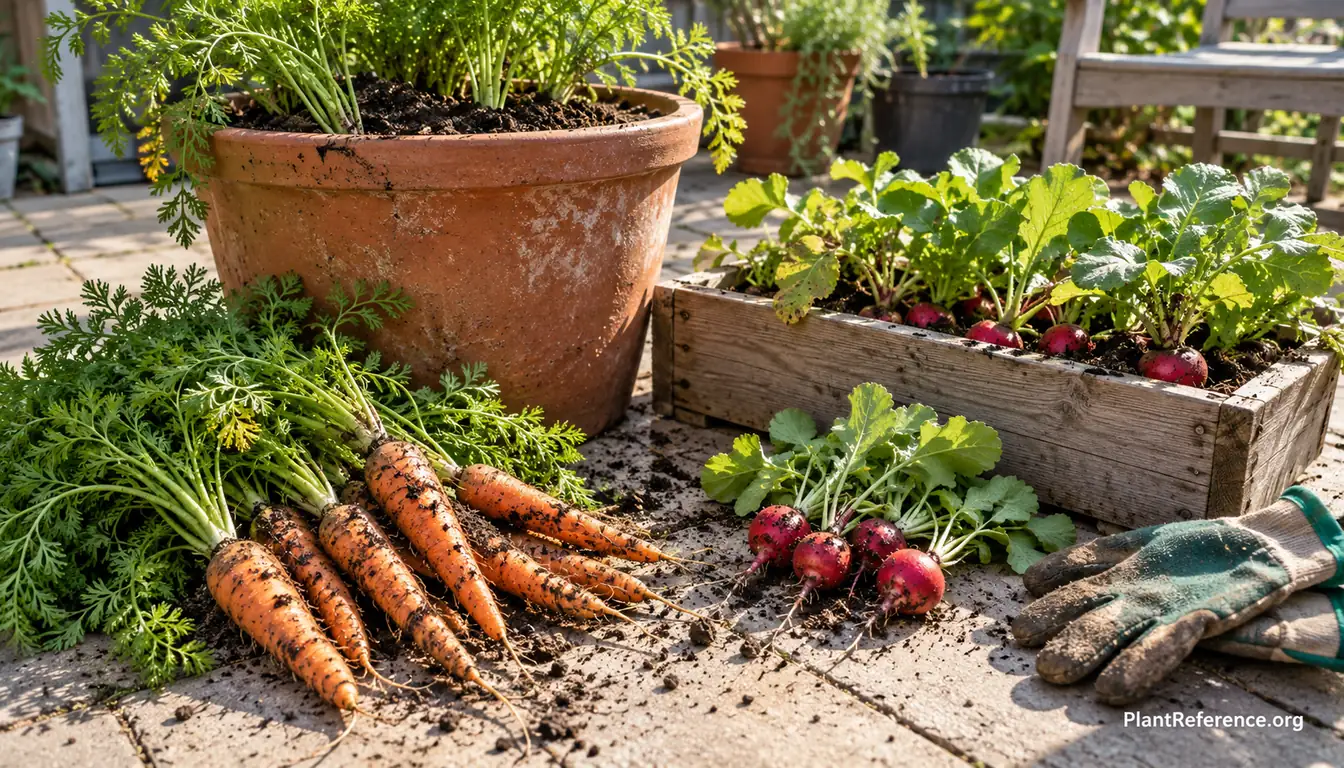
— Image © PlantReference.org 2026
Growing carrots in containers succeeds when depth is chosen before seed. Standard carrots need at least 12 inches (30 cm) of loose, stone-free mix, while short Nantes and round cultivars can use shallower vessels. Sow directly because transplanted roots fork easily, keep the surface moist through slow germination, and thin seedlings early enough that each root has room to expand.
Match Root Shape to Container Depth
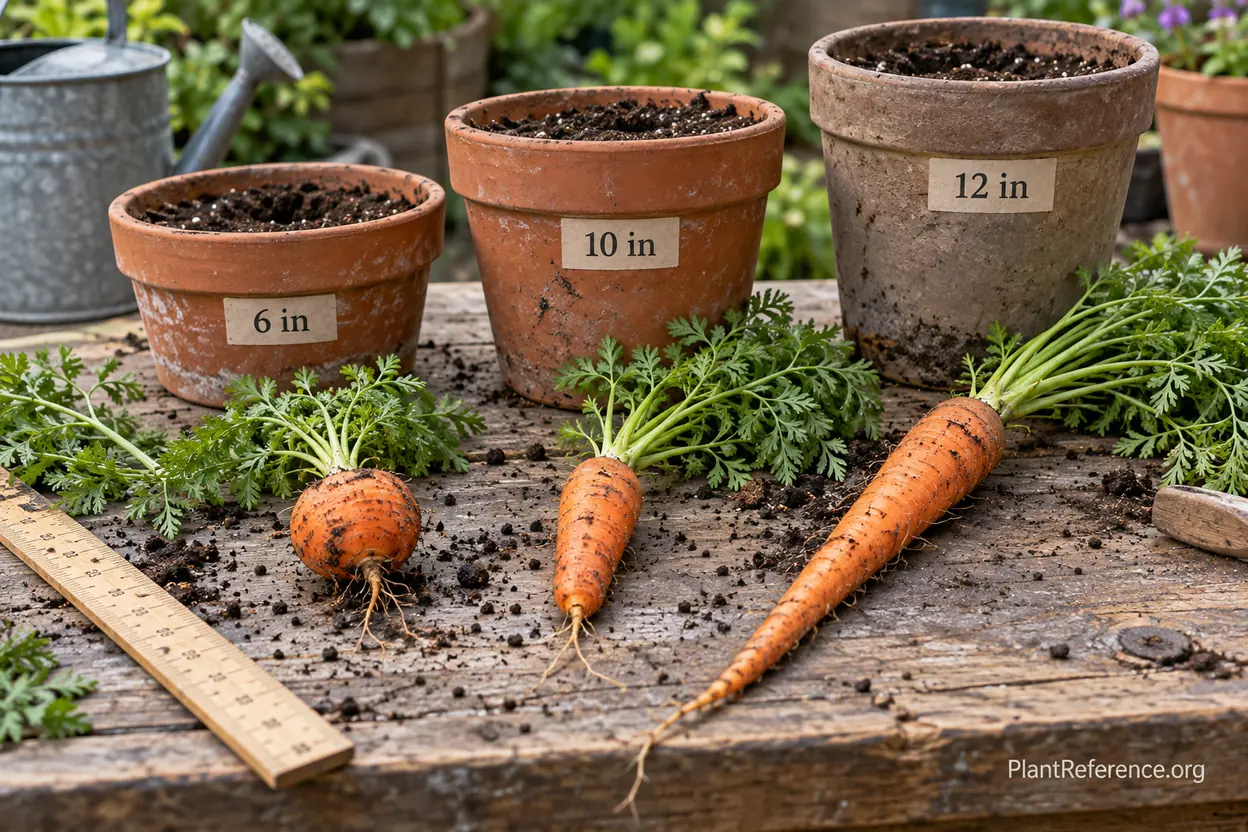
The cultivated carrot Daucus carota ssp. sativus (DAW-kus kuh-ROH-tuh sah-TEE-vus) stores energy in one enlarged taproot. If that root reaches a hard base, stone, woody chunk, or compacted layer, it bends or branches. Container gardening lets you control the entire root zone, but only if the vessel matches the mature root. A 10-inch (25 cm) carrot cannot finish in 6 inches (15 cm) of mix just because its leaves fit.
For a standard cylindrical root, start with at least 12 inches (30 cm) of usable mix. Short Nantes types can mature in 8–10 inches (20–25 cm), while round Parisian carrots can use 6–8 inches (15–20 cm). Radish 🌿Raphanus sativus develops much faster and most round cultivars need only about 6 inches (15 cm). That makes radish useful in a shallow window box or along the edge of a deeper carrot pot.
Cultivar | Root shape | Minimum usable depth | Best container fit |
|---|---|---|---|
Tapered standard | 12 inches (30 cm) | Deep bucket or tall planter | |
Daucus carota ssp. sativus 'Scarlet Nantes' | Short cylinder | 10 inches (25 cm) | Medium-depth wide pot |
Daucus carota ssp. sativus 'Little Finger' | Slender baby | 8 inches (20 cm) | Window box or compact pot |
Daucus carota ssp. sativus 'Paris Market' | Round | 6–8 inches (15–20 cm) | Shallow bowl or box |
Round radish | 6 inches (15 cm) | Shallow succession planter | |
Oblong radish | 8 inches (20 cm) | Medium box with loose mix |
Select by season as well as depth. Carrots and radishes prefer cool growing conditions, and hot weather can make radishes pithy or carrots slow and coarse. Regional schedules vary widely. When to Plant Carrots in Phoenix: Zone 9b Dates + Best Varieties emphasizes a cool-season window, while When to Plant Carrots in Anchorage: Complete Guide + Best Varieties for Zone 4b works within a short summer. Use the guide for your climate rather than a national planting month.
Width determines quantity. A 12-inch (30 cm) round pot can hold roughly 16 carrots on a 3-inch (7.5 cm) grid, though beginner results improve with slightly wider spacing. A rectangular box makes straight rows easier to thin. Do not crowd every seedling you germinate. The goal is edible roots, not a forest of tops.
Build a Loose, Stone-Free Root Zone
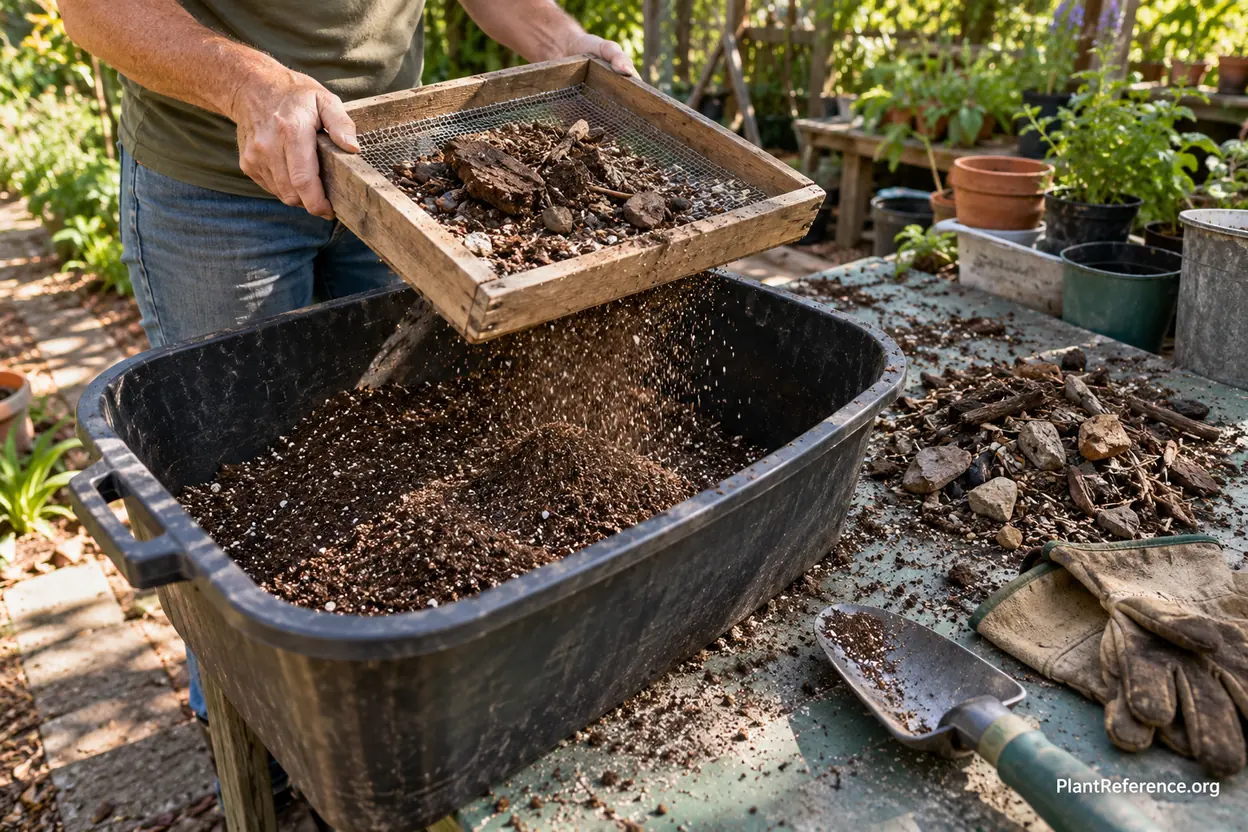
Use a fine-textured container mix that stays open after repeated watering. Coir or peat holds moisture; perlite creates air space; well-finished compost adds a modest nutrient reserve. Screen out stones, large bark chunks, sticks, and uncomposted material. The mix should crumble when squeezed, not form a sticky ball. Garden soil is risky because it compacts in a pot and may contain hard debris that redirects roots.
Do not overdo compost or manure. Fresh manure and excessively rich, nitrogen-heavy mixes encourage hairy, branched roots and a large canopy. Carrots need nutrition, but a root crop is not improved by pushing soft leaf growth. Blend a balanced potting medium before sowing and avoid adding concentrated fertilizer directly under the seed row.
Fill the container uniformly from bottom to top. A gravel layer does not improve drainage; the texture boundary can keep the saturated zone higher and removes precious root depth. Leave 1 inch (2.5 cm) below the rim for watering, then level the surface without pressing it hard. If the pot sits on a flat patio, raise it slightly so all holes can drain.
The mix principles in Container Tomato Soil: Creating the Perfect Growing Mix for Maximum Yields help explain air and water balance, but carrots need fewer large woody pieces than tomatoes tolerate. For a reusable mix, remove old roots and screen out compacted clumps. Replace material that has collapsed into dense fines before the next carrot crop.
Sow Directly and Keep Seeds Moist
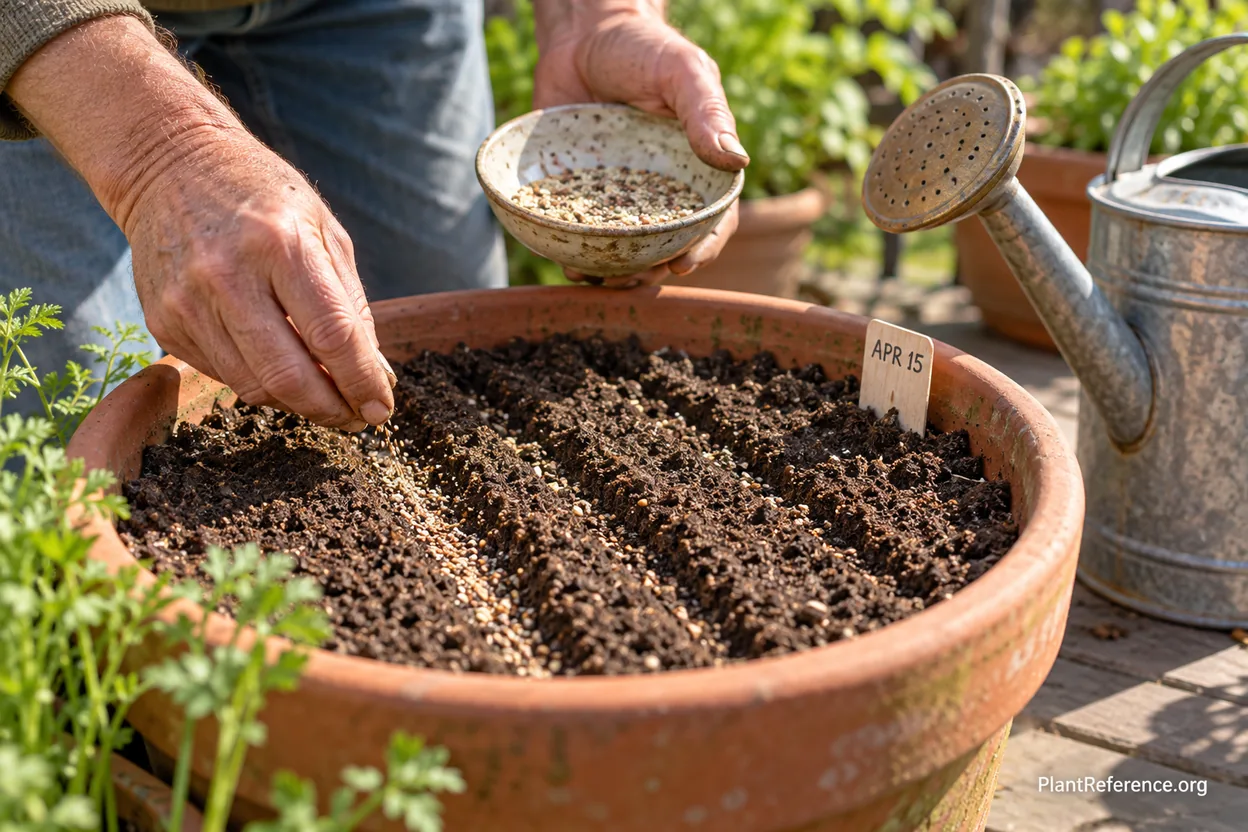
Carrot seed is small and slow to emerge, often taking one to three weeks depending on temperature. Sow it about 1/4 inch (6 mm) deep in shallow furrows. Mix seed with dry sand for more even distribution, or use pelleted seed if available. Cover lightly, press only enough for seed-to-mix contact, and water with a fine rose so the row does not wash into a corner.
Surface moisture is the hard part. The top layer dries before the deeper pot, and a brief dry spell during germination can kill newly sprouted seed. Lay a board, burlap, or a thin layer of vermiculite over the row to slow evaporation, checking daily and removing any solid cover as soon as seedlings appear. Mist gently rather than flooding. Never leave an opaque board over green seedlings.
Radishes emerge faster and can mark carrot rows. Sow 🌿Raphanus sativus 'Cherry Belle' sparingly between carrot positions, then harvest the radishes before carrot roots need the space. This works only if you actually pull them on time. An overgrown radish becomes competition. For a dedicated radish pot, sow a short row every 10–14 days during cool weather instead of filling every container at once.
Regional soil temperatures and frost dates change the sowing window. When to Plant Carrots in Seattle: Zone 8b Dates + Best Varieties and When to Plant Carrots in Minneapolis: Complete Guide + Best Varieties for Zone 4a illustrate different spring and fall opportunities. Containers warm faster than ground, but they also cool quickly during a cold night.
Thin for Full-Size Roots
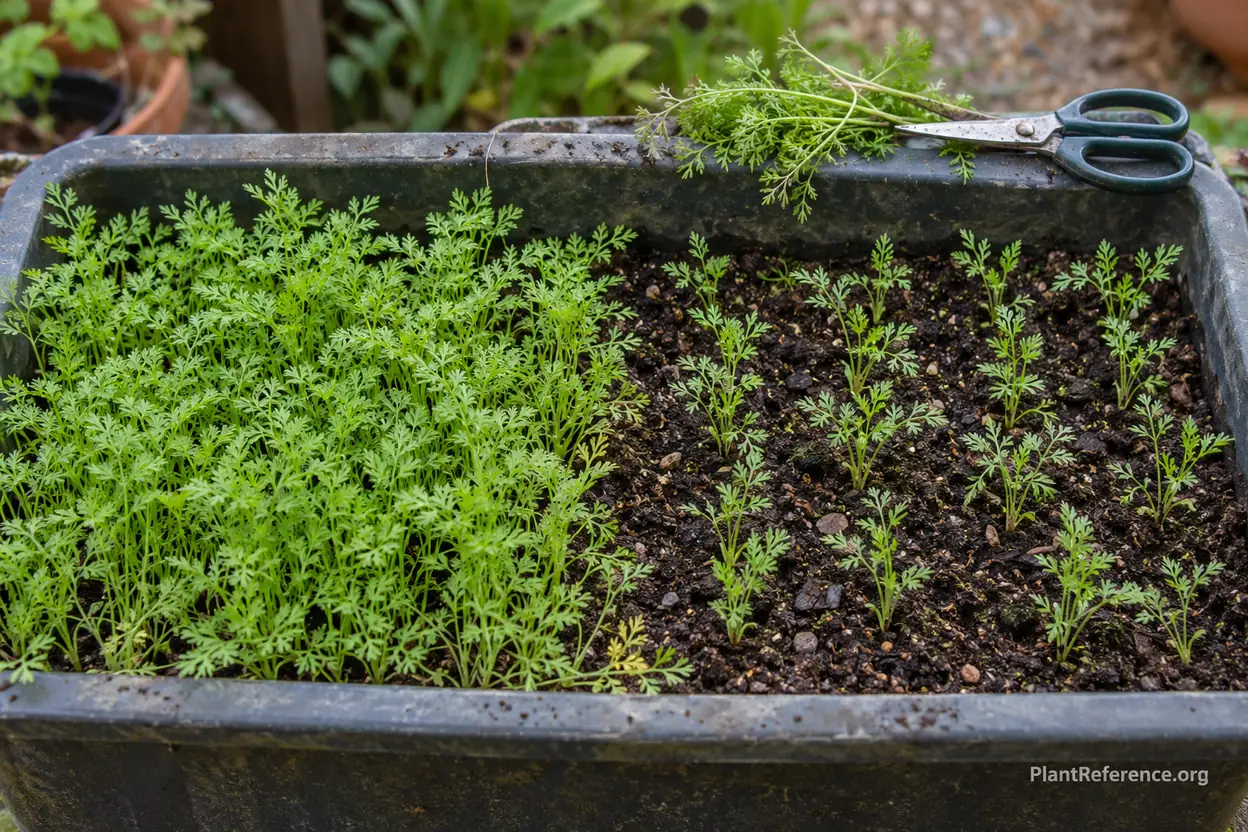
Thinning feels wasteful, but leaving seedlings crowded wastes the entire crop. When carrot tops reach about 2 inches (5 cm), thin them to roughly 1 inch (2.5 cm) apart. A couple of weeks later, thin again to 2–3 inches (5–7.5 cm), depending on cultivar. Round carrots can use a closer grid than broad-shouldered standard roots. Radishes generally need 1–2 inches (2.5–5 cm).
Cut unwanted seedlings at the mix surface with small scissors if pulling could disturb neighbors. When plants are spaced a little wider, you can pull gently after watering. Avoid loosening the remaining roots. Remove thinnings from the pot so decaying leaves do not attract pests.
Crop goal | Final spacing | Typical density in one square foot |
|---|---|---|
Baby carrots | 1.5–2 inches (4–5 cm) | About 25–36 roots |
Standard carrots | 2–3 inches (5–7.5 cm) | About 16–25 roots |
Round carrots | About 2 inches (5 cm) | About 25 roots |
Round radishes | 1–2 inches (2.5–5 cm) | About 36–64 roots |
Keep shoulders covered as roots enlarge. If orange or purple crowns push above the mix, pull a little loose medium around them to prevent greening and sun damage. Do not bury foliage or pack the mix firmly. A thin mulch can help hold moisture after seedlings are established, but keep it light so slugs have fewer places to hide.
Good thinning also improves airflow and makes watering more uniform. Dense foliage can hide dry pockets and pest damage. If you want more roots, sow another pot two weeks later instead of refusing to thin the first one. The spacing logic in Raised Bed Vegetable Garden Layout: Planning for Maximum Production applies to surface planning, though containers add a hard depth limit.
Water and Feed Without Forking Roots
Keep moisture even from germination through root expansion. Water when the top 1 inch (2.5 cm) begins drying, applying enough to wet the full depth and produce a little drainage. Repeated drought followed by a flood can split roots. Shallow daily sprinkles encourage a dry lower zone, while standing water deprives roots of oxygen.
Learn the pot's weight and check below the surface. A moisture probe can help compare depths, but insert it between rows so it does not stab roots. Overwatering vs Underwatering Container Tomatoes: How to Tell the Difference uses a different crop, yet its checks for pot weight, drainage, and wet-root wilt are useful here.
Feed lightly. A potting mix with starter fertilizer may carry the first part of the crop. If growth becomes pale after that charge is used, apply a balanced vegetable fertilizer at the container rate. Avoid high-nitrogen feeding, which produces tall tops and hairy roots. Never place fertilizer granules in direct contact with seed or young roots.
In hot weather, shade the container wall while keeping foliage in adequate light. Dark plastic can heat the outer root zone and dry one side faster. A pale outer sleeve or afternoon shade protects roots. Wind also accelerates water loss; place the pot below a railing or behind a permeable screen, using the placement ideas in Protecting Container Tomatoes on Windy Balconies and Exposed Patios.
Harvest Carrots and Radishes on Time
Check the seed packet's maturity range, then inspect the root shoulder. A carrot is usually ready when the shoulder reaches its expected diameter and color. Loosen the mix with a narrow tool beside the root, grasp the tops near the crown, and pull steadily. Water dry mix first so the root releases without snapping.
Radishes become pithy, hot, or hollow when left too long, especially in warmth. Pull 🌿Raphanus sativus 'French Breakfast' as soon as the shoulder reaches usable size rather than waiting for every plant. Harvesting a few test roots teaches you more than the calendar. If the first is small but tender, leave the rest several days; if it is woody, pull the row.
For storage, remove tops 1/2 inch (1 cm) above carrot shoulders so leaves do not draw moisture from roots. Brush off loose soil and refrigerate unwashed roots in a humid bag or container, washing before use. Radishes store best with tops removed as well. Do not store damaged roots with sound ones.
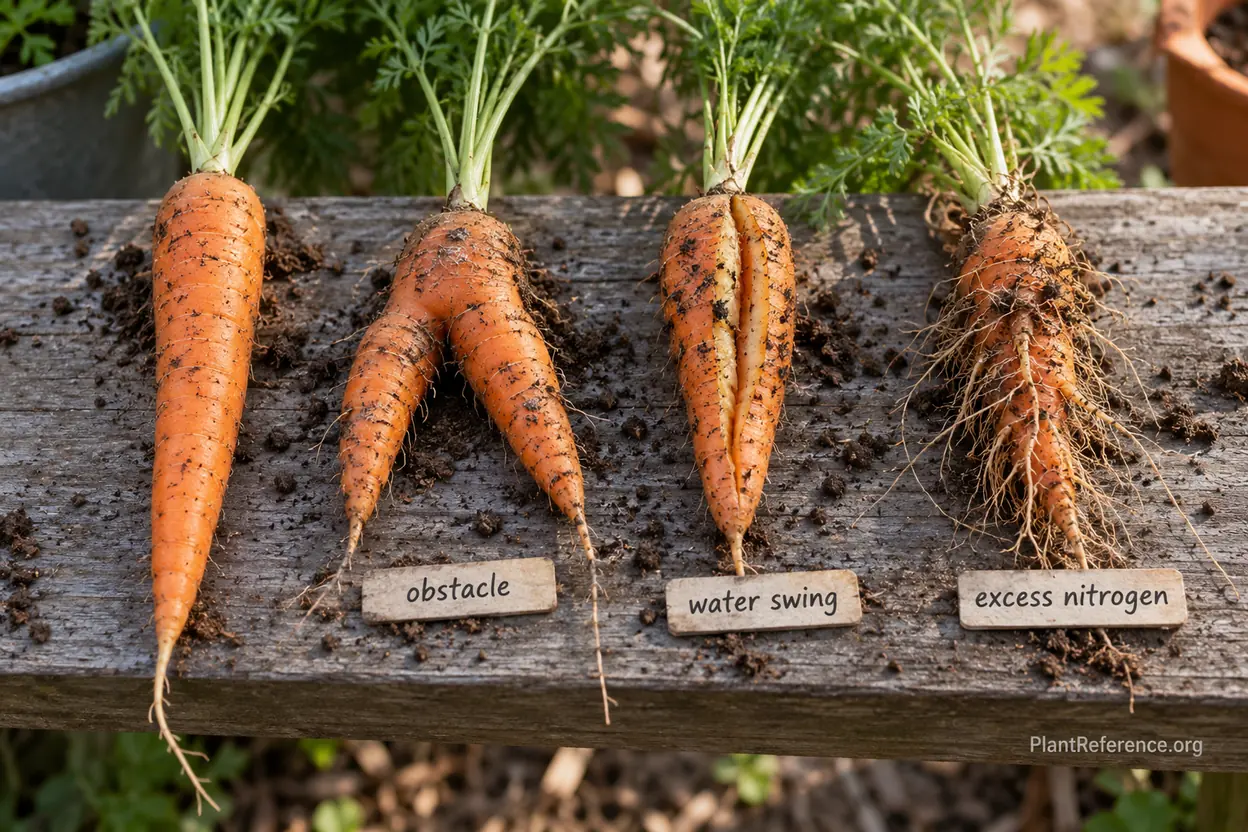
You can also harvest baby carrots during the second thinning. Those small roots are a bonus, not a substitute for proper final spacing. Once the main crop is out, empty the pot, examine the root shapes, and use them as a report card. Forked roots point to debris or rich mix; split roots point toward moisture swings; tiny straight roots may mean crowding or an early harvest.
Diagnose Forking, Hairiness, and Pests
Forking usually begins below the surface. Stones, woody compost, compacted clumps, fresh manure, root disturbance, or nematode damage can divide the taproot. Screen the next batch's mix and direct sow. A forked carrot is still edible if healthy, but its shape tells you the root met an obstacle.
Hairy roots often follow excessive nitrogen, water stress, or roots left too long in warm conditions. Reduce feeding, keep moisture steadier, and harvest within the cultivar's window. Short, blunt roots may mean the container was too shallow or the root hit a compacted base. Match the next cultivar to the actual usable depth rather than the outside pot height.
Carrot rust fly larvae tunnel through roots in affected regions. A fine insect barrier placed immediately after sowing can exclude adult flies if its edges remain sealed. Aphids may gather on tops, and slugs chew seedlings near the surface. Inspect after dark and adapt the low-toxicity methods in Stop Slugs in the Pacific Northwest Garden Safely where slugs are active.
When foliage is weak and roots are tiny, check light and temperature before adding food. Carrots need several hours of sun but dislike extreme root-zone heat. If a whole batch fails, replace questionable mix and clean the container. Then sow a small test row. One corrected pot is cheaper than repeating the same problem across six.
Frequently Asked Questions
Reading about plants and recognising them are different skills. These three build the second.
- Daily PlantIdentify the day’s mystery plant from a close-up photograph.
- Keyed OutWork a dichotomous key, lead by lead, to name a hidden specimen.
- Name That PlantName a specimen from botanical clues dealt hardest first.
Free to play, no account needed
Tagged with
Carlos grew up helping his abuelos tend their backyard garden in San Antonio, Texas, but didn't get serious about growing his own food until he bought his first house in Austin. He works as an HVAC technician during the day and gardens in the early mornings and evenings. Carlos specializes in heat-tolerant vegetables and container growing—essential skills for Texas summers and his south-facing driveway that gets intense sun. He's learned through plenty of failures (multiple dead fig trees, countless bolted lettuce crops) and now helps neighbors troubleshoot their own gardens. His YouTube channel documenting his container tomato experiments has a small but dedicated following. Carlos is passionate about growing food on a budget, often sourcing free containers and building his own compost.