When to Plant Carrots in Phoenix: Zone 9b Dates + Best Varieties
Pets & Toxicity
Recorded toxicity for plants linked in this guide. An unknown status is not a safety assessment.
No linked plant is recorded as toxicDetailsHide
— Image © Plant Reference 2026
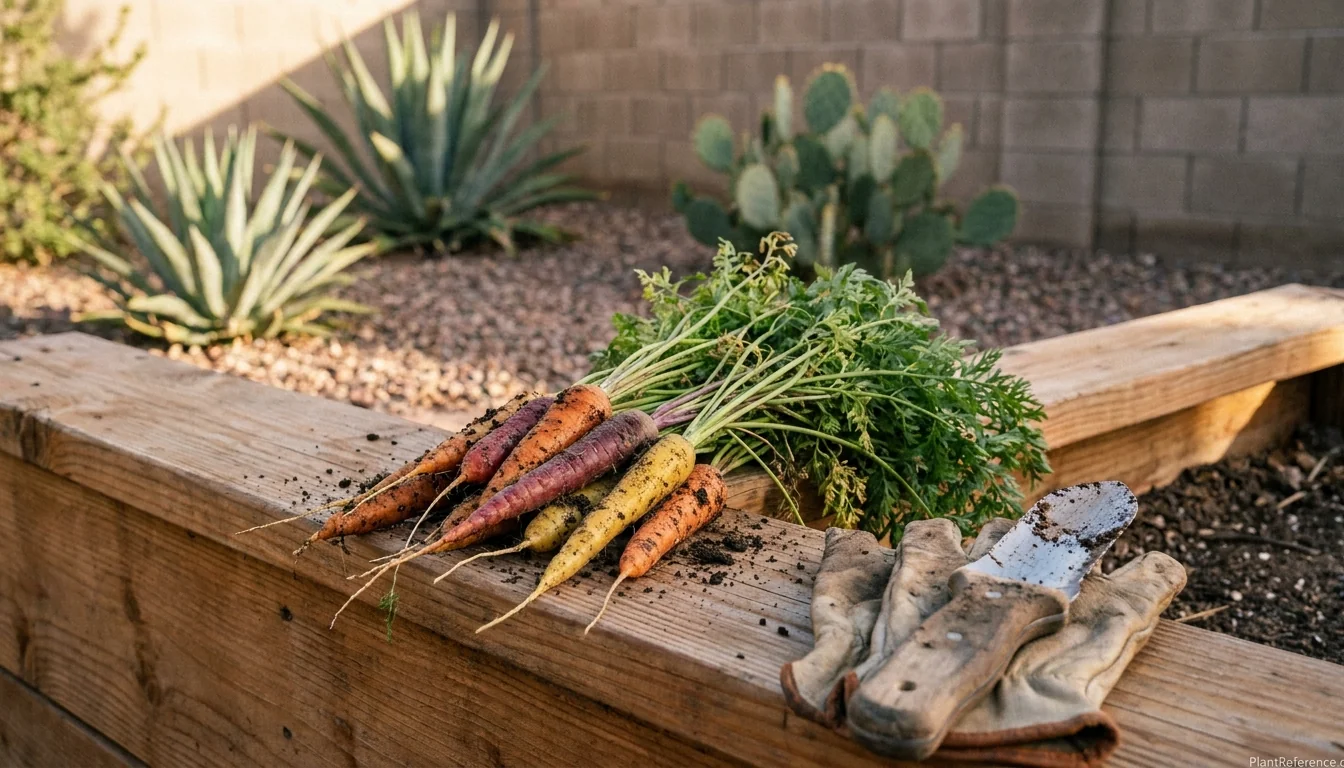
Growing carrots in Phoenix means accepting that the Sonoran Desert runs on a backwards calendar. Our Zone 9b summer—four months of 100°F-plus days—is a complete dead zone for root crops. But our cool desert winter is one of the best carrot windows in the country. Plant 🌿Daucus carota (DAW-kus kuh-ROH-tuh) from October through early February, irrigate consistently, and you'll pull sweet, crack-free roots from March through May while the rest of the country is still waiting for frost to lift.
Best Carrot Varieties for Phoenix's Zone 9b Climate
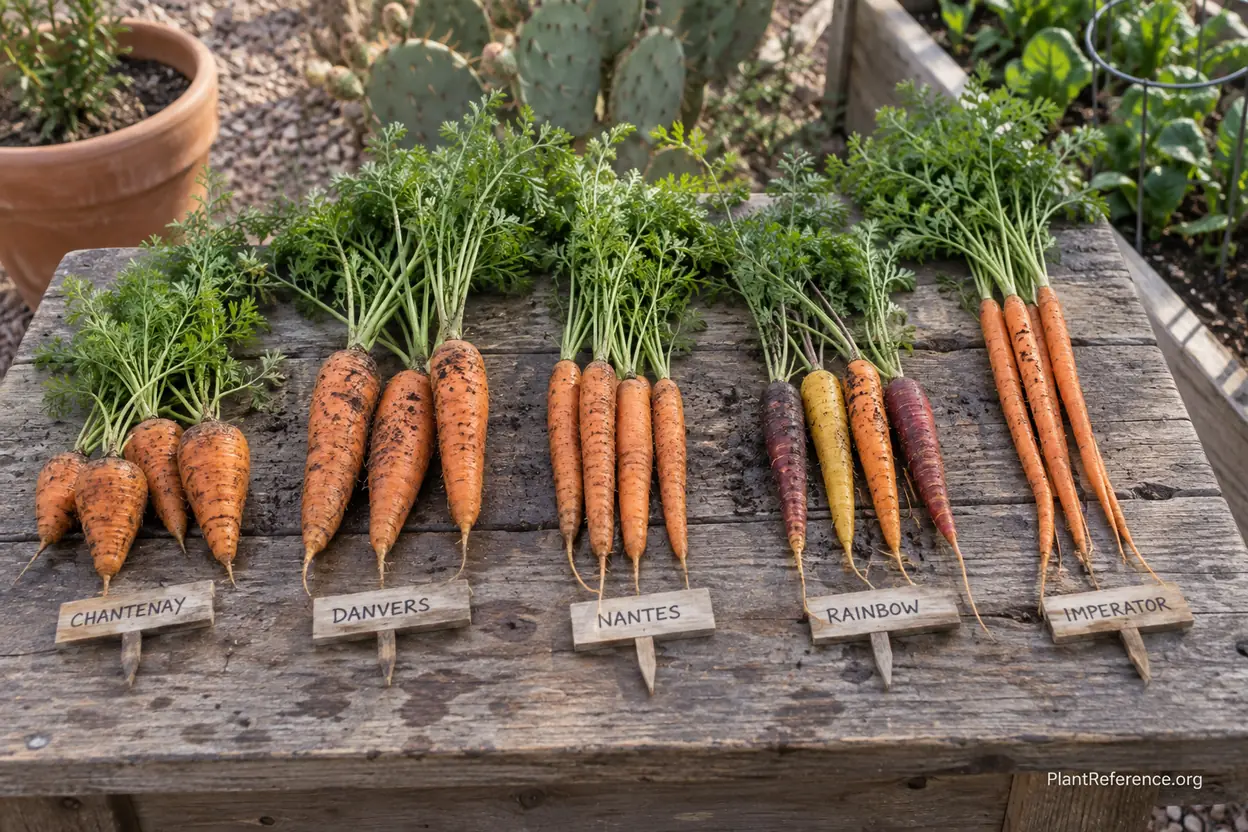
Phoenix gardeners face two specific carrot problems most growers don't: caliche-laden desert soil that fights long taproots, and a late-spring heat ramp that can push 90°F by mid-April. The right variety beats both. I steer most Phoenix clients toward shorter, stubbier Chantenay and Danvers types because they handle our soil and finish their growth before the heat hits. Long Imperator carrots can work in deeply prepared raised beds, but they're an advanced project—not where I'd start.
🌿Daucus carota 'Chantenay' is my desert default. The blunt 5-6 inch (13-15 cm) tapered roots push through Phoenix's heavy, rocky soil without forking, and the variety holds quality even when temperatures spike into the 80s in late April. At 65-75 days from sowing, a late-October planting matures cleanly in early January, leaving the bed open for a second succession.
🌿Daucus carota 'Danvers' runs slightly longer at 6-7 inches (15-18 cm) with a stronger taper that resists splitting during our occasional winter rain bursts. The 70-80 day maturity makes it well-suited to November and December sowings that harvest in February and March. The shoulders stay tender in Phoenix's mild winters, and the storage quality is excellent for households that want to harvest a whole bed at once.
🌿Daucus carota 'Nantes' is the classic sweet carrot, but in Phoenix it works best when planted October 15 through November 15 and pulled before late March. Nantes types crack faster than Chantenay when stressed by heat or irrigation swings, so they reward gardeners with consistent drip lines and afternoon shade.
🌿Daucus carota 'Rainbow' (a multi-color mix that typically includes purple, yellow, white, and orange selections) brings color to Phoenix farmers market sales and family gardens alike. The blend matures over a 70-75 day window. Yields run lower than single-variety plantings, but the visual payoff at harvest is worth it.
🌿Daucus carota 'Imperator'—the 8-10 inch (20-25 cm) supermarket-style carrot—is possible in Phoenix only with 12-18 inches (30-45 cm) of stone-free, deeply amended raised bed soil. If your bed isn't that prepared, skip it. Forked Imperators are the most common carrot failure I see in Phoenix.
Variety | Days to Maturity | Best For | Notes for Phoenix |
|---|---|---|---|
65-75 days | Heavy or rocky desert soil | Top pick for Phoenix; handles caliche and late-spring heat | |
70-80 days | Storage and big-batch harvests | Stronger taper resists splitting; great for Nov-Dec sowings | |
65-75 days | Sweetest fresh eating | Best for October-November sowings; needs consistent irrigation | |
70-75 days | Visual variety, kids' gardens | Lower yield but worth it for color; treat like Nantes | |
75-85 days | Raised beds with deeply amended soil | Only for advanced beds; forks badly in native Phoenix soil |
Specific Planting Dates for Phoenix
Phoenix's planting calendar for carrots is built around heat avoidance, not frost avoidance. Our February 15 last frost is rarely the limiting factor—summer is. Carrot seed germinates poorly above 85°F (29°C), and roots get woody and bitter when sustained air temperatures climb past 90°F (32°C). Every date below works backward from those two thresholds.
Primary Fall Sowing Window
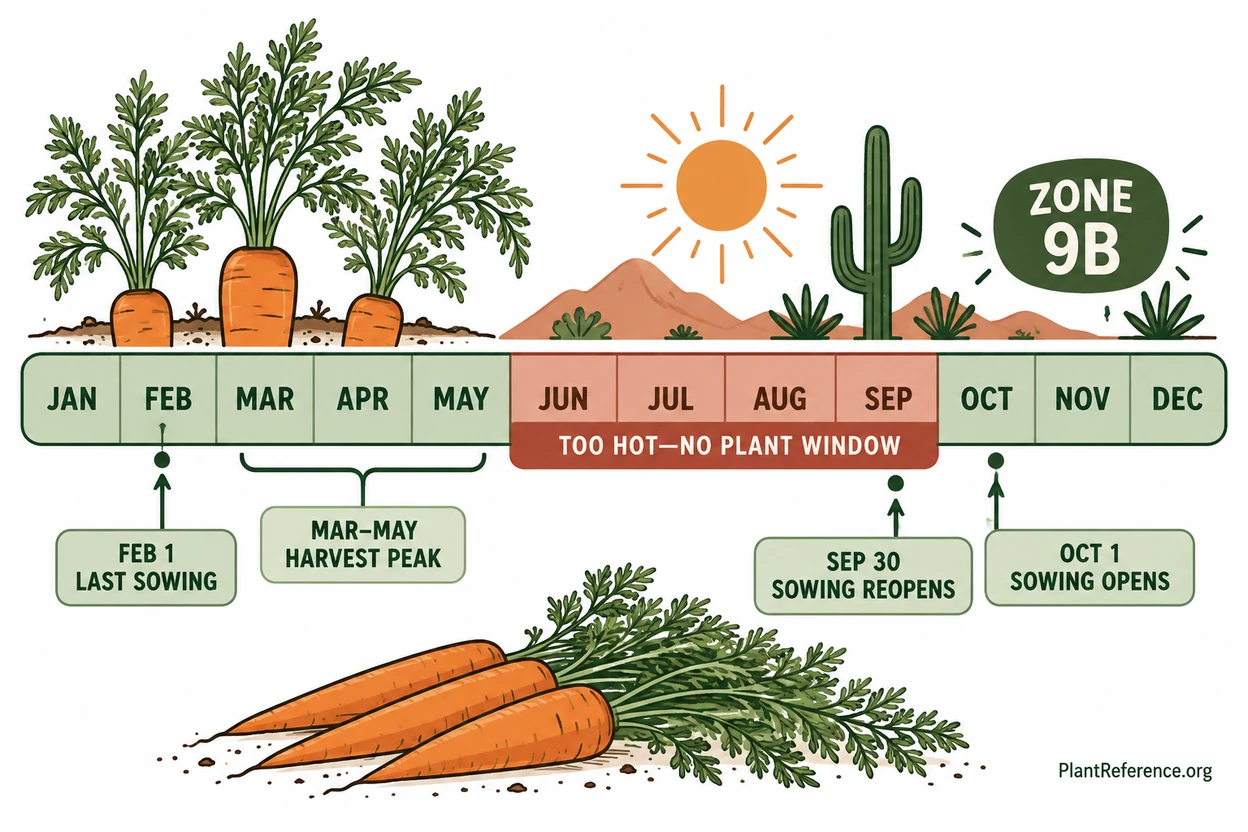
Direct sow carrots October 1 through November 30, when soil temperatures finally drop below 80°F (27°C). This is the prime Phoenix carrot window. Sowings made in this stretch germinate within 10-14 days, grow through the mild November-January period, and mature for harvest from late December through March.
Carrots are direct-sow only—their fragile taproot does not survive transplanting. Sow seeds 1/4 inch (0.6 cm) deep in rows 12-18 inches (30-45 cm) apart. Phoenix's intense sun and low humidity dry the soil surface within hours, so keep the seedbed continuously moist with light daily watering until germination. A thin layer of vermiculite or fine compost over the seed row holds moisture better than bare soil.
Late Winter Succession
Sow a second crop December 15 through February 1 for spring harvest. This succession bridges the gap between your fall planting harvest and the summer shutdown. The cool soil during this window slows germination to 14-21 days, but the trade-off is sweeter roots—the cold-driven starch-to-sugar conversion that makes winter carrots taste better still works in Phoenix's mild winter, even if our "winter" rarely sees a hard freeze.
The No-Plant Window
February 15 through September 30 is essentially off-limits for carrots in Phoenix. Sowings made in late February can still produce, but they're a race against heat that the carrots usually lose. By March, soil temperatures climb above 75°F (24°C) and germination rates plummet. Anything planted after early February runs a high risk of bolting, woody texture, or simply refusing to germinate. Save the bed for warm-season crops like When to Plant Cucumbers in Phoenix: Complete Guide + Best Varieties for Zone 9b or When to Plant Peppers in Phoenix: Zone 9b Dates + Best Varieties.
Optional Early Fall Push
Aggressive growers sometimes attempt a September 15-30 sowing under shade cloth. The catch is that surface soil in mid-September can still hit 95°F (35°C) at planting depth. If you try this, run 30-40% shade cloth over the bed and irrigate three times daily until germination. It's possible, but the October sowing is far less work.
Key Date Summary
Primary fall sowing: October 1 through November 30
Late winter succession sowing: December 15 through February 1
No-plant window: February 15 through September 30
Optional shade-cloth push: September 15-30 (advanced)
Expected first harvest: Late December through January (from October sowings)
Spring harvest peak: March through May
Complete Growing Guide for Phoenix
Site Selection and Microclimate
Carrots want full sun in most climates—but Phoenix isn't most climates. I plant carrots where they catch morning sun and afternoon shade, especially for sowings made after mid-November that will be sizing up during March and April warmup. East-facing exposures alongside a block wall, citrus tree, or shade structure are ideal. Pure south or west exposures cook the foliage by April and trigger early bolting.
If your only spot is full sun, install 30-40% shade cloth over the bed from mid-March onward. The cloth drops leaf temperature 10-15°F (5-8°C), which is the difference between a carrot that finishes properly and one that bolts before sizing up.
Soil Preparation for Caliche Country
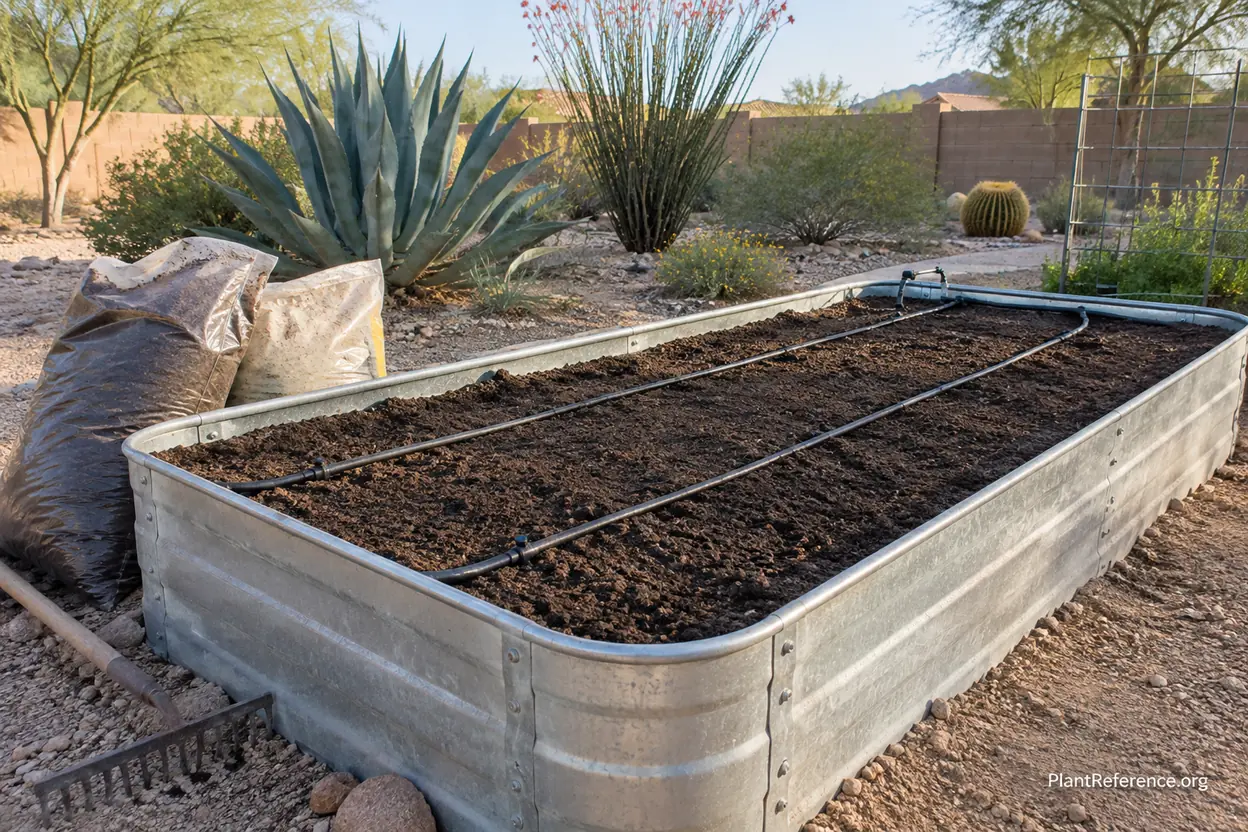
Phoenix soil is the single biggest obstacle to good carrots. Native desert soil here is alkaline (pH 7.8-8.4), low in organic matter, and frequently contains caliche—a cement-hard calcium carbonate layer that stops taproots cold. There are two paths around this:
Path one is the raised bed. Build or buy a bed at least 12 inches (30 cm) deep—18 inches (45 cm) is better for Imperator-type carrots. Fill with a 50/50 blend of high-quality topsoil and finished compost, and add 1 inch (2.5 cm) of coarse sand to improve drainage. Best Soil for Raised Beds: 6 Commercial Mixes Tested and Compared gives a head-to-head review of commercial mixes that work well for root crops. Raised Bed Soil Settling and Compaction: Prevention and Solutions addresses the compaction problem that develops over the first 18 months of a new bed.
Path two is in-ground bed preparation. Double-dig the planting area to 12 inches (30 cm), removing every rock larger than a marble. Work in 3-4 inches (7-10 cm) of finished compost and elemental sulfur (1 lb per 100 sq ft / 450 g per 9 sq m) to nudge the pH down toward the 6.0-6.8 range carrots prefer. Test annually with a soil pH meter and amend accordingly.
Watering: The Make-or-Break Variable
Carrots split, crack, and turn bitter when soil moisture swings between extremes. In Phoenix's low humidity that's an everyday risk. Run a drip irrigation line directly over the seed row with emitters every 6 inches (15 cm). During germination, plan on three short cycles per day for the first two weeks—just enough to keep the top inch from drying. Once seedlings emerge and the first true leaves form, transition to deeper, less frequent watering: 1-1.5 inches (2.5-3.8 cm) per week applied in two or three sessions.
By March, when daytime highs climb into the 80s, you'll likely need to double the irrigation frequency. Stick your finger 2 inches (5 cm) into the soil—if it feels dry, water. A 2-inch (5 cm) layer of straw or shredded mulch around (not over) the plants buffers soil moisture swings dramatically. Best Soil Mix for Raised Beds: Creating the Perfect Growing Medium covers building beds that hold moisture better in dry climates.
Thinning—The Step People Skip
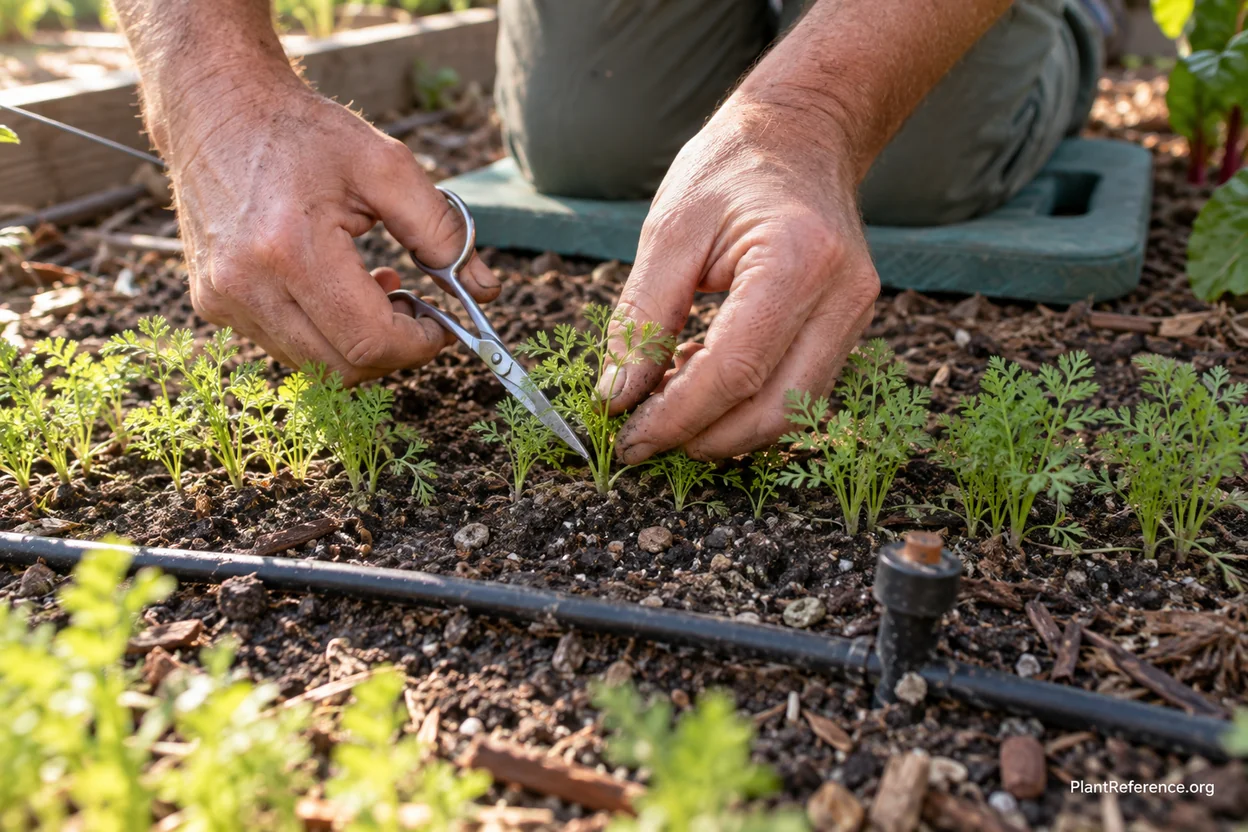
Unthinned carrots produce twisted "pencils" with no eating quality. Plan on two thinning passes:
First pass: when seedlings are 1-2 inches (2.5-5 cm) tall, thin to 1 inch (2.5 cm) spacing. Use small scissors to snip plants at soil line rather than pulling—pulling disturbs the keeper carrots' taproots.
Second pass: when tops reach 4-5 inches (10-13 cm), thin to final spacing. Chantenay and Nantes: 2-3 inches (5-7.5 cm) apart. Danvers: 3 inches (7.5 cm). Imperator: 3-4 inches (7.5-10 cm) for full length. The second-pass thinnings are gourmet baby carrots—eat them with greens still attached.
Fertilizer
Carrots are light feeders. Too much nitrogen produces hairy roots and lush tops at the expense of the carrot itself. Mix 1-2 inches (2.5-5 cm) of finished compost into the bed before sowing—that's usually enough nutrition for the whole crop. If you need supplemental feeding, side-dress with a low-nitrogen, higher-phosphorus formula (something like 3-15-15) once tops reach 6 inches (15 cm). Skip fresh manure entirely; it triggers the forking and hairiness that ruins root quality.
Troubleshooting Phoenix-Specific Problems
Forking and Stunted Roots
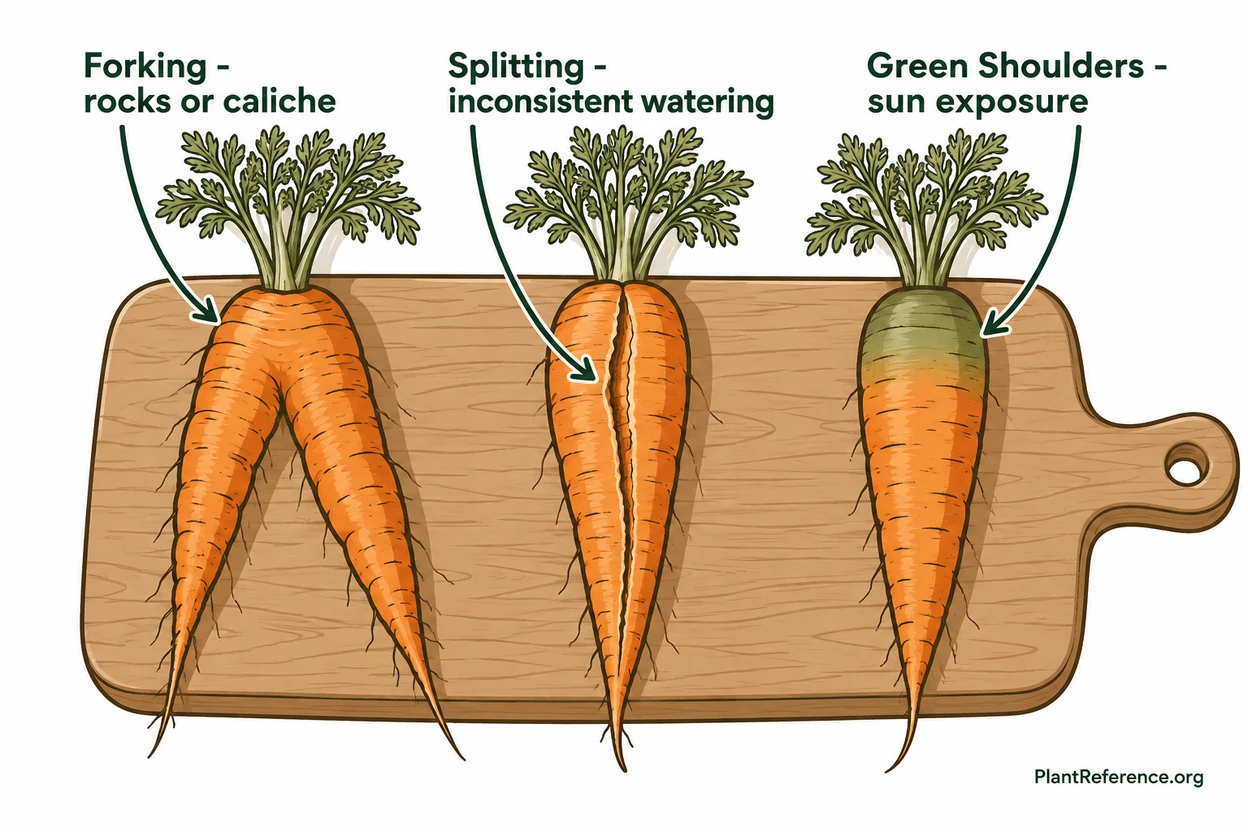
The most common Phoenix carrot failure. Forking happens when the taproot hits a rock, caliche, or unbroken clay layer. The carrot splits into two or more legs trying to navigate the obstacle. Prevention is the only fix: deeply prepared soil (12-18 inches / 30-45 cm) with all rocks removed, or use Chantenay and Danvers types that don't need depth. Avoid fresh manure—the rapid nitrogen pulse also causes branching.
Bolting Before Sizing Up
Phoenix's late-winter warm-ups can trick carrots planted in early February into thinking summer has arrived. The plant sends up a flower stalk and the root turns woody. Bolt-resistant varieties like 🌿Daucus carota 'Chantenay' handle this better than Nantes types. Cut your sowing season off by February 1 to avoid most bolting problems, and harvest promptly once roots reach mature size.
Splitting and Cracking
Splitting almost always traces back to inconsistent watering. A dry stretch followed by a deep soak causes the carrot cells to absorb water faster than the skin can stretch. Drip irrigation on a consistent schedule plus 2 inches (5 cm) of mulch solves it. If you're using overhead irrigation, switch—and water early enough that foliage dries by midday to avoid the fungal issues humidity can bring.
Alternaria Leaf Blight
Phoenix winters get occasional humid stretches, especially after monsoon-like winter storms. Alternaria shows up as dark, angular spots on leaves that eventually defoliate the tops. Without tops, the roots stop sizing up. Plant Chantenay or Danvers types for better resistance, space rows 18 inches (45 cm) apart for airflow, water at soil level rather than overhead, and remove infected foliage promptly. Nutrient Deficiencies in Raised Beds: Visual Diagnosis and Treatment covers how to distinguish disease from nutritional symptoms.
Green Shoulders
The top of a carrot turns green where it pushes above the soil and gets exposed to sunlight. Green shoulders aren't dangerous, but they're bitter. As roots size up in February and March, hill an inch (2.5 cm) of compost or mulch over the shoulders to blanch them. This also reduces sunscald damage from Phoenix's intense spring UV.
Caliche Layer Failure
If you've prepped soil to 12 inches (30 cm) and your carrots still fork at 6 inches deep, you've hit caliche. The only real solution is a raised bed with imported soil. Trying to chip through caliche by hand is slow, brutal work and rarely produces consistent results. The Complete Guide to Raised Bed Gardening for Beginners (2025) walks through the build process from scratch.
Harvest & Storage
Start checking carrots about 60 days after sowing by brushing soil away from the shoulders. Pull when 🌿Daucus carota 'Chantenay' reaches 1.5-2 inches (4-5 cm) shoulder diameter, 🌿Daucus carota 'Nantes' reaches 1-1.5 inches (2.5-4 cm), 🌿Daucus carota 'Danvers' reaches 1.5-2 inches (4-5 cm), and 🌿Daucus carota 'Imperator' reaches 0.75-1 inch (2-2.5 cm). Pulling earlier gives sweeter, more tender roots; waiting too long—especially as April temperatures climb—gives woody, bitter carrots.
In Phoenix, do not "store in the ground" the way northern growers do. By April, our soil temperature climbs above the sweetening threshold and roots actually lose quality if left in place. Once carrots size up, pull within a 10-day window.
Loosen the soil with a digging fork before pulling—jerking on the tops with a stuck root tears the foliage off and leaves you digging by hand. Cut tops to 1 inch (2.5 cm) immediately after harvest. Leaves continue transpiring water out of the root, shriveling stored carrots within days if left attached.
Wash only what you'll use within a week. For longer storage, leave soil on, place unwashed carrots in perforated plastic bags in the refrigerator crisper drawer at 32-40°F (0-4°C). They'll hold 4-6 weeks this way. For batch preservation, freezing blanched slices or canning pickled rounds both work well for Phoenix's spring harvest peak.
For a Phoenix garden plan that uses the same beds across the cool season, follow your carrot crop with warm-season vegetables. When to Plant Squash in Phoenix: Complete Guide + Best Varieties for Zone 9b and When to Plant Lettuce in Phoenix: Complete Guide + Best Varieties for Zone 9b cover what slots in next as April warms up.
Frequently Asked Questions
Reading about plants and recognising them are different skills. These three build the second.
- Daily PlantIdentify the day’s mystery plant from a close-up photograph.
- Keyed OutWork a dichotomous key, lead by lead, to name a hidden specimen.
- Name That PlantName a specimen from botanical clues dealt hardest first.
Free to play, no account needed
Tagged with
Alejandro is a landscape designer in Phoenix who focuses on low-water, desert-adapted plantings. He grew up in Tucson surrounded by Sonoran Desert plants and got frustrated watching neighbors install water-hungry lawns in a city that gets eight inches of rain a year. After earning his landscape architecture degree, he started designing residential gardens using native and desert-adapted species. Alejandro's approach is practical—he works with the climate rather than against it, using microclimates, shade structures, and efficient irrigation to create gardens that look good without draining the aquifer. He's a regular speaker at local xeriscaping workshops.