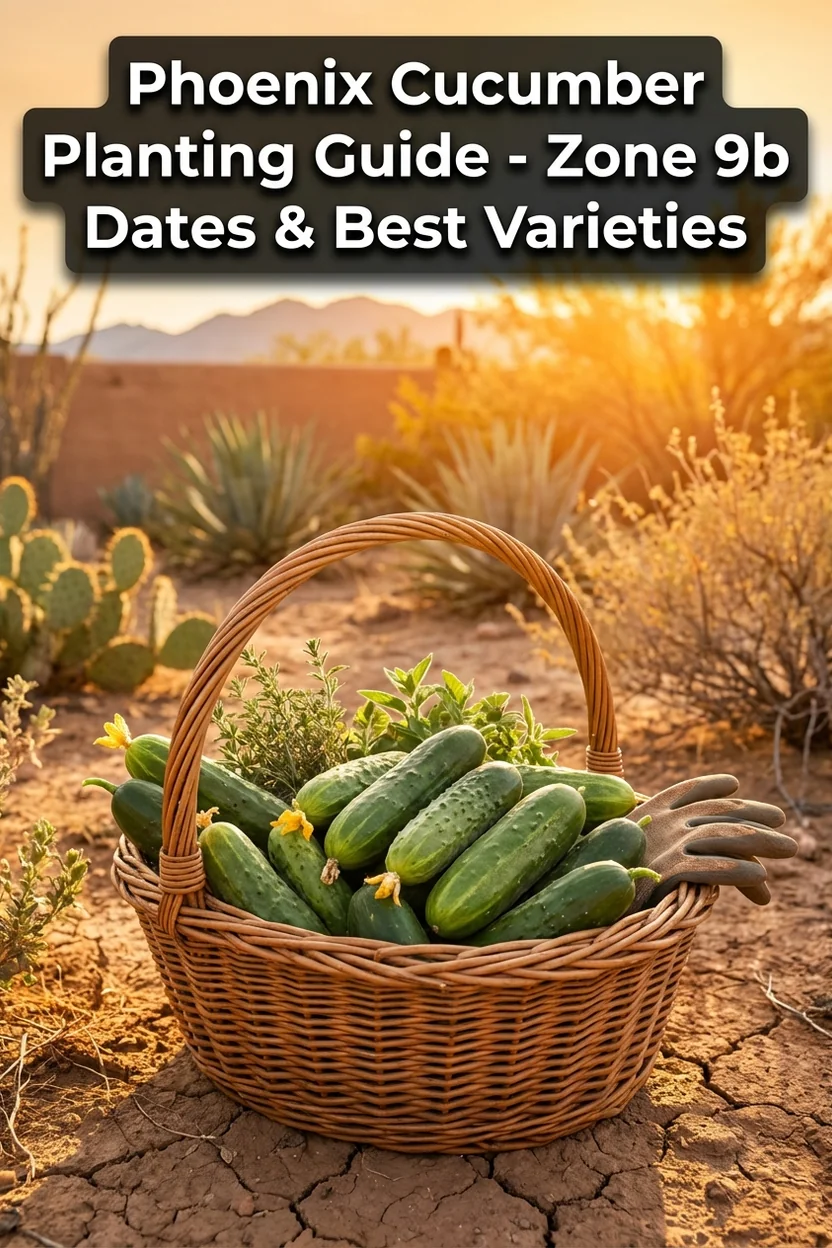
When to Plant Cucumbers in Phoenix: Complete Guide + Best Varieties for Zone 9b
Pets & Toxicity
Recorded toxicity for plants linked in this guide. An unknown status is not a safety assessment.
No linked plant is recorded as toxicDetailsHide
Cucumis sativus 'Marketmore 76' — Toxicity
Non-toxicView Cucumis sativus 'Marketmore 76' plant profileCucumis sativus 'Straight Eight' — Toxicity
Non-toxicView Cucumis sativus 'Straight Eight' plant profileCucumis sativus 'Boston Pickling' — Toxicity
Non-toxicView Cucumis sativus 'Boston Pickling' plant profile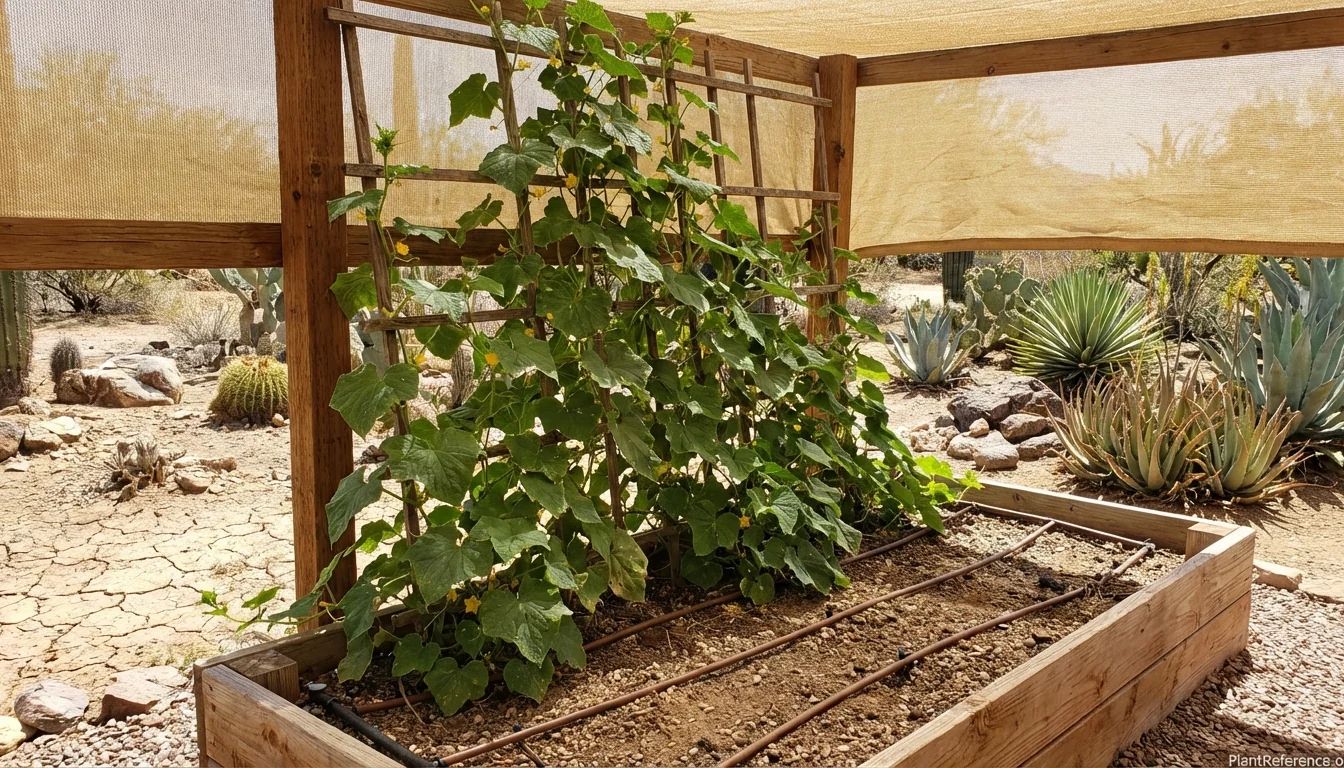
— Image © Plant Reference 2026
People think desert gardens are just gravel and cactus, but Phoenix vegetable gardens produce remarkable results when you understand the climate instead of fighting it. Cucumbers are a prime example. Our 289 frost-free days look like paradise for warm-season crops, but the reality is more nuanced—Phoenix summer heat routinely exceeds 110°F (43°C), and at those temperatures, cucumber physiology shuts down entirely. Pollen becomes sterile, vines stop flowering, and fruit that does form turns bitter from heat-induced cucurbitacin production. The practical approach is a two-season strategy: an aggressive spring crop from February through May, and a fall crop from September through November. Between those windows, you let the Sonoran Desert do what it does and plan accordingly. Smart shade placement, drip irrigation, and varieties bred for arid heat make Phoenix cucumber growing not just possible but genuinely productive during those two windows. When to Plant Tomatoes in Phoenix: Complete Guide + Best Varieties for Zone 9b
Best Cucumber Varieties for Phoenix's Climate
Phoenix sits in USDA Zone 9b with a February 15 last frost and December 1 first frost—289 days. But effective cucumber production splits into spring (February-May) and fall (September-November) with extreme summer heat creating a mandatory mid-season gap. Research confirms that temperatures consistently exceeding 90°F induce significant physiological stress including pollen sterility and cucurbitacin-driven bitterness. In Phoenix, that threshold is exceeded daily from June through September. Variety selection prioritizes heat tolerance, drought resilience, and the ability to produce quickly during our compressed windows.
Variety | Type | Days to Harvest | Disease Resistance | Best For |
|---|---|---|---|---|
🌿Cucumis sativus 'Persian' (Beit Alpha) | Specialty | 55 days | Moderate (PM) | #1 for Phoenix—bred for hot arid climates |
Specialty | 65 days | Moderate (Rust, drought tolerant) | Superior drought and heat tolerance | |
Slicing | 65 days | High (Scab, CMV, moderate DM/PM) | Heavy foliage provides essential self-shading | |
Pickling | 55 days | Low-Moderate | Fast harvest in compressed windows | |
Slicing | 63 days | Low (CMV tolerance only) | Not recommended for Phoenix | |
🌿Cucumis sativus 'Persian' (fall crop) | Specialty | 55 days | Moderate | September planting for fall harvest |
🌿Cucumis sativus 'Persian' is the clear #1 variety for Phoenix. The Beit Alpha strains were bred for hot, arid Mediterranean climates that closely match our conditions. At 55 days, they maximize production within our compressed spring and fall windows. Parthenocarpic fruit set bypasses the pollination failure that defeats standard varieties when temperatures exceed 90°F. Consistent irrigation prevents the rapid thin-skin dehydration that our dry desert air causes. Research confirms that Persian types thrive in Zone 9-10 conditions with adequate water.
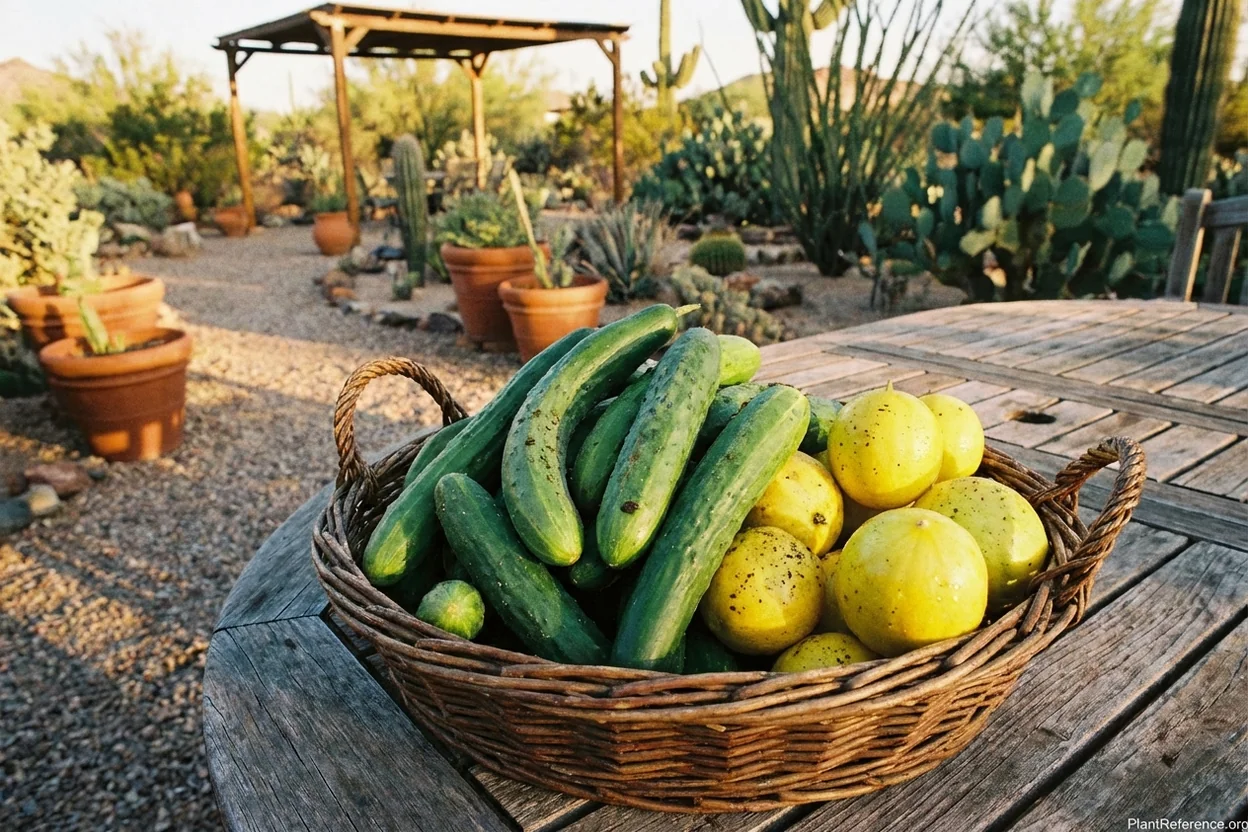
🌿Cucumis sativus 'Lemon' demonstrates superior drought tolerance and heat resistance compared to other varieties—traits from ancestral arid-environment genetics. When Phoenix temperatures push 105°F+ and irrigation schedules tighten, 🌿Cucumis sativus 'Lemon' continues producing where other varieties collapse. The round yellow fruit handles sun exposure better than elongated slicers.
🌿Cucumis sativus 'Marketmore 76' works in Phoenix only with shade cloth protection because its heavy foliage provides essential self-shading for fruit. Without adequate foliage cover, sunscald destroys fruit in our extreme UV. The "stay-green" gene maintains canopy density—critical when that canopy is the only thing between fruit and 115°F direct sun.
🌿Cucumis sativus 'Straight Eight' is not recommended for Phoenix. It produces bitter fruit rapidly above 90°F, lacks drought tolerance, and has inadequate foliage for self-shading. Research confirms its rapid quality decline in extreme heat compared to adapted varieties. When to Plant Peppers in Phoenix: Complete Guide + Best Varieties for Zone 9b
Specific Planting Dates for Phoenix Gardens
Phoenix's February 15 last frost and December 1 first frost give you 289 days—but only about 140-160 of those are cucumber-productive. The spring and fall windows are your entire season.
Spring Direct Sow: February 15-March 15. Phoenix soil reaches 60°F (16°C) by mid-February. This early planting window is the advantage of desert gardening—while Northern cities wait until May, Phoenix cucumbers are already in the ground. Direct sowing works well because our warm, dry soils germinate seeds in 3-4 days.
Spring Transplants: For even earlier production, start indoors January 20-February 5 and transplant February 20-March 1. This gains 2-3 weeks and maximizes the spring harvest window before heat shuts production down.
Spring Production Window: April through late May. This is your primary harvest. Once daytime temperatures consistently exceed 105°F (41°C) in June, fruit quality drops rapidly. Harvest everything aggressively through May.
Summer Shutdown: June through mid-August. Temperatures regularly exceed 110°F (43°C). No variety produces quality fruit in these conditions. Don't waste water trying. Remove spent spring vines, rest the soil, and prepare beds for fall planting.
Fall Planting: August 15-September 15. Start seeds indoors or direct sow into pre-moistened soil under 50% shade cloth. Soil temperatures are extremely high in August—water thoroughly before and after sowing. Transplants handle the transition better than seeds in residual August heat.
Fall Production Window: Late September through November. As temperatures moderate below 100°F, then 90°F, cucumbers enter their best production period. October in Phoenix delivers the ideal 80-90°F days that cucumbers prefer—better conditions than most of the country provides at any time of year.
Final Sowing Deadline: September 15. A 55-day 🌿Cucumis sativus 'Persian' planted September 15 matures by early November with a month of harvest before the December 1 frost. Raised Bed Vegetable Garden Layout: Planning for Maximum Production
Complete Growing Guide for Phoenix
Shade Cloth: The Non-Negotiable Element
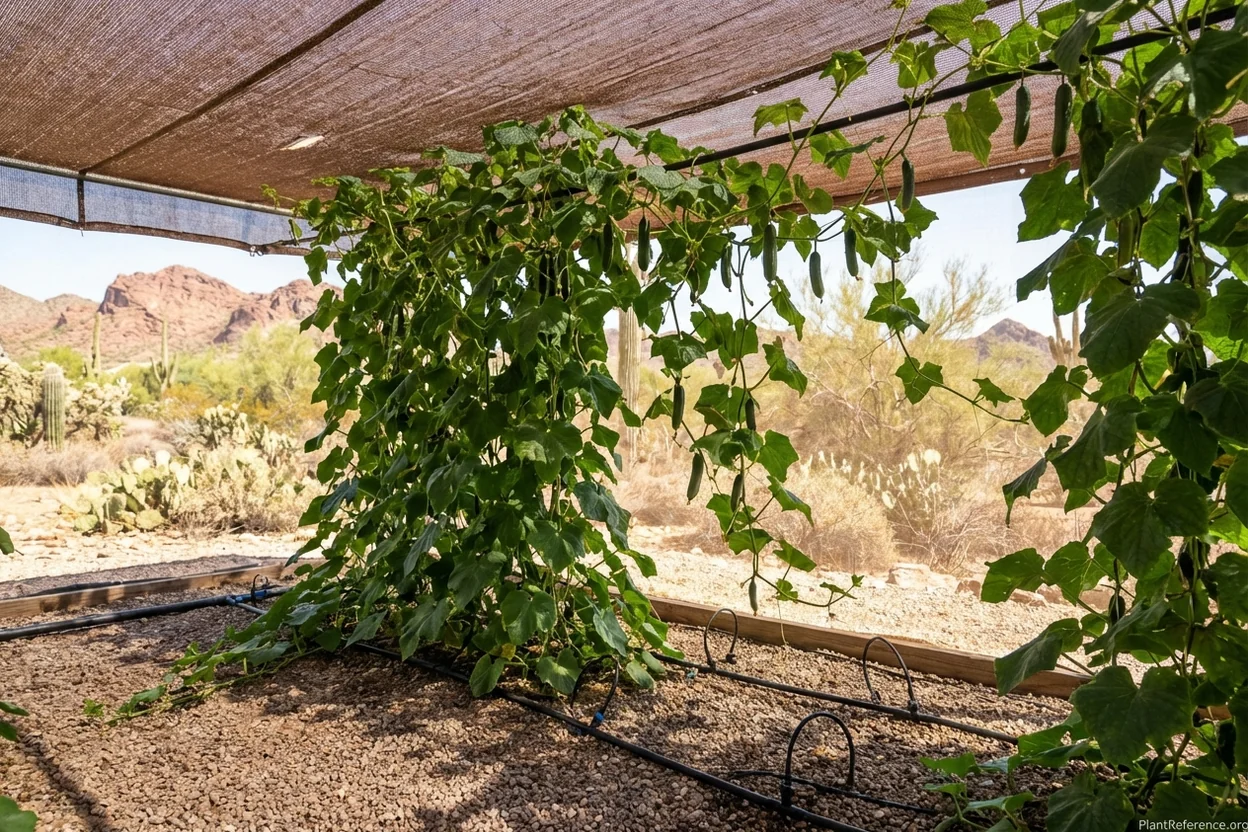
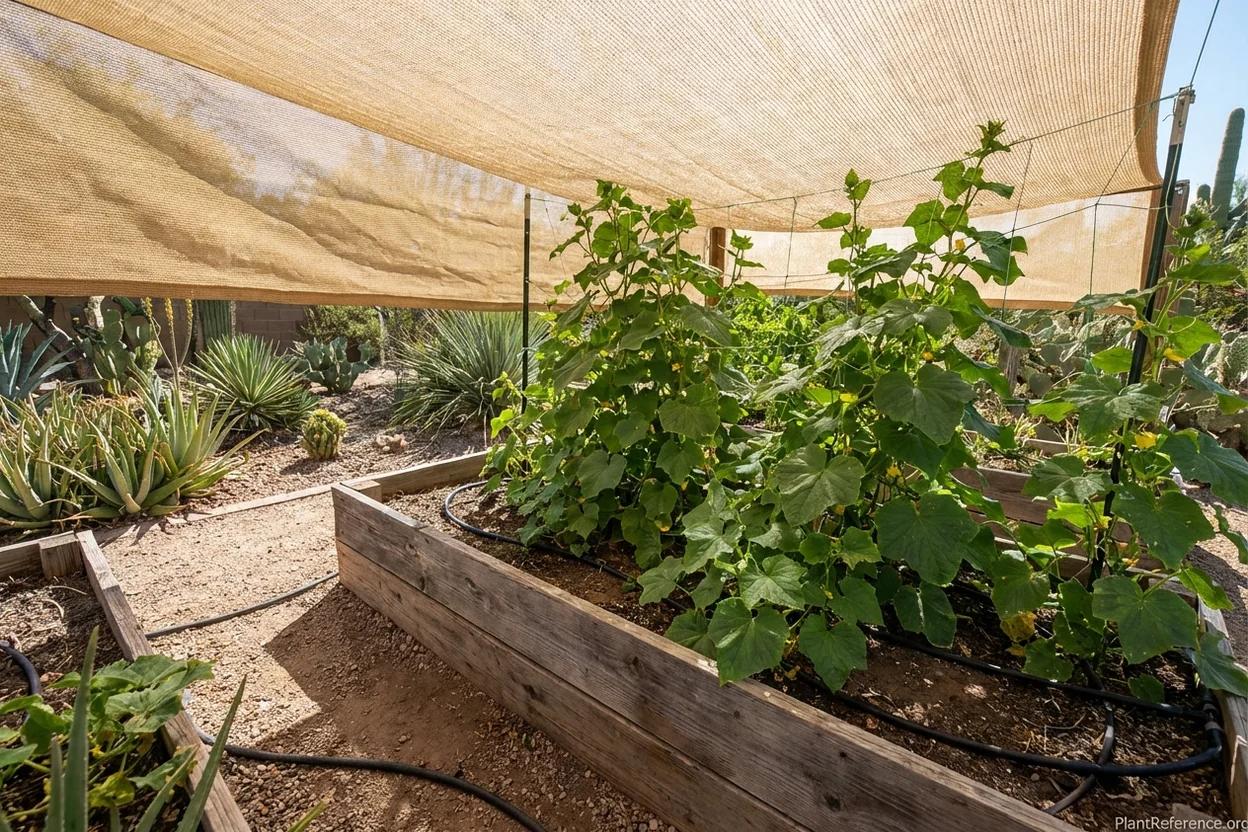
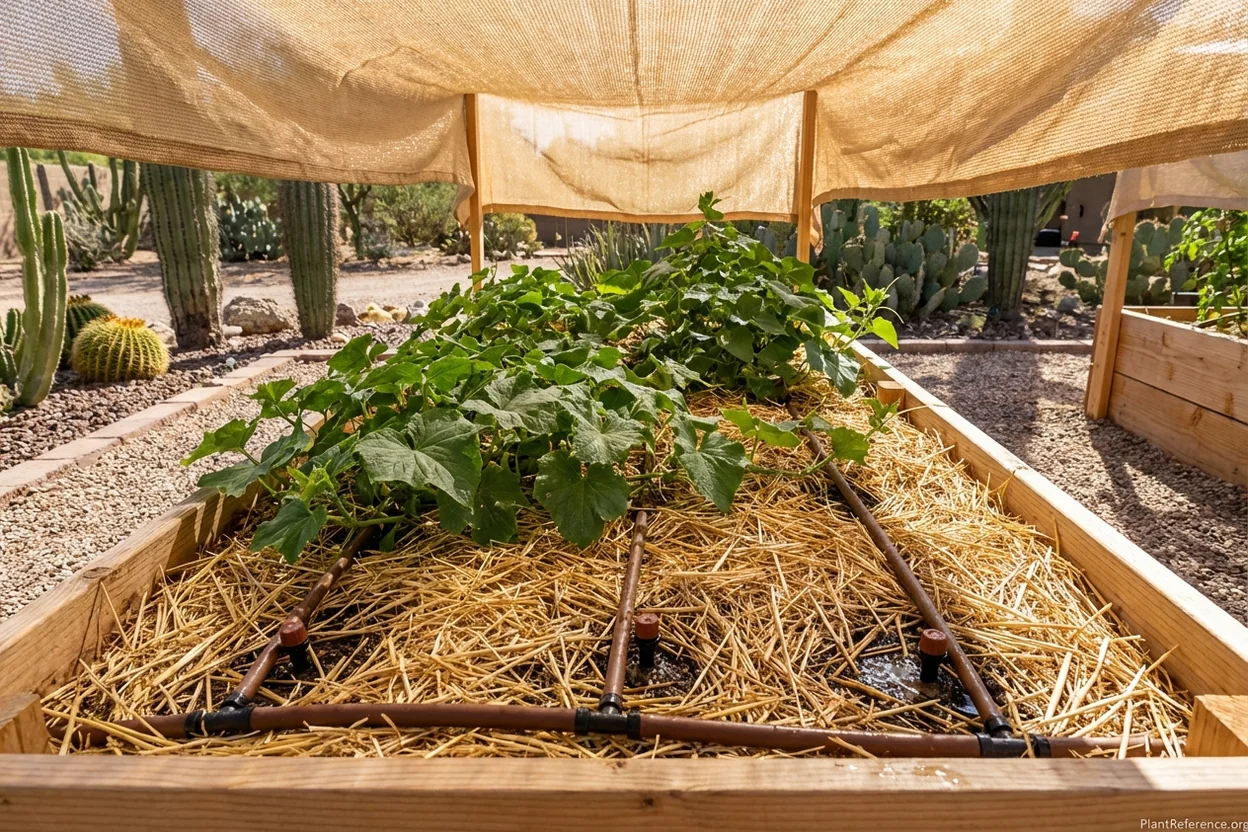
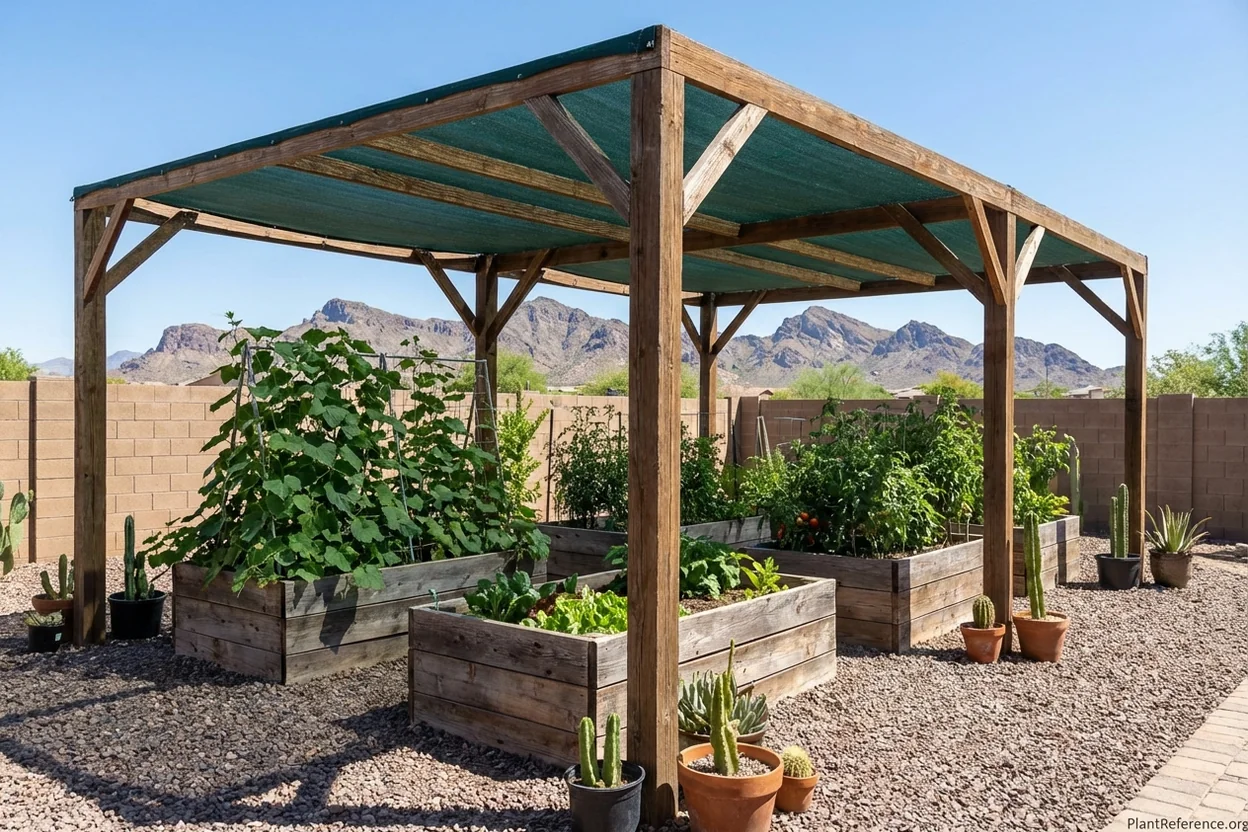
Shade cloth (30-50% density) is mandatory for Phoenix cucumber growing—not a suggestion, not a nice-to-have, mandatory. Research confirms it is practically mandatory for mid-summer survival in the arid Southwest. It reduces leaf surface temperature by 10-15°F, prevents sunscald on fruit from our extreme UV, and reduces water demand by 20-30% through decreased transpiration. Use 30% shade cloth over spring crops from mid-March through May. Use 50% shade cloth over fall transplants in August and September until temperatures moderate in October. Build a permanent shade structure over your vegetable beds—you'll use it for every warm-season crop, not just cucumbers. 5 Best Drip Irrigation Kits for Raised Beds (Tested for Easy Installation)
Irrigation: Every Drop Counts
Phoenix averages 8 inches (20 cm) of annual rainfall—less than almost any other major US city. Cucumbers need 1.5 to 2 inches (4-5 cm) weekly in our heat, and every bit comes from irrigation. Drip irrigation on a timer is the only responsible approach. Water twice daily during peak heat—early morning and early evening—to maintain consistent soil moisture that buffers root zone temperature. Overhead watering wastes 40-60% to evaporation in our extreme dry heat and is unconscionable in a desert city.
Mulch 4 inches (10 cm) with straw or shredded bark. In Phoenix, unmulched soil surface temperatures can exceed 160°F (71°C)—hot enough to kill surface roots and cook fruit resting on the ground. Mulch is literally a survival tool for cucumber roots in desert conditions. How to Build a Raised Garden Bed: Step-by-Step Construction Guide
Soil and Alkalinity
Phoenix soils are alkaline caliche-based clay (pH 7.5-9.0) with poor organic matter content. Cucumbers prefer 6.0-6.8. Raised beds are essentially required—filling with 60% topsoil, 30% compost, and 10% perlite or expanded shale bypasses both alkalinity and the concrete-like native soil. Apply chelated iron preventatively because alkaline conditions lock up micronutrients at the root zone. The Maricopa County Cooperative Extension provides soil testing through the University of Arizona.
Trellising
Trellis under shade cloth for maximum protection. A 6-foot (1.8 m) trellis oriented east-west provides morning sun exposure while the shade cloth filters the brutal afternoon sun from the south and west. Trellised cucumbers stay cooler because they're elevated above the ground-level heat that radiates from desert soil. Fruit hanging in shaded air is 15-20°F cooler than fruit resting on exposed ground. When to Plant Squash in Phoenix: Complete Guide + Best Varieties for Zone 9b
Feeding
Side-dress with balanced fertilizer at flowering and every two weeks during production. Fish emulsion provides balanced nutrition without salt buildup. Apply chelated iron and zinc every 2-3 weeks—micronutrient lockout from extreme alkalinity is persistent in Phoenix. Avoid synthetic fertilizers that add salts to already-saline irrigation water. Many Phoenix homes receive Colorado River water with naturally high mineral content, and salt accumulation in garden soils is a real long-term concern.
Pollination
Standard varieties face severe pollination challenges in Phoenix. Temperatures above 90°F cause pollen sterility, and above 100°F pollinators dramatically reduce activity—retreating to shade during the hottest 6-8 hours of the day. 🌿Cucumis sativus 'Persian' parthenocarpic types bypass this entirely and are the primary reason they're the top variety recommendation for Phoenix. For standard varieties, hand-pollinate before 8 AM when temperatures are coolest and pollen is most viable. When to Plant Kale in Phoenix: Complete Guide + Best Varieties for Zone 9b
Troubleshooting Phoenix-Specific Problems
Extreme Heat and Production Shutdown
The defining reality of Phoenix cucumber growing. Temperatures above 110°F (43°C) cause complete vine shutdown—no flowering, no fruit set, no growth. Even with shade cloth and aggressive watering, June through mid-August is a dead zone for cucumber production. Don't fight this. Plan for the two-season approach and accept the summer gap. Shade cloth extends the spring window by 2-3 weeks and advances the fall window by the same amount, but it cannot overcome sustained 115°F+ conditions. Raised Bed Too Hot in Summer: Protecting Plants from Heat Stress
Sunscald
Exposed cucumber fruit develops severe white, papery sunscald patches within hours of direct Phoenix sun exposure. Prevention: 30-50% shade cloth over all plantings, varieties with heavy foliage for self-shading, and trellising so fruit hangs in shade. 🌿Cucumis sativus 'Marketmore 76' provides the best self-shading canopy. Never grow cucumbers in Phoenix without shade cloth overhead.
Spider Mites
Phoenix's hot, dry, dusty conditions are the ideal environment for spider mite populations. Stippled, bronzed leaves with fine webbing indicate infestation. Brief overhead misting disrupts mites. Neem oil every 7-10 days provides preventative control. Heavy infestations thin the canopy that provides essential fruit shading—address mite problems aggressively to preserve the foliage your cucumbers depend on for shade protection. Raised Bed Pest Problems: Identification and Organic Control Methods
Caliche and Alkaline Soil
Phoenix's caliche layer is essentially concrete—you cannot dig through it. Raised beds are the only practical approach for vegetable gardening. Fill with controlled soil mix and manage pH with elemental sulfur amendments. Apply chelated iron every 2-3 weeks preventatively. Our alkaline irrigation water compounds soil pH over time, so regular monitoring and amendment are ongoing requirements, not one-time fixes. Best Soil Mix for Raised Beds: Creating the Perfect Growing Medium
Harvest & Storage
Harvest slicing cucumbers at 6-8 inches (15-20 cm) and pickling types at 2-4 inches (5-10 cm). During spring production, check vines daily—Phoenix heat drives rapid fruit development and cucumbers can go from ideal to overripe in 24-36 hours. During the fall window, every 2 days is sufficient as moderate temperatures produce more controlled growth.
Harvest before 7 AM—fruit picked in Phoenix afternoon heat wilts within minutes and stores poorly. Cut with pruners rather than pulling. A healthy 🌿Cucumis sativus 'Persian' plant produces 12-18 snacking cucumbers per season window; 🌿Cucumis sativus 'Marketmore 76' yields 8-12 slicers. With both spring and fall plantings, total annual yield per garden bed reaches 30-50 cucumbers—respectable production from a desert garden.
Fresh cucumbers store 7-10 days refrigerated in a towel inside a loose bag. Phoenix-grown cucumbers from the fall window develop outstanding flavor because October's 80-85°F daytime temperatures are the ideal range for 🌿Cucumis sativus 'Straight Eight' metabolism. The dry air produces clean, concentrated flavor without the bitterness that humidity or water stress creates elsewhere. Fall Phoenix cucumbers are some of the best-tasting in the country. The Complete Guide to Raised Bed Gardening for Beginners (2025)
Frequently Asked Questions
Reading about plants and recognising them are different skills. These three build the second.
- Daily PlantIdentify the day’s mystery plant from a close-up photograph.
- Keyed OutWork a dichotomous key, lead by lead, to name a hidden specimen.
- Name That PlantName a specimen from botanical clues dealt hardest first.
Free to play, no account needed
Alejandro is a landscape designer in Phoenix who focuses on low-water, desert-adapted plantings. He grew up in Tucson surrounded by Sonoran Desert plants and got frustrated watching neighbors install water-hungry lawns in a city that gets eight inches of rain a year. After earning his landscape architecture degree, he started designing residential gardens using native and desert-adapted species. Alejandro's approach is practical—he works with the climate rather than against it, using microclimates, shade structures, and efficient irrigation to create gardens that look good without draining the aquifer. He's a regular speaker at local xeriscaping workshops.