Image 1 of 10
1 / 10
© The original uploader was Monocromatico at Portuguese Wikipedia ., some rights reserved (CC-BY-SA) · Wikimedia Commons
Capsicum, Genus, annuum, Species,
- Genus & species
Pepper
Overview
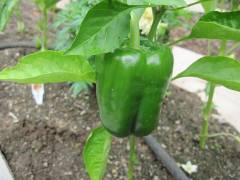
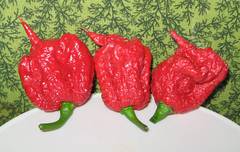
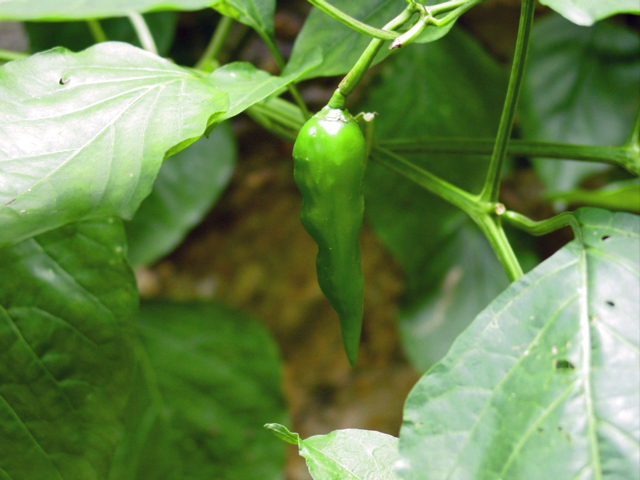
Capsicum annuum is a tender perennial in the nightshade family grown as a warm-season annual, forming a branched subshrub 18-36 inches (45-90 cm) tall with a woody base and brittle green upper stems. Leaves are alternate, ovate to lanceolate, 2-5 inches (5-13 cm) long, hairless and entire-margined. Flowers are borne singly at the nodes, 0.4-0.8 inch (10-20 mm) across, with five white to greenish-white petals and blue-purple anthers; they are self-fertile and set fruit without insect visits, though vibration raises the rate of set. The fruit is a hollow berry ranging from 0.5 inch (1.3 cm) in ornamental types to 8 inches (20 cm) in bell types, ripening from green through yellow, orange, red or brown. Pungency comes from capsaicinoids concentrated in the placental tissue and ranges from 0 Scoville heat units in sweet bells to over 100,000 in cayenne selections, so a single botanical name covers the whole range. Fruit set stalls above 90F (32C) day temperatures and below 60F (16C) night temperatures, which opens a flowering gap during midsummer heat. Stems snap under a heavy fruit load, and the shallow root system dries out within a day in small containers.
Native Range
Capsicum annuum was domesticated in Mexico and Central America, with archaeological remains from Tehuacan valley deposits dated to roughly 6,000 years ago. Wild bird pepper populations treated as Capsicum annuum var. glabriusculum range from the southwestern United States through Mexico into northern South America. The species reached Europe, Africa and Asia within decades of 1493 and is now grown throughout the tropics and warm temperate zones.Suggested Uses
Grown in vegetable beds, raised beds and containers of 3-5 gallons (11-19 litres) at 18 inch (45 cm) spacing. Compact ornamental selections 8-12 inches (20-30 cm) tall are used in bed edging and window boxes, where upright red, orange and purple fruit persists for 6-8 weeks. Fruit is taken fresh, dried and ground, or fermented, according to cultivar pungency.How to Identify
Appearance
Size & Dimensions
Height1'6" - 3'
Width/Spread1' - 2'
Bloom Information
Flowering begins 45-70 days after transplanting and continues until frost, peaking in June and again in September in temperate gardens. Individual flowers open for 2-3 days and self-pollinate, with fruit visible 5-10 days after petal fall. Flower drop follows day temperatures above 90F (32C), night temperatures below 60F (16C), or heavy nitrogen feeding. Fruit ripens from green to its finished colour over 3-4 weeks once full size is reached.
Detailed Descriptions
Flower Description
white to greenish-white with blue-purple anthersFoliage Description
medium to dark green, purple-flushed in some cultivarsGrowing Conditions
Sun Requirements
Requires 6-10 hours of direct sunlight daily
• Full Sun: 6+ hours of direct sunlight
• Partial Shade: 3-6 hours of direct sunlight
• Full Shade: Less than 3 hours of direct sunlight
Water & Climate
Water Needs
Care & Maintenance
Care Guide
Grows in full sun with 6-8 hours of direct light in free-draining soil at pH 6.0-6.8. Seed is started indoors 8-10 weeks before the last frost over 80-85F (27-29C) soil, then transplanted once night temperatures hold above 55F (13C), at 18 inch (45 cm) spacing. Water use runs 1-1.5 inches (25-40 mm) per week applied evenly, since fluctuating soil moisture triggers blossom end rot on the fruit shoulder. Nitrogen is held near 0.5 lb per 100 sq ft (0.25 kg per 9 sq m) before flowering, with phosphorus and potassium raised once fruit sets; surplus nitrogen yields leafy plants carrying few fruit. Aphids, thrips and pepper weevil feed on the crop, and bacterial leaf spot caused by Xanthomonas species spreads in warm wet weather. Containers hold the crop when filled with 3-5 gallons (11-19 litres) of medium, as smaller pots dry within a day in summer heat.Pruning
Pinching out the first flower bud at transplanting delays the first fruit by 7-10 days and raises branch count. Leaves and shoots below the first stem fork are sometimes removed to open air movement at the base. Plants overwintered under frost-free cover are cut back to 6-8 inches (15-20 cm) in late winter, after which new shoots break from the remaining nodes.Pruning Schedule
Prune: May–June
late spring
Container Growing
Suitable for container growing
Minimum container size: 3 gallons