Capsicum, Genus, chinense, Species, 'Carolina Reaper', Cultivar,
- Genus & species
- Cultivar
Carolina reaper
Species native to the Amazon basin of South America (Peru, Bolivia, Brazil) with archaeological cultivation evidence over 4,000 years old; 'Carolina Reaper' cultivar developed by Ed Currie of PuckerButt Pepper Company in Rock Hill, South Carolina and first publicly released in 2013; commercially grown across southern United States, Mexico, and warm-summer regions of Europe and Asia
Overview
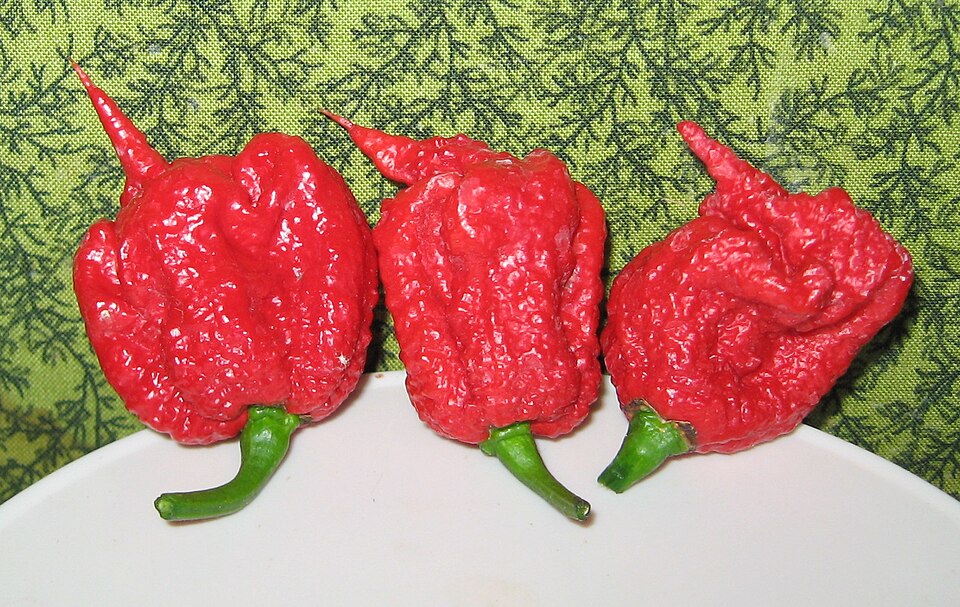
Capsicum chinense 'Carolina Reaper' is a warm-season annual fruiting subshrub in the nightshade family (Solanaceae) reaching 3–4 feet (90–120 cm) tall and 2–3 feet (60–90 cm) wide in an upright bushy branching habit. The cultivar held the Guinness World Record for the hottest pepper from 2013 to 2023, registering 1.6–2.2 million Scoville Heat Units (with verified individual fruits exceeding 2.2 million SHU); the record was surpassed in 2023 by 'Pepper X' (also bred by the same breeder, Ed Currie of PuckerButt Pepper Company in Rock Hill, South Carolina). Plants produce small fruits 1–2 inches (2.5–5 cm) long with a wrinkled bumpy red surface and a pointed scorpion-like tail at the blossom end — the tail is the diagnostic morphological feature of the cultivar and the source of the 'Reaper' name. Fruits ripen from green to bright red, occasionally to chocolate brown depending on growing conditions and selection lines. Foliage is dark green slightly wrinkled oval-pointed; flowers are small white with purple anthers. The extreme heat derives from very high concentrations of capsaicin and related capsaicinoids, concentrated in the placental tissue and seeds. Days to first ripe fruit run 120–150 from transplant — a longer growing season than 'Habanero' (90–120 days) or 'Fish' (75–90 days), and the cultivar runs unsuitable for short-season climates without season extension. Plant parts including foliage and unripe fruits contain solanine alkaloids; toxic to pets if ingested. Mature fruit capsaicin levels can cause severe burning sensations to skin, eyes, and mucous membranes, and the cultivar is unsuitable for handling without nitrile gloves and eye protection.
Native Range
The species Capsicum chinense originated in the Amazon basin of South America (Peru, Bolivia, Brazil), with archaeological cultivation evidence going back over 4,000 years across the indigenous communities of the western Amazon. The 'Carolina Reaper' cultivar was developed by Ed Currie of PuckerButt Pepper Company in Rock Hill, South Carolina through approximately 10 years of selective breeding crossing a Pakistani naga pepper with a Saint Vincent Caribbean habanero ancestor, and was first publicly released in 2013. The cultivar is grown commercially across the southern United States, Mexico, and warm-summer regions of Europe and Asia for hot sauce production, specialty culinary applications, and competitive eating events.Suggested Uses
Grown in vegetable gardens, raised beds, large container plantings (5+ gallon containers with stake or cage support), and greenhouse cultivation for hot sauce production (the cultivar is the principal capsaicin source for many specialty superhot hot sauces), capsaicin extraction for pharmaceutical and self-defense applications, competitive pepper-eating events, and specialty culinary applications. The extreme heat level (1.6–2.2 million SHU, 100–500 times the heat of jalapeño at 2,500–8,000 SHU) makes the cultivar unsuitable for general culinary use; it is grown for specific extreme-heat applications rather than for everyday cooking. The cultivar is unsuitable for households with young children or pets due to capsaicin contact hazard from handling fresh or dried fruits. Nitrile gloves and eye protection are sensible work attire when handling fresh fruits, dried fruits, or processing the fruits into hot sauce or other concentrated products. The 2013–2023 Guinness World Record holder status makes the cultivar a teaching example in horticultural breeding and in capsaicin biochemistry curricula. Cool-summer maritime climates and short-season continental climates rule out outdoor cultivation; greenhouse or polytunnel cultivation extends the growing season enough to ripen fruits in those climates.How to Identify
Appearance
Size & Dimensions
Height3' - 4'
Width/Spread2' - 3'
Bloom Information
Small white flowers 0.4 inch (10 mm) across with purple anthers appear continuously from midsummer through the first hard frost — typically July through October in temperate continental climates with adequate growing-season heat. The cultivar is self-pollinating; small bees, pollen wasps, and gentle physical disturbance improve fruit set when pollinator activity runs low. Fruit production runs continuous across the growing season once the first flowers set fruit, with ripening fruits at all color stages on the plant simultaneously after the first 8–10 weeks of fruit development.
Detailed Descriptions
Flower Description
White; small 0.4 inch (10 mm) across with purple anthers; midsummer through first hard frostFoliage Description
Dark green; slightly wrinkled oval-pointed leaves on green stemsGrowing Conditions
Sun Requirements
Requires 8-12 hours of direct sunlight daily
• Full Sun: 6+ hours of direct sunlight
• Partial Shade: 3-6 hours of direct sunlight
• Full Shade: Less than 3 hours of direct sunlight
Care & Maintenance
Care Guide
Start seed indoors 10–12 weeks before the last frost date in cell trays at soil temperatures of 80–90°F (27–32°C) for germination — C. chinense cultivars require warmer germination temperatures than C. annuum and germinate slowly (14–28 days) even at the recommended soil temperature. Bottom heat from a seedling heat mat is the practical method for maintaining the required soil temperature in cool indoor conditions. Transplant outdoors 2–3 weeks after the last frost date when night air temperatures stay above 60°F (16°C) and soil temperatures reach 70°F (21°C). Grow in full sun with 8 or more hours of direct light in well-drained loamy soil at pH 6.0–7.0. The cultivar runs heat-demanding and benefits from black plastic mulch in cooler-summer continental climates. Maintain consistent moisture during fruit set; reduce watering as fruits ripen to concentrate capsaicin in the developing fruits — drought stress in the final 2–3 weeks of ripening increases heat level. Apply balanced fertilizer (10-10-10) every 2–3 weeks during vegetative growth, then switch to lower-nitrogen higher-phosphorus fertilizer when flowering begins to encourage fruit set rather than excessive vegetative growth. Days to first ripe fruit run 120–150 from transplant. Stake or cage plants when fruit load increases — the small-fruited but numerous-fruited stems can break under the cumulative weight of 50+ fruits per plant. The cultivar is unsuitable for cool-summer maritime climates and short-season continental climates without polytunnel or greenhouse cultivation.Pruning
Pinch growing tips at 6–8 inches tall to encourage lateral branching and to direct early plant energy into root and stem development. Remove the first 1–2 flower clusters at the seedling stage to delay fruit set until plant size and root development can support a heavy fruit load. Remove suckers that emerge in leaf axils on the main stem to maintain a 2–3 stem framework. Stake or cage plants when fruit load increases; small-fruited heavy-load Capsicum stems can break under cumulative fruit weight. Harvest fruits regularly with nitrile gloves to encourage continued flower production.Pruning Schedule
Prune: June–July
summer
Container Growing
Suitable for container growing
Minimum container size: 5 gallons