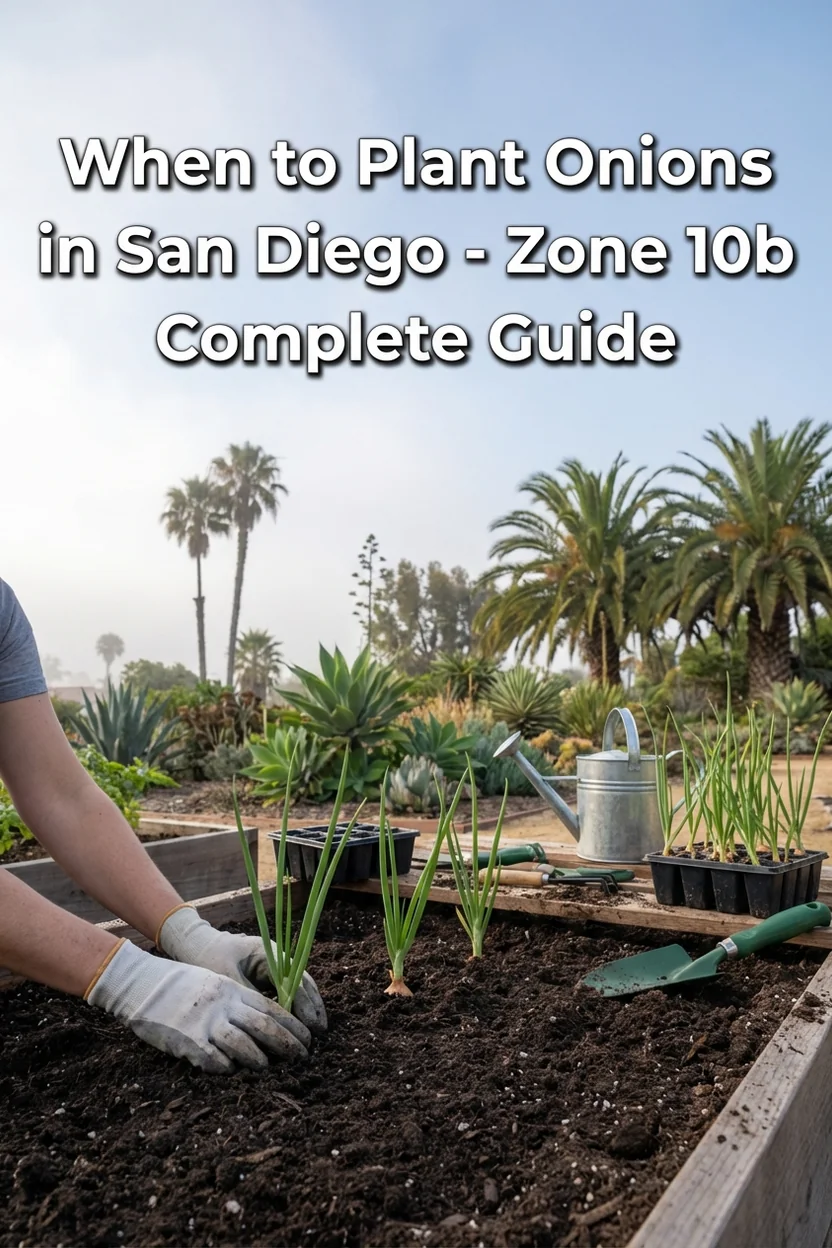
When to Plant Onions in San Diego: Complete Guide + Best Varieties for Zone 10b
Pets & Toxicity
Recorded toxicity for plants linked in this guide. An unknown status is not a safety assessment.
Toxic to pets: Granex onion, red creole onionDetailsHide
Allium cepa 'Granex' — Toxicity Warning
Toxic to cats and dogs if eaten; cats are especially susceptible, and raw, cooked or concentrated plant material can damage red blood cells and cause anaemia.View Allium cepa 'Granex' plant profileAllium cepa 'Red Creole' — Toxicity Warning
Toxic to cats and dogs if eaten; cats are especially susceptible, and raw, cooked or concentrated plant material can damage red blood cells and cause anaemia.View Allium cepa 'Red Creole' plant profile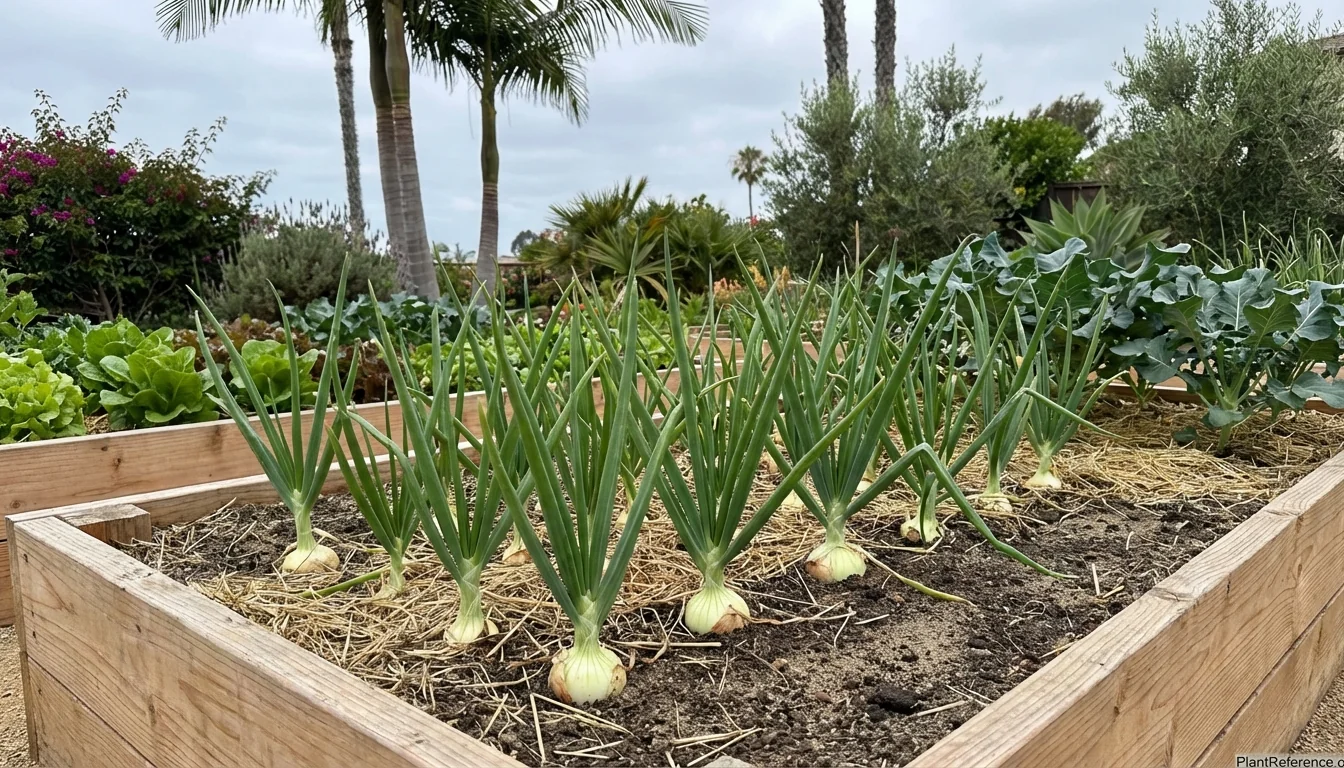
— Image © Plant Reference 2026
San Diego's Zone 10b climate presents unique opportunities and challenges for growing onions. With our mild winters and rare frost, you can grow onions year-round—but success depends entirely on choosing the right varieties and planting at the correct time.
The key to success lies in understanding that San Diego sits at 32.7°N latitude, requiring short-day onion varieties that bulb when daylight reaches just 10-12 hours. Plant long-day varieties here, and you'll get massive green tops but no bulbs—I've seen it happen countless times. Fall planting from October through December takes advantage of our cool, mild winter weather for establishing strong plants that bulb rapidly as spring days lengthen.
Best Onion Varieties for San Diego's Climate
San Diego's latitude of 32.7°N puts us squarely in short-day onion territory. These varieties are genetically programmed to form bulbs when they receive 10-12 hours of daylight—perfect for our spring conditions when days lengthen from winter's minimum.
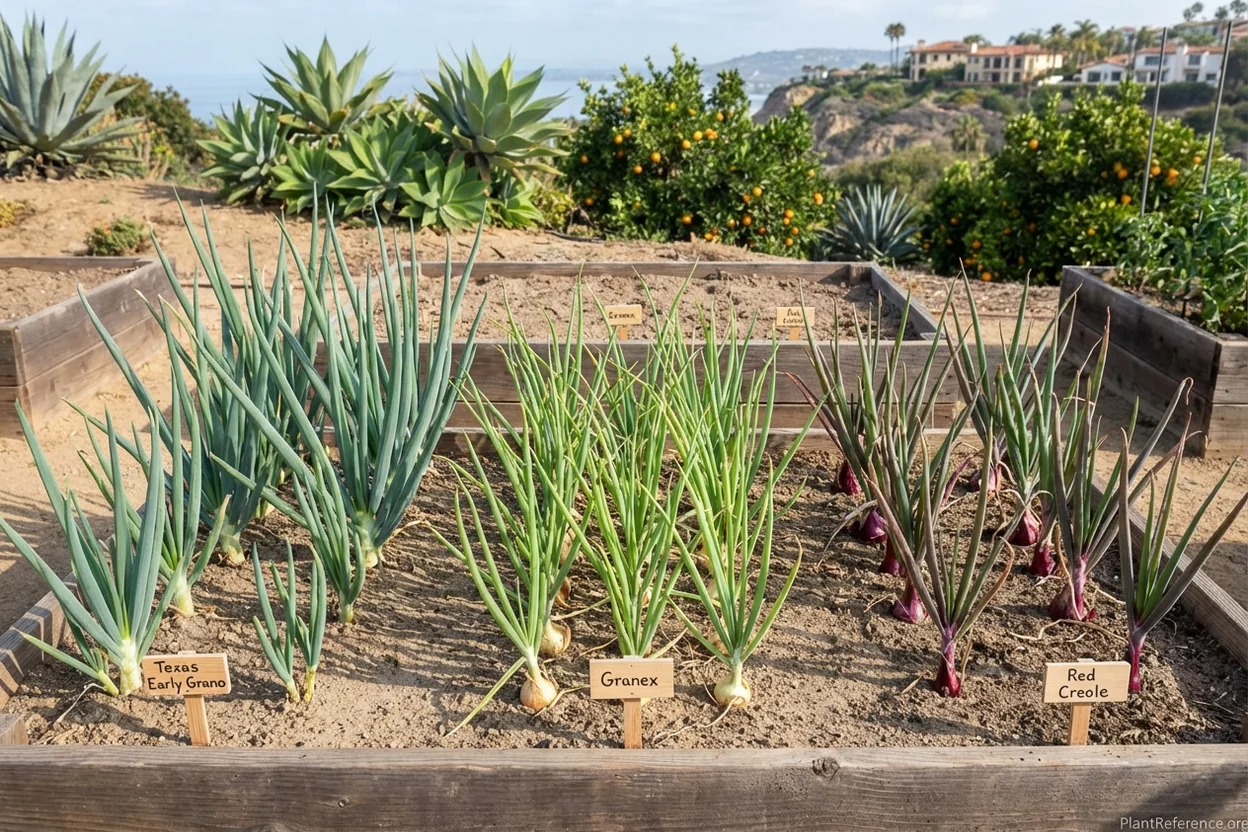
Short-Day Varieties for San Diego Success
Variety | Days to Maturity | Best For | Notes for San Diego |
|---|---|---|---|
Allium cepa 'Texas Early Grano' | 90-110 days | Sweet cooking | Perfect for Zone 10b, mild flavor |
100-115 days | Vidalia-type sweet | Excellent storage for short-day type | |
95-120 days | Hot, pungent cooking | Heat tolerant, stores well | |
Allium cepa 'Crystal Wax' | 95-100 days | Pickles, fresh eating | White skin, very mild |
Allium cepa 'Yellow Bermuda' | 100-110 days | All-purpose | Reliable producer |
Allium cepa 'Southern Belle' | 110-125 days | Storage | Best keeper among short-day types |
Allium cepa 'Texas Early Grano' stands as the gold standard for San Diego gardens. Developed for Texas conditions, this variety thrives in our similar latitude and produces large, sweet bulbs perfect for fresh eating. The bulbs flatten slightly as they mature, reaching 3-4 inches (7.6-10 cm) across when properly grown.
🌿Allium cepa 'Granex' produces the famous Vidalia-type sweet onions. In San Diego's low-sulfur soils, these develop exceptional sweetness with minimal pungency. They store better than most sweet onions—up to 3 months when properly cured.
Allium cepa 'Red Creole' brings heat and color to your harvest. This variety tolerates warm weather better than others, making it perfect for San Diego's occasional heat waves. The purple-red skin adds visual appeal, and the pungent flavor mellows beautifully when cooked.
Varieties to Avoid in San Diego
Never plant long-day varieties like 'Walla Walla', 'Red Wing', or 'Yellow Sweet Spanish' in San Diego. These need 14-16 hours of daylight to bulb—something our latitude never provides. You'll waste an entire growing season on plants that produce huge tops but never form bulbs.
Specific Planting Dates for San Diego
San Diego's Zone 10b climate offers a long planting window from October through December, with specific timing based on your desired harvest date and chosen variety.
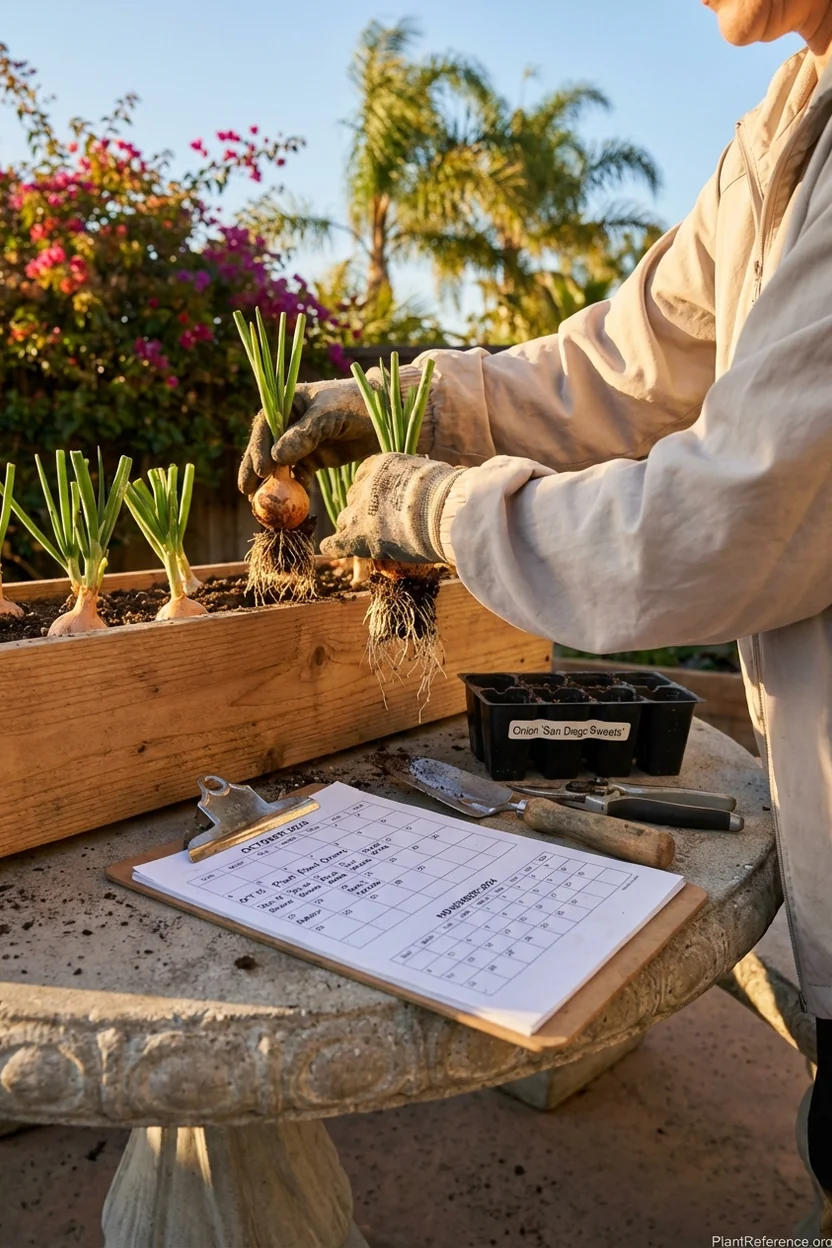
Optimal Planting Windows
Early Planting (October 1-31): Best for varieties needing longer maturity like Allium cepa 'Southern Belle' and 🌿Allium cepa 'Red Creole'. Plant by October 15 for harvest by early April.
Mid-Season Planting (November 1-30): Perfect timing for most gardeners. Allium cepa 'Texas Early Grano' and 🌿Allium cepa 'Granex' planted November 15 harvest by mid-May.
Late Planting (December 1-31): Still successful with fast-maturing varieties. Allium cepa 'Crystal Wax' planted December 15 harvests by late May.
Calculating Your Planting Dates
Here's how I determine exact planting dates for San Diego:
For transplants: Count backward from desired harvest date using days to maturity, then subtract 30 days for transplant establishment.
Example: Want to harvest Allium cepa 'Texas Early Grano' by April 15? - Days to maturity: 110 days - April 15 minus 110 days = December 26 - Subtract 30 days for establishment = November 26 planting date
From seed: Add 45-60 days to transplant timing for direct seeding, though transplants work better in our climate.
San Diego's Frost Considerations
Our last average frost date of January 31 means most plantings avoid significant cold damage. However, protect newly planted transplants if temperatures drop below 35°F (2°C). Row covers or clear plastic tunnels provide adequate protection during rare cold snaps.
Complete Growing Guide for San Diego
Success with onions in San Diego requires understanding our unique growing conditions: mild winters, low rainfall, alkaline soils, and intense summer sun.
Soil Preparation
San Diego's native soils tend toward alkaline (pH 7.5-8.5), but onions prefer slightly acidic to neutral conditions (pH 6.0-7.0). Test your soil and amend with sulfur if needed—apply 1 pound per 100 square feet (0.45 kg per 9.3 sq m) to lower pH by one point.
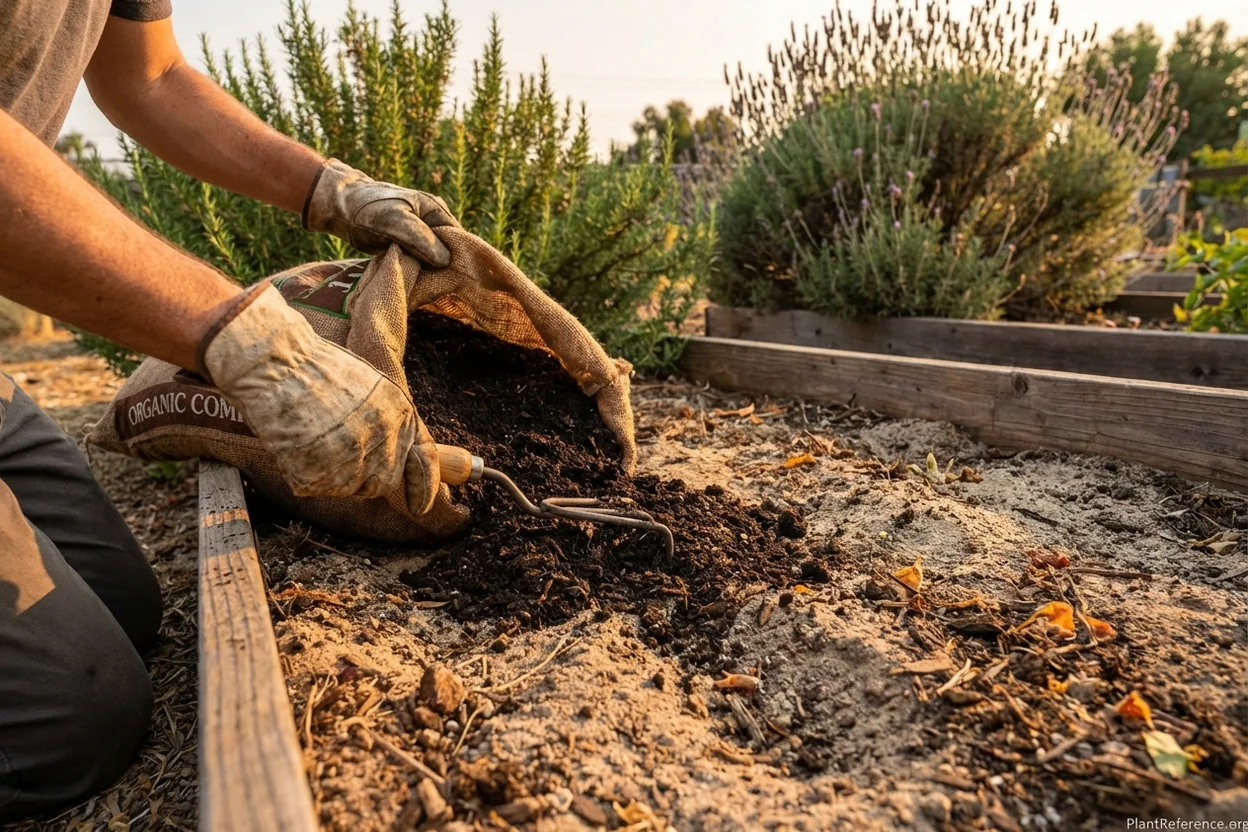
Our sandy soils drain well but need organic matter for water and nutrient retention. Work in 2-3 inches (5-7.6 cm) of compost before planting. This improves both drainage in heavy areas and water retention in sandy spots.
Planting Transplants
Transplants give the most reliable results in San Diego. Plant them 4 inches (10 cm) apart in rows spaced 12 inches (30 cm) apart. This spacing allows good air circulation while maximizing yield.
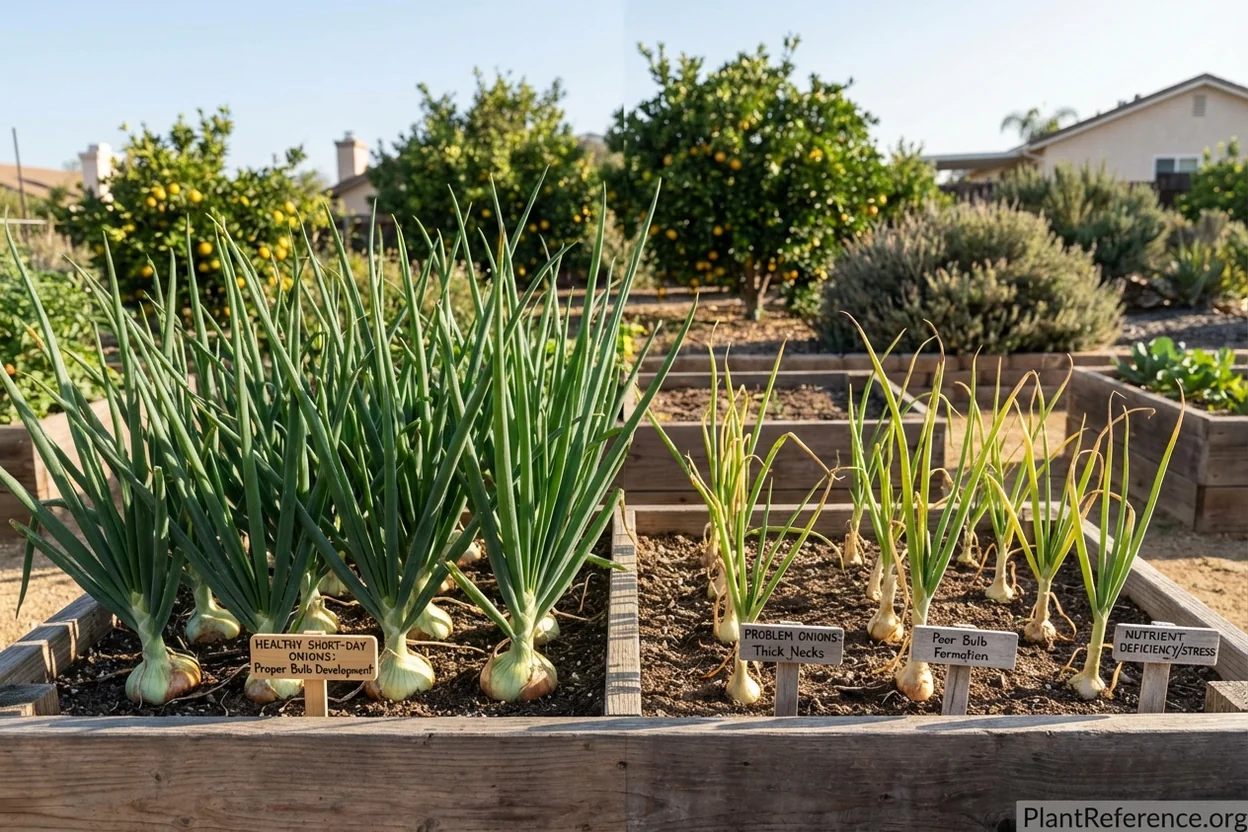
Trim transplant roots to 2 inches (5 cm) and tops to 4 inches (10 cm) before planting. Set them just deep enough to cover the root ball—about 1 inch (2.5 cm) deep. Plant too deep, and you'll get thick necks that won't cure properly.
Water transplants gently after planting and maintain consistent moisture for the first two weeks while roots establish.
Fertilizing Through the Growing Season
Onions are heavy feeders requiring consistent nutrition throughout their long growing season. Apply balanced fertilizer (10-10-10) at planting, using 2 pounds per 100 square feet (0.9 kg per 9.3 sq m).
Month 1-2 (November-December): Focus on root establishment with phosphorus-rich fertilizer.
Month 2-4 (January-March): Push vegetative growth with higher nitrogen. Side-dress with blood meal or fish emulsion every 3 weeks.
Month 4-5 (April-May): Stop all nitrogen when bulbing begins. You'll see soil cracking at the base of plants as bulbs swell. Switch to potassium-rich fertilizer to strengthen bulb development.
Irrigation Management
San Diego's dry climate requires careful water management. Onions need consistent moisture but never waterlogged soil. Deep, infrequent watering encourages strong root development.
Establishment phase (first 3 weeks): Water lightly every 2-3 days to keep soil evenly moist.
Vegetative phase (month 2-4): Water deeply once per week, applying 1 inch (2.5 cm) total.
Bulbing phase (final 6 weeks): Reduce watering as bulbs mature. Stop completely when tops begin falling over naturally.
Managing San Diego's Pest Challenges
Thrips become active during warm winter days. These tiny insects cause silvery streaks on leaves and can stunt growth. Spray with insecticidal soap every 10 days if populations build.
Snails and slugs love our mild, moist winters. Hand-pick during evening inspections or use iron phosphate baits around beds.
Troubleshooting San Diego-Specific Problems
San Diego's unique climate creates specific challenges that don't occur in traditional onion-growing regions.
Problem: No Bulb Formation
Symptoms: Plants produce huge green tops but never form bulbs, even after 5-6 months of growth.
Cause: Wrong day-length variety planted. Long-day varieties will never bulb in San Diego because our maximum day length (14.5 hours in June) never reaches their 15-16 hour requirement.
Solution: Remove plants and replant with proper short-day varieties. This is the most common mistake I see San Diego gardeners make.
Problem: Premature Bolting
Symptoms: Plants send up flower stalks before bulbs form, usually in February or March.
Cause: Temperature stress from unusual cold snaps or planting too early when plants are still small and vulnerable.
Solution: Plant after November 1 when temperatures stabilize. Cover with row covers if temperatures drop below 35°F (2°C).
Problem: Small, Undersized Bulbs
Symptoms: Bulbs form but remain small (under 2 inches/5 cm diameter) despite proper variety selection.
Causes: Competition from weeds, insufficient fertilizer, irregular watering, or planting too late in season.
Solution: Maintain weed-free beds, follow fertilization schedule, and plant by December 31 for full-size development.
Problem: Thick Necks That Won't Cure
Symptoms: Bulbs form but necks remain thick and green, preventing proper storage preparation.
Causes: Excess nitrogen late in season, overwatering during bulb development, or harvesting too early.
Solution: Stop nitrogen fertilizer when bulbing begins (April), reduce watering in final month, and wait for natural top fall-over before harvest.
Problem: Sunscald and Heat Stress
Symptoms: Brown, papery patches on bulb shoulders exposed above soil, usually appearing in late spring.
Cause: San Diego's intense late-spring sun (April-May) can damage bulbs as they swell above soil level.
Solution: Hill soil gently around bulb shoulders or apply light mulch to protect from direct sun exposure.
Harvest & Storage
San Diego's onion harvest typically occurs from March through June, depending on planting dates and varieties. Proper harvest timing ensures maximum bulb size and storage potential.
Recognizing Harvest Readiness
Harvest when 50-75% of tops fall over naturally. This signals that the plant has completed photosynthesis and transferred all sugars to the bulb. Never force tops down early—this stops bulb development and creates poor storage.
Visual cues: Tops yellow and fall over, bulb shoulders emerge above soil, outer skin begins papering.
Timing by variety: - Allium cepa 'Crystal Wax': March 15-April 15 - Allium cepa 'Texas Early Grano': April 1-May 1 - 🌿Allium cepa 'Granex': April 15-May 15 - Allium cepa 'Southern Belle': May 1-June 1
Proper Harvest Technique
Choose a dry day for harvest. Loosen soil with a fork, then lift bulbs gently by hand. Shake off excess soil but don't remove outer papery layers—they protect during curing.
Leave roots and tops attached initially. Brush off soil but avoid washing—moisture encourages rot during curing.
Curing in San Diego's Climate
San Diego's low humidity makes curing easier than in humid climates. Our dry air naturally removes moisture from bulbs without encouraging mold growth.
Location: Covered patio, garage, or shed with good air circulation. Avoid direct sun, which can cook the bulbs.
Method: Spread bulbs in single layers on screens or hang in mesh bags. Ensure air circulates around each bulb.
Duration: 2-3 weeks until necks feel completely dry and papery. Properly cured bulbs have tight, dry necks you can't squeeze.
Storage: After curing, trim roots to 1/2 inch (1.3 cm) and tops to 1 inch (2.5 cm). Store in cool, dry place (55-65°F/13-18°C) with good ventilation.
Storage Expectations
Short-day onions generally don't store as long as long-day varieties, but proper curing extends life:
Allium cepa 'Southern Belle': 4-5 months
🌿Allium cepa 'Granex': 3-4 months
Allium cepa 'Texas Early Grano': 2-3 months
Allium cepa 'Crystal Wax': 1-2 months (eat fresh)
Check stored onions monthly and remove any showing soft spots or sprouting to prevent spread to healthy bulbs.
Frequently Asked Questions
Reading about plants and recognising them are different skills. These three build the second.
- Daily PlantIdentify the day’s mystery plant from a close-up photograph.
- Keyed OutWork a dichotomous key, lead by lead, to name a hidden specimen.
- Name That PlantName a specimen from botanical clues dealt hardest first.
Free to play, no account needed
Emma runs a small succulent propagation business from her home in San Diego, shipping starter plants and cuttings across the country. She fell into succulents after college when she realized they were the only plants that survived her travel schedule—she was working as a travel nurse at the time. San Diego's mild, dry climate is ideal for outdoor succulent gardens, and Emma's front yard is a living catalog of over 200 varieties. She completed a certificate program in ornamental horticulture and writes about succulent care, propagation techniques, and drought-tolerant garden design. Her writing is calm and reassuring—she knows people feel bad about killing plants, and she wants them to stop worrying so much.