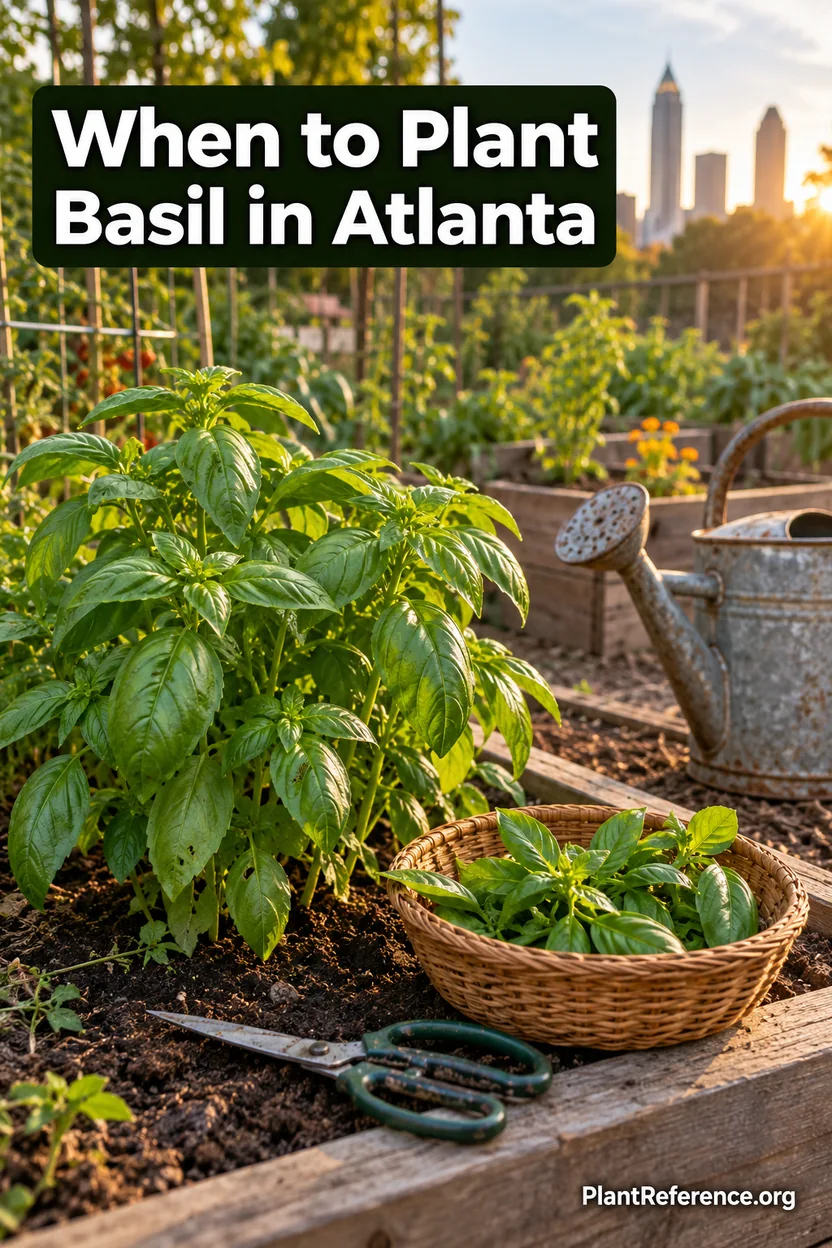
When to Plant Basil in Atlanta: Dates and Growing Guide
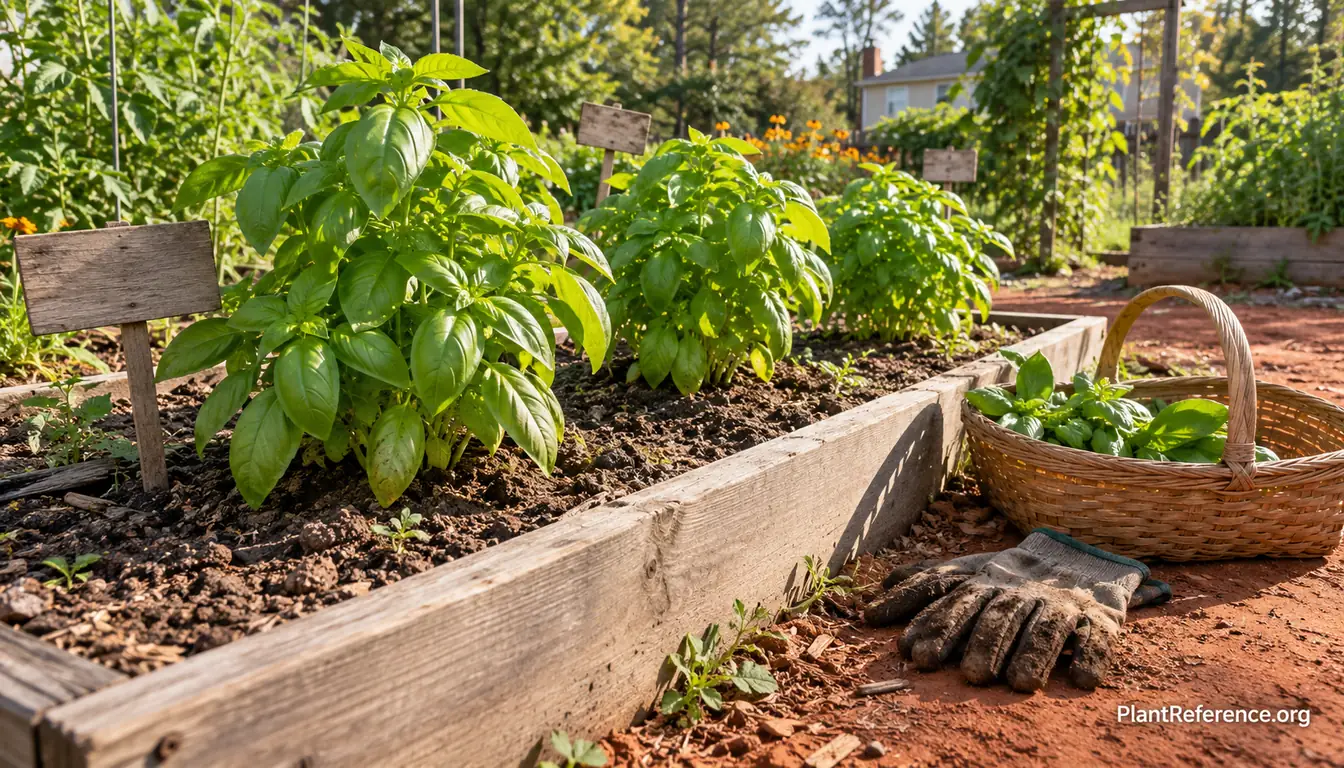
— Image © PlantReference.org 2026
Pets & Toxicity
Recorded toxicity for plants linked in this guide. An unknown status is not a safety assessment.
No linked plant is recorded as toxicDetailsHide
Ocimum basilicum 'Purple Ruffles' — Toxicity
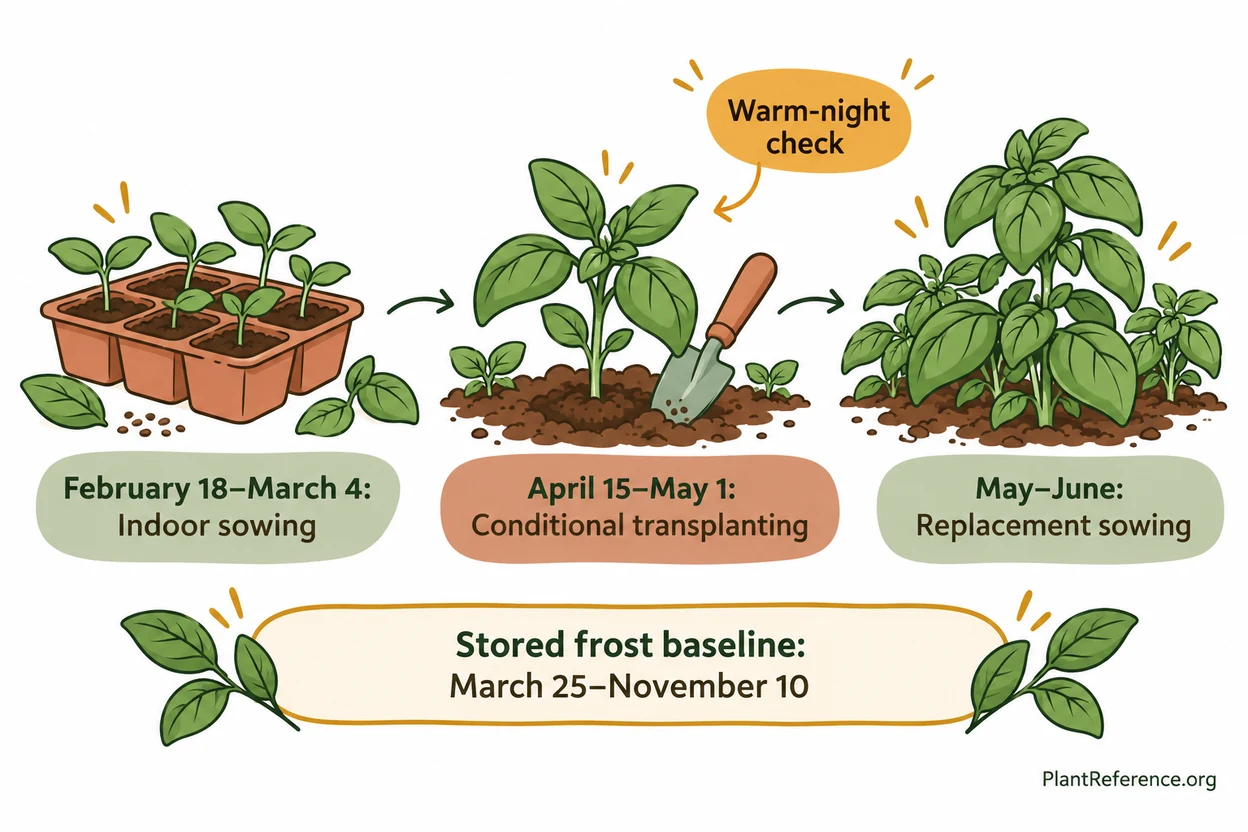
Non-toxicView Ocimum basilicum 'Purple Ruffles' plant profileWhen to plant basil in Atlanta comes down to giving a tender herb a warm start without wasting the long growing season. Sow indoors around February 18–March 4 for a conditional April 15–May 1 transplant window, waiting for nights consistently above 50–55°F (10–13°C) and soil around 60°F (16°C) or warmer. If a cool spell arrives, hold the seedlings rather than asking small plants to recover from an avoidable setback.
Sweet basil Ocimum basilicum (OH-see-mum bah-SIL-ih-kum) can supply regular kitchen harvests from a modest planting. In a shared garden, that means several useful cuttings instead of one big harvest that leaves bare stems behind. Georgia's summer warmth helps, but humidity and wet roots require attention too. Start with enough plants to maintain well, label the types, and make watering and harvesting responsibilities clear. For gardeners working with a porch or balcony, Growing Herbs in Containers: Pots, Soil & Harvest provides a practical alternative to a full bed.
Best Basil Varieties for Atlanta's Climate
Choose what people will actually cook with. A familiar sweet-leaved type can be the main planting, with a few other flavors clearly labeled nearby. Different aromas are a reason to diversify, but no type removes the need for good drainage or disease observation.
The plan's maturity ranges are estimates. Confirm whether the seed supplier counts from sowing or transplanting, and expect weather to change the pace. An established plant can offer small tip harvests before it reaches the size represented by a full maturity estimate.
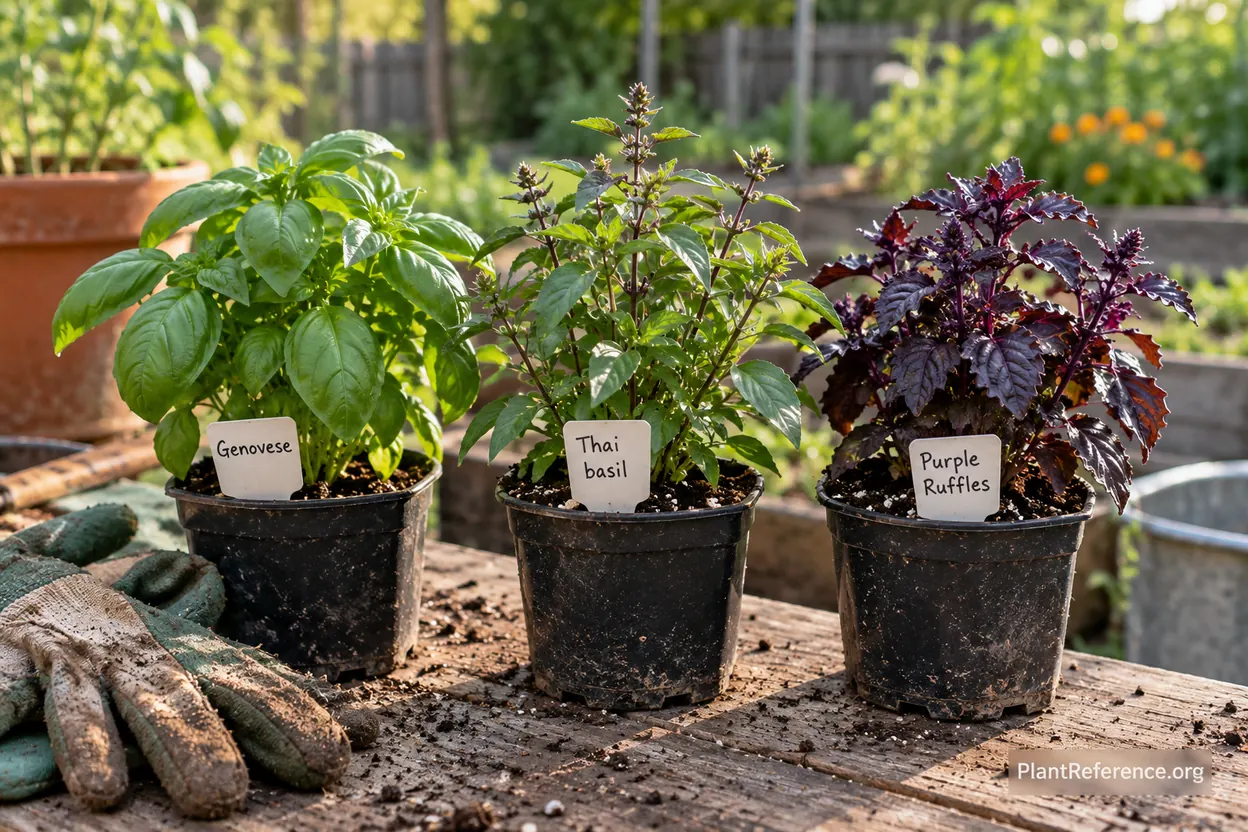
Sweet leaves and stronger flavors
🌿Ocimum basilicum 'Genovese' produces broad leaves for pesto, salads, and fresh cooking. Give this main crop a place where volunteers can reach the stems without stepping into the bed. Regular tip harvesting encourages branching, while leaving enough foliage to keep the plant growing.
🌿Ocimum basilicum 'Thai' offers an anise-like flavor and firmer, narrower leaves. It suits cooks who want that distinct flavor in hot dishes. Watch for developing flower spikes; remove them when leaves are the priority rather than letting every plant shift into flowering before anyone notices.
The plan includes 🌿Ocimum basilicum 'Lemon' for citrus-scented leaves. Lemon-scented basil is sold under differing botanical identities, so retain the identity on the actual packet. Keep moisture steady and avoid crowding roots into a tiny pot, both of which matter for maintaining useful leafy growth.
Type | Planning maturity range | Best use | Notes for the local garden |
|---|---|---|---|
60–90 days | Pesto and fresh leaves | Keep foliage open and monitor disease | |
60–90 days | Anise-flavored cooking herb | Warmth suits it; pinch flower tips for leaves | |
60–75 days | Citrus-scented leaves | Confirm packet identity and avoid moisture swings | |
70–80 days | Fresh garnish and color | Good light supports coloration | |
60–90 days | Distinctive aromatic herb | Treat as a warm-season annual |
Color and specialty plantings
🌿Ocimum basilicum 'Purple' is the broad purple-leaved selection in the plan. A seed packet may identify a more precise cultivar, such as the research-supported 🌿Ocimum basilicum 'Purple Ruffles'. Do not assume purple leaves automatically mean disease resistance or that every purple selection has the same growth habit.
Holy basil 🌿Ocimum tenuiflorum (OH-see-mum ten-yoo-ih-FLOR-um) is a different species with a spicy aroma and frequent flowering. Grow it for the culinary or aromatic use you want, without making medicinal promises. It is not a dependable outdoor perennial under the stored Zone 8a conditions.
Keep a simple record of flavor preferences and harvest frequency. In a community plot, a type that several households use every week deserves more space than a novelty nobody picks. Share surplus seedlings early, before roots become cramped, and include the plant label and basic care notes.
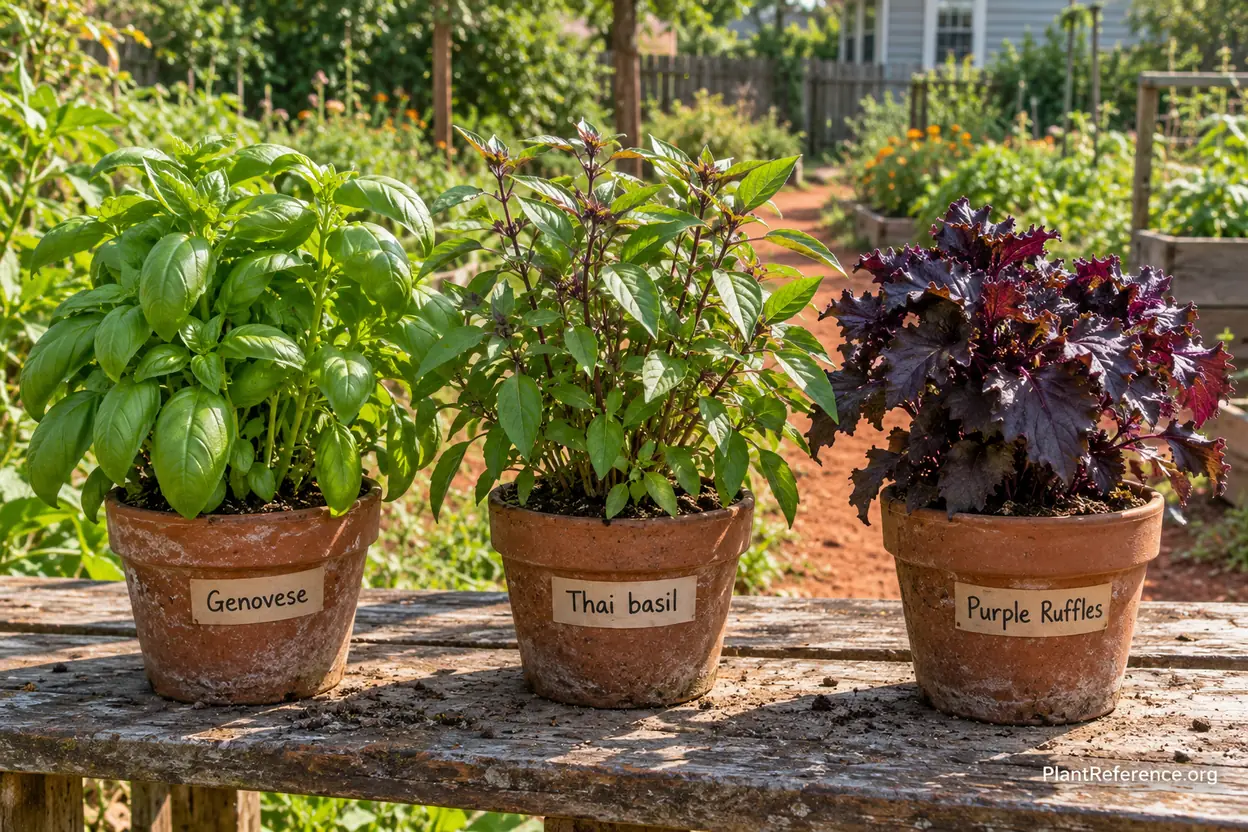
When to Plant Basil in Atlanta: Specific Dates
The stored city record uses March 25 as last frost and November 10 as first frost, giving 230 days between them. These are historical planning dates, not a forecast or a guarantee for an exposed plot. The Zone 8a label describes winter cold, not whether a particular April night will suit basil.
Calculate the baseline, then check warmth
Six to eight weeks before March 25 is January 28–February 11. A seven-to-fourteen-day frost buffer produces April 1–8. Those are useful calculations, but basil still needs warm roots and nights; frost avoidance alone is not enough.
For a more cautious working plan, count backward from April 15: six to eight weeks gives February 18–March 4. Target April 15–May 1 outdoors only when the temperature checks pass. If conditions are favorable earlier or remain cold later, let observations guide the decision rather than treating the date as an order.
Coordinate neighboring warm-season crops with When to Plant Peppers in Atlanta: Complete Guide + Best Varieties for Zone 8a. Each crop keeps its own seed-starting interval, even when they share the same bed-preparation day.
Plan replacements before you need them
February 18–March 4: sow the main indoor batch.
Early April: gradually expose seedlings to suitable outdoor conditions.
April 15–May 1: transplant after confirming warmth.
May or June: start a small replacement batch for summer use.
June 14–July 14: use as an illustrative 60–90-day planning range after April 15 transplanting.
Autumn: harvest before repeated cold damages leaves, not simply before the frost baseline.
The harvest calculation adds the plan's maturity range to transplanting; use the packet's convention if it counts from sowing instead. Light tip harvests can start earlier from established branching plants. For the rest of the bed, When to Plant Tomatoes in Atlanta: Complete Guide + Best Varieties for Zone 8a helps avoid shading herbs beneath a mature canopy.
Complete Growing Guide for Atlanta
Start a manageable number of healthy plants
Use clean trays and fresh seed-starting mix. Sow ordinary Ocimum basilicum selections about ¼ inch (6 mm) deep unless the packet says otherwise. Follow the separate light-germination directions for 🌿Ocimum tenuiflorum rather than burying every basil seed to the same depth.
Aim for mix near 75°F (24°C) during germination. A thermostat-controlled heat mat helps in a cool room, but measure the medium and follow probe-placement instructions. Keep the mix moist without leaving the tray soaking in water.
Provide strong light after emergence and thin crowded seedlings. If stems become long and pale, correct light and spacing rather than assuming they need more fertilizer. A few sturdy starts are easier to share and establish than a tray full of weak, tangled plants.
Prepare drainage and assess soil
Choose a sunny site with roughly six to eight hours of useful light and room for air to move. Morning sun is valuable because it helps leaves dry. During intense summer heat, a position with some afternoon relief may help, provided it does not become deep shade.
Do not work wet clay simply because planting day is on the calendar. Examine drainage first; raised beds or containers can help where existing ground remains saturated, but only when excess water can escape. How to Test Garden Soil: Jar, Ribbon & pH Tests gives a useful starting point for observations and testing.
In an urban plot, review the site's history and use appropriate testing when contamination is a concern. A basic texture or pH test does not establish soil safety. Keep edible growing areas separate from suspicious fill or runoff while the site is assessed.
Transplant and water with a shared plan
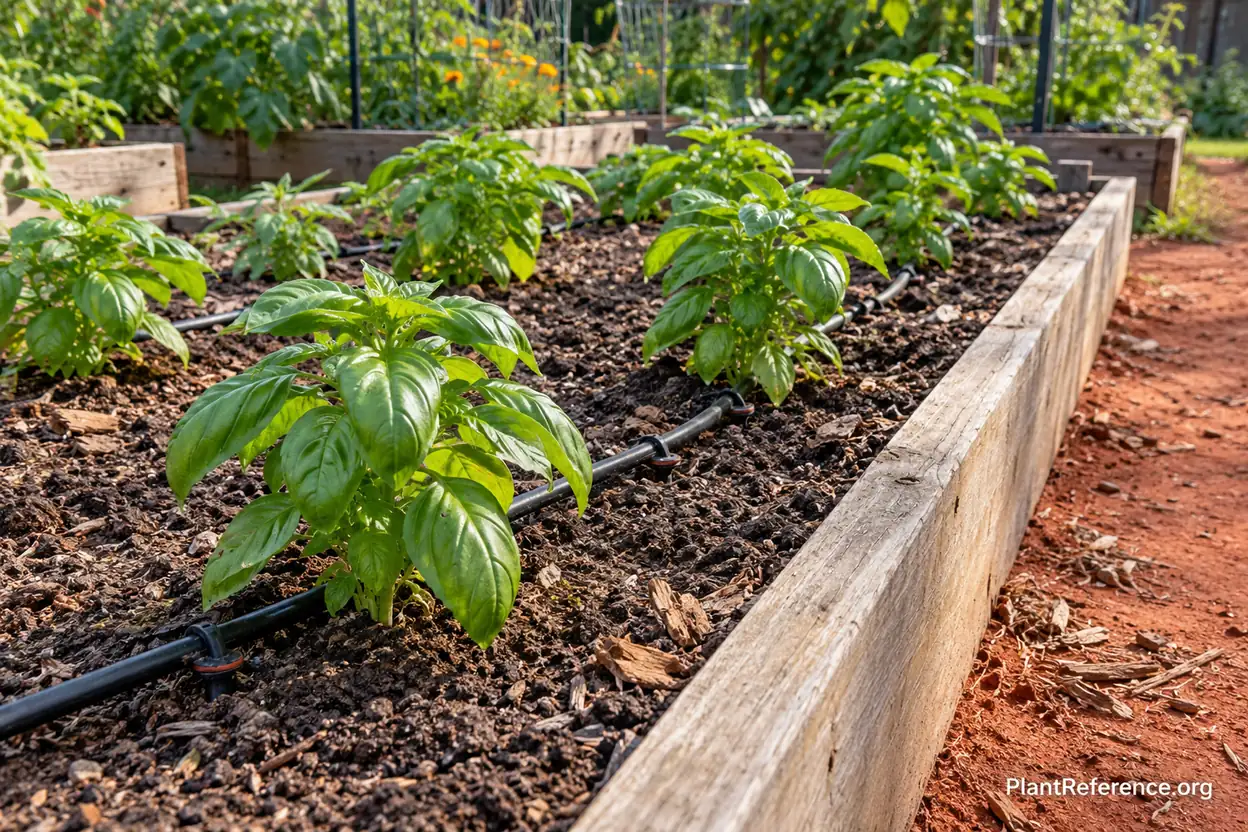
Harden seedlings over about a week, gradually increasing outdoor light and wind exposure during warm periods. Return them to warmth on cold nights. Water the root ball before planting and keep approximately its previous growing depth.
Allow around 18–24 inches (45–60 cm) between vigorous plants where humidity and mature foliage would otherwise create crowding. Adjust to the specific type rather than treating one spacing as universal. Open space now becomes access and airflow later.
Water near the soil, preferably early enough that any splashed leaves dry. Check moisture before watering again after rain. In a shared garden, use a simple watering note so two well-meaning people do not both soak the same bed.
Containers need separate checks because their volume and exposure differ from the ground. Use open drainage holes and container mix, not a pot of heavy garden soil. Empty collected runoff from outer containers, and check pot weight alongside the surface moisture.
Feed for useful growth
A working pH range around 6.0–7.5 suits basil. Test before making major adjustments, using Raised Bed Soil pH Problems: Testing, Adjusting, and Maintaining Balance when an established bed needs attention. Yellow foliage alone does not tell you whether pH, roots, cold, or nutrition is responsible.
Account for nutrients already in the soil or potting mix. Follow fertilizer directions and use DIY Organic Fertilizer Blends: A Soil-Test-First Guide when planning amendments. More nitrogen is not automatically a better harvest, and an organic label does not make excessive feeding useful.
Plan access around larger crops with When to Plant Squash in Atlanta: Complete Guide + Best Varieties for Zone 8a. Herbs should remain reachable after neighboring vines expand. Easy access makes inspection and modest harvesting more likely to happen.
Teach one repeatable harvesting cut
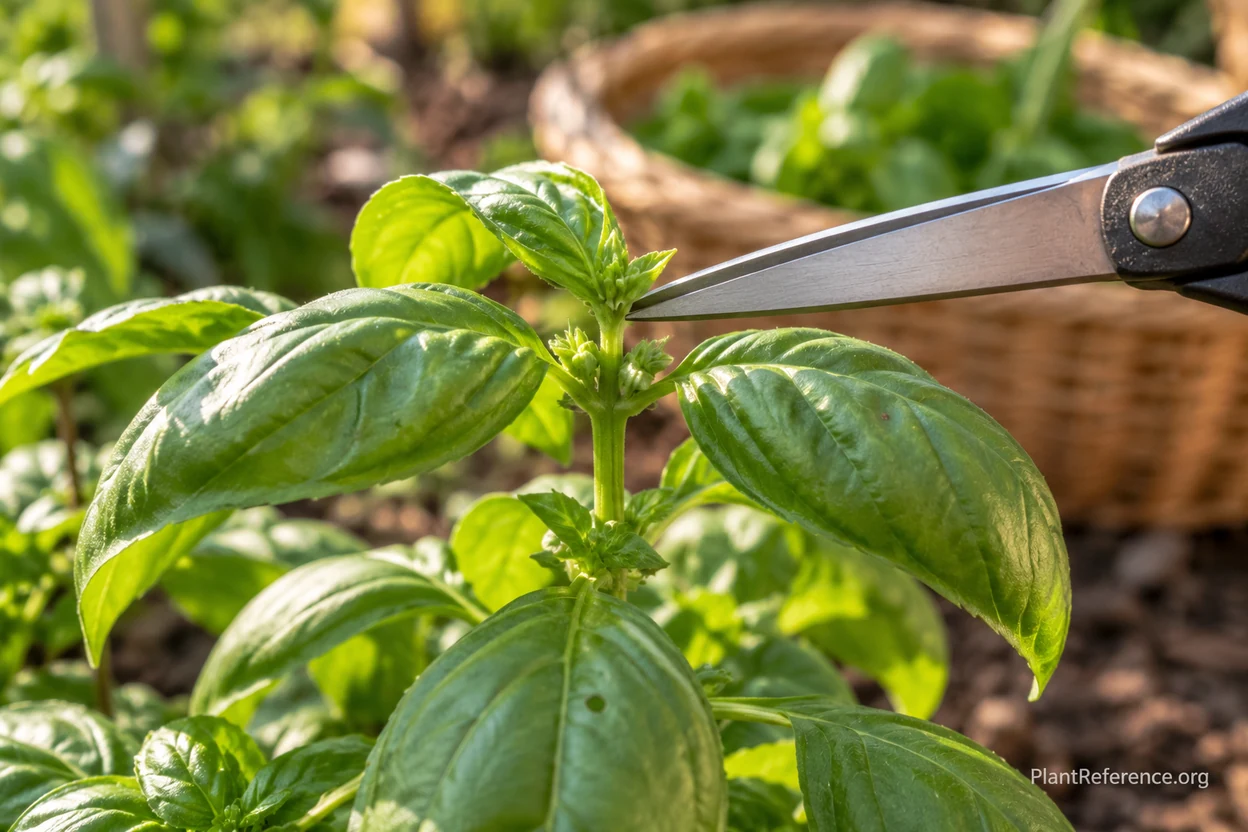
Once a plant has three or four healthy leaf pairs and is actively growing, cut the tip just above a leaf pair. Side buds below the cut can develop into branches. Leave plenty of foliage to support recovery.
Show that cut to everyone who harvests, rather than relying on a sign that says only “pick some basil.” Remove flower buds when leaves are the priority, and avoid stripping a small plant bare. Coordinate the rest of the summer planting with When to Plant Green Beans in Atlanta: Complete Guide + Best Varieties for Zone 8a.
Troubleshooting Atlanta Basil Problems
Yellowing and humid-weather disease
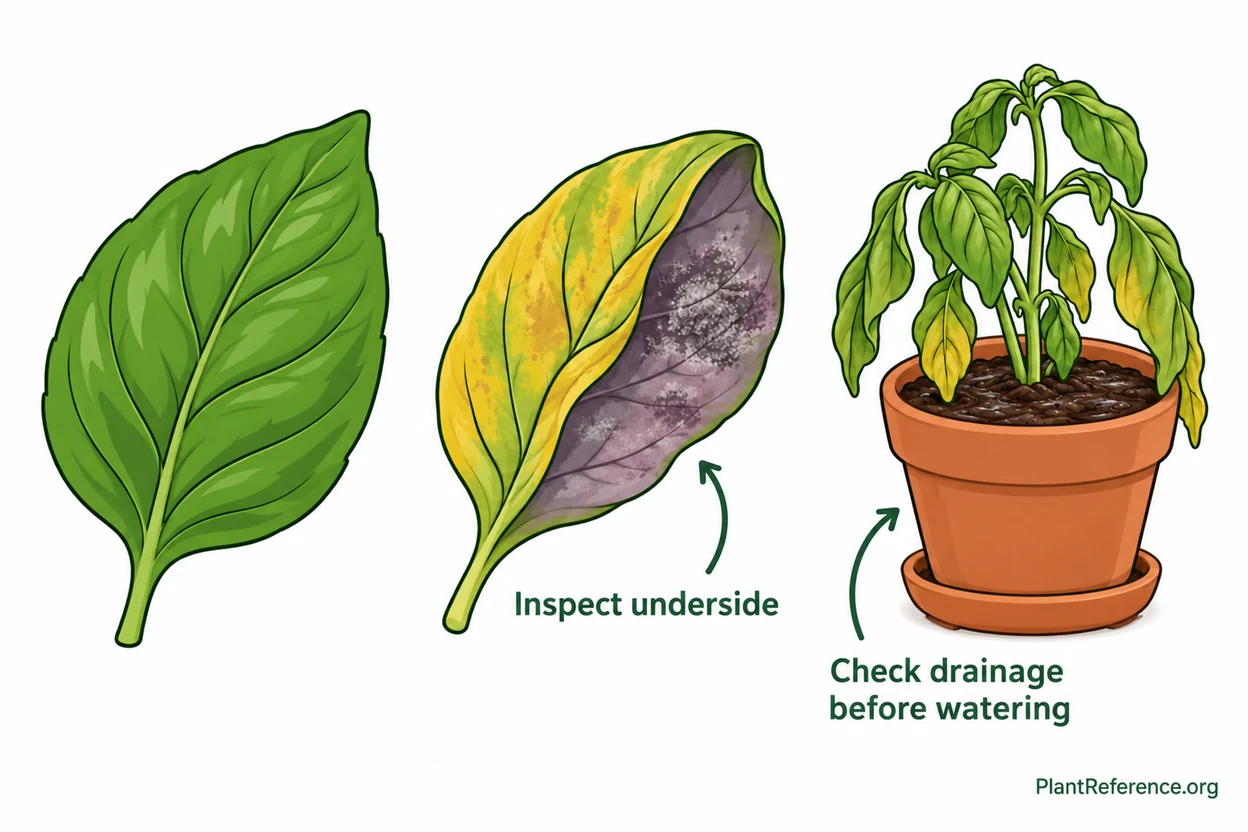
Turn yellow leaves over before diagnosing a nutrient shortage. Gray-purple fuzzy growth beneath yellow areas is concerning for downy mildew. Isolate suspect plants, remove badly affected material, and seek local diagnostic help when symptoms are unclear.
Airflow, soil-level watering, and avoiding crowded foliage reduce favorable conditions but cannot guarantee prevention. Do not assume a type is resistant because of leaf color or aroma. Use explicit resistance information when choosing future seed rather than inventing a promise from appearance.
Wilting with wet soil
A wilted plant in saturated soil does not need another soak. Check drainage, recent rainfall, and stem condition. Root damage or disease can look like thirst, and brown streaking or sudden collapse deserves investigation.
Remove failing plants when necessary and correct the setup before replacing them. In a shared plot, note where the problem occurred so another gardener does not immediately replant into the same wet pocket. Keep tools clean between suspect and healthy plants.
Holes, heat, and flowers
Identify chewing pests before choosing a response. Inspect leaves and nearby hiding places; hand removal can help when pests are visible and numbers are manageable. Avoid broad treatments on an edible herb without identifying the problem and confirming label suitability.
During hot weather, check moisture and afternoon exposure when leaves wilt. Do not keep soaking already wet roots. Some afternoon relief can help, while deep shade can reduce useful growth and slow foliage drying.
Flowering is normal, not proof that the whole plant is ruined. Pinch buds for leaf production and maintain steady conditions. If old plants become woody and stop responding well, a replacement batch can be more productive than repeatedly cutting them harder.
Harvest & Storage
Harvest after dew dries and before leaves become hot and wilted. Use clean scissors, take stem tips above leaf pairs, and leave enough growth for recovery. Rotate modest cuts across several healthy plants when several households share the crop.
Keep harvested leaves shaded and handle them gently. Exclude diseased or badly damaged material from kitchen batches. Label unfamiliar types so a strong anise-flavored harvest does not surprise someone expecting ordinary sweet leaves.
Use fresh leaves promptly or freeze surplus in small labeled portions. Wash as needed and dry before processing. Fresh herb-and-oil mixtures are not shelf-stable merely because they contain oil; prepare them for prompt use or freezing rather than room-temperature storage.
Watch autumn night temperatures and take the main harvest while foliage remains healthy. The November 10 frost baseline is not a promise of good growth until then. Chilling can affect this tender crop before a freeze occurs.
At season's end, clean containers and equipment, record the most useful types, and note where drainage or shade caused trouble. Share those notes with the next group of growers. A productive community planting is not just the leaves harvested this year; it is also the practical knowledge that makes the next season easier.
Frequently Asked Questions

Reading about plants and recognising them are different skills. These three build the second.
- Daily PlantIdentify the day’s mystery plant from a close-up photograph.
- Keyed OutWork a dichotomous key, lead by lead, to name a hidden specimen.
- Name That PlantName a specimen from botanical clues dealt hardest first.
Free to play, no account needed
Tagged with
Grace is a community garden organizer in Atlanta who manages three neighborhood garden plots across the city. She came to gardening through food justice work—she saw how many Atlanta neighborhoods lacked access to fresh produce and decided to do something about it. Grace has a background in public health and brings that lens to everything she writes about food growing, soil safety in urban settings, and making gardens work for the communities they serve. She grows a wide range of vegetables, with a focus on crops that produce heavily in Atlanta's long growing season. Grace is practical and community-minded—she thinks about gardens as shared spaces, not just personal projects.