When to Plant Kale in Boise: Zone 6a Growing Guide
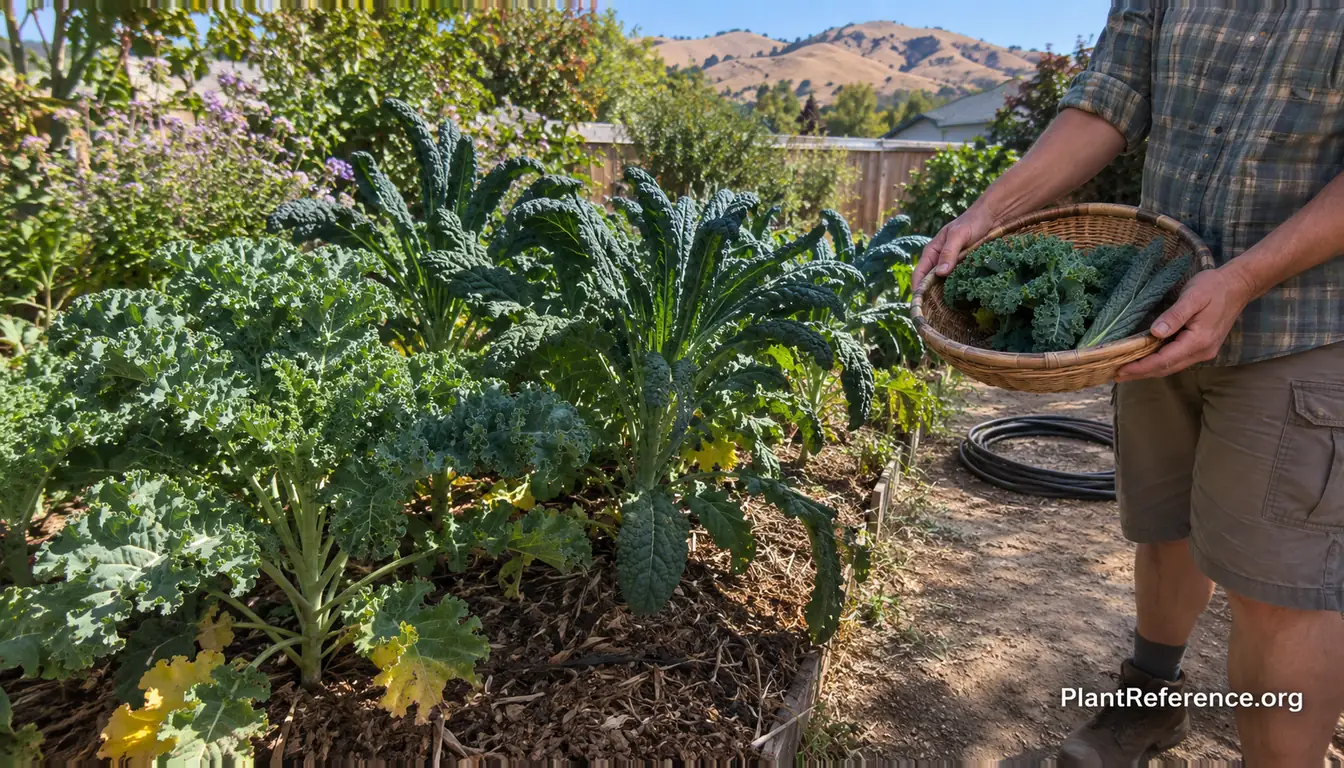
— Image © PlantReference.org 2026
Pets & Toxicity
Recorded toxicity for plants linked in this guide. An unknown status is not a safety assessment.
No linked plant is recorded as toxicDetailsHide
When to plant kale in Boise is a spring-and-fall question, not a single date on a seed packet. Start seeds indoors March 10–24, transplant cautiously May 12–19, and make room for a second sowing July 18–August 1; the autumn crop needs its start before the weather feels autumnal.
This calendar uses the city's stored Zone 6a designation, May 5 last-frost anchor, and October 10 first-frost anchor. That gives a 158-day planning interval, not a forecast or a claim that kale cannot grow outside it. Idaho gardens vary with exposure, elevation, soil, and shelter, so check your own bed rather than assuming a neighbor's planting date transfers perfectly.
The bigger challenge is often below the leaves. Alkaline soil, uneven moisture, and a hard surface crust can frustrate even a well-timed crop; begin with How to Test Garden Soil: Jar, Ribbon & pH Tests instead of buying amendments on the assumption that more must be better.
Best Kale Varieties for Boise's Climate
The best variety is one you enjoy eating and can keep growing well in the space available. A tender salad leaf, a sturdy cooking leaf, and an ornamental purple leaf solve different problems. None makes inconsistent irrigation disappear.
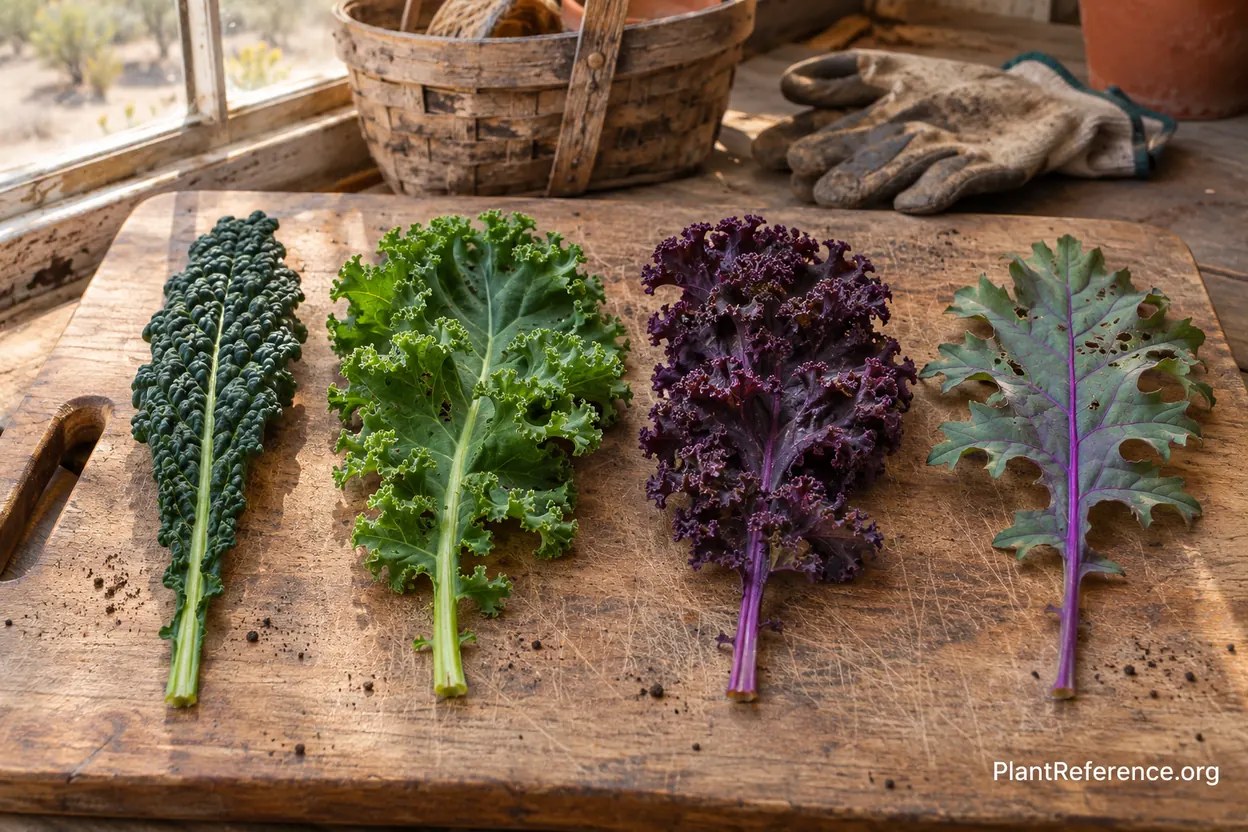
Two useful starting points
🌿Brassica oleracea 'Lacinato' has long, dark, heavily textured leaves that are easy to strip from the stem and chop. Its earthy flavor works well in soups and cooked dishes. Relative heat tolerance makes it a useful shoulder-season choice, but it is not the hardiest option for leaving exposed through severe winter weather.
Brassica oleracea 'Vates' is the compact alternative, with finely curled blue-green leaves on plants around 12–16 inches (30–41 cm) tall. That size makes harvesting and covering a small bed straightforward. The open-pollinated variety is also useful in roomy containers, provided you give its roots enough space rather than confusing a short plant with a tiny root system.
Both are reasonable first choices if you want a manageable crop without collecting every packet in the seed rack. Put the compact selection where taller leaves would block access. Give the taller, narrow-leaf type a position where you can reach its outer leaves without leaning over another crop.
Tender salads or a robust fall bed
🌿Brassica napus 'Red Russian' produces flat, lobed leaves with purple veins and a tender texture. At roughly 50–60 days to maturity, it is a useful quick option, especially when small salad leaves are the goal. Thin foliage needs protection from drying wind; this is not the variety to neglect in a hot corner and expect to remain delicate.
🌿Brassica oleracea 'Winterbor' is a vigorous F1 hybrid with deeply curled leaves and strong cold tolerance. Plants can reach 2–3 feet (60–90 cm), so leave room for the canopy and your harvest path. Mature leaves have more substance than baby salad kale, making this a sensible choice for regular cooking and a fall harvest bed.
🌿Brassica oleracea 'Redbor' adds an upright frame and purple curly foliage. Cooler conditions often deepen its color, which is useful if the vegetable planting is also part of the view from the house. Attractive foliage still needs the same inspection for aphids hidden inside curls as a plain green plant.
Variety | Days to maturity | Best for | Local growing consideration |
|---|---|---|---|
60–75 | Soups and textured salads | Useful heat tolerance; protect from severe cold | |
60–75 | Curly cooking leaves | Vigorous growth needs adequate room | |
50–60 | Tender salad greens | Avoid exposed, drying positions | |
60–75 | Colorful edible beds | Purple curls can conceal aphid colonies | |
Brassica oleracea 'Vates' | 55–65 | Compact plots and containers | Low growth simplifies covering and access |
Treat the maturity ranges as comparisons, not appointments. Check whether your seed supplier counts from sowing or transplanting, and allow for slower growth as autumn daylight declines. Baby-leaf harvests come earlier, but repeated cutting from small plants is not the same yield as harvesting a mature stand.
Try two contrasting types in the same season and record which you actually bring into the kitchen. Variety selection becomes much easier when the question is “Which leaves did we use?” rather than “Which packet promised the biggest plant?”
Specific Planting Dates for Boise
Use the May 5 and October 10 anchors to work backward, then adjust for conditions. Zone 6a is a winter-hardiness reference, not a soil-temperature reading. The dates below deliberately distinguish a cautious transplant schedule from earlier direct sowing of a cool-season crop.
Spring: count backward, then check the bed
Six to eight weeks before May 5 gives March 10–24 for indoor starts. Sow in clean containers and a suitable seed-starting medium, and provide strong light as seedlings emerge. Keep moisture even without leaving trays sitting in water; seedlings do not benefit from alternating a dry crust and a saturated root zone.
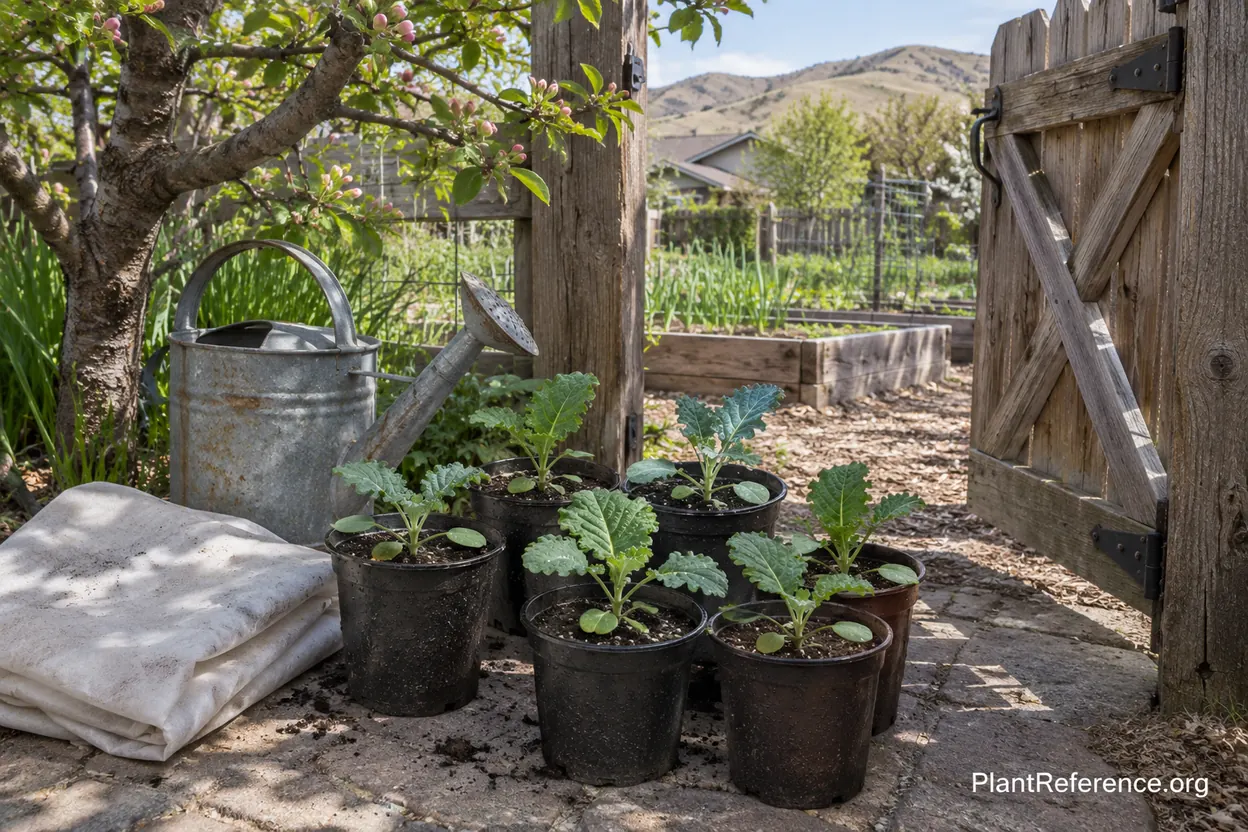
Set aside May 12–19 for a conservative transplant window, seven to fourteen days after the stored last-frost date. Acclimate seedlings gradually to outdoor light and wind for about a week. Earlier transplanting can work for hardened kale with favorable soil and protection, but a warm afternoon alone is not a reliable signal.
For direct sowing, April 7–21 is the two-to-four-week pre-frost window. Wait if the bed is frozen, waterlogged, or so sticky that working it smears the soil. A prepared, moist seedbed is more useful than a perfectly punctual sowing into poor conditions.
Fall: sow while summer is still here
Counting ten to twelve weeks before October 10 gives July 18–August 1. This window allows plants to build leaves before short days slow growth. Use the earlier end for slower varieties or a bed that loses afternoon light as the season changes.
Where a packet counts 50–75 days from transplanting, May 12–19 suggests a broad July 1–August 2 mature-harvest range. A seed-based 50–75-day estimate for the fall sowing suggests September 6–October 15, before adding any slowdown from autumn conditions. Because the late estimate passes the frost anchor, choose quicker types or aim for baby greens when planting late.
Do not borrow coastal winter calendars unchanged. Pacific Northwest Winter Garden: July-August Sowing offers useful succession-planning ideas, but inland hard freezes and dry air change how much protection a crop needs. Reserve bed space before the summer crop fills every gap.
Complete Growing Guide for Boise
Understand the soil before changing it
Kale grows well in a useful pH range of roughly 6.0–7.5, but your soil test determines what correction, if any, is needed. An alkaline reading does not mean you should immediately pour an acidifying product over the bed. Soil texture, buffering, salts, and the amendment's label all affect the appropriate response.
Start with a representative sample rather than a scoop from one recently fertilized spot. A laboratory test can answer questions a texture test cannot. Best Soil Test Kits for Home Gardeners helps compare testing approaches, while Soil Health 101: How to Build Living, Productive Garden Soil provides the broader context for building a productive root zone.
Use finished compost thoughtfully, particularly where previous additions may already have raised nutrient or salt levels. More compost is not automatically the cure for every pale leaf. Improve structure gradually and keep foot traffic out of the bed; working wet clay can leave dense clods long after the surface dries.
If drainage and compaction are the main obstacles, use How to Improve Clay Soil Without Making It Worse before rebuilding the whole bed. A raised bed can improve access and drainage, but a very exposed one may also dry faster than the surrounding ground.
Establish a small, even stand
Choose a bright site with a realistic watering plan. Some afternoon relief from reflected summer heat can help, particularly for young fall starts. Avoid a spot where walls, pavement, and wind combine to dry the seed zone repeatedly before seedlings establish.
Follow packet depth instructions and keep the seed surface evenly moist. Thin seedlings instead of leaving crowded clusters. Start around 12 inches (30 cm) between compact plants, allowing extra room for vigorous varieties and for your hands to reach leaves without damaging neighboring crowns.
Water transplants at planting and check their root balls separately from the surrounding soil. A nursery mix can dry while the heavier bed still feels damp. Keep plants at their established growing depth, firm gently, and avoid burying the central growing point.
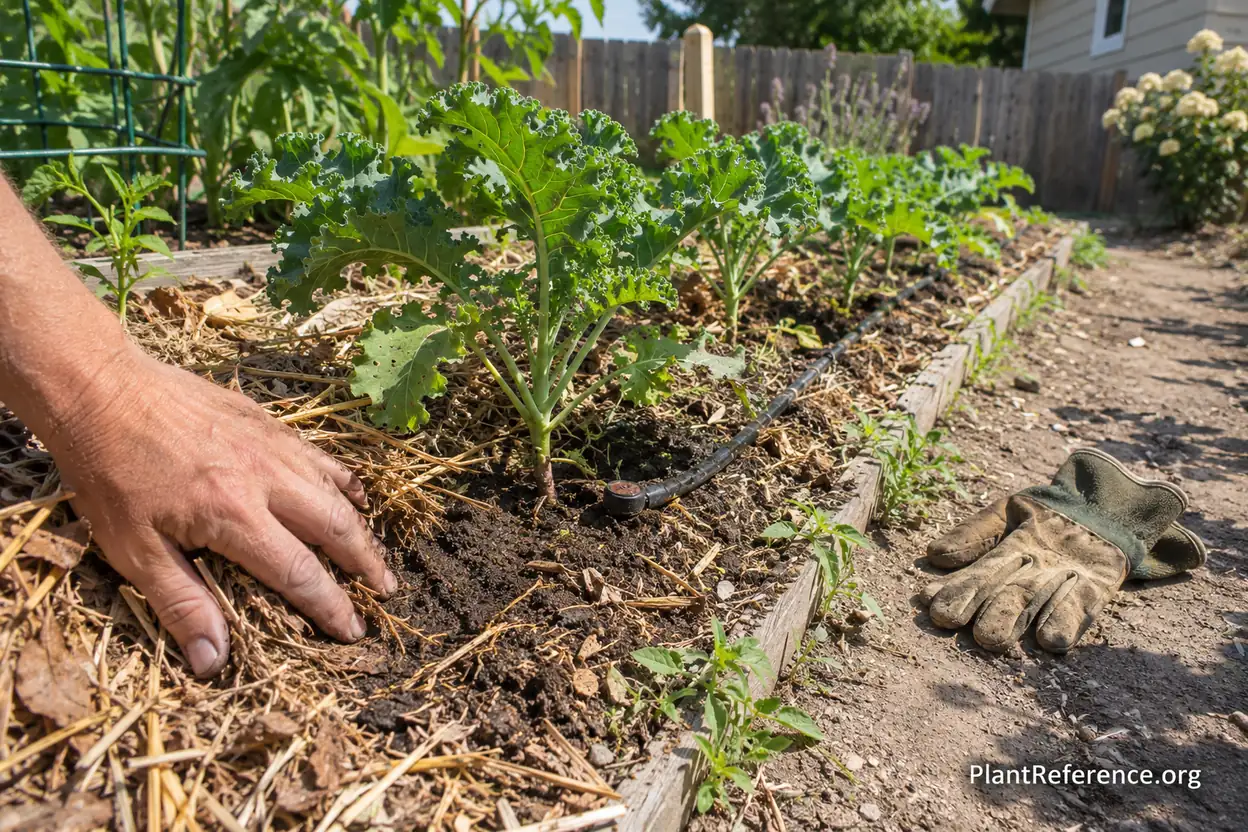
Irrigate the root zone consistently
The aim is steady moisture, not a permanently wet bed. Check below the surface and verify that irrigation reaches beyond a single small spot beside each stem. As plants expand, their wetted root area should expand too; a seedling's watering setup may need adjustment by midsummer.
Use mulch to reduce evaporation once plants are established, keeping it clear of stems. Water early when possible and avoid repeatedly splashing soil onto leaves. If foliage wilts at midday but the soil is moist, inspect again in cooler conditions before adding another cycle.
Persistent wilt in wet ground calls for diagnosis, not more water. Too Much Water in Raised Beds: Signs and Solutions for Overwatering is useful when irrigation advice based only on dry surface soil leads to soggy roots underneath. Containers need their own checks because their exposure and soil volume differ.
Feed the crop without chasing dark green leaves
Nitrogen supports leaf production, but heavy feeding can encourage soft growth and aphid problems. Use the soil report and the fertilizer label to set amounts. Avoid adding individual micronutrients merely because a leaf is yellow; the underlying problem may be pH, root damage, or water stress.
If growth slows after repeated harvests, reassess moisture and fertility together. DIY Organic Fertilizer Blends: A Soil-Test-First Guide explains why a measured approach beats stacking several products with overlapping ingredients. Organic fertilizer is still fertilizer, and a natural label does not make unlimited applications harmless.
Make summer establishment less punishing
Fall sowing is the part of this schedule that asks the most attention. Temporary afternoon shade can help keep young plants from drying rapidly, but check that they still receive enough light for sturdy growth. For an especially exposed bed, see Raised Bed Too Hot in Summer: Protecting Plants from Heat Stress.
Prepare the fall bed before sowing so watering reaches the whole seed zone.
Inspect seedlings often during hot, windy weather rather than following a fixed calendar blindly.
Thin crowded plants early and keep mulch away from tiny seedlings.
Secure insect-cover edges and check underneath before assuming the crop is protected.
Ventilate cold frames and enclosed covers when sunshine raises the temperature inside.
Troubleshooting Boise-Specific Problems
Yellow leaves and alkaline soil
Yellow foliage is a symptom, not a diagnosis. Check whether the oldest leaves are aging, whether roots are too wet, and whether new growth shows a different pattern. In high-pH Idaho soil, nutrient availability can be part of the problem even when fertilizer has already been applied.
Do not treat every yellow leaf as iron deficiency or add lime because kale is a brassica. Compare the pattern with Iron Chlorosis in Desert Soil: Yellow Leaves, Green Veins, then confirm what the soil and plant actually need. Blind amendment can leave you with the original problem plus a new one.
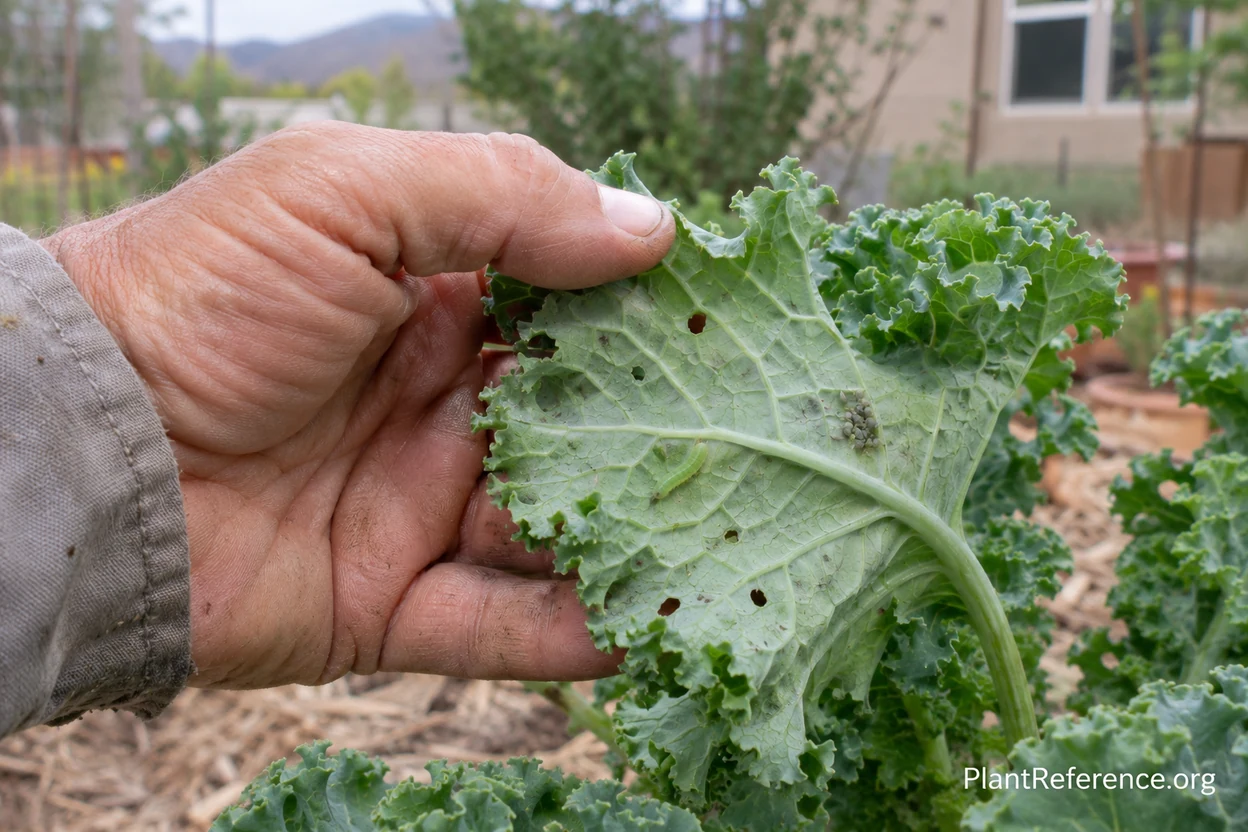
Holes, curled leaves, and unwanted colonies
Green caterpillars and dark droppings often accompany irregular holes. Tiny jumping beetles leave smaller shot-holes, particularly damaging on young seedlings. Inspect both leaf surfaces before choosing a response; hand removal and exclusion can be enough for a small planting.
Gray-green aphids collect in curls and new growth. Dislodge small colonies with water and remove severely infested leaves while preserving enough foliage for recovery. If treatment is necessary, use a product labeled for the identified pest and edible crop, following its directions rather than improvising a stronger mixture.
Bt products intended for caterpillars do not solve an aphid problem. Covers work best over clean plants with secured edges; otherwise they can shelter the insects already inside. Because the harvest is foliage, kale does not require the pollination access of a fruiting crop.
Heat, flowering, and winter limits
Older leaves become tougher with heat and water stress. Harvest smaller leaves and improve moisture consistency instead of expecting fertilizer to repair texture. Bolting is distinct: cold exposure followed by warmth can trigger flowering in susceptible plants, especially after overwintering.
For Zone 6a, plan on useful autumn harvests before counting on winter survival. Protection can help, but exposure and the duration of freezing conditions matter. Swollen, distorted roots or persistent wet-soil wilt warrant diagnosis; suspected clubroot is a reason to review rotation and sanitation, not to assume a quick soil additive will fix the bed.
Harvest & Storage
Pick outer leaves while protecting the central growing point. Leave enough healthy foliage for continued growth rather than turning each harvest into a complete stripping. Small, frequent collections usually fit home cooking better than letting every leaf become large and fibrous.
Harvest in the cool part of the day and refrigerate promptly. Protect leaves from drying without sealing them in a puddle of water. Wash under running water before eating, inspect curls carefully, and discard slimy or decaying leaves rather than trying to rescue them in a cooked dish.
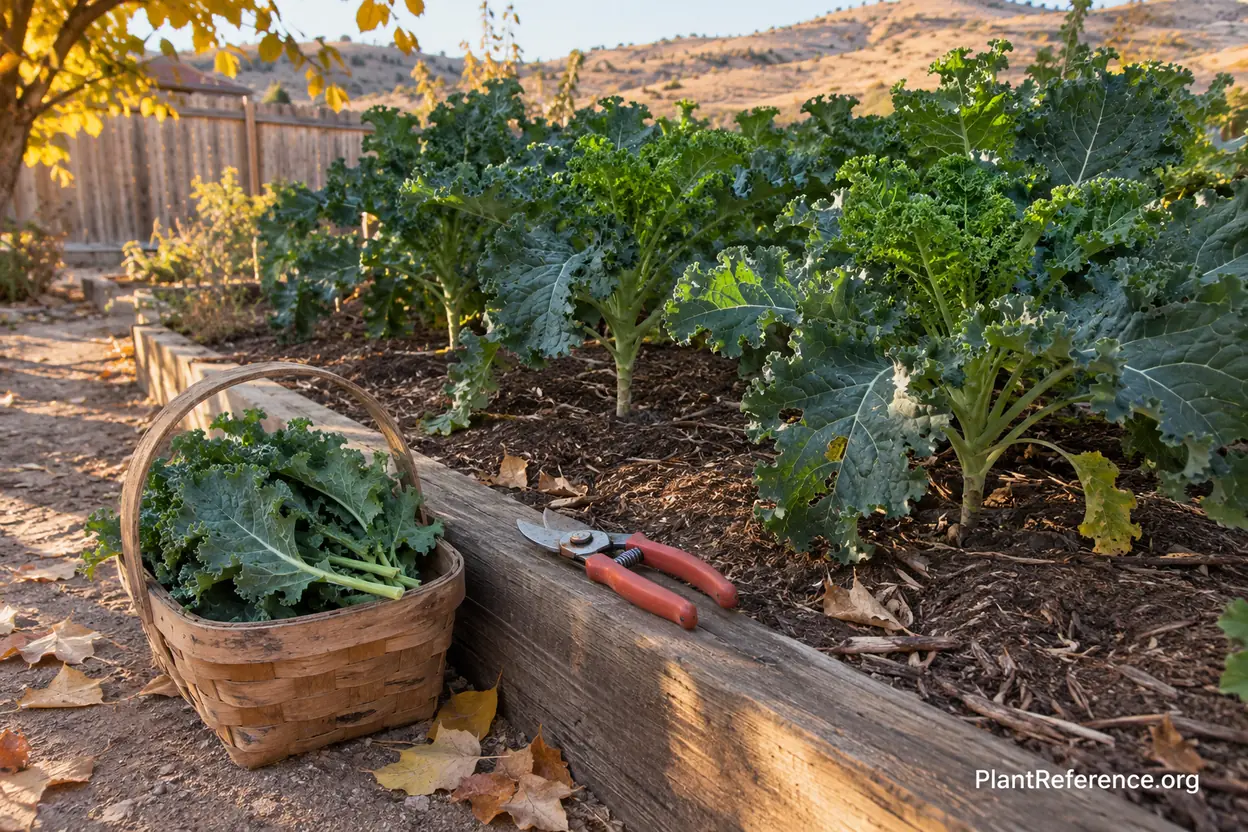
Cool weather can improve sweetness as plants accumulate sugars, but a damaging freeze is not a flavor requirement. Let frozen leaves thaw naturally before handling and judge their condition afterward. Harvest ahead of a severe cold spell when losing the crop would outweigh the hoped-for improvement in taste.
For surplus leaves, blanch and freeze using reliable preservation directions. Record sowing, first harvest, and the point when regrowth slowed; those notes are more useful next year than remembering only that the crop “did fine.” A high-desert garden rewards that kind of specific observation.
Frequently Asked Questions
Reading about plants and recognising them are different skills. These three build the second.
- Daily PlantIdentify the day’s mystery plant from a close-up photograph.
- Keyed OutWork a dichotomous key, lead by lead, to name a hidden specimen.
- Name That PlantName a specimen from botanical clues dealt hardest first.
Free to play, no account needed
Tagged with
Lily is a Master Gardener and high-desert homesteader outside Boise. She and her husband moved to Idaho from the Bay Area and had to completely relearn gardening for a climate with alkaline soil, intense sun, hard freezes, and limited water. Lily now grows a large vegetable garden, maintains a small orchard of cold-hardy fruit trees, and raises cut flowers for the local farmers market. She writes about the specific challenges of intermountain gardening—short seasons, temperature swings, and the importance of soil amendment in high-pH soils. Lily is honest about the learning curve: high-desert gardening is humbling, and she thinks more gardening writers should admit when conditions are genuinely difficult.