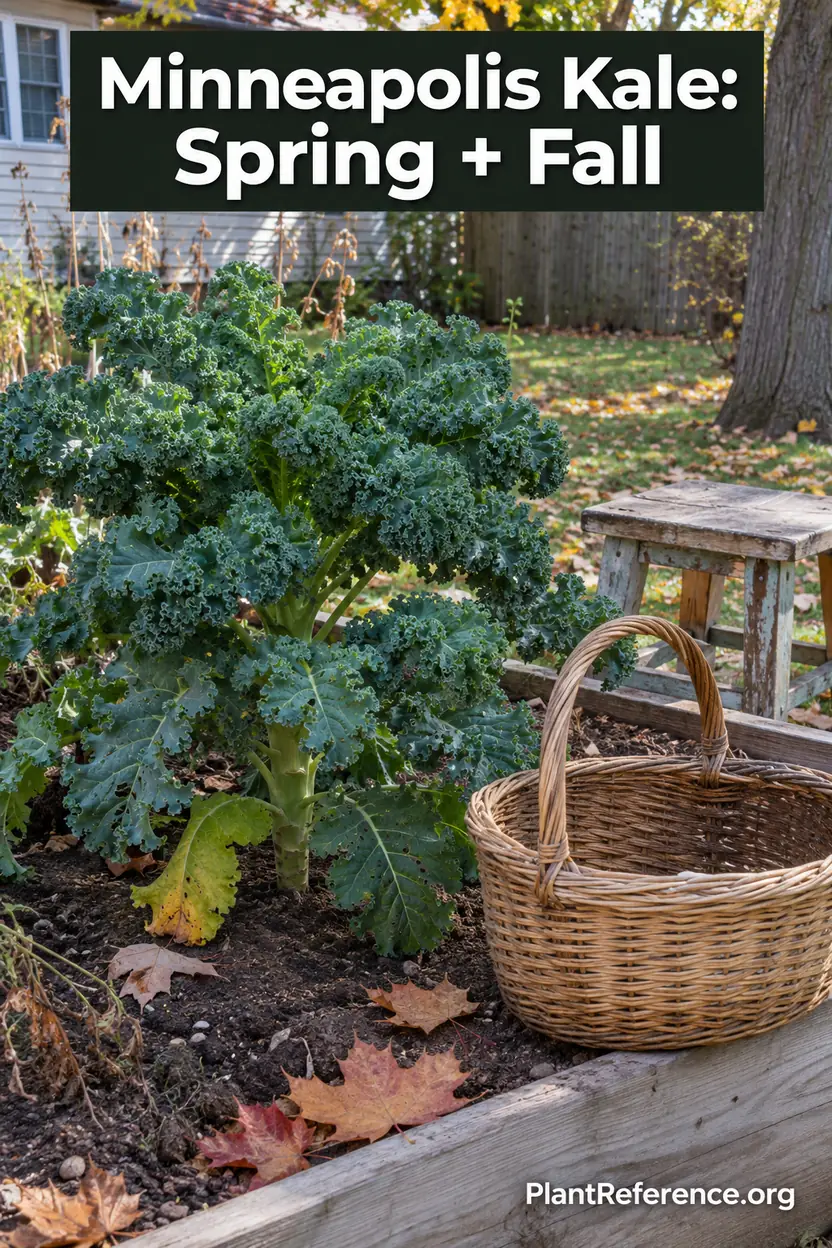
When to Plant Kale in Minneapolis: Zone 4a Guide
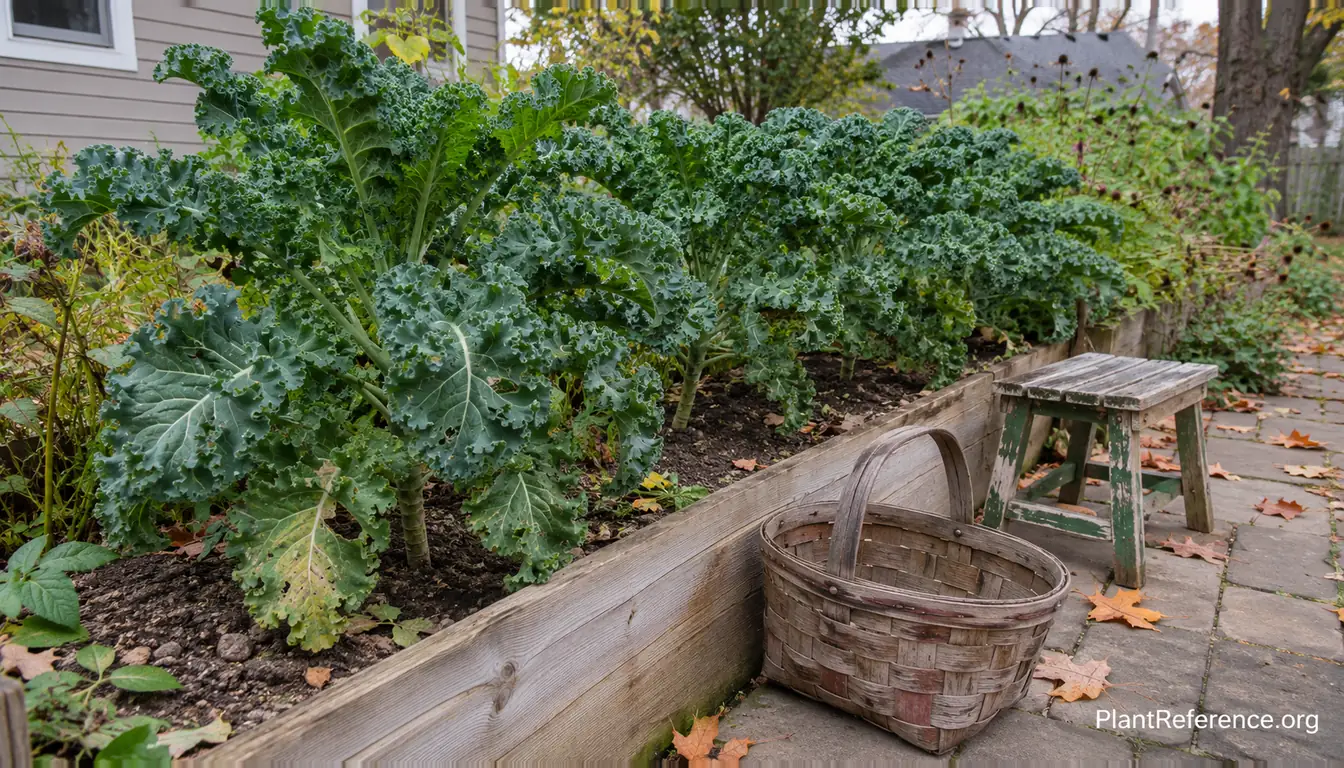
— Image © PlantReference.org 2026
Pets & Toxicity
Recorded toxicity for plants linked in this guide. An unknown status is not a safety assessment.
No linked plant is recorded as toxicDetailsHide
Knowing when to plant kale in Minneapolis means planning two useful windows instead of waiting for summer vegetables to go outside. Kale 🌿Brassica oleracea (BRASS-ih-kah oh-ler-AY-see-ah) tolerates cool conditions, and established plants can keep supplying leaves after tender crops finish. The most rewarding crop often starts in midsummer and matures into autumn.
This guide uses the supplied Zone 4a planning baseline: May 15 last frost, September 30 first frost, and 138 days between them. Those are seasonal reference dates, not a forecast or a guarantee for every yard. Soil condition, exposure, and plant acclimation still decide whether a particular day is suitable.
Plan the bed so you can reach leaves and lift covers comfortably. A smaller planting you can inspect and harvest regularly is more useful than a large patch that is difficult to manage.
Best Kale Varieties for Minneapolis's Climate
Choose for eating quality, plant size, and the season you want to extend. No cultivar makes a northern winter harmless, and a packet's maturity estimate is not a fixed harvest appointment. Cooler autumn weather and shorter days can slow development.
🌿Brassica oleracea 'Winterbor' is a strong choice for a substantial fall planting. Its deeply curled leaves and vigorous growth suit repeated harvests, while its cold tolerance makes it useful for season extension. Expect a broad plant rather than a tiny windowsill crop, and leave room to inspect inside the curls for insects.
Brassica oleracea 'Vates' keeps the crop easier to reach in a small bed or container. Its compact habit, roughly 12–16 inches (30–41 cm) tall in the research profile, reduces the need to work around a tall canopy. The finely curled leaves still need careful pest checks; compact does not mean maintenance-free.
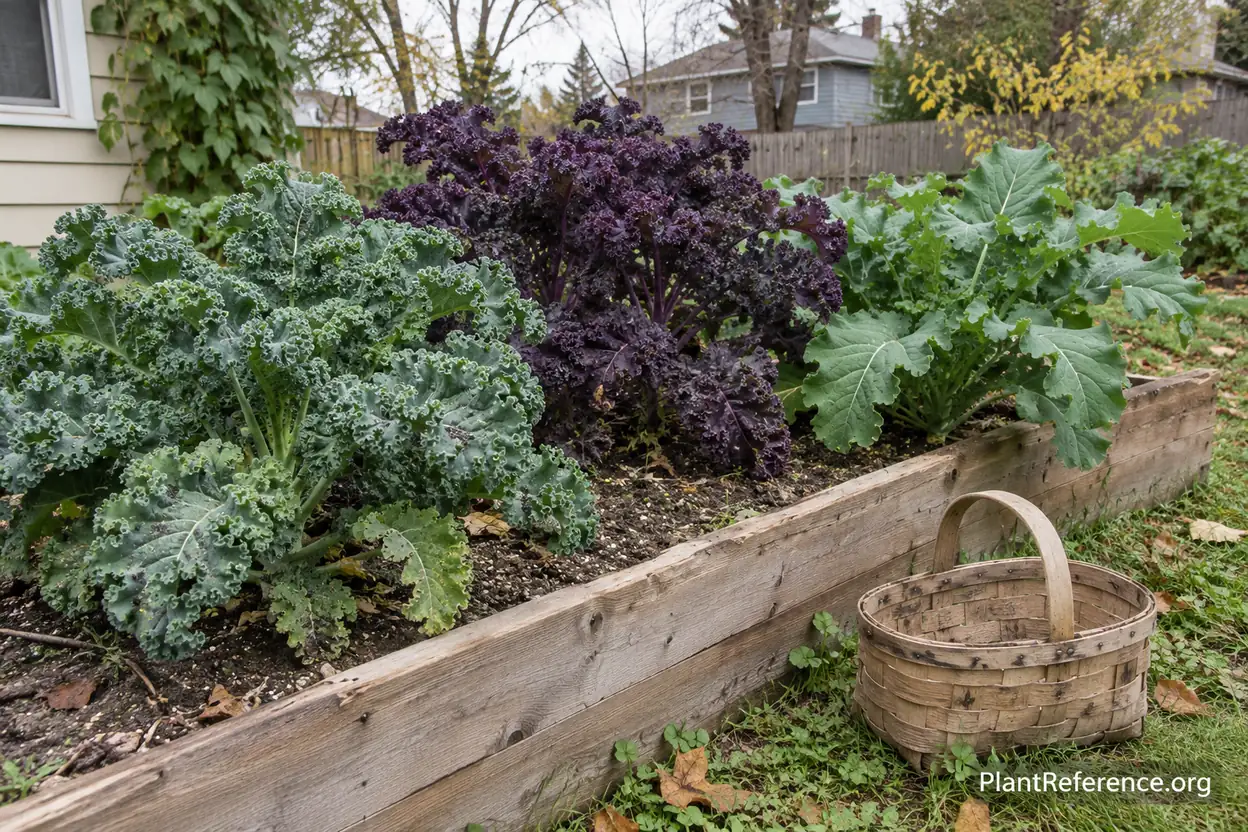
For tender young salad leaves, 🌿Brassica napus 'Red Russian' offers flat, lobed foliage with purple-red veins. The research identifies this cultivar as a different species from the curly cabbage-family kales, despite the simplified plan listing. Its relatively quick 50–60-day maturity range makes it useful when an early harvest matters, but thin leaves need protection from drying winds.
🌿Brassica oleracea 'Lacinato' has long, blistered leaves with a different texture in the kitchen. It is useful for spring and early-autumn harvest, but is less dependable for severe cold than the hardier curly choices. Grow it for the leaves you enjoy eating, not as a promise of unprotected winter production.
🌿Brassica oleracea 'Redbor' supplies deeply curled purple foliage and an upright form. It combines edible harvest with a visible color accent, which can make a mixed vegetable bed easier to navigate. Its color develops with maturity and cold exposure; seedlings will not necessarily resemble a fully colored autumn plant.
Variety | Planning maturity range | Best use | Local consideration |
|---|---|---|---|
60–75 days | Curly cooking greens and fall harvest | Allow room for a vigorous canopy | |
Brassica oleracea 'Vates' | 55–65 days | Compact beds and containers | Shorter plants simplify reaching |
50–60 days | Tender young leaves | Protect thin foliage from drying wind | |
60–75 days | Long leaves for cooking | Less dependable in severe cold | |
60–75 days | Purple curly leaves | Useful edible color in mixed beds |
Read the seed packet to confirm whether its days are counted from sowing or transplanting. The ranges above support comparisons, not a single date that works for every seed lot. Label each row so you can compare actual performance without trying to remember which green plant is which.
For a first planting, two contrasting choices are enough: a compact curly type and a tender flat-leaved type, for example. That gives you a useful kitchen comparison without multiplying seed trays and labels. Keep some room available for the fall sowing rather than using every space in spring.
Specific Planting Dates for Minneapolis
Spring: indoor starts and outdoor options
Counting back six to eight weeks from May 15 gives March 20–April 3 for indoor seed starting. This schedule offers a manageable seedling project without requiring you to gamble the entire crop on the earliest workable outdoor date.
For a cautious transplant schedule, use May 22–29, a seven-to-fourteen-day buffer after the planning last-frost date. Harden plants gradually beforehand and check the forecast. Kale can tolerate cool conditions, but greenhouse-soft seedlings still need adjustment to wind, sun, and outdoor temperatures.
Earlier direct sowing is an option once the bed is workable and not waterlogged. April 17–May 1 provides a practical two-to-four-week pre-frost planning window; a cold, wet spring can push that later. Do not force sowing into frozen or saturated soil simply to meet a printed date.
If packet maturity is counted from transplanting, a May 22–29 transplant plus 50–75 days suggests approximately July 11–August 12 for full-size harvest. If it is counted from sowing, use the sowing date instead. Baby leaves can be available sooner, and actual development remains weather-dependent.
Fall: count backward before summer gets busy
For full-size fall plants, subtract ten to twelve weeks from September 30. That gives July 8–22, earlier than many gardeners expect when autumn still feels far away. This lead time matters because young plants need to build leaf area before shortening days slow growth.
A July 8–22 sowing plus the listed 50–75-day ranges gives an approximate August 27–October 5 maturity window. Favor the earlier sowing for slower cultivars, and treat later dates as increasingly uncertain as light decreases. Do not wait until September to start a full-size crop.
Small succession sowings can spread the workload, but stop treating late sowings as equivalent to midsummer ones. A later patch may provide baby leaves rather than large plants. If seedling care in July heat is difficult, start a small protected tray and transplant carefully once established.
Keep this calendar separate from warm-season crops. When to Plant Peppers in Minneapolis: Complete Guide + Best Varieties for Zone 4a and When to Plant Basil in Minneapolis: Complete Guide + Best Varieties for Zone 4a involve different cold sensitivities. Sharing a garden does not mean sharing a transplant date.
Complete Growing Guide for Minneapolis
Build a reachable, well-drained growing area
Choose a bright site with room for airflow and easy access to water. In a raised bed, make the width fit your reach from the sides instead of assuming you can lean across the middle. Keep paths firm and clear so carrying a basket or moving a stool does not become the hardest part of harvesting.
Good drainage matters more than racing to plant early. Work soil only when it crumbles rather than smears, and incorporate suitable finished compost without turning the bed into a soggy basin. A raised planting area can help where drainage is poor, but it still needs somewhere for excess water to go.
The research gives a broad pH range of 6.0–7.5. Use a soil test before adding lime or other amendments; yellow leaves alone cannot tell you that pH is wrong. Avoid borrowing a liming recommendation from another region and applying it automatically to Minnesota soil.
Sow, thin, and transplant for manageable plants
Follow the packet's sowing depth and keep the seed zone evenly moist while seedlings establish. Label the sowing date immediately. For small indoor batches, place trays where watering and observation are easy rather than somewhere that requires awkward lifting.
The plan uses 12-inch (30 cm) plant spacing as a starting point. Allow additional room when vigorous cultivars, airflow, or comfortable hand access require it. Dense baby-leaf sowings are a separate harvest strategy; thin plants intended to grow into full-sized specimens.
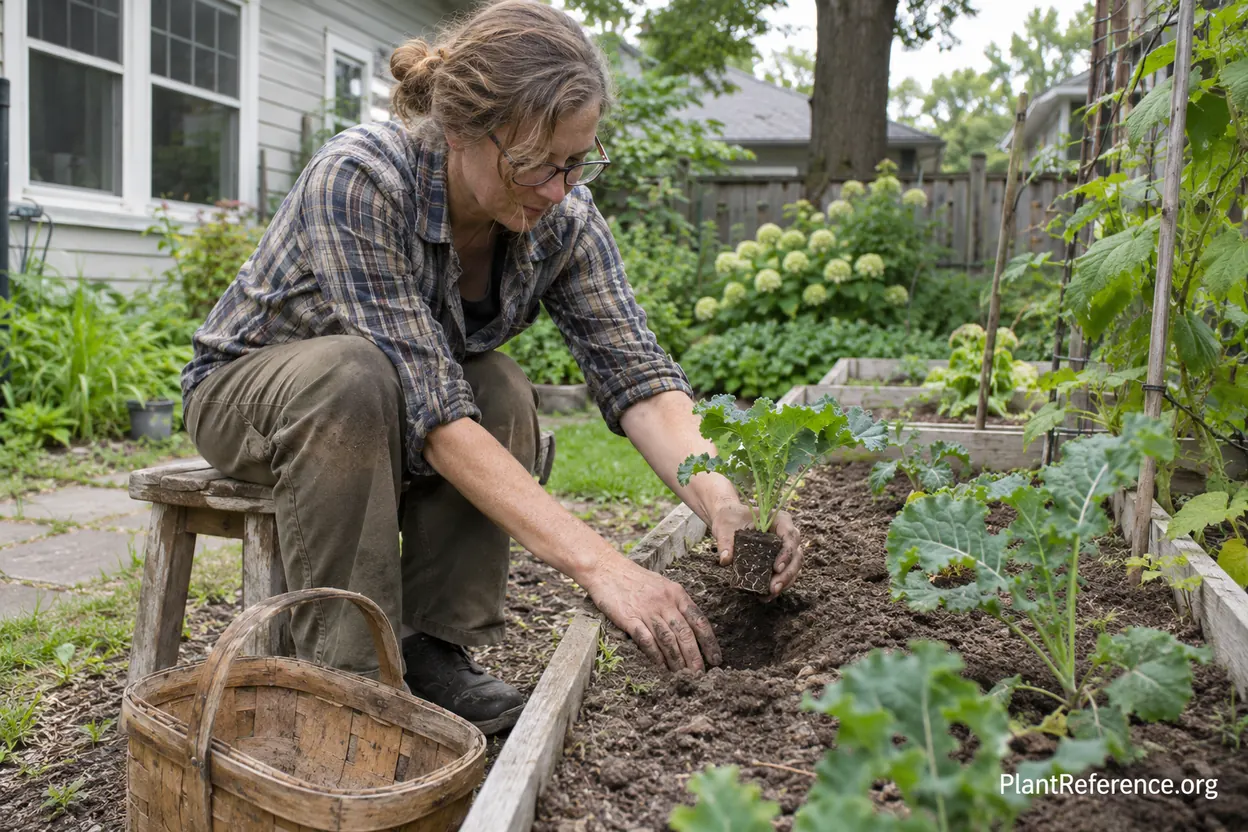
Transplant gently and keep the root ball intact where practical. Set the plant at its seedling depth, settle soil around it, and water to establish contact. Do not bury a weak, stretched stem deeply as a substitute for improving seedling light.
Water and feed for steady leaves
Check soil moisture rather than relying only on yesterday's weather. Established plants need water reaching the root zone, while newly sown rows need attention near the surface. Containers and exposed raised beds can dry faster than sheltered ground beds.
Aim for steady growth without repeated drought followed by saturation. Water at soil level where practical to limit splashing onto foliage, and avoid leaving plants crowded and wet overnight. A watering wand or hose positioned within reach can reduce carrying and stretching.
Kale needs nutrients for leaf production, but more fertilizer does not always produce a better crop. Use soil-test guidance and product directions, accounting for nutrients already supplied by compost or potting mix. Excess nitrogen can encourage soft growth and aphid pressure.
Reassess established plants several weeks after planting rather than feeding automatically every time a lower leaf yellows. Root stress, pests, shading, and natural leaf age can resemble nutrient shortage. Observe the whole plant before adding another input.
Protect the crop while preserving access
Install suitable insect-exclusion cover promptly over a clean planting and secure the edges. Covering an already infested patch can trap pests inside, so inspect first. Use supports where needed to keep access and plant growth manageable.
Make one side easy to open for inspection and harvest. Heavy weights that you cannot lift comfortably defeat the purpose of an accessible bed; use an anchoring method you can handle safely. Ventilate or remove inappropriate covers during warm conditions instead of assuming breathable fabric cannot overheat.
Coordinate neighboring crops so taller summer plants do not shade the kale. When to Plant Cucumbers in Minneapolis: Complete Guide + Best Varieties for Zone 4a and When to Plant Squash in Minneapolis: Complete Guide + Best Varieties for Zone 4a help plan the sprawling part of the garden separately.
Troubleshooting Minneapolis-Specific Problems
Holes, curled leaves, and hidden insects
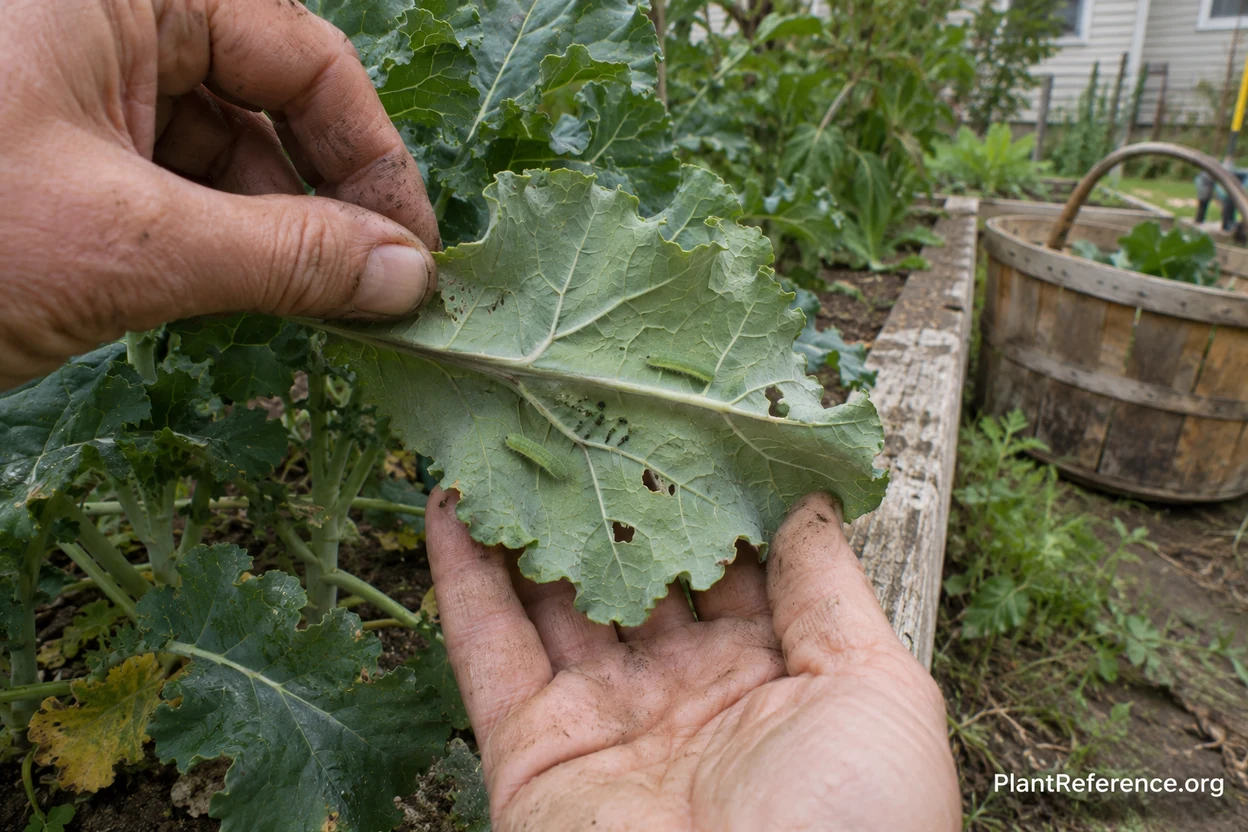
Large irregular holes with caterpillars or droppings suggest cabbageworm or looper feeding. Small shot-like holes on seedlings can point toward flea beetles. Turn leaves over and inspect growing points instead of choosing a spray from the hole pattern alone.
Hand removal is practical for a small reachable patch. Exclusion covers help prevent new egg-laying when properly installed. If a caterpillar treatment is needed, use a product labeled for the crop and pest, following its directions rather than applying it on a generic weekly schedule.
Aphids gather in leaf creases and can be difficult to see in tightly curled varieties. A directed water spray can dislodge small colonies, but check again afterward. Avoid assuming every curled leaf needs fertilizer, especially when visible insects are present.
Heat, bitterness, and premature flowering
Summer warmth and uneven water supply can make leaves tougher or more bitter. Harvest smaller leaves, maintain moisture, and plan the second crop for cooling weather. Heat does not make every plant bolt immediately; flowering also relates to maturity and prior cold exposure.
Do not spend the entire season rescuing a poor-quality old planting if a timely fall sowing is feasible. A fresh crop can simplify care and improve leaf quality. When to Plant Lettuce in Minneapolis: Complete Guide + Best Varieties for Zone 4a offers another cool-season crop to consider in the broader planting plan.
Disease and unreliable winter protection
Persistent wilting with swollen roots needs a diagnosis rather than repeated extra watering. Clubroot and other problems require management beyond this planting calendar. Keep suspect soil from moving between beds, clean tools, and seek local horticultural advice for recurring losses.
Rotate brassicas rather than putting kale after cabbage or broccoli in the same troubled bed. Leaf lesions also deserve inspection, particularly when splashing water and crowding accompany spreading damage. Improving drainage and airflow is useful, but it does not identify a pathogen.
Zone 4a cold is a real limit. A cover or cold frame can extend harvest, yet unheated protection does not guarantee living plants or new growth through the entire winter. Wind exposure, acclimation, snow cover, and freeze duration all influence results.
Harvest & Storage
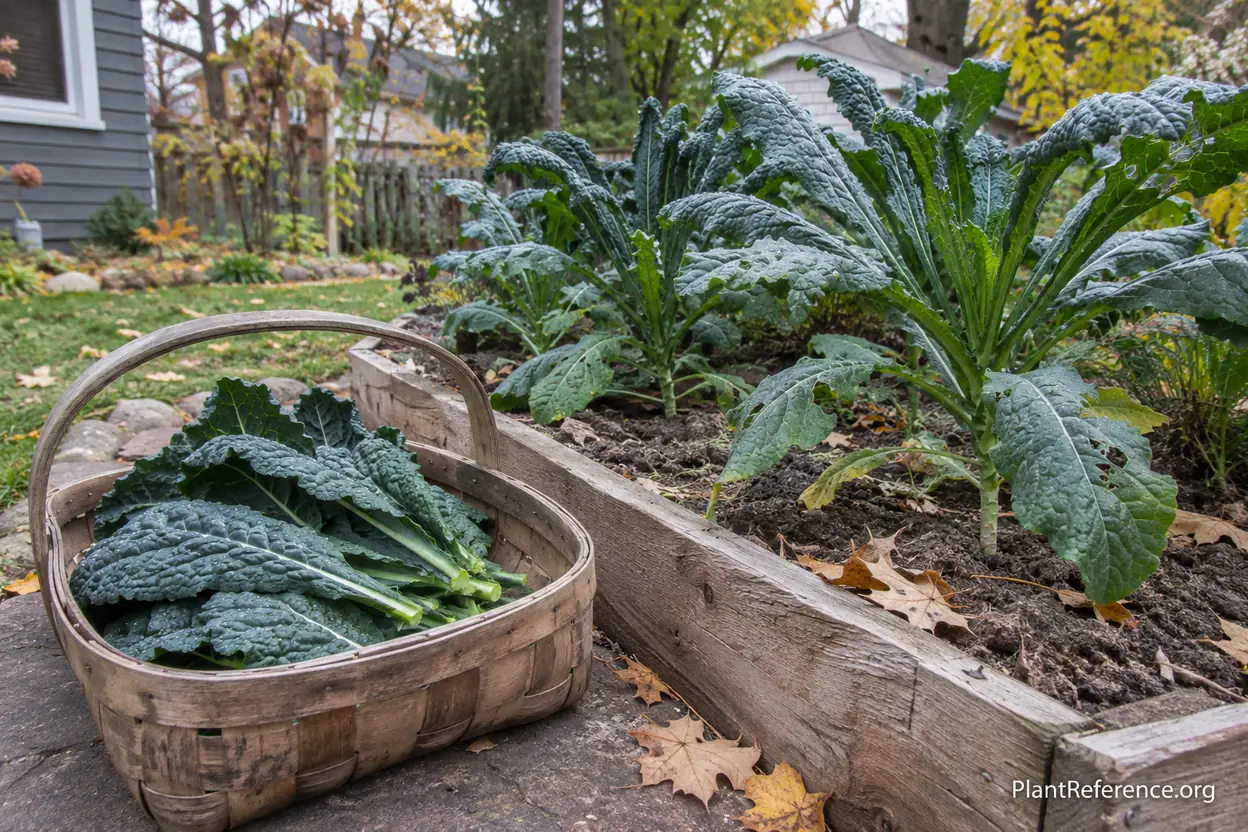
Pick outer leaves while preserving the central growing point. Take no more than about one-third of the plant at a time, and leave enough healthy foliage to support continued growth. Frequent modest harvests are easier on the plant and often easier on the gardener than one heavy picking session.
Use a basket or tray placed at a comfortable height rather than repeatedly bending to the ground. A stool beside a narrow bed lets you harvest, check leaf undersides, and remove damaged material in one visit. Keep cutting tools clean and easy to grip.
Cold exposure can increase sugars and improve perceived sweetness, but frost is not a requirement before eating kale. Harvest what is ready before a damaging freeze rather than sacrificing the crop for an imagined perfect flavor date. Let frozen leaves thaw naturally before handling them.
Refrigerate sound leaves promptly, keeping them from drying out without leaving them waterlogged. Wash before use and discard spoiled material. For a large surplus, use a reliable blanching-and-freezing method rather than assuming raw leaves will retain their quality indefinitely.
Plan other root and leaf harvests around the same comfortable workflow. When to Plant Carrots in Minneapolis: Complete Guide + Best Varieties for Zone 4a and When to Plant Onions in Minneapolis: Zone 4a Dates + Varieties help organize the rest of the harvest area.
Keep notes on sowing date, variety, first picking, and the point when quality declines. Those observations are more useful next year than a generic promise of months of harvest. Compare local results carefully with When to Plant Kale in Anchorage: Complete Guide + Best Varieties for Zone 4b; northern gardens share challenges, but their calendars are not interchangeable.
Frequently Asked Questions
Reading about plants and recognising them are different skills. These three build the second.
- Daily PlantIdentify the day’s mystery plant from a close-up photograph.
- Keyed OutWork a dichotomous key, lead by lead, to name a hidden specimen.
- Name That PlantName a specimen from botanical clues dealt hardest first.
Free to play, no account needed
Tagged with
Amanda came to gardening through an unexpected route—after developing chronic pain from rheumatoid arthritis in her late 20s, she started researching adaptive gardening techniques that would allow her to continue growing plants without aggravating her condition. Now based in Minneapolis, she writes about accessible gardening, raised bed designs for people with mobility challenges, and ergonomic tools that reduce strain. Amanda completed a certificate in sustainable urban agriculture and volunteers with a nonprofit that builds accessible community gardens. She grows vegetables, herbs, and flowers in waist-high raised beds she designed herself. Her writing focuses on practical solutions that work for real people with real limitations—whether that's arthritis, limited mobility, or just a bad back.