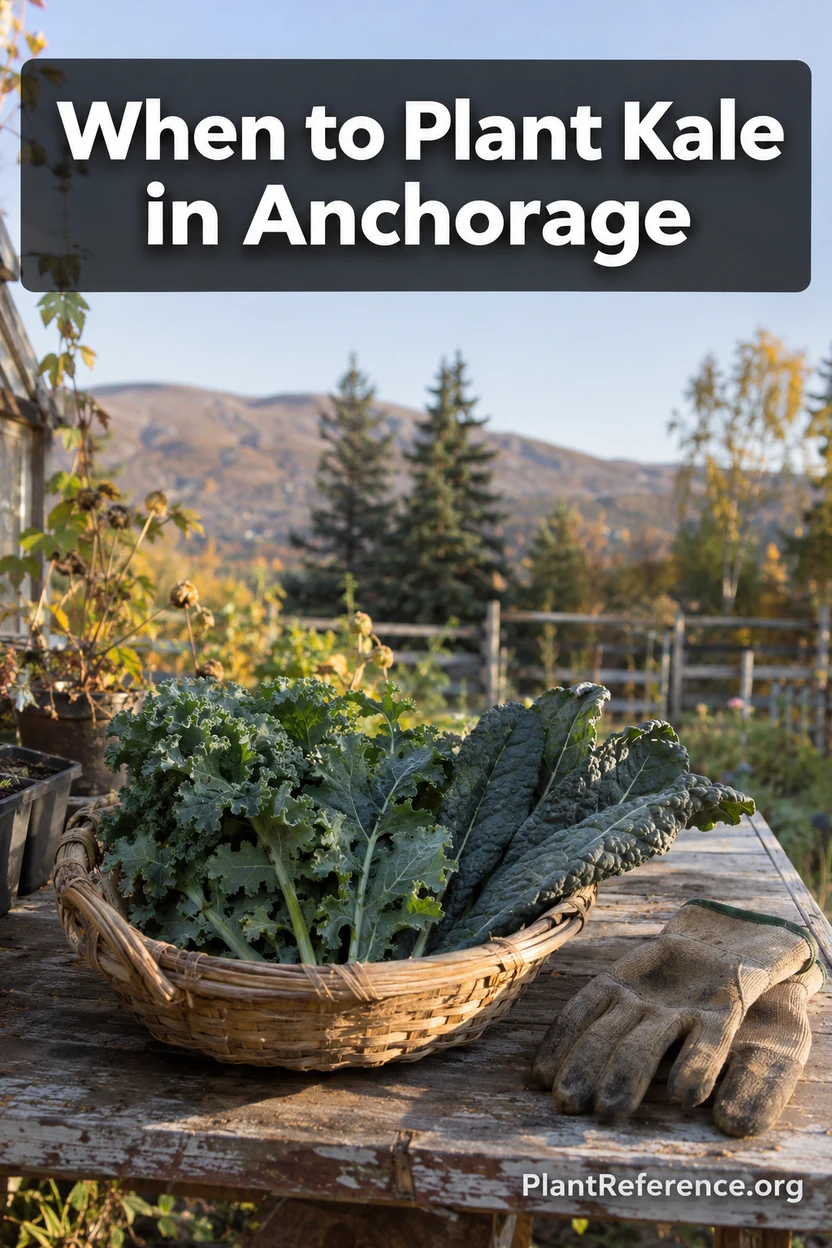
When to Plant Kale in Anchorage: Zone 4b Growing Guide
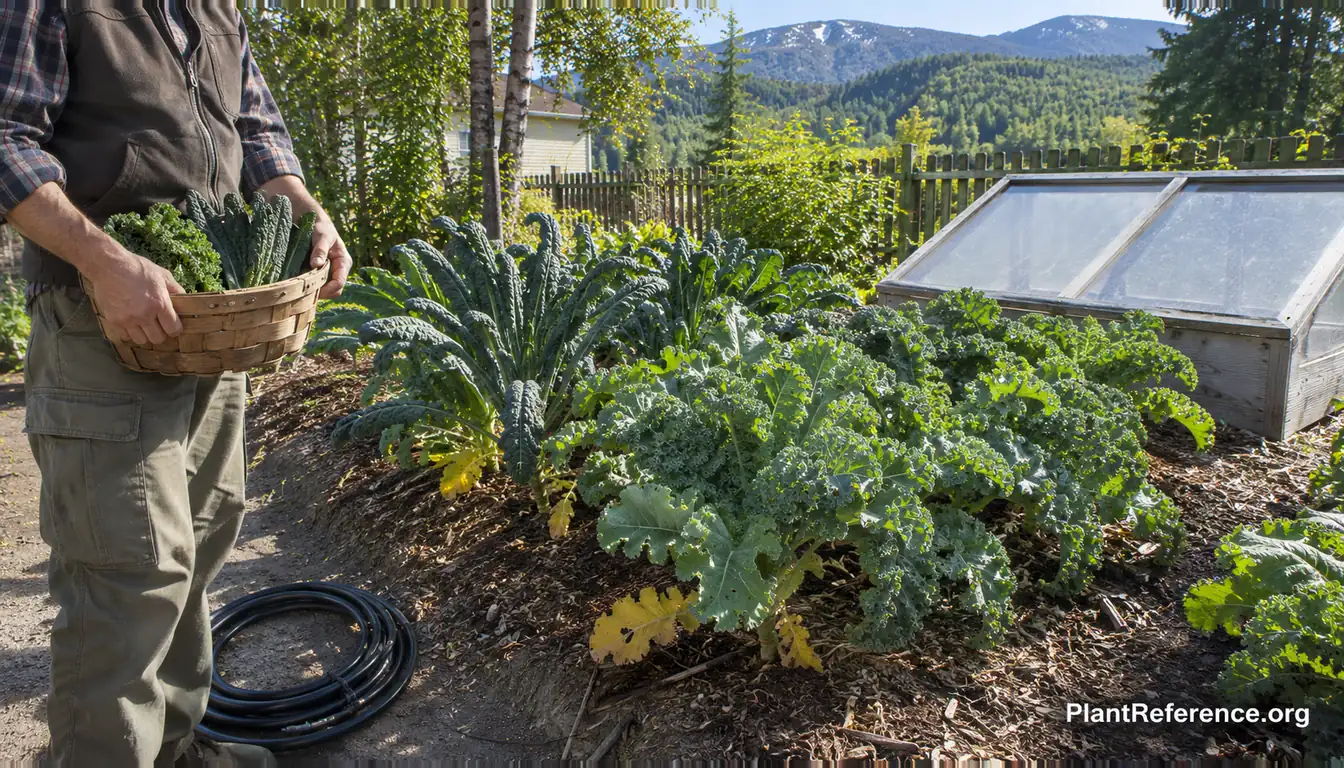
— Image © PlantReference.org 2026
Pets & Toxicity
Recorded toxicity for plants linked in this guide. An unknown status is not a safety assessment.
No linked plant is recorded as toxicDetailsHide
When to plant kale in Anchorage starts with a simple rule: give the crop a head start, then use the summer light rather than waiting for a long autumn. Sow indoors March 25–April 8 for transplanting May 27–June 3, and plan any second sowing for June 23–July 7.
The stored Zone 4b city record uses May 20 and September 15 as frost anchors, giving a 118-day planning interval. These are seasonal reference dates, not a forecast; Alaska gardens vary with elevation, shelter, and how quickly a particular bed thaws and drains. Kale tolerates cool weather, but that does not make frozen soil a suitable seedbed.
Long days are an advantage only when roots have water, air, and nutrients. Coordinate other greens with When to Plant Lettuce in Anchorage: Complete Guide + Best Varieties for Zone 4b, and keep a little room for an early succession rather than filling every corner on planting day.
Best Kale Varieties for Anchorage's Climate
The best variety is one you enjoy eating and can keep growing well in the space available. A tender salad leaf, a sturdy cooking leaf, and an ornamental purple leaf solve different problems. None makes inconsistent irrigation disappear.
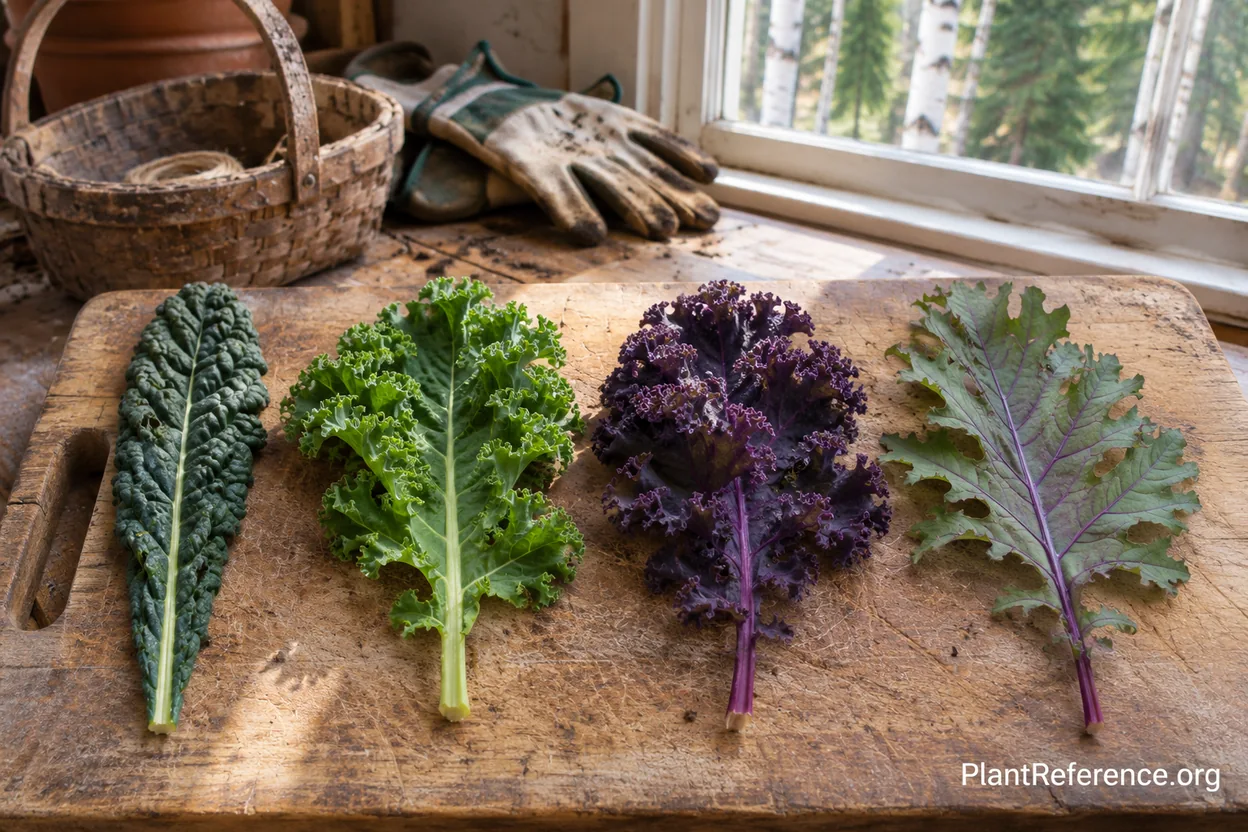
Two useful starting points
🌿Brassica oleracea 'Lacinato' has long, dark, heavily textured leaves that are easy to strip from the stem and chop. Its earthy flavor works well in soups and cooked dishes. Relative heat tolerance makes it a useful shoulder-season choice, but it is not the hardiest option for leaving exposed through severe winter weather.
Brassica oleracea 'Vates' is the compact alternative, with finely curled blue-green leaves on plants around 12–16 inches (30–41 cm) tall. That size makes harvesting and covering a small bed straightforward. The open-pollinated variety is also useful in roomy containers, provided you give its roots enough space rather than confusing a short plant with a tiny root system.
Both are reasonable first choices if you want a manageable crop without collecting every packet in the seed rack. Put the compact selection where taller leaves would block access. Give the taller, narrow-leaf type a position where you can reach its outer leaves without leaning over another crop.
Tender salads or a robust fall bed
🌿Brassica napus 'Red Russian' produces flat, lobed leaves with purple veins and a tender texture. At roughly 50–60 days to maturity, it is a useful quick option, especially when small salad leaves are the goal. Thin foliage needs protection from drying wind; this is not the variety to neglect in a hot corner and expect to remain delicate.
🌿Brassica oleracea 'Winterbor' is a vigorous F1 hybrid with deeply curled leaves and strong cold tolerance. Plants can reach 2–3 feet (60–90 cm), so leave room for the canopy and your harvest path. Mature leaves have more substance than baby salad kale, making this a sensible choice for regular cooking and a fall harvest bed.
🌿Brassica oleracea 'Redbor' adds an upright frame and purple curly foliage. Cooler conditions often deepen its color, which is useful if the vegetable planting is also part of the view from the house. Attractive foliage still needs the same inspection for aphids hidden inside curls as a plain green plant.
Variety | Days to maturity | Best for | Local growing consideration |
|---|---|---|---|
60–75 | Soups and textured salads | Useful heat tolerance; protect from severe cold | |
60–75 | Curly cooking leaves | Vigorous growth needs adequate room | |
50–60 | Tender salad greens | Avoid exposed, drying positions | |
60–75 | Colorful edible beds | Purple curls can conceal aphid colonies | |
Brassica oleracea 'Vates' | 55–65 | Compact plots and containers | Low growth simplifies covering and access |
Treat the maturity ranges as comparisons, not appointments. Check whether your seed supplier counts from sowing or transplanting, and allow for slower growth as autumn daylight declines. Baby-leaf harvests come earlier, but repeated cutting from small plants is not the same yield as harvesting a mature stand.
Try two contrasting types in the same season and record which you actually bring into the kitchen. Variety selection becomes much easier when the question is “Which leaves did we use?” rather than “Which packet promised the biggest plant?”
Specific Planting Dates for Anchorage
Use May 20 as the spring planning anchor and September 15 as the autumn one. Zone 4b describes winter cold, not the day a bed becomes ready to plant. A sunny raised bed and a shaded low spot can behave very differently within the same neighborhood.
Indoor starts and spring transplanting
Counting back six to eight weeks from May 20 gives March 25–April 8 for indoor sowing. Start in clean containers, use a suitable seed-starting medium, and provide strong light after emergence. If plants fill their cells before the bed is ready, pot them on rather than holding them dry and hungry.
The conservative transplant window is May 27–June 3, seven to fourteen days after the frost anchor. Harden seedlings gradually for about a week, beginning in shelter and increasing exposure to light and wind. Earlier planting is possible for acclimated kale when soil and protection are suitable, but there is no reward for setting a healthy transplant into cold mud.
Direct sow in late May, once the bed is workable and the seed zone can stay evenly moist. This is the straightforward option for gardeners without indoor lights. Choose quicker varieties or plan baby-leaf harvests if establishment is delayed; do not assume long daylight cancels every setback.
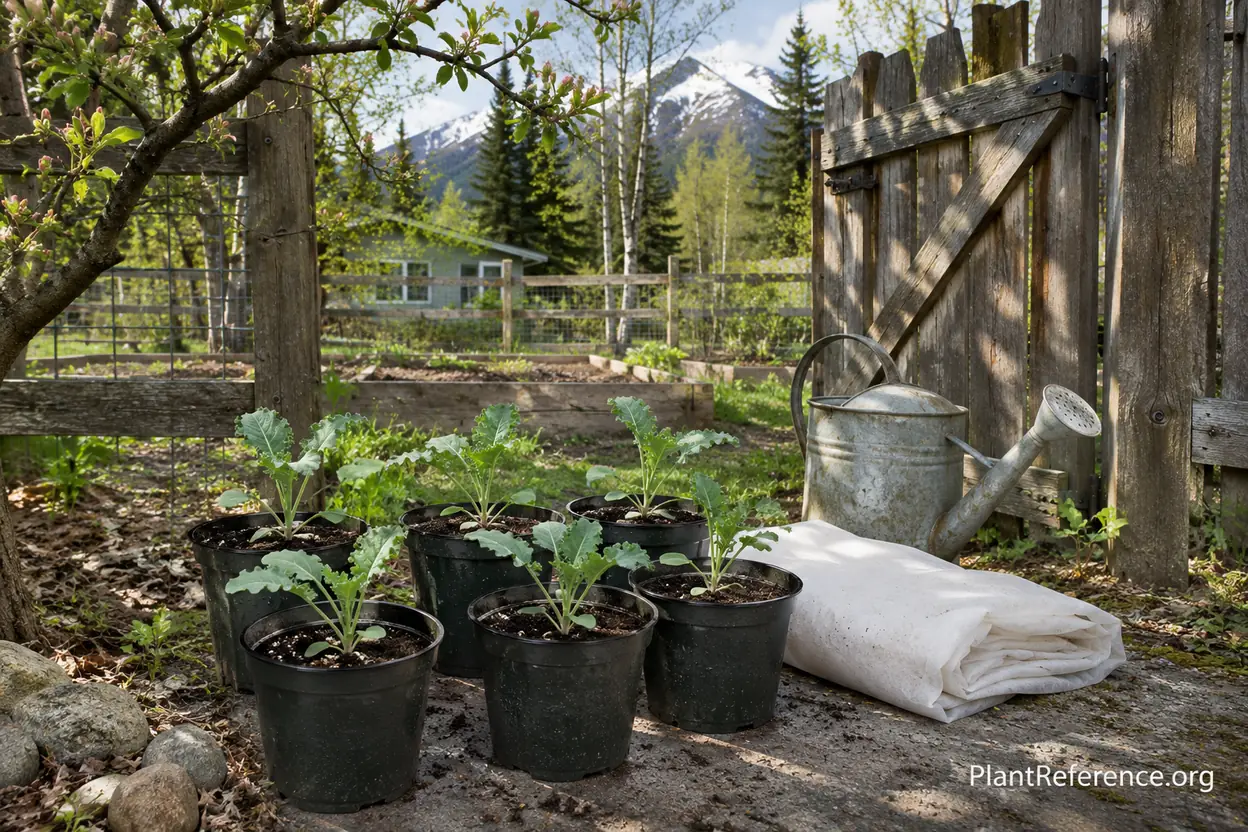
An early succession for autumn
Count ten to twelve weeks back from September 15 and the second sowing falls on June 23–July 7. That can feel early for a fall crop, but plants need size before growth slows. Use the earlier end for slower varieties and exposed beds, and consider keeping healthy spring plants producing instead of replacing everything.
For packets counting 50–75 days from transplanting, May 27–June 3 gives a broad July 16–August 17 mature-harvest estimate. A seed-based 50–75-day range for June 23–July 7 suggests August 12–September 20, before any seasonal slowdown. The late end extends beyond the frost anchor, so late sowings carry more risk for full-size harvests.
Read Pacific Northwest Winter Garden: July-August Sowing for the principle of growing leaves before winter, not as a calendar to copy unchanged. Coastal winter conditions are not ours. Keep a record of sowing, emergence, and first picking; next year's decisions benefit from those three dates more than from a hopeful packet photograph.
Complete Growing Guide for Anchorage
Start with thawed, well-drained soil
A bed that looks ready on top may still be cold and wet underneath. Check below the surface before digging, and let saturated ground drain instead of working it into dense clods. Raised beds can improve drainage and access, but they do not remove the need to understand the soil beneath them.
Test pH and fertility before adding amendments. Kale's useful pH range is roughly 6.0–7.5; apply lime only when a soil test supports it, not because a generic brassica guide says so. How to Test Garden Soil: Jar, Ribbon & pH Tests explains what simple observations can reveal and where laboratory testing adds useful detail.
Work finished compost into the bed according to its condition and nutrient history. Compost improves a growing system; it is not a substitute for drainage. Soil Health 101: How to Build Living, Productive Garden Soil gives the background, while How to Improve Clay Soil Without Making It Worse is useful when the real obstacle is dense structure.
Use the light without crowding
Choose a bright position with reasonable shelter and easy access. The long summer day helps a healthy stand make leaves, but crowding still forces plants to compete. Begin around 12 inches (30 cm) apart for compact types and allow extra room for vigorous plants and your hands at harvest.
Follow the packet's seed depth and thin seedlings promptly. For transplants, keep the established planting depth, firm soil gently around the root ball, and water it in. Check the nursery root ball separately during establishment because it can dry differently from the surrounding garden soil.
A row that is easy to reach is easier to inspect and easier to harvest well. Leave a path instead of planning to step between plants after they expand. Raised Bed Soil Settling and Compaction: Prevention and Solutions helps explain why keeping feet off the growing area matters.
Water according to the roots
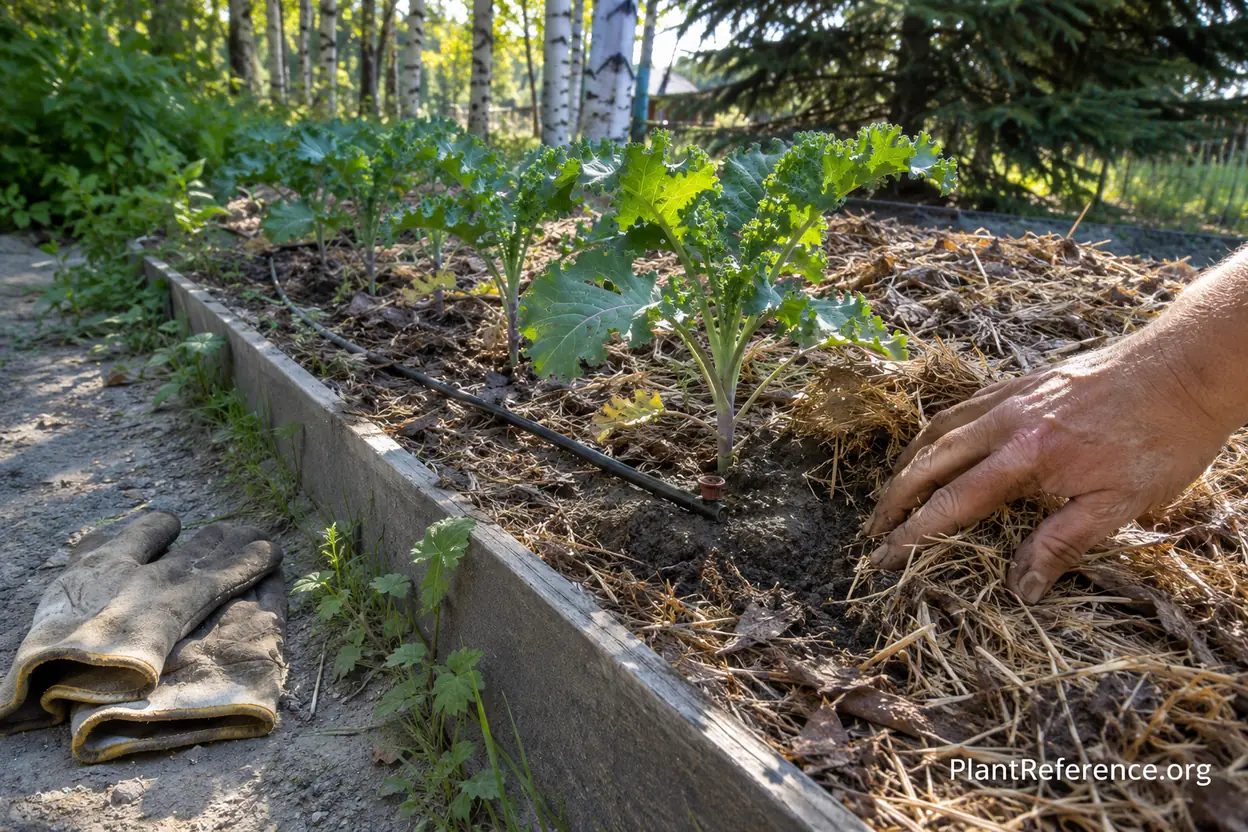
Cool air does not guarantee moist soil. Wind, long daylight, and a small container can dry a planting while the weather still feels pleasantly chilly to the gardener. Check beneath the surface, water the root zone, and confirm that irrigation reaches more than one narrow spot beside a stem.
Avoid leaving roots continuously saturated. Persistent wilt in moist soil deserves inspection, not another automatic soaking. Where possible, water early and direct it toward soil so leaves are not repeatedly splashed and left wet.
Use mulch after plants are established when it helps retain moisture and suppress weeds, but do not bury stems or smother emerging seedlings. On a cold spring bed, allow the soil to warm before applying a heavy blanket. For pots, Container Gardening: Pots, Soil, Water & Yields helps separate container needs from in-ground routines.
Feed for steady production
Use the soil report and fertilizer label to decide what to add. Kale needs nitrogen to make leaves, but excess encourages soft growth and can worsen aphid problems. Yellow lower leaves can also reflect old age, wet roots, or a damaged root system; fertilizer is not a diagnosis.
Reassess growth after establishment and after repeated picking. A measured supplement is more useful than applying several overlapping products every time growth pauses. DIY Organic Fertilizer Blends: A Soil-Test-First Guide provides a practical framework for making that decision without treating organic inputs as unlimited inputs.
Covers are useful tools, not a second climate
Install lightweight cover over clean plants to reduce insect access and buffer some weather stress. Secure the edges, inspect underneath, and leave enough room for leaves to grow without constant abrasion. Kale grown for foliage does not need pollinators to enter, so you can manage the cover around crop health rather than flowering.
Cold frames and enclosed tunnels need ventilation when sun warms them. A cool forecast outside does not tell you the temperature under a closed lid. Check plants and conditions inside before deciding a cover should stay shut all day.
Prepare a drained bed before taking seedlings out of their pots.
Harden plants gradually instead of moving directly from indoor light to open exposure.
Check both the root ball and surrounding soil during establishment.
Secure covers without pinning fabric tightly against growing leaves.
Reserve a small area for the early succession and keep its sowing date visible.
Troubleshooting Anchorage-Specific Problems
Slow growth and wet roots
A pale, stationary plant is not necessarily asking for more fertilizer. Check soil temperature, drainage, and the root ball before feeding again. Newly transplanted kale can pause while it establishes, particularly when the bed stays cold.
If low ground remains wet, correct drainage or choose a better position for the next planting. Do not add sand or lime as an automatic fix. Best Soil Test Kits for Home Gardeners helps distinguish useful test information from guesses based only on leaf color.
Holes, curled leaves, and unwanted colonies
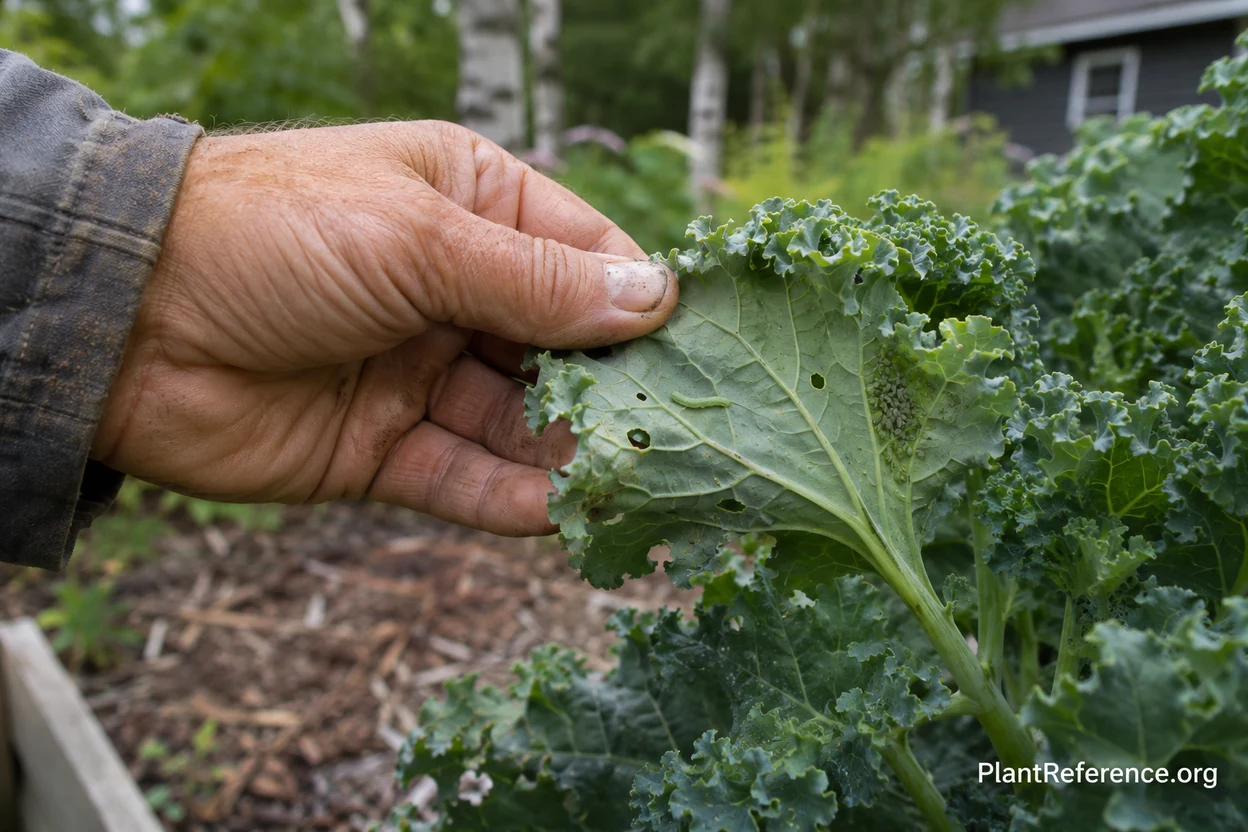
Green caterpillars and dark droppings often accompany irregular holes. Tiny jumping beetles leave smaller shot-holes, particularly damaging on young seedlings. Inspect both leaf surfaces before choosing a response; hand removal and exclusion can be enough for a small planting.
Gray-green aphids collect in curls and new growth. Dislodge small colonies with water and remove severely infested leaves while preserving enough foliage for recovery. If treatment is necessary, use a product labeled for the identified pest and edible crop, following its directions rather than improvising a stronger mixture.
Bt products intended for caterpillars do not solve an aphid problem. Covers work best over clean plants with secured edges; otherwise they can shelter the insects already inside. Because the harvest is foliage, kale does not require the pollination access of a fruiting crop.
Heat, flowering, and winter limits
Older leaves become tougher with heat and water stress. Harvest smaller leaves and improve moisture consistency instead of expecting fertilizer to repair texture. Bolting is distinct: cold exposure followed by warmth can trigger flowering in susceptible plants, especially after overwintering.
For Zone 4b in Alaska, plan on summer and early autumn harvests before counting on winter survival. Protection can help, but exposure and the duration of freezing conditions matter. Swollen, distorted roots or persistent wet-soil wilt warrant diagnosis; suspected clubroot is a reason to review rotation and sanitation, not to assume a quick soil additive will fix the bed.
Harvest & Storage
Pick outer leaves while protecting the central growing point. Leave enough healthy foliage for continued growth rather than turning each harvest into a complete stripping. Small, frequent collections usually fit home cooking better than letting every leaf become large and fibrous.
Harvest in the cool part of the day and refrigerate promptly. Protect leaves from drying without sealing them in a puddle of water. Wash under running water before eating, inspect curls carefully, and discard slimy or decaying leaves rather than trying to rescue them in a cooked dish.
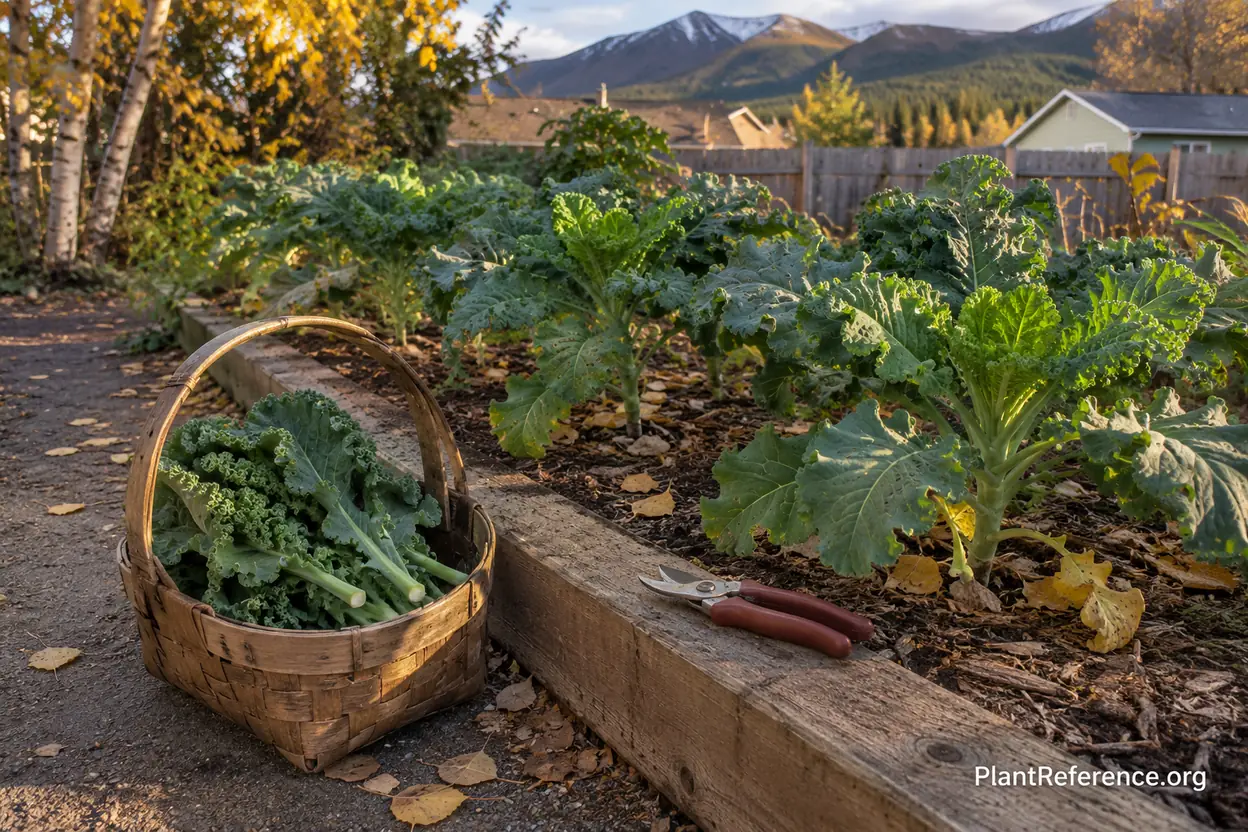
Cool weather can improve sweetness as plants accumulate sugars, but a damaging freeze is not a flavor requirement. Let frozen leaves thaw naturally before handling and judge their condition afterward. Harvest ahead of a severe cold spell when losing the crop would outweigh the hoped-for improvement in taste.
For surplus leaves, blanch and freeze using reliable preservation directions. Record sowing, first harvest, and the point when regrowth slowed; those notes are more useful next year than remembering only that the crop “did fine.” A northern garden rewards that kind of specific observation; the season is short enough that a useful note earns its space.
Frequently Asked Questions
Reading about plants and recognising them are different skills. These three build the second.
- Daily PlantIdentify the day’s mystery plant from a close-up photograph.
- Keyed OutWork a dichotomous key, lead by lead, to name a hidden specimen.
- Name That PlantName a specimen from botanical clues dealt hardest first.
Free to play, no account needed
Tagged with
Tom is a lifelong Alaskan who gardens in Anchorage, where the growing season is short but intense. He works for the state cooperative extension service and has spent years figuring out what works in a climate where the ground freezes deep, the growing season starts in late May, and you get 19 hours of daylight in June. Tom grows cold-hardy vegetables, maintains a collection of boreal-adapted perennials, and experiments with season extension using cold frames and row covers. He writes about the realities of northern gardening—the unique advantages (those long summer days produce remarkable growth) and the genuine limitations. Tom's tone is calm and practical, with the quiet humor of someone who's gardened through Alaskan winters for decades.