Image 1 of 3
1 / 3
Plant Reference
Brassica, Genus, napus, Species, 'Red Russian', Cultivar,
- Genus & species
- Cultivar
red Russian kale
Open-pollinated cultivar; the species B. napus originated from a cross between B. oleracea and B. rapa in the Mediterranean/European region
SunFull Sun – Part Shade
WaterMedium
Overview
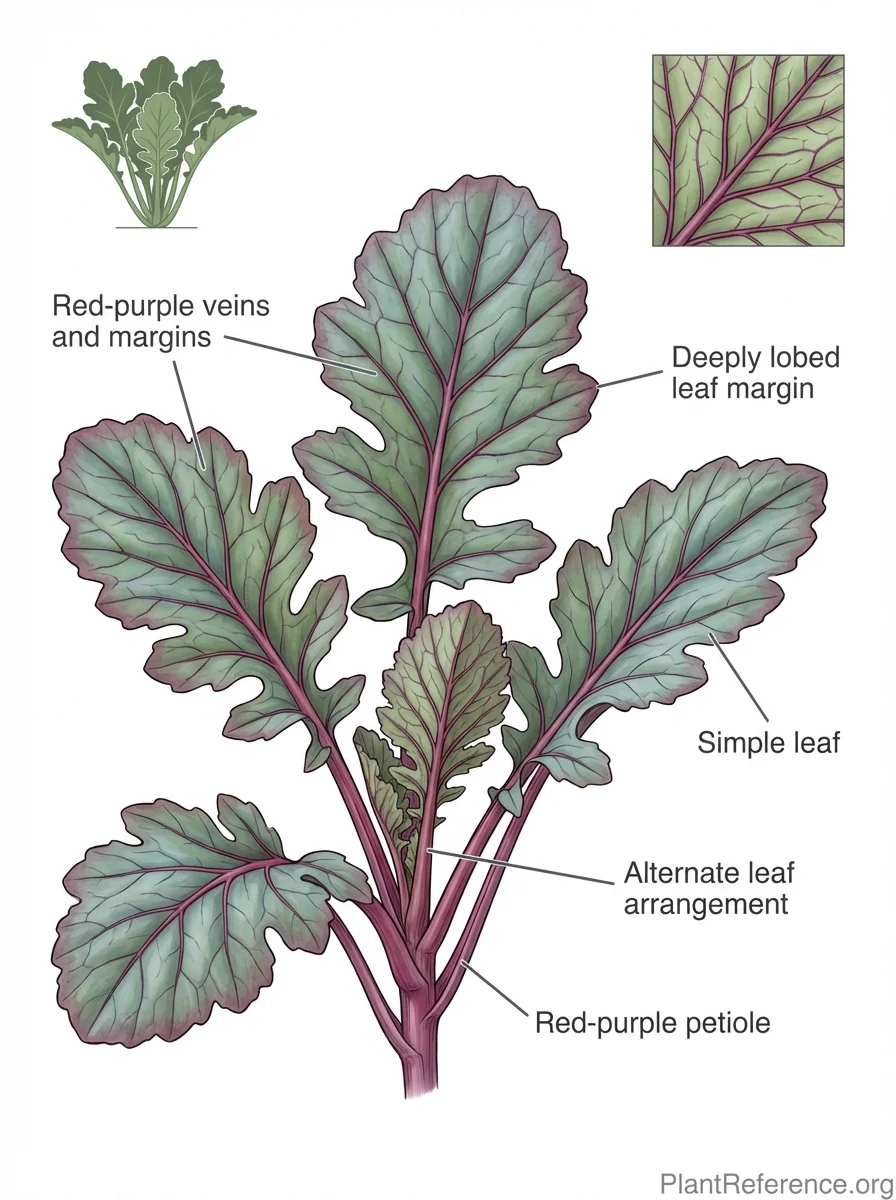
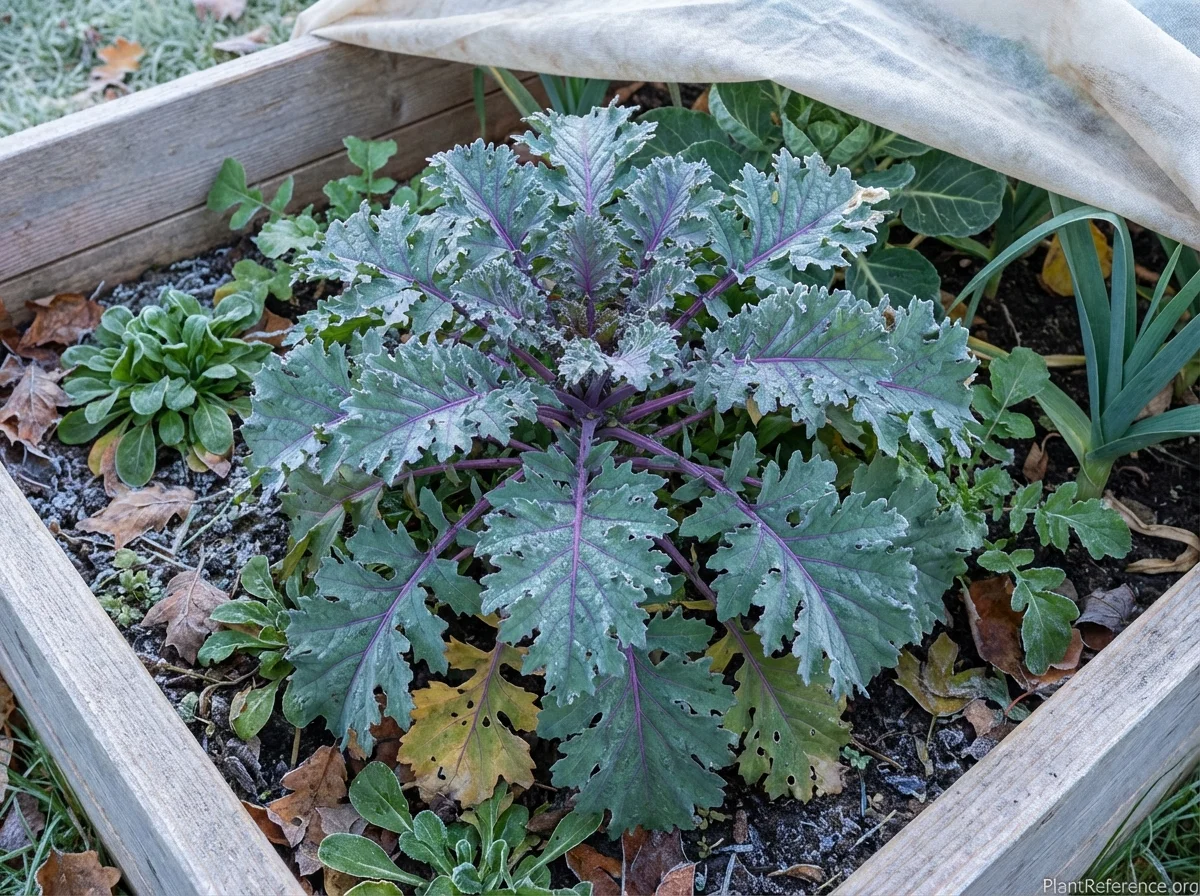
Brassica napus 'Red Russian' is Red Russian kale (Ragged Jack kale), a cool-season annual forming an upright open rosette 24-36 inches (60-90 cm) tall and 18-24 inches (45-60 cm) wide. Deeply lobed oak-leaf-shaped blue-green leaves with red to purple veining and purple-red stems. The species is B. napus (a natural hybrid of B. oleracea x B. rapa), not B. oleracea like most kale cultivars. The deeply lobed flat leaf shape (like a frilly oak leaf) distinguishes Red Russian from curly kale (B. oleracea var. sabellica) and Lacinato kale (B. oleracea var. palmifolia). The leaves are more tender and thinner than curly or Lacinato types — suited to raw salads. In the mustard family (Brassicaceae). Open-pollinated — seed can be saved. Cold-hardy: the purple pigment (anthocyanin) intensifies after frost. Cool-season crop: bolts in sustained heat above 80°F (27°C). Harvest outer leaves by cut-and-come-again starting at 4-6 inches (10-15 cm), or full-size at 60-90 days. Cabbage worms (Pieris rapae), aphids, and flea beetles are primary pests. Not deer-resistant. Non-toxic (edible crop). Full sun to partial shade. Annual. Growth rate is moderate.
Native Range
Open-pollinated cultivar. The species B. napus originated from a natural cross between B. oleracea and B. rapa in the Mediterranean/European region.Suggested Uses
Grown in vegetable gardens, raised beds, and containers of at least 5 gallons (19 L). Cool-season crop — spring and fall. The tender thin leaves are suited to raw salads (unlike tougher curly kale). Open-pollinated — save seeds. Not deer-resistant. Non-toxic. Annual.How to Identify
Appearance
Size & Dimensions
Height2' - 3'
Width/Spread1'6" - 2'
Bloom Information
Detailed Descriptions
Flower Description
Bright yellow, 4-petaled cruciform — only if allowed to bolt; undesirable for leaf productionFoliage Description
Blue-green to silvery-green with red to purple veining and purple-red stems; the purple pigment intensifies after frostGrowing Conditions
Sun Requirements
Requires 4-10 hours of direct sunlight daily
• Full Sun: 6+ hours of direct sunlight
• Partial Shade: 3-6 hours of direct sunlight
• Full Shade: Less than 3 hours of direct sunlight
Care & Maintenance
Care Guide
Full sun to partial shade. Rich moist soil pH 6.0-7.5. Cool-season crop — bolts above 80 degrees F (27 degrees C). Purple pigment intensifies after frost. Open-pollinated — save seeds. Cabbage worms, aphids, flea beetles. Not deer-resistant. Non-toxic. Annual.Pruning
Harvest outer leaves by cut-and-come-again starting at 4-6 inches (10-15 cm). Leave the central growing point intact. Remove bolting stalks and flower buds. Remove yellowed or pest-damaged leaves.Container Growing
Suitable for container growing
Minimum container size: 5 gallons
Toxicity
Non-toxicPlanting Guide
Planting Methods & Timing
Planting Method
both
Indoor Start
4 weeks before last frost
Direct Sow Timing
Early spring 2-4 weeks before last frost; again in late summer for fall harvest
Days to Maturity
60–90 days
Plant Spacing
12 inches
Botanical Flashcard