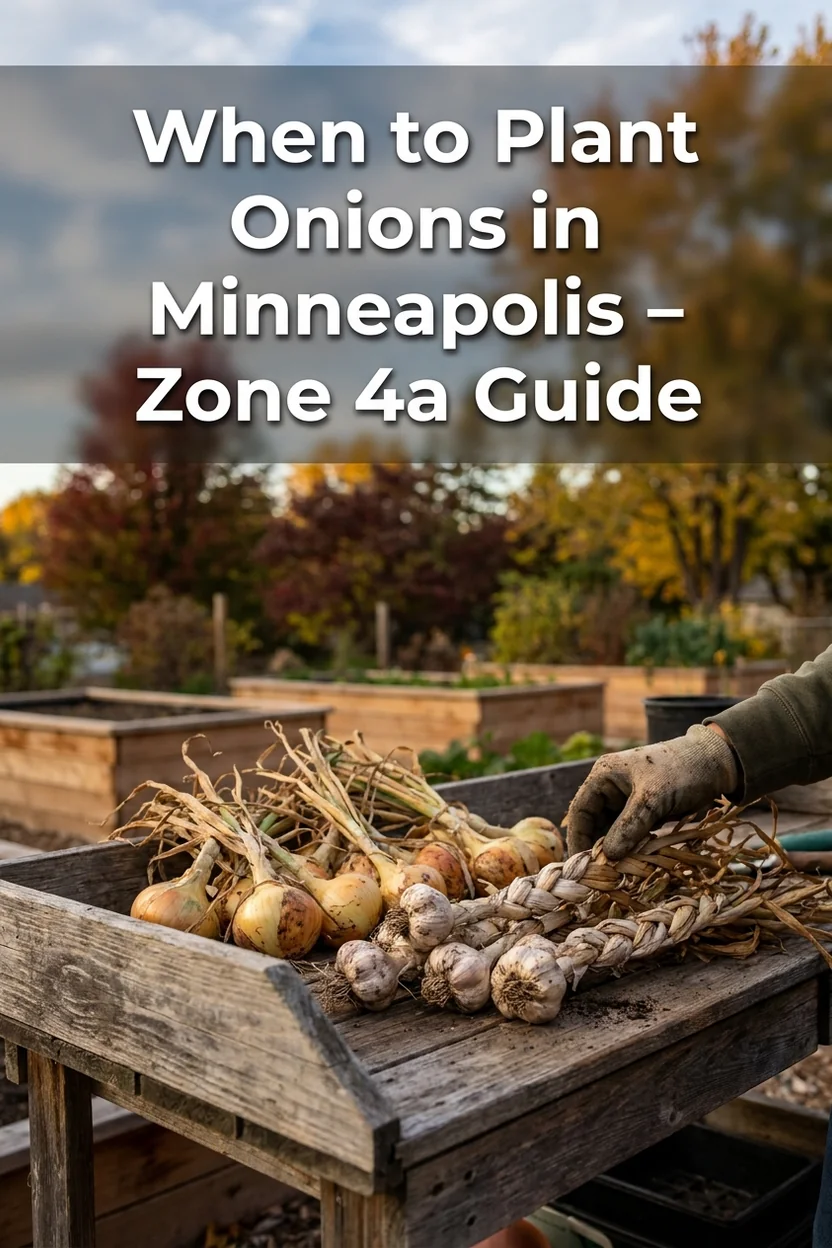
When to Plant Onions in Minneapolis: Zone 4a Dates + Varieties
Pets & Toxicity
Recorded toxicity for plants linked in this guide. An unknown status is not a safety assessment.
Toxic to pets: Patterson onion, Walla Walla sweet onion, red wing storage onion and 2 more (5 linked plants checked)DetailsHide
Allium cepa 'Patterson' — Toxicity Warning
Toxic to cats and dogs if eaten; cats are especially susceptible, and raw, cooked or concentrated plant material can damage red blood cells and cause anaemia.View Allium cepa 'Patterson' plant profileAllium cepa 'Walla Walla' — Toxicity Warning
Toxic to cats and dogs if eaten; cats are especially susceptible, and raw, cooked or concentrated plant material can damage red blood cells and cause anaemia.View Allium cepa 'Walla Walla' plant profileAllium cepa 'Red Wing' — Toxicity Warning
Toxic to cats and dogs if eaten; cats are especially susceptible, and raw, cooked or concentrated plant material can damage red blood cells and cause anaemia.View Allium cepa 'Red Wing' plant profileAllium sativum 'German Extra Hardy' — Toxicity Warning
Toxic to cats and dogs if eaten; cats are especially susceptible, and raw, cooked or concentrated plant material can damage red blood cells and cause anaemia.View Allium sativum 'German Extra Hardy' plant profileAllium sativum 'Chesnok Red' — Toxicity Warning
Toxic to cats and dogs if eaten; cats are especially susceptible, and raw, cooked or concentrated plant material can damage red blood cells and cause anaemia.View Allium sativum 'Chesnok Red' plant profile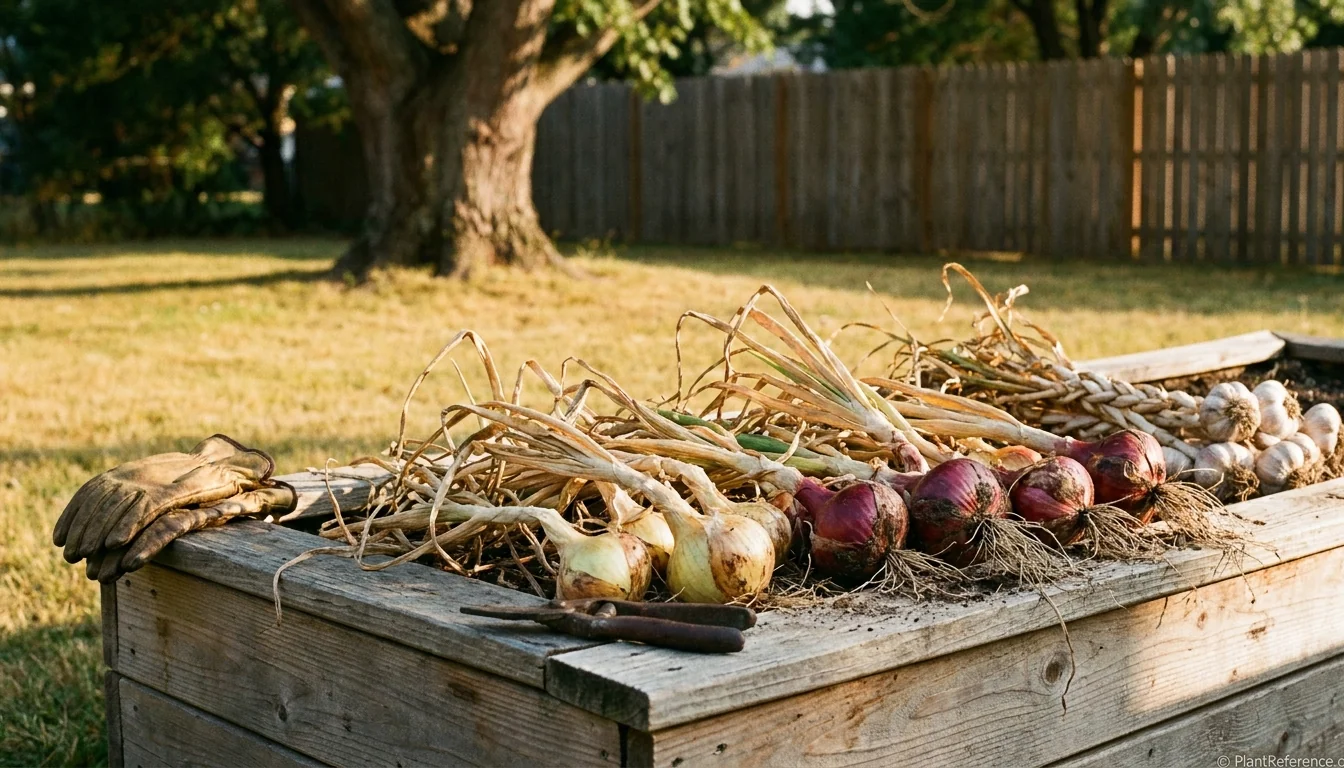
— Image © PlantReference.org 2026
Growing onions in Minneapolis is one of those crops that rewards careful timing more than constant effort. Zone 4a gives you a short, intense growing season—May 15 to September 30, roughly 138 frost-free days—but onions actually thrive in this kind of climate when you plant the right varieties at the right time. The key thing Minneapolis gardeners need to understand is day length: at our latitude of 45°N, summer days stretch to 15+ hours of light, which triggers bulbing only in long-day Allium cepa (AL-ee-um SEE-pah) cultivars. Plant a short-day onion here and you'll get green tops all summer and golf-ball-sized bulbs at harvest. Pair your spring onion crop with a fall garlic planting and you'll have a full year of allium harvest from a single raised bed.
Best Onion & Garlic Varieties for Minneapolis's Zone 4a Climate
The single most important variety decision in Minneapolis is choosing long-day onions. Short-day and intermediate-day types simply will not form bulbs at our latitude because they need shorter day lengths to trigger bulbing—which we never get during the growing season. The varieties below have been tested across Minnesota gardens and university extension trials.
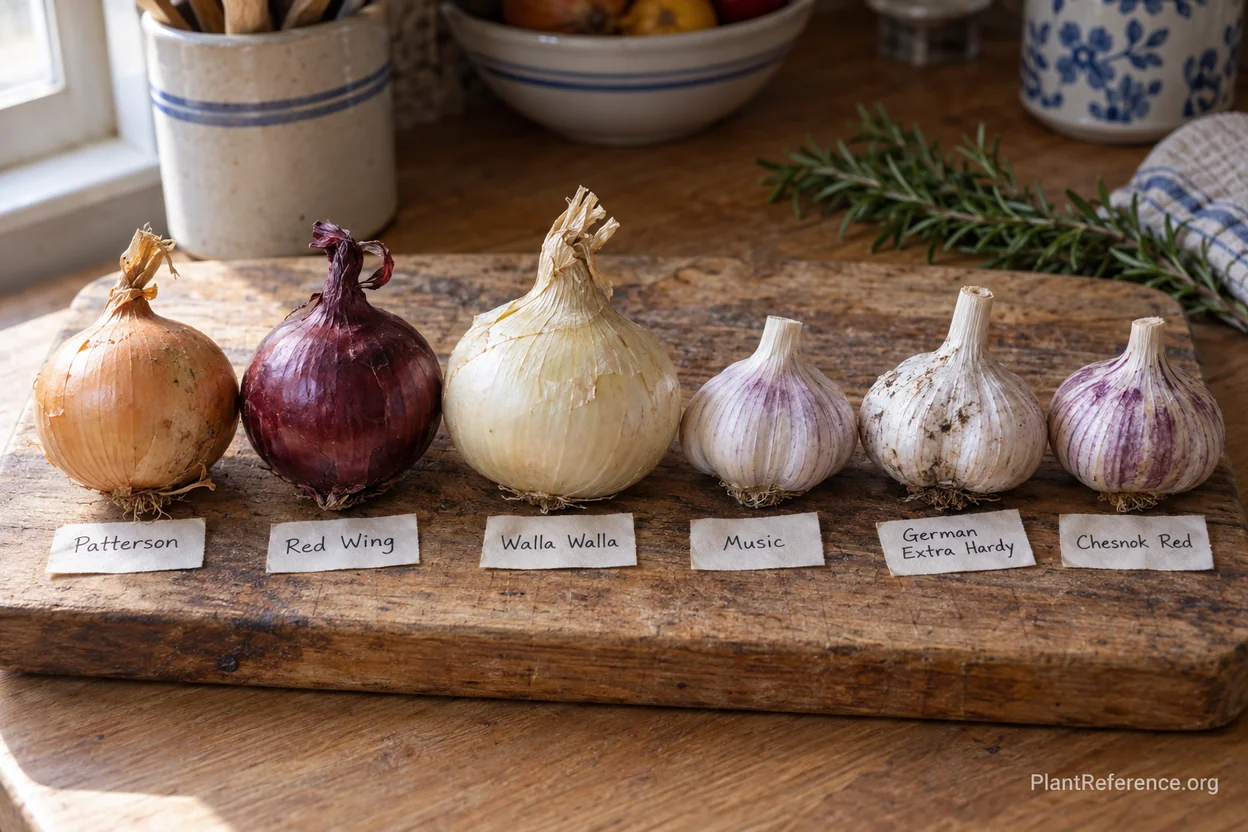
🌿Allium cepa 'Patterson' is the gold standard for storage in Minneapolis. This F1 hybrid yellow onion produces hard, dense, brown-skinned bulbs that store cleanly through April or May in a cool basement. Maturity runs 104 days from transplant, which fits comfortably within Minneapolis's frost-free window. 🌿Allium cepa 'Patterson' replaced the older 'Copra' variety after seed availability dried up, and it performs equally well or better.
🌿Allium cepa 'Walla Walla' is the sweet, mild fresh-eating onion most northern gardeners dream about. The large, flat bulbs reach softball size by late August and slice into beautiful crisp rings. They do not store—plan to eat them by October—but the flavor in tomato salads and grilled on burgers is worth growing them for that alone. Maturity is 110-125 days.
🌿Allium cepa 'Red Wing' is my pick for color and decent storage. The deep purple-red bulbs hold their color through cooking, store 4-6 months in proper conditions, and tolerate Minneapolis's variable late-summer rain better than most red varieties. Maturity runs 115 days.
Allium cepa 'Ailsa Craig Exhibition' is the variety to grow if you want truly enormous fresh-eating onions. Bulbs routinely reach 4-5 pounds (1.8-2.3 kg) when given good soil and consistent water. They do not store, but a single bulb feeds a family for a week. Maturity is 110 days.
For garlic, I recommend hardneck varieties for Minneapolis. The cold winters that punish softneck garlic actually trigger proper bulb division in hardnecks. 🌿Allium sativum 'Music' (AL-ee-um sa-TY-vum) is the most popular Minnesota variety—4-7 large fat cloves per head, strong full flavor, excellent storage of 6-9 months. 🌿Allium sativum 'German Extra Hardy' produces fewer but larger cloves and handles our worst winters reliably. 🌿Allium sativum 'Chesnok Red' has gorgeous purple-striped wrappers and a mellower flavor that bakes beautifully.
Variety | Type | Days to Maturity | Best For Minneapolis |
|---|---|---|---|
Yellow storage onion | 104 days | Long-term storage; reliable workhorse | |
Sweet fresh-eating | 110-125 days | Summer eating; does not store | |
Red storage onion | 115 days | Color, salads, 4-6 month storage | |
Allium cepa 'Ailsa Craig Exhibition' | Large fresh-eating | 110 days | Showpiece bulbs; immediate use |
Hardneck garlic | Fall-planted, July harvest | Most reliable Minnesota hardneck | |
Hardneck garlic | Fall-planted, July harvest | Coldest-winter resilience | |
Hardneck garlic | Fall-planted, July harvest | Decorative purple stripes, mellow |
Specific Planting Dates for Minneapolis
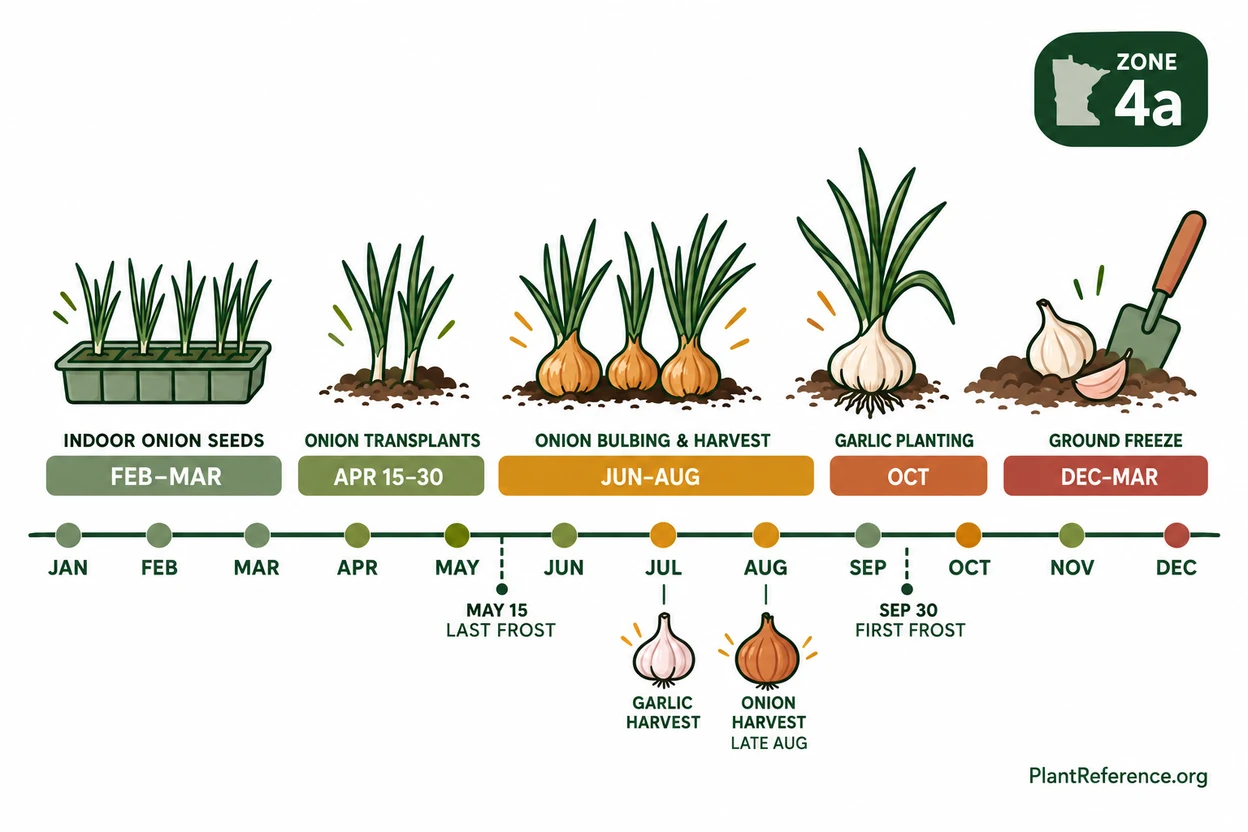
Minneapolis onion and garlic timing breaks cleanly into two windows—a spring window for onions and an autumn window for garlic. Both pivot around our two frost dates: the May 15 last frost and the September 30 first frost.
Indoor Onion Seed Starting
Start onion seeds indoors February 15 - March 1. Onions need 10-12 weeks of indoor growth before transplant, and starting earlier than mid-February produces leggy, weak seedlings that struggle outside. Sow seeds 1/4 inch (0.5 cm) deep in seed-starting mix, keep at 70-75°F (21-24°C) for germination, then drop temperature to 60-65°F (16-18°C) after sprouts emerge. Use grow lights 14-16 hours daily.
Trim onion seedlings with scissors when they reach 4 inches (10 cm) tall, cutting back to 2 inches (5 cm). This pruning is non-negotiable—it stockies up the seedlings, prevents flopping, and dramatically improves transplant survival. Repeat trimming every 2-3 weeks until transplant day.
Onion Transplant Outdoors
Transplant onion seedlings outdoors April 15-30 in Minneapolis, well before the May 15 last frost date. This catches new gardeners off-guard, but mature onion seedlings tolerate light frost and even brief drops to 25°F (-4°C). Earlier transplanting equals bigger bulbs because more leaves form before day length triggers bulbing in June.
Onion sets from a garden center are an easier alternative if seed-starting isn't your thing. Plant sets April 20 - May 10 at the same depth as transplants. Choose sets smaller than dime-size—larger sets often bolt to seed instead of bulbing.
Direct Sowing (Generally Not Recommended)
Direct sowing onion seed outdoors in Minneapolis produces undersized bulbs because our season is too short for seeds to germinate, grow leaves, and form bulbs before September frost. The exception is sowing scallion or bunching onion varieties in April for use as green onions through summer—those don't need to form bulbs.
Fall Garlic Planting
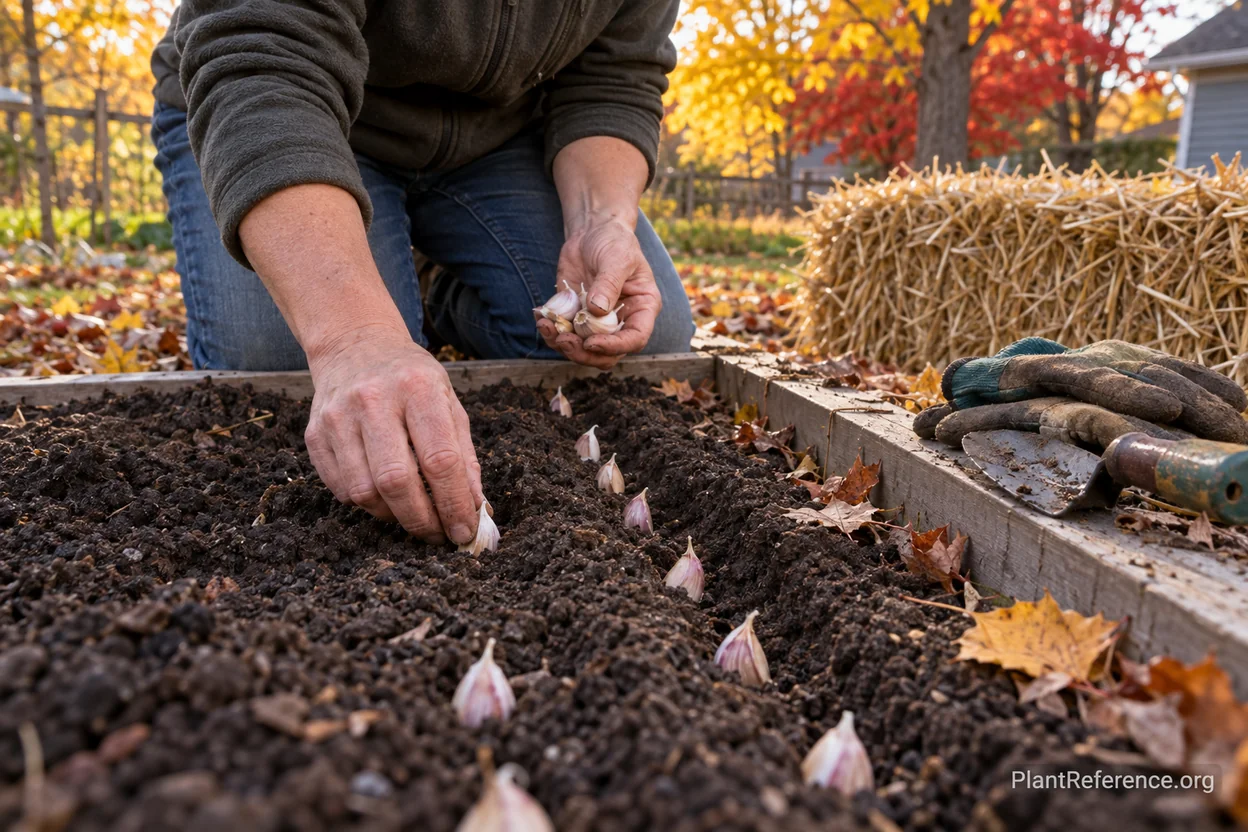
Plant garlic cloves October 1-25 in Minneapolis. The goal is to give cloves enough warm soil time to grow roots without sending up significant top growth before winter dormancy. Plant 6 weeks before the ground freezes solid, which typically happens in mid-November. Separate heads into individual cloves the day of planting (not earlier—pre-separated cloves dry out fast). Plant pointy end up, 2 inches (5 cm) deep and 6 inches (15 cm) apart, in rows 12 inches (30 cm) apart.
Mulch garlic beds with 4-6 inches (10-15 cm) of clean straw or shredded leaves after the ground surface freezes lightly in late November. The mulch isn't to keep the bed warm—it's to keep the bed consistently cold, preventing the freeze-thaw cycles that heave cloves out of the soil.
Key Date Summary
Start onion seeds indoors: February 15 - March 1
Transplant onion seedlings outdoors: April 15 - 30
Plant onion sets: April 20 - May 10
Average last frost: May 15
Day length triggers bulbing: June 15-25 (longest days)
Onion harvest: late August - early September
Average first frost: September 30
Plant garlic cloves: October 1 - 25
Apply winter mulch over garlic: mid-late November
Garlic harvest: mid-July (following year)
Complete Growing Guide for Minneapolis
Site Selection and Soil Preparation
Onions and garlic both need full sun—at least 6 hours daily, ideally 8 or more. Choose your most open, sun-baked spot. Both crops are heavy feeders that need consistent moisture but absolutely hate sitting in waterlogged soil. Raised beds solve a lot of Minnesota problems at once: they warm up earlier in spring, drain better during wet Junes, and let you work without bending. A 24-inch (60 cm) tall raised bed is comfortable to tend from a stool or wheelchair. The Complete Guide to Raised Bed Gardening for Beginners (2025)
Prepare beds 2-3 weeks before planting by working in 2-3 inches (5-7.5 cm) of finished compost to a depth of 8-10 inches (20-25 cm). Best Soil Mix for Raised Beds: Creating the Perfect Growing Medium Onions and garlic both prefer a slightly acidic pH between 6.0 and 6.8. Most Minneapolis garden soils run close to neutral, but a soil test from the University of Minnesota Extension is worth the small fee. Raised Bed Soil pH Problems: Testing, Adjusting, and Maintaining Balance
Add a balanced organic fertilizer at planting time—blood meal or feather meal supplies the nitrogen alliums hammer through during early growth. Avoid fresh manure, which can burn shallow roots and introduce weed seeds.
Transplanting and Spacing
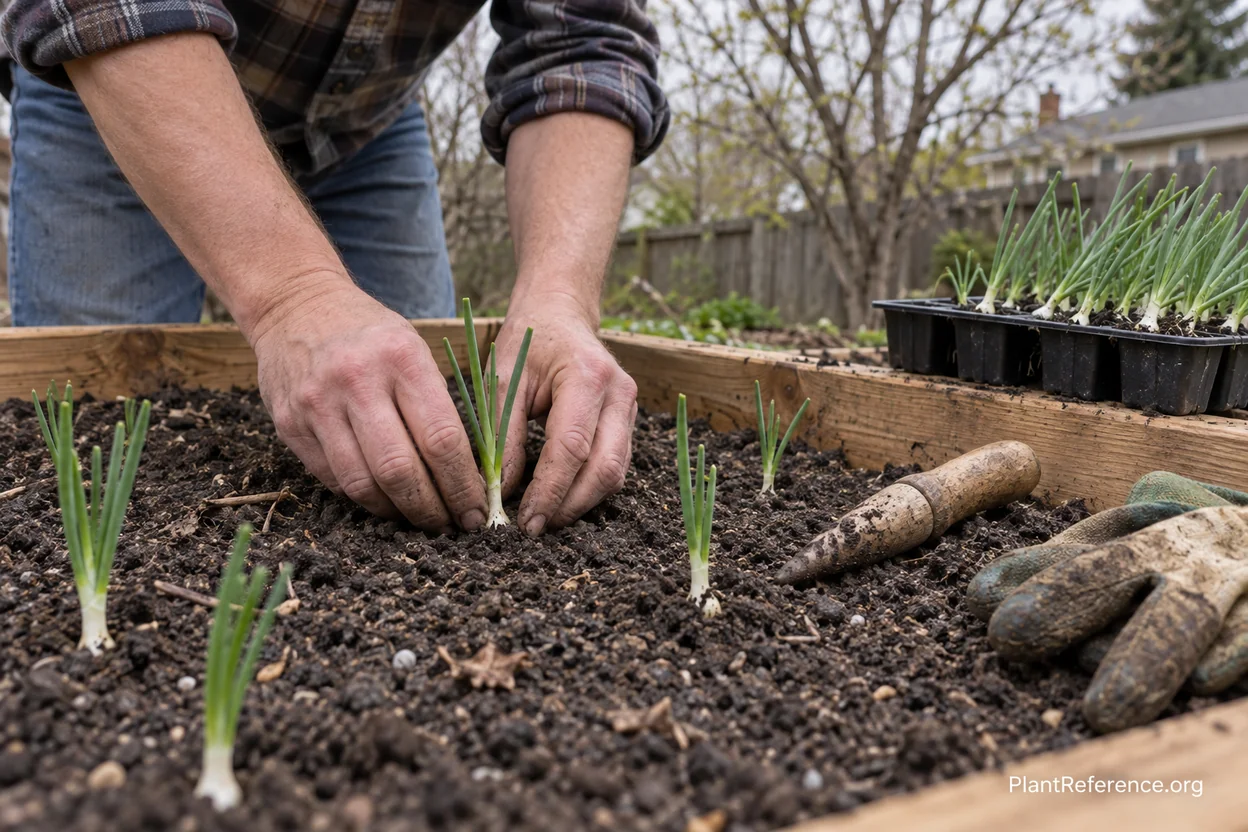
Set onion transplants 4-6 inches (10-15 cm) apart in rows 12 inches (30 cm) apart. Plant the tiny white bulb base just at soil level—deeper planting restricts bulb expansion. Garlic cloves go 6 inches (15 cm) apart, 2 inches (5 cm) deep, pointed end up. Both crops have shallow root systems, so consistent surface moisture matters more than deep watering.
A waist-high (24-inch / 60 cm) raised bed makes onion work substantially more comfortable. You can sit on the edge while planting, weeding, and harvesting—gardening shouldn't require you to bend over until your back screams. Raised Bed Vegetable Garden Layout: Planning for Maximum Production
Watering
Onions and garlic both need 1 inch (2.5 cm) of water per week throughout active growth. In Minneapolis, that's typically twice-weekly deep watering during dry spells, less during our wet Junes. Drip irrigation or a soaker hose works far better than overhead watering, which encourages fungal disease on the foliage. Stop watering onions when tops begin yellowing and falling over in August—the bulbs need to dry down before harvest. Stop watering garlic two weeks before harvest in early July.
Fertilizing
Onions are nitrogen-hungry through their leafy growth phase, but excess nitrogen after bulbing starts produces thick necks and poor storage. Side-dress with blood meal or fish emulsion every 3 weeks from mid-May through mid-June, then stop completely once you see bulbs beginning to swell at the soil line. Nutrient Deficiencies in Raised Beds: Visual Diagnosis and Treatment Garlic gets a single early-spring nitrogen feeding in late March or early April as soon as green shoots appear through the mulch.
Mulching and Weeding
Mulch onion beds with 1-2 inches (2.5-5 cm) of clean straw or grass clippings after transplanting. Mulch suppresses weeds—and onions cannot compete with weeds due to their thin foliage—conserves moisture, and moderates the soil temperature spikes of Minneapolis's surprisingly hot Julys. Raised Bed Too Hot in Summer: Protecting Plants from Heat Stress Hand-pull any weeds that emerge through the mulch rather than hoeing, which can damage shallow onion roots.
Troubleshooting Minneapolis-Specific Problems
Thick Necks and Poor Storage
If your onions form thick green necks that won't dry down properly, you've over-fertilized late in the season. Excess nitrogen after bulbing starts produces lush tops at the expense of papery, well-cured skins. Stop nitrogen feeding once bulbs begin swelling at the soil line in late June. Plant 🌿Allium cepa 'Patterson' and 🌿Allium cepa 'Red Wing' for the hardest-cured storage onions.
Bolting (Sending Up Flower Stalks)
Onion bolting is triggered by cold stress on young plants. If a stretch of below-freezing nights hits transplants smaller than pencil-width, the plants register the cold as winter, then bolt to seed in early summer. Mature transplants tolerate cold fine; very small ones don't. The fix is delaying transplant until seedlings are at least the diameter of a pencil—or selecting onion sets smaller than dime-size, which are less likely to bolt than larger sets. Pull any plants that bolt and use the resulting bulbs immediately—they won't store.
Onion Maggots
Onion maggots are Minnesota's most reliable onion pest. The small flies lay eggs at the soil line in spring; the maggots tunnel into bulbs and leaves, causing wilting and plant collapse. Floating row covers from transplant through mid-June exclude the adult flies completely. Crop rotation matters—never plant alliums in the same bed two years in a row. Why Your Raised Bed Plants Are Stunted: Diagnosing Growth Problems
Garlic Heaving Out of Frozen Ground
Freeze-thaw cycles in November and again in March can lift garlic cloves out of the soil. The fix is straw mulch applied 4-6 inches (10-15 cm) thick after the ground surface freezes lightly—not before. Mulched too early, garlic continues weak top growth and uses up clove energy reserves. Mulched at the right time, the mulch keeps the soil consistently frozen all winter, which is exactly what hardneck garlic wants. When to Plant Basil in Minneapolis: Complete Guide + Best Varieties for Zone 4a
Pink Root or White Rot
Pink-tinged or shrunken bulbs at harvest signal soil-borne fungal disease that builds up when alliums grow in the same bed repeatedly. Rotate onion and garlic plantings on a 3-year cycle through different beds. 🌿Allium cepa 'Patterson' has some resistance to pink root, but no variety is fully immune.
Harvest & Storage
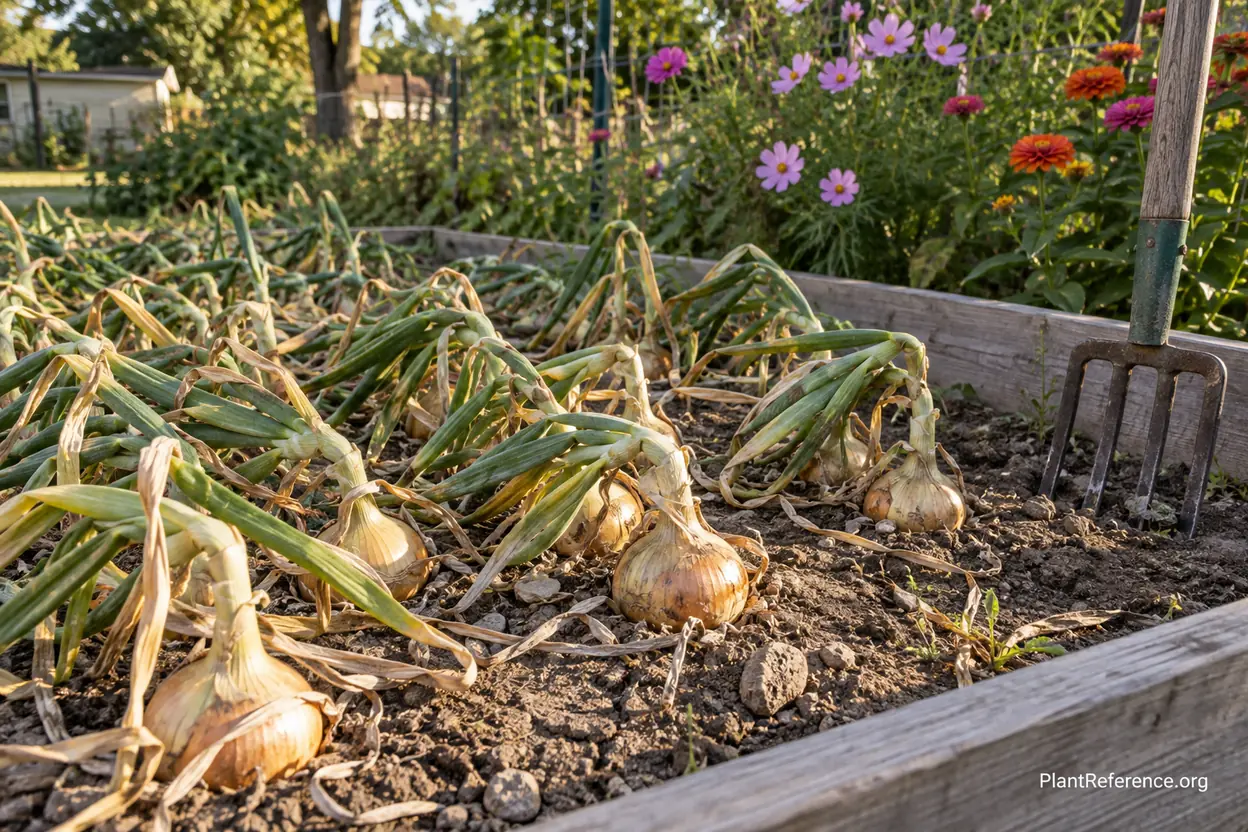
Harvest onions when 80% of the tops have naturally fallen over in late August or early September. Do not knock down the standing tops—that's an old technique that can introduce rot into the necks. Stop watering completely once tops begin falling. After 7-10 dry days, lift bulbs gently with a garden fork on a sunny morning. Brush off loose soil but do not wash.
Cure onions in a single layer in a warm, dry, well-ventilated spot for 2-3 weeks. A covered porch, garage, or basement with a fan works well. Curing is complete when necks are completely dry and outer skins are papery. Cut tops to 1 inch (2.5 cm) above the bulb and store 🌿Allium cepa 'Patterson' and 🌿Allium cepa 'Red Wing' in mesh bags or shallow crates in a cool basement at 35-50°F (2-10°C) with low humidity. Storage runs 5-8 months for properly cured bulbs. Best Raised Bed Vegetables for Beginners: Top 10 Easy-Growing Crops
Harvest garlic in mid-July when the bottom 3-4 leaves have turned brown but the top 4-5 leaves remain green. Earlier harvest produces undersized cloves; later harvest causes the wrappers to split, ruining storage potential. Cure heads with tops still attached for 3-4 weeks in a shaded, ventilated location, then trim tops to 1 inch (2.5 cm) and store in a cool, dry spot. 🌿Allium sativum 'Music' and 🌿Allium sativum 'German Extra Hardy' store 6-9 months under proper conditions. Too Much Water in Raised Beds: Signs and Solutions for Overwatering
Save your largest cloves from the harvest as seed stock for next October's planting. Garlic genetics adapt to local conditions over generations, and your own Minneapolis-grown 🌿Allium sativum 'Music' will eventually outperform any commercial seed-stock you can buy.
Frequently Asked Questions
Three daily games
Can you name a plant on sight?
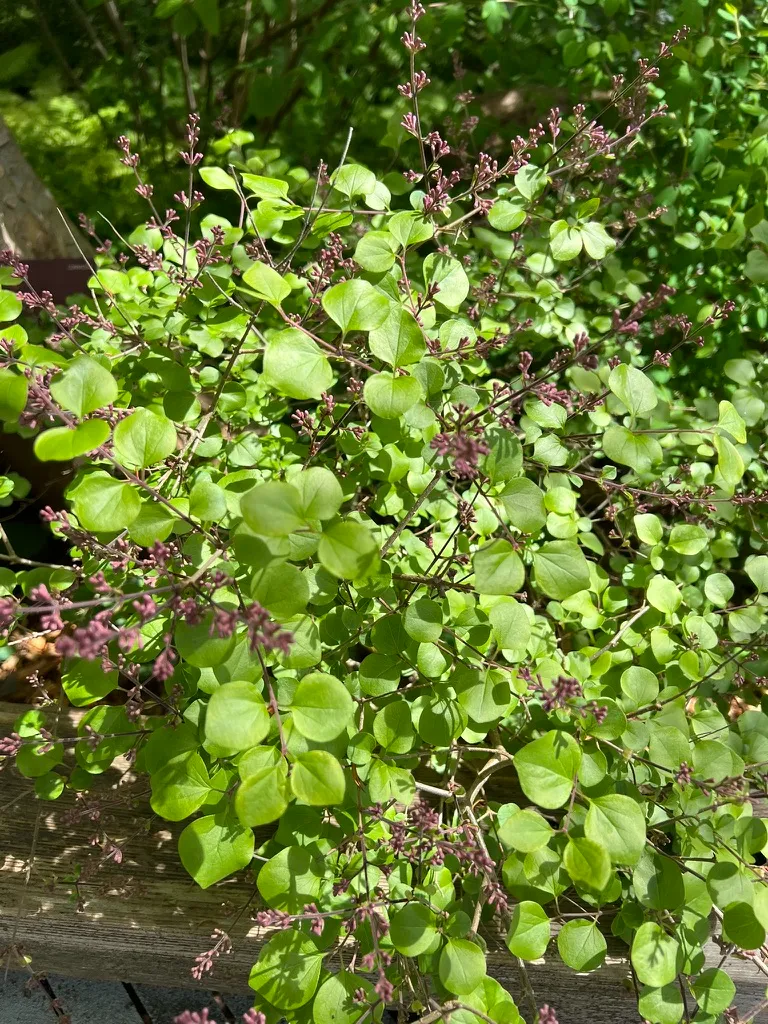
Tuesday’s specimenSyringa pubescens ssp. patula 'Miss Kim'Reading about plants and recognising them are different skills. These three build the second.
- Daily PlantIdentify the day’s mystery plant from a close-up photograph.
- Keyed OutWork a dichotomous key, lead by lead, to name a hidden specimen.
- Name That PlantName a specimen from botanical clues dealt hardest first.
Free to play, no account needed
Tagged with
Amanda came to gardening through an unexpected route—after developing chronic pain from rheumatoid arthritis in her late 20s, she started researching adaptive gardening techniques that would allow her to continue growing plants without aggravating her condition. Now based in Minneapolis, she writes about accessible gardening, raised bed designs for people with mobility challenges, and ergonomic tools that reduce strain. Amanda completed a certificate in sustainable urban agriculture and volunteers with a nonprofit that builds accessible community gardens. She grows vegetables, herbs, and flowers in waist-high raised beds she designed herself. Her writing focuses on practical solutions that work for real people with real limitations—whether that's arthritis, limited mobility, or just a bad back.